
Yes, you can grow asparagus in Texas, but your success depends heavily on where in the state you live. North Texas and parts of Central Texas are the sweet spots. South Texas is genuinely difficult, and the Gulf Coast is a tough sell. With the right variety, planting timing, and soil prep, most Texas gardeners can get a productive asparagus bed that lasts a decade or more. The key is understanding what asparagus actually needs and matching those requirements to your specific corner of the state.
Can You Grow Asparagus in Texas? Requirements and Care
Marcus Holloway
23 Apr 2026
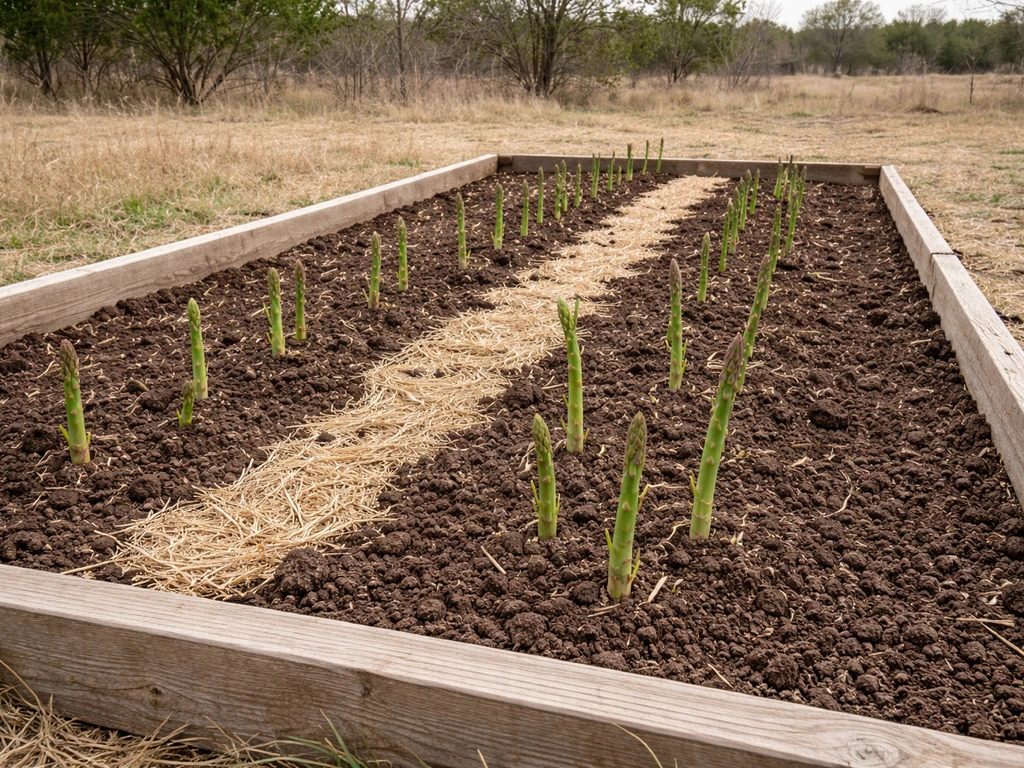
Texas asparagus feasibility by region
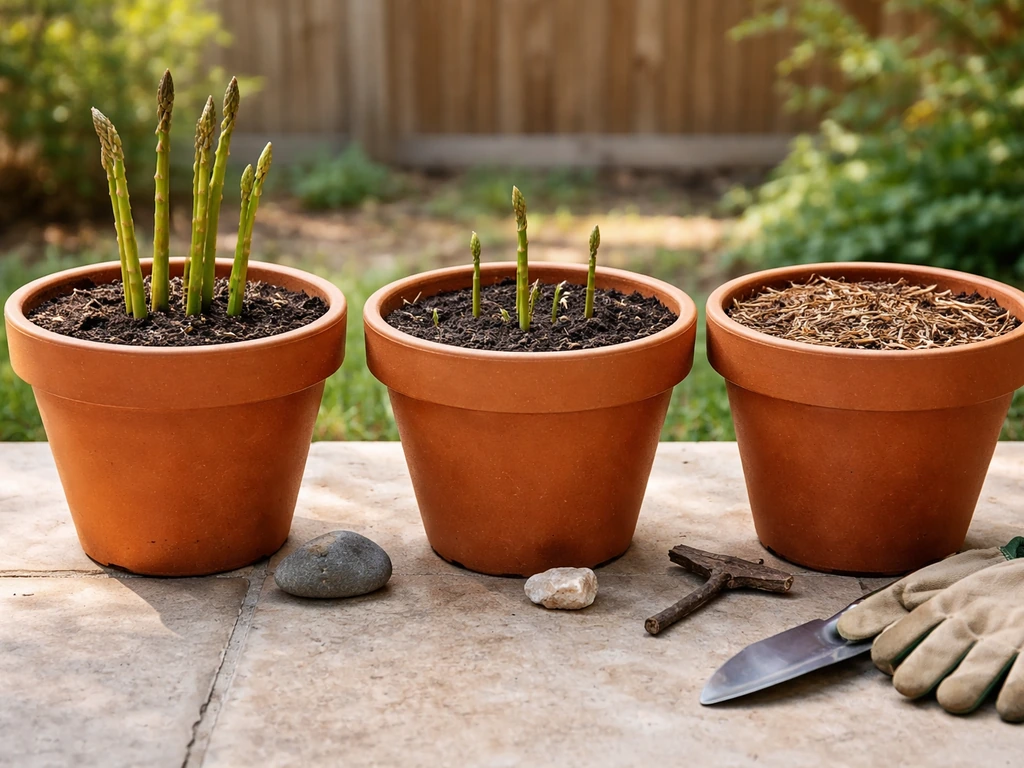
Asparagus is a cold-hardy perennial that needs a real dormant period each winter to recharge its root system and push strong spears the following spring. The more reliably cold your winters, the better your results. That's why there's such a big difference between Dallas and Brownsville.
- North Texas (Dallas-Fort Worth, Amarillo, Lubbock): Best odds in the state. Winters are cold enough to give crowns genuine dormancy, summers are hot but manageable with mulch and irrigation. Expect consistent harvests if you manage the bed well.
- Central Texas (Austin, San Antonio, Waco): Workable but variable. Winters are usually cool enough, but warm snaps can interrupt dormancy. Choose heat-tolerant varieties and pay extra attention to fall fern management.
- East Texas (Tyler, Lufkin): Humidity is the main challenge here, raising disease pressure significantly. Good drainage and disease-resistant varieties are non-negotiable.
- South Texas (Rio Grande Valley, Laredo, Corpus Christi): Genuinely difficult. High fall temperatures prevent crowns from storing enough energy for the next season. Texas A&M explicitly notes that spears get progressively smaller and weaker each year in these warmer areas. Not recommended unless you're willing to treat it as an experiment.
- West Texas (El Paso, Midland-Odessa): Dry and alkaline soils actually suit asparagus pH preferences well, and winters are cold enough. Irrigation is the main challenge, but this region can produce good results with consistent watering.
What asparagus needs to thrive
Before you dig a trench, it helps to understand what you're actually asking the plant to do. Asparagus is a long-lived perennial that can stay productive for 15 to 20 years in the right spot, but it's picky about its environment. Get these fundamentals right and it almost manages itself. Skip one, and the whole bed underperforms.
Cold and dormancy
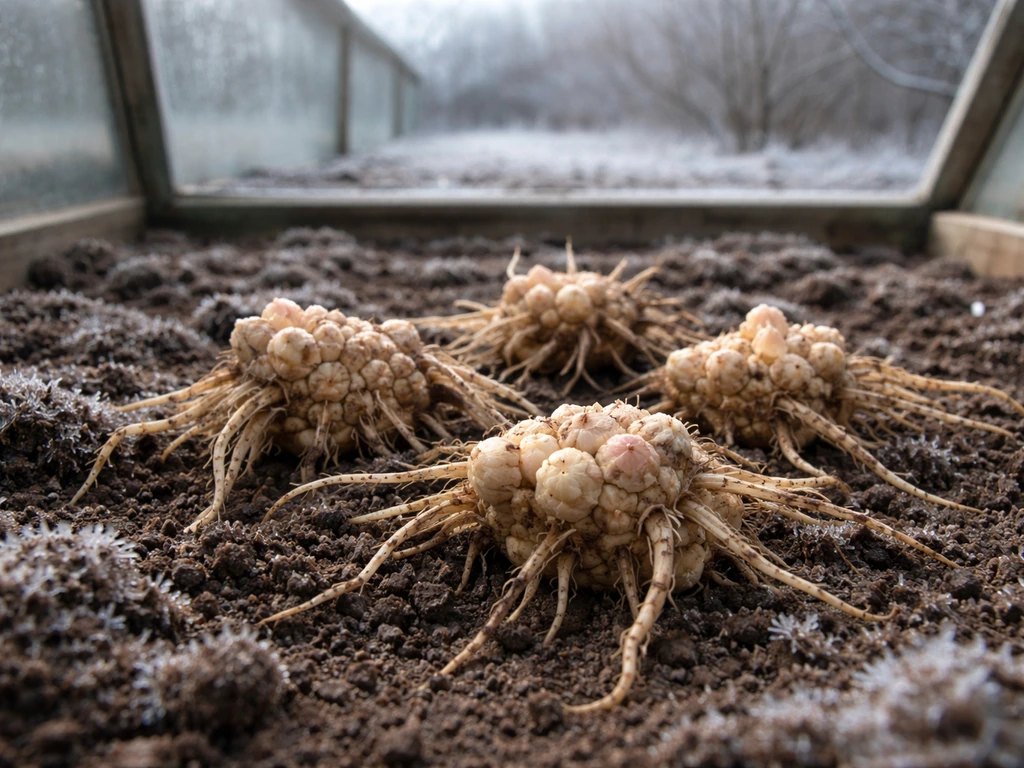
Asparagus needs a cold dormant period to reset each year. Research shows that chilling duration and temperature directly affect bud break and spear development, which is why South Texas beds often produce weaker spears over time. The crowns simply don't get enough cold to fully recharge. North and Central Texas get adequate chilling most winters, though an unusually warm winter can set you back a season.
Soil
Drainage is arguably the single most important soil factor. Crown rot (primarily Fusarium) is the most serious soilborne disease asparagus faces, and it thrives in waterlogged conditions. Do not plant asparagus in a low spot or anywhere water pools after rain. On the pH side, asparagus does poorly below 6.0 and performs best between 6.5 and 7.5. Texas A&M notes it actually does well in higher-pH soils, which is good news for West Texas growers with naturally alkaline ground.
Sun and spacing
Asparagus needs full sun, at least 8 hours a day. Shade produces weak, spindly spears and reduces stored energy in the crowns. Spacing matters too: Texas A&M warns that planting too closely produces smaller spears, while wider spacing gives larger individual spears but reduces total yield per row. Rows should be 5 feet apart to give ferns room to develop without crowding.
Water
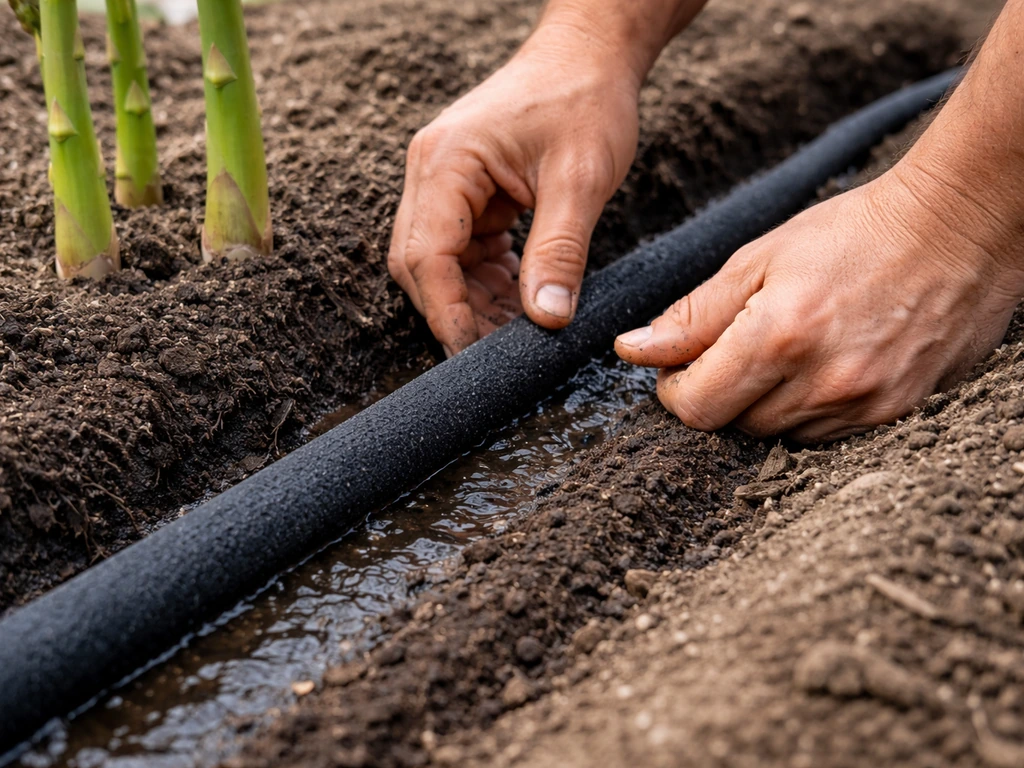
Asparagus needs frequent, deep watering. The Texas A&M recommendation is to water thoroughly, then let the top inch of soil dry before watering again, which typically means every 3 to 5 days depending on your soil type and temperatures. During establishment, consistent moisture is critical. Drip irrigation works well for Texas beds because it keeps water off the foliage, which helps reduce fungal disease pressure.
Choosing the right varieties and crowns for Texas
Texas A&M AgriLife has a specific list of recommended varieties for Texas conditions, and sticking to it is worth doing. The UC series (UC 157, UC 72) was developed in California and performs well in heat, making both good choices for Central and South-Central Texas. The Jersey series (Jersey Giant, Jersey Gem, Jersey Knight) produces all-male plants, which means more energy goes into spear production rather than seed making. Martha Washington is an older open-pollinated variety that has a long track record in Texas gardens. Purple Passion is a sweeter variety with slightly lower yield but good flavor.
| Variety | Best for Texas Region | Notes |
|---|---|---|
| UC 157 | Central and South-Central TX | Heat-tolerant, good for warmer areas |
| UC 72 | Central and South-Central TX | Heat-tolerant, adapted to warm climates |
| Jersey Giant | North and Central TX | All-male, high yield, disease resistant |
| Jersey Gem | North and Central TX | All-male, consistent producer |
| Jersey Knight | North and Central TX | All-male, good rust resistance |
| Martha Washington | Statewide | Time-tested in Texas, widely available |
| Purple Passion | North and Central TX | Sweeter flavor, slightly lower yield |
Always buy 1- to 2-year-old crowns rather than starting from seed. If you start from seed, you're waiting 3 years before your first harvest. With year-old crowns, you can do a limited harvest the very next spring, and the bed reaches full production in 2 to 3 years from planting. That's a meaningful time difference for a perennial bed you're planning to keep for years.
When and how to plant in Texas
Texas A&M recommends planting crowns in January or February, or as soon as the ground can be worked. This early planting gives crowns time to establish before the brutal Texas summer heat arrives. For North Texas, aim for late January through February. For Central Texas, January is often workable. In South Texas, if you're going to try at all, January is your window.
Planting crowns step by step
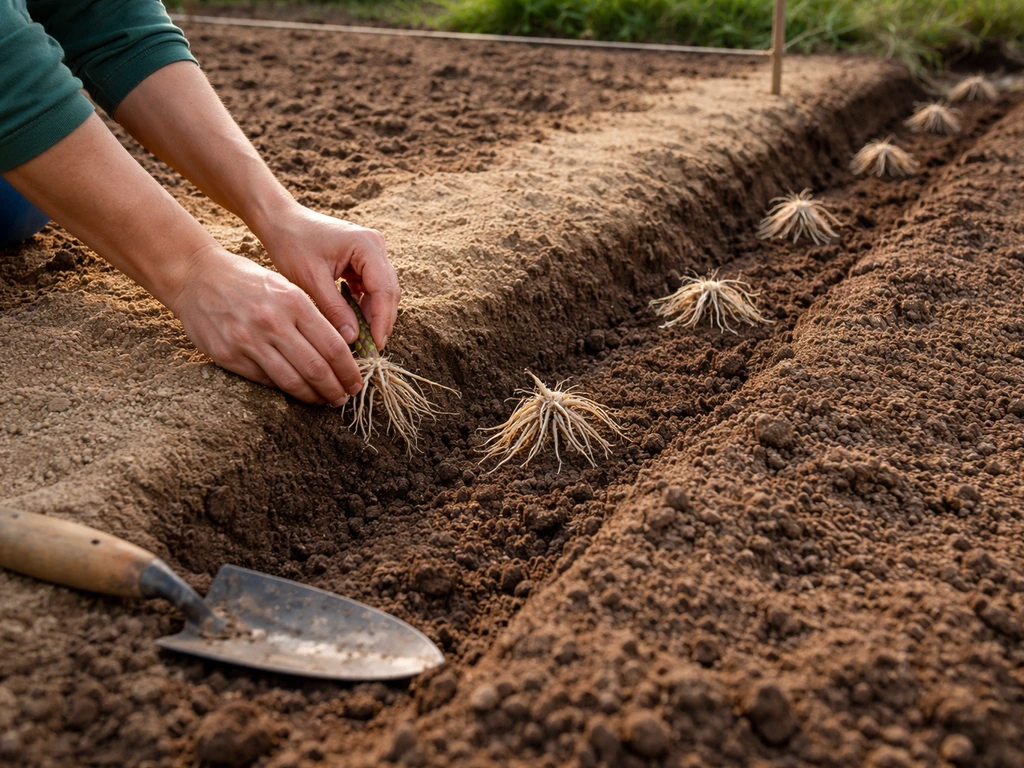
- Mark rows 5 feet apart across your prepared bed.
- Dig a furrow 4 inches wide. Depth depends on your soil: 6 to 12 inches deep in loose sandy soil, 4 to 6 inches in heavier clay.
- Space crowns 12 to 14 inches apart in the trench (spacing them 18 to 24 inches apart gives larger individual spears if you prefer quality over total volume).
- Place crowns with the buds facing up, about 6 inches below the final soil surface.
- Cover with 2 inches of amended soil to start, then gradually fill the trench as the season progresses and shoots emerge. Do not cover all at once.
- Water in well immediately after planting.
If you're curious about seeds: it's not impossible, but the 3-year wait before first harvest makes it hard to justify in Texas, where summer heat is already working against you from day one. Crowns give you a head start and better odds of establishment.
Site prep and getting the soil right
Because asparagus is a permanent planting, you only get one real chance to build the foundation. Do it right before the crowns go in the ground, and you'll be rewarded for years. Skip it, and you'll spend every season fighting problems that could have been prevented.
First, get a soil test. Extension offices and commercial labs can tell you your current pH and nutrient levels. If your pH is below 6.0, add lime per the test recommendation to bring it up to 6.5 to 7.5. For most Texas soils, you're often already in a decent pH range, especially in West Texas where soils tend to be alkaline.
Work 3 to 4 inches of compost or well-rotted organic matter into the top 12 inches of soil before digging your trenches. This improves drainage in clay soils, improves water retention in sandy soils, and builds the organic base that asparagus crowns need during their long establishment phase. Texas A&M recommends replacing native soil with an organic mixture in the planting trench itself.
One more thing worth noting: if you've grown asparagus in that bed before, or in the area nearby, pick a different spot. Fusarium crown and root rot persists in the soil and can devastate new crowns planted in previously infected ground. Fresh ground is one of the best disease-prevention moves you can make.
Year-by-year care plan
Year one: establishment
The first year is entirely about root and crown development. Do not harvest any spears. Let every spear grow out into fern, no matter how tempted you are. Those ferns are photosynthesizing and building the energy reserves that will feed next year's growth. Water consistently every 3 to 5 days. Keep weeds under control because asparagus does not compete well with weeds early on. A 2 to 3 inch layer of mulch helps with both weeds and moisture retention, which matters a lot in Texas summers.
Year two: continued establishment
Still no harvest, or at most a very limited one (Texas AgriLife's recommendation is to avoid harvesting during the first 2 years after planting). In late January or early February, scatter 2 pounds of 10-20-10 fertilizer (or equivalent) per 20 feet of row before spring growth begins. Continue watering and mulching. After the first hard frost, cut the fern tops to ground level and mulch the bed. If you don't get a hard frost, remove ferns in late November when they turn yellow.
Year three and beyond: full production
By year three, most beds in North and Central Texas are in full or near-full production. Apply 2 pounds of 10-20-10 per 20 feet of row in late January before spears emerge. Harvest spears when they reach 4 to 10 inches tall, cutting or snapping at ground level every other day. Harvesting every other day is important because spears left too long become fibrous and tough, especially in Texas warmth where growth accelerates quickly. Continue irrigation throughout the season. After the harvest period ends, let remaining spears develop into ferns for the summer to recharge crowns for the following year.
Common Texas problems and how to handle them
Heat stress and declining production
In warmer parts of Texas, especially South Central and South Texas, you may notice spears getting progressively thinner and weaker each year. This is the classic sign that high fall temperatures are preventing crowns from storing enough energy for the next spring. There's not much you can do except ensure you're not overharvesting, that ferns are allowed to grow vigorously after harvest season, and that irrigation is consistent. If the decline continues, the honest answer is that your location may simply be too warm for asparagus to thrive long-term.
Crown rot and drainage problems
Crown rot (Fusarium) is the most serious soilborne disease asparagus faces. Signs include poor or absent spring emergence, yellowing ferns that collapse early, and crowns that feel soft or rotten when dug up. The fix is mostly prevention: choose well-drained ground from the start, never plant in a location that has grown asparagus before, and maintain proper soil pH. Once Fusarium is established in a bed, it's very difficult to eliminate. Phytophthora crown rot is a similar problem, again tied to waterlogging. If your bed has drainage issues, raised beds or raised rows can help significantly.
Rust
Asparagus rust shows up as orange-red pustules on fern stems and can weaken crowns over time. It's more common in humid East Texas. The Jersey series varieties have good rust resistance, which is one reason they're worth choosing in humid areas. Remove and dispose of infected fern material at end of season rather than composting it.
Asparagus beetle
The asparagus beetle is the most significant insect pest you'll encounter. Both adults and larvae chew on spears and ferns. The beetle overwinters in crop debris, so thorough bed cleanup after the season (removing all fern material) is your first line of defense. For active infestations, hand-picking works for small beds. If you need a spray, Sevin (carbaryl) is the conventional option, or you can use an organic insecticide. Don't let infestations go unchecked during fern season because weakened ferns mean weaker crowns and smaller spears next spring.
What to expect from harvest and long-term maintenance
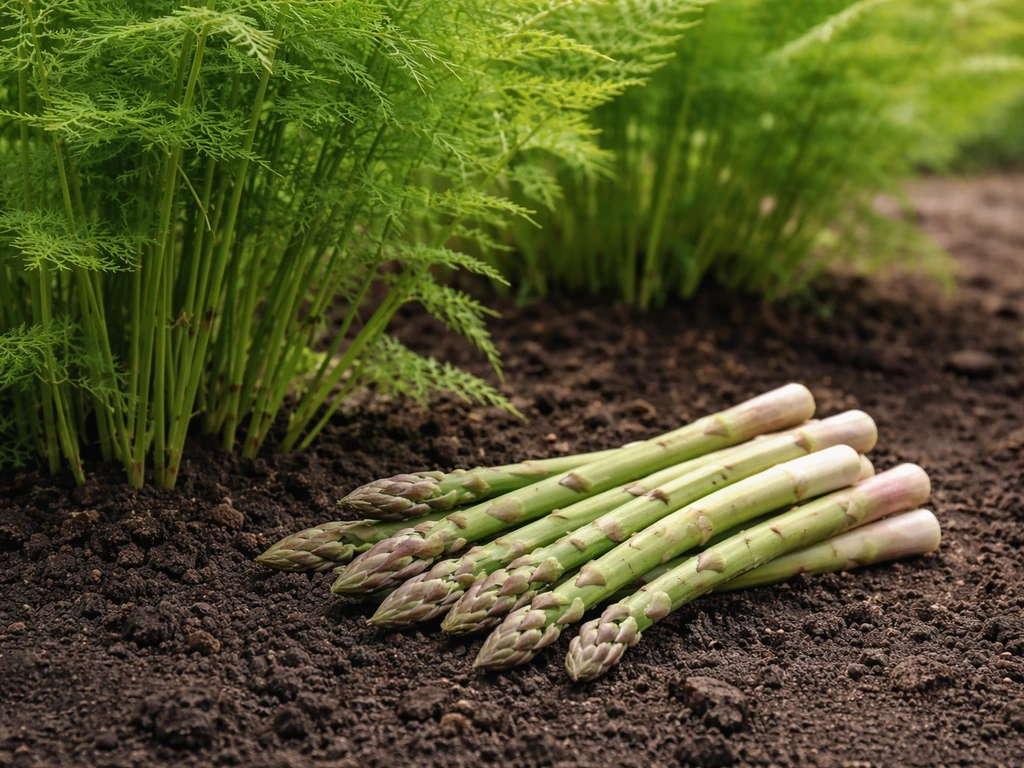
In most Texas locations, the asparagus harvest window runs about 4 to 6 weeks in early spring, typically starting in February or March depending on your region and the winter. Harvest spears when they're 4 to 10 inches tall and harvest every other day to stay ahead of spear maturity. Stop harvesting when spear diameter drops below 3/8 inch or when spear heads start opening up as temperatures rise. Those are your two clear signals that the season is wrapping up.
One useful strategy Texas A&M recommends: harvest everything that comes up early in the season, then transition to selective harvesting, letting some spears develop into ferns to start rebuilding crown energy. This protects long-term productivity without cutting your spring harvest short.
A well-managed bed in North or Central Texas can stay productive for 15 to 20 years. Annual maintenance is straightforward: fertilize before spring growth, water consistently through the season, cut ferns after frost or in late November, mulch the bed over winter, and stay on top of beetles and weeds. It's genuinely one of the lower-maintenance perennial crops you can grow once the bed is established.
If you're comparing effort across perennial vegetables, asparagus is similar in establishment demand to artichokes, another Texas-viable perennial that needs some regional matching to succeed. If you're also wondering whether artichokes can thrive in Texas, the biggest factor is matching their cooler-season requirements to your region artichokes in Texas. Other Texas vegetable projects like carrots and lentils are much faster to evaluate because they're annual crops, but asparagus rewards the patience with a bed that keeps giving for decades. Can you grow gooseberries in Texas? The same idea applies: you need the right variety and to match the plant to your local climate. If you are wondering can you grow carrots in Texas, the answer depends mostly on picking a cool-season window and the right variety for your region. If you also want a faster annual you can trial, you can grow lentils in Texas by choosing the right planting window and variety. That long-term payoff is the main reason it's worth the two to three year wait.
FAQ
Can you grow asparagus in Texas if your winters are mild or you get frequent warm spells?
You can try, but plan for weaker or delayed spring emergence. If you regularly have winter days well above freezing and no consistent cold stretch, the crowns may not recharge enough to produce thick spears. In that case, choose a variety known for heat tolerance, avoid overharvesting, and treat year 1 and 2 as establishment only.
What’s the best way to fix poor drainage before planting asparagus in Texas?
If water pools after rain, don’t just amend the top few inches. Improve drainage in the trench area by building the bed or raised rows, and keep crowns above the level where runoff sits. A quick test is to dig a test hole and see how long it takes to stop filling, if it remains wet for more than a day or two, raised planting is usually the safer choice.
How do I tell when my soil pH is truly low for asparagus, not just “a little off”?
Use a soil test from your own yard, not a neighborhood estimate. If pH is under 6.0, you’re more likely to see slow growth and nutrient lockout, especially in heavy soils. When you add lime, retest after changes, because over-liming can push pH too high and create other nutrient availability problems.
Can asparagus handle clay soil in Texas if I add compost?
Compost helps, but asparagus usually needs drainage improvements beyond surface amendments. Work organic matter into the planting trench and consider raised rows if your clay holds water after storms. The goal is for the crown zone to dry down between waterings, crown rot risk drops dramatically when the root zone stays aerobic.
Is drip irrigation always better than overhead watering for Texas asparagus?
Drip is usually preferable because it reduces moisture on fern tissue, which can lower fungal pressure. Overhead watering is not automatically fatal, but if you water late in the day or during humid periods, you’ll likely see more rust and other foliage issues. If you must use sprinklers, water early and keep timing consistent so plants dry quickly.
How close can I plant asparagus spears and still get good yield?
Avoid the common mistake of planting too tightly to “maximize space.” Crowded plants often produce thinner spears, even if the bed survives. A practical approach is to follow the row spacing (about 5 feet) and keep crowns spaced so ferns can fully expand without rubbing or shading adjacent plants.
Should I fertilize asparagus in Texas the first year even if I’m not harvesting?
Focus on establishment, but don’t skip the nutrient plan. Many gardeners add a spring fertilizer for root development while still avoiding spear harvest in year 1 and often year 2. The key is timing (before spears emerge) and using an amount appropriate to your row length rather than applying “by feel.”
When should I stop watering asparagus in Texas after the harvest?
Don’t cut irrigation abruptly right after harvesting ends. Continue consistent watering long enough for remaining spears to grow into healthy ferns that rebuild crown energy. Let the bed rest gradually, but keep soil from drying to the point where ferns stall or collapse early.
What are the first signs Fusarium or crown rot is starting in my bed?
Early symptoms are often subtle, poor or uneven emergence, yellowing ferns that don’t recover, and plants that fail to rebound after normal spring growth begins. When you dig a small section and find crowns that are soft, brown, or rotting, it’s usually too late for “fixes.” The best action is prevention for future plantings, fresh crowns, and avoiding the same site again.
Can I transplant asparagus crowns within my yard if something doesn’t look right?
You can transplant, but it won’t solve Fusarium problems if the original spot was already infected. If plants are failing for drainage or disease reasons, it’s usually better to correct the site (raised planting or different location) and start with healthy crowns rather than moving declining crowns around.
How do I manage asparagus beetles if I don’t want to use chemical sprays?
Start with complete seasonal cleanup, remove all fern material at the end of the season, and control weeds that can host pests. For small beds, hand-picking adults and removing infested bits during fern season can work. If pressure is high, use an approved organic insecticide and repeat according to label timing, because one-off treatments often miss larvae.
How can I tell my asparagus harvest window is ending before spears become tough?
Use both diameter and tip opening as signals. Stop when spears run below about 3/8 inch thickness or when spear heads start to loosen and open, even if you still see plenty of spears. Continuing past that point makes spears fibrous and can also stress crowns if ferns don’t get established quickly.
Is it okay to harvest some spears in year 2, or should I wait until year 3 in Texas?
In most Texas situations, waiting is safer for long-term vigor. The article guidance suggests avoiding harvest during the first two years, doing at most very limited harvest if at all, then moving into full production by year 3. If you harvest earlier, keep it minimal, and prioritize strong fern growth afterward.
Can asparagus be grown in containers in Texas?
It’s difficult and usually not worth it for long-term production. Asparagus needs a deep, stable growing environment and consistent drainage for years, plus it benefits from the dormant cycle tied to winter chilling. If you try, you’ll need a large container, excellent drainage, and you still must manage cold exposure realistically.
Next Articles
Can You Grow Vanilla in the US? Requirements and Steps
Can you grow vanilla in the US? Learn US requirements, setups, and hand pollination steps for beans, often years later.
Can You Grow Vanilla in the US? Practical Guide by Region
Can you grow vanilla in the US? Regional feasibility, greenhouse setup, care needs, and years to pods via hand pollinati
Can You Grow Vanilla Beans in Texas? How to Succeed
Learn if you can grow vanilla beans in Texas and follow step-by-step for orchid care, hand pollination, and curing.