
Yes, you can grow vanilla beans in Texas, but it depends heavily on where in the state you live and how much infrastructure you're willing to set up. In the warmest pockets of Southeast Texas, outdoor growing is marginally possible with winter protection. Everywhere else, you're really looking at a greenhouse, a sunroom, or a well-managed indoor container setup. That's not a dealbreaker. It just means being clear-eyed about what vanilla actually needs before you invest years into a vine.
Can You Grow Vanilla Beans in Texas? How to Succeed
Marcus Holloway
5 Apr 2026
Texas climate reality check for vanilla
Texas is a big, climatically diverse state, and that matters enormously for a tropical crop like vanilla. The Panhandle sees genuine cold-climate winters. DFW and Central Texas sit in a humid subtropical zone, but they still take hard freezes most winters. Austin's Camp Mabry records an average of around 12 freezing days per year, and any one of those nights can wipe out an unprotected tropical vine. Even Houston, arguably the best natural candidate in the state, averages only a few freezing days per year but has seen record lows close to 9°F during extreme events. February 2021 made that point painfully clear for tropical plant growers across the state.
Where Houston does have a genuine advantage is humidity. Summer mornings in Houston average above 90% relative humidity, which actually lines up well with what vanilla needs. The problem is that winter cold arrives unpredictably and the vine cannot tolerate it. South Texas and the Gulf Coast strip are the only regions where outdoor vanilla has any realistic shot, and even there you need a plan for cold snaps.
What vanilla actually is and what it needs to thrive
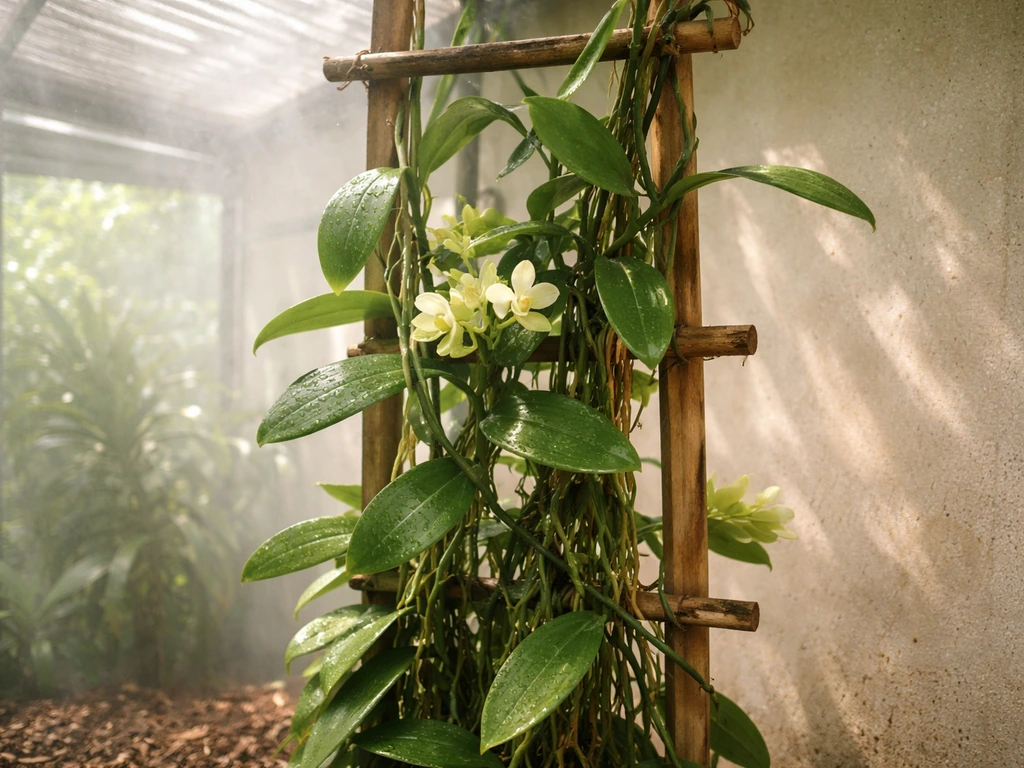
Vanilla (Vanilla planifolia) is a tropical orchid, not a bean in any traditional sense. It's a climbing vine that produces long seed pods, and those pods, after a months-long curing process, are what we call vanilla beans. The vine is native to Mexico and Central America, and it wants a climate that reflects that origin: warm temperatures year-round (ideally 60–95°F), high humidity consistently above 60–80%, bright but indirect or filtered light, a sturdy trellis or climbing structure, and well-draining growing media that stays moist but never waterlogged.
Commercial vanilla production systems, including those described for South Florida by UF/IFAS, use lath-house or greenhouse-style setups with roughly 50% shade to filter intense direct sun. The vine climbs vertical supports, typically wood or concrete posts connected by wire. It does not produce pods from a young plant. You're generally looking at three or more years before a vine matures enough to flower, and then you have to hand-pollinate each flower individually. There are no natural pollinators for Vanilla planifolia outside its native range, so skipping that step means zero pods.
Can you actually grow vanilla in Texas? Feasibility by region
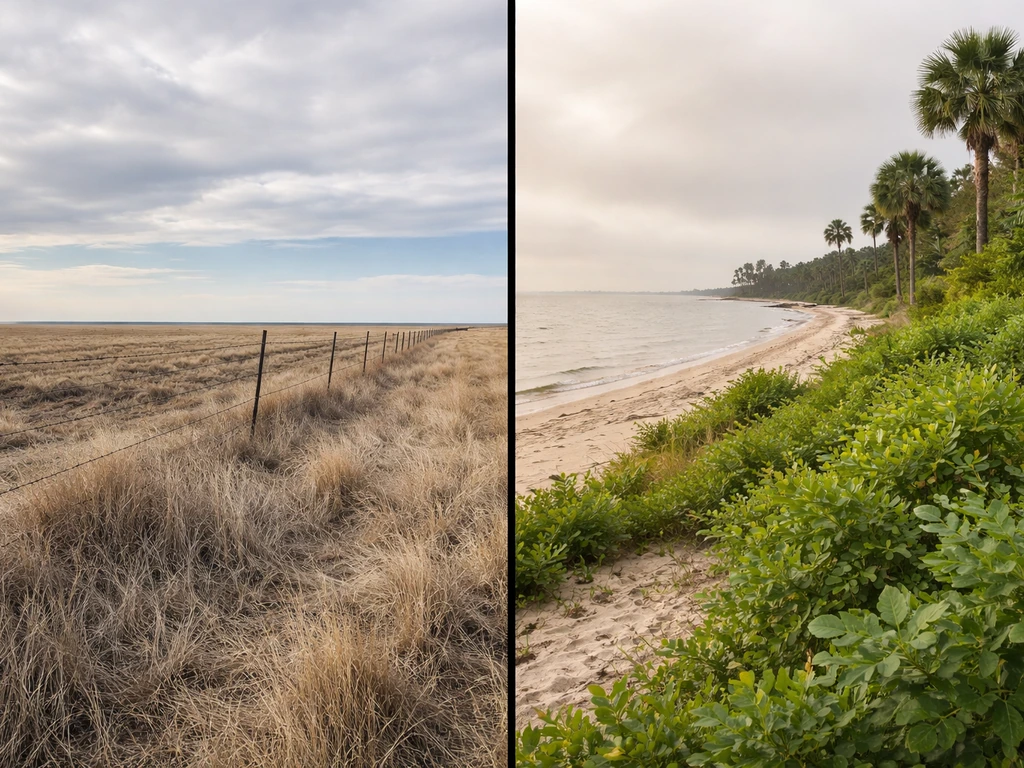
Here's the honest regional breakdown. The warmest and most humid parts of Texas, specifically the Houston area and the lower Gulf Coast, offer the closest thing to suitable outdoor conditions. But even there, winter protection is not optional. For everyone else in the state, controlled-environment growing is the realistic path. The table below gives you a practical sense of how each major region stacks up.
| Texas Region | Winter Freeze Risk | Summer Humidity | Outdoor Feasibility | Recommended Approach |
|---|---|---|---|---|
| Houston / Gulf Coast | Low (a few days/year avg) | Very high (90%+ mornings) | Marginal with protection | Outdoor with winter cover or bring inside |
| San Antonio / South Texas | Low to moderate | Moderate to high | Marginal with protection | Container + patio with winter plan |
| Austin / Central Texas | Moderate (~12 freeze days/year) | Moderate | Not reliable outdoors | Greenhouse or indoor container |
| Dallas-Fort Worth | Moderate to high | Moderate | Not suitable outdoors | Greenhouse or indoor only |
| West Texas / Panhandle | High | Low | Not feasible outdoors | Dedicated greenhouse only |
If you want to compare Texas's situation to another state with similar subtropical promise, the challenges faced in growing vanilla beans in Arizona are actually quite parallel, with heat and aridity being the main limiting factors there rather than freeze risk. Texas and Arizona growers end up solving different problems but often land on the same solution: a protected growing environment.
Step-by-step guide to growing vanilla beans in Texas
Step 1: Source healthy vanilla cuttings
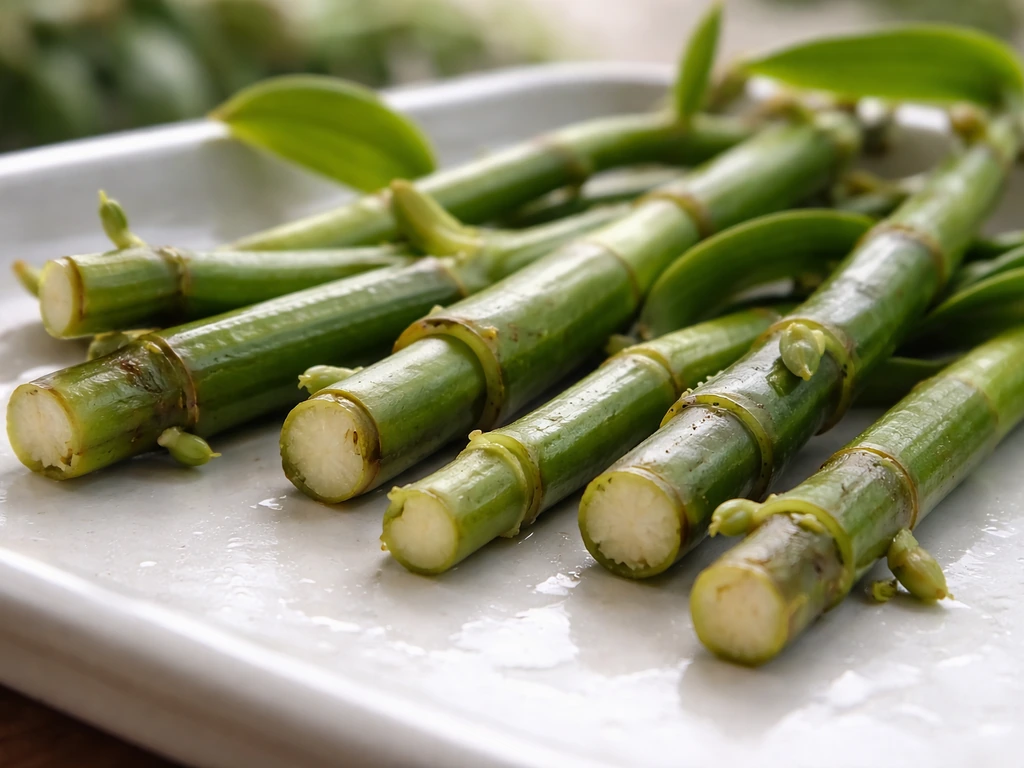
You'll start with a cutting, not seeds. Vanilla seeds require a specific fungal symbiosis to germinate and are not a practical route for home growers. Source cuttings from a reputable orchid nursery or specialty supplier. Look for cuttings that are at least 12–18 inches long with several visible nodes. Each node is a potential root and growth point.
Step 2: Let cuts heal before planting
This step is critical and often skipped. Vanilla cuttings are highly susceptible to rot at the cut end, especially when placed immediately into damp media. Allow the cut end to dry and callous over for at least a few days in a warm, shaded spot with good airflow before planting. Planting too soon into moist substrate is one of the most common ways to lose a cutting to damping-off or rot.
Step 3: Set up your growing media and container
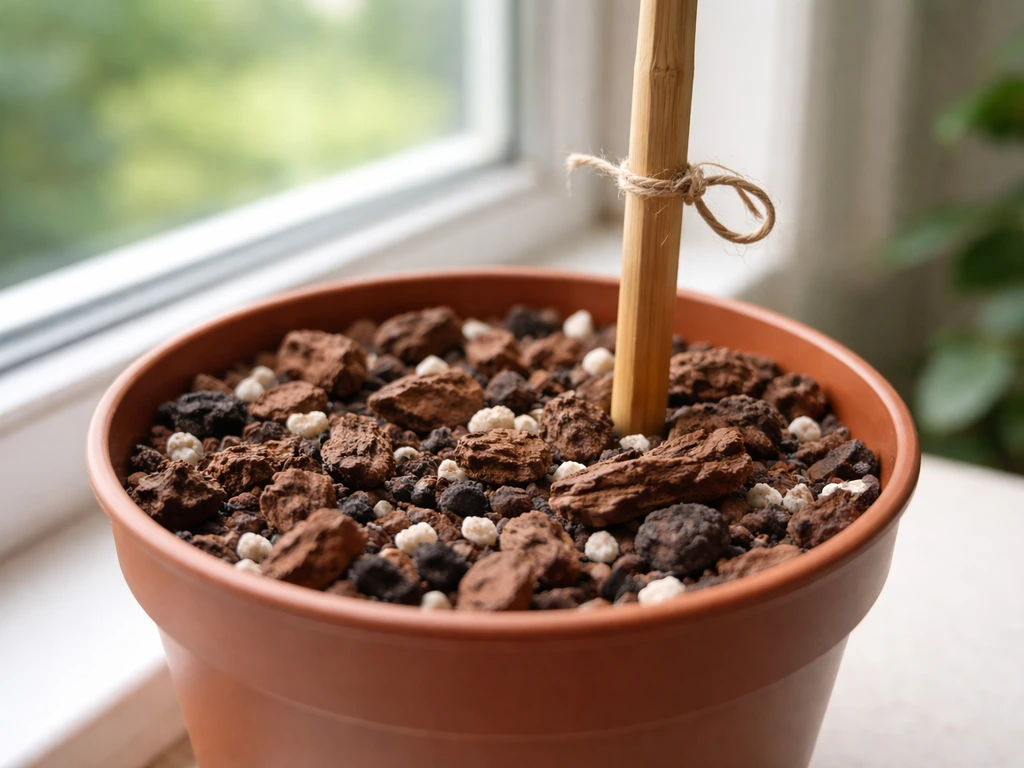
Vanilla is an epiphytic orchid, meaning it grows on structures in nature rather than in dense soil. Use a chunky, well-draining orchid mix, typically a blend of bark, perlite, and coco coir. Avoid standard potting soil, which retains too much moisture and will suffocate the roots. A large container (at least 5–10 gallons) with excellent drainage holes works well for container culture. Once your cutting's wound has healed, plant it upright, covering one node with the substrate while leaving the rest of the vine above the media surface.
Step 4: Build a trellis or support structure
Vanilla is a climber and needs something to grow on. For indoor or greenhouse setups, vertical wooden posts or PVC poles with wire or jute rope strung between them work well. The vine sends out aerial roots that attach to the support. Give it at least 4–6 feet of vertical climbing space initially, more if you can manage it. Outdoors in a frost-protected spot in Houston or South Texas, cedar posts with galvanized wire run between them replicate the commercial trellis style described in South Florida production systems.
Step 5: Get the light and humidity right
Vanilla wants bright, indirect light, roughly equivalent to what you'd get through a sheer curtain or 50% shade cloth. Direct Texas afternoon sun will scorch the leaves and stress the vine. Humidity is the harder problem to solve indoors. Aim for 60–80% relative humidity around the plant. In Houston during summer, outdoor humidity naturally supports this, but indoor environments in air-conditioned spaces can be very dry. A humidifier near the plant, a pebble tray with water, or positioning the plant in a bathroom or laundry room can help. In a greenhouse, you have much more control over both factors.
Step 6: Hand-pollinate the flowers
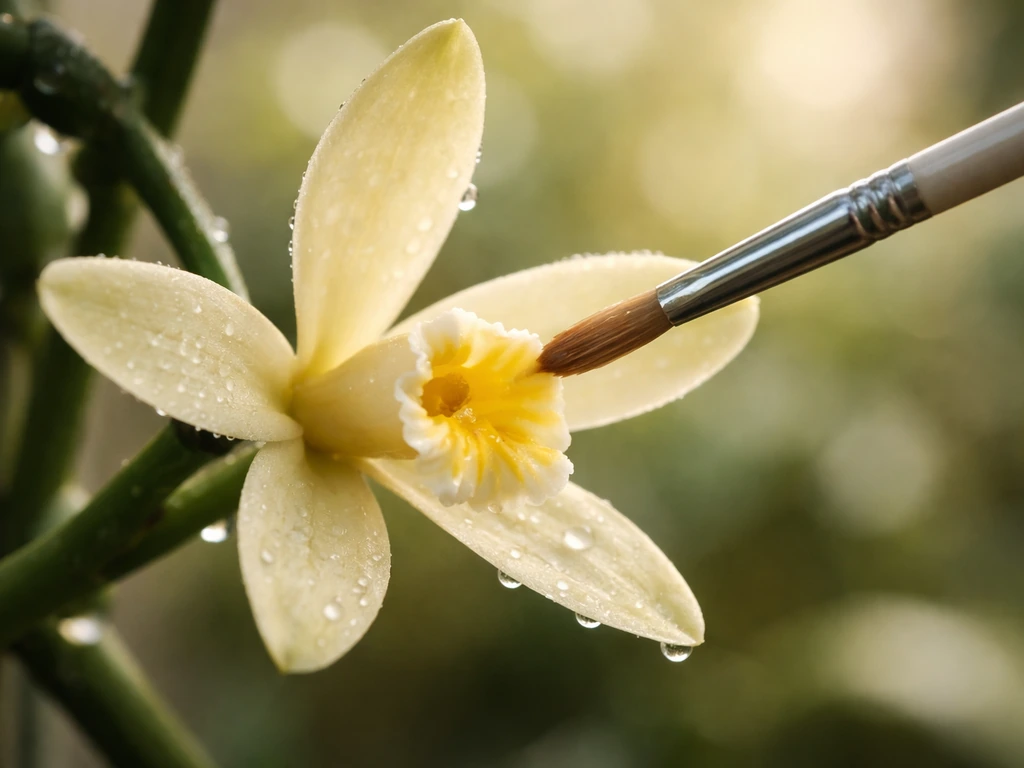
This is the step that determines whether you get pods. Vanilla flowers open for an extremely short window, and you have to act fast. The practical target is early morning, generally between 6:00 and 13:00, with some sources reporting the receptive window as narrow as 4–6 hours. Mark your calendar when buds start forming, and check daily once they're close to opening.
Pollination requires bypassing the rostellum, a small flap of tissue that physically separates the pollen-bearing anther from the stigma and prevents self-pollination in the wild. Using a toothpick or small stick, gently lift or fold back the rostellum and press the anther (pollen mass) against the stigma below it. It's a delicate operation but not difficult once you've done it once. A successful pollination results in the small ovary behind the flower beginning to swell within a week or two. That swelling becomes your vanilla pod.
Ongoing care and Texas-specific troubleshooting
Managing heat and humidity swings
Texas summers are brutal. Temperatures over 100°F in direct sun, combined with intense radiant heat, can stress a vanilla vine even in filtered light. Keep your plant shaded from afternoon sun during the peak summer months (June through August). If you're growing outdoors in the Houston area, a shade structure or lath house helps significantly. Indoor and greenhouse growers should monitor temperatures actively, since a greenhouse without ventilation can easily overheat above 95–100°F, which is outside vanilla's comfort zone.
Watering and root rot prevention
Overwatering is consistently the top killer of vanilla in container culture. The roots need moisture but must have the chance to dry out slightly between waterings. In high-humidity conditions like a Houston summer, you may water far less frequently than you expect. Check the media by feel, water thoroughly when the top inch or two is dry, and never let the pot sit in standing water. Root rot sets in quickly when the medium stays wet for too long, and by the time you notice symptoms above the soil line, the damage is often severe.
Winter protection in Texas
For outdoor plants in Houston or South Texas, have a plan before November. Move container plants indoors or into a greenhouse when temperatures are forecast below 50°F. For in-ground or fixed plants, frost cloth rated for several degrees of protection can help with mild cold snaps, but it won't protect against a hard freeze. Given how unpredictable Texas winters have become, a moveable container setup is a much safer bet than planting vanilla directly in the ground.
Pests and diseases to watch for
Scale and mealybugs are the most common orchid pests you'll encounter in Texas, especially in warm, humid environments. Mealybugs produce a sticky honeydew residue that leads to sooty mold growth and can even carry viruses between plants. Inspect the undersides of leaves and along the vine nodes regularly. If you catch a small infestation early, physical removal with a cotton swab dipped in isopropyl alcohol is effective and avoids chemical exposure on a food-producing plant. Larger infestations may require a horticultural oil or insecticidal soap treatment.
Harvesting and curing your vanilla beans
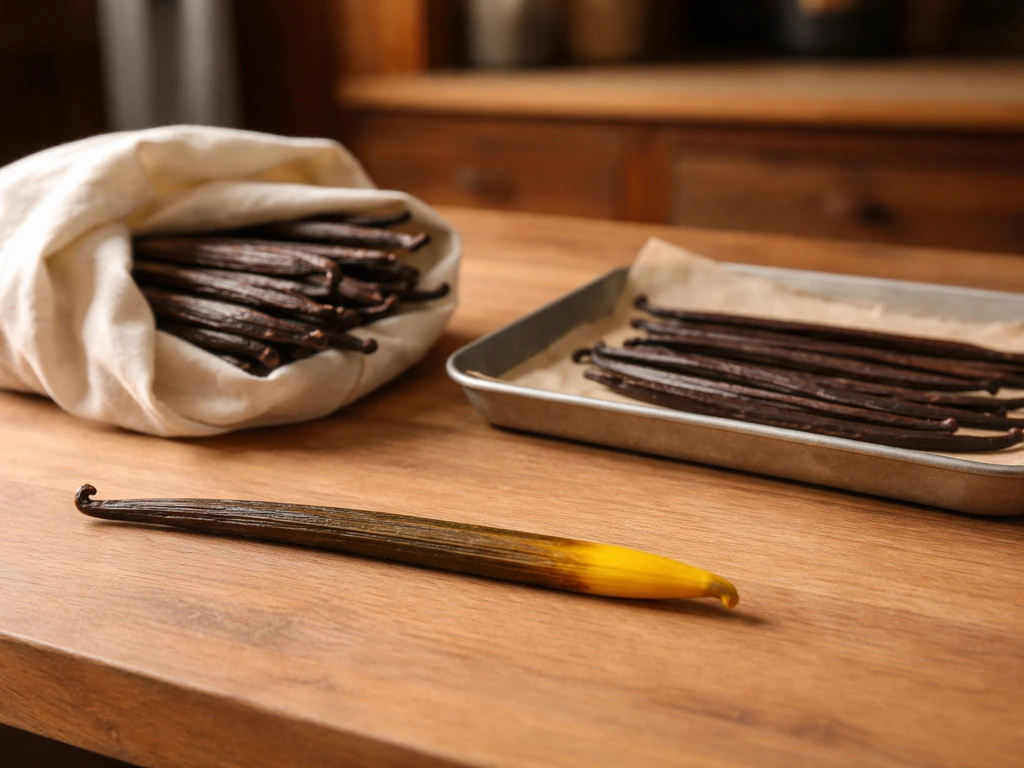
After successful hand-pollination, pods take roughly 9 months to mature on the vine. They're ready to harvest when the tip of the pod begins to turn yellow. At this point the pod still smells almost nothing like vanilla. The characteristic flavor and aroma develop entirely during the curing process, which is lengthy but manageable at home.
Traditional curing happens in four stages: killing (blanching), sweating, drying, and conditioning. The killing step involves a brief heat treatment, typically immersing the pods in water at around 60–63°C for a few minutes, which stops enzymatic activity that would cause the pods to simply rot rather than ferment. After blanching, the pods are wrapped tightly in cloth or wool blankets and placed in an insulated box to sweat, a fermentation stage that is repeated daily for one to two weeks. This sweat cycle is where vanillin development begins. After sweating, pods are dried slowly in shade over several weeks, then conditioned (stored in a sealed container) for additional months. The full process from harvest to finished bean typically takes three to six months.
The curing process is non-negotiable. A green vanilla pod picked off the vine and used directly has essentially no vanilla flavor. If you skip or shortcut curing, you won't have a usable product regardless of how well you grew the vine.
What to do if outdoor vanilla isn't practical for your part of Texas
If you're in Dallas, Amarillo, or anywhere with reliable winter cold, don't try to push vanilla outdoors. The realistic paths forward are a dedicated greenhouse or a well-managed indoor container setup. A greenhouse gives you the most control. You can maintain the 60–95°F temperature range, keep humidity elevated with misters or an evaporative humidifier, and use 50% shade cloth on the glazing to filter the light. The vine still requires hand-pollination regardless of environment, so a greenhouse doesn't eliminate that labor, it just removes the climate obstacle.
For a deeper look at how controlled-environment vanilla growing works across different setups, the guide on growing vanilla beans in a greenhouse covers the infrastructure and management details that apply directly to Texas growers building a protected setup.
If you want a comparison point from a state with a warmer, more vanilla-friendly baseline, growing vanilla beans in California faces its own regional challenges but coastal Southern California offers conditions that are in some ways easier to manage than Texas winters. And for a completely different climate context, the approach used for growing vanilla beans in Australia in tropical Queensland is probably the closest analog to what vanilla production looks like when conditions are actually well-matched, and it's a useful reference for what you're trying to replicate in a Texas greenhouse.
Finally, if after reading all of this you decide the multi-year investment isn't worth it right now, that's a completely reasonable conclusion. Buying high-quality cured vanilla beans from a reputable supplier is always an option, and the curing process is genuinely what makes vanilla valuable. Without mature pods and a proper cure cycle, there's nothing to work with. Growing your own vanilla in Texas is possible, but it's a long-term project that rewards patience, infrastructure, and attention to detail. Go in with that expectation and you'll be ahead of most people who try it.
FAQ
If I start with a cutting, how long will it take in Texas before I can expect any flowers and pods?
In Texas growing conditions, plan on at least 3 to 4 years after rooting before the vine is mature enough to flower, sometimes longer if light or humidity runs low. Pod formation also depends on getting repeated seasonal stability, so a greenhouse usually leads to more consistent flowering than moving a plant in and out of a home.
Can I grow vanilla outdoors in Texas year-round if I cover the plant with frost cloth?
For mild, non-hard-freeze nights, frost cloth can help containers retain a bit more warmth, but it will not reliably prevent damage during a true freeze event. For this crop, treat freezes as “go-no-go,” and use moveable containers plus a pre-planned move indoors when forecasts drop toward the low-40s°F.
What’s the biggest container mistake that causes vanilla cuttings to fail?
Putting the fresh cut end into wet, moisture-retentive media before it callouses. The rot risk is highest in the first couple weeks. Let the cut end dry and air-cure for several days, then plant into a chunky orchid mix, and water conservatively until you see new growth.
How do I know whether my humidity is high enough when my home runs air-conditioned?
Aim for stable 60 to 80% relative humidity around the plant, not just the room average. A cheap hygrometer placed near the pot helps, because the air above and near the foliage can be much drier than you expect. If humidity drops below your target during nights, flowers and growth often stall even if daytime looks fine.
Does vanilla need direct sun at any point in the year in Texas?
No, the safe default is filtered or bright indirect light. Direct Texas afternoon sun can scorch leaves, especially in indoor windows where glass amplifies heat. If you see pale, bleached patches or crispy leaf edges, reduce light immediately and increase shading.
How can I tell when I should hand-pollinate, and what if I miss the opening window?
Watch buds closely once they form, then pollinate during the short receptive period, typically early morning. If you miss one day, that flower will not reliably convert into a pod, so you may need to wait for the next flowering set. Mark multiple bud clusters on your calendar so you do not end up pollinating too late.
Will vanilla still produce pods if I pollinate one flower on the vine or do they need to all be pollinated?
Each flower is an individual opportunity. Pollinating only some flowers can still yield pods, as long as the pollinated flowers successfully swell. There is no requirement to pollinate every flower, but the overall harvest will be limited by how many flowers you manage within each short blooming window.
My vanilla vine isn’t thriving, but the leaves look green. What problem should I check first?
Check root health and watering frequency before assuming it is a nutrient issue. Overwatering is a top killer in container setups, and early root damage may not show until later. Use a feel test (top inch to two inches dry) and ensure the pot drains completely, never leaving it in a saucer of water.
Do I need fertilizer for vanilla in Texas, and what’s a safe approach?
Fertilize lightly and consistently once active growth starts, using an orchid fertilizer at reduced strength. If you fertilize while the vine is stressed from cold, low humidity, or inconsistent watering, you can worsen root stress. A practical approach is to feed only during warm, stable growth periods and flush with plain water occasionally to prevent salt buildup.
What pests are most likely in a Houston-style humid environment, and how do I catch them early?
Mealybugs and scale are the most common nuisances, and they often hide along nodes and leaf undersides. Early detection is easier if you inspect weekly and use a cotton swab routine on small spots before populations explode. Sticky residue or sooty mold usually means the infestation is already active, so act as soon as you see waxy specks.
After harvest, how can I tell if I’m curing correctly without specialized equipment?
You should see a clear aroma progression and a change in pod color from green toward darker, more aromatic tones as curing progresses. If pods stay bland and remain overly soft or moldy, the process is not progressing correctly, often due to skipped blanching or poor sweat conditions. Follow the full sequence (kill, sweat, dry, condition) rather than shortening steps for faster results.
Next Articles
Can You Grow Brussel Sprouts in Michigan? How To
Grow Brussels sprouts in Michigan with a step-by-step plan on timing, varieties, soil, pests, and harvest protection.
Can You Grow Okra in Michigan? Planting Plan and Tips
Yes, grow okra in Michigan with heat tricks: timing, starting indoors, warm microclimates, soil prep, and pest care.
Can You Grow Asparagus in Texas? Requirements and Care
Learn if asparagus grows in Texas and get a step-by-step care plan by region, planting, soil, watering, and harvest timi