
Yes, you can grow Brussels sprouts in Michigan, but it takes careful timing. Brussels sprouts are a cool-season crop that needs a long growing window, and Michigan's hot summers followed by short cool falls make that tricky. The key is to start seeds early indoors (late April to early May), get transplants in the ground by late June, and let the fall frosts do the flavor work. Get that timing right and you will pull firm, sweet sprouts right through October and into November.
Can You Grow Brussel Sprouts in Michigan? How To
Marcus Holloway
20 May 2026
Michigan feasibility and ideal growing window
MSU Extension is blunt about this: most areas of Michigan are not ideally suited to Brussels sprout production because summers get too hot and the cool fall season is too short for efficient production. That is worth taking seriously, especially if you are thinking about growing them commercially. For a home gardener though, "not ideal" is not "impossible." It just means you need to plan around the calendar rather than plant whenever you feel like it.
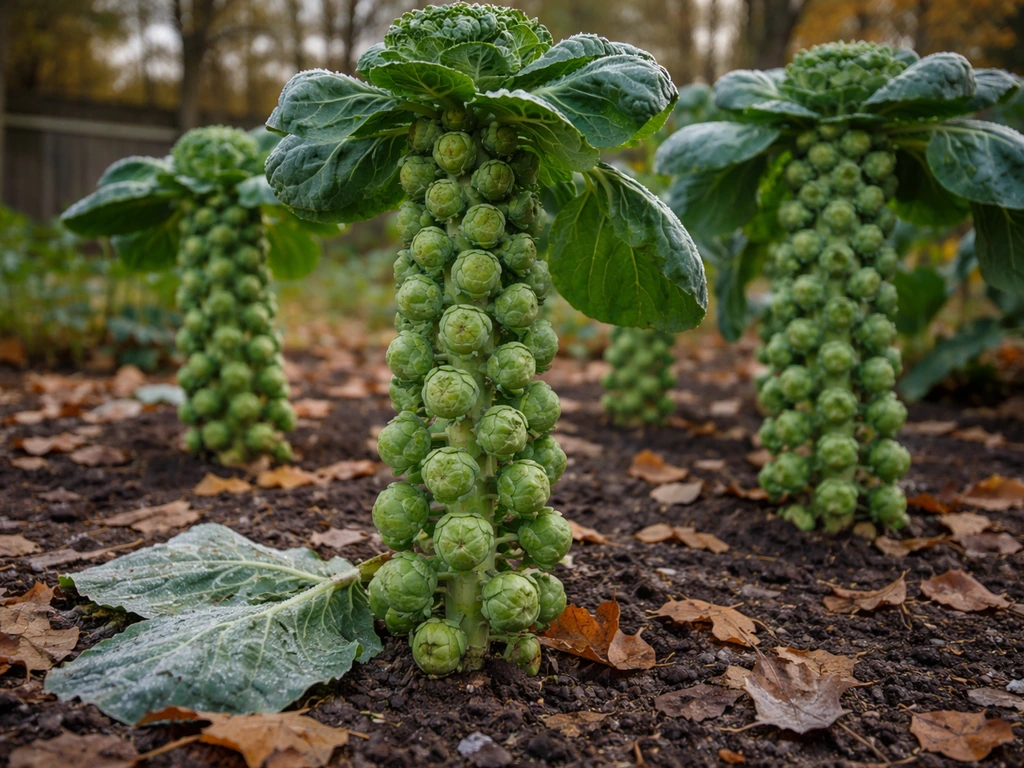
Brussels sprouts need around 80 to 110 days from transplant to harvest depending on the variety. They also need those days to end in cool weather, not start in it. That is because the best flavor and firmest sprout formation happens in cold fall temperatures, particularly after the first fall frosts. MSU Extension confirms that frost-kissed sprouts are noticeably sweeter and milder. So your target is a late-September through November harvest, which means counting backward from your first frost date to figure out when transplants need to go in.
First frost timing varies across Michigan. At the Grand Rapids station, the 50th-percentile first freezing date is October 6, with some years seeing frost as early as September 22. In the Upper Peninsula you are looking at earlier first freezes, while far southwest Michigan near Lake Michigan gets a slight buffer. Use your local first frost date as your anchor and count back 90 to 110 days to find your transplant window. For most of Lower Michigan, that puts transplants in the ground between late June and mid-July.
Choosing varieties suited to Michigan's season length
Variety selection is genuinely important here. With Michigan's compressed cool-season window, you want shorter-days-to-maturity varieties that can finish before a killing freeze wipes out unhardened sprouts.
| Variety | Days to Maturity (from transplant) | Notes for Michigan |
|---|---|---|
| Oliver | 90 days | MSU Extension recommended; best choice if you are starting late or in a shorter-season region |
| Jade Cross | 90 days | Reliable hybrid, widely available, good cold tolerance |
| Churchill | 90 days | Early maturing, performs well in northern gardens |
| Long Island Improved | 100-110 days | Heirloom option, better suited to southern Lower Michigan with a longer fall |
| Diablo | 110 days | Excellent flavor, but push it only if your fall season consistently runs past mid-October |
MSU Extension specifically calls out Oliver as a 90-day option, which makes it the safest pick for most Michigan growers. If you are in the Upper Peninsula or northern Lower Michigan, stick with 90-day or shorter varieties without exception. Southern Michigan gardeners near Indiana or Lake Michigan can experiment with 100-day types, but keep a 90-day variety as a backup.
Site prep: soil, sun, spacing, and drainage
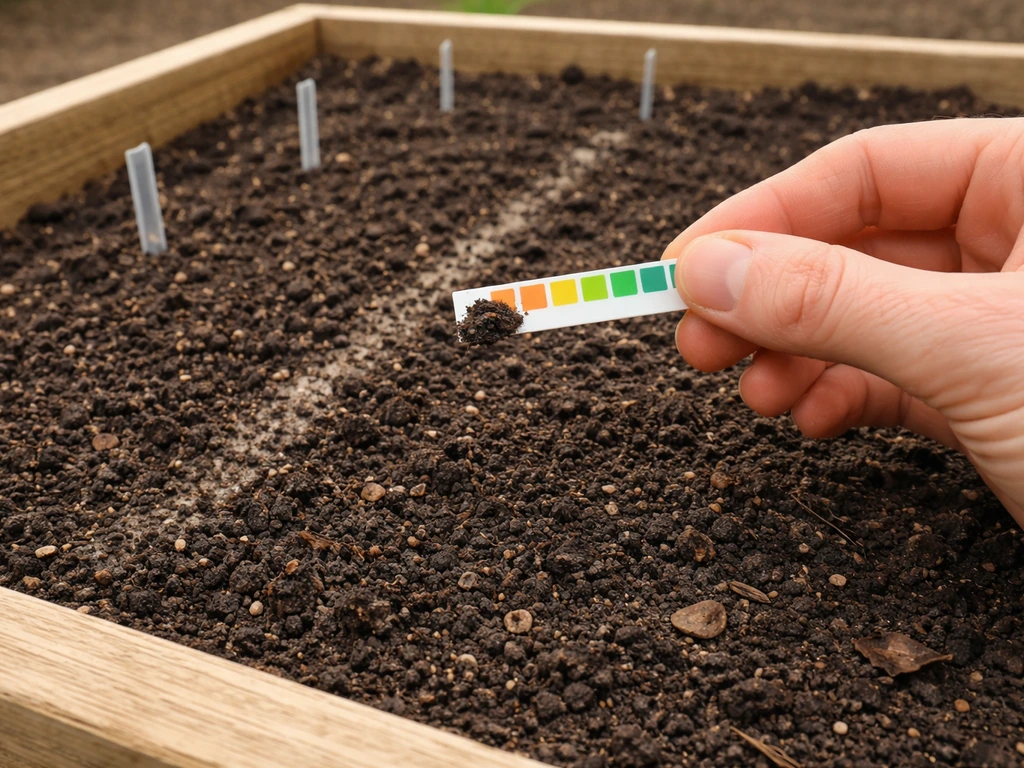
Brussels sprouts are heavy feeders that want rich, moisture-retentive soil with good drainage. They also want full sun, which in Michigan means at least 6 to 8 hours of direct light daily. A spot that gets morning sun is better than one that only gets afternoon sun during hot Michigan July weather, since morning sun dries leaf surfaces and reduces disease pressure.
- Soil pH: aim for 6.5 to 7.0. This range also helps suppress clubroot, a common brassica disease.
- Amend beds with 2 to 3 inches of compost worked in 8 to 10 inches deep before transplanting.
- Drainage matters: Brussels sprouts hate wet feet. Raised beds or slightly mounded rows help in heavier Michigan clay soils.
- Spacing: plant transplants 18 to 24 inches apart in rows 30 to 36 inches apart. These plants get large. Crowding them kills airflow and invites disease.
- Avoid planting where other brassicas (cabbage, broccoli, kale) grew in the last two to three years to reduce soilborne disease carryover.
Michigan soils vary widely, from sandy loams in the west to heavier clays further inland. Sandy soils dry out fast, which is a problem for a crop that needs consistent moisture all season. If your soil drains very quickly, work in extra organic matter and consider mulching heavily right after transplanting.
Seed starting vs buying transplants and transplant timing
You have two options: start your own seeds indoors or buy transplants from a nursery. Both work, but starting your own seeds gives you better variety selection and more control over timing. Buying transplants is fine if you can find a good variety and the timing lines up.
Starting from seed indoors
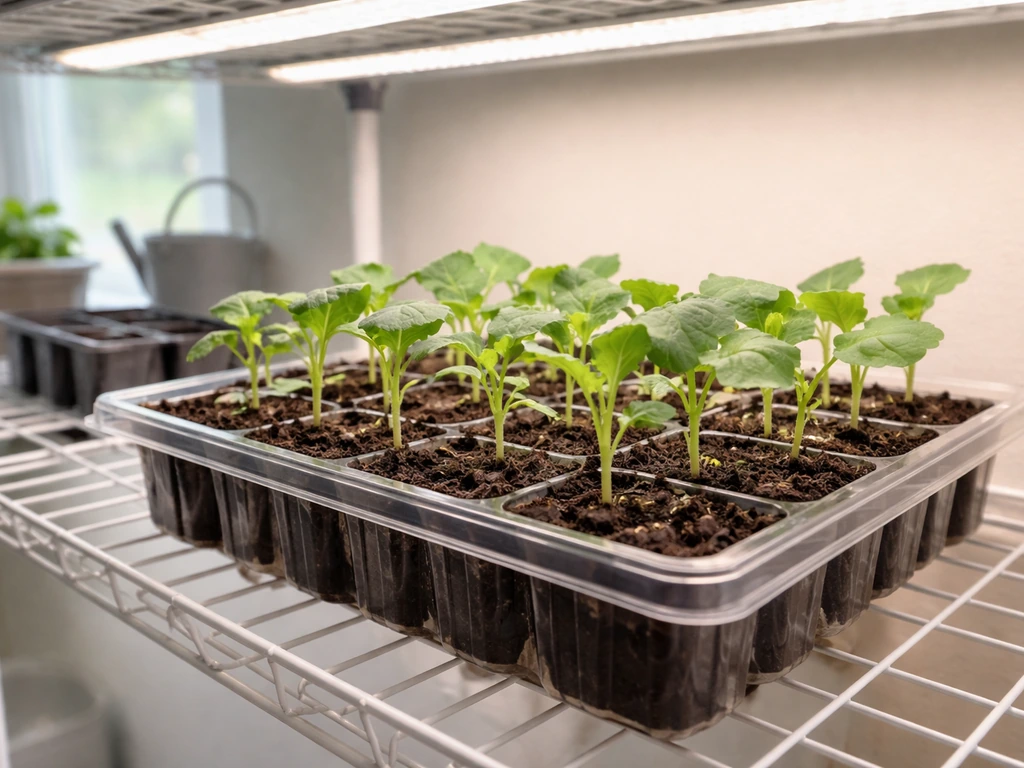
For a late June to early July transplant date, start seeds indoors 4 to 6 weeks before you plan to put them in the ground. That puts seed-starting in mid-April to mid-May for most of Lower Michigan. Sow seeds about a quarter inch deep in small cells or pots, keep soil temperature around 70 to 75 degrees Fahrenheit for germination (seeds typically sprout in 5 to 10 days), and then grow seedlings under bright light or a grow light to keep them stocky and short. Leggy seedlings transplant poorly. Harden off transplants over 7 to 10 days before moving them outside.
Buying transplants
If you are buying starts from a garden center, look for transplants in late May or early June and hold them in a cool spot until your transplant window opens in late June. Avoid transplants that are already flowering or very root-bound in their cells. Ideal transplants are 4 to 6 inches tall with a sturdy stem and dark green color.
Transplant timing
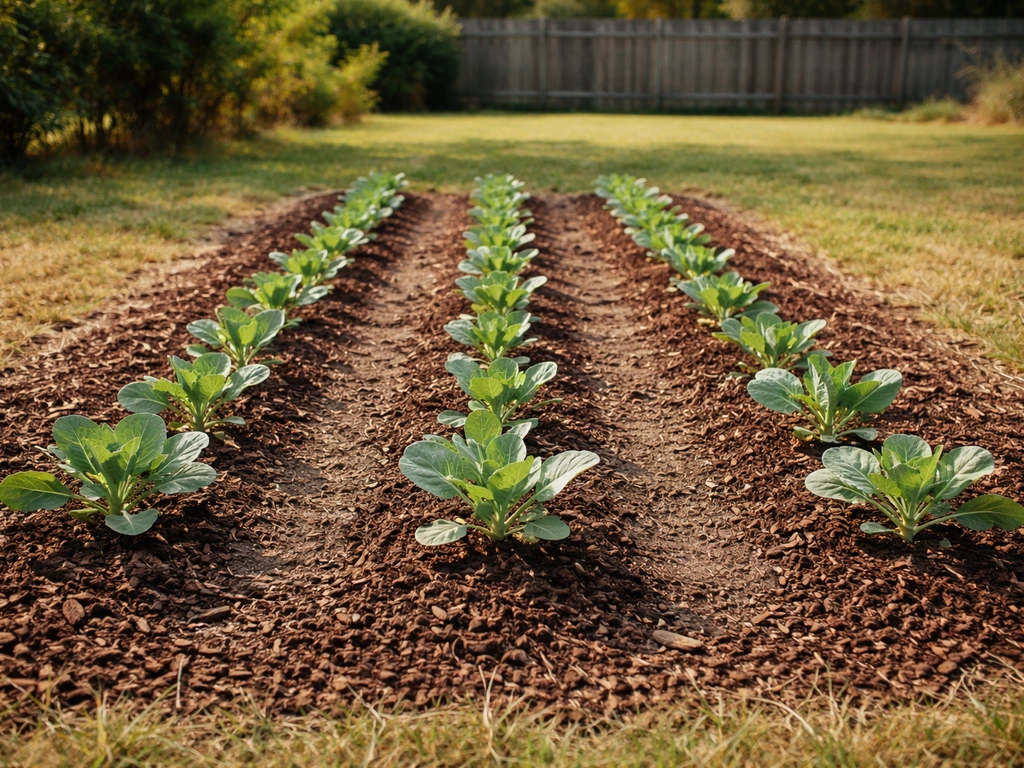
For most of Michigan, transplant Brussels sprouts into the garden from late June through mid-July. Transplanting earlier than mid-June means the plants spend too much time in summer heat before fall arrives, which stresses them and can disrupt sprout set. Transplanting after mid-July with a 90-day variety gets tight, especially in northern Michigan. On transplant day, water the bed well, set plants slightly deeper than they were in their containers, and water in with a dilute fertilizer solution to reduce transplant shock.
Care basics: watering, fertilizing, and weed control
Brussels sprouts need steady moisture throughout the season, roughly 1 to 1.5 inches of water per week from rain or irrigation. Inconsistent watering (drought followed by heavy rain) causes loose, leafy sprouts instead of tight, firm ones. Drip irrigation or a soaker hose laid at planting is worth the effort. Mulching with 2 to 3 inches of straw or shredded leaves right after transplanting holds moisture, keeps roots cool during hot July and August weather, and smothers weeds.
Fertilizing matters because these are hungry plants. At transplanting, work a balanced granular fertilizer (like a 10-10-10) into the top few inches of soil or use the compost amendment described above. About 4 weeks after transplanting, side-dress with a nitrogen-rich fertilizer such as blood meal or a granular vegetable fertilizer to push vegetative growth. By late August, ease off nitrogen so the plant shifts energy into sprout development rather than leaf production. If you overfeed with nitrogen late in the season, you will get big leafy plants with loose, poor sprouts.
Weed control is mostly a late spring and early summer job. Once plants are established and large (by late August), they shade out most competition on their own. Focus weeding efforts in the first 4 to 6 weeks after transplanting, and the thick mulch layer will do most of the work for you.
Pests, diseases, and problem-solving in cool-season weather
Brassica crops attract a predictable set of pests and diseases, and Brussels sprouts are no exception. Michigan's warm summer transplant period is prime time for some of the worst offenders.
Common pests to watch for
- Cabbage worms and cabbage loopers: these are the larvae of white butterflies and moths that lay eggs on brassica leaves. Hand-pick egg clusters and caterpillars, or spray with Bacillus thuringiensis (Bt), which is safe and very effective on larvae.
- Aphids: colonies of gray-green aphids can cluster on the undersides of leaves and inside forming sprouts. Knock them off with a strong water spray or treat with insecticidal soap.
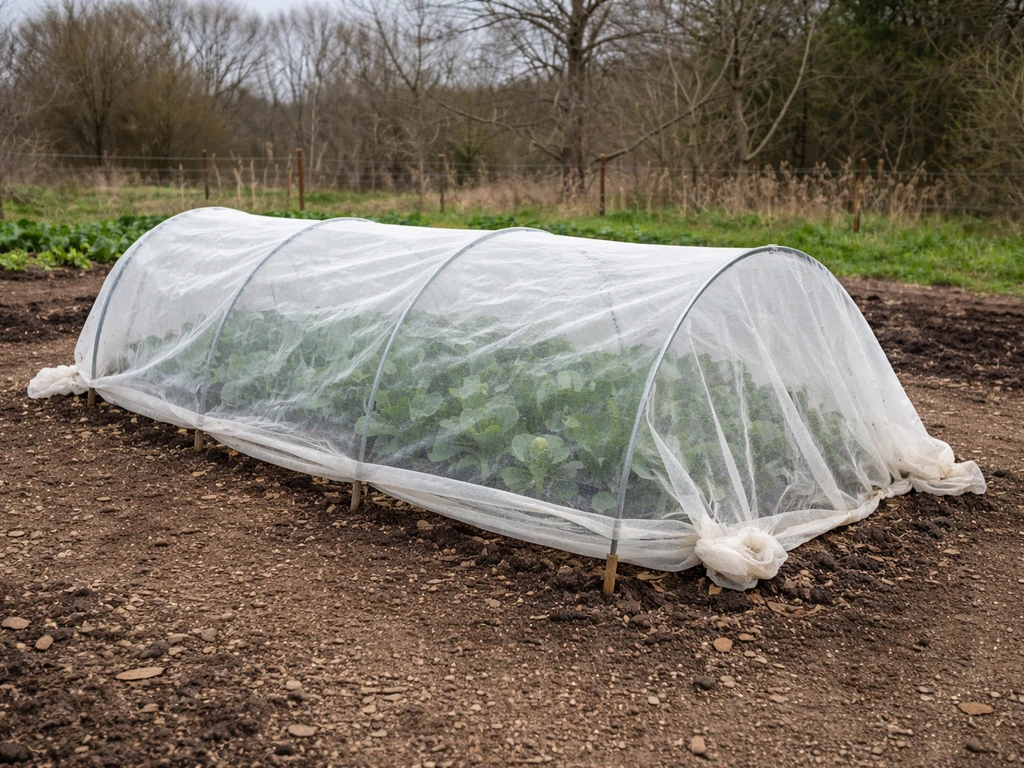
- Cabbage root maggot: larvae attack roots, causing plants to wilt and fail. Use row cover from day one to prevent egg-laying by the adult fly.
- Flea beetles: tiny jumping beetles leave small holes in young leaves. Row cover at transplanting prevents most damage; diatomaceous earth can help too.
Common diseases
- Clubroot: a soilborne disease causing swollen, distorted roots and wilting. Prevent by maintaining soil pH above 6.8 and rotating brassicas. There is no cure once it is in the soil.
- Downy mildew: favored by wet, cool conditions (classic Michigan fall weather). Improve air circulation with proper spacing, avoid overhead watering in the evening, and remove affected leaves promptly.
- Black rot: bacterial disease spread by water splash and infected seed. Buy disease-free seed, avoid overhead irrigation, and remove infected plants immediately.
- Alternaria leaf spot: fungal spots on older leaves, more cosmetic than deadly. Good air circulation and avoiding prolonged leaf wetness help prevent it.
Row cover is genuinely useful in Michigan for Brussels sprouts, both early in the season to keep pests off young transplants and later in fall to extend the harvest window. Just remember to remove or vent it on warm days to prevent overheating, and you do not need it once plants are large and established unless pest pressure is high.
Harvest timing and extending the season with protection
Sprouts are ready to harvest when they are firm and about 1 to 2 inches in diameter, per MSU Extension guidelines. Harvest from the bottom of the stalk upward, since lower sprouts mature first. Twist or cut each sprout off cleanly. You can remove the lower leaves as you harvest to help upper sprouts develop. Do not wait for every sprout on a stalk to reach perfect size at once because that is not how they work. Harvest progressively over several weeks.
Light frosts actually improve flavor. Once temperatures dip into the upper 20s Fahrenheit at night, the plants convert starches to sugars and the sprouts taste noticeably sweeter. This is the whole reason targeting a fall harvest in Michigan is the right strategy. You want those October frosts. A hard freeze below about 20 degrees Fahrenheit for an extended period will damage plants, but a few frosts in the 25 to 30 degree range are genuinely beneficial.
To extend the harvest into November or even early December in southern Lower Michigan, cover plants with a floating row cover or frost blanket when temperatures threaten to drop below 20 degrees Fahrenheit. This can buy you several more weeks of harvesting. Alternatively, pull the whole stalk out of the ground before a killing freeze and hang it upside down in a cool garage or basement. Sprouts will continue to firm up and keep for a few more weeks on the stalk stored this way.
Your Michigan Brussels sprouts action plan
Here is how to put all of this together for the current season. If you are reading this in May 2026, you are right on time.
- Now through late May: Start seeds indoors if you have not already. Use a 90-day variety like Oliver or Jade Cross. Aim for 4 to 6 weeks of indoor growing time before transplanting.
- Late June to mid-July: Transplant hardened-off seedlings into prepared beds. Full sun, well-drained, compost-amended soil at 18 to 24 inches spacing. Water in well.
- July through August: Water consistently (1 to 1.5 inches per week), side-dress with nitrogen around 4 weeks post-transplant, mulch heavily, and monitor for cabbage worms and aphids.
- Late August: Stop heavy nitrogen feeding. Let the plant shift into sprout production mode.
- September through October: Begin harvesting bottom sprouts as they firm up to 1 to 2 inches. Enjoy the flavor improvement after the first frosts.
- Late October through November: Use row cover or frost blankets to extend harvest during hard freeze events. Pull stalks before a sustained freeze below 20 degrees and store in a cool spot.
If you have missed the indoor seed-starting window, check local garden centers for transplants in late May or early June and target the fastest-maturing varieties available. If transplants are not available until mid-July, go with Oliver at 90 days and accept that you may harvest on the tighter end of the season window. It is still very doable in most of Lower Michigan. Growing Brussels sprouts in Michigan is a planning exercise more than a gardening challenge, and once you nail the timing, it is a surprisingly satisfying crop to grow. If you are wondering can you grow okra in Washington state, start by comparing your local warm-season length and frost dates, since okra needs reliable heat to set pods. You can grow lentils in Michigan as well, but you will need to match planting to your cool-season temperatures and choose shorter-maturity varieties. Okra is a warm-season crop, so it needs heat and a long frost-free window, which is why timing is crucial in Michigan can you grow okra in Michigan. If you are wondering can you grow okra in Colorado, the key is understanding your heat and frost-free timeline.
FAQ
What should I do if my first frost date is earlier than expected this year?
Recalculate your transplant window using your local 50th-percentile first freezing date, then bias toward the shortest maturing variety you can find (90 days or less for northern Michigan). If you are already past the optimal transplant range, row cover for pest control and an early harvest plan becomes more important than trying to “make it up” with extra nitrogen, which can delay sprout set.
Can I direct seed brussel sprouts in Michigan instead of starting indoors?
Usually no, because brussels sprouts need a long season and consistent cool temperatures for sprout formation. Direct sowing in Michigan typically won’t finish before the fall window closes, unless you have a protected setup and a very early, predictable cool fall.
How do I prevent leggy seedlings when starting indoors?
Start seeds on time, then immediately move seedlings under very bright light (or a strong grow light) and keep them cool enough to avoid stretching. Seedlings that become tall and pale often transplant poorly and may set sprouts later, reducing your chance of hitting a late-September to November harvest.
Is there a sign that I transplanted too early or too late?
Too early often shows stress from prolonged summer heat, with slower sprout development later. Too late tends to produce smaller plants that never fully size up before killing freezes, even if leaves look healthy. If plants look delayed by late August, prioritize progressive harvesting from the lowest sprouts rather than expecting a full, uniform head on every stalk.
How much nitrogen is too much for brussels sprouts in Michigan?
If you side-dress heavily and keep feeding late into the season, you can end up with vigorous leafy growth and looser sprouts. A practical approach is to apply the nitrogen push around mid-season, then stop adding nitrogen by late August so the plant can shift energy toward sprout formation.
What’s the best watering method if my soil dries out quickly?
Use drip or a soaker hose set up at planting, then mulch right after transplanting to slow evaporation. If you only water by hand when plants wilt, the drought-then-rain pattern can cause loose, leafy sprouts. Aim for steady, predictable moisture rather than large, infrequent soakings.
Should I remove leaves to help sprouts size up?
You can remove lower leaves during harvest as you go, because it can improve access and reduce clutter around developing upper sprouts. However, avoid heavy leaf stripping early in the season, since leaves are needed for growth and nutrient production before sprout set.
Do I need row cover the entire season?
No. Row cover is most useful for protecting young transplants from pests and for extending the harvest during cool spells. Once plants are large and established, keep it off during warm daytime conditions to prevent overheating, and remove it if pest pressure is low.
How do I know when a sprout is “ready,” beyond just diameter?
Firmness matters. If sprouts feel soft or loose, they are usually not converting starch to the sweeter, tighter texture you want yet. Harvest the bottom first and check repeatedly over a few weeks, since sprout maturity happens up the stalk over time.
What’s the safest way to extend harvest into November without damaging plants?
If you use frost blankets or floating row cover, vent on warmer days and remove it when temperatures moderate to avoid heat buildup. For colder stretches near or below freezing, consider pulling stalks before a killing freeze and storing them upside down in a cool garage or basement for continued sprout firming.
Are pests and diseases worse in certain parts of Michigan?
They can be, especially because the transplant window overlaps warm summer weather across the state. The biggest difference you will notice is how early you can establish plants before pest populations peak, which is why timing, good mulch, and early protection tend to matter more than treating later with ad hoc fixes.
Next Articles
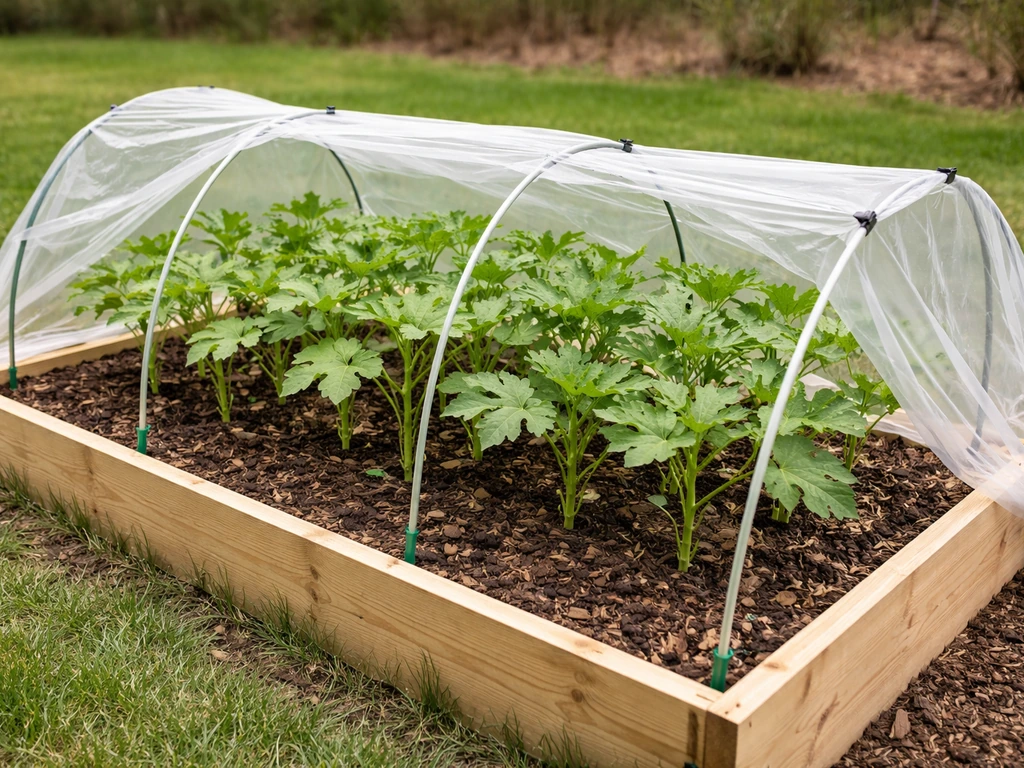
Can You Grow Okra in Michigan? Planting Plan and Tips
Yes, grow okra in Michigan with heat tricks: timing, starting indoors, warm microclimates, soil prep, and pest care.
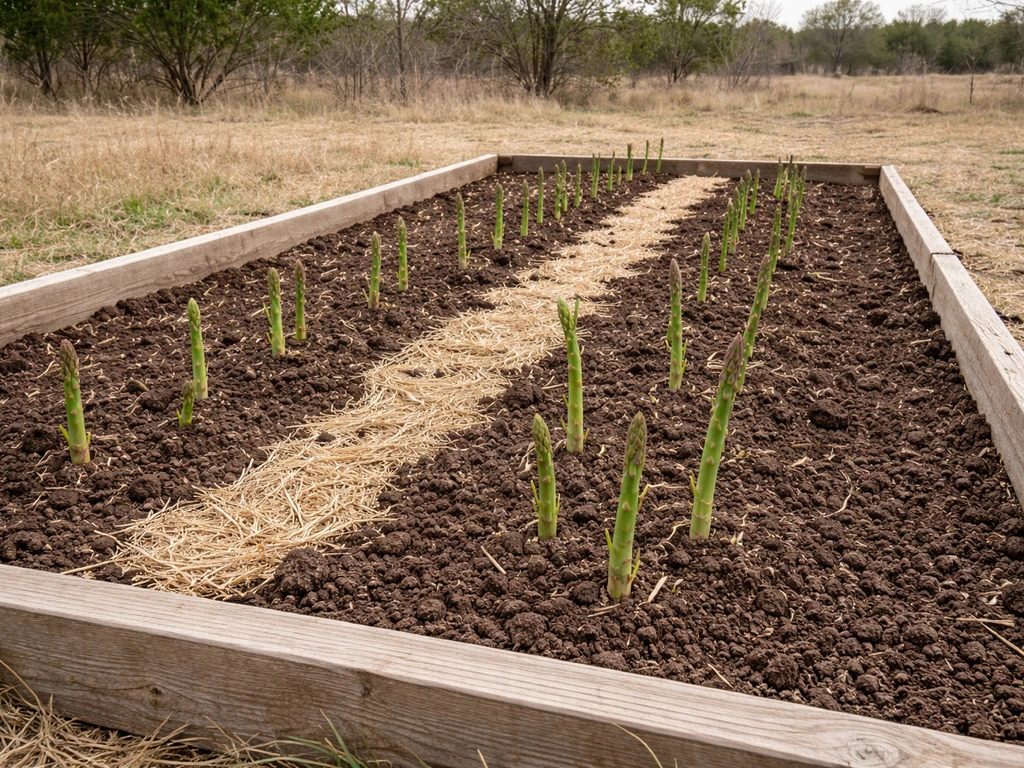
Can You Grow Asparagus in Texas? Requirements and Care
Learn if asparagus grows in Texas and get a step-by-step care plan by region, planting, soil, watering, and harvest timi
Can You Grow Vanilla in the US? Requirements and Steps
Can you grow vanilla in the US? Learn US requirements, setups, and hand pollination steps for beans, often years later.