
Yes, you can grow rhubarb in Arizona, but it depends heavily on where in the state you live and how willing you are to work around the heat. In cooler, high-elevation areas like Prescott, Flagstaff, or the White Mountains, rhubarb can establish and produce reasonably well. In the low desert, including Phoenix, Tucson, and Yuma, it becomes a genuine challenge that requires serious heat mitigation and patience.
Can You Grow Rhubarb in Arizona? Guide by Region
Marcus Holloway
22 Apr 2026
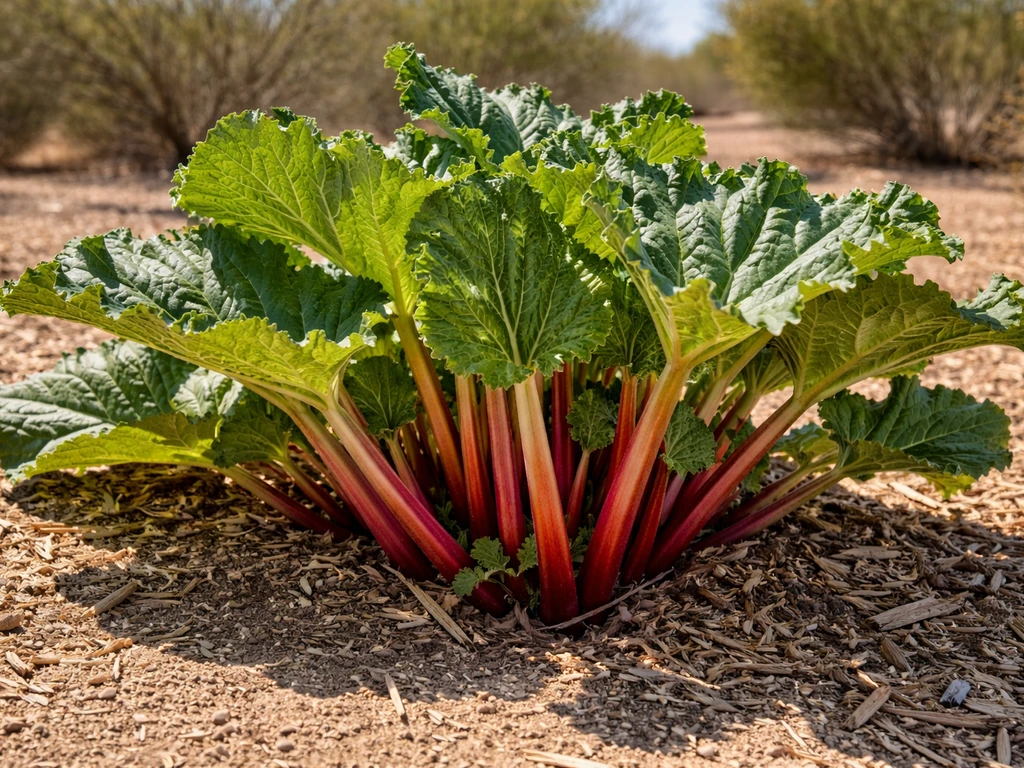
The University of Arizona Cooperative Extension describes rhubarb in Arizona as a plant that requires a 'challenge' mindset, largely because conditions here are so different from the Midwestern and Northeastern regions where rhubarb grows relatively trouble free. That's not a reason to skip it. It just means you need to go in with realistic expectations and the right setup.
Feasibility by Region: Where in Arizona Rhubarb Actually Works
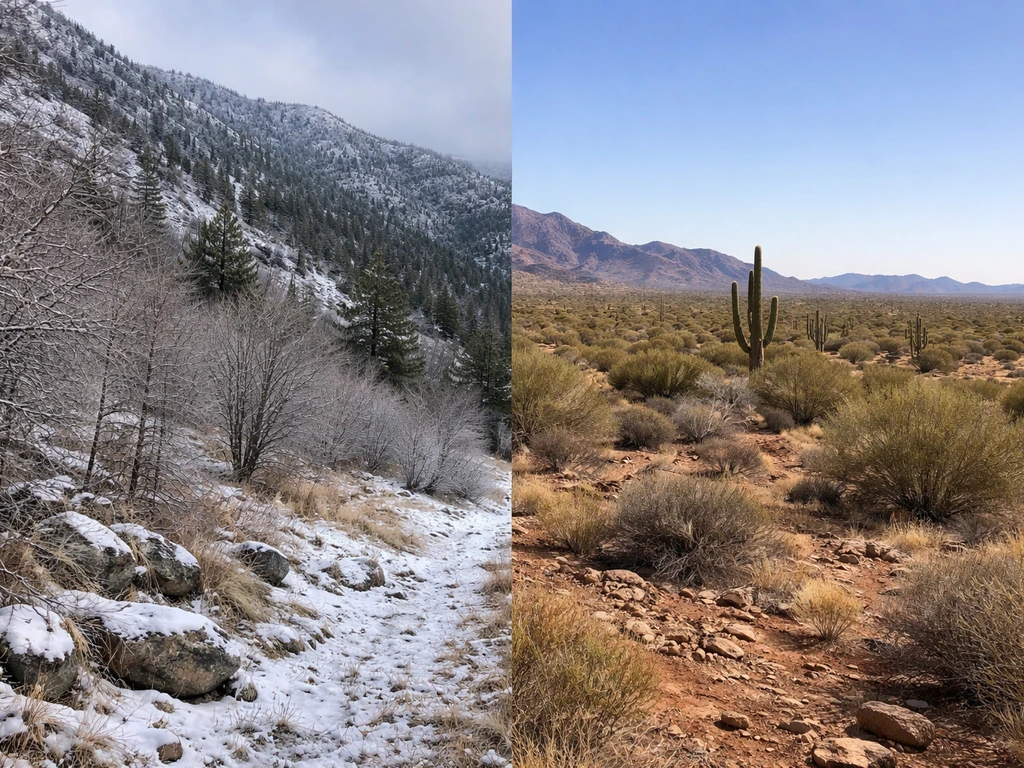
The single biggest factor for rhubarb in Arizona is winter cold. Rhubarb needs at least 500 hours of winter temperatures between 28°F and 40°F to properly form new leaf buds. Without that chilling period, crowns may not break dormancy reliably, and you'll end up with weak, stunted growth year after year. In high-elevation Arizona (4,500 feet and above), you typically get enough cold hours to satisfy that requirement, which is why Yavapai County extension resources are your best state-level guide for rhubarb. Places like Prescott (around 5,300 feet), Flagstaff (nearly 7,000 feet), and communities in the White Mountains and Mogollon Rim area offer the conditions rhubarb actually wants.
The low desert is a different story. Phoenix, Tucson, and surrounding areas rarely accumulate enough chilling hours, and summer heat regularly exceeds 110°F, which rhubarb simply cannot tolerate without intervention. Plants may limp through a season or two but typically decline and fail without aggressive shade management and careful winter monitoring. If you're in the low desert, container growing and a strategy to move plants through extreme heat (more on that below) are pretty much non-negotiable if you want multi-year results.
Best Varieties for Arizona's Conditions
Variety choice matters a lot when you're working at the edge of a plant's comfort zone. You want varieties that are vigorous, relatively heat tolerant, and that hold off on producing seed stalks (which sap energy and reduce your harvest). Here's how the main options stack up for Arizona conditions.
| Variety | Heat Tolerance | Seed Stalk Tendency | Best for Arizona? |
|---|---|---|---|
| Crimson (Crimson Cherry / Crimson Red) | Moderate | Low to moderate | Yes, a solid first choice |
| Valentine | Moderate | Low (usually older before bolting) | Yes, good option |
| Ruby Red | Moderate | Low (similar to Valentine) | Yes, worth trying |
| Victoria | Lower | High (bolts young) | Not ideal |
| MacDonald | Lower | High (bolts young) | Not ideal |
Crimson varieties are widely recommended for outdoor production and tend to be more adaptable. Valentine and Ruby Red are worth trying because they produce fewer seed stalks and typically wait until they're older before putting energy into bolting, which means more stalks for you. Victoria and MacDonald are less suited to marginal climates because they bolt readily at a young age, wasting the plant's resources before it's even established. Stick with Crimson, Valentine, or Ruby Red as your starting point for Arizona.
How to Actually Plant Rhubarb in Arizona
Site Selection
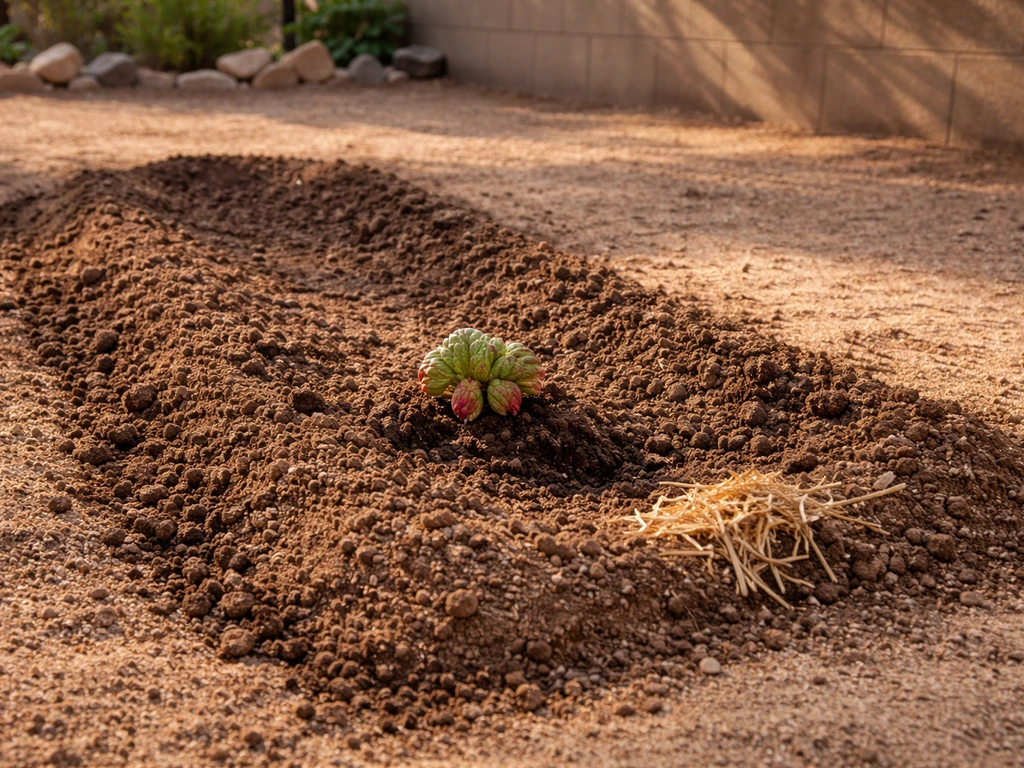
Pick a location that gets good morning sun but is shielded from intense afternoon sun, especially in the low desert. The University of Arizona Cooperative Extension is specific here: avoid sites with reflected light or heat (think south-facing walls, concrete patios, or areas next to white block walls that radiate heat) and avoid excessively windy spots. Rhubarb is a long-term plant, so choose a spot you can dedicate to it for multiple years without needing to move it.
Soil Preparation
Arizona soils, especially in the lower elevations, tend to be alkaline, low in organic matter, and sometimes poorly draining. Before planting, work 2 to 4 inches of well-composted organic matter into the soil to a depth of 6 inches. UA Cooperative Extension also recommends adding a phosphorus fertilizer at planting and, if a soil test indicates a deficiency, a quality iron chelate. The iron step matters because Arizona's alkaline soils frequently lock up iron, and rhubarb will show yellowing leaves (chlorosis) when iron is unavailable.
Planting Crowns
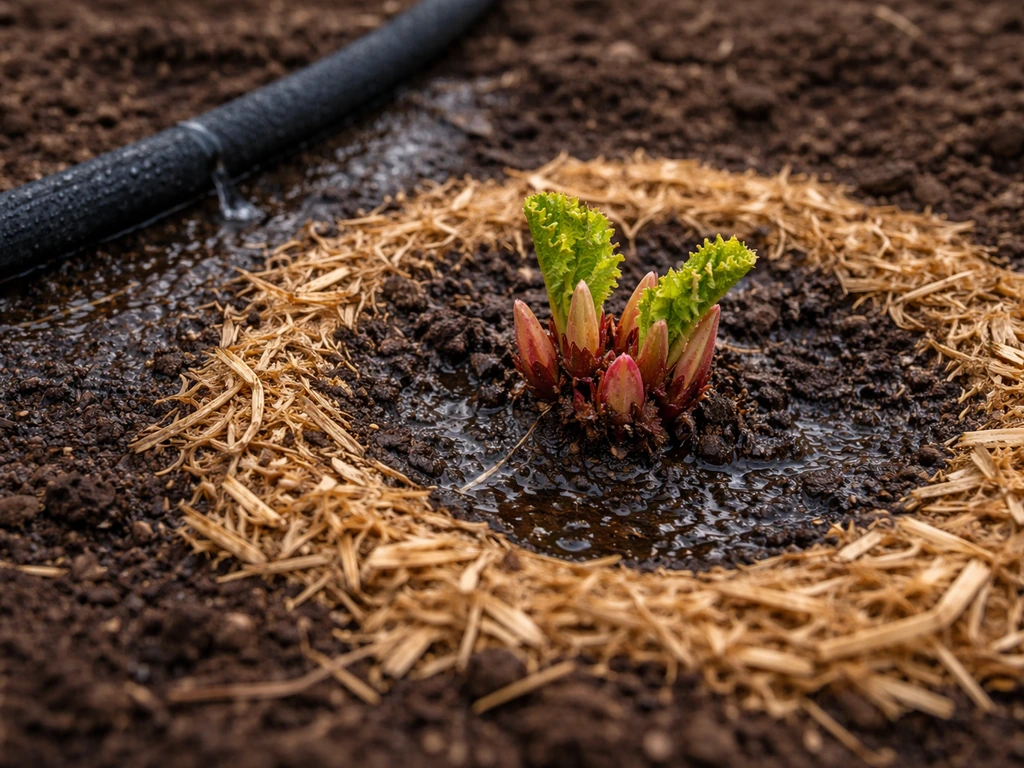
Plant rhubarb from healthy crown divisions in early spring, once soil temperatures have warmed slightly but before the intense heat builds. Set crowns so they are covered with no more than 1 inch of soil, then firm the soil around them and water in well. Space each crown about 3 feet apart to give the plants room to spread. Shallow planting might feel wrong if you're used to tucking things in deep, but rhubarb crowns rot easily when buried too deep in Arizona's conditions. Kansas State University Extension notes that crown rot from Phytophthora is a common concern in rhubarb, making proper planting depth important for crown protection crown rot easily when buried too deep.
Seasonal Care Through Arizona's Climate Extremes
Watering
During the first two years of establishment, water newly planted rhubarb one to two times per week, making sure the water penetrates all the way to the bottom of the root zone. Don't let young plants dry out completely during establishment. Once plants are older, the goal shifts to watering deeply but less frequently: let the soil surface dry to about 2 inches deep between waterings, and when you do water, make sure moisture moves several inches down through the root zone. Shallow, frequent watering in Arizona's heat leads to surface rooting and stress.
Mulching
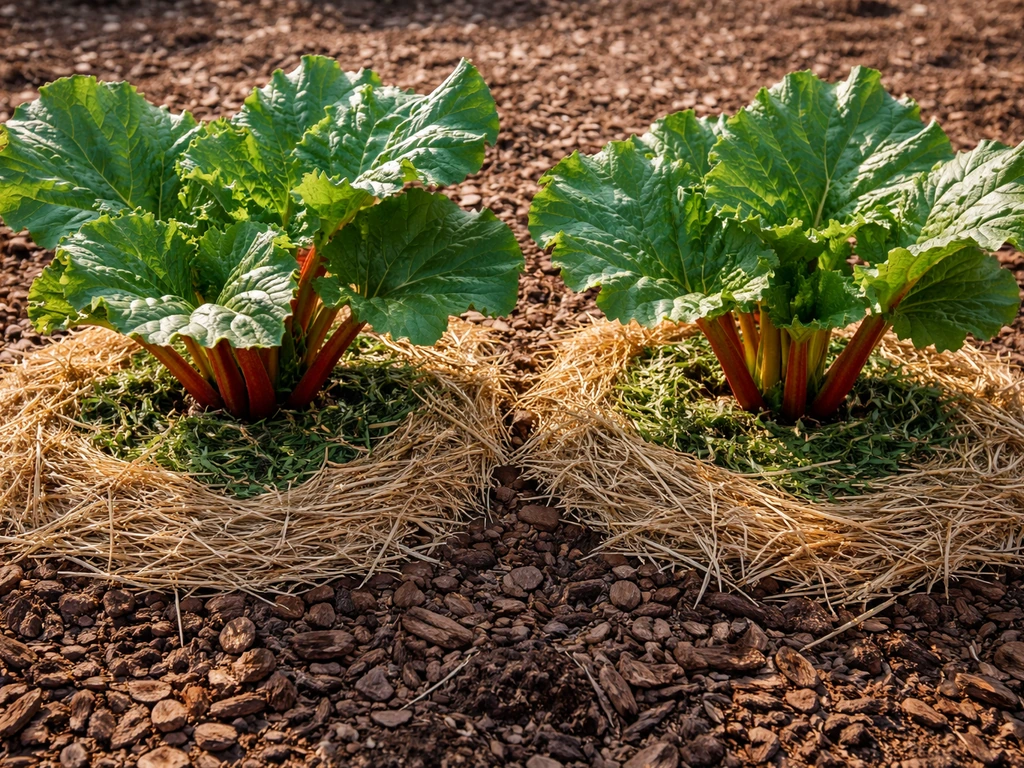
Mulch is non-negotiable in Arizona. Use straw, grass clippings, or bark to keep the soil cooler and hold moisture. The key placement rule: mulch goes under the leaves around the plant, not directly over the crown itself. Burying the crown under mulch invites rot. In cooler areas above 4,500 feet, you can also apply 2 to 3 inches of straw mulch over the root zone after the tops die back in late fall, which helps protect the crown through winter and reduces freeze-thaw stress. Just clear it away from the crown center in early spring.
Shade Management
If your rhubarb leaves are scorching at the edges or the plant looks stunted and stressed during summer, shade cloth is the fix. UA Cooperative Extension recommends 30 to 40 percent shade cloth to protect plants from summer heat. This is especially important in the low desert, but even in Prescott or the Verde Valley, afternoon shade during the hottest months is helpful. Some growers in Tucson and Phoenix essentially put their rhubarb into a 'summer rest mode' by shading it heavily and reducing expectations for any active growth from June through September.
Fertilizing
Don't fertilize rhubarb during its first year or two of establishment. Once it's past that stage, apply about half a cup of 16-16-16 granular fertilizer (or an equivalent amount of composted manure) around the base of each plant just before leaves begin emerging in spring. That's your annual feeding. Avoid over-fertilizing with nitrogen, which pushes leafy growth at the expense of root development and crown strength.
When to Harvest and What to Expect
Patience is the hardest part of growing rhubarb anywhere, and Arizona is no exception. Do not harvest any stalks in years 1 or 2. The plant needs that time to establish a strong root system and crown. In year 3, you can harvest for 3 to 4 weeks. From year 4 onward, you can harvest for 6 to 10 weeks, stopping when the plant starts to lose vigor. Stalks are ready to harvest when the petioles (the edible portion) reach 10 to 15 inches in length. Always leave at least a few healthy stalks on the plant to keep photosynthesis going.
Realistic expectations in Arizona: even under good conditions, your harvest window and total yield will likely be shorter and smaller than what someone growing rhubarb in, say, Minnesota or Oregon would see. High-elevation Arizona growers in Flagstaff or Prescott can get respectable multi-week harvests by year 4. Low desert growers should expect less, and may find that the plant's energy goes more toward surviving the summer than building toward a big harvest. That's just the honest reality of the climate.
Common Problems in Arizona and How to Fix Them
- Crown decline or failure to break dormancy: This usually comes down to insufficient chilling hours. If your winters aren't cold enough, the crown doesn't reset properly and growth is weak or absent. The fix in marginal areas is to move to container growing so you can give the plant a cold spell (see below), or accept that rhubarb simply isn't viable in your specific location without intervention.
- Heat stress and leaf scorch: Leaves that turn pale, scorch at the edges, or wilt during summer are telling you the plant is overheating. Install 30 to 40 percent shade cloth and double-check that you have adequate mulch under the leaves. In extreme heat, plants may die back completely, which isn't always fatal. Let them rest and check the crown for rot.
- Crown rot: Often caused by overwatering, mulch piled directly on the crown, or planting too deep. Make sure crowns are no more than 1 inch below the soil surface, keep mulch away from the crown center, and let the top 2 inches of soil dry out between waterings.
- Bolting (seed stalk production): When rhubarb sends up tall flower stalks, cut them off at the base immediately. Bolting drains energy from the plant. Choosing low-bolt varieties like Valentine or Ruby Red reduces but doesn't eliminate this problem.
- Iron chlorosis (yellowing leaves): Common in Arizona's alkaline soils. Apply a quality iron chelate product per label directions. Soil testing first helps you confirm that iron is actually the deficiency before treating.
- Poor establishment in year 1: Usually caused by inconsistent watering, planting in full sun without afternoon shade, or planting too late in spring when heat builds quickly. Time plantings for early spring, keep soil consistently moist, and be ready with shade cloth if temperatures spike.
Container Growing and Overwintering: Your Best Options for Tough Spots
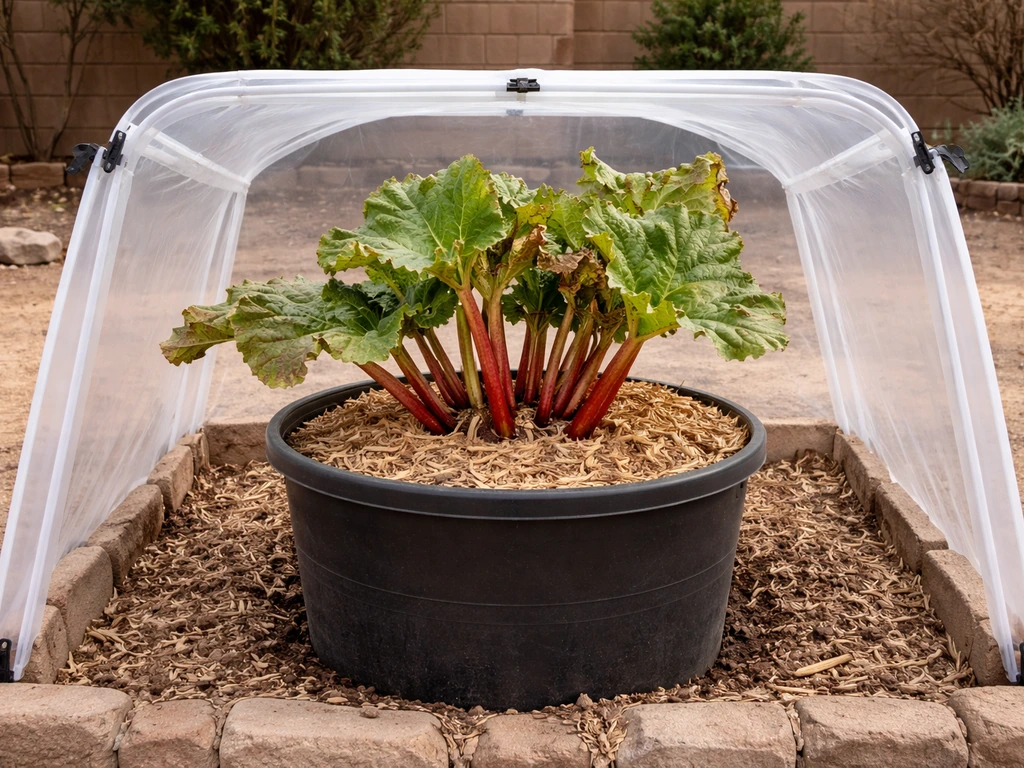
If you're in the low desert or a marginal area, growing rhubarb in a large container is one of the smartest moves you can make. A container (at least 15 to 20 gallons for a mature plant) lets you control the environment in ways you simply can't with in-ground plants.
You can move the pot to a shadier spot during summer heat, bring it under cover if a hard freeze threatens, and, critically, expose it to sufficient cold in winter by moving it somewhere with consistent overnight temperatures below 40°F to accumulate the 500 chilling hours the plant needs.
Mississippi State University Extension explains how chilling-hour requirements are fulfilled based on the amount of winter temperatures in the 28°F to 40°F range, which matters for bud break and dormancy timing sufficient cold in winter by moving it somewhere with consistent overnight temperatures below 40°F to accumulate the 500 chilling hours.
For overwintering in containers, once the plant dies back in late fall, reduce watering significantly and let the plant rest. In high-elevation Arizona, the natural winter chill is usually enough if you leave the container in an exposed but sheltered spot. In the low desert, you may need to get creative: an unheated garage that drops into the 30s and low 40s overnight, or even a spot that gets cold air drainage, can help accumulate chilling hours. UA Cooperative Extension notes that Arizona's normal winter lows often fall in the 40s, which is borderline adequate, and frost cloth can protect against cold snaps down to around 30°F if a hard freeze threatens.
Container-grown rhubarb also makes it easier to manage soil quality since Arizona's native soils often need repeated amendment to stay productive for rhubarb. Use a high-quality potting mix amended with plenty of compost, and refresh the mix or top-dress with compost each spring. Water containers more frequently than in-ground plants since containers dry out faster, especially in summer, even under shade cloth.
If you're comparing notes with growers in similarly warm states, Arizona shares some challenges with growing rhubarb in Georgia or Alabama, where summer heat and marginal chilling hours are the recurring obstacles. If you are wondering can you grow rhubarb in alabama, the same constraints apply: summer heat and limited winter chilling. The container-plus-shade strategy that works in Arizona tends to be the same approach that gives gardeners in those states the best shot at success. The core issues are the same: heat tolerance, sufficient chilling, and crown protection.
Bottom Line for Arizona Rhubarb Growers
High-elevation Arizona, think Prescott, Flagstaff, Show Low, and similar communities above 4,500 feet, gives you a genuine shot at growing productive rhubarb with standard good practices. Choose Crimson, Valentine, or Ruby Red varieties, plant crowns in early spring at 1-inch depth, amend your soil heavily, mulch consistently, and be patient for two full years before harvesting. Low desert growers aren't completely out of luck, but you need shade cloth, container growing, and a plan for providing adequate winter chilling.
Can you grow rhubarb in Georgia? The same core requirements like cold hours, heat management, and crown protection still determine whether it succeeds there. If you want to know the exact steps for growing broccoli in Arizona, look for guidance tailored to your city’s heat and winter temperatures. If you’re also planning a cool-season crop, see when to grow broccoli in georgia for timing ideas that match your frost risk and temperatures.
Go in knowing the yield ceiling is lower and the management effort is higher, and you'll avoid the frustration that comes from expecting Arizona rhubarb to behave like Vermont rhubarb.
FAQ
How can I tell if my Arizona rhubarb crown is getting enough winter chilling?
In spring, look for consistent leaf bud break along the crown. If growth is sparse, very uneven, or weak for multiple years, it often means the crown is not completing dormancy properly. You can also check the timing, if leaves only start very late or struggle to re-sprout after you thaw the plant, chilling is likely borderline.
What should I do if my rhubarb bolts (makes a seed stalk) in Arizona?
Remove seed stalks as soon as you see them to keep energy focused on stalk production and crown growth. Going forward, prioritize a variety that delays bolting (Crimson, Valentine, Ruby Red), ensure the crown is not planted too deep, and avoid nitrogen-heavy feeding that can push premature, stressed growth.
Is it okay to plant rhubarb in the fall in Arizona?
For most gardeners, spring planting is safer because it gives crowns time to root before Arizona’s heat ramps up. If you must plant later, keep the crown shallow (no more than about 1 inch of soil above it), provide strong mulch coverage, and be extra careful about watering evenly so the crown does not rot or desiccate.
How often should I water rhubarb in high heat, especially in the low desert?
In-ground plants, water deeply but less frequently once established, aim for moisture to reach several inches down, and let the top few inches dry between waterings. In containers, watering needs are higher, because pots dry faster, so you’ll likely water more often even under shade cloth. Always water the soil, not the crown.
Why are my rhubarb leaves yellowing or pale, and what’s the fix?
Yellowing leaves in Arizona alkaline soil is commonly chlorosis from limited iron availability. A soil test helps confirm it, but a practical step is using an iron chelate as recommended at planting or as a targeted correction rather than adding more general fertilizer.
Can I grow rhubarb from seed in Arizona?
It’s possible, but it is usually a poor fit at the edge conditions Arizona provides. Rhubarb is commonly grown from crown divisions because they establish reliably and reduce the time you spend waiting out borderline chilling and heat stress. If you try seed, expect a longer path to usable harvests and more variability.
What are the most common causes of crown rot in Arizona?
Crowns rot most often when they are buried too deep, kept consistently wet, or covered by mulch that touches or traps moisture around the crown center. Stick to shallow planting, keep mulch under the leaves not over the crown, and make sure drainage is adequate in your soil or container.
Should I fertilize rhubarb at the same time every year in Arizona?
Yes, time it to leaf emergence in spring, but tailor the amount based on establishment stage. Avoid feeding during the first year or two, then use a moderate, balanced fertilizer approach (about half a cup of 16-16-16 per plant is typical) and avoid extra nitrogen that can weaken crowns and increase stress.
How do I protect rhubarb during sudden cold snaps in the low desert?
For hard freezes, use frost cloth and keep it loose enough to avoid crushing leaves. If you are container growing, moving pots to a sheltered spot first helps, then add frost cloth if lows are forecast near freezing. Remove extra protection during milder days to prevent excess trapped moisture.
Can I harvest rhubarb sooner if the plant looks strong?
Avoid harvesting in years 1 and 2 even if the plant seems vigorous. Rhubarb needs that time to build crown reserves, in Arizona especially where summer survival takes more energy. In year 3, harvesting briefly is usually the safer balance for long-term productivity.
What container size and pot setup works best for rhubarb in Arizona?
Use at least 15 to 20 gallons for a mature plant, with excellent drainage holes. Choose a light-colored pot if possible to reduce heat buildup, fill with a high-quality potting mix amended with compost, and top-dress with compost each spring so the mix stays productive over time.
How can I maximize winter chilling for a container grown plant?
The decision aid is whether the container experiences consistent overnight temperatures below 40°F during winter long enough to reach the chilling requirement. Use a location that reliably cools at night (such as an unheated garage that drops into the 30s to low 40s), then bring it back to a protected area during heat spikes so the plant does not break dormancy too early.
Next Articles
Can You Grow Agave in Canada? Zone Guide & Growing Tips
Can you grow agave in Canada? Practical region-by-region guide, hardy species, container tips & winter care.
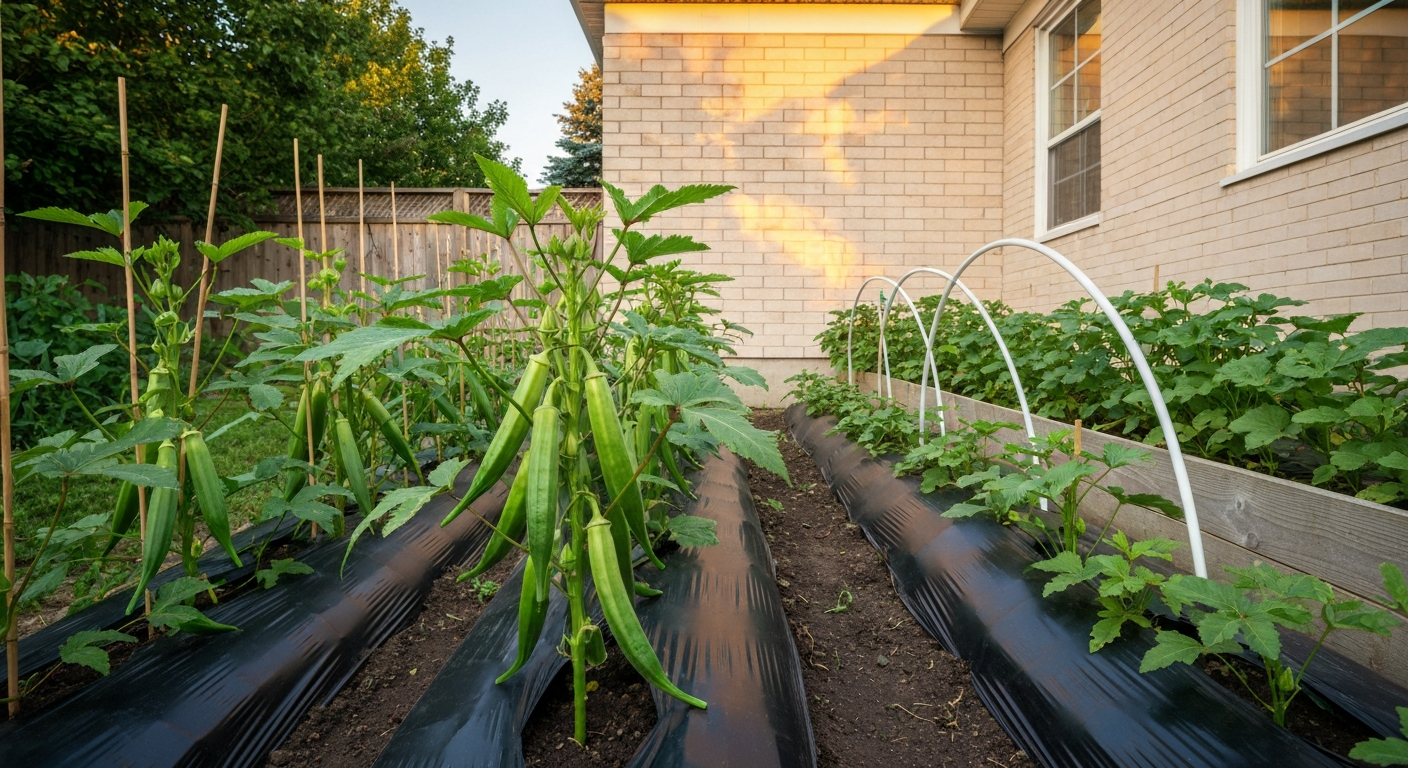
Can You Grow Okra in Canada? Ontario Guide & Short‑Season Tips
Can you grow okra in Canada? Regional verdict, Ontario-specific steps, varieties, season-extension & harvest tips.
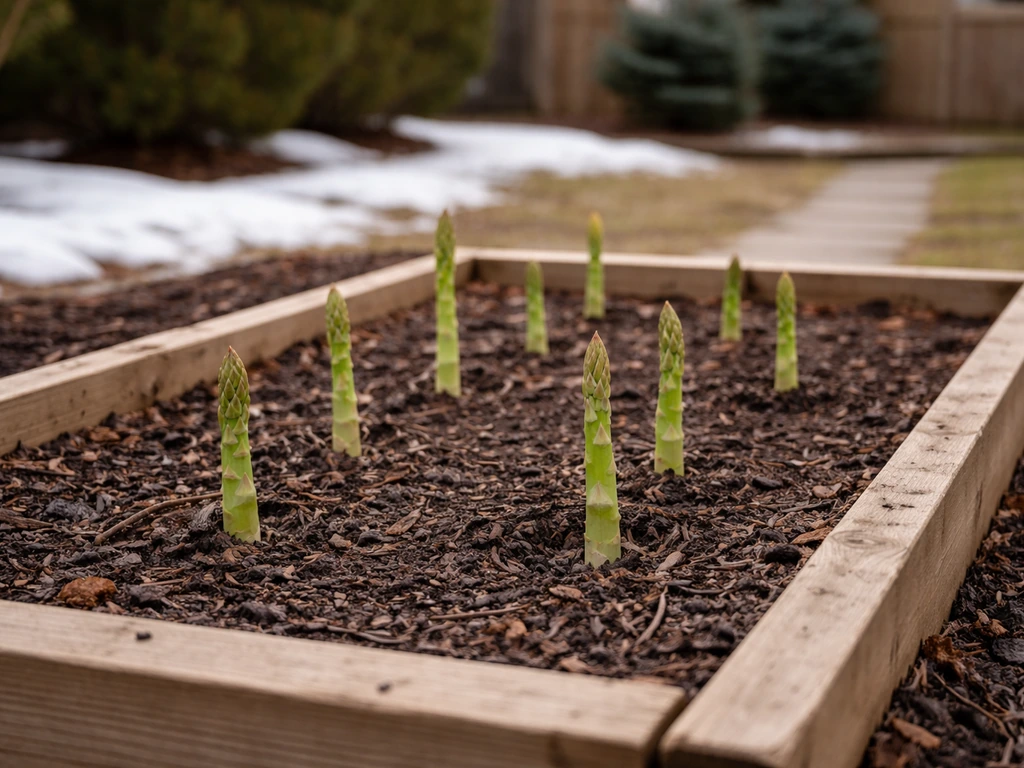
Can You Grow Asparagus in Canada? Planting Guide by Zone
Grow asparagus in Canada by zone: site, hardiness, crowns or seed, planting depth, care, and harvest plus fixes