
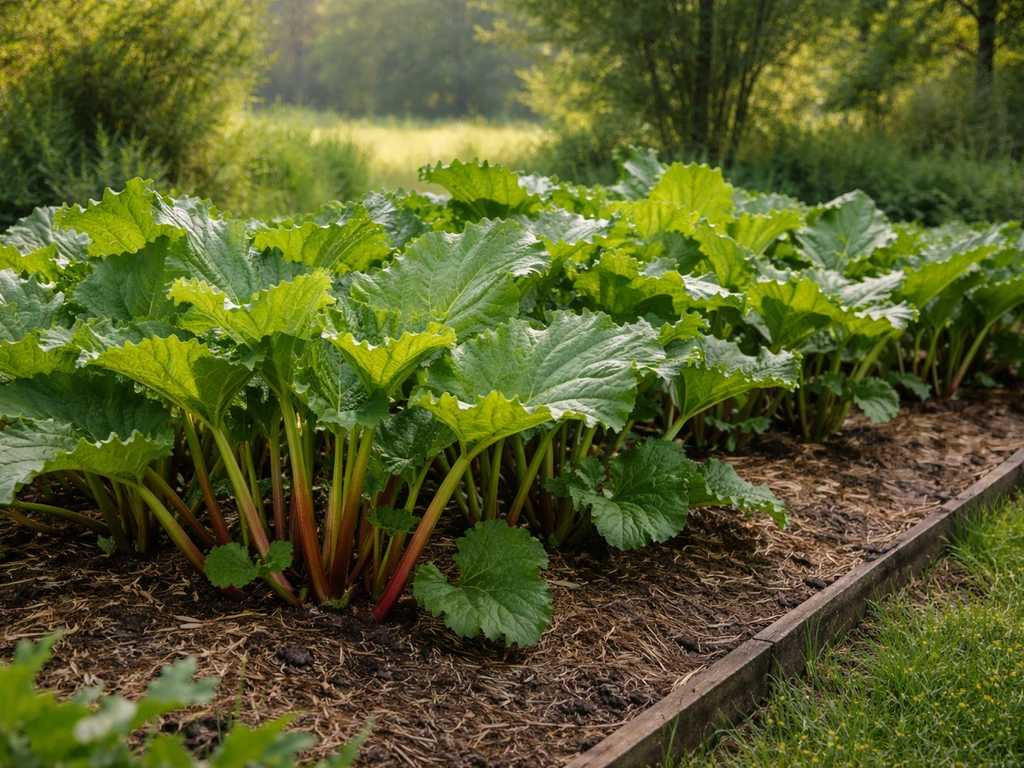
You can grow rhubarb in Georgia, but only with realistic expectations and the right setup. North Georgia is your best shot, where winters are cold enough to give rhubarb the dormancy it needs. Central Georgia is marginal, and South Georgia is genuinely difficult because the winters there just don't get cold enough long enough for rhubarb to thrive. That said, if you're in the right spot and you pick a heat-tolerant variety, rhubarb is absolutely doable in this state.
Can You Grow Rhubarb in Georgia? A Practical Guide
Marcus Holloway
21 May 2026
Feasibility by Region: North, Central, and South Georgia
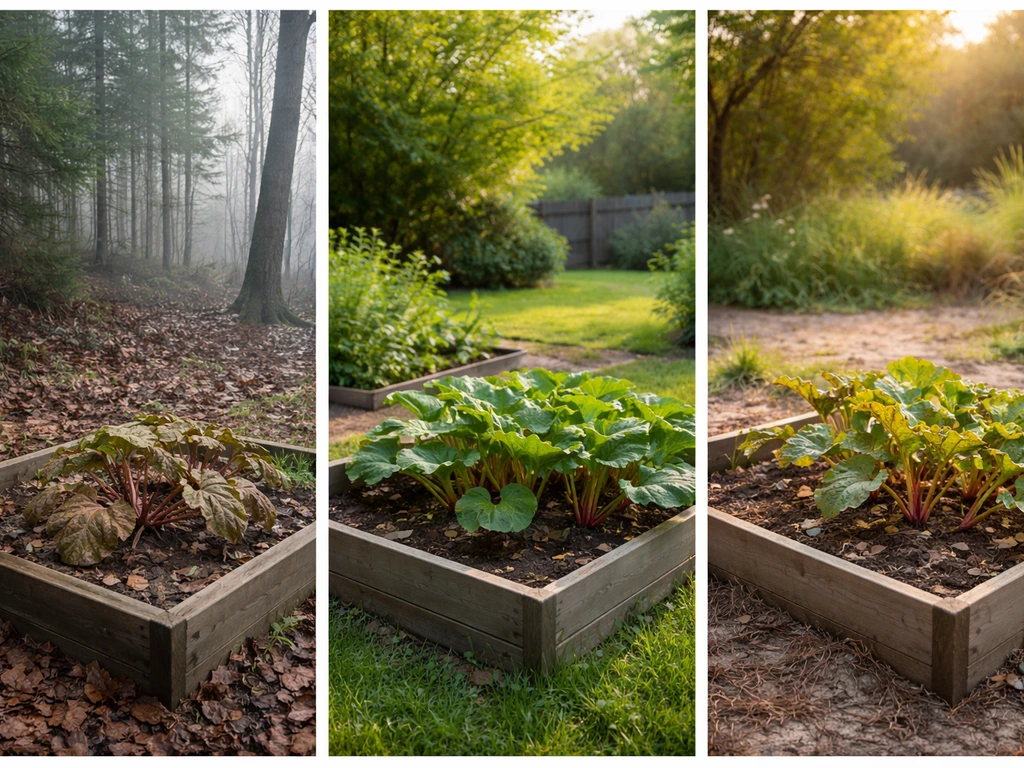
Georgia spans USDA plant hardiness zones 7a through 9b, which is a huge range for one state. The mountain counties in North Georgia (think Rabun, Towns, Union, Fannin) sit in zones 7a and 7b, with cold winters that can reliably push temperatures below 40°F for extended periods. That's exactly what rhubarb needs. Rhubarb requires a proper cold dormancy period to reset itself each year and push out vigorous stalks in spring. Most guides point to somewhere around 500 or more hours below 40°F as a useful benchmark for good production. North Georgia can hit that in most winters.
Central Georgia (zones 8a and 8b, roughly the Atlanta metro through Macon) is where things get tricky. You'll get some cold hours but not always enough for peak performance. Rhubarb may survive and produce a modest crop, but don't expect it to perform the way it would in, say, Kentucky or Tennessee. It's worth trying if you're committed, especially in a cooler microclimate or a spot that gets good winter exposure.
South Georgia (zones 8b through 9b, Valdosta and below) is a tough environment for rhubarb. Winters are mild, dormancy is shallow at best, and plants tend to sputter along without ever really building vigor. It's not impossible, but you'd be fighting the climate the whole time. If you're in deep South Georgia and really want rhubarb, container growing where you can move the plant to a colder spot in winter is probably your best workaround. If you think Georgia is challenging, growing rhubarb in Arizona is an even harder ask for similar reasons. Broccoli has a much different growing profile than rhubarb, so you will need to plan around Arizona's heat, winter chill, and watering needs grow broccoli in arizona.
Best Rhubarb Varieties for Georgia Climates
Not all rhubarb varieties behave the same in warmer climates. For Georgia, you want varieties that are reasonably productive even with moderate (not stellar) winter cold, and that handle heat stress without bolting at the first sign of a warm spring. Here are the varieties most worth planting in Georgia:
| Variety | Best for Georgia | Stalk Color | Notes |
|---|---|---|---|
| Victoria | North and Central GA | Green-red | Old reliable; handles variable winters well; widely available |
| Canada Red / Chipman's Canada Red | North GA | Deep red | Good flavor; recommended for warm-temperate climates like Kentucky |
| MacDonald | North GA | Bright red | Tender stalks; productive in zones 7–8 |
| Valentine | North and Central GA | Red | Good heat tolerance relative to other varieties; slower to bolt |
| Crimson Red | North GA | Deep red | Strong color, good production in cooler zones |
Victoria is probably your safest starting point because it's widely available, forgiving, and productive across a range of winter conditions. If you're specifically in the mountains of North Georgia, Canada Red and MacDonald will reward you with better color and flavor. In marginal Central Georgia, Valentine is worth trying because it has a somewhat better reputation for handling warmth without immediately throwing up a flower stalk.
Site Selection and Ideal Growing Conditions
Chill and microclimate
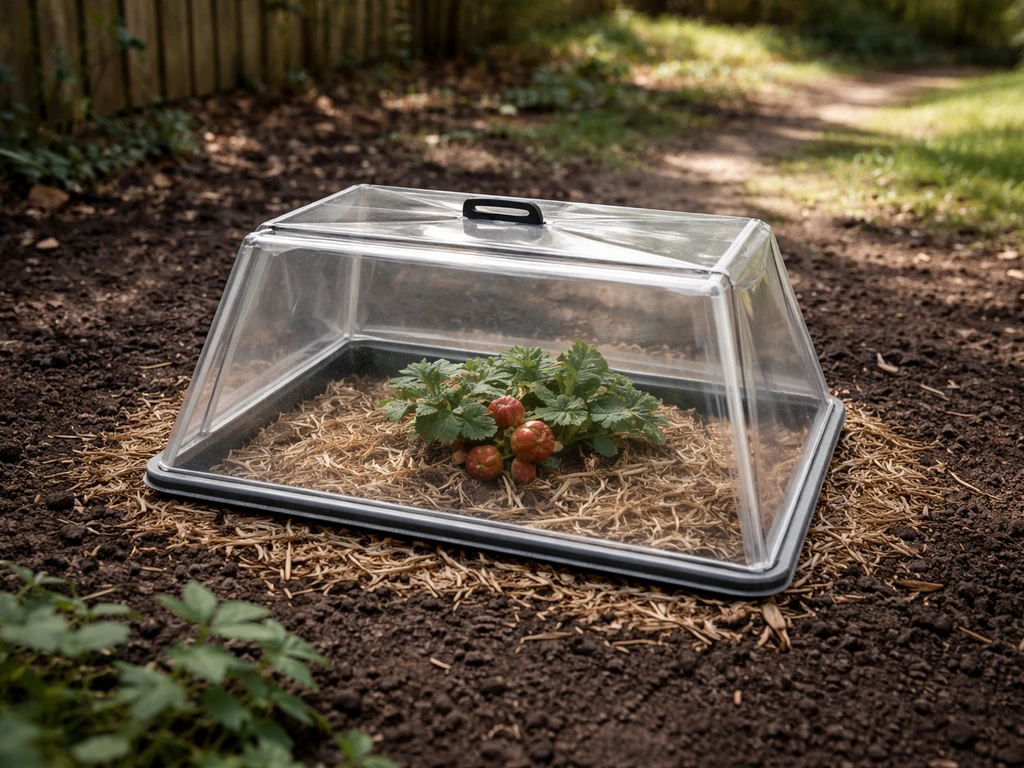
Pick the coldest spot on your property. In North Georgia that might be a north-facing slope or a spot that stays shaded during warm early-spring days, which helps delay premature growth. In Central Georgia, positioning your bed where it gets some protection from radiant heat off pavement or south-facing walls will help extend the plant's productive window before summer shuts it down.
Sun exposure
Rhubarb wants full sun, ideally six or more hours a day. In cooler climates this is straightforward. In Georgia's summer, though, afternoon shade can actually extend the season slightly by reducing heat stress in July and August. A spot with morning sun and light afternoon shade is a reasonable compromise for Central Georgia growers.
Soil requirements
This is non-negotiable: rhubarb must have well-drained soil. Crown rot caused by fungal pathogens is the single biggest killer of rhubarb in humid, warm climates, and Georgia's combination of summer heat and humidity creates ideal conditions for it. Constantly wet soil is a death sentence for rhubarb crowns. Work plenty of compost into the planting bed before you start, both for drainage and fertility. If your native soil is heavy clay (common in Georgia's Piedmont), consider raising your bed 6 to 8 inches above grade or building a proper raised bed. Aim for a soil pH around 6.0 to 6.8.
Moisture management
Rhubarb likes consistent moisture but hates standing water. Water deeply enough to wet the root zone, then let the soil dry slightly before watering again. In Georgia's rainy seasons (spring and late summer/fall), drainage matters more than irrigation. In the dry summer stretch, you'll need to water actively to keep the crowns from desiccating completely.
How to Plant Rhubarb in Georgia: Step by Step
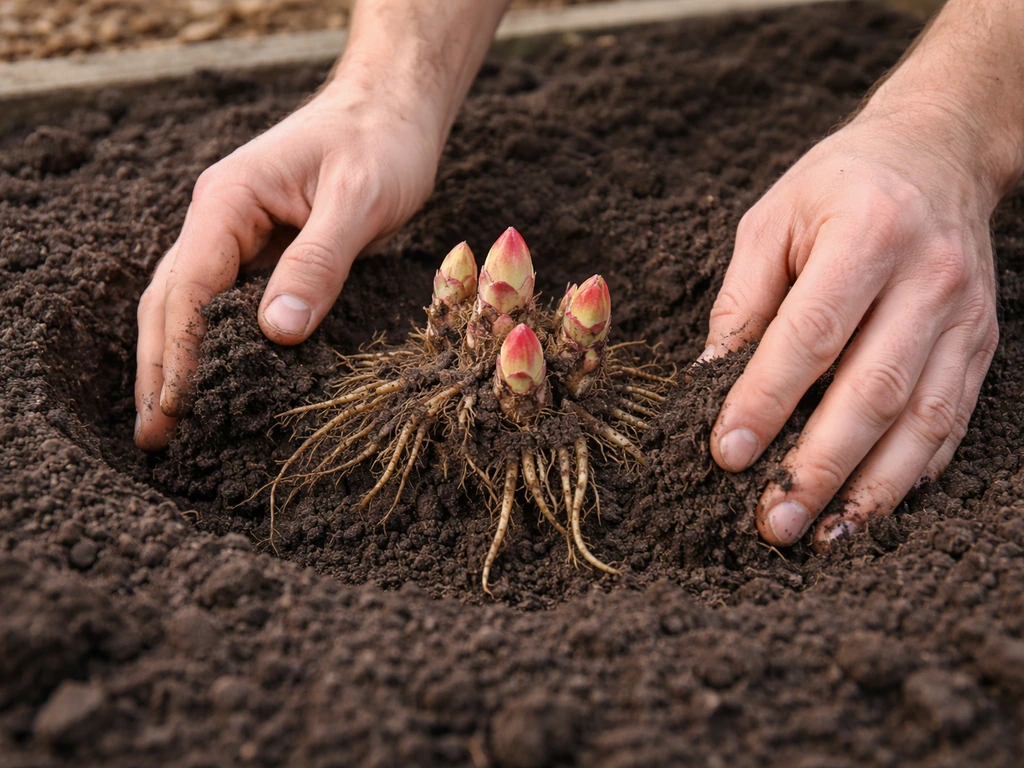
- Clear the planting area of perennial weeds thoroughly before you do anything else. Rhubarb is a long-term resident (10 to 15 years if all goes well), so weeds you ignore now will haunt you later.
- Work 3 to 4 inches of compost into the top 12 inches of soil. This improves drainage, fertility, and soil structure all at once.
- If your soil drains poorly, build a raised bed or mound your planting area 6 to 8 inches above grade.
- Plant crown divisions (not seeds; crowns are far more reliable and productive faster). Space crowns 3 to 4 feet apart in all directions. Rhubarb spreads.
- Set the crown so the top bud sits about 1 to 2 inches below the soil surface. Don't bury it deeper; crowns planted too deep are slower to establish and more prone to rot.
- Water in well after planting, then apply a 3-inch layer of mulch (straw or wood chips) around the planting, keeping mulch a few inches away from the crown itself to allow airflow.
- During the first growing season, water 1 to 2 times per week and water deeply enough to push moisture well into the root zone.
- Apply a balanced fertilizer around the base of the plant just before leaves emerge in spring each year.
Timing: When to Plant and How to Handle Georgia's Seasons
When to plant
Plant rhubarb crowns in late winter or very early spring in Georgia, typically February through early March for North Georgia, and January through February for Central Georgia if you can source crowns early enough. OSU Extension also recommends positioning the rhubarb crown, or planting point, close to the soil surface, about 1, 2 inches below the soil surface for the top of the crown blank" rel="noopener noreferrer">Oregon State University Extension Publication EC 797. For more specifics on timing for broccoli, see when to grow broccoli in Georgia based on your region. You want the plant to establish roots before the heat of summer hits. Fall planting (October to November) is also an option and can work well in North Georgia because the plant has a full winter of cold ahead of it to break dormancy properly before its first spring.
Managing Georgia summers
Georgia summers are rhubarb's main enemy. Once temperatures climb consistently above 90°F, rhubarb essentially shuts down. Stalks become thin and tough, and the plant may look half-dead by July. This is normal. Keep the soil mulched heavily (3 to 4 inches) to conserve moisture and moderate soil temperature. Don't harvest during this period. Water consistently to prevent the crown from completely drying out, and just wait. Think of summer as the plant's rest period. It will come back in the fall and again the following spring.
Managing Georgia winters
In North Georgia, your winters are cold enough to give rhubarb what it needs with little intervention. Leave the dead foliage in place until late winter since it provides some insulation for the crown. In Central Georgia, consider adding a few inches of extra mulch over the crown during the coldest months to protect it from freeze-thaw cycles that can heave crowns out of the ground. The plant needs cold, so don't baby it too much, but protecting against hard, sudden freezes after a warm spell is worthwhile.
Harvesting, Plant Longevity, and Common Problems
How and when to harvest
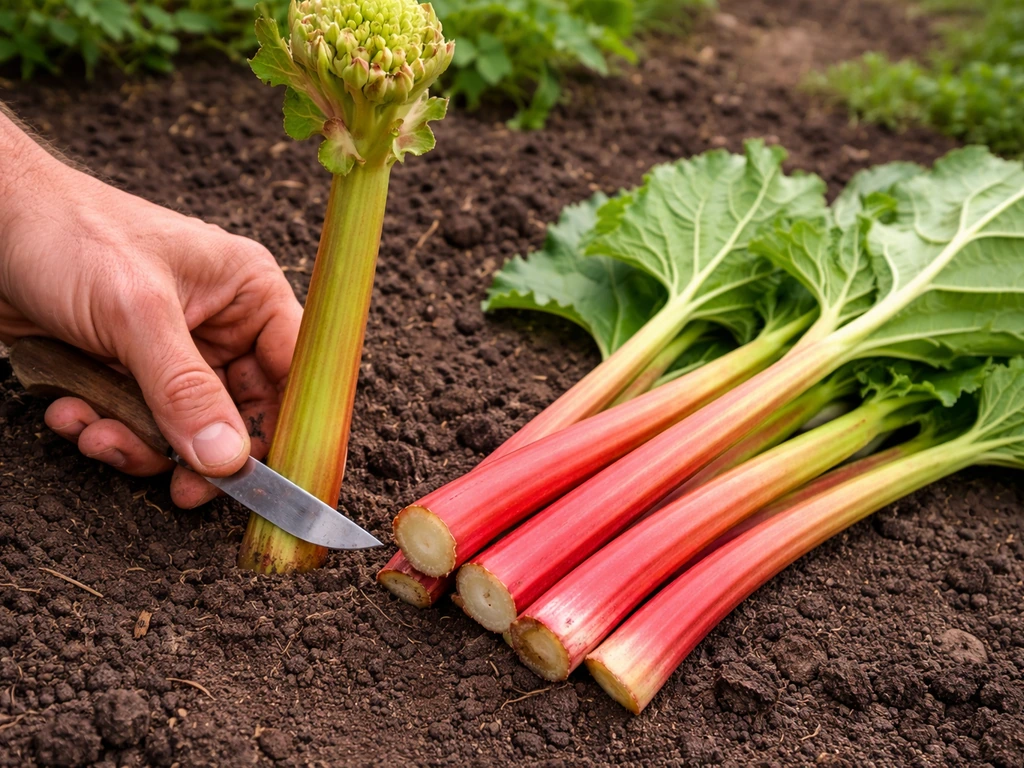
Don't harvest anything the first year. Seriously. The plant needs that first full season to build root mass, and pulling stalks too soon will weaken it heading into its first Georgia summer. In year two, harvest lightly: take only a few stalks per plant. By year three you can harvest more freely. To harvest, grasp a stalk near the base and pull with a slight twisting motion to snap it cleanly, or cut it at the base. Always leave at least three to four healthy stalks on each plant so it can continue to photosynthesize and recover. Stop harvesting by late spring before the heat really sets in.
Managing bolting
Rhubarb will sometimes send up thick, round flower stalks, especially when stressed by heat, low fertility, or insufficient cold. Cut these off immediately at the base the moment you see them. Flower stalks divert energy from edible stalk production and signal that the plant is shifting into reproductive mode. Removing them promptly keeps energy focused on the parts you actually want to eat.
Crown rot and fungal disease
Crown rot (often caused by Phytophthora and related fungi) is the most common serious disease problem for Georgia rhubarb growers. It shows up as soft, collapsing crowns, wilting that doesn't respond to watering, and sometimes a foul smell at the base of the plant. Once established, it's nearly impossible to reverse. Prevention is everything: well-drained soil, no mulch piled against the crown, and avoiding overwatering during humid periods. If you lose a crown to rot, don't replant rhubarb in the same spot.
Other pests and issues
- Slugs and snails: common in humid Georgia conditions; use iron phosphate bait or diatomaceous earth around the crown
- Aphids: occasional, especially on new growth; knock off with water or use insecticidal soap
- Leaf scorch: large rhubarb leaves can show tip burn in Georgia's summer heat; this is largely cosmetic but a sign the plant is stressed
- Thin or sparse stalks: usually a sign of insufficient cold the previous winter or a plant that hasn't had time to establish fully
Troubleshooting: If Your Rhubarb Won't Grow
If you planted rhubarb in Georgia and it's not performing, run through these diagnoses before you give up:
| Symptom | Likely Cause | Fix |
|---|---|---|
| Crown never leafed out in spring | Insufficient winter cold OR crown planted too deep OR crown rot | Check crown depth (should be 1–2 inches below surface); check for rot; consider whether your location gets enough winter cold |
| Plant leafed out but stalks are tiny and thin | Not enough cold hours last winter OR plant is still in year one or two | Be patient through year three; if in Central/South GA, consider whether your site is viable long-term |
| Plant dies in summer | Crown rot from poor drainage OR heat desiccation | Improve drainage before replanting; mulch heavily; don't let soil dry out completely in summer |
| Plant bolts repeatedly | Heat stress, low fertility, or insufficient cold | Cut flower stalks immediately; fertilize in early spring; add mulch to reduce soil temperature |
| Leaves emerge then collapse | Crown rot (Phytophthora) | Remove plant; don't replant rhubarb in that location; improve drainage for future planting |
| Plant survives but never thrives after multiple years | Location too warm (Central or South GA) | Try a cooler microclimate; consider North Georgia varieties; accept that rhubarb is marginal in your zone |
The single most common failure pattern in Georgia is planting rhubarb in a location that's too warm and too wet, then compounding the problem with poor drainage. If you address those two factors aggressively, you've solved most of what goes wrong. North Georgia growers who do this right can expect a productive rhubarb patch that blank" rel="noopener noreferrer">lasts a decade or more. Central Georgia growers should go in with eyes open: some years will be great, some will be mediocre depending on how cold the winter was. That variability is just part of growing rhubarb this far south, similar to the challenge faced by growers trying rhubarb in Alabama or other Deep South states. If you are wondering can you grow rhubarb in Alabama, the biggest hurdle is usually getting enough winter chill for reliable dormancy growing rhubarb in Alabama.
Bottom line: if you're in North Georgia and you plant a heat-tolerant variety like Victoria or Valentine in well-drained, compost-rich soil, give it a couple of years to establish, and protect it from summer waterlogging, you will grow rhubarb. It takes some patience and a bit of site engineering, but it's genuinely achievable. Can you grow rhubarb in Arizona? The short answer is that it is possible, but you’ll need to overcome harsh heat and very different winter chill levels.
FAQ
If I start rhubarb from seed in Georgia, will I have the same success as with crowns?
Yes, but it is slower and the first year often looks underwhelming. Rhubarb is usually sold as dormant crowns for this reason, and in Georgia you will generally get better odds by buying healthy crowns early enough to establish roots before summer heat.
Can you grow rhubarb in Georgia in containers, especially for Central or South Georgia?
Use containers if you can control both winter chill and summer drainage. Choose a pot with strong drainage, keep the crown above consistently wet soil (water only when the top inch dries), and move the pot to your coldest available spot in winter, like a shaded north side or an unheated porch.
How can I tell if my yard drainage is good enough for rhubarb before I plant?
Avoid planting where water sits after rain, even if the spot is sunny. A practical test is to water the area heavily, wait 24 to 48 hours, and confirm the surface is not still wet or muddy; rhubarb crowns rot quickly in conditions that stay damp.
My rhubarb looks small, is it because it is not cold enough or because I’m doing something wrong?
It is usually a weak signal in Georgia, because poor cold chill and crown stress can both limit growth. Check whether the plant is producing new leaves and whether stalks thicken after watering and mulching, rather than judging by appearance immediately after a warm winter.
What should I do if my rhubarb sends up flower stalks in spring?
After you see a flower stalk, cut it at the base right away. If you do not remove it immediately, the plant can shift energy into seeds and you may notice thinner, tougher edible stalks later in the season.
If I suspect crown rot, can I save the plant or should I remove it?
Take it seriously, but do not overcorrect. Remove mushy tissue and any infected material, then focus on prevention next season with higher drainage, no mulch touching the crown, and more careful watering during humid stretches.
How often should I water rhubarb during Georgia’s hot summer months?
Rhubarb can handle some drought stress, but in Georgia the biggest risk is crown desiccation during hot, dry weeks. Water deeply, then allow slight surface drying, and keep mulch consistently 3 to 4 inches away from the crown so moisture is even without waterlogging.
Will adding compost alone fix my soil, or do I need to raise and amend the bed for rhubarb in Georgia clay?
A good target is soil pH around 6.0 to 6.8, and the biggest win is correcting heavy clay with compost and raised beds. If you amend, mix it into the bed thoroughly rather than only topping the surface, because crowns sit deeper than most top-dressing.
When can I start harvesting rhubarb in Georgia, and how much is safe?
For the first year, skip harvest entirely to let the crown build. In year two, harvest lightly, then increase by year three, always leaving at least three to four healthy stalks so the plant can keep feeding itself through Georgia’s summer slump.
Should I mulch rhubarb in Georgia winter, and how close should the mulch be to the crown?
Not typically, because rot is a major issue when winter wet coincides with mild temperatures. If you mulch, keep material off the crown, use heavy mulch only as a protective layer in cold months for marginal areas, and avoid piling it right up against the crown.
Next Articles
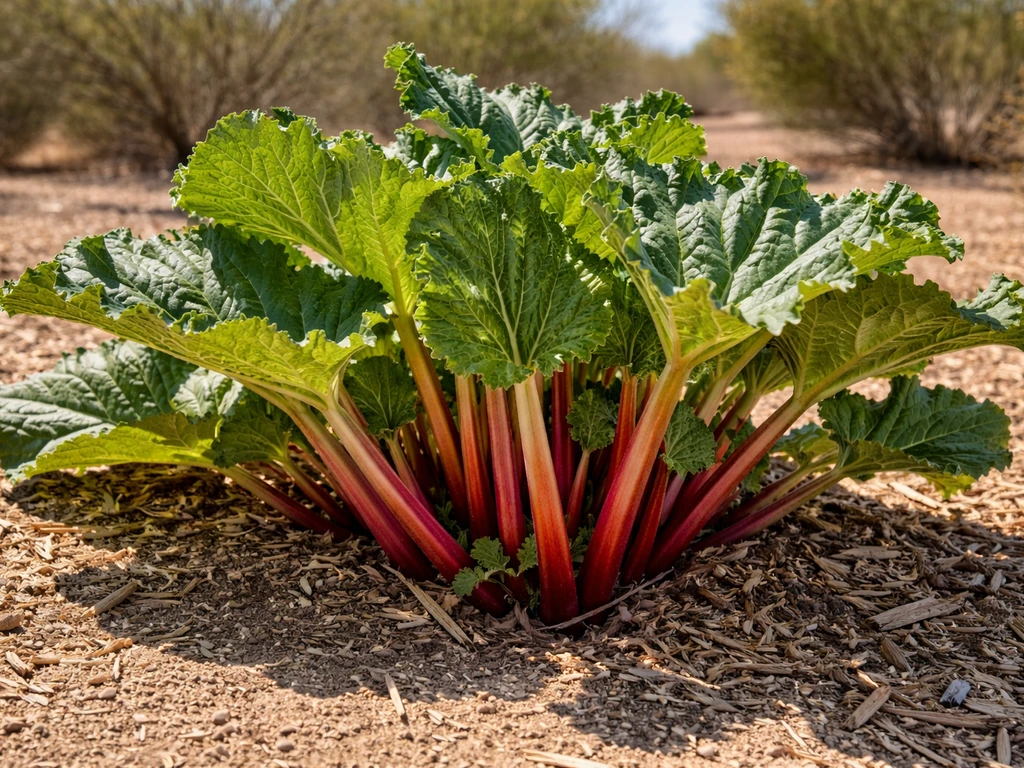
Can You Grow Rhubarb in Arizona? Guide by Region
Yes. Regional Arizona guide to grow rhubarb, choosing cold-hardy varieties, planting, watering, winter protection, and f
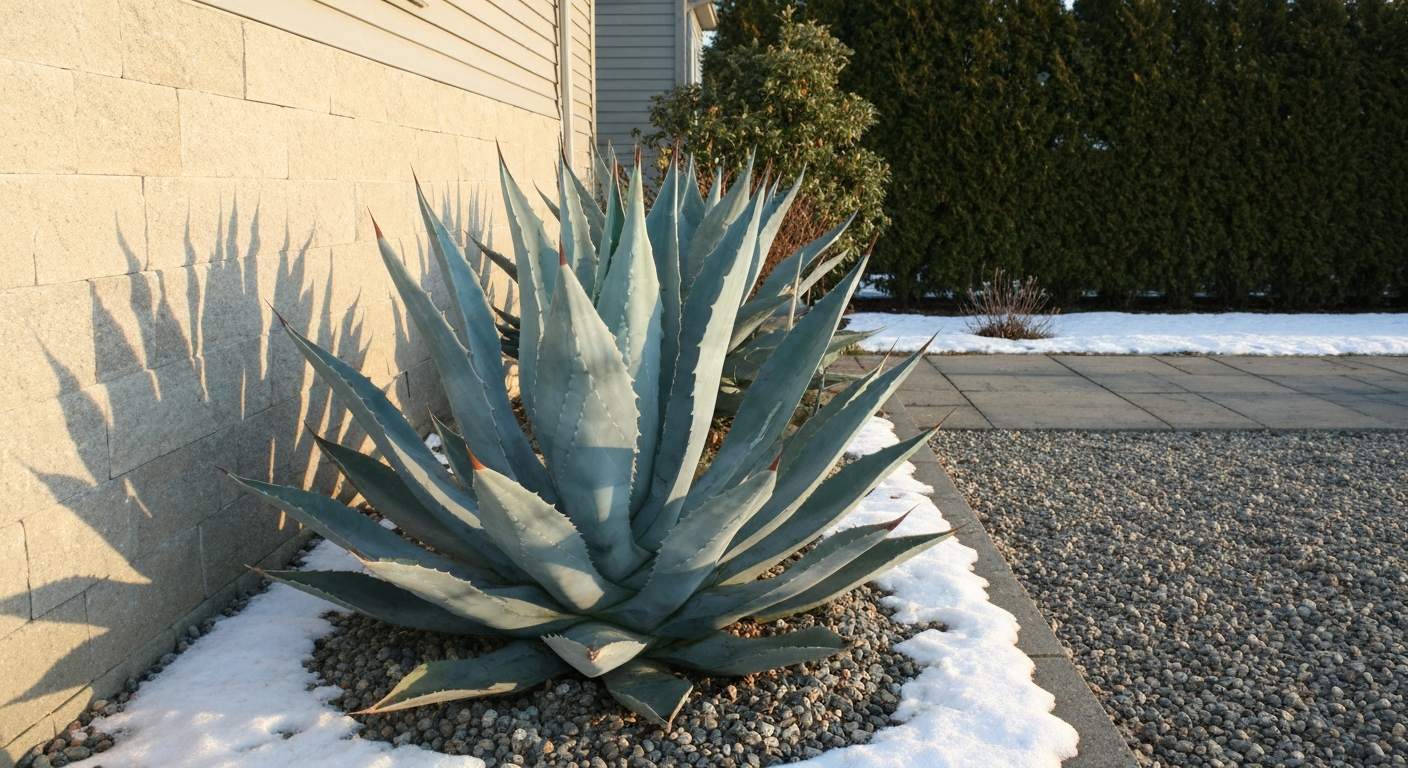
Can You Grow Agave in Canada? Zone Guide & Growing Tips
Can you grow agave in Canada? Practical region-by-region guide, hardy species, container tips & winter care.
Can You Grow Okra in Canada? Ontario Guide & Short‑Season Tips
Can you grow okra in Canada? Regional verdict, Ontario-specific steps, varieties, season-extension & harvest tips.