Yes, you can grow globe artichokes in Massachusetts, but the honest answer comes with some nuance. In the warmer coastal zones (6b–7) around Boston, Cape Cod, and the South Shore, artichokes can sometimes overwinter and behave as short-lived perennials. In the colder interior and western Berkshires (zones 5–6a), you will almost certainly grow them as annuals from seed each season. Either way, it works. UMass Extension confirms that annual production from seed is the most reliable approach across New England, and research trials from the University of Maine show first-year plants producing harvestable buds from late August through early October using cold-hardy varieties like Imperial Star.
Can You Grow Artichokes in Massachusetts? Zone-by-Zone Guide
Marcus Holloway
10 Aug 2026
Globe artichokes vs Jerusalem artichokes (sunchokes)
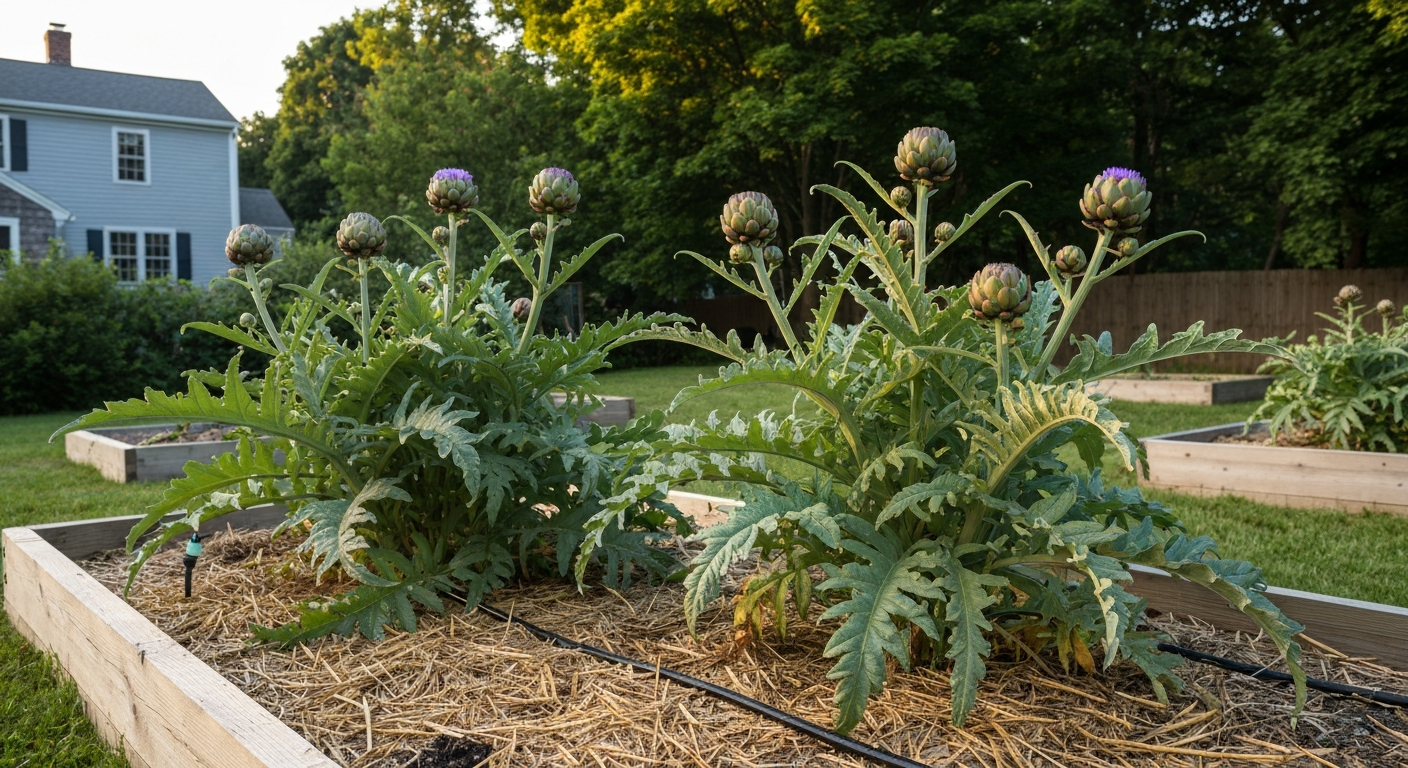
These two plants share a name and almost nothing else. Globe artichokes (Cynara cardunculus var. scolymus) are the big, edible flower buds you see in the grocery store. They are Mediterranean in origin, like warmth, dislike wet cold winters, and need careful management in Massachusetts. Jerusalem artichokes, also called sunchokes (Helianthus tuberosus), are a completely different plant. They are a native North American sunflower relative that produces edible starchy tubers. Sunchokes are extraordinarily cold-hardy, perennial, and will come back vigorously year after year in any Massachusetts zone. If you just want something called an artichoke in your garden with minimal effort, sunchokes are nearly foolproof. But if you want those globe buds to steam and dip in butter, you are growing Cynara and need the guidance below.
| Feature | Globe Artichoke (Cynara) | Jerusalem Artichoke / Sunchoke (Helianthus tuberosus) |
|---|---|---|
| Edible part | Flower bud (leaves and heart) | Underground tuber |
| Cold hardiness | Zones 7–11 as perennial; grown as annual in MA zones 5–6 | Zones 3–9; reliably perennial throughout MA |
| Ease of growing in MA | Moderate to challenging; requires timing and vernalization | Very easy; low maintenance |
| Flavor | Mild, buttery artichoke flavor | Nutty, slightly sweet, potato-like |
| Spreading habit | Clumping; stays where planted | Aggressive spreader; needs containment |
| When to harvest | Late summer to fall (buds) | Fall after frost (tubers) |
Perennial or annual? What to expect in your part of Massachusetts
Globe artichokes are perennial in USDA zones 7 and warmer. Massachusetts clips the bottom edge of zone 7 on Cape Cod and the Islands, and parts of coastal Boston and the South Shore sit in zone 6b. In those warmer microclimates, overwintering is possible but not guaranteed. A hard winter with little snow cover and repeated freeze-thaw cycles will kill the crown even with mulch protection. In Worcester (zone 6a) and the Berkshires near Pittsfield (zone 5b), expecting perennial behavior is wishful thinking. UMass Extension and the UMaine trial data both point to the same practical conclusion: in New England, treat artichokes as annuals and you will not be disappointed. Overwintering trials reported by Globe Artichoke | New England Vegetable Management Guide (UMass Amherst) and UMaine indicate experimental straw‑mulch plus low‑tunnel methods sometimes allow survival, but perennial overwintering is unreliable at commercial scale; controlled vernalization or hoop‑house strategies for annual first‑year budding are more predictable.
Microclimate signs that suggest you might get a second year from a plant: you are within a few miles of the coast, your garden is south-facing and protected from north and northwest wind, and your winters are mild enough that garlic overwinters without heaving. Even then, cut the plant back to about 6 inches after the first frost, pile on 6–8 inches of straw, and add a low tunnel or heavy row cover for extra protection. Do not count on it surviving, but it is worth trying if the first year's plant is vigorous and healthy.
Choosing varieties and starting materials
Varieties that work in Massachusetts
The most important variety choice for Massachusetts is an annual-production cultivar, meaning one bred to set buds in its first year without needing two full growing seasons. Imperial Star is the standard recommendation from UMass Extension and was one of the better performers in the 2021 UMaine trial, producing a higher proportion of marketable buds (over 3 inches) than some other cultivars. Tavor, Wonder, and Colorado Star are other annual types worth considering. All are available from Johnny's Selected Seeds, and Imperial Star appears at Territorial Seed Company and Fedco Seeds, though Fedco occasionally sells out early. Avoid heirloom perennial types like Green Globe Improved unless you are gardening in zone 7 coastal areas and plan to attempt overwintering seriously.
Seeds vs crowns vs transplants vs container-grown plants
- Seeds: The most common and economical option for annual production in MA. You control timing, vernalization, and variety selection. Requires a seed-starting setup with grow lights and a small cooler or refrigerator for cold treatment.
- Crowns (root divisions): Divisions taken from established perennial plants. More reliable for first-year bud production if sourced from a perennial parent, but harder to find in New England. Typically planted in early spring as soon as soil can be worked.
- Transplants: The easiest option if you can find them at a local farm stand or garden center in May. You skip the seed-starting and vernalization steps. Transplants that have already been cold-treated will set buds more reliably.
- Container-grown plants: A good option for zone 5 growers who want flexibility. A 15- to 20-gallon container lets you move plants into a frost-free garage or greenhouse for winter attempts, or simply start fresh each year.
Picking the right site and preparing the soil
Globe artichokes want full sun, at least 6 to 8 hours daily, and deeply worked, well-drained soil. They have a strong taproot and do poorly in waterlogged or compacted ground. The UMass New England Vegetable Management Guide specifies a soil pH of 6.5 to 7.0 and notes that light, sandy soils with poor water retention are not ideal either. You want something in the middle: a loamy, fertile, moisture-retentive but well-draining bed.
In Massachusetts, raised beds are genuinely helpful here. They drain better than in-ground beds in clay-heavy areas (common across much of eastern and central MA), warm up faster in spring, and are easier to amend. Before planting, work in 3 to 4 inches of finished compost and have your soil tested. The UMass Soil and Plant Nutrient Testing Laboratory offers crop-specific recommendations calibrated for New England soils using Modified Morgan extraction. A basic soil test will tell you exactly how much lime to apply to hit that 6.5–7.0 pH window and whether you need supplemental phosphorus or potassium before planting. It costs a few dollars and is well worth it.
Massachusetts planting calendar
Timing everything to your local last-frost date is the key to making annual artichoke production work in Massachusetts. Frost dates vary significantly across the state: Boston's median last spring frost is around April 8, Worcester's is around April 15, and Pittsfield in the Berkshires does not see its last frost until around May 13 on average. Use your specific ZIP code or weather station on a frost-date calculator to get your exact number, because microclimates can shift those dates by weeks.
| Task | Timing relative to last frost | Boston example (LF ~Apr 8) | Worcester (LF ~Apr 15) | Pittsfield (LF ~May 13) |
|---|---|---|---|---|
| Sow seeds indoors | 10–12 weeks before LF | Mid to late January | Late January | Late February |
| Vernalize seedlings (35–50°F for 10–21+ days) | ~6–8 weeks before transplant date | Early to mid-March | Mid-March | Early to mid-April |
| Harden off transplants | 2 weeks before transplant | Late March | Late March to early April | Late April |
| Transplant outdoors | Around last frost (soil workable) | Early to mid-April | Mid to late April | Mid to late May |
| Crown planting (if using crowns) | As soon as soil is workable | Late March to early April | Early April | Early to mid-May |
| Harvest window begins | ~85 days after transplant | Late June to early July | Mid-July | Late July to early August |
| Peak harvest | Aug–Sept | Aug–Sept | Aug–Sept | Aug–Oct |
| Fall planting for overwintering attempt (coastal zone 6b–7 only) | 4–6 weeks before first fall frost | Early to mid-September | Not recommended | Not recommended |
The vernalization step is critical and easy to skip by accident. Artichokes need exposure to cool temperatures (35–50°F) to trigger bud formation. For annual production, UMass recommends at least 10 days of controlled cold treatment; the UMaine research found that 500–550 hours of cold (roughly 21–32 days) increased bud set and yield. In practice, you can vernalize seedlings by moving them to an unheated garage, basement, or spare refrigerator set to around 40°F for two to three weeks before transplanting. The 2021 UMaine trial vernalized trays in a 40°F cooler starting May 10 and transplanted May 24, with harvest beginning August 20.
Spacing, layout, and container options
Globe artichokes get big. A mature plant can reach 4 to 5 feet tall and almost as wide. In the UMass trial setup, plants were spaced at least 2 feet apart within rows with 6-foot row centers. For a home garden, space plants 3 to 4 feet apart in all directions if you have the room. In a raised bed, a single row of plants spaced 3 feet apart along a 12-foot bed gives you three or four plants, which is a reasonable starting number. Do not crowd them. Poor airflow makes Botrytis gray mold worse, which was the primary disease issue noted in the UMaine trials.
For container growing, go large. A minimum of 15 gallons per plant is workable, but 20 to 25 gallons gives the taproot more room and reduces how often you need to water. Use a well-draining potting mix blended with about 25% perlite or coarse compost. Containers heat up and dry out faster than in-ground beds, so you will water more frequently. The advantage is portability: in zone 5, you can roll a container into an unheated greenhouse or garage in November for an overwintering attempt.
Feeding, watering, and summer maintenance
Artichokes are heavy feeders. Start with a soil-test-based fertilizer application worked in before planting. As a general baseline, the UMass guide references broadcast rates around 100–150 lb N per acre and 150 lb K2O per acre where P and K are low, but your soil test will dial in exact rates for your specific plot. At the home garden scale, working in a balanced granular fertilizer at planting plus a sidedress of a nitrogen-rich fertilizer (like fish emulsion or blood meal) about 4 to 6 weeks after transplanting keeps plants growing vigorously through the bud-production window.
Water is equally important. Plants need about 1 inch per week, and the UMass guide specifically recommends drip irrigation over overhead watering to reduce foliar disease pressure. If you are hand-watering, water at the base of the plant and avoid wetting the foliage. In dry stretches, deep watering two or three times per week is better than frequent shallow watering. A 3- to 4-inch layer of straw mulch around the base of each plant helps retain soil moisture, moderate soil temperature, and suppress weeds. In the UMaine trial, mulch treatments were compared and showed measurable effects on per-plant yield.
Overwintering and season extension in Massachusetts
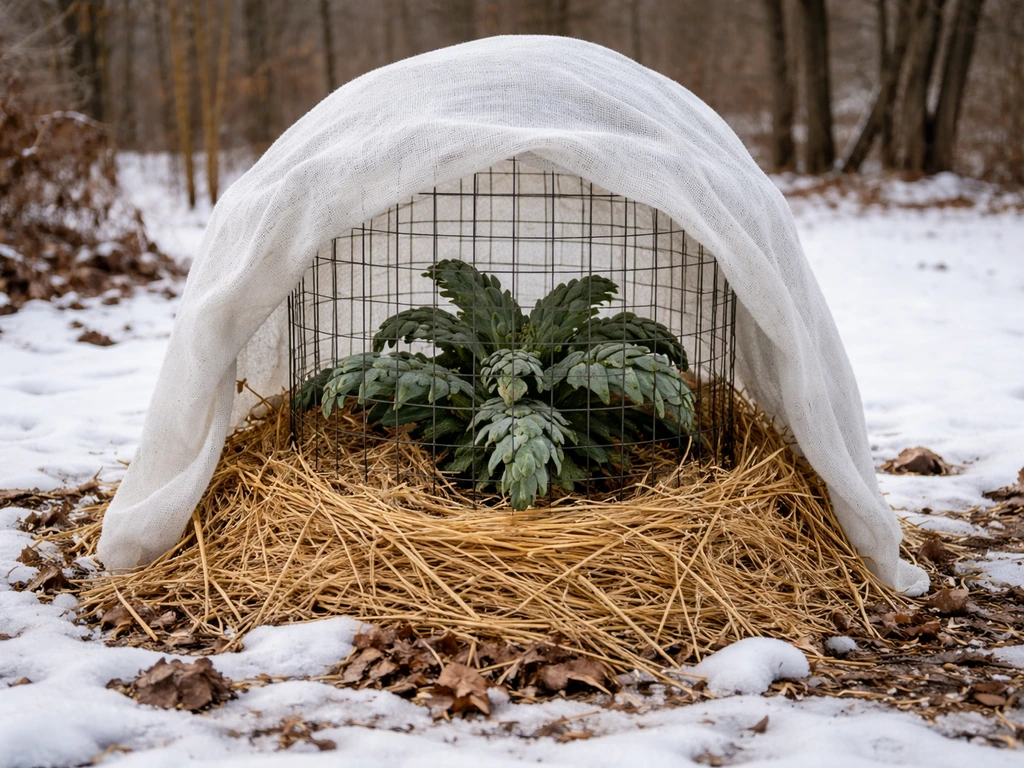
If you are in coastal zone 6b or zone 7 and want to try overwintering your plants, here is the practical approach. After the first hard frost cuts back the foliage, trim the plant down to about 6 inches. Cover the crown with 6 to 8 inches of loose straw, then add a low tunnel or heavy-weight row cover over the top to keep the mulch dry and add a few degrees of insulation. Remove everything in late March when overnight temperatures stay consistently above 25°F. Even with this treatment, expect losses in any winter colder or snowier than average.
Hoop houses and unheated high tunnels are a more reliable form of season extension. A single layer of 6-mil greenhouse plastic over low hoops can extend your harvest window by several weeks in fall and may be enough to carry some plants through mild winters in zone 6b. Heated greenhouses allow you to grow artichokes year-round, though the economics rarely make sense for home gardeners unless you already have a structure. If you are gardening in zone 5, skip the overwintering attempts and focus your energy on starting seeds on schedule in late January or February.
Pests and diseases to watch for
The 2021 UMaine trial observed green peach aphids, thrips, and tarnished plant bugs as the main insect pests on artichokes in the Northeast. Aphid colonies tend to cluster in the tightly packed bud leaves, which makes them harder to spot and harder to wash off than aphids on open foliage. Check buds regularly and knock aphids off with a strong stream of water or use insecticidal soap spray as a targeted treatment. Tarnished plant bugs cause distorted growth and stippling; row covers help exclude them early in the season when pressure is highest.
Botrytis cinerea (gray mold) was the main pathogen in the UMaine trial, though it caused minimal bud loss under the conditions tested. Good airflow through proper spacing, avoiding overhead irrigation, and removing dead leaves promptly are your best preventative measures. In wet, humid Massachusetts summers, gray mold can be more of a problem than in drier climates, so stay on top of spacing and sanitation.
What to expect at harvest
Harvest timing for first-year annual plants in Massachusetts runs from roughly late August through early October, depending on your location and planting date. In the UMaine 2021 trial (transplanted May 24 in a similar northern climate), harvest started August 20 and continued with weekly pickings through a final harvest on October 1. Cut buds when they are firm, compact, and still tightly closed. Once the bud starts to open and petals splay out, it has passed peak eating quality.
Per-plant yields in the UMaine trial averaged roughly 1.0 to 1.6 lb of marketable buds, with high-performing individual plants reaching 3.3 to 4.8 lb depending on cultivar and mulch treatment. For a home garden planting of four plants, that realistically means 4 to 10 lb of artichokes over the season. Not a huge harvest, but enough to make the effort worthwhile if you enjoy them. Each plant typically produces one large central bud followed by several smaller lateral buds.
Practical alternatives if the full process feels like too much
If the seed-starting, vernalization, and timing requirements feel like a lot, you have three easier paths. First, buy started transplants from a local farm stand in May. If they have already been cold-treated, you just plant and water. Second, grow them in a hoop house or unheated high tunnel, which compresses your risk and extends your season without adding much complexity. Third, and honestly the most reliable option if you just want to grow something called an artichoke with almost no effort, plant Jerusalem artichokes (sunchokes). If you're gardening in a much warmer region, see can artichoke grow in India for guidance on growing globe artichokes in Indian climates. They are native to North America, die back and come back every spring in any Massachusetts zone, and produce a solid tuber harvest in fall. The trade-off is they spread aggressively, so plant them in a contained area or large buried tubs.
How Massachusetts compares to similar northern states
Massachusetts sits in a similar climate band to several other northern states and provinces where growers face the same annual-vs-perennial question. Michigan and Wisconsin span USDA zones 4 through 6, making annual production the default just as in most of Massachusetts, with the same need for vernalization and careful timing. For region-specific guidance, see Can you grow artichokes in Wisconsin Can you grow artichokes in Wisconsin?. If you're wondering 'can you grow artichokes in Michigan', the short answer is yes, much like Massachusetts, most of Michigan (zones 4–6) is best suited to annual production using cold-hardy, vernalized varieties Can you grow artichokes in Michigan?. Illinois ranges from zone 5 in the north to zone 6b in the Chicago area, so growers there deal with nearly identical considerations. For specific guidance, see our page 'can you grow artichokes in illinois' for zone maps, recommended varieties, and timing tailored to Chicago and northern Illinois. New Jersey stretches from zone 6a to 7b, meaning its southern coastal areas actually have better odds of perennial overwintering than most of Massachusetts. See can you grow artichokes in New Jersey for details on New Jersey's zones and overwintering prospects. Ontario, Canada is mostly zones 5 and 6, so growers there face even shorter seasons and need to start seeds earlier indoors. If you're in Ontario and want region-specific timing, varieties, and overwintering tips, see can you grow artichokes in Ontario. In all these regions, the practical playbook is the same: choose annual varieties, start early, vernalize, and plan for a late-summer to fall harvest.
Your next steps
- Look up your exact USDA hardiness zone and last spring frost date using your ZIP code before you order anything.
- Order Imperial Star or Tavor seeds from Johnny's Selected Seeds, Territorial Seed Company, or Fedco Seeds by late December to ensure availability.
- Submit a soil sample to the UMass Soil and Plant Nutrient Testing Laboratory before spring to get pH and fertilizer recommendations specific to your plot.
- Mark your seed-starting date on the calendar at 10–12 weeks before your local last frost, and plan a 14–21 day vernalization window 6–8 weeks before transplant.
- Prepare a raised bed or large containers (15–25 gallons each) with well-draining, compost-amended soil at pH 6.5–7.0.
- Set up drip irrigation or plan to water at the base of plants, targeting 1 inch per week.
- Apply 3–4 inches of straw mulch after transplanting and check plants weekly for aphids and tarnished plant bugs.
- If you are in zone 5 or simply want a no-fuss alternative, plant Jerusalem artichokes in a contained bed for a reliable, perennial harvest.
FAQ
Can you grow globe artichokes in Massachusetts (USDA zones ~5–7)?
Yes — but with caveats. In warmer coastal/urban microclimates (zone 7 and mild zone 6 pockets) some varieties or well‑protected plants can survive and produce as short‑lived perennials. Most of Massachusetts (zones 5–6 inland and highlands) will not reliably overwinter globe artichokes; in those areas growers typically produce them as an annual from seed/transplant or use greenhouse/hoop protection. Source: UMass/NEV and regional trials.
What's the difference between globe artichokes and Jerusalem artichokes (sunchokes)?
They are different species with different culture and outcomes. Globe artichoke (Cynara cardunculus var. scolymus) produces edible flower buds (the vegetable). Jerusalem artichoke or sunchoke (Helianthus tuberosus) is a sunflower relative grown for edible tubers and is cold‑hardy in New England. If you want an easy, reliably hardy ‘artichoke‑like’ crop in MA, plant sunchokes instead.
Which artichoke varieties work best for Massachusetts and the Northeast?
Choose cultivars bred for annual or northern production: examples from trials and seed suppliers include Imperial Star, Tavor, Wonder, and Colorado Star. These have better first‑year bud set and were used in UMaine/NE trials. Select seed vendors that list performance in cool regions and prioritize ‘annual’ or ‘short‑season’ selections.
What starting material should I use: seed, crown, transplant or container plants?
Options and pros/cons: - Seed: cost‑effective, good for annual production; sow 8–12 weeks before transplant and vernalize (cold treatment) for bud set. - Seedlings/transplants: easiest for home gardeners; buy or start yourself. - Crowns/root divisions: more common where overwintering is possible; may be less reliable in MA. - Container plants: good for patios or for moving into protected overwintering structures. For Massachusetts, many growers start from seed or transplants to grow as annuals or to get a first‑year crop.
How and when should I schedule planting in Massachusetts?
General schedule (adjust to local last‑frost date): - Sow seed indoors 8–12 weeks before your median last frost (use your ZIP‑based frost date). - Germinate at 70–75°F; seedlings may need vernalization (35–50°F for 10–30+ days) to induce first‑year bud set. - Harden off and transplant after danger of hard frost has passed (typically mid/late April–May in MA depending on location). UMaine trials transplanted in late May and harvested from late August onward.
What soil and site conditions do globe artichokes need?
Plant in deep, fertile, well‑drained soil with pH 6.5–7.0. Avoid very light, excessively dry soils. Incorporate generous organic matter and base fertilization on a soil test (UMass lab recommended). Provide a sunny site with good air movement to reduce foliar disease.
Next Articles
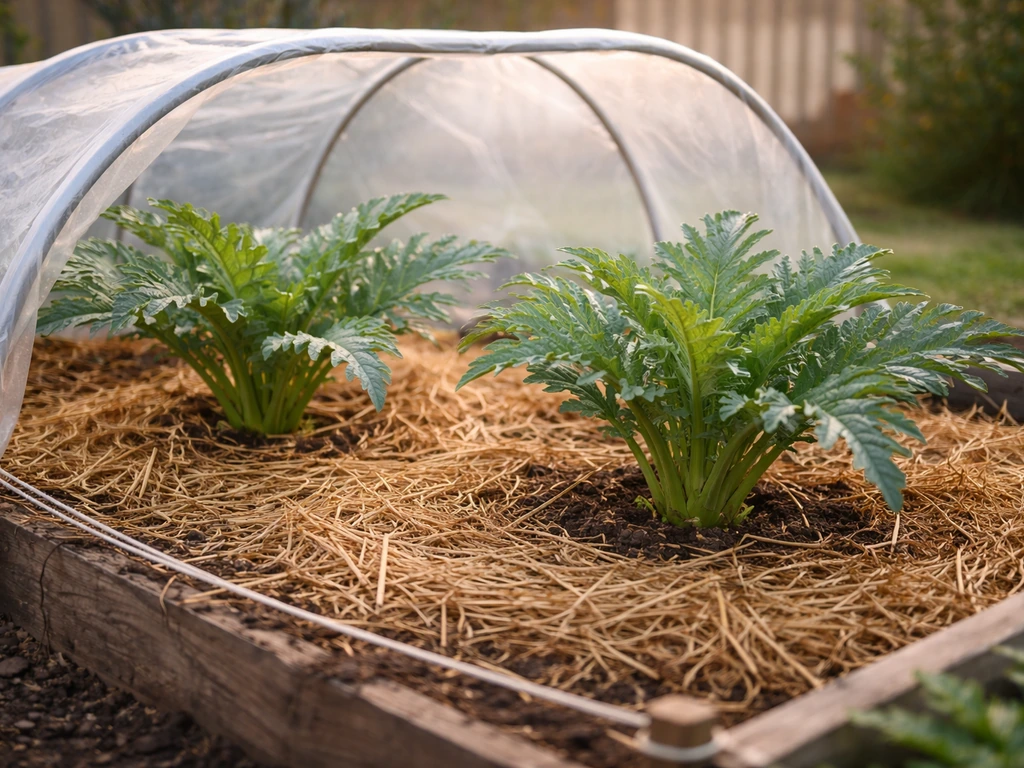
Can You Grow Artichokes in New Jersey? Yes, With Care
Yes, you can grow artichokes in New Jersey with winter protection, the right varieties, and NJ-specific planting and car
Can You Grow Artichokes in Ontario Canada? How to Succeed
Yes, you can grow artichokes in Ontario. Learn varieties, planting timing, winter care, and harvest tips.
Can You Grow Artichokes in Wisconsin? Practical Guide
Yes, but with the right cold-tolerant varieties, site prep, timing, and heavy winter protection for Wisconsin.