
Yes, you can grow artichokes in Tennessee, but how you grow them depends heavily on where in the state you are. Gardeners in Middle and West Tennessee (USDA zones 7a–8a) can treat artichokes as short-lived perennials with some winter protection. In higher-elevation East Tennessee (zones 6a–6b), you'll get the most reliable results by treating them as annuals, starting seeds indoors early and pushing for a first-year harvest. Either way, varieties like Imperial Star make the whole process much more achievable than older globe types that need multiple seasons to produce.
Can You Grow Artichokes in Tennessee? Zones, Varieties & Care
Marcus Holloway
25 Jul 2026
Tennessee climate overview: zones, seasons, and frost dates
Tennessee spans a wider range of climates than most people expect. According to the 2023 USDA Plant Hardiness Zone Map, the state runs from approximately zone 6a in the highest elevations of East Tennessee (think the Appalachian ridges and the Unaka Mountains) all the way up to zone 8a in parts of Shelby County near Memphis. Most of Middle Tennessee sits in zones 6b to 7b, while the lower elevations of the eastern valleys sit around 7a.
Frost timing follows those zones closely. The Knoxville area sees a median last spring frost in early to mid-April and a first fall frost around late October, giving roughly a 185–200 day growing window. Nashville and the central basin push those dates earlier in spring and later in fall. Memphis gardeners have the longest season in the state, with last frost dates often as early as mid-March. High-elevation East Tennessee communities can see frost as late as early May and as early as mid-October. For artichokes, those bookend dates matter a lot because you need enough warm days after transplanting to get buds before cold shuts things down.
Which artichokes work best in Tennessee
Traditional globe artichoke varieties were bred for the mild, frost-free California coast. They need two or more seasons to hit their stride, which is a problem in Tennessee where winter lows regularly drop below 14°F (−10°C) in most of the state. That cold threshold is about where serious winter damage kicks in for unprotected plants. The practical fix is choosing varieties bred to produce in their first year from seed, which sidesteps the whole overwintering risk.
Imperial Star is the go-to choice for Tennessee growers. It was specifically bred for annual first-year bud production, comes in around 85 days from seeding, and handles the kind of vernalization protocol that short-season growers use. Colorado Star is another strong option, earlier at about 75 days and producing attractive purple-tinged buds. Green Globe Improved and Tavor are worth considering too, especially in warmer zones where you might attempt overwintering, since trial data from the University of Maine shows them among the highest producers by weight.
| Variety | Days to Maturity | Bud Type | Best For in TN | Overwintering Potential |
|---|---|---|---|---|
| Imperial Star | ~85 days | Green globe | Annual production, all zones | Moderate in zones 7b–8a |
| Colorado Star | ~75 days | Purple, medium | Annual production, all zones | Low to moderate |
| Green Globe Improved | ~75 days | Green globe | Zones 7–8, perennial attempt | Moderate with protection |
| Tavor | ~88 days | Green globe | Zones 7–8, higher yield targets | Moderate with protection |
| Violetto | ~90–100 days | Purple, large | Zones 7b–8a, ornamental appeal | Low in most of TN |
If you're in zones 6a or 6b, I'd stick with Imperial Star or Colorado Star and treat every plant as an annual. In zones 7b and 8a, it's reasonable to try overwintering Green Globe Improved or Tavor, but go in knowing you might lose 50% or more of plants in a hard winter.
Seed vs transplant: which makes more sense for you
Both approaches work in Tennessee, but they suit different situations. Starting from seed gives you access to the best annual varieties (especially Imperial Star) and is significantly cheaper per plant if you're growing more than a handful. The trade-off is that seeds need to be started 8–12 weeks before your transplant date, which means you're starting indoors in January or February for most of the state. You also need to run a vernalization step: after your seedlings reach 4–6 true leaves, expose them to 10–14 days at around 40–50°F to trigger bud set. A garage, unheated mudroom, or cold frame works well for this.
Transplants from a local nursery or mail-order supplier save time and skip the indoor seed-starting hassle, but variety selection is often limited to whatever the nursery carries. If you find Imperial Star or Colorado Star transplants locally, that's a perfectly good option. Just make sure transplants are 6–12 weeks old and have been hardened off before you put them in the ground.
- Choose seeds if: you want variety control, you're growing 6+ plants, or you enjoy the seed-starting process
- Choose transplants if: you're starting late, growing just 2–4 plants, or you find a reliable local source
- Either way, Imperial Star is the safest bet for first-year production across all Tennessee zones
- Don't skip vernalization when starting from seed — it's the key to getting buds in year one
Exact planting windows by Tennessee region
Timing is everything with artichokes because you need to hit the transplant window precisely, too early and a hard freeze can kill young plants, too late and you won't have enough warm days to develop buds before fall. Seed germination needs soil temperatures of 70–80°F, which means indoor starts only in winter. Grow seedlings at 60–70°F daytime and 50–60°F at night until you're ready to transplant.
| Region | USDA Zones | Start Seeds Indoors | Vernalize Seedlings | Transplant Outdoors | Expected Harvest Window |
|---|---|---|---|---|---|
| East TN highlands (e.g., Mountain City, Elizabethton) | 6a–6b | Jan 1–15 | Late Feb–early Mar | Mid-Apr to May 1 | Aug–Sep |
| East TN valleys (e.g., Knoxville, Maryville) | 6b–7a | Jan 1–15 | Late Feb–early Mar | Apr 1–15 | Jul–Sep |
| Middle TN (e.g., Nashville, Murfreesboro) | 6b–7b | Jan 1–20 | Late Feb–early Mar | Mar 20–Apr 10 | Jul–Aug |
| West TN / Memphis metro | 7a–8a | Dec 15–Jan 10 | Mid-Feb | Mar 1–20 | Jun–Aug |
For direct seeding outdoors, artichokes are not a practical choice in Tennessee. The germination temperature requirements and the long time to bud set make indoor starting the only reliable path. If you're in the Memphis area with a zone 8a microclimate, you could theoretically direct-sow in very early spring, but you'd be gambling on yield timing.
Site selection and soil preparation
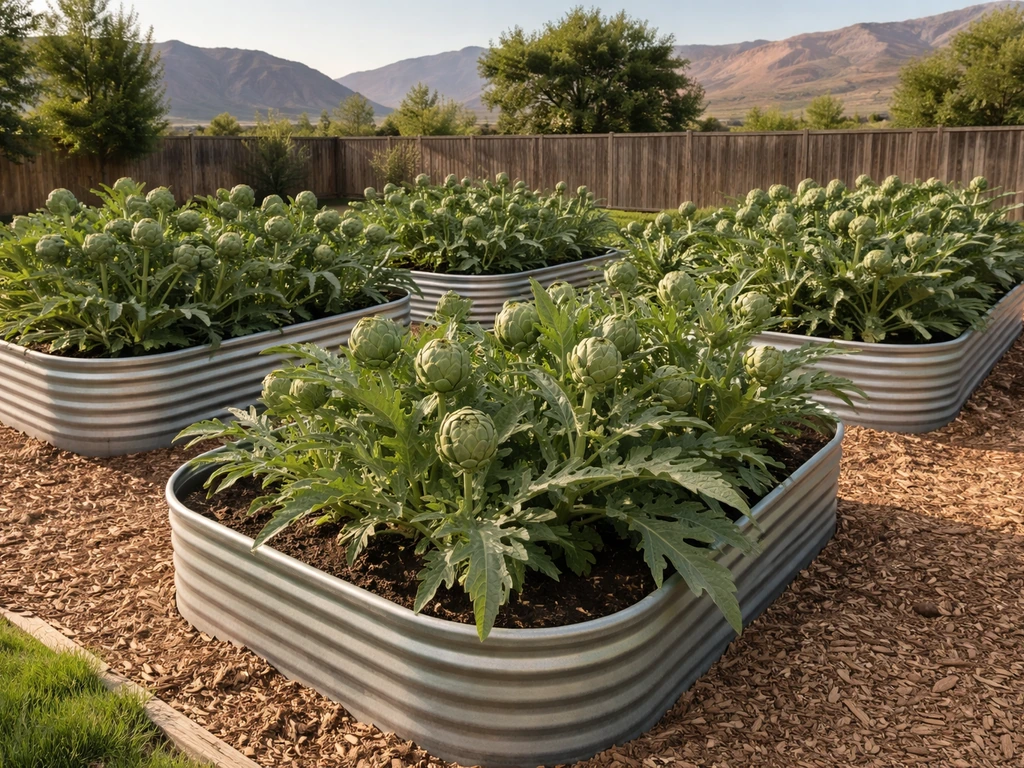
Artichokes want full sun, at least 6–8 hours of direct light per day. In Tennessee's summer heat, some afternoon shade won't hurt, but don't let it shade out the morning sun. The bigger concern in most of Tennessee is drainage. Artichoke roots rot in waterlogged soil, and much of Middle Tennessee's clay-heavy ground holds water poorly. Raised beds 8–12 inches high make a real difference and are worth the extra setup effort, especially if you're in a low-lying area or on heavy clay.
Soil pH should be between 6.5 and 7.0. Tennessee soils, particularly in the east, tend to be acidic, often falling in the 5.5–6.2 range without amendment. Run a soil test before you plant (your local UT Extension office can process these for a modest fee) and apply ground limestone several weeks ahead if pH needs adjusting. Work 2–3 inches of compost into the top 12 inches of soil. If you're using a fertilizer baseline at bed prep, a broadcast application of a balanced fertilizer such as 10-10-10 at roughly 2–3 lbs per 100 square feet is a reasonable starting point, similar to what University of Maine trial protocols used.
- Full sun preferred, minimum 6 hours direct light
- Raised beds strongly recommended on clay or poorly drained Tennessee soils
- Target soil pH 6.5–7.0; test and amend with lime weeks before planting
- Incorporate 2–3 inches of compost to a depth of 12 inches
- Avoid low spots, areas with standing water after rain, or heavy clay without drainage improvement
Planting layout, spacing, and companion plants
Artichokes are big plants. Each one can spread 3–4 feet across and reach 3–5 feet tall at peak growth. Johnny's recommends 2–3 feet between plants in a row and 3–6 feet between rows. For home gardens with space constraints, I'd aim for 3 feet between plants in rows 4–5 feet apart. In a raised bed setting, a single row down the center of a 4-foot-wide bed with plants 3 feet apart is manageable and gives you room to access plants from both sides.
For small-scale plots, a block of 6–12 plants is enough to give a meaningful harvest while keeping the bed manageable. Companion planting options include tarragon, which many growers note deters aphids, and sunflowers or tall annuals on the north side to buffer wind without shading. Avoid planting near other large perennials or anything that spreads aggressively, since artichokes don't compete well when crowded early in the season.
Irrigation and drainage plan
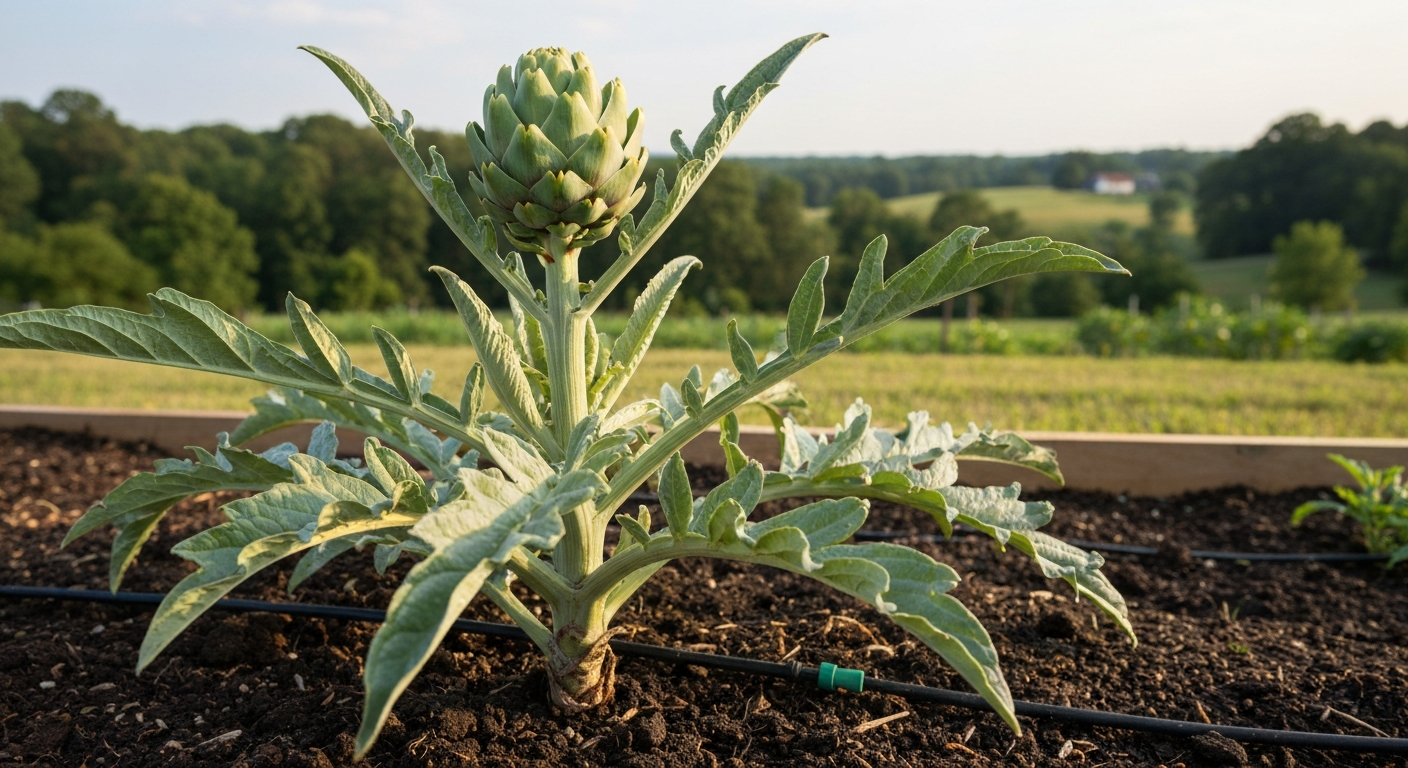
Artichokes need consistent moisture but are very sensitive to standing water. Drip irrigation is the clear best choice here. A single drip line per row keeps moisture at the root zone, avoids wetting foliage (which reduces disease pressure), and makes it easier to control water during Tennessee's wet spring periods. Aim to keep soil evenly moist to a depth of about 6 inches, roughly equivalent to 1–1.5 inches of water per week during active growth.
Tennessee's spring weather can be unpredictable, with heavy rain events common from March through May. In those periods, the biggest risk is not drought but waterlogging, especially on flatter ground. If you're seeing standing water around your plants after rain, that's a red flag for root rot. During summer in Middle and West Tennessee, heat and dry spells can arrive fast, and plants under stress will abort bud development. Check soil moisture 2–3 times per week in July and August and increase drip run times during dry stretches. Overhead watering isn't ideal but works if you water in the morning so foliage dries before evening.
Fertilization and nutrient management
Artichokes are heavy feeders. After the preplant compost and balanced fertilizer at bed preparation, side-dress plants with a nitrogen-focused fertilizer about 4–6 weeks after transplanting, once plants are actively growing. A fish emulsion or balanced liquid fertilizer applied every 2–3 weeks during the vegetative phase works well for home gardens. Reduce nitrogen inputs once buds begin to form, since excess nitrogen at that point pushes leafy growth at the expense of bud size.
The most common deficiency you'll run into in Tennessee's acidic soils is low phosphorus availability at low pH. If your soil test shows pH below 6.2, correcting the pH with lime will unlock existing phosphorus more effectively than adding more fertilizer. Magnesium deficiency (yellowing between leaf veins) shows up occasionally in sandy West Tennessee soils and can be corrected with a light application of Epsom salt at about 1 tablespoon per gallon of water applied as a foliar spray. Keep a soil test record and revisit nutrient levels annually if you're attempting to overwinter plants for a second season.
Mulching and winter protection in Tennessee
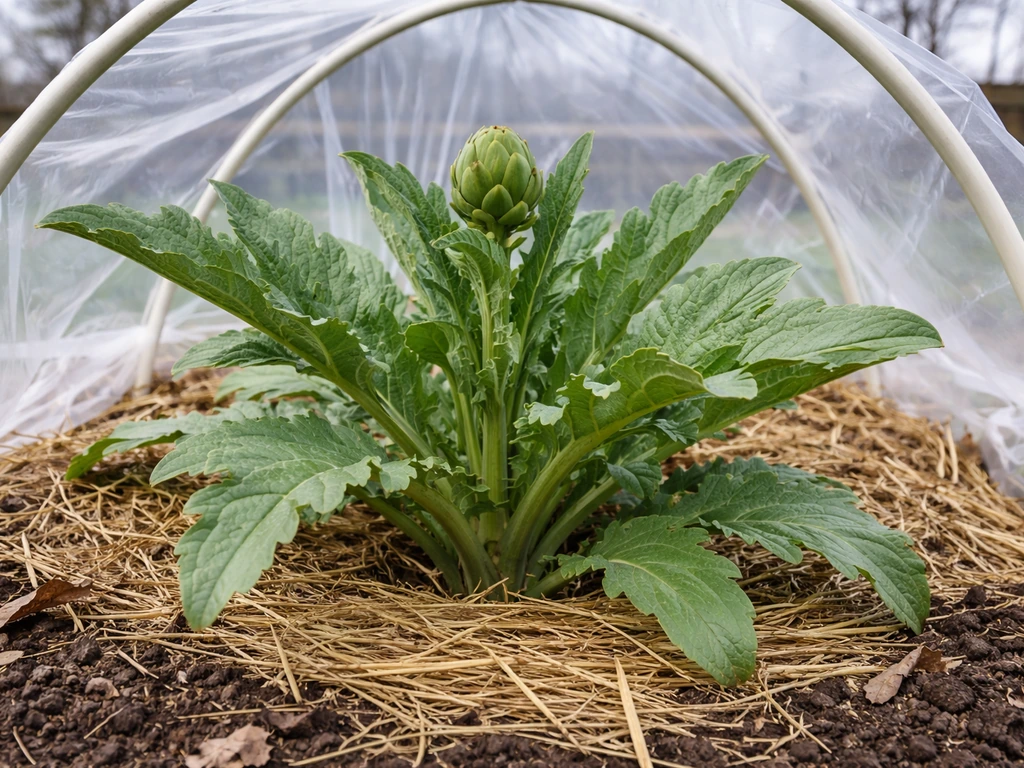
If you're in zones 7b or 8a and want to attempt overwintering, the combination of thick mulch and a low tunnel gives you the best shot. After the first hard frost cuts back the foliage, cut plants back to about 6–8 inches, mound 6–12 inches of straw over the crown, and cover the bed with a low tunnel using woven frost fabric or heavyweight row cover. SARE farmer research in New Hampshire (a colder climate) found average first-year overwintering survival around 48% with straw mulch plus woven fabric tunnels, with survival ranging from 20–76% depending on drainage and site microclimate. Perennial globe artichokes wintered in low tunnels (SARE final report FNE14‑809) reported average first‑year survival around 48% (plot survival ~20–76%) using straw mulch plus woven fabric low tunnels, with survival strongly affected by drainage and site microclimate. Tennessee's milder winters in zones 7–8 should improve those odds, but drainage quality was the biggest variable, so don't try this on poorly drained ground.
In zones 6a and 6b, overwintering in the ground is a long shot. Your practical options are either treating plants as annuals and starting fresh each year, or digging plants in fall and overwintering them in containers in an unheated but frost-free garage or basement. Potted artichokes kept at 35–45°F with minimal water can survive winter and be replanted in spring. It's extra work, but for gardeners who fall in love with a particular plant, it's worth it.
Pests and diseases to watch for
The pest list for artichokes in the mid-South is manageable. Aphids are the most common issue, typically clustering on new growth and under bud scales. A strong water spray or insecticidal soap handles most infestations. Thrips and tarnished plant bugs are documented in trial settings and can cause bud scarring; both are managed with row cover during early growth and, if needed, targeted insecticide applications. In Tennessee's hot, dry summers, particularly in West Tennessee, two-spotted spider mites can become a serious problem. Look for stippled, bronzed foliage and fine webbing under leaves. Miticide or insecticidal soap applied in the morning can knock populations back.
On the disease side, gray mold (Botrytis cinerea) is the main threat, especially in Tennessee's humid springs. It shows up as gray fuzzy growth on stems and buds during cool, wet weather. Good air circulation, overhead watering avoidance, and prompt removal of dead or damaged tissue are your best cultural defenses. Crown rot from waterlogged soil is the other common killer. There's no recovering a plant with a rotted crown, which is why drainage setup is so important before you plant.
Harvest timing and realistic yield expectations
You're looking for buds that are firm, tightly closed, and 3–5 inches in diameter. Harvest with pruning shears, cutting about 1–1.5 inches below the bud. Don't wait for buds to start opening, once the bracts loosen and the flower begins to open, eating quality drops fast. The central (terminal) bud on each stalk is the largest; secondary side-shoot buds are smaller but still worth harvesting.
In a first-year annual system with Imperial Star or Colorado Star, expect 1–3 buds per plant in a good year. University of Maine trial data showed average marketable yield per plant ranging from about 1.0 to 1.6 lbs, with high-performing plants in good conditions reaching 3.3–4.8 lbs. Those numbers are from a cooler climate than most of Tennessee; in zones 7–8 with the longer season, you may see the higher end of that range. A 10-plant bed can realistically give you 10–20 lbs of artichokes in a productive season, which is genuinely satisfying for a home garden.
Seasonal timeline for Tennessee artichoke growers
- December–January: Start seeds indoors under grow lights; germinate at 70–80°F
- February: Grow seedlings at 60–70°F daytime; begin vernalization (10–14 days at 40–50°F) once plants reach 4–6 true leaves
- March (West/Middle TN) or April (East TN): Harden off transplants for 7–10 days; transplant to prepared beds after last frost risk passes
- April–May: Establish drip irrigation; side-dress with nitrogen fertilizer; monitor for aphids
- May–June (West/Middle TN) or June–July (East TN): Buds begin to form; reduce nitrogen, maintain consistent soil moisture
- June–August: Harvest buds at peak firmness; cut secondary side shoots as they develop
- September–October: Evaluate plants for overwintering attempt (zones 7b–8a) or let annuals finish
- October–November (zones 7b–8a only): Cut back plants after first frost; mound straw over crowns; install low tunnel protection
- March (following year): Remove low tunnels as growth resumes from overwintered plants
How Tennessee compares to neighboring and similar states
Tennessee sits in a middle ground among states where artichoke feasibility is a common question. Missouri shares similar zone ranges (roughly 5b–7a) and faces comparable winter-kill challenges in the north, making annual production the dominant strategy there much as it is in East Tennessee. If you’re asking "can you grow artichokes in Missouri", the answer is similar: annual production is the norm in the cooler north while warmer southern zones offer better chances for overwintering. Ohio gardeners in the northern half of the state face harder winters than most of Tennessee and rely heavily on annual production with cold-hardy varieties. For more on local conditions and strategies, see can you grow artichokes in ohio. Colorado presents a more extreme version of the short-season problem: most of the state is colder and drier than Tennessee, and growers there battle both late spring frosts and low humidity. For specific guidance on handling Colorado's late frosts and low humidity, see can you grow artichokes in Colorado. Utah's artichoke situation varies sharply between the milder Wasatch Front valleys and the colder high-altitude regions, somewhat echoing the East-versus-West Tennessee divide. Can you grow artichokes in Utah? (link). Tennessee actually has one of the more favorable profiles among these inland states, particularly in its western and central zones, where the combination of mild winters and long growing seasons gives perennial attempts a real shot.
What to do if artichokes don't work out
If you try artichokes and find the timing, space, or climate in your specific corner of Tennessee isn't cooperating, cardoon (Cynara cardunculus) is a close relative that's hardier and easier to overwinter in zones 6–7. It's grown for its edible stems rather than buds and has a similar flavor profile. Jerusalem artichoke (Helianthus tuberosus) is a native Tennessee plant that produces abundantly without any of the cold-hardiness drama, though it spreads aggressively if you're not careful. For the full globe artichoke experience with less risk, a large container (25–30 gallon) on a sunny patio gives you the ability to move plants to frost protection in winter, which is the most reliable system for zones 6a–6b gardeners who don't want to start fresh from seed every year.
FAQ
Can you grow globe artichokes (Cynara scolymus) successfully in Tennessee?
Yes — but approach depends on where you are. In much of Middle and West Tennessee (USDA zones ~6b–8a) you can often grow artichokes as tender perennials with winter protection or as reliable annuals that produce in the first year. In higher‑elevation East Tennessee (zones ~6a–6b) treat them as annuals or use intensive winter protection; consistent winter minima below ~14 °F (−10 °C) greatly reduce perennial survival.
Which parts of Tennessee are best for growing artichokes?
Best: low‑elevation West and central areas (zones 7a–8a) where winters are milder. Middle Tennessee (large sections zone 6b–7b) can succeed with winter mulch/low tunnels or by growing as annuals. East Tennessee higher elevations (zone 6a–6b) have the most risk of winter kill and usually need annual production or very robust winter protection.
Which varieties are recommended for Tennessee (cold‑tolerant / short‑season)?
Good choices: Imperial Star (bred for first‑year production), Colorado Star, Tavor, Green Globe Improved, and Violetto. Imperial Star and Colorado Star are favored for short seasons and annual-first‑year harvests; Green Globe Improved and Tavor give higher yields where overwintering succeeds.
Should I start artichokes from seed or buy transplants in Tennessee?
Both work. Seed indoors 8–12 weeks before your transplant date to save money and get early control over vernalization. Transplants (6–12 weeks old) give more reliable first‑year yields and are easier for beginners. If you want first‑year buds, start seed indoors and apply a short vernalization (see below) or buy transplants pre‑vernalized.
What exact planting windows should Tennessee gardeners use (by region)?
Use local last‑frost/first‑frost normals as a guide. Typical windows: - West & Middle TN (warmer): transplant outdoors mid‑March to early April after soil workable; sow indoors mid‑January–February. - Higher‑elevation East TN: sow indoors January, transplant late April–May (after last frost) and plan as annuals or use protection. For fall planting as perennials, transplant by late summer/early fall (Aug–early Sep) so plants establish before winter. Check NOAA/USDA zone maps for county dates.
How do I prepare soil and site for best results?
Choose a sunny, well‑drained site with fertile soil (pH 6.5–7.0). Work in ample organic matter; raised beds with good drainage reduce winter rotting. Incorporate balanced starter fertilizer (e.g., 10‑10‑10) at recommended rates, and avoid heavy clay poorly drained spots. Drip irrigation and single dripline per bed are recommended.
Next Articles
Can You Grow Artichokes in Missouri? How to Succeed
Yes, with the right variety and cold protection. Learn how to grow artichokes in Missouri, from planting to overwinterin
Can You Grow Artichokes in Ohio? Complete Guide
Learn if you can grow artichokes in Ohio, with timing, varieties, planting steps, care, pests, and winter protection.
Can You Grow Artichokes in Utah? How to Succeed
Yes, learn how to grow artichokes in Utah: best varieties, planting dates, container or ground setup, and overwintering