
You can grow date palms in Virginia, but getting edible fruit is a completely different story. In the warmest coastal parts of the state, like Hampton Roads and the Eastern Shore, a date palm can survive in the ground with protection and produce occasional fruit in exceptional summers. In the Piedmont and Blue Ridge, survival is the challenge, and fruiting is unlikely without container growing and a lot of management. In the mountains, date palms are not a realistic outdoor plant. If your goal is fruit on the tree, Virginia makes it hard. If your goal is to experiment with a genuinely exotic plant, the coastal zones give you a real shot. You can apply the same container and winter-protection logic if you want to know can you grow dates in Alabama, since cold snaps and humidity still matter.
Can You Grow Dates in Virginia? Cold Hardiness and Care Guide
Virginia's climate and what it means for date palms
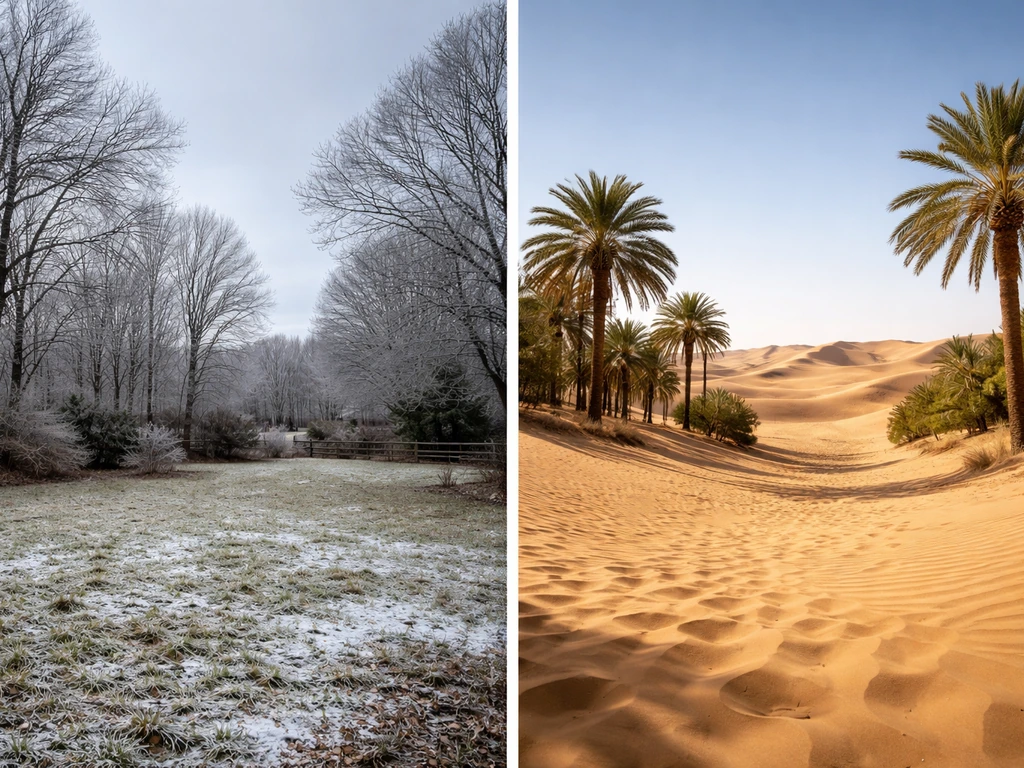
Date palms (Phoenix dactylifera) evolved in desert climates with brutal summer heat and essentially frost-free winters. Virginia is roughly the opposite: humid, often wet, and capable of serious cold snaps even on the coast. Virginia's USDA hardiness zones span from Zone 5A in the western mountains (where winter lows can hit -20°F to -15°F) all the way up to Zone 8B in the Hampton Roads area (where average winter lows hover around 15°F to 20°F). That coastal zone is the only part of the state with any realistic claim to long-term date palm survival in the ground.
Even in Zone 8B, the issue is not just the average low, it is the occasional hard freeze. Date palms can take brief exposure around 15°F to 20°F (-9°C to -7°C) with little damage, but any sustained cold below 0°C (32°F) starts causing leaf desiccation and metabolic stress. When temperatures drop below freezing for multiple nights in a row, which happens even in Norfolk and Virginia Beach in bad winters, a young in-ground date palm is vulnerable. The Piedmont (Zones 6B-7B) sees winter lows that can reach 0°F to 10°F without warning. That is below the survival threshold for Phoenix dactylifera without serious protection.
Summer heat matters too. Date palms need shade temperatures above 25°C (77°F) for fruiting and significant heat accumulation over a long season to ripen fruit. Virginia's summers are warm and humid, but they are not the dry desert heat dates require. Humidity creates disease pressure that arid date-growing regions never deal with. Fruit ripening in Virginia, even if flower set occurs, is a race against fall temperatures dropping before the fruit matures, and it is a race the tree often loses.
Which types of date palms are we actually talking about?
When most people search for growing dates, they mean Phoenix dactylifera, the true edible date palm. But there is a critical distinction between seed-grown plants and named cultivars propagated from offshoots. Seed-grown date palms are a gamble in every direction: you get roughly 50/50 male to female plants, fruit quality from seedlings is often poor, and you have no idea of the cold hardiness pedigree. Named cultivars like Medjool and Deglet Noor are propagated from offshoots of proven female trees, which gives you a known-sex plant with predictable fruit quality. For Virginia, buying an offshoot from a named cultivar is the only approach that gives you any reasonable chance at edible fruit.
You may also encounter other Phoenix species marketed loosely as date palms, like Phoenix canariensis (Canary Island date palm) or Phoenix sylvestris (silver date palm). These are cold-hardier and more ornamental but do not produce edible dates worth eating. If someone sells you a cold-hardy date palm and the species is not explicitly Phoenix dactylifera, you are buying an ornamental, not an edible crop. Understand that distinction before you spend money.
| Type | Cold Hardiness | Edible Fruit? | Virginia Viability |
|---|---|---|---|
| Phoenix dactylifera (named cultivar, offshoot) | ~15–20°F (-9 to -7°C) | Yes, good quality | Coastal Zone 8 with protection; containers elsewhere |
| Phoenix dactylifera (seed-grown) | ~15–20°F (-9 to -7°C) | Variable, often poor | Same cold limit; sex unknown until flowering |
| Phoenix canariensis (Canary Island date) | ~15–20°F (-9 to -7°C) | Not edible | Ornamental only; survives Zone 8-9 |
| Phoenix sylvestris (silver date palm) | ~18–20°F (-8 to -7°C) | Very poor quality | Ornamental; coastal areas only |
How to actually grow dates in Virginia
Picking the right spot
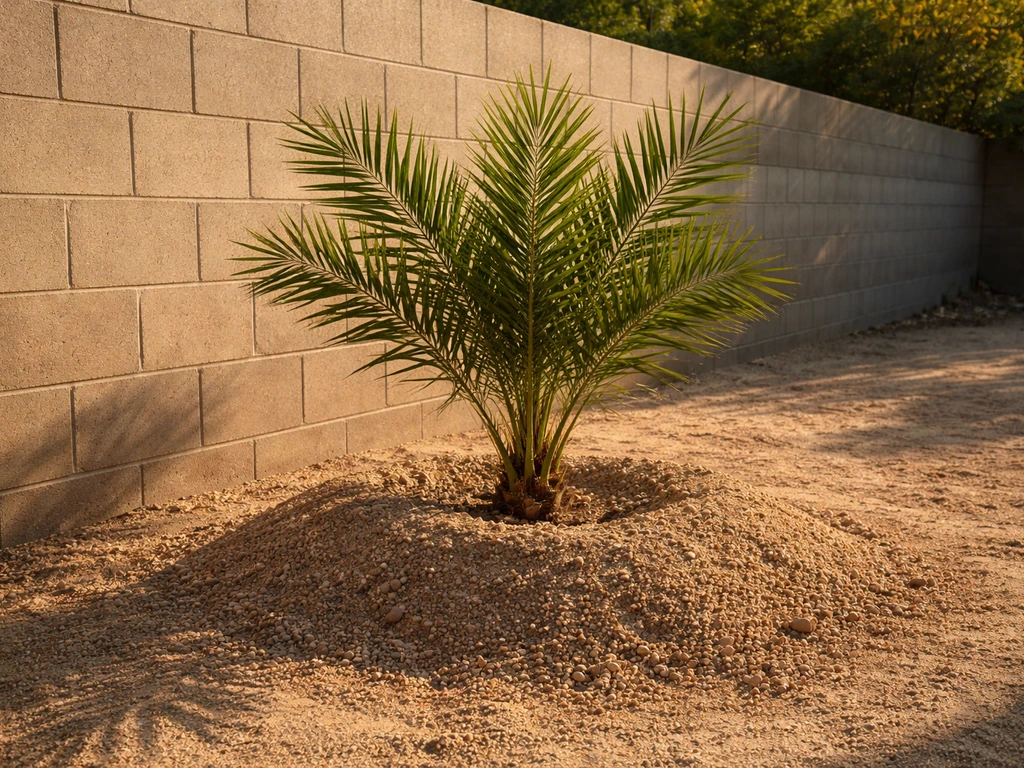
If you are planting in the ground, microclimate is everything. You want the warmest, most sheltered spot on your property, a south or southwest-facing position against a masonry wall or brick structure that absorbs daytime heat and radiates it overnight. Avoid low spots where cold air settles. The goal is to create conditions that push your local microclimate a half-zone or even a full zone warmer than the surrounding area. In coastal Virginia, a well-chosen microclimate can realistically bump you from Zone 8B conditions to something closer to Zone 9-equivalent for temperature purposes.
Drainage is non-negotiable. Date palms absolutely cannot tolerate wet, soggy soil, and Virginia's clay-heavy soils in the Piedmont and northern regions are a serious problem. If your soil holds water, you need to amend heavily with coarse sand and grit or build a raised bed. In the coastal plain, sandier soils are more forgiving, but standing water will still kill the roots over winter. Mound the planting area slightly so water runs away from the crown and base.
Planting and establishment
Plant in late spring once soil temperatures are consistently above 60°F, giving the palm the maximum possible growing season to establish before its first Virginia winter. During the first two to three years, water deeply and infrequently to encourage roots to go down, not laterally. A US retailer product listing for Phoenix dactylifera (Date Palm) also gives basic culture guidance of full sun and deep, infrequent watering, and notes that it forms suckers or offshoots that can be transplanted Date palm culture notes call for full sun and deep, infrequent watering. Once established, date palms are drought-tolerant, but in Virginia's hot, humid summers you will still need to water during dry stretches, especially for container plants. Use a balanced palm fertilizer through the growing season, but stop fertilizing by late August so the tree can harden off before winter.
Pollination for fruit
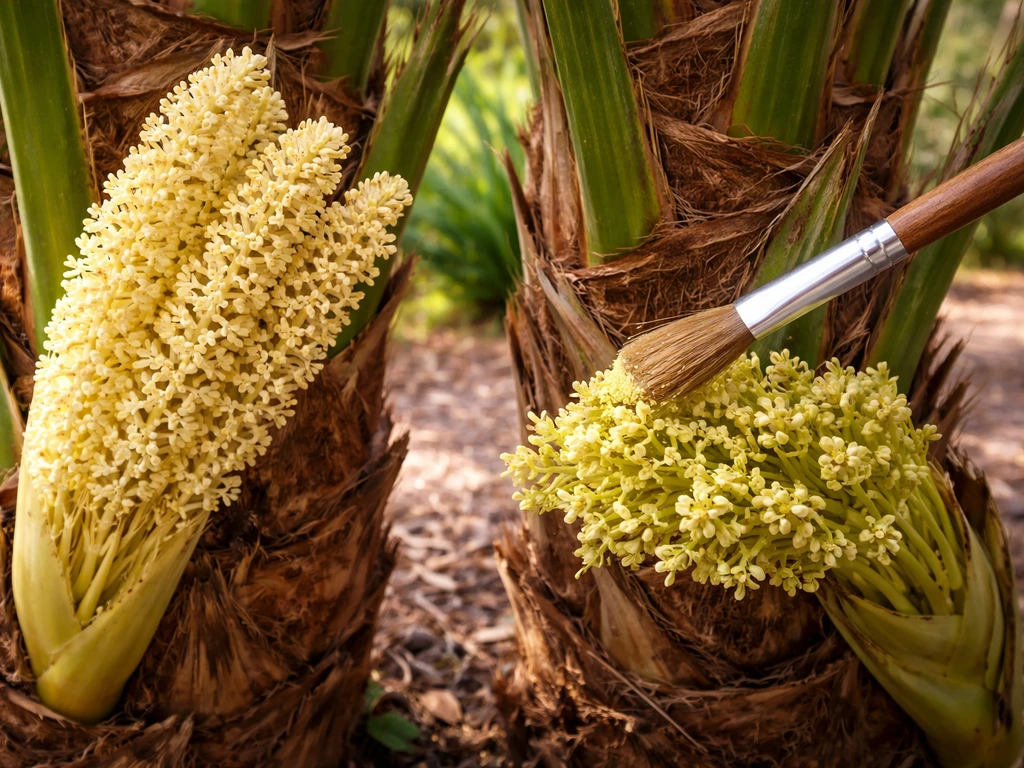
Date palms are dioecious, meaning you need a male and a female plant to get fruit. Natural wind pollination is possible, but in a backyard with one of each, hand pollination is the reliable approach. When the male flower sheath opens and releases pollen (a yellow, powdery cluster), cut strands of the male inflorescence and tuck them directly into the open female flower cluster. Timing is critical and short-lived, typically a window of a few days. If you only have one plant and do not know its sex yet, you will not find out until it flowers, which can take years. For anyone serious about fruit, buy from a nursery that can confirm the plant is a rooted female offshoot from a named cultivar.
Surviving Virginia winters: protection strategies that actually work
Winter protection is the single most important factor for date palm success in Virginia. The approach depends heavily on where in the state you are and whether the plant is in the ground or a container.
In-ground plants in coastal zones
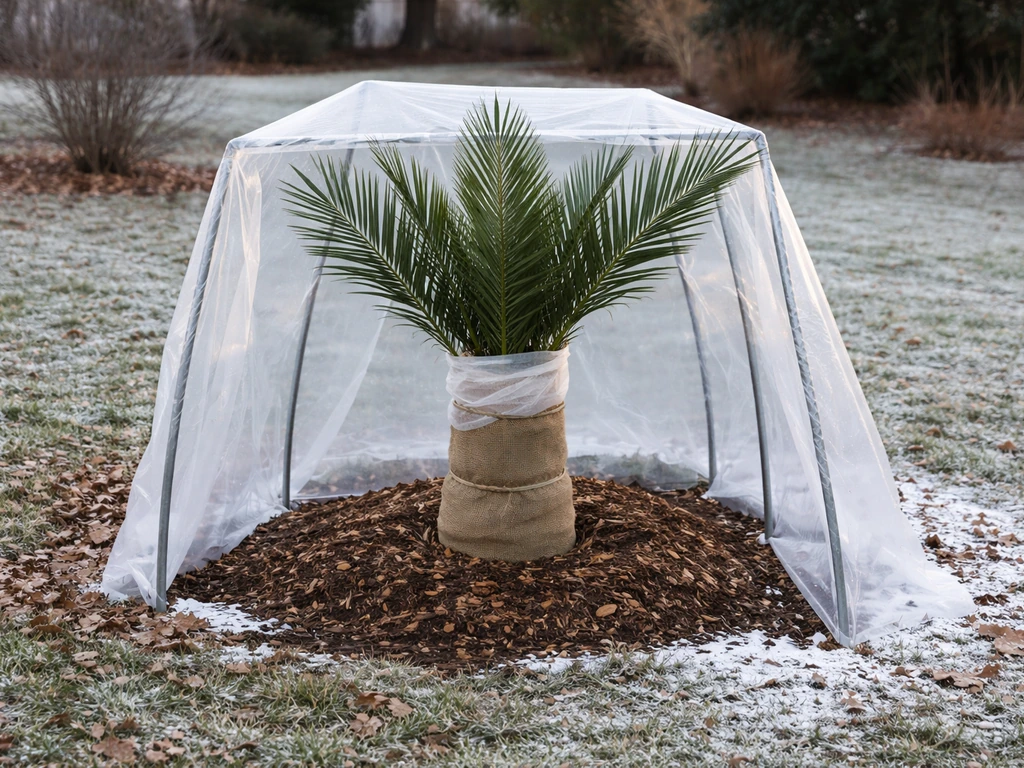
For in-ground palms in Zone 8 coastal Virginia, the goal is to protect the crown (the growing point at the top of the trunk) and the root zone. Apply 3 to 4 inches of mulch around the base, but keep it pulled away from the trunk itself to prevent rot in Virginia's wet winters. In fall, gather the lower fronds and loosely tie them upward around the crown, then wrap the crown with burlap or frost cloth. Avoid plastic or dark materials that can trap heat on sunny days and cause temperature swings that damage tissue. Frost cloth buffers temperature by about 4 to 6 degrees, which helps against light frosts, but will not save the crown during a hard freeze below 25°F. For hard freeze events, add an additional layer of insulation or use a heat source like a string of incandescent lights inside the wrapped crown.
Inland and Piedmont locations
In Zone 7 and below, in-ground date palms face genuine survival odds that are not good. Even with wrapping, heavy mulching, and microclimate selection, a Zone 6 or 7 winter can push below the -9°C threshold that causes serious damage. If you are committed to trying in-ground in the Piedmont, treat the plant as semi-expendable and have a backup container plant. Check NOAA historical records for your nearest weather station to understand your actual record lows, not just the zone average, before committing.
Overwintering container plants indoors
For anyone outside coastal Zone 8, container growing with indoor overwintering is the practical path. Bring the container inside before the first frost, typically October in the Piedmont and earlier in the mountains. Place it in a cool but frost-free environment, ideally around 45°F to 55°F (7°C to 13°C). A garage or unheated basement that stays above freezing works well. You want the plant dormant, not actively growing, so avoid a warm, well-lit indoor spot that encourages growth. Give it minimal water during dormancy. Move it back outside in late April to May once frost risk has passed and temperatures are warming.
When to expect fruit, and being honest about what Virginia can deliver
Date palms take roughly 4 to 8 years from planting before they begin to flower, and closer to 7 to 10 years before you see meaningful fruit production. That timeline assumes consistent warm seasons and no winter setbacks. In Virginia, every cold winter that damages or kills fronds sets the clock back. If a hard freeze wipes out the crown, you may be starting over. Even in the best coastal Virginia microclimate, you should expect 5 to 10 years before your first taste of homegrown dates, and that assumes everything goes right.
Fruit ripening is the second major hurdle. Dates need a long, hot, dry ripening period to develop the sugar concentration that makes them edible. Virginia summers are warm enough to set fruit in a good year, but the fall humidity and rainfall can cause fruit to ferment or mold on the tree before it fully ripens. In coastal Virginia, you might get partially ripe or soft-stage (khalal) dates in exceptional years. Fully ripe, dried dates (the kind you buy in a store) are essentially out of reach for outdoor Virginia growing. If you harvest at the khalal stage (still slightly crunchy and astringent) and finish them indoors, you can get something worth eating. It requires patience, attention to timing, and a bit of luck with the weather.
Compared to neighboring states, Virginia is a harder date-growing environment than Georgia, South Carolina, or Louisiana, which have longer, hotter growing seasons and milder winters in their warmest zones. North Carolina's coastal areas are closer to Virginia's situation. The reality is that Virginia is right at the edge of where date palms can exist, let alone fruit. If you are wondering whether dates can grow in Louisiana, the climate and timing matter even more than in Virginia date palms can exist.
Container vs. in-ground: which makes more sense for Virginia?
This is the most practical decision Virginia date palm growers face. Here is the honest breakdown:
| Factor | Container Growing | In-Ground Growing |
|---|---|---|
| Winter survival control | High — bring indoors below freezing | Low to moderate — depends on microclimate |
| Fruit potential | Low — roots restricted, heat limited | Moderate in coastal Zone 8 with good site |
| Long-term viability | Indefinite with management | Risky outside Zone 8B |
| Effort | High — moving large pots is labor-intensive | Moderate after establishment |
| Best for Virginia regions | Piedmont, mountains, Zone 7 and below | Coastal Virginia, Zone 8B only |
| Soil and drainage | Full control with potting mix | Requires heavy amendment in clay soils |
If you live in Hampton Roads, Norfolk, Virginia Beach, or the Eastern Shore and have a warm south-facing wall, in-ground is worth the experiment. Everywhere else in Virginia, container growing gives you much better control over the plant's survival, even if it limits fruit potential. A large container (25 gallons or more) with excellent drainage, a quality palm potting mix, and a manageable overwintering location is the setup that makes date palms realistic across most of the state.
Where to find plants and your next steps today
The most important thing to get right when buying is knowing exactly what you are purchasing. Ask these questions before you hand over money:
- Is this a Phoenix dactylifera (true date palm) or another Phoenix species?
- Is it propagated from an offshoot (known sex, known cultivar) or grown from seed (unknown sex)?
- If female, what named cultivar is it? Medjool and Deglet Noor are the most common named edible cultivars.
- What size and age is the plant? Older, larger specimens cost more but start fruiting sooner.
- Has it been hardened off for outdoor conditions or is it a greenhouse-grown plant that needs adjustment?
Local Virginia nurseries rarely carry Phoenix dactylifera as a fruiting plant. You are more likely to find them at specialty palm nurseries, online retailers that ship bare-root or potted palms, or palm society sales. Specialist palm and tropical plant sellers sometimes carry sexed offshoots of named cultivars, which is what you actually want. If a listing does not specify the cultivar and sex, assume it is a seedling of unknown quality. For Virginia buyers, look for a plant that is at least in a 3-gallon container or larger, which gives you a head start on the years-long establishment timeline.
To get started today: check your exact USDA hardiness zone using the 2023 USDA Plant Hardiness Zone Map for your specific ZIP code, identify your warmest microclimate and assess your drainage situation, and decide upfront whether you are going container or in-ground. If you are in Zone 7 or colder, commit to the container path. If you are in Zone 8B on the coast, make the microclimate and drainage your first projects before the plant arrives. Order from a reputable specialty palm nursery that can confirm cultivar identity and plant sex, and plan your overwintering setup before the first fall frost. Going in with clear expectations, a warm spot, great drainage, and a realistic timeline is what separates the growers who get dates in Virginia from the ones who give up after the first hard freeze.
FAQ
If I can’t get fully ripe dates outdoors, what’s the best way to salvage a harvest?
Yes, but only if you are treating it as an experiment and you accept that fruit might never fully dry on the tree. The most realistic “home grown” outcome is harvesting at the khalal stage and finishing indoors in a dry, warm room with good airflow. Don’t expect the same look and shelf-drying quality as store-bought dates, especially in humid fall weather.
What are the most common reasons people fail when trying to grow date palms in Virginia?
Treat it as a two-part problem, winter damage and fruit drying. Keep the plant dormant indoors or protected outdoors, and prioritize a warm, sheltered microclimate plus hard drainage before you focus on fertilizers. If you do hand pollination, timing still matters, and if you skip sexing or cultivar verification you may spend years waiting for flowers that cannot produce edible fruit.
How can I tell whether a “date palm” I’m buying is actually Phoenix dactylifera and worth growing for fruit?
A cold-hardy label on its own is not enough. Ask what the seller means by “date palm,” confirm the species is Phoenix dactylifera (the edible date palm), and ask whether the plant is a named cultivar offshoot that is sexed. If they cannot confirm both cultivar identity and that it is a female, assume poor odds for edible dates.
If my date palm flowers but I didn’t know it was male or female, what can I do?
You can sometimes see sex sooner than you would expect, but don’t rely on timing. Many palms take years to flower, and juvenile fronds look similar regardless of sex. Plan as if you will not know you are missing a male or a female until the first flowering event, so buy two plants only from sellers who can confirm sex ahead of time if fruit is the goal.
Can I overwinter a container date palm in my house instead of a garage or basement?
Yes, but it has to be the right setup. Overwinter a container date palm at roughly 45°F to 55°F (7°C to 13°C), keep it cool and near-dormant, and avoid a warm, bright indoor spot that triggers active growth. Let the mix dry slightly between waterings, because wet soil plus cool temperatures is a root-stress combination.
What’s the best way to manage drainage if my soil is clay-heavy?
For containers, use a large pot, about 25 gallons or more if you want fewer winter compromises, and focus on fast drainage rather than just adding “potting mix.” Use a gritty palm mix and ensure you have drainage holes, then elevate the pot so excess water cannot sit underneath. For in-ground, mound slightly and keep mulch away from the trunk to prevent rot in Virginia’s wet winters.
When should I remove winter wraps and mulch in Virginia?
You usually should not remove protection too early in spring. Wait until frost risk is truly past for your specific area, then unwrap gradually if you used multiple layers, especially after a hard winter. Sudden exposure to bright sun and temperature swings can scorch tender fronds that emerged under protection.
Is it safe to use string lights or a heat source for winter protection, and how do I avoid creating new problems?
If you are using light-based heat, keep it simple and safe. The goal is to buffer temperature around the crown, not to create a warm growing environment. Use string lights designed for indoor outdoor use, secure them so they do not contact burlap/frost cloth directly, and never use enclosed heaters that could create fire or moisture buildup inside wraps.
If wind pollination is possible, when is hand pollination actually necessary?
It can be worth it, but only for the edible-species goal. If you have room for two sexed plants and you can protect the crown through hard freezes, hand pollination is a reliable way to avoid “waiting for wind.” However, it will not fix the biggest constraint, getting enough heat for fruit to ripen and enough dryness to prevent fermentation or mold.
What microclimate choices matter most on a specific lot, not just by zone?
Start with the warmest microclimate you have, south or southwest exposure, and keep the palm away from low areas where cold air settles. You can also improve performance by using a heat-absorbing wall and ensuring airflow so humidity does not hang around the fronds. Just remember that better summer warmth still cannot fully overcome repeated hard freezes in Zones 7 and below.
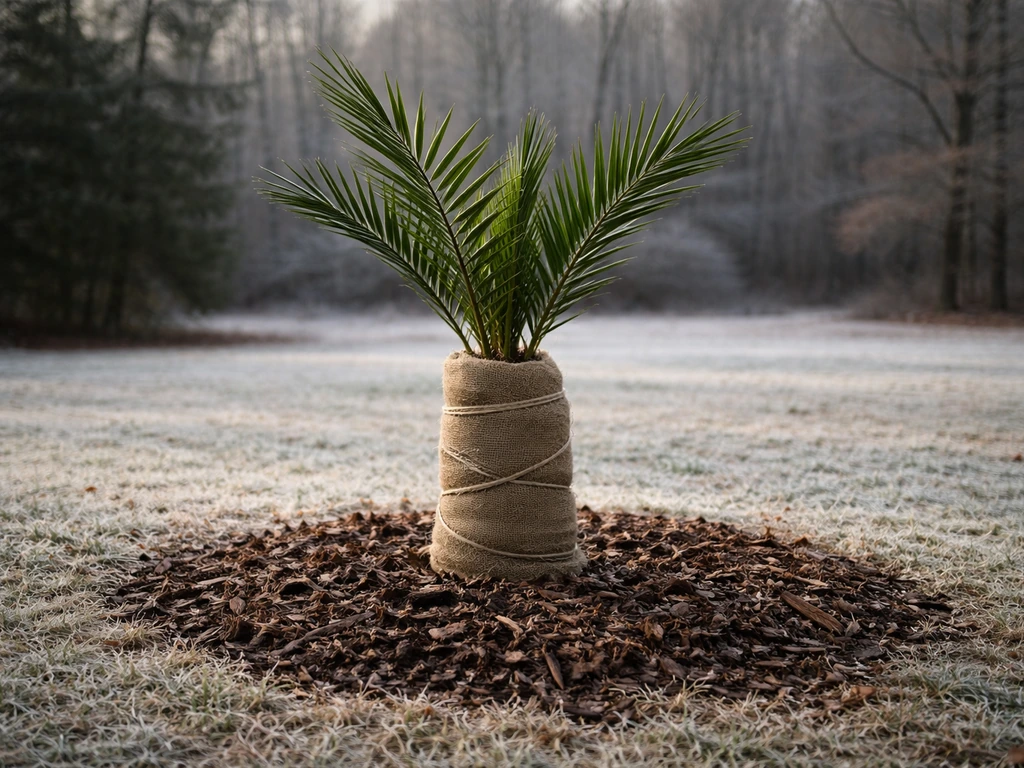
Learn if you can grow date palms in Georgia, where they survive, setup steps, and cold protection for fruiting.

Can you grow date palms in North Carolina? Winter limits, where it might work, and seed vs plant options.
Can you grow agave in Canada? Practical region-by-region guide, hardy species, container tips & winter care.