
Yes, you can grow date palms in North Carolina, but let's be honest upfront: getting edible fruit from them is a long shot for most of the state. You can keep a date palm alive in the coastal plain, and with serious effort you might coax one through winters in the Piedmont. But flowering, fruiting, and harvesting actual dates? That's a much harder ask, and it depends on which part of North Carolina you're in, which type of palm you plant, and how much work you're willing to put into winter protection every single year.
Can You Grow Dates in North Carolina? Realistic Guide
Marcus Holloway
21 Apr 2026

What 'growing dates' actually means here
Before getting into specifics, it's worth clarifying what you're actually trying to do. 'Growing dates' usually means one of two things: growing a date palm from a seed you found inside a grocery store date, or planting a palm that eventually produces harvestable fruit. These are very different projects with very different timelines and odds.
Date palms (Phoenix dactylifera) are dioecious, meaning individual trees are either male or female. Only female trees produce fruit, and they need pollen from a male to do it. Seeds from store-bought dates can germinate, but the resulting seedlings won't reveal their gender until they flower, which according to genetic research takes roughly 6 to 8 years from seed. That's nearly a decade before you even know if your plant is capable of producing fruit, let alone whether it will in North Carolina's climate. If fruiting dates are the goal, buying a named female variety as an established palm is the smarter starting point.
How North Carolina's climate actually lines up
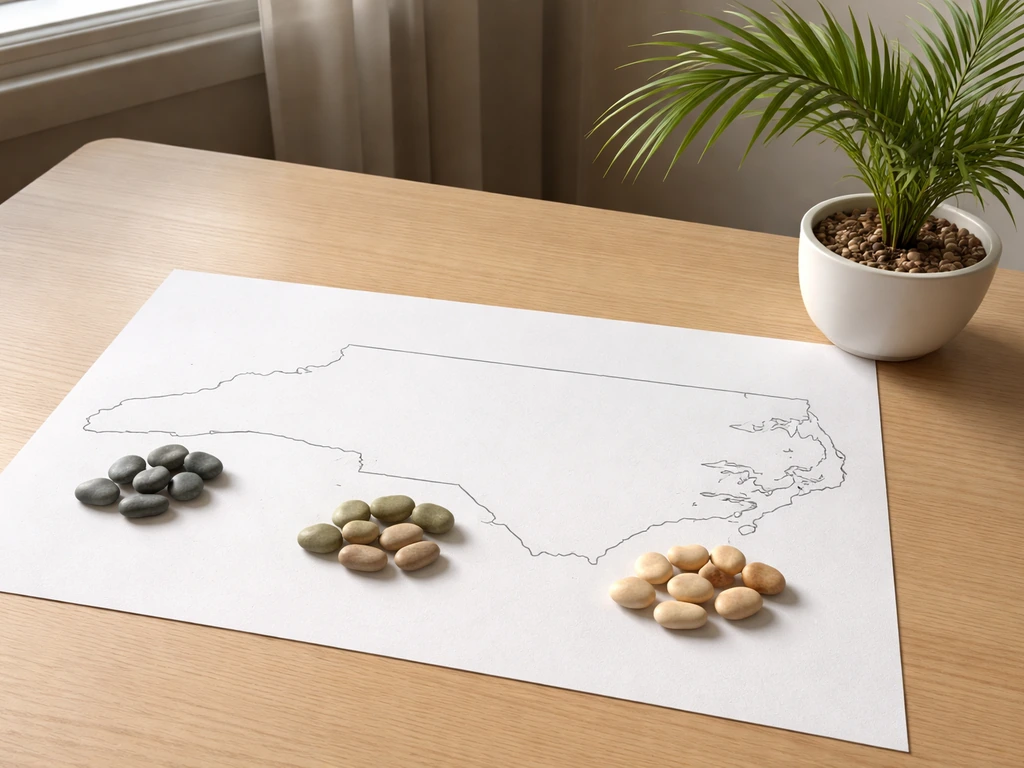
North Carolina spans a wide range of USDA hardiness zones, roughly from Zone 5 in the high mountains down to Zone 8b along the southern coastal plain. That spread matters enormously for date palms. Phoenix dactylifera can tolerate cold down to about 15°F, with some sources noting it can handle brief dips into the low 20s°F with manageable frond damage. But sustained cold, repeated freezes, and wet winters all increase the risk of serious injury or death.
Here's how the three main regions break down in practical terms:
| Region | Typical Zones | Winter Low Range | Date Palm Viability |
|---|---|---|---|
| Coastal Plain (Wilmington area) | Zone 8a–8b | 10–20°F typical lows | Best chance in-ground; fruiting possible in warmest spots |
| Piedmont (Charlotte, Raleigh) | Zone 7b–8a | 5–15°F typical lows | Survival possible with protection; fruiting very unlikely |
| Mountains (Asheville and west) | Zone 5–7a | Below 0°F to 10°F | Not viable in-ground; container-only with full indoor overwintering |
The coastal plain, especially around Wilmington and Brunswick County, is where growers have the most realistic shot. Microclimates matter a lot here: a south-facing wall, proximity to a large body of water, or an urban heat island can push your effective zone slightly warmer and reduce the duration of cold snaps. Those few extra degrees can be the difference between a palm that bounces back and one that doesn't make it. Compared to neighboring states, North Carolina's coast sits in similar territory to South Carolina's Upstate region, though South Carolina's coast itself runs slightly warmer overall.
Picking the right variety and finding one to plant
Phoenix dactylifera is the true date palm, the one that produces commercial dates. But there are related species worth knowing about if you're more interested in having a palm that survives than one that necessarily fruits. Phoenix sylvestris (wild date palm or silver date palm) has similar cold hardiness, tolerated to about 15°F, and is sometimes used as a rootstock or ornamental. Phoenix canariensis (Canary Island date palm) is frequently grown in the Carolinas and is slightly more cold-tolerant in terms of surviving freezes, but it produces small, barely edible fruit, not the sweet dates you're thinking of.
If you specifically want Phoenix dactylifera with a chance at fruit, look for named female varieties like Medjool, Deglet Noor, or Barhee. Sourcing matters: buy from a reputable specialty palm nursery that can confirm the sex and variety of the plant. A sexed, named female palm in a 15-gallon or larger container gives you a head start of several years over starting from seed. Online specialty nurseries ship to North Carolina, and occasionally you'll find Canary Island date palms at big box stores, though those won't give you edible fruit.
Seed vs. transplant: what you're actually signing up for
Growing from seed
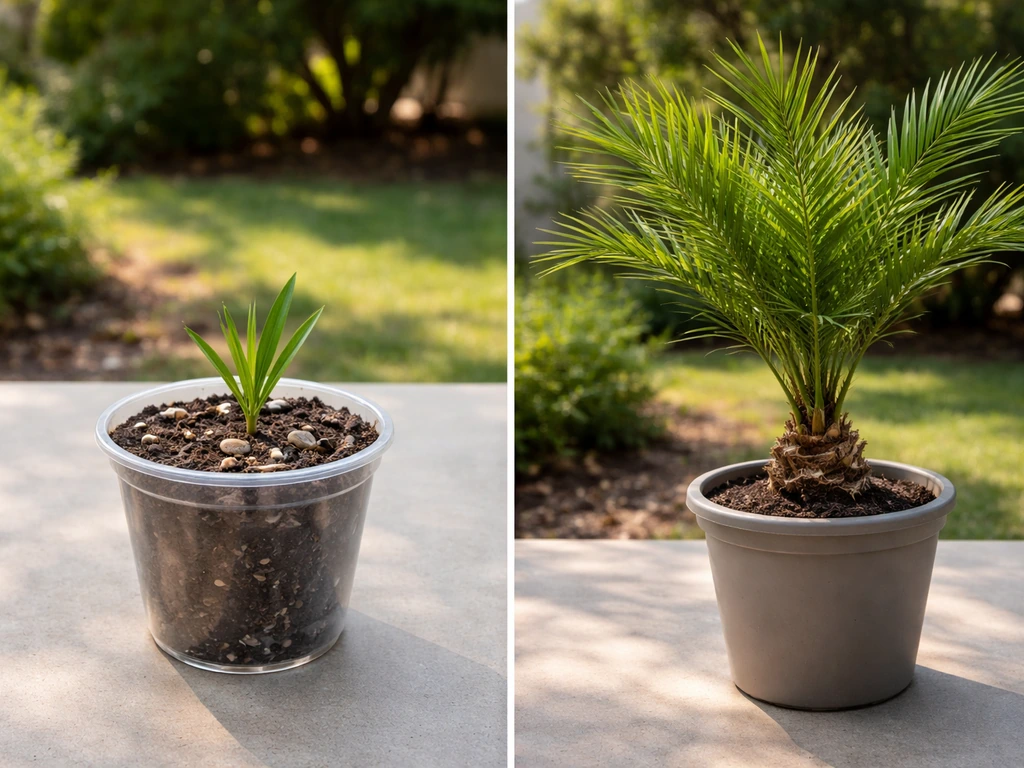
Growing a date palm from a grocery store date seed is a fun project, and germination is usually pretty reliable if you use fresh seeds and provide warmth (soil temperatures around 75–95°F speed things up). Soak the seed for 24 to 48 hours, plant it about an inch deep in well-draining mix, and keep it warm and moist. Germination can take anywhere from 3 to 8 weeks.
After that, you're raising a seedling that you won't know the sex of for 6 to 8 years. If it turns out male, it can't produce fruit. Even if it's female, it still needs a male nearby and the right climate conditions to set fruit. Seed-grown palms are a long game with uncertain payoffs, better suited as a curiosity or a learning project than a serious fruiting effort.
Planting an established palm
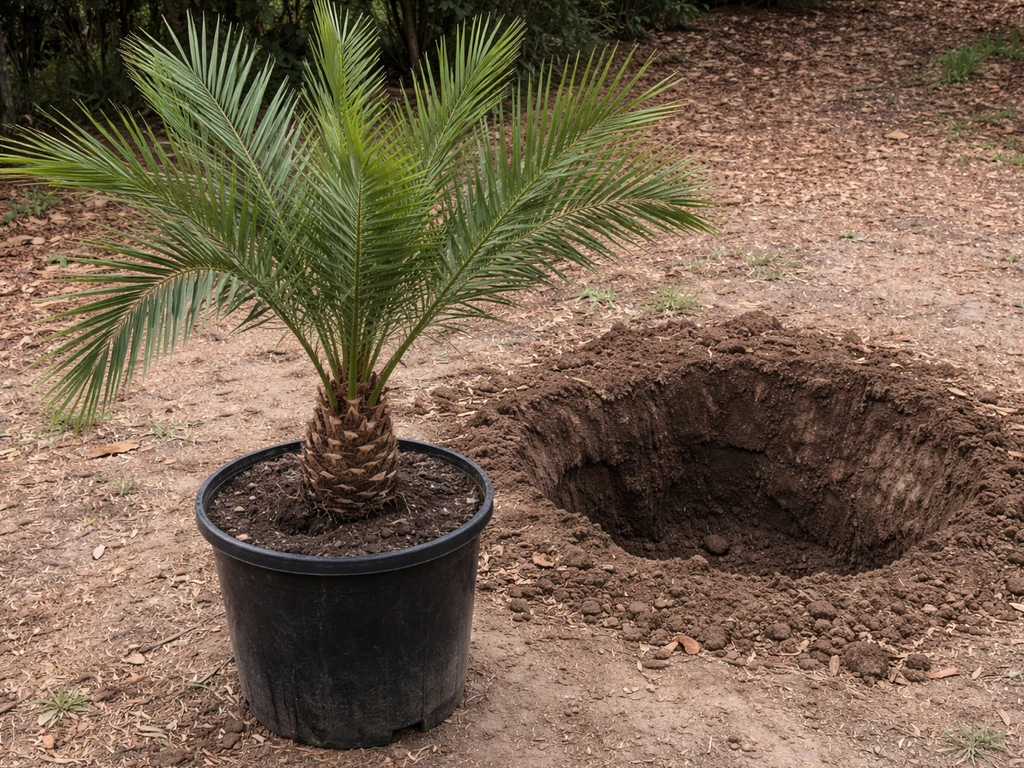
Buying an established, sexed palm skips the gender guessing game. A female palm in a 15-gallon container might be 3 to 5 years old already, which is meaningful when the total time to first fruiting from seed is 6 to 8 years minimum. In North Carolina's climate, the realistic timeline to fruit from a transplanted established female (assuming you have pollen access) is still several years, plus you need at least one growing season for the palm to settle in and establish roots before it's under additional stress from trying to fruit.
Pollination: the part most people overlook
Date palms are wind-pollinated and dioecious, so you need both male and female plants, or access to pollen, to get fruit. In commercial date production, one male tree can pollinate 40 to 50 female trees. In a home garden setting, you have a couple of options. You can grow one male and one or more females (though growing two full palms in North Carolina's climate doubles your overwintering challenge). Alternatively, you can buy dried or fresh date palm pollen from specialty suppliers and hand-pollinate female flowers when they open in spring. Hand-pollination is actually common in small-scale and hobby date growing and is more practical in a North Carolina context than trying to maintain a male tree.
Timing matters too. Female flowers need to be pollinated when they're receptive, which in a typical production setting happens in late winter to early spring. In North Carolina, that timing coincides with unpredictable cold snaps, which can damage open flowers or interrupt the pollination window. This is one more reason why consistent fruiting is difficult even when the palm survives winter.
Day-to-day care: containers, in-ground, water, and feeding
Container vs. in-ground
In the Piedmont and mountains, containers are the only realistic option. They let you move the palm into a garage, greenhouse, or other protected space when temperatures drop. Use a large, heavy pot (25 gallons or more for a mature palm) with excellent drainage holes. In the coastal plain, in-ground planting is feasible in Zone 8 areas, but even there, keeping a container backup plan in mind during the first few winters is smart until you know how your specific microclimate performs.
Site prep and soil
Date palms want full sun, at minimum 6 to 8 hours a day, and they're very particular about drainage. Wet roots in cold weather are a fast path to root rot and death. For in-ground planting in the coastal plain, choose a south-facing or south-east-facing spot near a structure that provides wind protection. Amend heavy clay soils with coarse sand and organic matter to improve drainage, or build a raised bed. The soil pH should be between 6.0 and 7.5. For containers, use a cactus/palm mix or blend your own with coarse perlite, sand, and some quality potting mix.
Watering and feeding
During the growing season (spring through early fall), date palms are moderately thirsty. Water deeply and allow the top inch or two of soil to dry before watering again. Avoid waterlogged conditions at all times. Reduce watering significantly in winter, especially for container palms brought indoors. For fertilizing, use a palm-specific slow-release fertilizer with a ratio that includes micronutrients like magnesium, manganese, and iron. Apply in spring and again in midsummer. Avoid fertilizing after August in North Carolina to prevent pushing soft new growth before cold weather arrives.
Getting them through winter
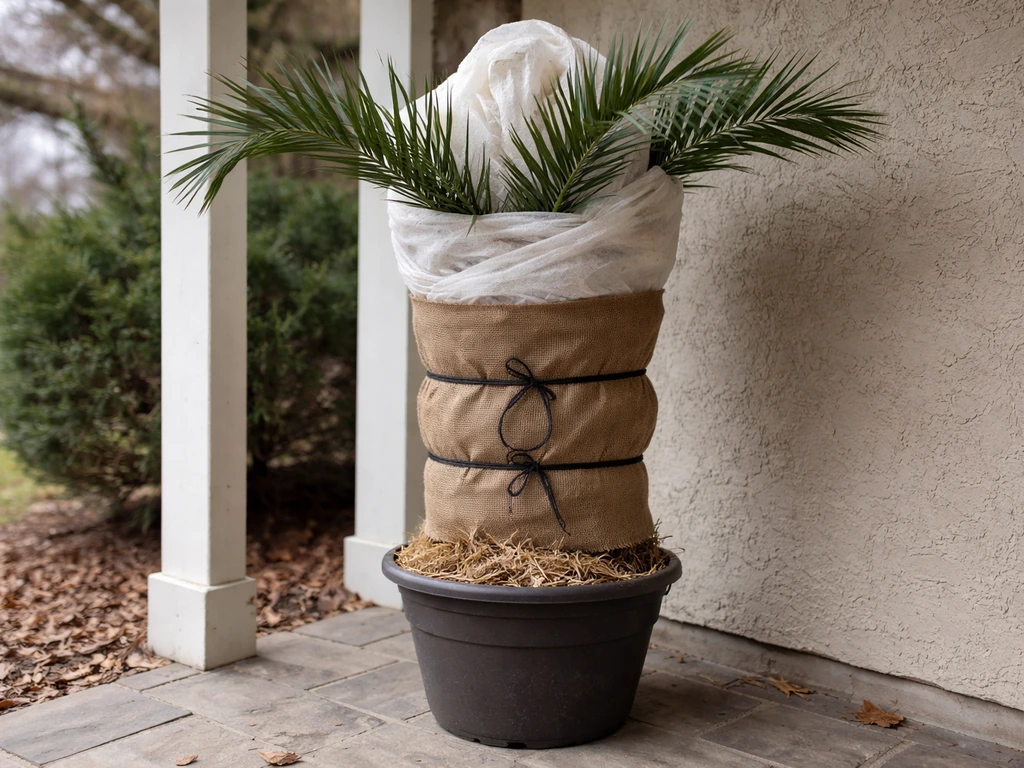
Winter protection is where North Carolina date palm growing gets labor-intensive. Cold injury to palms is affected not just by the low temperature reached, but by how long the cold lasts, how quickly temperatures drop, and whether the palm has had time to harden off. A palm that's been acclimated is more resilient than one that went from 70°F to 20°F overnight.
For in-ground palms in the coastal plain, the following strategies stack well together:
- Apply 4 to 6 inches of mulch over the root zone to insulate soil and prevent hard freezes from reaching roots
- Wrap the trunk with burlap or frost cloth when temperatures are forecast below 20°F
- Protect the crown (growing point) by loosely tying fronds upward and wrapping the whole crown with frost cloth, but avoid trapping moisture inside the wrapping since free water is a key driver of bud rot
- Place a string of outdoor incandescent lights (not LEDs, which generate less heat) inside the wrapped crown during hard freeze events for a small but meaningful heat boost
- Remove wrappings as soon as temperatures rise above freezing to allow airflow and prevent fungal problems
For container palms in the Piedmont or mountains, move them into an unheated garage, greenhouse, or enclosed porch before the first hard freeze (usually November in Raleigh, October in Asheville). They don't need much light when dormant, but they do need temperatures that stay above about 20°F. Water sparingly during indoor storage, roughly once every 3 to 4 weeks. Move them back outside after the last hard freeze date for your area, typically mid-March in Charlotte and late April in the mountains.
When things go wrong
Cold damage
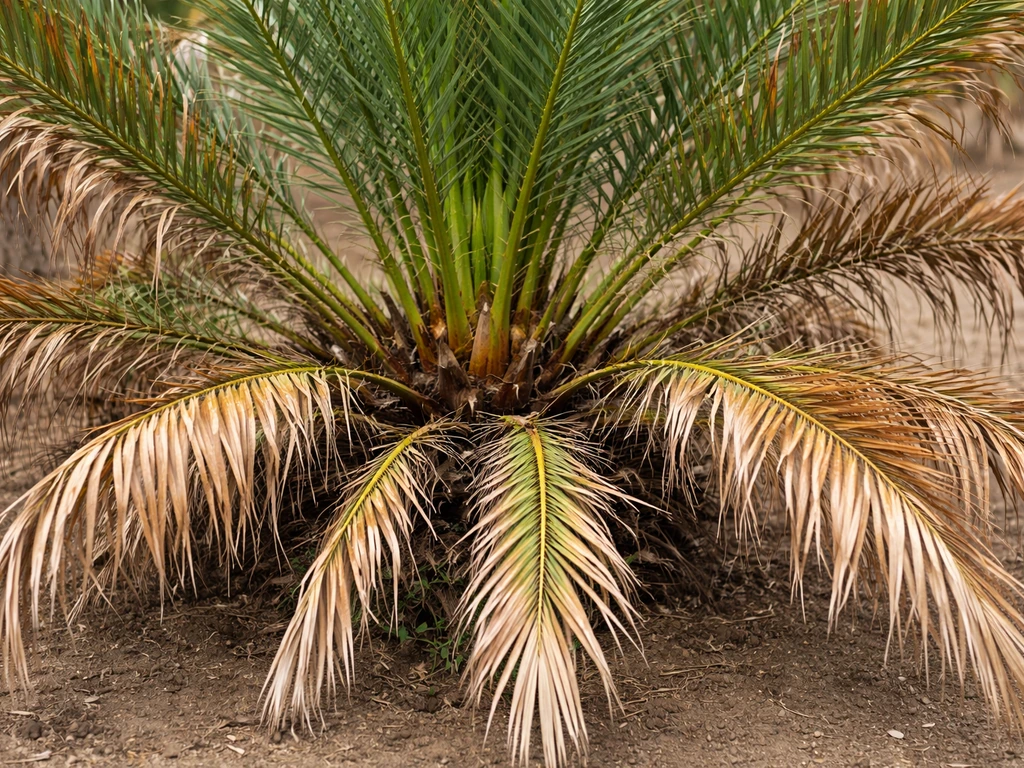
Frond browning and dieback after a freeze is common and doesn't necessarily mean the palm is dead. The critical question is whether the growing point (the bud at the center of the crown) survived. If new growth emerges from the center in spring, the palm made it. If the center stays brown, mushy, or fails to push new growth by late spring, the palm is likely lost. Don't prune cold-damaged fronds immediately; they provide some insulation. Wait until new growth appears in spring, then remove dead material.
Bud rot
Bud rot is a fungal disease that attacks the growing point, and it's particularly nasty because losing the bud means losing the whole palm. It's driven by free water sitting in the crown, which is why wrapping palms for cold protection without ensuring drainage is risky. If you see mushy, foul-smelling new growth emerging, bud rot may be present. Remove infected tissue and apply a copper-based fungicide to the crown. Preventive copper applications before winter wrapping can reduce risk.
Pests
Palmetto weevils are the most serious pest threat to Phoenix-type palms in the Southeast. These large beetles are attracted to stressed or wounded palms, so anything that injures the trunk, including freeze damage, improper pruning, or transplant stress, raises your risk. Inspect trunks regularly and avoid unnecessary wounding. If you see sawdust-like frass at the base of fronds, investigate immediately. Systemic insecticides applied preventively during the growing season are the primary control tool.
When to call it
If you're in the Piedmont and you've lost two palms to winter cold in two years despite reasonable protection, the math probably isn't working in your favor. At that point, it makes more sense to shift to a hardier ornamental palm (like Sabal minor or Rhapidophyllum hystrix, which tolerate temperatures well below 0°F) and accept that Phoenix dactylifera fruiting just isn't realistic in your location.
The coastal plain is where date palm growing in North Carolina has a genuine future; further inland, you're fighting the climate more than working with it. Growers in Georgia and Alabama, which share similar coastal dynamics, face the same calculation, and even in those states fruiting dates remain a challenging specialty crop. In Georgia, the same coastal-style strategy and winter protection reality applies if you’re hoping for fruit Growers in Georgia and Alabama.
Your realistic next steps
If you're in the coastal plain around Wilmington or south of Jacksonville: buy a named female Phoenix dactylifera in the largest container you can handle, plant it in a south-facing, wind-protected spot with excellent drainage, source hand-pollination pollen from a specialty supplier, and commit to a winter wrapping routine. In Louisiana, you can follow a similar strategy of choosing a cold-hardy female date palm, planting in full sun with excellent drainage, and planning for winter protection in cooler inland areas can you grow dates in louisiana. You have a genuine shot at keeping the palm alive and, eventually, at fruiting.
If you're in the Piedmont around Charlotte or Raleigh: grow in a large container, plan on moving it indoors every winter, and be realistic that fruiting is unlikely. Think of it as a statement plant you enjoy outdoors in summer. Hand-pollination attempts won't hurt, but don't plan a harvest around them.
If you're in the mountains: grow from seed as a houseplant project or stick to indoor/greenhouse palms. Phoenix dactylifera is not a viable outdoor plant above 2,500 feet in North Carolina regardless of protection strategies.
The short version: North Carolina can grow date palms, but fruiting them is a coastal game. If you're wondering can you grow dates in Virginia, the key is evaluating your USDA zone and whether you can realistically protect a date palm through winter. Know your zone, pick your variety intentionally, protect hard every winter, and go in with honest expectations.
If you're also wondering can you grow dates in South Carolina, compare your USDA zone and your ability to provide winter protection and drainage like you would here. If you’re wondering can you grow dates in Louisiana, the key is also your USDA zone and whether you can provide reliable winter protection and drainage. If you do all that, you'll get more out of this than most people who try.
FAQ
Can I grow date palms outdoors year-round in North Carolina, or do I need to bring them inside?
For most people, outdoor year-round works only in parts of the coastal plain with a good south-facing microclimate. Even then, having a container “backup” or an emergency wrap plan is smart for unusual cold winters. In the Piedmont and mountains, assume you will move the palm into an unheated but protected space during hard-freeze periods.
What’s the best way to know if my date palm survived winter without waiting until spring?
Look for signs in the crown and center bud rather than just frond browning. If the bud area remains brown and mushy or smells bad, survival is unlikely. If the center stays firm and you see new spear growth pushing later in spring, the palm likely made it even if older fronds are ruined.
If I have one female date palm, can I just wait for pollinators from nearby trees?
Usually no. Date palms are dioecious, and there are rarely enough nearby male Phoenix dactylifera palms in typical North Carolina neighborhoods to reliably supply pollen. Either plant a male nearby, or plan on hand-pollination using stored pollen during the receptive window.
How should I store and use hand-pollination pollen for date palms?
Pollen quality drops if it gets warm or damp, so store it in a cool, dry place and keep handling time short. Use it during late winter to early spring when female flowers are receptive, and plan a second attempt because timing can shift when cold snaps delay bloom.
Do I need to prune off frozen fronds immediately after a cold snap?
Not right away. Keeping damaged fronds can provide some insulation while you assess the center bud. Wait until new growth appears, then remove dead material once the palm’s survival is clear. Avoid cutting into healthy tissue because wounding increases pest risk.
What container size matters most, and can I start smaller than 25 gallons?
Starting smaller slows establishment and makes winter protection harder because smaller pots chill faster and dry out quicker indoors. If you can manage it, 25 gallons or more is a better long-term target for mature palms. For younger plants, still choose a heavy pot with excellent drainage and plan to up-pot before multiple winters in the same container.
How do I prevent bud rot when wrapping a date palm for winter?
The key is preventing trapped moisture in the crown. Wrap in a way that avoids free water accumulation, and make sure ventilation and drainage are still possible. If you notice foul-smelling mush or the bud turning soft, remove infected tissue promptly and treat with a copper-based fungicide as appropriate for crown infections.
What are the most common mistakes that kill date palms in North Carolina?
The top issues are wet roots during cold weather, insufficient protection for repeated freezes, and over-fertilizing late in the season which triggers soft growth. Another frequent mistake is pruning and wounding right before winter, which increases stress and attracts pests when the palm is already weakened.
Can I grow edible dates if I use Canary Island date palms or Phoenix sylvestris instead?
They are mainly for survival and ornament rather than sweet, harvestable fruit like Phoenix dactylifera. Canary Island date palms can handle some cold better but the fruit is small and not typically the “table date” experience. Phoenix sylvestris is hardier but the fruit quality is generally not comparable to true date varieties.
At what point should I stop trying to get Phoenix dactylifera fruit in my yard?
If you are repeatedly losing palms to winter cold for two consecutive years despite reasonable protection, the probability of ever reaching fruiting is low. At that stage, it’s usually better to switch to a hardier ornamental palm that tolerates low temperatures and frond dieback without requiring the same level of overwintering labor.
Does fertilizing frequency change in a container versus in-ground planting?
Yes. In containers, nutrients leach faster and growth cycles are more sensitive to indoor winter conditions. Keep to palm fertilizer with micronutrients in spring and mid-summer, but avoid late-season feeding after August, and consider slowing or stopping fertilizer during dormancy when you bring the palm indoors.
Next Articles
Can You Grow Agave in Canada? Zone Guide & Growing Tips
Can you grow agave in Canada? Practical region-by-region guide, hardy species, container tips & winter care.
Can You Grow Okra in Canada? Ontario Guide & Short‑Season Tips
Can you grow okra in Canada? Regional verdict, Ontario-specific steps, varieties, season-extension & harvest tips.
Can You Grow Asparagus in Canada? Planting Guide by Zone
Grow asparagus in Canada by zone: site, hardiness, crowns or seed, planting depth, care, and harvest plus fixes