
You can grow a date palm in South Carolina, but actually harvesting edible dates is a different story. In the coastal lowcountry, especially around Hilton Head and Charleston, the climate is warm enough to keep a date palm alive and even thriving. Inland and in the upstate, winter cold is the limiting factor. Getting ripe, sweet fruit requires a very specific combination of a long, dry, extremely hot summer plus a reliable male plant for pollination, and that combination is hard to pull off reliably even in SC's warmest corners. So the honest answer: yes to the palm, maybe to the fruit, with real effort and the right setup.
Can You Grow Dates in South Carolina? Cold, Varieties, Care
Marcus Holloway
2 Jun 2026
What SC's climate actually means for date palms
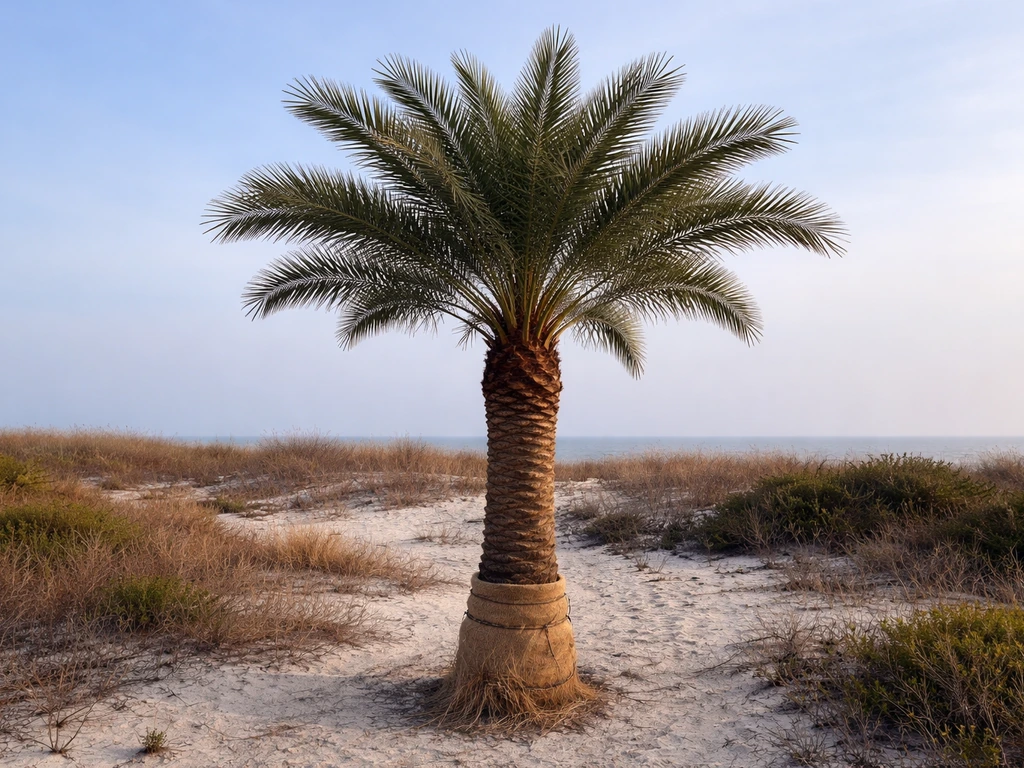
Date palms (Phoenix dactylifera) are native to the arid Middle East and North Africa. They want scorching, dry summers with temperatures regularly above 95°F, and they can tolerate cold down to roughly 15°F to 20°F once established, though prolonged hard freezes will damage or kill them. blank" rel="noopener noreferrer">South Carolina's USDA hardiness zones run from Zone 7b (5°F to 10°F) in the extreme northwest corner all the way to Zone 9b (25°F to 30°F) on the southeastern coast around Hilton Head. Most of the lowcountry and the Grand Strand fall in Zone 9a (20°F to 25°F).
That means the coastal strip is genuinely workable. A winter low of 20°F to 30°F is within a date palm's cold tolerance if the freeze is brief, the plant is established, and you have even a little frost protection in place. The upstate is trickier. Zone 7b gets lows around 5°F to 10°F, which will kill most date palms outright unless they're in containers you can move indoors. The Midlands (Columbia, Sumter area) sit around Zone 8a to 8b, which puts you in borderline territory: survivable with protection in most years, but one bad polar vortex winter can wipe out years of work.
The other big climate challenge is summer humidity. SC is hot in summer, but it's also humid, and date palms need dry heat to set and ripen fruit properly. Prolonged humidity during the fruiting season can cause fruit to mold or simply fail to ripen correctly. Phoenix, Arizona averages humidity under 20% during summer; Myrtle Beach is regularly 70% or higher. That gap matters a lot when you're hoping for dates on the table, not just a palm in the yard.
The best date palm varieties to try in South Carolina
Phoenix dactylifera is the true fruiting date palm, and within that species some cultivars handle marginal climates better than others. If you're in Zone 8 or Zone 9, these are the ones worth your time.
| Variety | Cold Tolerance | Fruit Quality | Best Fit in SC |
|---|---|---|---|
| Medjool | Down to ~18°F | Excellent, premium | Coastal Zone 9a/9b only |
| Deglet Noor | Down to ~15°F | Good, semi-dry | Coastal Zone 9, marginal Zone 8b |
| Zahidi | Down to ~15°F | Good, semi-dry | Coastal Zone 9, marginal Zone 8b |
| Barhee | Down to ~22°F | Very good, soft | Best for containers statewide |
| Hayany | Down to ~20°F | Mild, soft | Coastal Zone 9, containers in Zone 8 |
Medjool is the variety most people want, and it's achievable in the coastal lowcountry. Barhee is actually the smartest choice for anyone in Zone 8 or growing in a container, because it produces earlier in the season and has slightly better cold tolerance. Deglet Noor and Zahidi are workhorses that handle less-than-perfect conditions but still need long summers to ripen fully. Avoid varieties with extremely long ripening windows (some need 200+ days above 100°F) since SC summers, while hot, rarely meet that bar consistently.
Setting up your planting site the right way
In-ground vs container
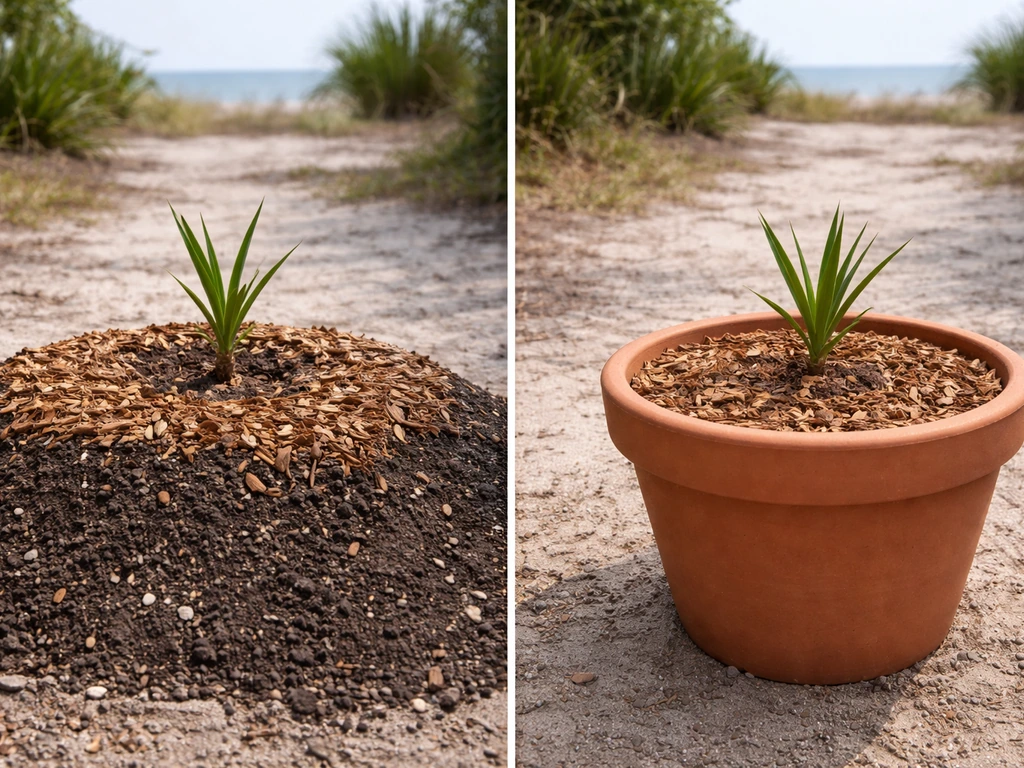
If you're in coastal Zone 9a or 9b, planting in-ground is a viable long-term strategy. You'll get a bigger, more productive palm over time, and you won't have to haul it around. If you're in Zone 8 or anywhere with regular freezes below 15°F, a large container (at least 25 to 30 gallons, eventually 100+ gallons for a maturing palm) gives you the flexibility to move the plant into a garage or greenhouse during the worst cold snaps. The trade-off is that container palms need more frequent watering and fertilizing, and a full-sized date palm is eventually very difficult to move.
Choosing the right spot
Date palms need full sun, and not just regular full sun. Think 8 to 10 hours of direct sun daily through the growing season. The best in-ground locations in SC take advantage of microclimates: the south or southwest side of a masonry wall or building, where radiated heat boosts growing-degree days and the structure blocks cold northwest winds in winter.
USDA also warns that microclimates can shift a plant’s effective hardiness zone, making a sheltered south-facing wall or cold-air pooling spot warmer or cooler than the surrounding yard microclimates can shift a plant’s effective zone.
Avoid low spots in the yard where cold air pools on still, clear nights. USDA notes that microclimates can shift your effective zone by half a zone or more, so a well-chosen south-facing wall position in Zone 8b could behave more like Zone 9a.
Soil preparation
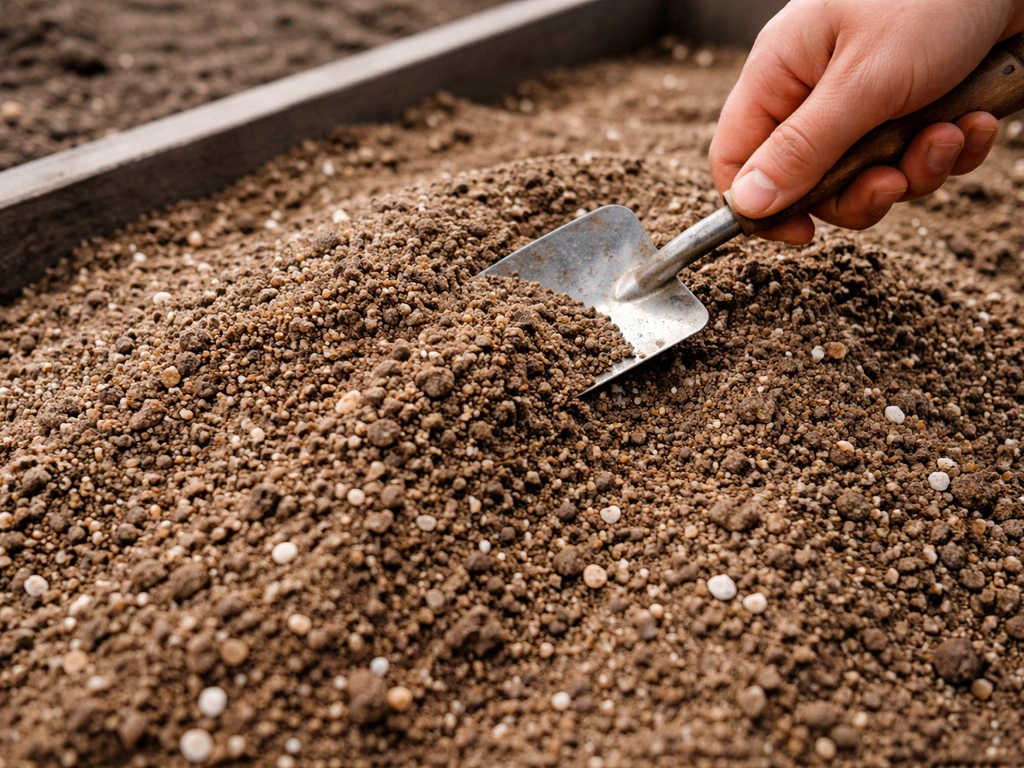
Date palms absolutely cannot tolerate waterlogged roots. They want fast-draining, sandy or loamy soil with a slightly alkaline to neutral pH (around 7.0 to 8.0). Fortunately, a lot of South Carolina's coastal soils are naturally sandy, which works in your favor. If you're in the Midlands or Upstate with heavier clay soil, amend generously with coarse sand and perlite, or build a raised mound at least 12 inches high to ensure drainage. Avoid peat-heavy mixes that hold moisture.
Pollination and when to expect actual fruit
Date palms are dioecious, meaning male and female flowers are on separate plants. You need at least one male to pollinate your female plants. In commercial date production, the ratio is roughly one male per 25 to 50 females, and pollination is done by hand.
For a home grower in SC, here's the practical reality: you need to either buy a known female plant (most nursery date palms are sold as seedlings with unknown sex, which won't reveal itself for 5 to 8 years) or buy tissue-cultured offshoots of known female varieties. You'll also want a male, or you can purchase dried date pollen online and hand-pollinate by dusting it directly onto female flower clusters when they open in late winter or early spring.
Even with pollination handled, don't expect fruit in year one or two. Date palms typically begin flowering at 4 to 8 years from planting (earlier with tissue-cultured known-variety starts). After successful pollination, fruit takes roughly 6 to 7 months to ripen, putting harvest in late summer to fall. In SC's humid climate, you may want to bag fruit clusters with breathable fabric after pollination to protect developing dates from moisture and insects.
The frustrating truth is that in a humid Southeast climate, you're more likely to get fruit that struggles to fully ripen or dries unevenly compared to arid-climate production. Some SC coastal growers do report getting edible Medjool dates in good years. It's not a sure thing every season, but it's not fantasy either.
Year-round care in South Carolina
Watering
During the growing season (roughly April through October), date palms in SC want consistent moisture but never wet feet. Water deeply once a week during dry spells, less if you get regular rain. Container plants may need watering every 3 to 4 days in peak summer heat. As temperatures drop in November, back off significantly. In winter, once a date palm is dormant or semi-dormant, very little water is needed and overwatering in cold weather is one of the fastest ways to kill one.
Fertilizing
Feed date palms with a slow-release palm fertilizer (look for formulas with a ratio around 8-2-12 with added magnesium) starting in early spring and again in midsummer. Three applications per year is a reasonable schedule: March, June, and September. Stop fertilizing by early fall so the palm can harden off before cold weather. Magnesium and potassium deficiencies are common in sandy coastal soils, showing up as yellowing or frizzled older fronds. If you see those symptoms, supplement with magnesium sulfate (Epsom salt, about 2 tablespoons per gallon of water as a drench) in addition to your regular palm fertilizer.
Pests and diseases
The most serious threat to date palms in the Southeast is the red palm weevil (Rhynchophorus ferrugineus), an invasive pest that has been moving into the Gulf Coast states and could eventually reach SC. Check regularly for signs of infestation: holes in the trunk, oozing sap, or fronds collapsing from the crown. Fungal issues are also a real concern given SC's humidity.
Ganoderma butt rot is a soil-borne fungal disease that attacks the base of the trunk and is essentially fatal once established. Avoid wounding the trunk, plant in well-drained soil, and don't use contaminated soil from a previous palm planting. Spider mites and scale insects can pop up in hot, dry spells, especially on container palms indoors in winter. Neem oil spray handles both.
Getting your date palm through winter (and what happens when things go wrong)
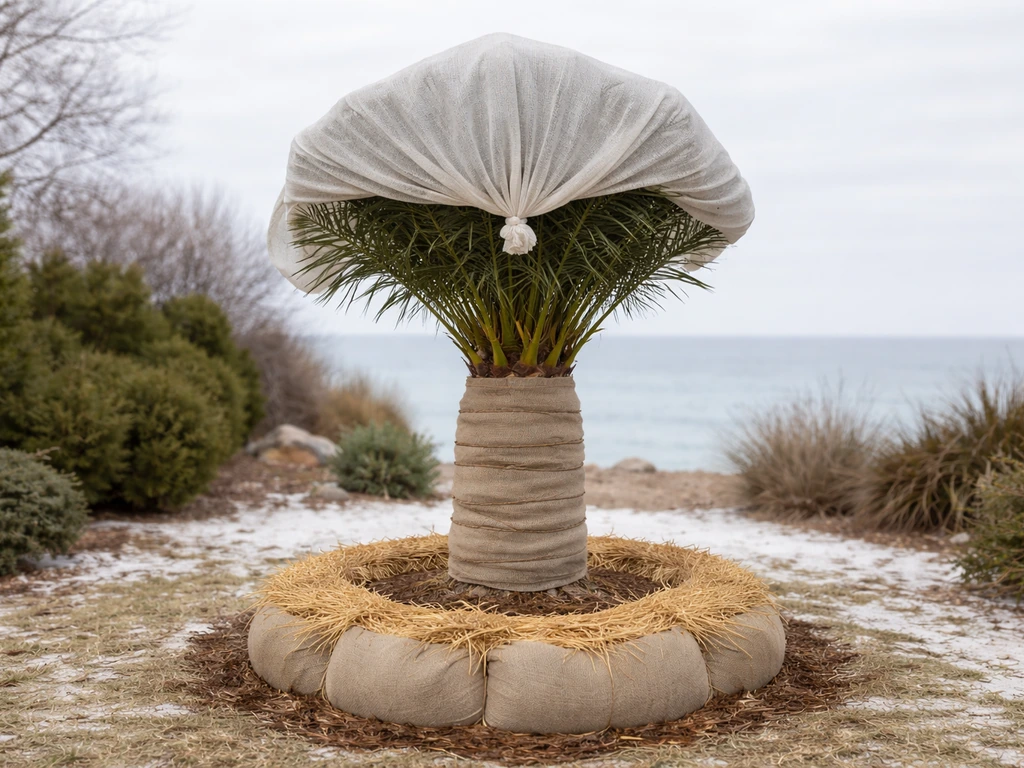
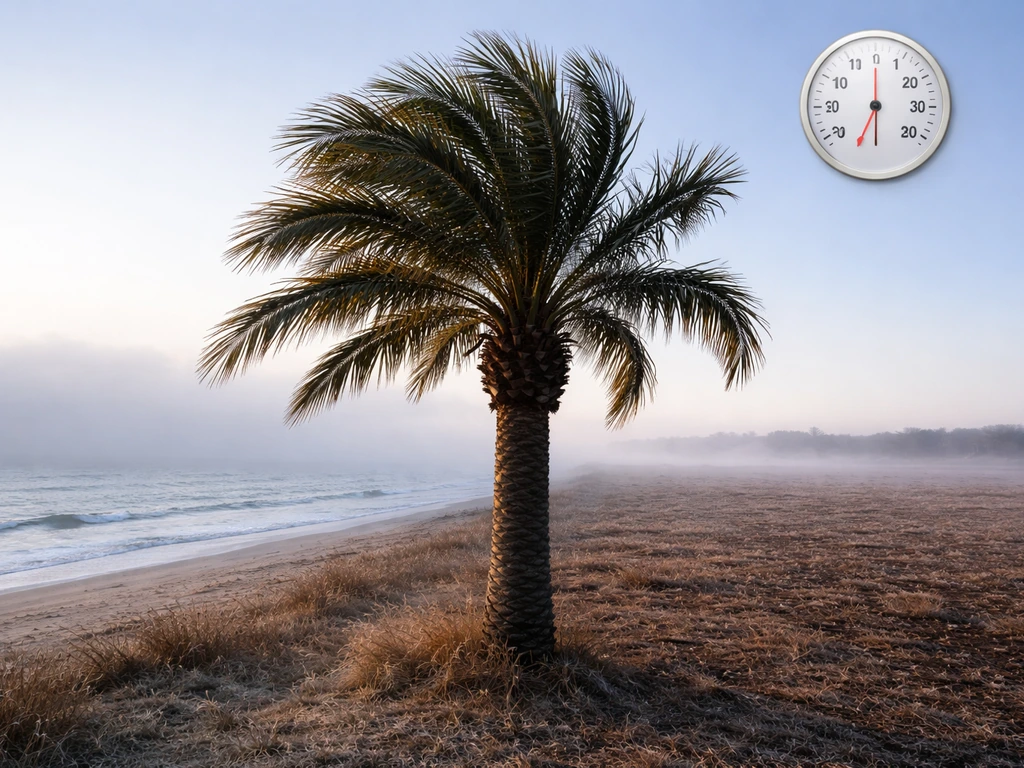
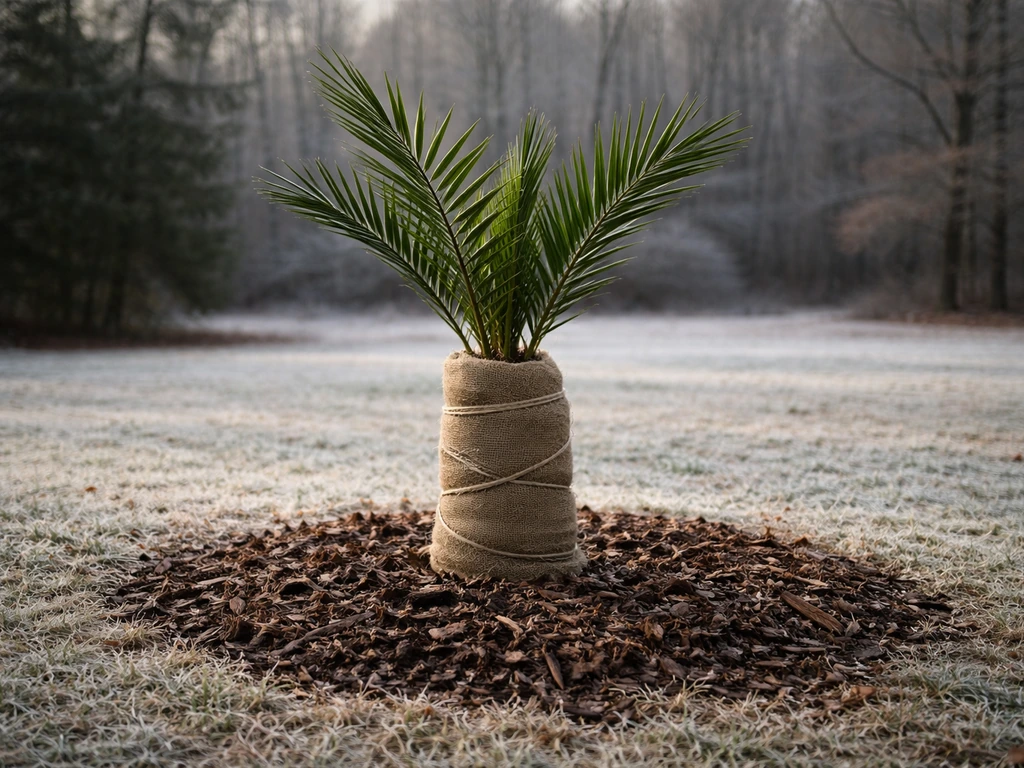
In coastal Zone 9a and 9b, an established date palm (3+ years in the ground) will usually survive SC winters with minimal intervention. When temperatures are forecast below 20°F, wrap the crown (the growing tip) with frost cloth, burlap, or old blankets. You can also tuck the fronds upward and tie them loosely around the crown to protect it. The growing tip is the only part that truly cannot regenerate if killed. The trunk and roots can take harder cold as long as the freeze is short, typically a day or two.
For Zone 8 growers with in-ground palms, have a plan for extreme cold events. String incandescent Christmas lights through the fronds and around the trunk under frost cloth for added warmth. Mulch heavily around the base, at least 6 inches of pine straw or wood chips, to insulate roots. If temperatures are forecast to drop below 15°F for more than 24 hours, you're in real trouble with an in-ground plant. That's the scenario that kills established date palms in marginal zones.
Container plants in Zone 8 or the Upstate should move into a garage, shed, or greenhouse before the first frost, ideally when nighttime temperatures consistently fall below 40°F. A cool (40°F to 55°F), bright location is ideal. They don't need strong light in true dormancy but shouldn't be kept in total darkness for months. Bring them back out gradually in spring after the last frost date, which in Columbia is typically mid-March and along the coast more like early March.
If your palm takes freeze damage, don't panic and don't prune immediately. Wait to see which fronds recover. If the spear leaf (the newest unopened frond at the very center) pulls out easily or smells rotten, the crown is likely dead and the plant won't recover. If the spear holds firm and new growth eventually pushes through, the palm survived. It may look rough for a full season but can bounce back. Cutting too early removes potentially viable tissue.
Be honest with yourself about realistic expectations here. Even if your date palm survives every winter, getting fully ripe, harvestable dates in South Carolina requires everything to line up: a known female cultivar, a male or purchased pollen, a long hot summer with low humidity during ripening, and no major frost damage. If you're wondering whether you can grow dates in Virginia, you'll want to start by checking your local winter lows and planning for protection or container growing.
In some years that happens. In others it doesn't. If you're wondering can you grow dates in georgia instead, the same idea applies: cold snaps, humidity, and ripening time all have to cooperate. Growing a date palm in SC is a long-term project measured in years and decades, not a reliable annual crop.
If you are wondering, can you grow dates in North Carolina, the key factors are winter lows, humidity, and whether you can protect a fruiting date palm through cold snaps. Compared to growing dates in Georgia or Louisiana (where coastal zones push further into Zone 9), SC's coastal conditions are comparable, though SC's Midlands and Upstate face tougher odds than growers in those warmer states.
What to do right now: your next steps this season
- Look up your exact USDA hardiness zone using your zip code at the USDA Plant Hardiness Zone Map. Coastal SC growers in Zone 9a/9b: you're in the best position. Zone 8a/8b (Columbia, Aiken, Florence area): plan on containers or serious winter protection. Zone 7b (Greenville, Spartanburg area): containers only, and be realistic about the effort involved.
- Decide on your approach: in-ground for coastal Zone 9 growers, large container (25+ gallons to start) for everyone else.
- Source a tissue-cultured offshoot of a known female variety rather than a seedling. Barhee is the top recommendation for SC given its earlier ripening and cold tolerance. Medjool is the prestige pick for coastal growers in Zone 9. Check specialty palm nurseries in Florida or California, or reputable online sources.
- Order or source dried date pollen (available from specialty suppliers) if you don't want to wait for or buy a male plant. Store it in your freezer and hand-pollinate female flowers when they emerge, typically late winter to early spring.
- Prepare your site now if planting in summer or fall: dig and amend with coarse sand and perlite if your soil is heavy clay. Set your container up with a gritty, well-draining palm mix.
- Set a calendar reminder in October to assemble your winter protection supplies: frost cloth, burlap, outdoor-rated extension cords, and incandescent string lights for heat. Don't wait until the first cold snap is already forecast.
- In your first winter, even if you're in Zone 9, protect the crown any time temperatures drop below 25°F. Newly planted palms are significantly less cold-tolerant than established ones, so treat your first two to three winters as high-stakes.
FAQ
What’s the earliest age I should expect flowering and potential fruit in South Carolina?
For typical seedling palms, expect flowering around 4 to 8 years after planting, and fruit will not be ready until about 6 to 7 months after successful pollination. If you buy tissue-cultured starts of known sex or variety, flowering can come earlier, but cold stress in Zone 8 can still delay bloom and reduce fruit set.
If I buy nursery palms, how can I tell whether I have the right male and female plants?
Most date palms sold at nurseries are not labeled by sex and will not reliably show it until several years of growth. The most dependable approach is to buy known female cultivars as tissue-cultured offshoots and also source a known male cultivar, or purchase dried date pollen and commit to hand-pollination when female flowers open.
Do I need to hand-pollinate for backyard success, or can I rely on wind and insects in South Carolina?
For fruit at home, plan on hand-pollination. Date palms are dioecious, and even when you have both sexes nearby, humidity and limited effective pollen transfer make natural pollination unreliable. Hand-pollinating at late winter or early spring when flower clusters are opening gives the best odds of forming viable fruit.
Will container-growing let me grow dates in South Carolina even if I’m in Zone 8 or colder?
It helps for survival, but not for ripening. Containers make it easier to protect the palm during deep freezes, yet the big hurdle is still hot, dry ripening conditions. Choose earlier-fruiting varieties like Barhee, keep the container in maximum sun, and be realistic that fruit may still fail to fully ripen in very humid summers or after a cold spring.
How big should the container be, and what’s the practical limit before moving becomes impossible?
Start with at least 25 to 30 gallons for younger palms, then expect to upsize as the trunk thickens. Once mature, some palms reach sizes where moving them safely is impractical, even with wheels. If you are in a freeze-prone area, plan your long-term setup early, such as a greenhouse that can be kept above roughly 40°F.
What protection actually matters during winter freezes, crown versus trunk?
Crown protection matters most because the growing tip is what determines whether the palm can recover after cold damage. For forecasts below about 20°F, wrap the crown with frost cloth or similar breathable material and secure fronds to avoid whipping. Trunk and roots can tolerate brief cold better than the spear, so don’t over-prune damaged growth right away.
How do I know if the crown died after a freeze, and when is it safe to prune?
Wait to assess recovery rather than pruning immediately. Check the spear leaf after the cold: if it pulls out easily or the center smells rotten, the crown likely died. If the spear holds firm and new growth pushes through later, the palm survived, and you should remove only clearly dead fronds once you can confirm they will not recover.
My date palm looks fine but the fruit won’t ripen, what’s usually going wrong?
In South Carolina, the most common issue is humidity during fruiting season, which can cause mold or uneven drying instead of turning fruit into sweet dates. Other frequent culprits are insufficient sustained heat, lack of a known viable female cultivar, or missed timing for pollination. Bagging fruit clusters with breathable fabric after pollination can reduce insect damage, but it cannot fully replace dry ripening conditions.
Should I water on a calendar, or adjust based on weather to avoid killing the palm?
Adjust based on rainfall and temperatures, because overwatering in cold weather is a major cause of failure. During active growth, water deeply during dry spells, but allow the soil to dry slightly between waterings. In winter or dormancy, reduce watering drastically, especially if nights stay cold or the container/soil stays wet.
What soil setup prevents waterlogged roots, especially if I have clay in the Midlands or Upstate?
Use drainage-first methods: amend heavy soils with coarse sand and perlite, and consider building a raised mound at least 12 inches high. Avoid peat-heavy mixes that hold moisture. The goal is for water to move through quickly after watering or rain, because date palms can decline when roots stay saturated.
What fertilizer schedule is safest in South Carolina, and when should I stop?
A practical guideline is early spring, midsummer, and again around early fall, then stop by early fall so the palm hardens off before cold. If you see magnesium-related yellowing or frizzled older fronds in sandy coastal soils, an occasional magnesium sulfate drench can help, but avoid frequent heavy feedings that keep the palm growing too late into the season.
How do I manage pests proactively, what should I check and how often?
For red palm weevil risk, inspect regularly for trunk holes, oozing sap, or fronds collapsing from the crown, especially during warm months. For indoor overwintered container palms, watch for spider mites and scale, which can appear when air is dry. Early detection matters because severe infestations can advance quickly and be hard to reverse.
Is neem oil always the right choice for scale or mites in winter when the palm is inside?
Neem can help, but timing and conditions matter. Apply when temperatures are mild enough for the palm to tolerate treatment, and ensure good coverage, especially on undersides of fronds where scale hides. If you see rapid spread or significant crown damage, you may need a stronger integrated pest approach rather than repeating the same light treatment.
If I want to grow dates mainly for the fruit, is a coastal location a must in South Carolina?
It is the best bet for edible dates. In-ground palms in coastal Zone 9a and 9b have a realistic path because winter cold is more manageable and summer heat can be strong enough, but humidity still limits ripening. If you are inland or in Zone 8, focus first on palm survival with protection, and treat fruit as an occasional bonus rather than an annual certainty.
Next Articles
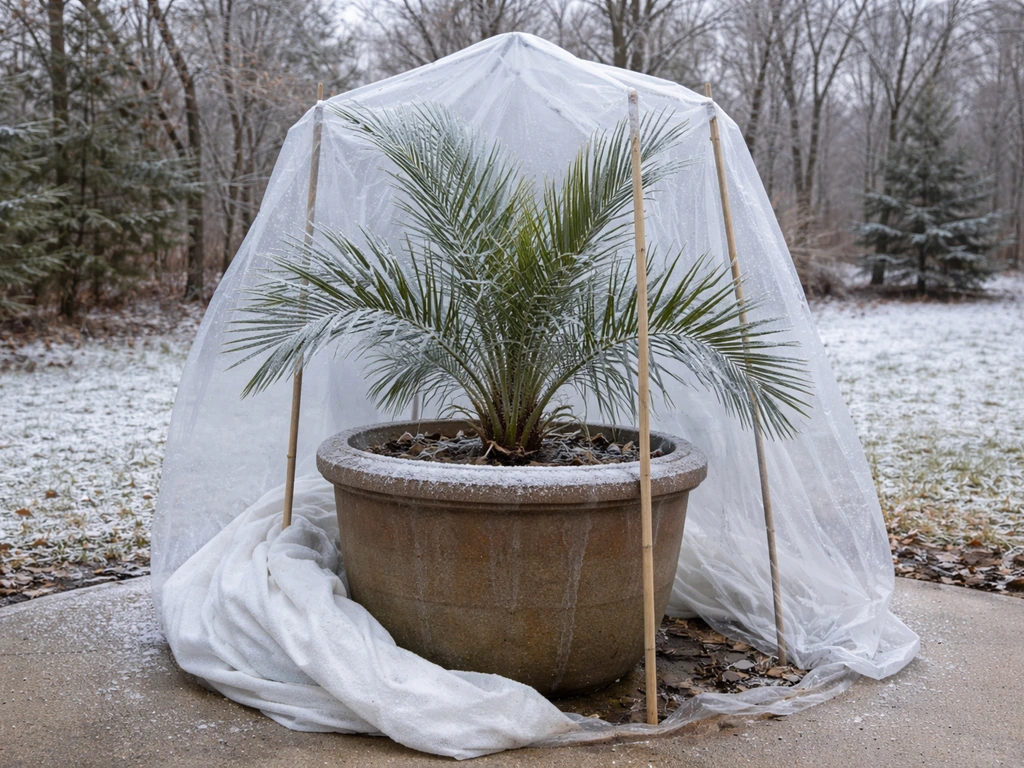
Can You Grow Dates in Missouri? Cold-Hardy Options and How-To
Learn if you can grow date palms in Missouri, which types may survive, and step-by-step overwintering and care tips.
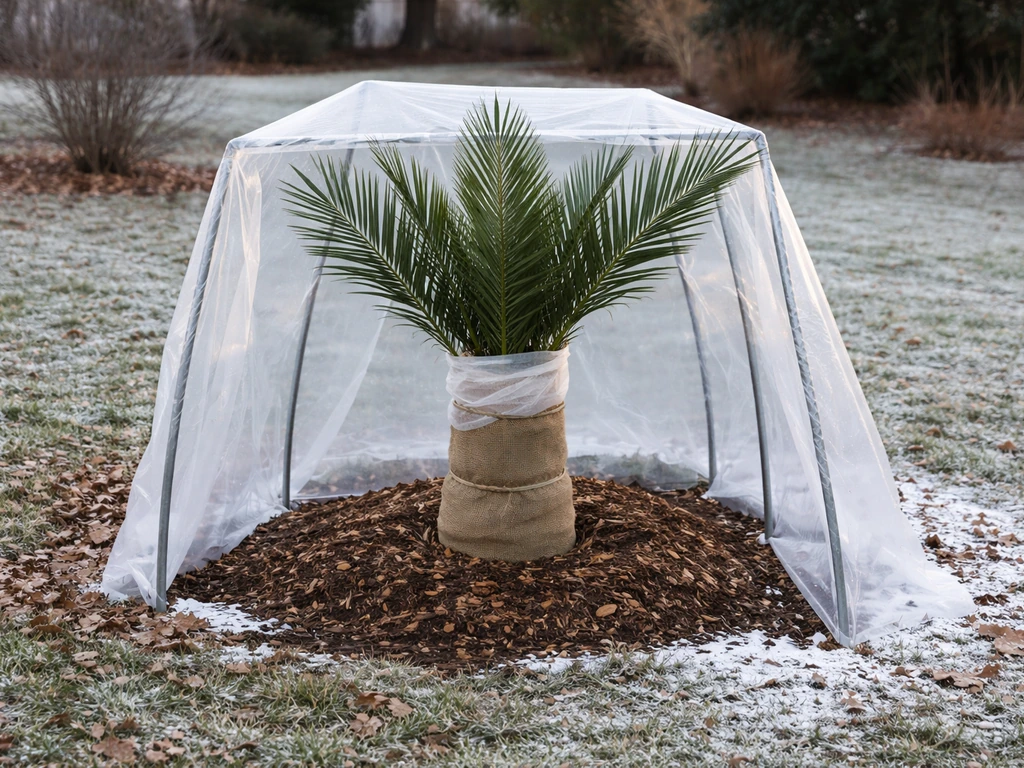
Can You Grow Dates in Virginia? Cold Hardiness and Care Guide
See if date palms can survive Virginia winters, how to plant, protect, and whether edible fruit is realistic.
Can You Grow Dates in Georgia? Cold-Proof Guide
Learn if you can grow date palms in Georgia, where they survive, setup steps, and cold protection for fruiting.