
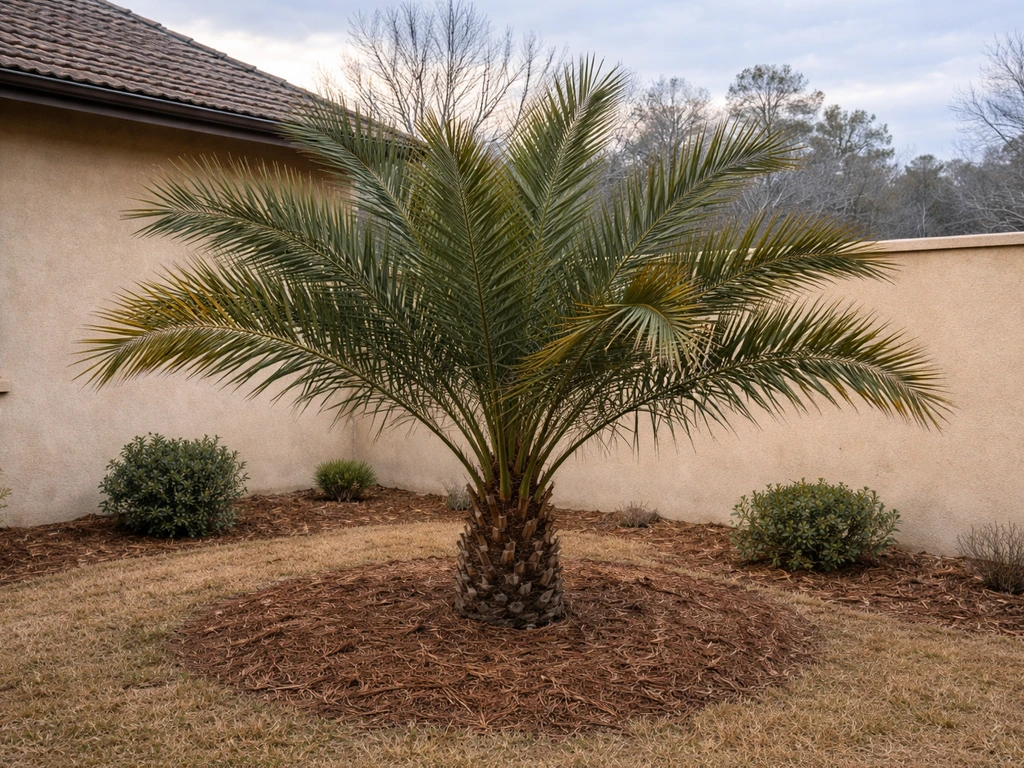
You can grow date palms in Alabama, but getting them to actually ripen edible fruit is a real challenge for most of the state. The honest version: in coastal and south Alabama (Zones 8a and 8b), date palms survive and even thrive as ornamentals, and with the right variety, setup, and a bit of luck on the weather, you can get fruit to ripen in the warmest spots. North Alabama is a tougher story where winter cold and a shorter warm season make reliable fruiting unlikely without serious protection. So yes, you can grow date palms in Alabama, but "growing dates" and "harvesting ripe edible dates" are two different things, and this guide will help you figure out which one is realistic for your location. If you're wondering, can you grow dates in Virginia, the short answer is that it depends on winter lows and your ability to provide serious protection.
Can You Grow Dates in Alabama Yes How to Try
Date Palm Feasibility in Alabama's Climate
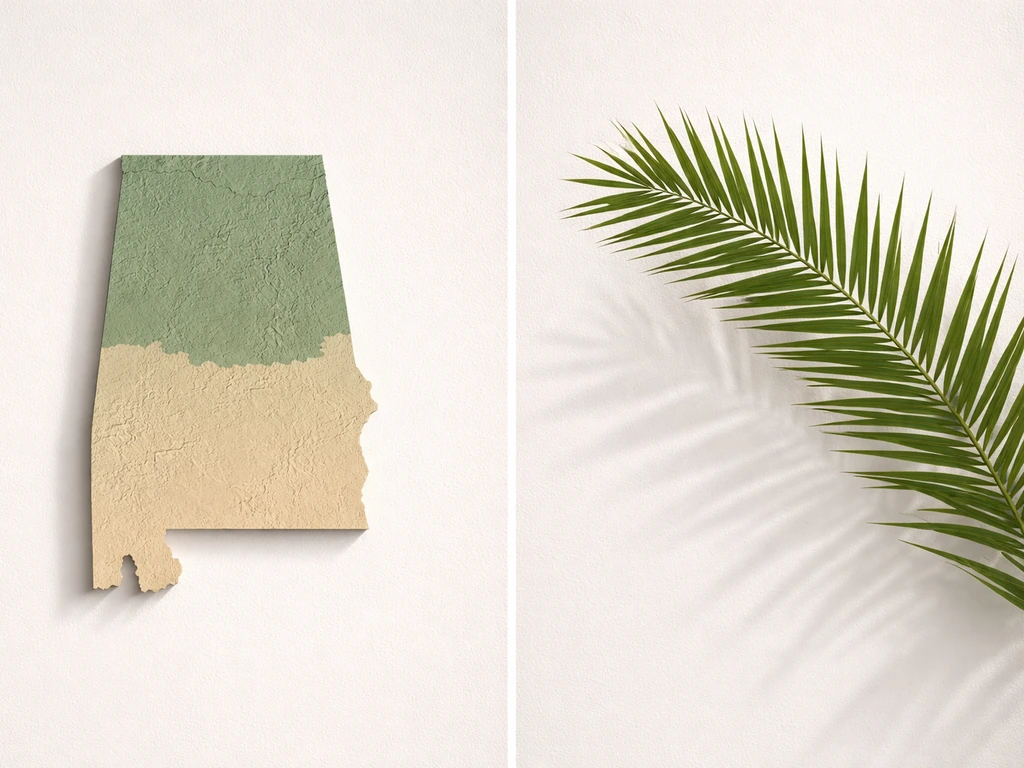
Alabama sits mostly in USDA Zones 8a and 8b, blank" rel="noopener noreferrer">based on the 2023 Plant Hardiness Zone Map (which uses average annual extreme minimum winter temperatures as its core metric). The Mobile area and coastal south Alabama fall into the warmer end of this range. Far north Alabama dips into blank" rel="noopener noreferrer">Zone 7b pockets, where winter lows can push well below what date palms tolerate without significant damage. The dividing line for reliable date palm performance is roughly Zone 8a and warmer. If you are asking can you grow dates in Missouri, your best bet is container growing and tight climate planning to manage cold winters and temperature swings date palm performance.
Date palms (Phoenix dactylifera, the true fruit-producing species) are native to the arid Middle East and North Africa. Because Louisiana has its own hot, humid growing season, you should compare those conditions to what date palms need before planting can you grow dates in louisiana. They need a long, bone-dry, blazing-hot summer to ripen fruit, roughly 100 to 200 days of temperatures above 95°F with virtually no rain during the ripening period. Alabama's summers are hot, yes, but they are also humid and frequently rainy, which is the core problem. Humidity during fruit ripening causes dates to mold on the tree before they fully ripen. That's the climate conflict you're fighting here, not just winter cold.
The warm season is long enough in south Alabama to support vegetative growth and even some flowering, and date palms in the Mobile area regularly survive winters without major damage. But summer humidity is a real obstacle to consistent fruit ripening, even in Zone 8b. Think of it this way: your date palm will likely stay alive and look good, but coaxing it to produce the sweet, caramel-rich Medjool dates you buy at the store is a genuine project, not a guarantee.
Which Date Palm Varieties Are Realistic in Alabama
Not all date palms are equal, and your variety choice matters a lot in Alabama.
| Variety | Cold Hardiness | Fruit Ripening Potential in Alabama | Best Use in Alabama |
|---|---|---|---|
| Phoenix dactylifera (True Date Palm) | Zone 8a minimum; damaged below 15–20°F | Low to moderate in south AL; poor north AL | Fruiting attempt in south Alabama only |
| Phoenix dactylifera 'Barhee' | Zone 8a; slightly more sensitive | Best fruiting odds; ripens earlier | Best bet for edible fruit in Zone 8b |
| Phoenix dactylifera 'Medjool' | Zone 8b preferred | Poor; needs drier summer heat | Only for very protected south AL sites |
| Phoenix dactylifera 'Deglet Noor' | Zone 8a | Poor; very long ripening season | Not recommended for Alabama fruiting |
| Phoenix canariensis (Canary Island Date Palm) | Zone 8a; handles brief cold better | Does not produce edible dates | Ornamental landscape palm only |
| Phoenix roebelenii (Pygmy Date Palm) | Zone 9a; cold-sensitive | Tiny, barely edible fruit only | Container ornamental, not a fruiting option |
If your goal is edible fruit, focus on Barhee. It ripens at the Khalal (yellow, crisp) stage, which requires less heat accumulation than fully dried dates. You can actually harvest and eat Barhee dates at this stage even if the summer wasn't dry enough for full drying on the tree. Medjool is the most famous variety but it needs both a long dry season and high heat, making it a poor fit for Alabama's humid summers. Canary Island date palms (Phoenix canariensis) are what you see in many Alabama landscapes, and they're much more forgiving of cold and humidity, but they don't produce useful edible dates. Know which species you're planting before you buy.
Growing Setup: In-Ground vs. Containers and Site Choice
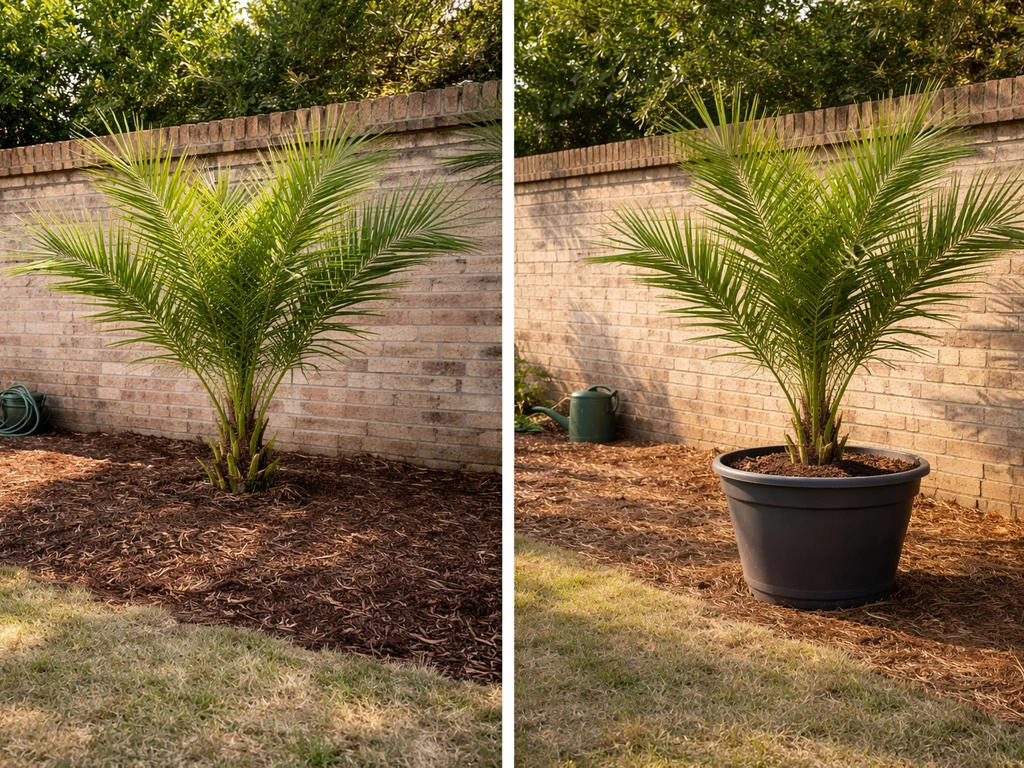
Where you are in Alabama should drive your planting decision. South of Montgomery, in-ground planting is worth attempting for ornamental use and potentially for fruit. North of that line, containers give you the critical ability to move palms under protection before hard freezes hit.
In-Ground Planting
In-ground date palms in Alabama do best in Mobile, Baldwin County, and the coastal southernmost zone. Pick a south-facing wall or a spot with a large thermal mass (concrete, brick, or pavement) nearby. This microclimate boost can mean the difference between a palm that sails through winter and one that gets defoliated by a cold snap. In-ground plants ultimately grow larger and are more productive than container plants, but they're also more exposed to Alabama's erratic winters.
Container Growing
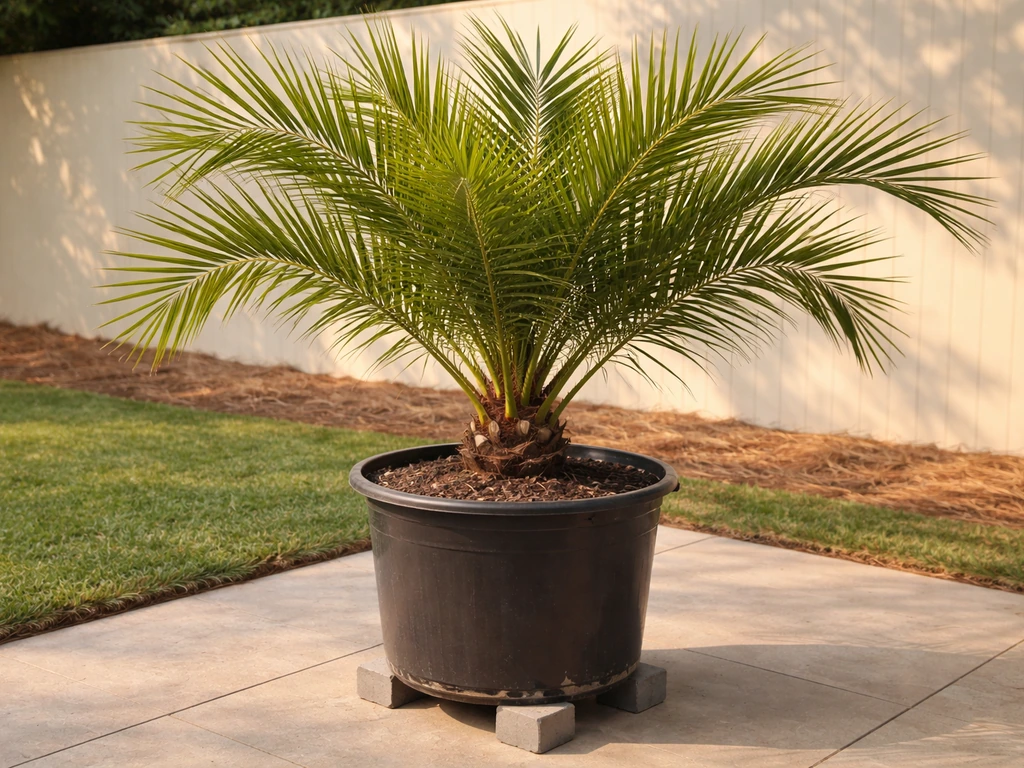
Container growing is the smarter choice for most of Alabama. Use a 25 to 30 gallon container minimum for a mature specimen. The downside is that containers restrict root growth and therefore overall palm size and potential fruit production. But you can roll the plant into a garage, greenhouse, or carport when temperatures drop below 20°F, which is the critical threshold for serious Phoenix dactylifera damage. This approach is how growers in Zone 7b pockets of north Alabama and even border states like Tennessee and North Carolina keep date palms alive long-term.
Site Selection Tips
- Full southern exposure, ideally with a reflective wall or fence behind the palm
- As far south in the property as possible for maximum heat accumulation
- Elevated or sloped ground to avoid frost pockets where cold air settles
- Wind protection on the north and west sides to reduce windchill damage in winter
- Good overhead clearance for eventual palm height (in-ground palms can hit 20+ feet over years)
Planting, Soil, Watering, and Sun Requirements
Date palms are not complicated to grow once you nail the basics, but those basics are non-negotiable. Alabama's clay-heavy soils are one of the biggest failure points for in-ground palms, so drainage is job one.
Soil and Drainage
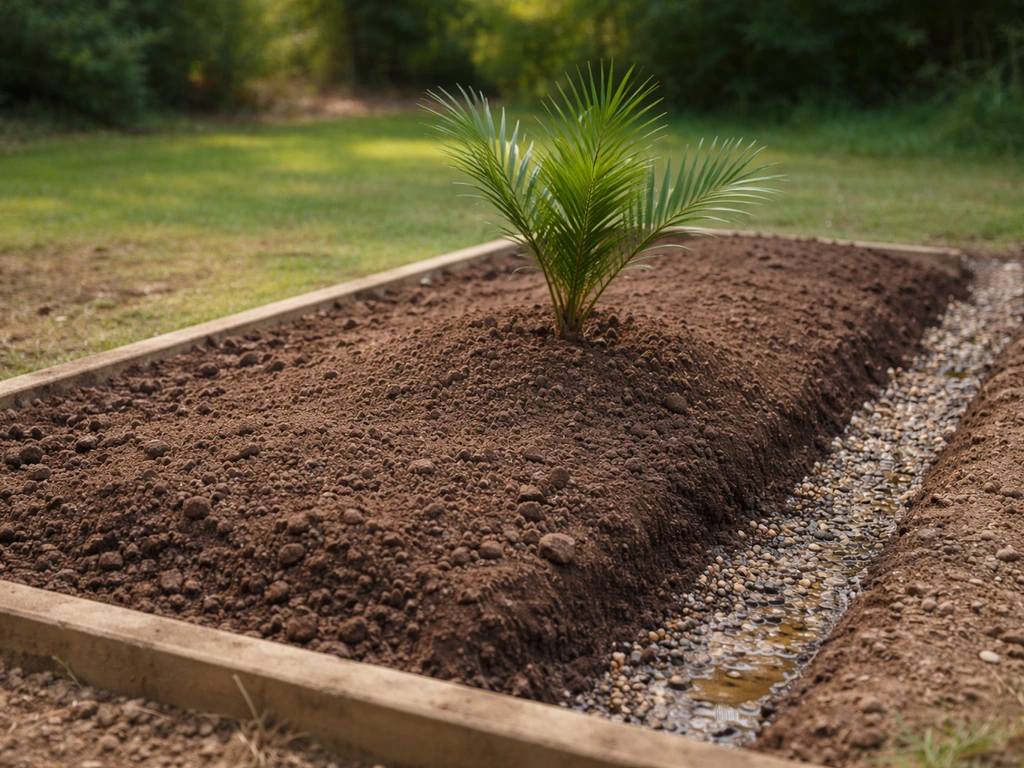
Date palms will not tolerate waterlogged roots. If you're in Alabama's heavier clay soils (common across central and north Alabama), you need to either build a raised bed or amend the planting hole heavily with coarse sand and pea gravel. A 50/50 mix of native soil and coarse sand works well in practice. For containers, use a cactus and palm potting mix, or build your own from two parts coarse sand, one part perlite, and one part standard potting soil. pH should be in the 6.5 to 7.5 range. Date palms tolerate slightly alkaline soil, which is actually a bonus in Alabama's sometimes-acidic conditions.
Watering
This is counterintuitive in a state as rainy as Alabama: date palms need relatively infrequent, deep watering, and they hate sitting in water. During Alabama's summer rainy season, you may not need to water at all, but you do need to make sure drainage is working. During hot dry stretches, water deeply once a week for in-ground plants. Container plants dry out faster and may need water twice a week in peak summer. In winter, reduce watering significantly since roots sitting in cold wet soil are a fast path to rot.
Sun Requirements
Date palms are full-sun plants, period. They want 8 or more hours of direct sun daily. In Alabama, this is usually achievable in an open yard, but be aware that partial shade during the afternoon (from trees or structures) will significantly reduce both growth rate and any chance at fruit production. If you're trying to get fruit, maximize sun exposure. Young palms can handle some afternoon shade, but once established, move them to full sun.
Fertilizing
Use a slow-release palm-specific fertilizer with an 8-2-12 ratio or similar formulation that's high in potassium and includes magnesium and manganese. Apply two to three times per year during the growing season (spring through early fall). Avoid high-nitrogen fertilizers, which push soft leafy growth that's more vulnerable to cold damage. Potassium and magnesium support cold hardiness and fruit development.
Pollination, Fruiting Expectations, and Timelines
Date palms are dioecious, meaning you need both a male and a female tree to get fruit. This is the detail that catches most home growers off guard. If you buy a single palm from a nursery and it's female, it will never produce fruit without a male nearby. If it's male, it won't produce fruit at all.
Commercial date operations hand-pollinate: they collect pollen from male flower clusters (called spathes) and apply it directly to female flower clusters at the right time in spring. For home growers, the easiest solution is to buy pollen online from date palm suppliers, which is sold dried and is viable for a season. Dust the pollen directly onto female flower clusters using a small paintbrush or by shaking dried pollen over the flowers. Timing is everything here, and you need to do it when the female spathe first opens.
A date palm grown from an offshoots (pups) from a known female will start producing fruit in 3 to 5 years. A seed-grown palm takes 5 to 8 years before you even know its sex, and roughly half will be male. Buy named variety offshoots from a reliable supplier if fruit is the goal.
On ripening timelines: Barhee dates flower in late spring (April to May in Alabama) and reach the Khalal (edible crisp) stage by late August or September, which is roughly 120 to 130 days from pollination. Getting them to full tamar (fully dried, sweet) stage in Alabama's humid late summer is difficult because mold sets in. The practical move is to harvest Barhee at the yellow Khalal stage and eat them fresh or refrigerate them. They're delicious this way and it sidesteps the humidity problem entirely.
Winter Protection, Cold Damage, and Recovery
Phoenix dactylifera can handle temperatures down to about 15 to 20°F for short periods, but extended cold below that range causes serious leaf and trunk damage. Alabama winters are unpredictable, and even in Mobile, occasional cold snaps can push into the mid-teens. You need a plan.
Protecting In-Ground Palms
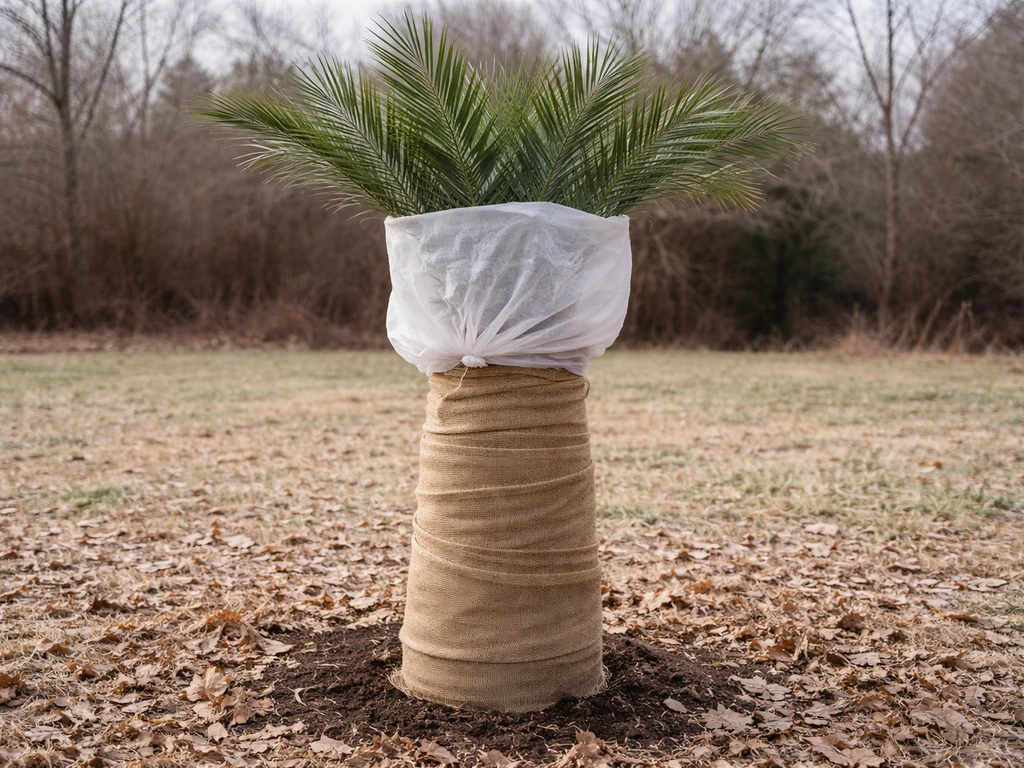
- Before a hard freeze forecast (below 25°F), wrap the trunk with burlap or frost cloth up to the crown. The crown (the growing point) is what you absolutely cannot lose.
- Bundle the fronds together over the crown and wrap them loosely with frost cloth or old Christmas lights (incandescent bulbs produce heat; LEDs do not). Do not mummify the crown so tightly that you prevent any air circulation.
- Mulch the base heavily (4 to 6 inches of pine bark or straw) to insulate the root zone.
- For extreme cold events (below 20°F), a temporary frame covered with frost cloth and an incandescent bulb inside can buy several extra degrees of protection.
- Remove protection once temperatures reliably stay above freezing, typically within a few days after the event.
Assessing and Recovering from Cold Damage
After a freeze, wait before cutting anything. Damaged fronds will brown and die, but cutting them too early stresses the palm unnecessarily and you may remove tissue that could still recover. Wait 4 to 6 weeks before trimming dead fronds. The critical check is the spear leaf (the central unopened leaf at the crown): pull it gently. If it comes out easily and smells bad or mushy, the growing point is dead and the palm will not recover. If it holds firm and shows green at its base, the palm is alive and will push new growth once temperatures warm. Be patient. A damaged date palm in south Alabama can look rough in March and come back strongly by July.
Troubleshooting and Best Alternatives If Dates Won't Ripen
If you've tried and your dates consistently mold before ripening, or you're in north Alabama where the seasons just don't align, it's worth being honest about next steps. You have a few realistic paths.
Adjust Your Expectations (and Harvest Timing)
As mentioned above, harvesting Barhee at the Khalal stage solves most of the humidity-related ripening problem. If you're getting fruit this far but it's molding before fully drying, harvest earlier and refrigerate or freeze the clusters. Khalal dates store well for weeks in the fridge and months in the freezer. This is not a failure; it's just adapting to your climate.
Switch to Hardy Ornamental Palms
If you want a palm in your Alabama landscape without the fruiting drama, Windmill palms (Trachycarpus fortunei) are cold-hardy to Zone 7b and thrive across most of Alabama. Sabal palms handle Zone 8 well and are native to the southeast. Neither produces edible dates, but they're beautiful and low-maintenance.
Grow Other Warm-Season Fruits Instead
Alabama is excellent territory for figs, persimmons, pomegranates, and muscadine grapes, all of which love the heat and produce reliably without the humidity conflicts that plague dates. Asian persimmons in particular offer that same sweet, jammy richness that people love about dates, and they thrive in Zones 7 and 8 with no special protection. If you want something exotic, pineapple guava (Feijoa) does well in south Alabama and is underrated.
How Alabama Compares to Neighboring States
Alabama sits in a middle ground for date palm growing in the Southeast. Louisiana's Gulf Coast (particularly around New Orleans) is slightly warmer and more humid, making it similarly challenging for fruit ripening but with better winter survival odds. Georgia's coastal strip around Savannah shares Alabama's Zone 8 conditions and faces the same summer humidity conflict. South Carolina's Low Country is marginally similar. North Carolina and Virginia are harder still for date palms, with colder winters limiting even ornamental survival to protected coastal areas. If you're comparing notes with growers in those states, the core challenge is the same across the region: it's not whether date palms can survive, it's whether Alabama's (and the broader Southeast's) humid summers allow fruit to ripen before mold takes over.
Making Your Decision Based on Your Specific Location
Here's the quick decision guide based on where you are in Alabama. If you're in Mobile, Baldwin County, or anywhere along the Gulf Coast in Zone 8b: try in-ground Barhee, manage expectations on full ripening, and use winter wrapping for cold events. If you're in central Alabama (Zone 8a, Montgomery, Tuscaloosa, Selma area): container growing is smarter, and focus on ornamental value with fruit as a bonus if you get a dry hot summer. If you're in north Alabama (Zone 7b, Huntsville, Fort Payne): keep date palms in containers, move them inside in winter, and enjoy them as a novelty. In South Carolina, you can grow date palms, but reliably getting edible, fully ripened dates is far harder than in warmer, drier climates. Expect ornamental use only, and consider the alternatives above for actual fruit production.
FAQ
What’s the coldest temperature a date palm in Alabama can handle?
For Phoenix dactylifera, plan for protection once temps drop near 20°F, since serious Phoenix damage risk rises as you get below that mark for a sustained period. In-ground palms in Mobile might survive occasional mid-teens cold snaps, but you still want a wrap plan for wind-chill and fast cold transitions.
Can I grow date palms outdoors year-round in south Alabama (Mobile/Baldwin)?
You can often keep them outdoors, but “year-round” depends on how often your area dips unusually low and how exposed the site is (open yard versus sheltered microclimate). Even in Zone 8b, use light winter wrapping, tie fronds up for airflow management, and prepare to cover the crown if a hard freeze is forecast.
If my date palm flowers, will I get fruit without doing anything else?
Usually not. Date palms are dioecious, so you need both a male and a female plant for edible fruit, or you need to hand-pollinate the female. Also, fruit set will be limited if the flowers experience cool nights or high humidity during the critical pollination window, even if the tree is healthy.
How do I know when to pollinate Barhee or other female flowers?
Watch for the female spathe to open, that’s when it’s receptive. Pollinate early in the day when flowers are fresh, and aim to repeat if you get wet weather right after pollination. Dried pollen can be viable for a season, but it loses reliability as storage conditions worsen, so avoid using old pollen from an unknown source.
My Barhee dates are turning yellow but still get mold, what should I do?
Harvest at the Khalal stage (yellow, crisp) rather than waiting for fully dried tamar. If you see fuzz or spotting before the cluster dries, remove the clusters early, then refrigerate to slow spoilage. For any cluster you can’t finish quickly, quick cooling is your best defense.
Is it better to plant in the ground or keep a date palm in a container in Alabama?
If your yard has heavy clay, containers are usually the safer choice because you control drainage and soil mix. In-ground planting can be worth it in the Gulf Coast microclimates, but the success driver is still how fast water drains away from the root zone during Alabama’s rainy stretches.
What’s the biggest mistake Alabama growers make with date palms?
Overwatering or planting in poorly draining soil. Date palms tolerate drought, they do not tolerate waterlogged roots, and clay-heavy Alabama sites make this easy to get wrong. If you’re unsure, build a raised bed or improve the planting hole so the root area stays airy even after storms.
Can I use mulch around a date palm in Alabama?
Yes, but keep it controlled. Use mulch to reduce evaporation, but avoid piling it against the trunk or crown where moisture can linger and invite rot. In winter, reduce mulch depth if you tend to get cold, wet conditions at the site.
Do I need to fertilize, or will compost and rainfall be enough?
Date palms benefit from targeted feeding, especially potassium, but too much nitrogen encourages soft growth that can be damaged by cold. Use a palm fertilizer suited for palms (often with an 8-2-12 style balance), apply during active growth, and stop fertilizing well before the first major cold period.
Can I grow a date palm from seed in Alabama and expect fruit?
You can grow them from seed, but it’s slow and unpredictable. Expect a long wait before fruiting, and about half the seedlings will be male. If edible fruit is the goal, buy a named variety offshoot, and plan for several years before the palm can reliably produce.
What should I do after a freeze, when is it safe to trim?
Wait before cutting anything, generally 4 to 6 weeks after the cold event, so the palm can show what tissue is truly dead. Also perform the spear (growing point) check, if the central spear stays firm and shows live tissue at its base, the palm can recover and you should avoid aggressive pruning right away.
If my goal is “dates like Medjool,” is that realistic in Alabama?
It’s the hardest option. Medjool typically wants prolonged hot, very dry ripening conditions, Alabama’s humidity often triggers mold before full drying. If you want the date experience without the full tamar drying problem, Barhee harvested at Khalal stage is a more Alabama-compatible approach.
What other fruit should I consider if I want similar sweetness but higher reliability?
If you want dependable fruit with less humidity conflict, figs, persimmons, pomegranates, and muscadine grapes are generally easier bets in Alabama. Asian persimmons are a common favorite because their sweet, jammy texture is similar in spirit to date flavor, without needing the same ultra-dry ripening window.
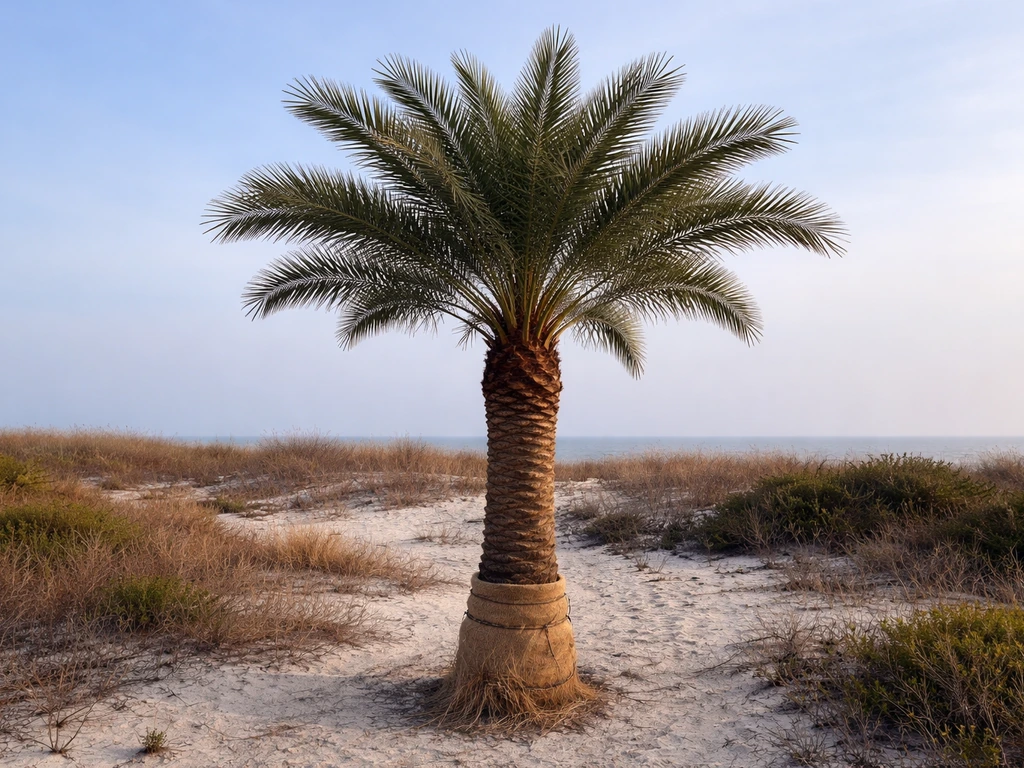
Learn if you can grow date palms in South Carolina, best varieties, planting, pollination, and winter protection tips.
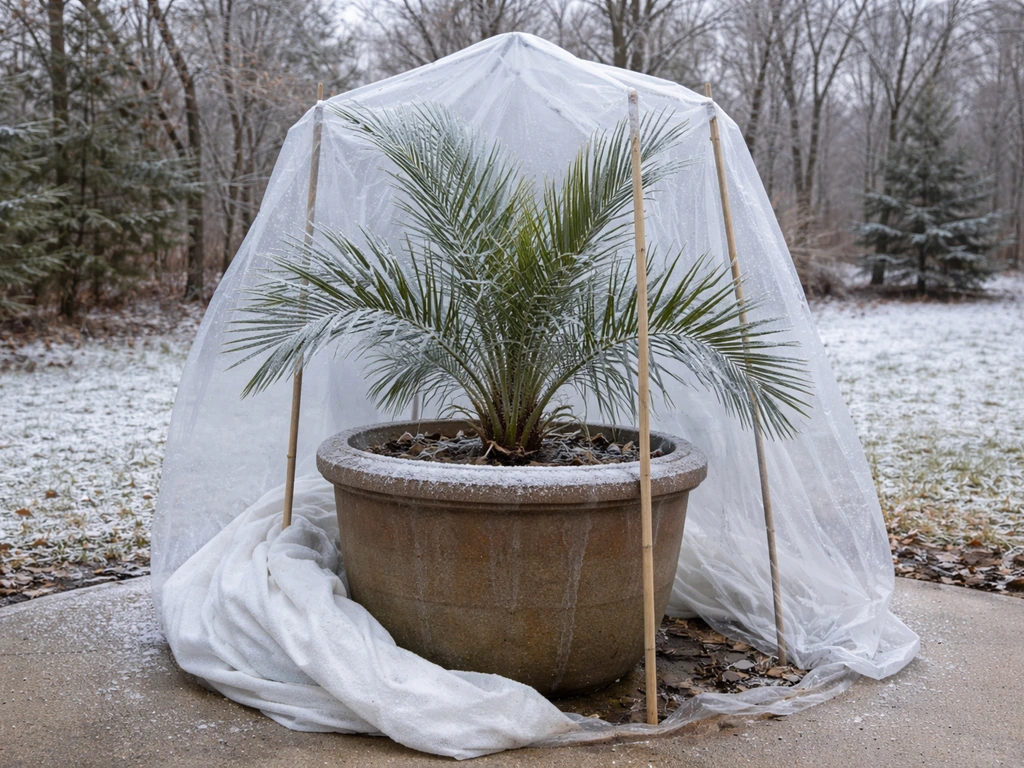
Learn if you can grow date palms in Missouri, which types may survive, and step-by-step overwintering and care tips.
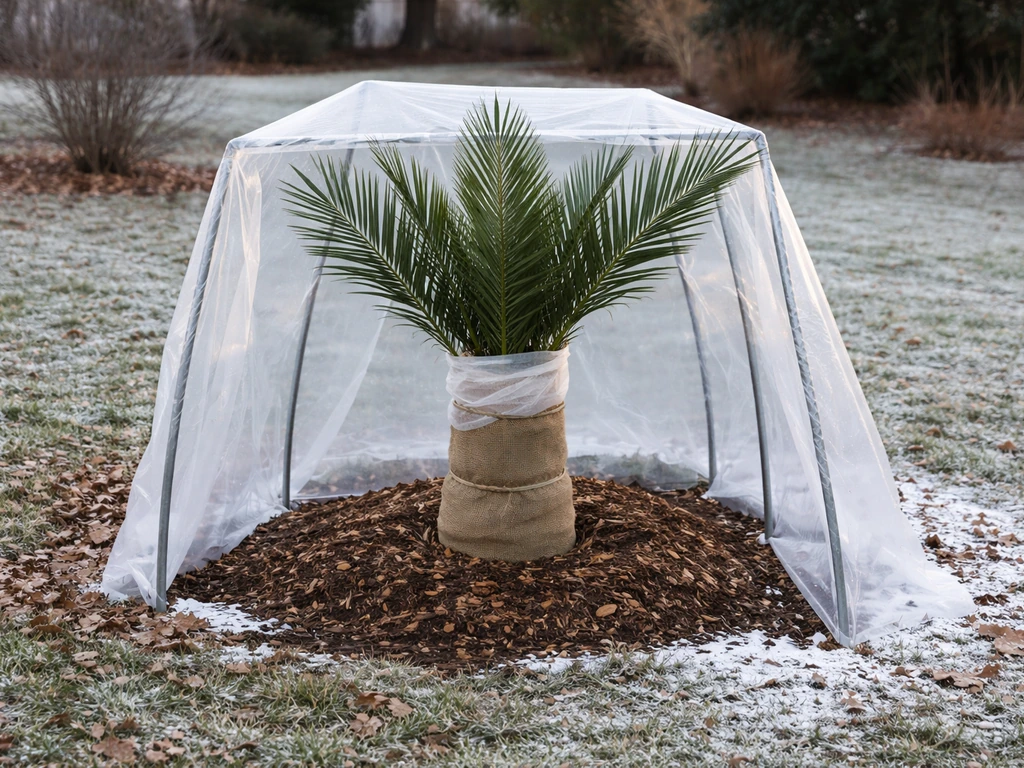
See if date palms can survive Virginia winters, how to plant, protect, and whether edible fruit is realistic.