
You can grow gooseberries in Texas, but only in the right part of the state and with real effort to manage the heat. The northern Panhandle, higher-elevation areas of the Hill Country, and parts of North Texas (USDA zones 6b–7b) give you a genuine shot at success. Anywhere south of roughly I-20, and especially in Houston, San Antonio, or the Rio Grande Valley, the odds stack against you fast. If you're in a marginal zone, heat-tolerant varieties, smart site selection, and shade management can tip the balance, but gooseberries will never be an easy Texas crop the way they are in Vermont or Oregon.
Can You Grow Gooseberries in Texas? Feasibility & Tips Guide.
Marcus Holloway
16 Jul 2026
The honest verdict
Gooseberries are cool-climate plants (genus Ribes) that perform best where summers stay mild. Texas overwhelmingly does not offer that, which is why extension services in the Southeast consistently classify Ribes as 'not heat tolerant' or 'marginally adapted' in warm, humid parts of the region. That said, Texas is not one climate. If you're exploring other crops adapted to Texas, see can you grow lentils in Texas for guidance on lentil suitability and regional growing tips. The Panhandle and parts of North Texas sit in USDA zones 6b–7a, where winter chilling is adequate and summers are hot but comparable to parts of Missouri or Kansas where gooseberries grow with some effort. Committed gardeners in those zones who choose the right varieties and manage summer conditions carefully can expect moderate yields. Growers further south should seriously consider jostaberries or currants instead. If you’re comparing Ribes to other garden crops in Texas, also see can you grow asparagus in Texas for advice on how asparagus performs across Texas regions.
Texas zones and regions: where gooseberries fit and where they don't
Texas spans USDA hardiness zones 6b in the northern Panhandle through zones 8–9 across most of Central and East Texas, all the way to zones 10a–10b along the Lower Rio Grande Valley. For a comparison, see whether you can grow carrots in Texas, which discusses regional suitability and microclimate tactics for a different cool-season crop. For gooseberries, hardiness itself is rarely the constraint. These plants are cold-hardy to at least zone 4 or 5 depending on cultivar. The real problem is summer heat, humidity, and inadequate winter chilling in the warmer zones.
| Region | USDA Zone | Approx. Chill Hours | Gooseberry Feasibility |
|---|---|---|---|
| Texas Panhandle (Amarillo area) | 6b–7a | 900–1,000+ | Best in Texas; most viable |
| North Texas (Dallas-Fort Worth) | 7b–8a | 700–800 | Marginal; possible with best varieties |
| East Texas (Tyler, Texarkana) | 7b–8a | 600–700 | Difficult; high humidity adds disease risk |
| Central Texas / Hill Country (Austin, Kerrville) | 8a–8b | 500–700 | Very difficult; heat and warm nights are limiting |
| West Texas (El Paso) | 7b–8a | 700–800 | Dry heat is less fungal but still stressful; possible in elevated sites |
| Gulf Coast (Houston, Corpus Christi) | 9a–9b | 200–400 | Not recommended; insufficient chill hours, extreme humidity |
| South Texas / Rio Grande Valley | 9b–10b | Under 200 | Not viable for gooseberries |
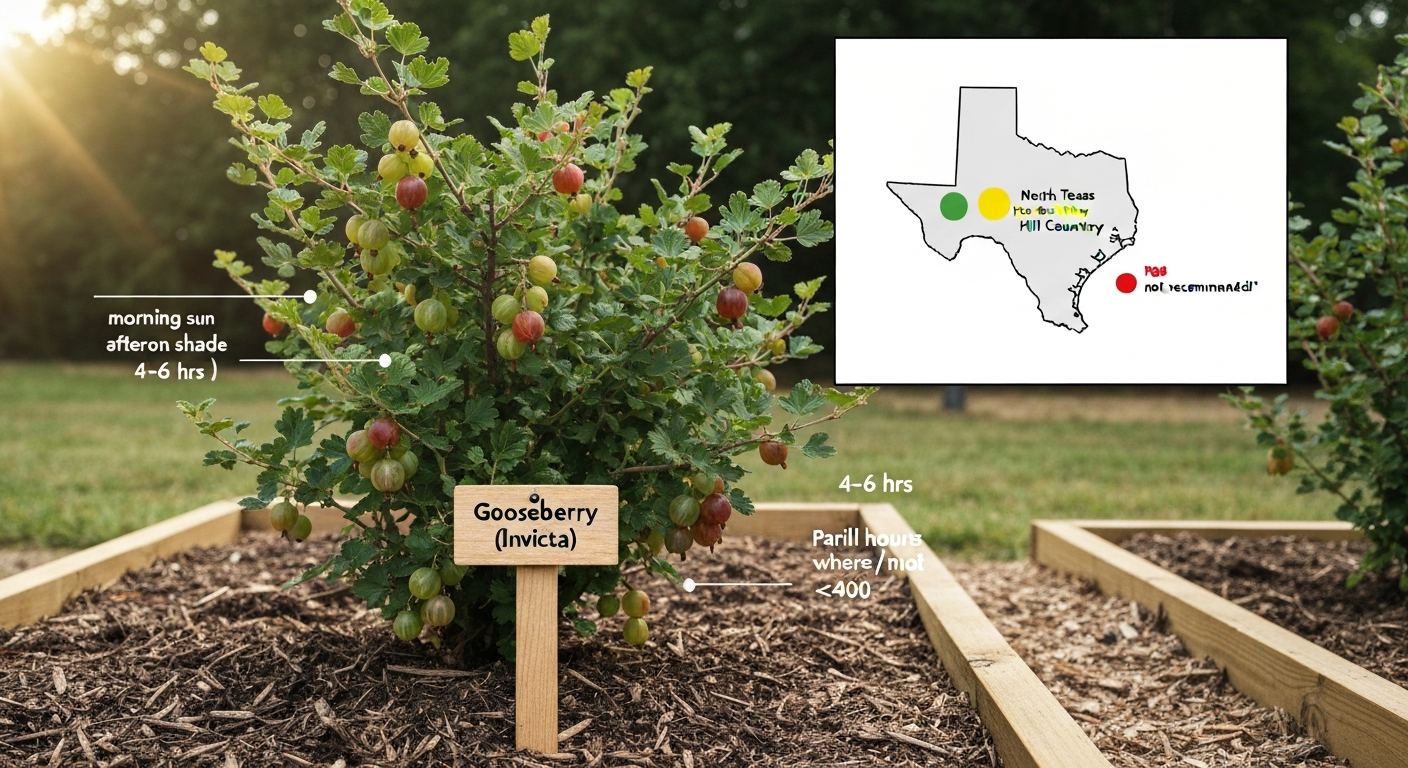
The Aggie-derived chill-hour map for Texas places the Gulf Coast and South Texas in the lowest bands (under 400 hours below 45°F), while the Panhandle regularly accumulates 900–1,000+ hours. Gooseberries typically need at least 800–1,000 chill hours depending on cultivar, so anything below the DFW latitude gets dicey quickly. The Panhandle is your best bet in Texas, full stop.
What Texas summers actually do to gooseberries
Dallas-Fort Worth records July normals of about 91–92°F during the day and 72°F at night. Austin climbs to 94–95°F on a typical July day with 73°F nights. Houston adds high morning relative humidity on top of that. These aren't marginal heat conditions for Ribes. They're brutal. Gooseberries evolved for cool, moist European and North American summers. When daytime highs consistently exceed 85–90°F and nights stay warm, plants shut down, fruit set drops, and powdery mildew moves in aggressively. Warm nights are especially damaging because they prevent the plant from recovering from daytime heat stress.
The specific risks you're managing in Texas are: (1) heat-induced fruit drop before berries fully ripen, (2) powdery mildew, which explodes in warm, humid conditions, particularly in East Texas and along the Gulf Coast, (3) insufficient chill hours in zones 8b and warmer, which means plants don't properly break dormancy and fruit set is erratic, and (4) summer soil temperatures that can damage shallow roots if mulch is inadequate. El Paso's dry heat is a different problem. You get less fungal pressure there, but temperatures spike even higher during the day and dry winds can desiccate plants quickly.
Varieties worth trying in Texas
Variety selection is probably the single biggest factor in whether your Texas gooseberry experiment succeeds or fails. European gooseberries (Ribes uva-crispa) are generally more susceptible to powdery mildew than American species (Ribes hirtellum) and American-European hybrids. In Texas, you want cultivars bred specifically for mildew resistance and heat tolerance. Ribes uva‑crispa 'Captivator', RHS Plant Profile describes 'Captivator' as fairly disease‑resistant and nearly thornless, a cultivar frequently recommended for improved powdery mildew tolerance Ribes uva‑crispa 'Captivator' — RHS Plant Profile. Here are the ones most worth trialing.
- Invicta: Widely recommended as the most mildew-tolerant gooseberry available. It's a European-derived cultivar with strong disease resistance, high yields, and good fruit quality. This is the first cultivar to try in any Texas location.
- Captivator: An American-European hybrid that's nearly thornless and has solid disease resistance. Extension sources consistently rate it as disease-tolerant and it's easier to manage than thorny types. Good pick for North Texas and Panhandle trials.
- Hinnonmaki Red and Hinnonmaki Yellow: Finnish cultivars with decent cold hardiness and moderate mildew resistance. They've performed reasonably in Northwest and Intermountain trials. Less proven in heat but worth a try in the Panhandle.
- Pixwell: An American-type hybrid known for mildew resistance and toughness. The fruit is small and tart but the plant handles adversity better than most. A practical backup option.
- Poorman: Another American hybrid with good flavor and some mildew tolerance. Performs better in cooler Texas sites like higher-elevation Hill Country locations.
One more option worth taking seriously in Texas is the jostaberry (Ribes x nidigrolaria), a hybrid between blackcurrant and gooseberry. It's thornless, vigorous, and significantly more disease-resistant than standard gooseberries. Missouri Botanical Garden lists it as a reliable fruiting shrub with excellent disease tolerance. If you want Ribes fruit in central or southern North Texas without the full gooseberry battle, jostaberry is a genuinely practical choice.
Rootstocks, grafted plants, and when to just switch to currants or jostaberries
Most home gardeners buy gooseberries as own-rooted bare-root or container plants, and that's fine for the Panhandle and cooler North Texas locations. Rootstock grafting is not a standard practice for gooseberries the way it is for fruit trees, so you're unlikely to find grafted gooseberry stock from mainstream nurseries. What you will find are standard own-rooted plants, which perform well enough in suitable climates.
The more useful question for Texas growers is not whether to use a rootstock but whether to grow gooseberries at all versus choosing a better-adapted Ribes relative. If you're in zone 8a or warmer, jostaberries are the pragmatic swap: they're more vigorous, more disease-resistant, tolerate heat somewhat better, and still produce tart berries usable for jam, juice, and cooking. Black currants (Ribes nigrum) are another option with better chill-hour flexibility in some cultivars, though they share the same powdery mildew vulnerability in humid conditions. If your primary goal is fruit from the Ribes family in a challenging Texas climate, jostaberry is often the better investment than fighting for marginal gooseberry production.
Site selection and soil preparation
In cooler climates, gooseberries prefer full sun. In Texas, partial shade is not optional. You want a site that gets morning sun (roughly 4–6 hours) and is shaded from the intense afternoon sun, ideally by a structure, fence, or larger deciduous trees. An east-facing slope or a north-facing wall exposure in the Panhandle can work well. Avoid low spots where cold air collects in winter and heat pockets form in summer.
Gooseberries need well-drained soil with a pH between 6.0 and 6.5. Texas soils vary wildly, from heavy black clay (Blackland Prairie) to sandy loams in East Texas to alkaline caliche-heavy soils in Central and West Texas. Before planting, test your soil pH and adjust with sulfur if you're above 7.0, which is common in Central and West Texas. Work in 3–4 inches of compost before planting to improve drainage in clay soils and water retention in sandy ones. In tight clay soils or alkaline caliche zones, raised beds are not just useful, they may be the only way to give roots a viable environment.
- Target soil pH: 6.0–6.5 (test before planting and amend accordingly)
- Drainage: critical; gooseberries do not tolerate waterlogged roots; raised beds 12–18 inches tall solve most drainage problems
- Sun exposure: morning sun, afternoon shade in zones 7b and warmer
- Spacing: 4–5 feet between plants for air circulation, which reduces powdery mildew pressure
- Container growing: possible in 15–25 gallon containers with a well-draining mix; allows you to move plants to shade during peak summer heat
Microclimate tactics to survive Texas summers
This is where you actually win or lose with gooseberries in Texas. The plants themselves can't change the climate, but you can change what the plant experiences at the microsite level. These strategies are most relevant for growers in the DFW area and the Panhandle where the effort is justified. South of those zones, no amount of microclimate engineering reliably compensates for both the heat and the chill-hour deficit working against you simultaneously.
- Shade cloth: Install 30–40% shade cloth on the west and southwest sides of plants before June. This directly reduces afternoon leaf temperature and slows moisture loss during peak heat weeks.
- Mulch heavily: Apply 4–6 inches of wood chip or straw mulch around the root zone to keep soil temperatures from spiking above 85°F, which damages feeder roots. Refresh mulch in late spring before summer heat arrives.
- Elevation and air drainage: Plant on gentle slopes where cool air drains away at night rather than collecting around plants. Even a slight grade improves nighttime cooling.
- Wind protection: Hot, dry winds desiccate gooseberries quickly, especially in West Texas and the Panhandle. A windbreak on the west or southwest side (fence, shrubs, or structure) reduces transpiration stress without trapping humidity.
- Reflective mulch: Some Texas gardeners use white or silver reflective mulch on the ground to bounce heat away from the plant canopy. Less commonly needed but worth trying in particularly hot sites.
- Container mobility: Growing in large containers (15 gallon or larger) gives you the option of moving plants to a shaded porch, carport, or north-facing wall during the hottest July and August weeks.
When and how to plant gooseberries in Texas
Planting timing in Texas depends on your region. Unlike asparagus or artichokes, which have broader Texas windows, gooseberries need to be established before summer heat arrives. You want roots settled in and actively growing before June temperatures start stressing the plant. Planting too late in spring leaves new plants without an established root system to survive their first Texas summer.
| Region / Zone | Bare-Root Window | Container Plant Window | Notes |
|---|---|---|---|
| Panhandle (Zone 6b–7a) | Late Feb – Mid March | Late Feb – April | Best window in Texas; soil warms slowly, roots establish well before summer |
| North Texas / DFW (Zone 7b–8a) | Mid Feb – Early March | Feb – Mid March | Plant early to maximize root establishment before May heat |
| East Texas (Zone 7b–8a) | Late Jan – Late Feb | Feb – Early March | High humidity risk; prioritize mildew-resistant varieties and open spacing |
| Hill Country / Central TX (Zone 8a–8b) | Jan – Late Feb | Feb – March | Heat arrives early; container plants give more flexibility here |
| West Texas / El Paso (Zone 7b–8a) | Late Feb – Mid March | Feb – Early April | Dry conditions; water carefully after planting |
Bare-root plants are the most common way gooseberries are sold by mail-order nurseries like Jung Seed, Raintree Nursery, and Peaceful Heritage Nursery. They ship in late winter, typically January through March depending on the supplier, and need to go in the ground promptly on arrival. Soak bare roots in water for 12–24 hours before planting, dig a hole wide enough to spread the roots without bending, and plant at the same depth the plant was growing previously. Container-grown plants give you a slightly larger window and transplant shock is lower, but they're less commonly available and more expensive.
Propagation from cuttings is worth knowing if you find a plant that performs well in your specific microsite. Hardwood cuttings taken in late fall or early winter (November to January) root reliably for gooseberries. Take 8–10 inch sections of healthy one-year-old wood, insert them 2/3 of their length into moist, well-drained rooting medium, and keep them in a sheltered spot. Layering (bending a low branch to the ground and covering a section with soil) is even simpler and produces a rooted plant by the following fall. For most Texas gardeners buying named cultivars, though, mail-order bare-root stock is the fastest and most reliable starting point.
FAQ
Can you grow gooseberries in Texas?
Yes — but with caveats. Gooseberries (Ribes spp.) are primarily cool‑climate shrubs and do best where summers are mild. In Texas they are feasible in cooler, higher‑chill pockets (northern Panhandle, higher elevations in North/Central Texas, cooler Hill Country sites and some parts of North Texas). In hot, humid lowlands (Gulf Coast, much of Central/South Texas, and Lower Rio Grande Valley) gooseberries are generally marginal because persistent high daytime temperatures and humidity increase heat stress and fungal disease pressure.
Which Texas USDA hardiness zones and climates are most and least suitable?
Most suitable: USDA zones roughly 6b–7b in the Panhandle, higher elevations of North/Central Texas and cooler Hill Country sites where summer highs are lower and chill hours are higher. Marginal but possible with microclimate help: much of North/Central Texas (zones 7–8) where summer nights are warm and afternoon temps often exceed 90°F. Least suitable: Gulf Coast, South Texas and Lower Rio Grande Valley (zones 9–10) where high heat and humidity and low winter chilling make success unlikely without heavy adaptation (containers + shade + refrigeration).
Which gooseberry varieties are best for Texas?
Choose mildew‑tolerant, heat‑resilient cultivars and hybrids. Good options cited in trials and extension literature: 'Invicta' (noted for mildew tolerance), 'Captivator' (disease‑tolerant, nearly thornless), Hinnomaki varieties (selected for disease resistance), 'Pixwell' and 'Poorman' in cooler sites. Consider jostaberry (Ribes × nidigrolaria) as an alternative — it combines vigor and improved disease resistance. Prioritize cultivars described as mildew‑tolerant and derived from Ribes hirtellum breeding lines.
How should I site and microclimate gooseberries in Texas to improve success?
Key actions: plant on the coolest, most sheltered site available — north or east side of buildings, under filtered afternoon shade, or on north‑facing slopes; choose higher elevation or well‑drained slopes to gain cooler nights; increase air circulation with wider spacing and open pruning to reduce fungal humidity; use containers or raised beds to move plants into shade or cooler microsites if needed; mulch to keep roots cool and maintain consistent moisture but keep mulch away from crown to reduce disease.
What soil and watering practices work best in Texas?
Gooseberries prefer fertile, well‑drained loam with pH near 6.0–6.8. In Texas, improve heavy clay with organic matter and ensure good drainage to avoid root stress in humid areas. Maintain consistent soil moisture during fruit set and summer (deep, infrequent watering) and avoid overhead irrigation where powdery mildew is a risk; drip irrigation is preferred. Apply 2–4 inches of organic mulch, refreshing annually and keeping it from touching stems.
When should I plant and how do I propagate gooseberries?
Plant bare‑root or container gooseberries in late winter to early spring (after major freezes but before budbreak) in cooler parts of Texas. In warmer areas consider fall planting in a protected spot. Propagation options: buy certified nursery stock (recommended); propagate hardwood cuttings in late winter/early spring for clones of known cultivars; layering and root suckers also work. Avoid transplanting in midsummer heat.
Next Articles
Can You Grow Lentils in Texas? How to Succeed
Learn if you can grow lentils in Texas, plus timing, varieties, soil prep, seeding, care, harvest, and troubleshooting.
Can You Grow Artichokes in Texas How to Succeed by Region
Yes, grow artichokes in Texas by region with the right variety, timing, heat protection, and soil care for buds.
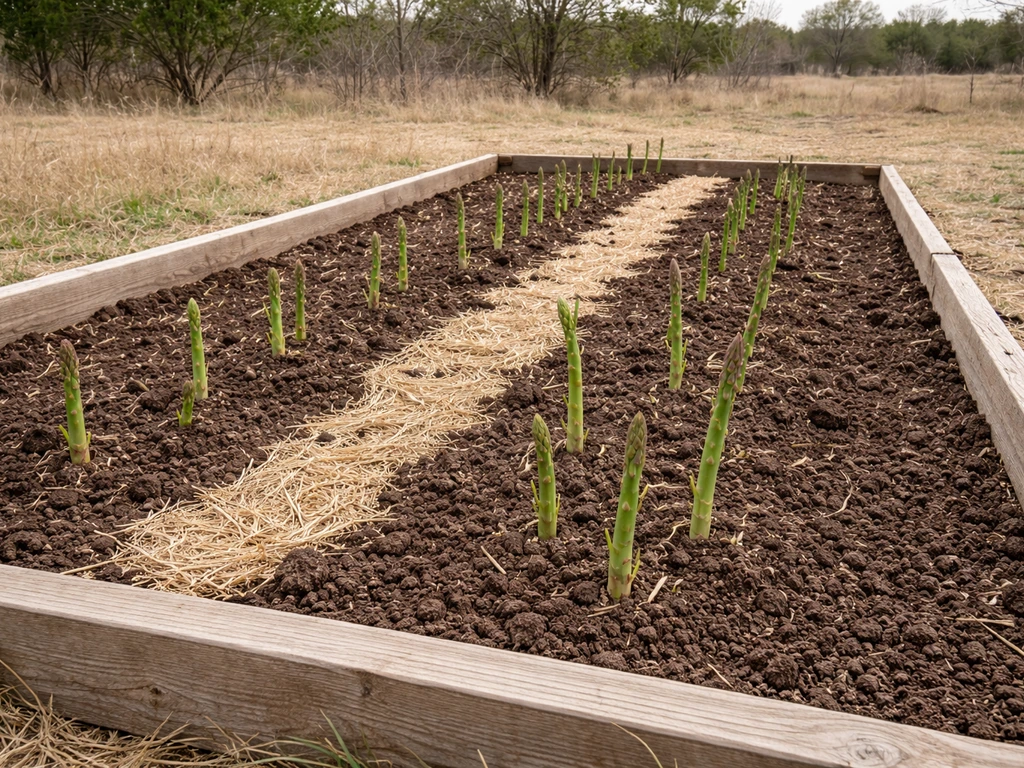
Can You Grow Asparagus in Texas? Requirements and Care
Learn if asparagus grows in Texas and get a step-by-step care plan by region, planting, soil, watering, and harvest timi