
Yes, you can grow vanilla in the US, but almost everywhere except southern Florida, you'll need to do it indoors, in a greenhouse, or in a container setup you can bring inside. In Canada, you can still grow vanilla, but you’ll need to do it indoors or in a controlled greenhouse setup to provide the heat, humidity, and filtered light it requires grow vanilla in Canada. Vanilla is a tropical orchid vine that needs heat, humidity, and filtered light year-round. Most of the country simply can't offer that outdoors. That doesn't mean it's impossible, it just means you're managing the environment instead of relying on nature to do it for you.
Can You Grow Vanilla in the US? Requirements and Steps
Marcus Holloway
14 Apr 2026
Where in the US can vanilla actually grow outdoors
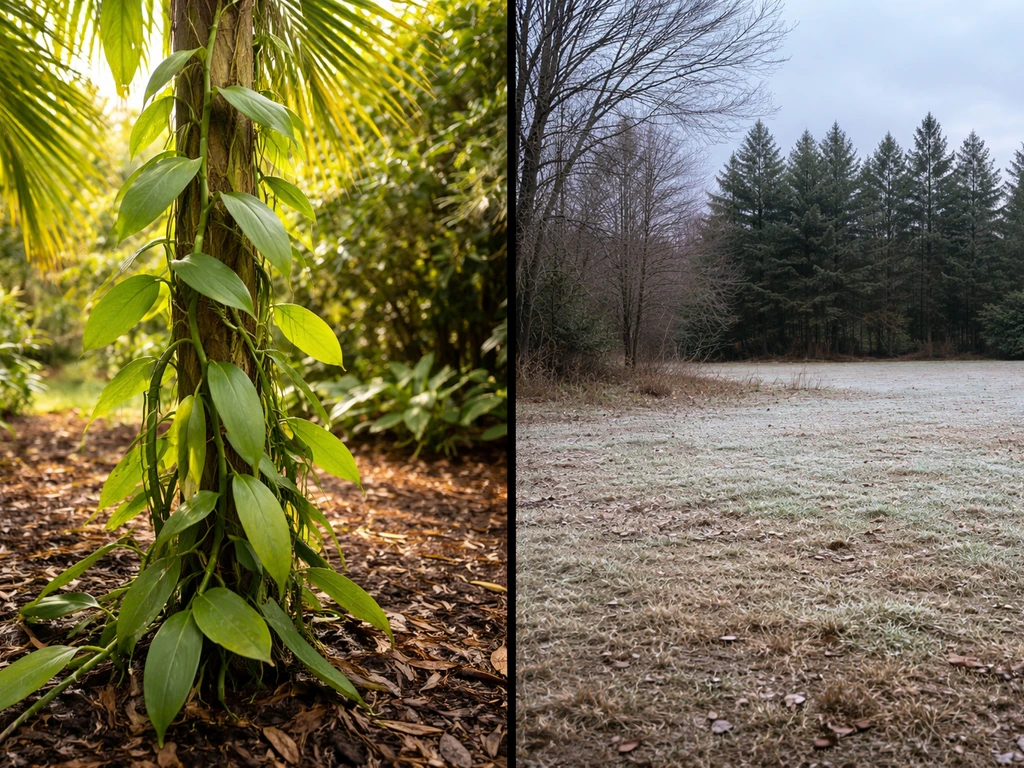
The short answer: southern Florida, and basically nowhere else in the continental US without serious winter protection. UF/IFAS has documented that the hot, humid climate around Homestead, FL is genuinely suitable for outdoor vanilla cultivation, and researchers there have explored it as a viable secondary crop for fruit tree growers. Hawaii also has the right conditions in lower-elevation areas. Parts of coastal Southern California and the Gulf Coast of Texas or Louisiana can flirt with vanilla outdoors during summer, but they're a frost event away from losing the whole plant.
If you're researching this from a colder or drier state, that doesn't disqualify you. It just means your setup has to compensate. Gardeners in the Pacific Northwest, the Midwest, New England, and the Mountain West grow vanilla successfully every year, entirely in controlled environments. The plant doesn't care where it is geographically as long as the conditions are right inside your greenhouse or grow room.
For a broader global picture of where vanilla thrives and why, it helps to understand what vanilla plants fundamentally need to succeed before zeroing in on US-specific conditions.
What vanilla actually needs to survive and produce
Vanilla planifolia is native to tropical Mexico and Central America, and it hasn't evolved to compromise much. The target temperature range is 21–32°C (roughly 70–90°F) during the day, with nights staying above 10°C (50°F) at minimum. Anything below that and growth stalls; a real frost kills the plant. The ideal humidity sits around 80% relative humidity, though a practical home target of 60–80% is workable. You're also looking at well over 1,500 mm of rainfall equivalent per year in its natural habitat, which translates to consistent, never-let-it-dry-out watering in cultivation.
Light is indirect and filtered. Vanilla grows as an understory vine in tropical forests, so it wants bright shade, not direct afternoon sun. Think dappled greenhouse light or a south-facing window with a sheer curtain. Too much direct sun scorches the thick, succulent-like leaves; too little and the vine just sits there and doesn't flower.
The vine itself is a climber and can get very long, easily reaching 30 feet or more at maturity. It produces aerial roots along the stem that it uses to grip whatever it's climbing. In a home or greenhouse setting, you need to give it a trellis, pole, or horizontal support system to grow along. UF/IFAS recommends looping the vines around trellises or existing branches as they grow, which also encourages more lateral flowering nodes. Without something to climb, the plant spends all its energy trying to anchor itself and flowers poorly.
Best setups for US growers
Greenhouse growing
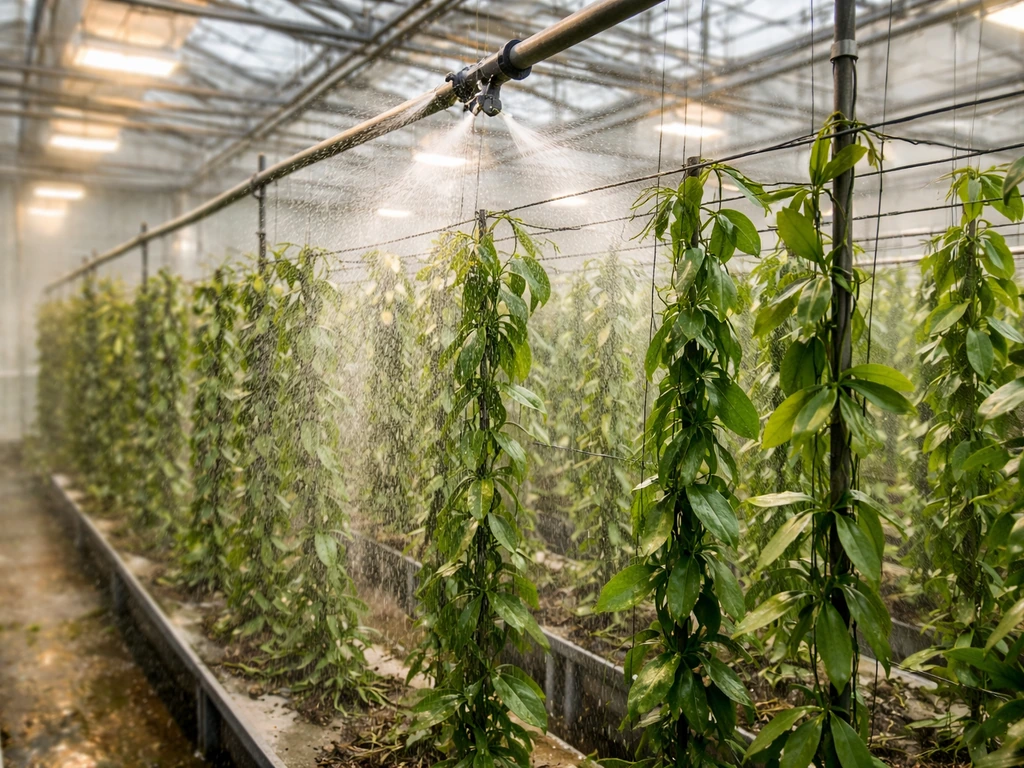
A heated greenhouse is the most reliable setup in the US, outside of South Florida. You're creating rainforest conditions year-round: consistent temperatures in the 70–90°F range, humidity held at 70–80%, and filtered light through shade cloth or polycarbonate panels. The key is drainage, vanilla hates sitting in wet soil, so a well-draining orchid bark or coarse potting mix beats standard potting soil. You'll also want a trellis or horizontal wire system installed along the greenhouse roof or walls for the vine to grow along. Good drainage combined with high ambient humidity (not waterlogged roots) is the balance you're chasing.
Container and indoor growing
Container growing works well and gives you flexibility. Vanilla planifolia is primarily grown indoors in most of the US due to its temperature and humidity needs, with a practical home target of 65–85°F and 60–80% humidity. A large pot (12 inches or bigger) with a coarse, fast-draining mix and a moss pole or small trellis is the typical starting point. Keep it near a bright window, run a humidifier nearby, and mist the aerial roots regularly. The vine will outgrow small pots quickly once it's established, so plan to repot every year or two.
Outdoor growing in frost-free microclimates
In USDA Zones 11–12 (South Florida, Hawaii), vanilla can grow on existing trees or outdoor trellises with minimal intervention. If you're in Zone 10 (parts of coastal California, the southernmost tip of Texas, or the Florida Keys), you can try it outdoors with a plan to protect the plant during cold snaps. Anywhere north of that, outdoor growing is a seasonal experiment at best, not a reliable production setup.
| Setup Type | Best For | Key Challenge | Humidity Control |
|---|---|---|---|
| Heated greenhouse | Most US states, serious growers | Initial cost and ongoing heat/humidity management | Easiest to control with misters and vents |
| Indoor container | Apartment or home growers in any state | Vine size management, consistent humidity | Humidifier required; monitor with hygrometer |
| Outdoor (South FL / Hawaii) | USDA Zones 11–12 only | Occasional cold snaps, pest pressure | Managed by climate naturally |
| Outdoor (Zone 10) | Coastal CA, S. Texas, FL coast | Frost risk, need winter protection plan | Seasonal dry periods need irrigation |
How long until you actually get vanilla beans
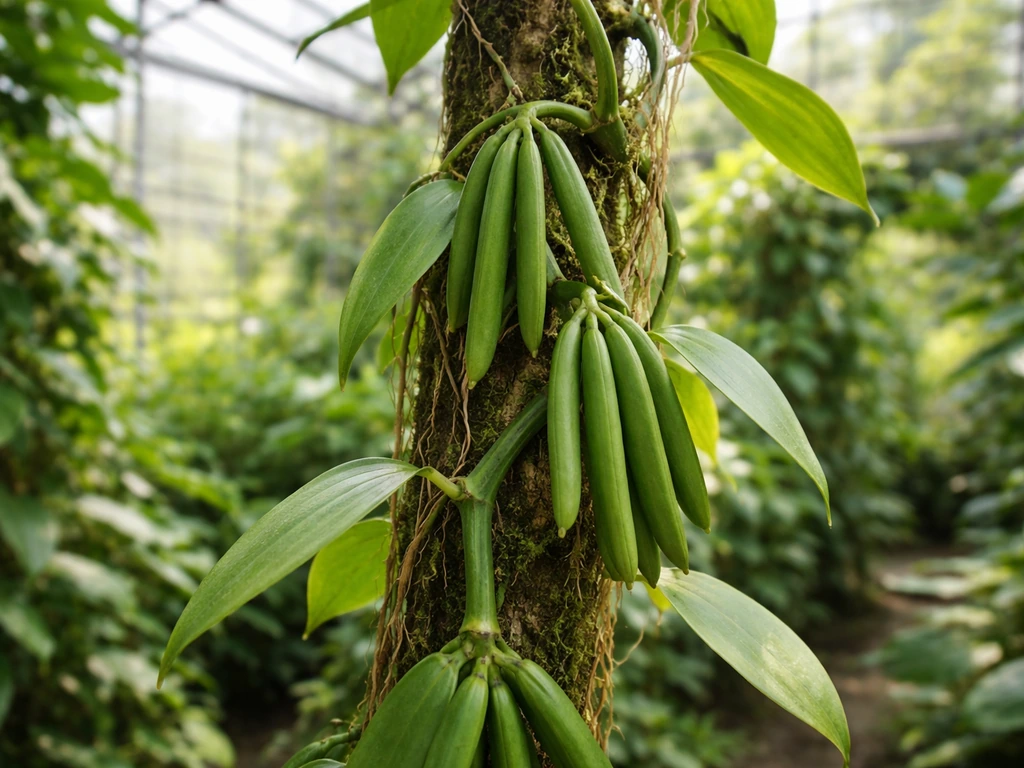
This is where a lot of people get surprised: vanilla is not a quick-turnaround crop. The vine typically won't flower until it's at least three years old, and that's under good conditions. Once it does flower and you successfully pollinate a bloom, the pod takes around nine months to reach full maturity. So from the day you plant a cutting to the day you harvest your first cured vanilla bean, you're realistically looking at four years or more.
The nine-month pod development timeline is well-documented, with both UC Davis's botanical conservatory and University of Florida research confirming it. Harvesting is done progressively by hand as individual pods ripen, not all at once. A single plant, even a healthy and well-managed one, is unlikely to produce hundreds of pods. Think of it as a rewarding long-game project, not a commercial venture (unless you're scaling up significantly in a greenhouse operation).
Hand pollination: the step you cannot skip
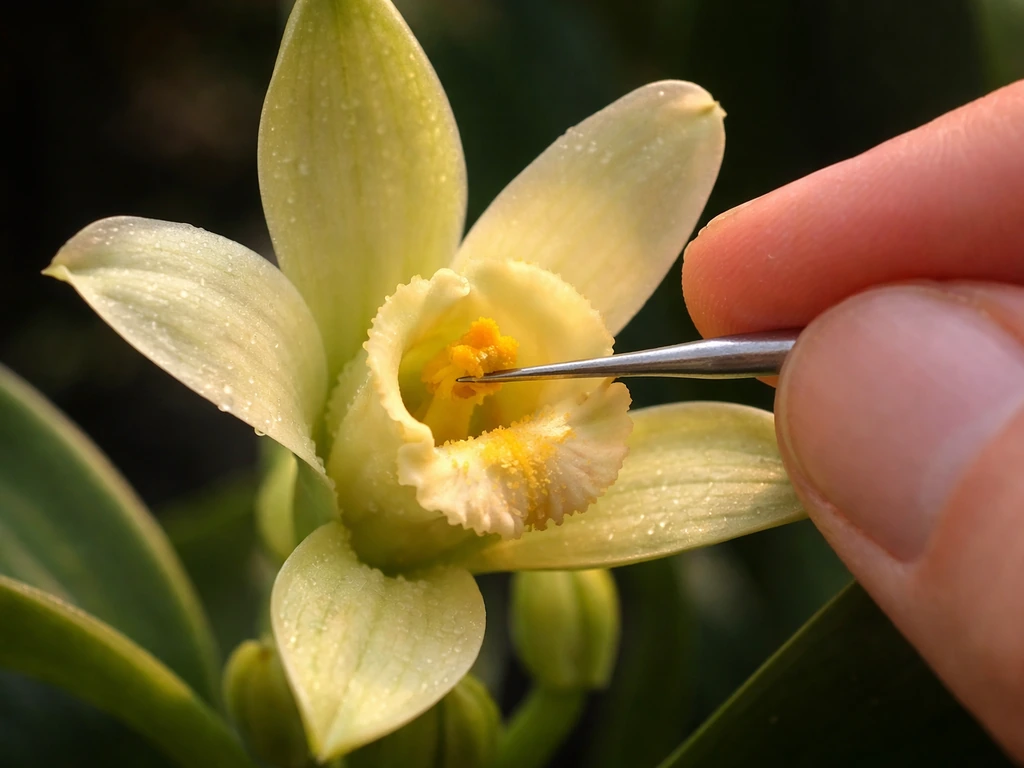
Here's the thing about vanilla flowers in the US: there are essentially no native pollinators that will do this job for you reliably. The natural pollinator of commercially grown Vanilla planifolia is not definitively known, and even in Florida where some bees have been studied, the blank" rel="noopener noreferrer">measured fruit set from insect pollination alone was less than 1%. In practice, every vanilla grower outside of the plant's native range hand-pollinates every single flower they want to become a bean. In the native range, Cornell’s Liberty Hyde Bailey Conservatory notes that blank" rel="noopener noreferrer">Edmond Albius discovered hand cross-pollination of vanilla by lifting the rostellum and transferring pollen manually. This is non-negotiable.
Vanilla flowers open in the morning and are only receptive for about 12 hours. If you miss that window, the flower wilts and falls off with no bean development. So you need to check your plant every morning during flowering season.
Here's the step-by-step process for hand pollinating a vanilla flower:
- Check the plant first thing in the morning for any newly opened flowers. They're small, pale yellow-green, and trumpet-shaped.
- Look at the column in the center of the flower. The anther cap (containing the pollinia, the pollen mass) sits at the top of the column, and the stigma (the receptive surface) is just below it, separated by a small flap called the rostellum.
- Use a toothpick or thin wooden skewer to gently lift the rostellum flap and expose the stigma.
- With the same toothpick, scoop or press the pollinia from the anther cap and transfer them directly onto the now-exposed stigma surface.
- Press gently to ensure contact between the pollen and the stigma.
- Check back over the next few days. If pollination worked, the base of the flower (the ovary) will begin to swell and elongate into a pod. If it failed, the flower will drop.
This is genuinely easy once you've done it a couple of times. The toothpick method is straightforward enough that trained workers in commercial operations can pollinate thousands of flowers per day. For a home grower with a vine that produces a few dozen flowers at a time, it takes maybe ten minutes of careful work each morning during flowering.
Where to get vanilla plants and how to start
The most reliable way to start is with a cutting or a tissue-cultured liner from a reputable specialty nursery. Logee's Greenhouses is a well-known source for tissue-cultured Vanilla planifolia liners in the US, and they've been supplying home growers and hobbyist collectors for years. Specialty orchid nurseries, tropical plant suppliers, and some online marketplaces also carry vanilla cuttings, but vet your seller carefully. One important note from UF/IFAS: make sure you're getting true Vanilla planifolia and not Vanilla × tahitensis (Tahitian vanilla), which produces a different flavor profile and may require verification if you ever plan to market any product derived from it.
Starting from a cutting is common and practical. Here's how to get started:
- Get a cutting that's at least 4–6 nodes long (the points where leaves attach to the stem). Longer cuttings tend to establish faster.
- Let the cut end callous over for a day or two before potting.
- Plant in a well-draining orchid bark or coarse perlite-heavy mix. Avoid dense potting soil that holds too much moisture.
- Keep the cutting in a warm (75–85°F), humid environment with bright indirect light. A humidity dome helps a lot in the first few weeks.
- Mist the aerial roots along the stem regularly. The plant absorbs moisture through these as much as through the soil roots.
- Once new growth appears (usually within a few weeks), you can gradually reduce dome coverage and transition to open-air conditions in your greenhouse or indoor setup.
If you're sourcing tissue-culture plants, be aware they need a careful hardening-off period. They come out of lab conditions with very high humidity tolerance and can struggle if moved immediately to low-humidity environments. Use a humidity dome and bright indirect light for several weeks before exposing them to normal indoor or greenhouse air.
What to monitor once you're up and running
Temperature and humidity are your two most critical variables. Get a digital thermometer/hygrometer and check it regularly. If temperatures drop below 60°F at night, growth will slow and root rot risk increases. If humidity drops below 50%, the aerial roots stop functioning well and the vine struggles. Watch for yellowing leaves (often a sign of overwatering or too much direct sun) and check the roots occasionally for rot or dryness.
Fertilize lightly during the growing season with a balanced orchid fertilizer or diluted liquid fertilizer. Vanilla is not a heavy feeder, but it needs consistent nutrition to grow and eventually flower. Also keep the vine trained along its support structure, looping new growth back around the trellis to encourage the lateral shoots where flowers will eventually emerge.
Growing vanilla in the US is genuinely doable, it just takes patience, the right setup, and a willingness to hand-pollinate flowers on a tight daily schedule during bloom time. If you've ever wondered how other countries manage similar challenges, it's worth knowing that vanilla growers in Nigeria and those attempting vanilla cultivation in South Africa face their own distinct climate trade-offs, which shows just how location-specific this crop really is. Even growing vanilla in Canada follows many of the same controlled-environment principles that most US growers outside Florida have to rely on.
The bottom line: if you're in southern Florida or Hawaii, vanilla is a realistic outdoor crop. Everywhere else, treat it as a rewarding greenhouse or indoor long-term project. Get a healthy cutting, nail your temperature and humidity, hand-pollinate every flower the morning it opens, and give the plant three to four years to hit its stride. It's a commitment, but harvesting a vanilla bean you grew yourself is genuinely one of the more satisfying things a home grower can do.
FAQ
Can I grow vanilla in a normal house without a greenhouse?
Yes, but the conditions must stay stable. If your indoor space drops below about 60°F at night or humidity falls under roughly 50%, growth often stalls and root issues become more likely. A thermostat-controlled heater for nights plus a humidifier near the plant is usually more reliable than relying on seasonal room swings.
Is outdoor vanilla possible in Zone 10?
You can try, but it is risky outdoors because a single cold event can kill the vine even if temperatures recover later. If you live in Zone 10 coastal areas and want to attempt summer outdoor growth, plan to bring the entire pot under protection as soon as overnight temperatures trend toward the low 50s°F, and avoid letting it experience frost risk.
How do I acclimate tissue-cultured vanilla liners so they do not crash?
Treat it like a long-term vine, not a short-term transplant. Tissue-cultured liners typically need a gradual hardening-off over several weeks using a humidity dome at first, then slowly reducing humidity while keeping bright, filtered light. Jumping directly from lab-level humidity to normal indoor air often causes aerial roots to fail.
Should I mist vanilla every day, or is there a better watering method?
Yes, and it helps target the aerial roots you need. Misting is useful, but do not keep the root zone waterlogged. The safer approach is high ambient humidity plus light misting of aerial roots, while ensuring the pot drains quickly so the main root mass does not sit in moisture.
What potting mix and drainage setup prevents root rot?
A common mistake is using standard potting soil or anything that stays soggy. Vanilla needs a coarse, fast-draining orchid-type mix (often bark-based) so airflow reaches the roots while the surrounding air stays humid. If you notice sour smells, slow drying, or persistent dark, mushy roots, repot sooner rather than waiting.
How often do I need to check vanilla flowers for pollination?
Plan on daily attention during bloom. Flowers open in the morning and are receptive for about 12 hours, so if you miss the window the bloom will not reliably form beans. Many home growers set a morning reminder and keep supplies (toothpick, clean workspace, and labels) ready so they can pollinate quickly.
My vanilla flowers but I get no beans, what should I troubleshoot first?
If you get blossoms but no pods, the most likely causes are missed pollination timing, inadequate pollination technique, or lack of mature growth and energy reserves. Also confirm you are using true Vanilla planifolia, since hybrids can have different flowering and performance expectations.
Why do vanilla flowers wilt and fall off in my greenhouse or indoors?
Vanilla flowers can drop even when conditions are decent, but frequent drop usually points to stress like humidity that is too low, drafts, temperature swings, or direct afternoon sun. Keep light filtered, maintain steadier nighttime temperatures, and avoid relocating the plant right before expected bloom.
How can I make sure I bought the right vanilla species for growing?
For a home setup, the most practical way to start is with a cutting or a tissue-cultured liner from a reputable specialty nursery and then standardize your environment. If you are buying online, request proof of species identity (Vanilla planifolia vs Vanilla × tahitensis) and inspect for healthy, firm roots and non-yellowing foliage before paying.
When will my vanilla plant produce its first harvest in the US?
It is usually a minimum of about three years before you should expect your first meaningful flowering, assuming the plant establishes well and environment targets are met. Pods then need roughly nine months after successful pollination, so first harvest is commonly around four years from starting a cutting in a typical controlled setup.
How many vanilla beans can I realistically expect from one plant?
A single plant rarely produces a large volume of beans without significant scale and space. If your goal is just a first experience, expect a few pods rather than many. If you want higher yields, plan for multiple vines and consistent trellis space, since flowers form along growth where the vine can spread laterally.
Can I succeed with a grow room setup instead of a greenhouse?
Yes, and it is one of the better ways to match the plant’s rainforest needs. You can run a grow room with a trellis and humidity control, but you still must meet temperature and humidity targets, provide filtered light, and keep the root zone well-draining. The biggest advantage over “set it and forget it” indoor care is adding automation for humidity and temperature.
Next Articles
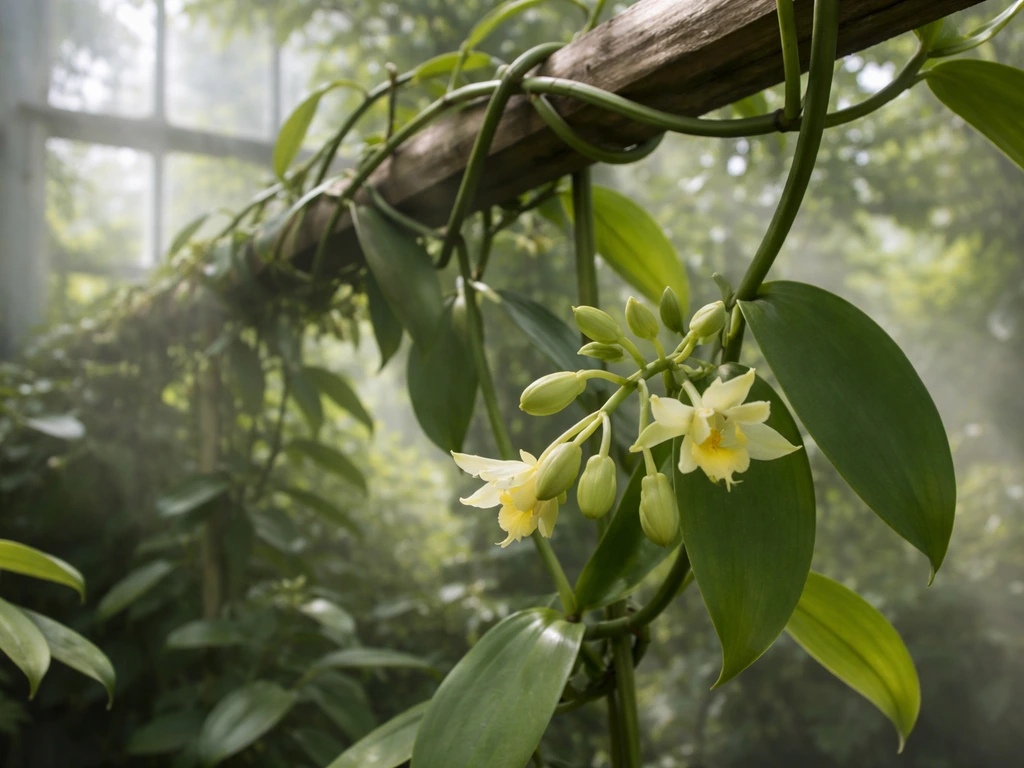
Can You Grow Vanilla in the US? Practical Guide by Region
Can you grow vanilla in the US? Regional feasibility, greenhouse setup, care needs, and years to pods via hand pollinati
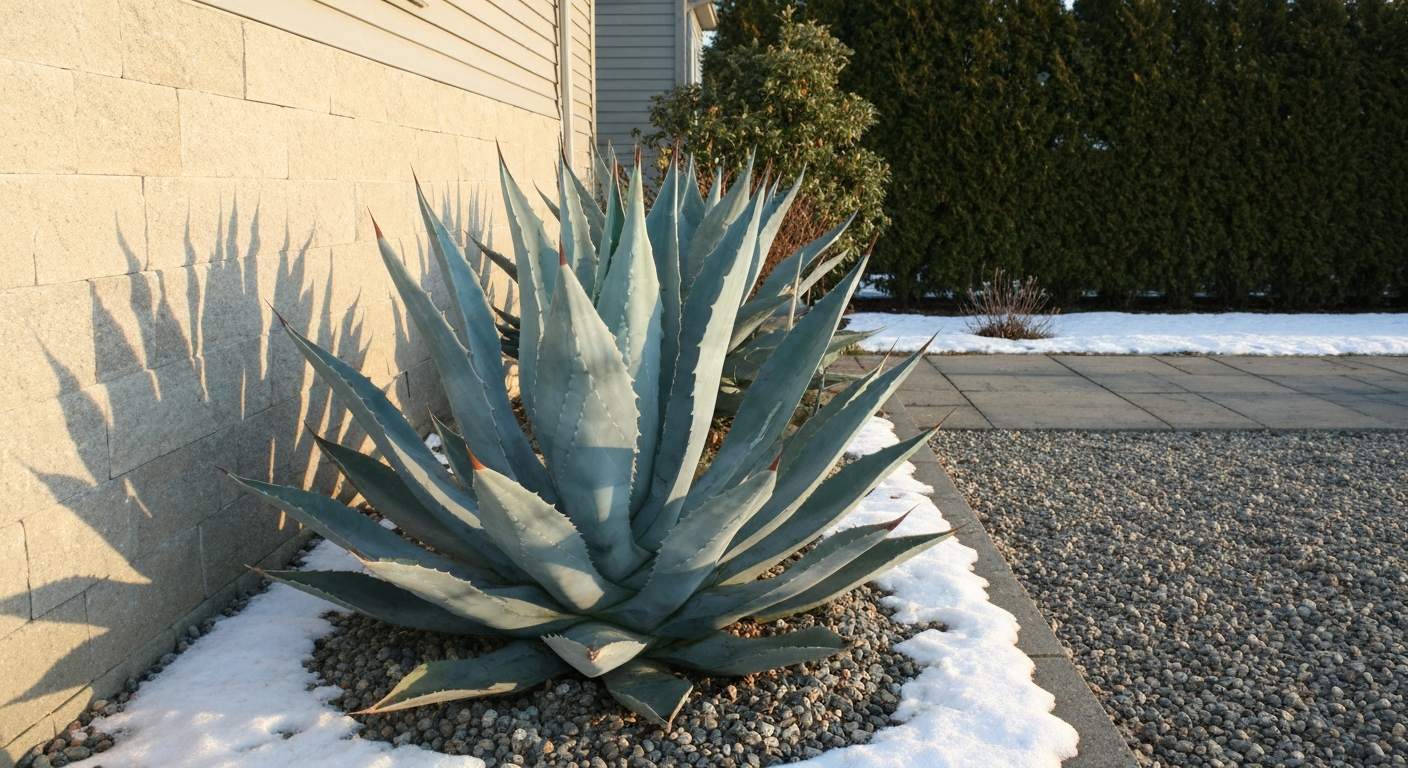
Can You Grow Agave in Canada? Zone Guide & Growing Tips
Can you grow agave in Canada? Practical region-by-region guide, hardy species, container tips & winter care.
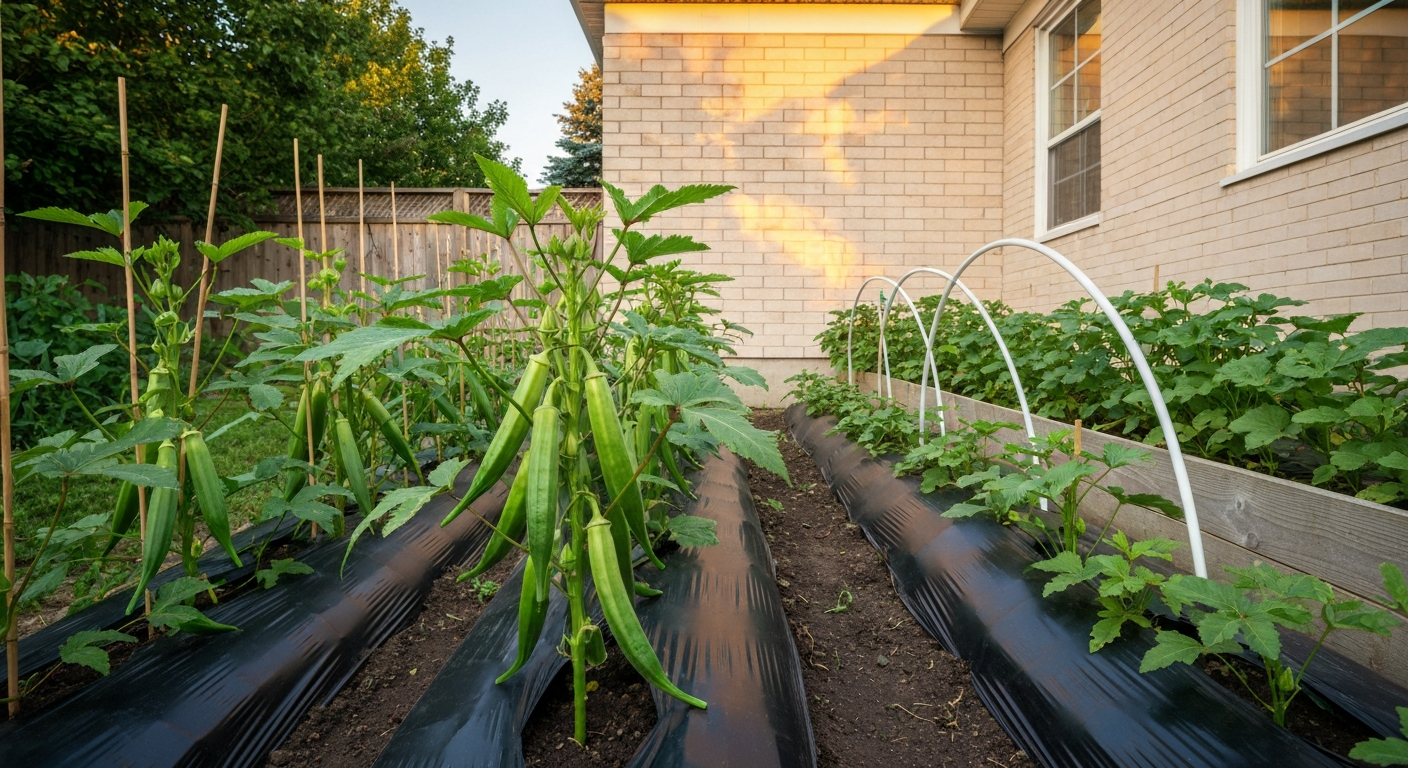
Can You Grow Okra in Canada? Ontario Guide & Short‑Season Tips
Can you grow okra in Canada? Regional verdict, Ontario-specific steps, varieties, season-extension & harvest tips.