Quick answer: can vanilla be grown in your US region?
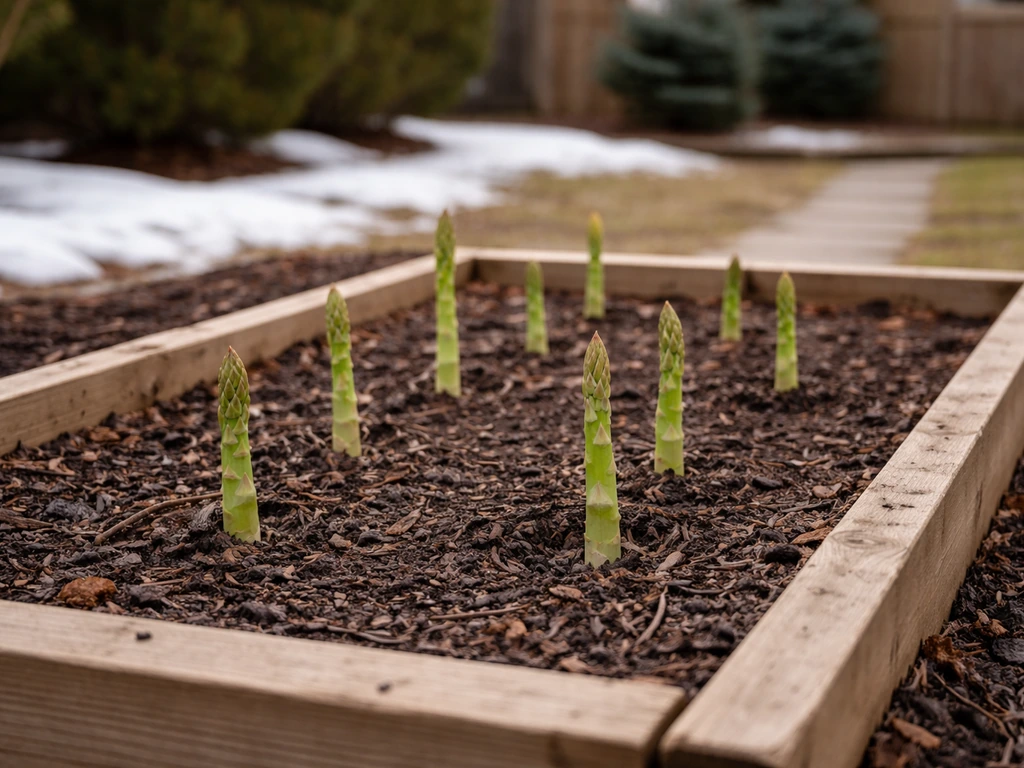
Yes, you can grow vanilla in the US, but almost certainly not the way you're imagining. Outdoors and unprotected, vanilla is really only viable year-round in the warmest parts of Florida, Hawaii, and Puerto Rico, where hardiness zones 10b–11 (and ideally 12–13) keep winter lows above 50°F. Everywhere else, from coastal California to Texas to the Pacific Northwest, you're looking at a greenhouse or serious indoor setup. The good news is that indoor growing works and plenty of growers in zone 7, 6, or even colder climates are successfully keeping vanilla vines alive and even coaxing them into flower. If you want a more detailed state-by-state breakdown, growing vanilla in the US by region covers that ground thoroughly. But the short version is this: vanilla is a doable project almost anywhere in the country if you're willing to build the right environment for it.
Vanilla basics: which plant it is and what you're actually growing
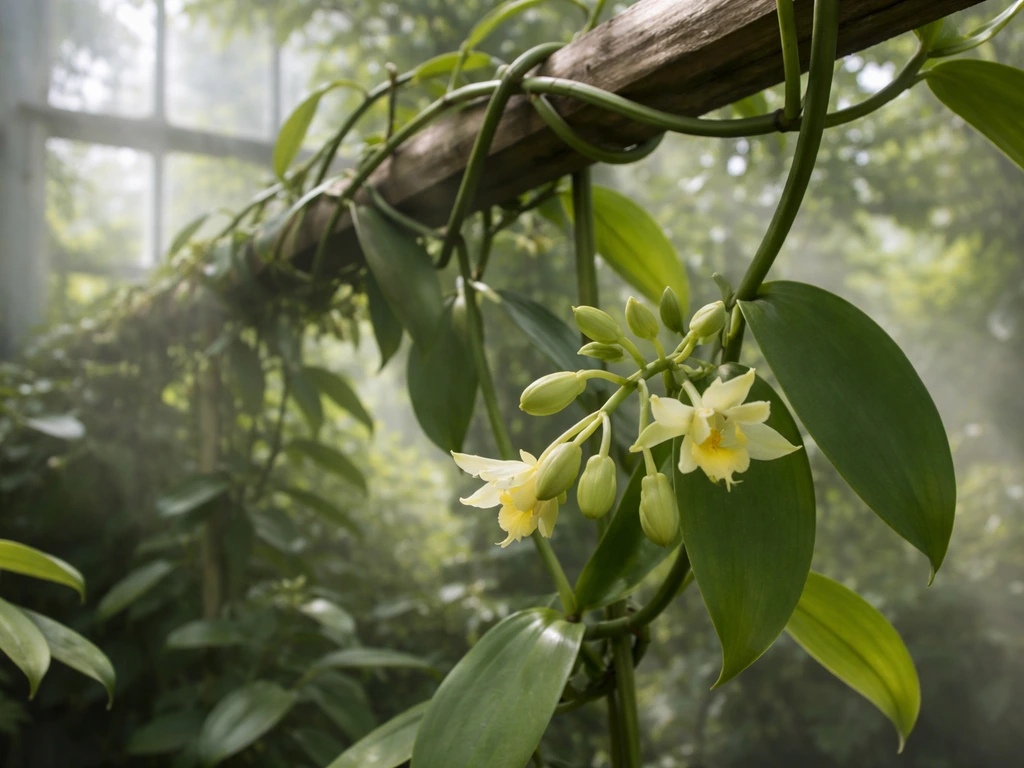
The vanilla you want is Vanilla planifolia, the species responsible for virtually all commercial vanilla production in the world. It's native to Mexico and Central America and is technically an orchid, which already tells you something about what it needs. But unlike most orchids, it's a vigorous climbing vine with thick, fleshy, photosynthetic stems. The stems themselves contribute to the plant's energy production, not just the leaves. In its natural habitat it scrambles up trees, sending out aerial roots to anchor itself and absorb atmospheric moisture. That growth habit is important to understand before you set one up, because you're not just potting a houseplant. You're giving a tropical vine a home and asking it to eventually produce seed pods (the vanilla beans of commerce) for you.
One thing to get clear early: you're almost certainly not starting from seed. Vanilla seeds require sterile lab conditions to germinate. You want a cutting or an established plant from a reputable orchid nursery. A rooted cutting gives you the fastest start and puts you closer to flowering maturity than starting from scratch.
Climate requirements and what they mean in practice
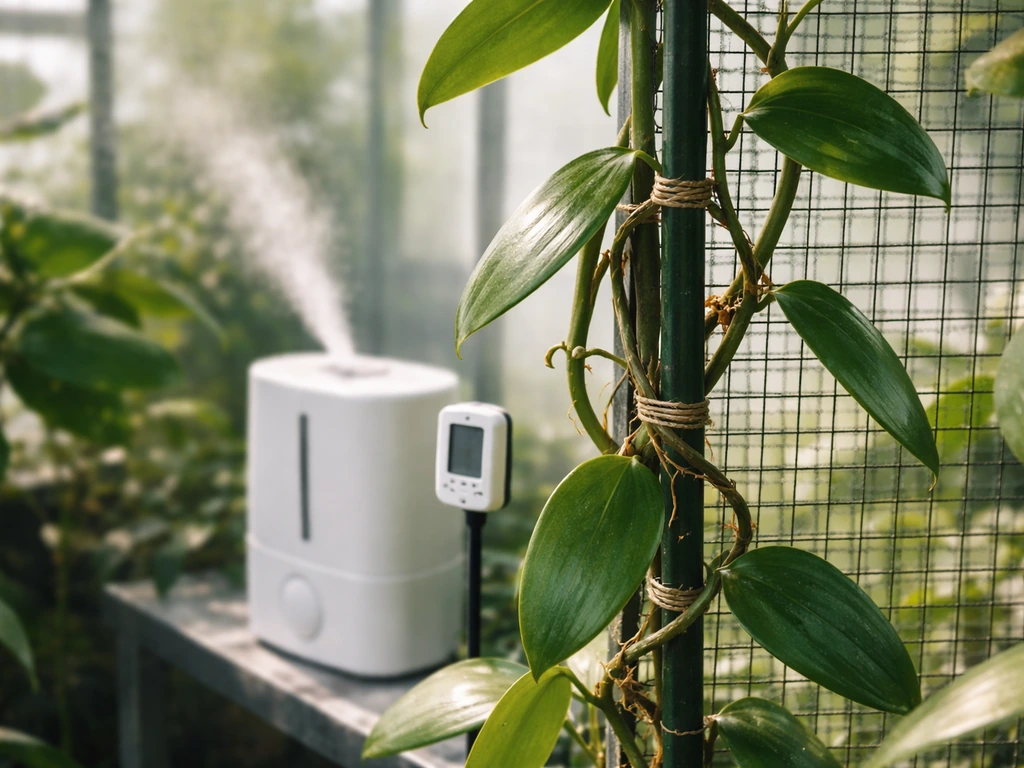
Vanilla planifolia has a fairly tight comfort zone. Daytime temperatures should stay in the range of roughly 75–90°F, with nights ideally between 60–70°F. Growth slows noticeably below 60°F and the plant sustains real damage below about 40°F. That threshold alone eliminates outdoor growing for most of the continental US, since even Miami occasionally dips into the 40s in winter. Zones 10b–11 are described as marginal outdoors with winter protection, while zones 12–13 (southern Florida, Hawaii) are the only places where year-round outdoor cultivation is genuinely practical.
Humidity is the other non-negotiable. Vanilla wants 60–80% relative humidity at a minimum, and some growers push targets as high as 85–90% during active growing periods. Truleaf’s cultivation guide for Vanilla planifolia similarly targets about 80% relative humidity during active growth 60–80% relative humidity at a minimum. In most US homes, ambient humidity sits well below that, so you'll need to actively manage it with a humidifier, a humidity tray, or a greenhouse environment. Low humidity is one of the most common reasons indoor vanilla plants stall out.
For light, vanilla mimics its rainforest understory origins. It wants bright, filtered light, not direct blazing sun. Think dappled shade rather than a south-facing windowsill at noon in July. Light levels around 25,000–40,000 lux are cited in cultivation guides, which in practical terms means a bright spot near an east- or west-facing window, or a spot under shade cloth in a greenhouse. Too much direct sun scorches the leaves; too little and the vine just sits there without putting on real growth.
How to set up your indoor or greenhouse growing system
For most US growers, the choice is between a dedicated greenhouse, a conservatory or sunroom, or a well-managed indoor space. Each has trade-offs. A greenhouse lets you maintain consistent humidity and temperature most easily, and it's easier to support a long climbing vine. An indoor setup in a spare room or large grow tent can absolutely work, but you'll need to add supplemental lighting if natural light is limited, and humidity management becomes more of a daily discipline.
The core infrastructure you need: a way to keep nighttime temperatures above 60°F (a portable heater with a thermostat works well for small spaces), a humidifier or misting system targeting that 60–80% range, and some kind of trellis or support structure because the vine will need something to climb. A horizontal wire system or a wooden post works fine. You want the vine to grow upward and then loop back down or horizontally, which encourages flowering later on.
If you're building a greenhouse setup and wondering whether a similar approach could work in a cooler climate, the strategies that apply to growing vanilla in Canada are closely parallel to what northern US growers face, and the climate control principles translate directly.
Planting and care: medium, watering, feeding, support and training
Choosing the right container and growing medium
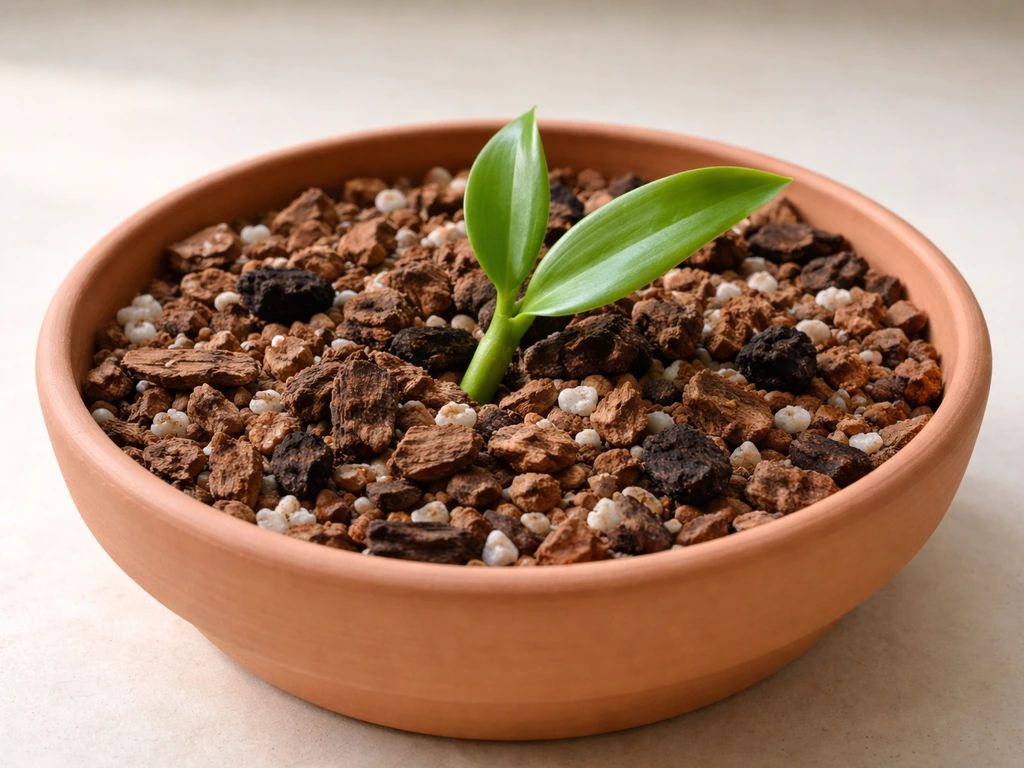
Vanilla is semi-epiphytic, meaning its roots are designed for air and bark, not dense wet soil. The classic recommendation from experienced orchid growers is a shallow, wide container with excellent drainage holes, filled with a mix of roughly half seedling-grade fir bark or cypress and half peat-based potting soil. On top of that, add a shallow, fluffy layer of damp sphagnum moss. The lowest aerial roots of the cutting rest across this surface rather than being buried deeply. You're trying to mimic how the plant grows against a tree trunk, not how a tomato grows in garden soil.
When you first establish a cutting, you can secure it to the medium using small floral-wire hairpins bent over the stem until it anchors itself with its own roots. This prevents the cutting from rocking loose before it establishes. The goal is a well-draining, airy substrate that never stays waterlogged. Overwatering and compacted, dense soil are probably the two fastest ways to kill a vanilla vine.
Watering and feeding
Water when the top of the medium starts to dry out, but never let the roots sit in standing water. Because humidity should be high, the medium won't dry out as fast as a typical houseplant. During active growth (roughly spring through summer), a diluted balanced orchid fertilizer applied every two to three weeks gives the vine what it needs. Back off feeding in winter when growth naturally slows. Aerial roots that are dangling in open air benefit from occasional misting, which is especially important in dry indoor environments.
Support and training the vine
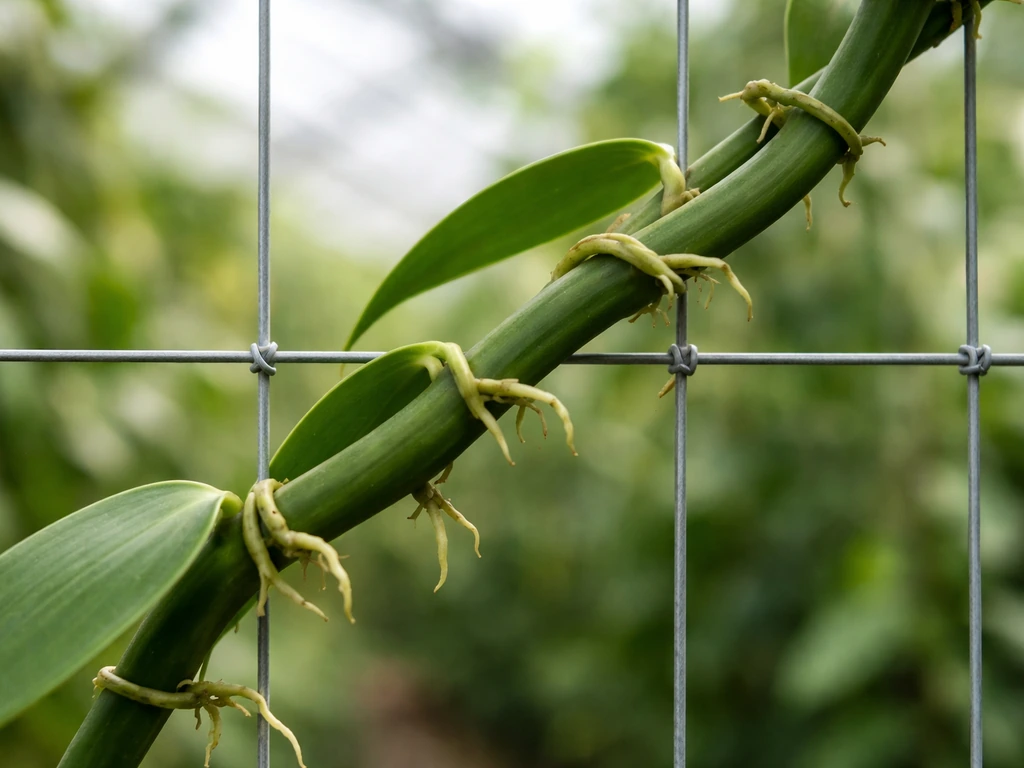
Vanilla is a vigorous climber and needs a structure it can wrap aerial roots around. A wooden post, a wire trellis, or even a piece of cork bark mounted on a wall all work. The vine should be encouraged to grow upward first. Once it reaches the top of its support, many growers loop it back horizontally or let it cascade downward. Training the vine into a loop or U-shape once it matures can help trigger flowering, as the plant tends to flower more readily on horizontal or slightly drooping sections of stem.
Flowering and pollination: how to actually get vanilla pods
Here's the part that separates a vanilla vine that just sits in your house looking tropical from one that actually produces vanilla beans. The vine needs to reach roughly 8–10 feet in length before it's even capable of flowering. That alone takes years. Once it's mature enough, flowers appear in clusters along the stem, and the bloom period typically lasts about six weeks to two months. But each individual flower opens for only one day, and in practice you have a window of just a few hours in the morning to pollinate it before it closes in the afternoon.
In Mexico, a specific species of bee handles this naturally. In the US, no native pollinator does the job reliably, so hand-pollination is essentially required. The technique isn't complicated, but it has to be done correctly and on time. Using a toothpick or your fingertip, you transfer pollen from the anther to the stigma on the same flower. The American Orchid Society describes the method as using your fingers to place the pollen on the receptive ridge and then pressing it so it sits correctly on the stigma. If the pollination takes, the flower will wilt within about 24 hours and the base of the flower (the ovary) will begin to swell. That swelling is your vanilla pod starting to form.
After successful pollination, the pod reaches its maximum length about six weeks later and then continues to ripen over the following seven to nine months before it's ready to harvest and cure. The curing process is what develops the vanillin compounds that give vanilla its characteristic flavor and smell, but that's a separate process after harvest.
This pollination requirement is the reason vanilla is labor-intensive to produce everywhere outside its native range. Places like growing regions in Nigeria and other tropical vanilla-producing areas face the same challenge, and hand-pollination is standard practice in all of them.
Timeline, expectations, and troubleshooting common problems
Realistic timeline
Be honest with yourself going in: vanilla is a long game. Most vines take three to five years to reach flowering maturity from a cutting. Once they do flower, you still need successful pollination followed by a seven-to-nine-month pod development period before harvest. You're committing to a multi-year project, not a seasonal crop. That said, the vine itself is attractive, the flowers are beautiful, and many growers find the process genuinely rewarding even before they get a single pod.
Common problems and how to fix them
| Problem | Likely Cause | Fix |
|---|
| Slow or stalled growth | Temperature too low or humidity too low | Check that nighttime temps stay above 60°F; push humidity to 60–80% minimum |
| Yellow or soft leaves | Overwatering or waterlogged medium | Let medium dry slightly between waterings; improve drainage |
| Leaf tip browning | Low humidity or salt buildup from fertilizer | Increase misting, flush medium periodically with plain water |
| No flowers after years of growth | Vine not long enough, or insufficient light | Ensure vine is 8–10 ft minimum; increase light levels toward 25,000–40,000 lux |
| Flowers dropping without pods | Missed pollination window or pollination failed | Pollinate in the morning within a few hours of flower opening; check technique |
| Root rot | Poor drainage, compacted or wet medium | Repot into airy bark-based mix with improved drainage holes |
Pests and environmental stress
Spider mites are the most common pest on indoor vanilla, typically triggered by low humidity (they love dry air). Keeping humidity high is your best prevention. If you see fine webbing on leaves, treat with insecticidal soap or neem oil and bump humidity up. Mealybugs can also show up in the leaf axils. Catch them early with a cotton swab dipped in isopropyl alcohol. Scale is less common but possible. General good airflow in your growing space goes a long way toward keeping pest pressure manageable.
Is vanilla worth trying in your specific state?
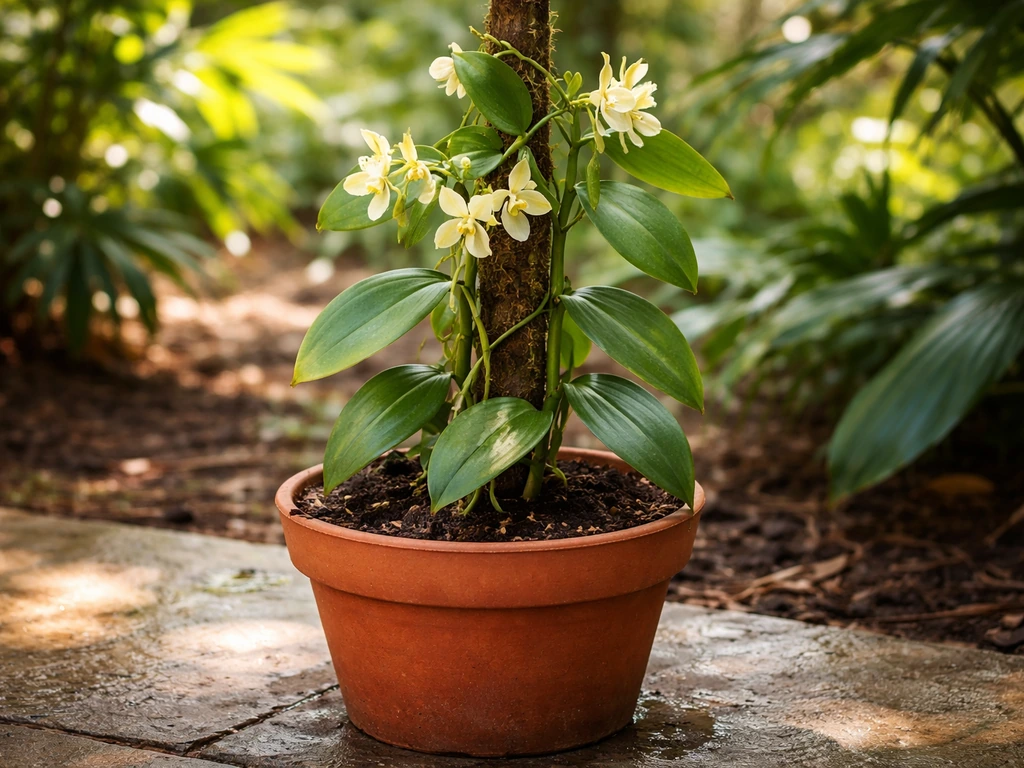
If you're in southern Florida, Hawaii, or a similar climate, outdoor growing is genuinely feasible with some shade management. For everyone else in the continental US, the question is really about your setup budget and patience level, not your climate. A well-managed greenhouse or indoor space in zone 7 can absolutely grow vanilla. It just requires active temperature and humidity control year-round. If you're in South Africa or curious how growers there approach this crop, growing vanilla in South Africa shows how similar tropical-management strategies apply in a Southern Hemisphere context. The same fundamentals apply everywhere: warm temperatures, high humidity, filtered light, and patience.
The practical next steps are straightforward. Figure out your hardiness zone, assess whether your space can maintain 60°F minimum nights and 60%+ humidity, source a rooted cutting from a reputable orchid nursery, and build or dedicate a support structure before you bring the plant home. Start small, learn the plant's behavior in your environment, and scale up from there. Most growers who stick with vanilla for the long haul eventually get flowers and, with careful hand-pollination, pods. It just takes time and the right setup from day one.