
Yes, you can grow currants in parts of Texas, but it is conditional on where you live in the state. The northern Panhandle and High Plains give you the best shot, and some cooler Hill Country microclimates are worth trying. Most of central, eastern, coastal, and southern Texas simply does not accumulate enough winter chill hours for standard currant cultivars to produce reliably. The good news: choosing the right Ribes species, hunting down low-chill cultivars, and being smart about site selection can extend your options further south than most gardeners expect.
Can You Grow Currants in Texas? Guide for Warm Climates
Marcus Holloway
13 Jul 2026
Currant basics: species, seasonality, and why chill hours matter so much
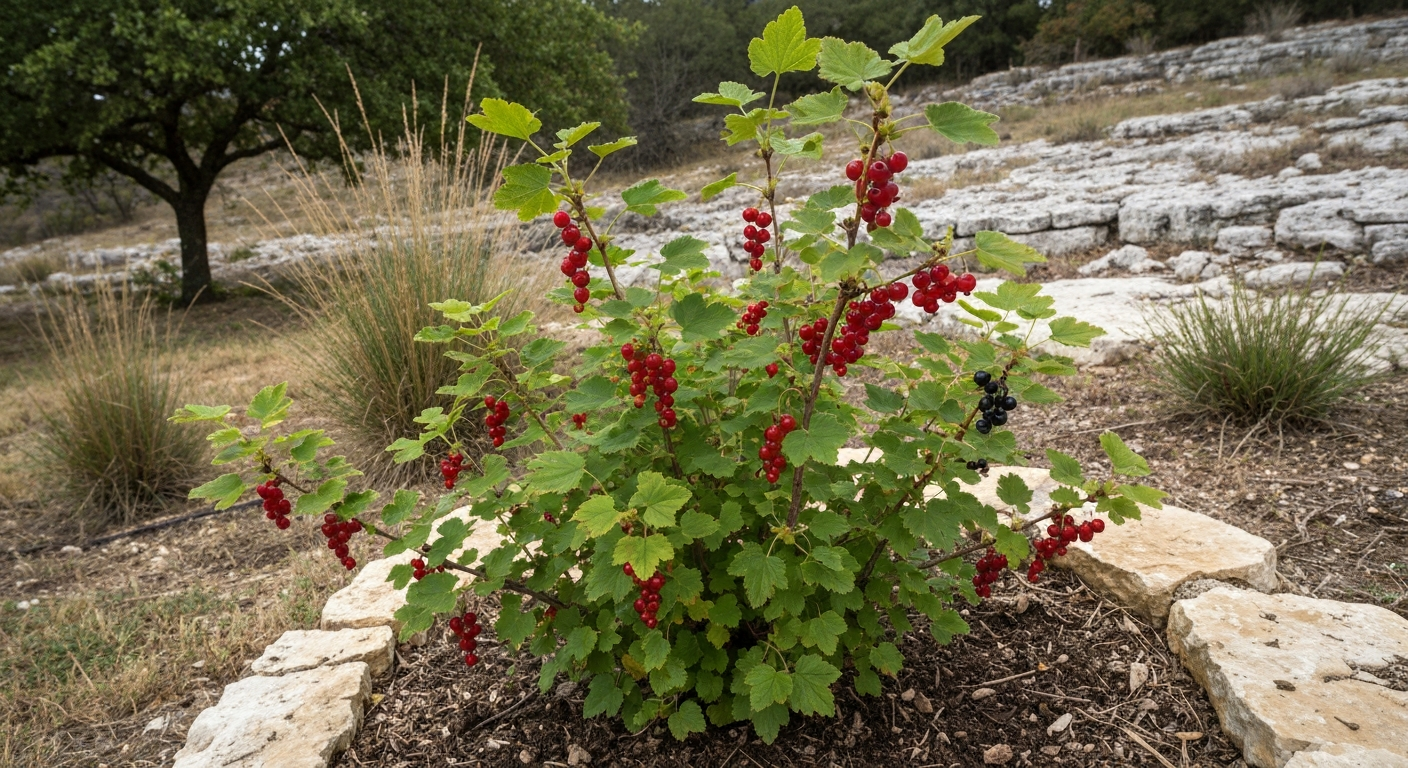
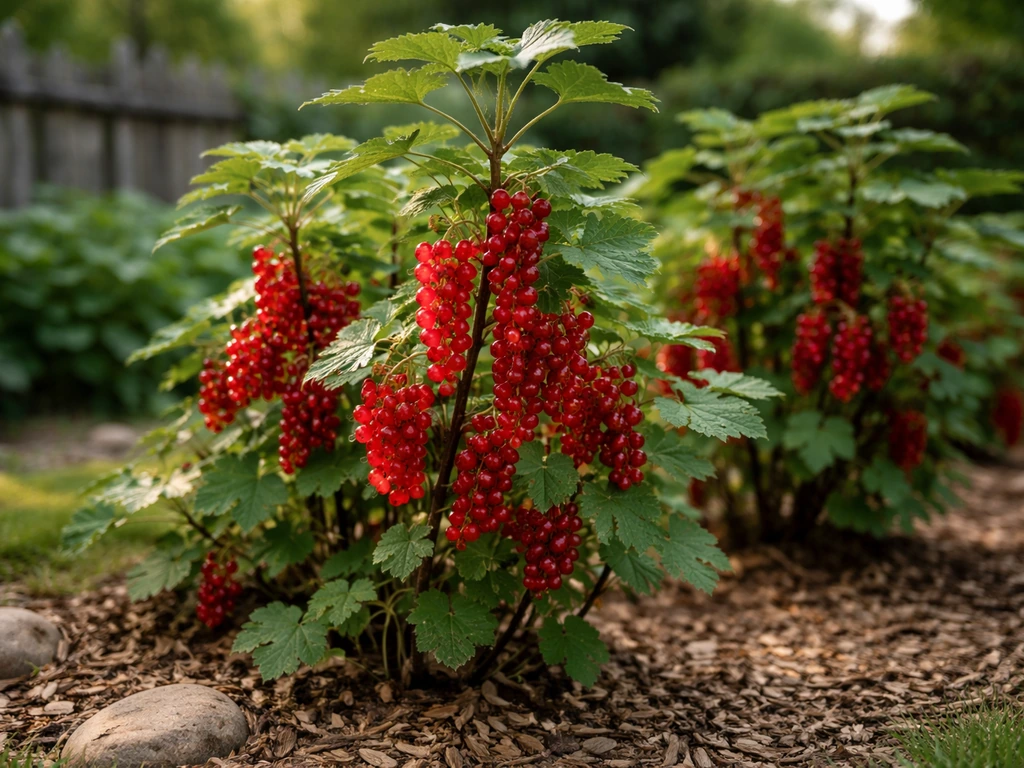
Currants belong to the genus Ribes and include several distinct species with very different climate tolerances. Black currant (Ribes nigrum) is the most demanding, typically requiring 800 to 1,600 chill hours (time below 7.2°C / 45°F) depending on cultivar, with some northern European selections needing more than 2,000 hours. Red currant (Ribes rubrum) and white currant (a color variant of the same species) are more forgiving. Jostaberries, a hybrid between black currant and gooseberry, tend to be more adaptable in marginal climates. Gooseberries (Ribes uva-crispa or Ribes hirtellum) generally need fewer chill hours than black currants and often handle heat slightly better.
The chilling requirement is the central challenge. Currants are temperate-zone shrubs that need sustained cold during dormancy to break bud evenly and flower reliably. When chill is insufficient or interrupted by warm spells mid-winter, you get delayed, uneven budbreak, erratic flowering, and disappointing yields. Researchers have moved away from the simple Chilling Hours model (just counting hours below 45°F) toward more nuanced tools like the Dynamic Model, which accounts for warm interruptions that can actually negate accumulated chill. In Texas, where winter temperatures swing widely, this matters a lot. Texas A&M AgriLife Extension maintains a chill-hour map through the TexasET network where you can look up station-level chill accumulations for your area, and that is the first place I would go before planting anything in the Ribes family.
How Texas climate zones affect your chances, region by region
Texas spans an enormous climate range, from humid subtropical in the east to hot semi-arid across the interior and true arid conditions in parts of the Trans-Pecos. That means your answer to 'can I grow currants here?' is going to look very different depending on your zip code. Here is how each major region stacks up.
Panhandle and High Plains
This is the most promising region in Texas for currants. Amarillo and surrounding areas can accumulate 800 to 1,000 or more chill hours in a good winter, which brings standard red and white currant cultivars into realistic range and puts some lower-chill black currant selections within reach. Elevations above 3,500 feet and cold continental air patterns help. If you are in the Panhandle and have never tried currants, this is where I would start with some confidence.
North and Central Texas
The Dallas-Fort Worth corridor and surrounding areas typically accumulate 500 to 700 chill hours, sometimes more in colder winters. That is borderline for red and white currants and generally not enough for most black currant cultivars. Growers here should focus exclusively on low-chill cultivars and microclimate advantages, and expect year-to-year variability in productivity.
Hill Country
The Hill Country is interesting because elevation and local topography create a mosaic of microclimates. Higher ground around Kerrville, Fredericksburg, and the Llano Uplift can accumulate more chill than surrounding lowlands. Cold-air pooling in valleys can also boost local chill accumulation overnight. This is marginal territory for currants, but worth experimenting with low-chill red currants or jostaberries if you can identify a favorable microclimate on your property.
East Texas
East Texas is humid subtropical with relatively mild winters. Chill hour accumulation typically falls in the 400 to 600 range, and high summer humidity creates significant disease pressure, especially powdery mildew. Standard currant cultivars are a tough sell here. If you are committed to trying, jostaberries or disease-resistant gooseberry varieties are a better bet than black currants.
Gulf Coast and South Texas
Honestly, this is where I have to be straight with you: most of the Gulf Coast and South Texas, including Houston and San Antonio, average 100 to 400 chill hours in most years. That is simply not enough for any Ribes species to perform reliably outdoors in the ground. Container growing with a controlled cold period indoors is the only viable workaround, and it is a significant commitment.
Trans-Pecos
The Trans-Pecos is arid to semi-arid, but higher elevations in the Davis Mountains and Guadalupe Mountains can accumulate meaningful chill. There is also a footnote worth knowing: the mountain ranges near the New Mexico and Arizona border have documented white pine blister rust (Cronartium ribicola) presence, which is a fungal disease that uses Ribes as an alternate host. Before planting currants in that area, check with the USDA Forest Service for local risk maps. Most lowland Texas locations are outside the main blister rust impact zones.
Which Ribes species handle warm or low-chill conditions better
Not all currants are created equal in a Texas context. Broadly speaking, red and white currants are more heat-tolerant and slightly less chill-hungry than black currants. Jostaberries, being a hybrid, often show more vigor and adaptability in marginal climates. Gooseberries sit in a similar range to red currants. Black currants are the most demanding, and most standard European or Scottish cultivars will underperform in Texas without significant chill accumulation.
| Species / Type | Typical Chill Requirement | Heat Tolerance | Texas Suitability |
|---|---|---|---|
| Black currant (Ribes nigrum) | 800–1,600+ hours | Low | Panhandle only, low-chill cultivars required |
| Red currant (Ribes rubrum) | 600–900 hours | Moderate | Panhandle, North Texas, cooler Hill Country |
| White currant (Ribes rubrum variant) | 600–900 hours | Moderate | Same as red currant |
| Gooseberry (Ribes uva-crispa / hirtellum) | 600–800 hours | Moderate | Panhandle and North Texas, select microclimates |
| Jostaberry (Ribes × nidigrolaria) | 500–800 hours (estimated) | Moderate-good | Widest adaptability in Texas; Hill Country worth trying |
For black currant specifically, New Zealand breeding programs have produced cultivars with lower chill requirements, around 1,300 hours using the 7°C model, compared to more than 2,000 hours for northern European types. Acta Horticulturae (2002) reports New Zealand breeding produced low‑chill blackcurrants requiring about 1,300 hours (7°C model) and documents cultivars such as Murchison, McWhite, Torlesse, and Owen Acta Horticulturae (2002) reports New Zealand breeding produced low‑chill blackcurrants requiring about 1,300 hours (7°C model) and documents cultivars such as Murchison, McWhite, Torlesse, and Owen.. Cultivars like Murchison, McWhite, Torlesse, and Owen came out of that program and are documented as lower-chill types. Within the Scottish Ben series, 'Ben Gairn' and 'Murchison' are identified as lower-chill selections, while 'Ben Dorain' and 'Ben Tirran' need significantly more cold. If you are in the Panhandle and want to try black currants, those New Zealand-influenced or lower-chill Ben series selections are where to focus your search.
Picking the right cultivar for your Texas location
The single most important thing you can do before buying any Ribes plant in Texas is confirm the cultivar's documented chill requirement. Nursery tags are often vague or absent on this point. Here is what I would look for and ask about.
- Ask for the specific chill hour requirement of the cultivar, not just 'cold-hardy' or 'adaptable' — those terms mean nothing without numbers.
- Compare that requirement against your local chill accumulation using Texas A&M's TexasET station data for the nearest weather station to your site.
- Prioritize cultivars with documented performance in zones 7 or warmer, or those with published low-chill heritage (New Zealand selections, for example).
- Contact your local Texas A&M AgriLife Extension office — county agents sometimes have trial data or cultivar lists specific to your region that are not available anywhere online.
- For red and white currants, look for heat-tolerant European varieties; Jonkheer van Tets and Rovada are commonly cited as more adaptable, though even these need adequate chill.
- For jostaberries, sourcing from specialty small-fruit nurseries is often more reliable than big-box retailers, which rarely stock them at all.
- Avoid buying bare-root plants at a garden center without cultivar identification — named cultivars with published specifications are worth the extra effort to source.
Practical planting checklist for Texas conditions
Site selection
In cooler Texas regions, full sun is fine for currants. In North and Central Texas, afternoon shade from a structure, fence, or established tree can reduce heat stress significantly during the brutal July and August period. North-facing slopes naturally accumulate slightly more chill and stay cooler in summer. Avoid frost pockets in low areas during late spring, especially if your cultivar has an early flowering habit, which is common in lower-chill types.
Soil preparation
Currants prefer fertile, well-drained loamy soil with a pH between 5.5 and 6.5. Texas soils vary widely, from the heavy clays of East Texas to the shallow, rocky limestone soils of the Hill Country and the alkaline sandy soils of the Panhandle. A soil test from your county extension office is worth the modest cost. Work in 3 to 4 inches of compost before planting to improve drainage in clay sites and water retention in sandy ones. In alkaline soils, sulfur amendments can nudge pH down, but bring it gradually and retest.
Planting time and spacing
- Plant bare-root stock in late winter (January to February in most Texas regions) while plants are dormant and before temperatures warm.
- Container-grown plants can go in from October through early March in most areas — avoid planting during summer heat.
- Space plants 3 to 5 feet apart for red and white currants; jostaberries are more vigorous and benefit from 5 to 6 feet of spacing.
- Plant at the same depth as the nursery pot or slightly deeper for black currants, which can root from buried stems.
- Set up drip irrigation at planting time rather than retrofitting later — it will save you time and improve plant establishment.
Watering, mulching, and feeding in the Texas heat
Water management is where Texas currant growers either succeed or fail during the first two summers. Currants do not like to dry out, but standing water will rot roots quickly, especially in clay soils. Drip or subsurface drip irrigation is strongly preferred over overhead sprinklers because it keeps foliage dry and reduces powdery mildew and other fungal pressure. Aim for consistent soil moisture at root depth, especially during flowering and fruit set.
Mulch heavily: 3 to 4 inches of wood chips or straw out to the drip line of the plant. In Texas summers, soil temperature under direct sun can spike enough to damage shallow feeder roots. Mulch moderates that, retains moisture, and reduces watering frequency. Refresh mulch annually because it breaks down.
For fertilization, a balanced approach works well. Apply a slow-release fertilizer or a couple of inches of aged compost in early spring as growth resumes. Avoid heavy nitrogen applications in late summer, which push soft new growth that cannot harden off before winter. If a soil test shows specific deficiencies (iron chlorosis is common in alkaline Texas soils), address those with targeted amendments rather than a generic booster fertilizer.
Pruning and training to keep plants productive
The standard approach for red and white currants is to maintain a structured bush with canes at three age tiers: one-year-old, two-year-old, and three-year-old wood. Most fruiting happens on two- and three-year wood, so you remove the oldest canes each year to keep the plant renewing itself. Black currants are pruned more aggressively, with a higher proportion of one-year wood retained because they fruit best on new growth. Jostaberries are vigorous and can get large; prune to maintain airflow and remove any crossing or dead wood.
In Texas, timing your dormant pruning requires a bit more attention than it would in Minnesota. Low-chill cultivars in particular can break dormancy early and unevenly, which means buds may swell sooner than expected in a mild late winter. Prune as late in the dormant period as you can while still catching the plant before full bud swell. Pruning too early and then getting a warm February can push soft growth that becomes frost-sensitive if temperatures drop again. Check your plants frequently from late January onward and prune when bud swell is just beginning.
Keep pruning cuts clean with sharp, sanitized tools. Powdery mildew and other fungal diseases can enter through rough cuts, and this is more of a concern in Texas's humid east than in the drier Panhandle. Remove all prunings from the planting area and dispose of them rather than composting diseased material.
Pests, diseases, and the blister rust question
The most common problems Texas currant growers encounter are powdery mildew, aphids (particularly currant aphid, Cryptomyzus ribis), and imported currant worm (Nematus ribesii), which can defoliate a bush quickly if you are not watching. Currant fruit fly is also documented. For most of these, regular scouting, removal of heavily infested material, and targeted biopesticides or insecticidal soap are effective at the home garden scale. Powdery mildew is worse in humid East Texas and in areas with poor air circulation, so pruning for open structure and avoiding overhead irrigation are your first lines of defense.
White pine blister rust (Cronartium ribicola) is worth understanding. Ribes species are an alternate host in this fungal disease's life cycle, and historically this led to Ribes being banned in many states to protect five-needle white pine forests. Most of those federal and state restrictions have been lifted or relaxed, and in most Texas agricultural and urban locations the blister rust risk is low because susceptible five-needle pines are not present nearby. The exception is the Trans-Pecos mountain ranges near New Mexico and Arizona, where southwestern white pine (Pinus strobiformis) grows and blister rust has been documented. If you are in that zone, check current USDA Forest Service risk maps before planting any Ribes species. See the USDA Forest Service species review 'Pinus strobiformis (southwestern white pine) species review, USDA Forest Service (discusses Cronartium ribicola presence in Southwest)' for maps and documentation of Cronartium ribicola presence in the Southwest Pinus strobiformis (southwestern white pine) species review — USDA Forest Service (discusses Cronartium ribicola presence in Southwest).
Container growing as a workaround for low-chill areas
If you are in the Gulf Coast, South Texas, or Central Texas and still want to try currants, container culture is your most realistic path. The idea is to grow the plant in a large container (15 to 25 gallons for an established bush), keep it outdoors during the fall to accumulate natural chill, and either move it to an unheated garage or greenhouse to complete dormancy during warm mid-winter spells, or supplement with a cold-storage period in a refrigerator or walk-in cooler if your winters are just not cold enough. This requires monitoring chill accumulation and plant condition closely. Root zones in containers heat up much faster than in-ground soil during Texas summers, so heavy mulching of the container surface, shade cloth during the hottest months, and consistent irrigation are essential. It is more work, but it is a legitimate approach for determined growers.
How Texas fits into the bigger US picture
Compared to the broader US, Texas sits at the southern and western edge of where currants become viable in the ground. Gardeners in cooler parts of North America may also ask "can you grow ranunculus in Ontario" for region-specific guidance. For a broader perspective on national suitability, see can you grow currants in the US. The Upper Midwest, Pacific Northwest, New England, and mountain West states are the heart of US currant production, where chill hours are abundant and summers are moderate. Texas is feasible in its coolest corners, marginal in its middle, and impractical in its warmest and lowest-chill zones without intervention. If you're comparing how elevation and chill affect other ornamentals, see can you grow ranunculus in Colorado for guidance on ranunculus performance in cooler, high‑altitude regions. If you are curious how other warm-winter US regions compare for specialty crops like this, the patterns across the South and Southwest tend to follow similar logic: elevation and northern latitude are your allies, coastal and southern locations are your obstacles. If you're exploring other cool-season ornamentals in warm-winter areas, see can you grow ranunculus in Texas for specific tips on growing ranunculus in similar Texas conditions.
FAQ
Can home gardeners and small‑scale growers successfully grow currants (Ribes spp.) in Texas?
Conditional — yes in parts of Texas but not everywhere. Higher‑chill areas (Panhandle, some High Plains, cooler Hill Country uplands, and protected microclimates) can reliably grow currants if you choose suitable cultivars and manage heat/stress. Central, coastal and South Texas generally have too few chill hours for typical northern cultivars unless you use low‑chill cultivars, containers, deliberate microclimate selection, or expect reduced/erratic yields.
What are currants’ chill‑hour needs and why does that matter in Texas?
Currant chill requirements vary by species and cultivar. Many blackcurrant cultivars need roughly 800–1,600+ chill hours (hours below ~45°F / 7.2°C), with some northern types >2,000 h. New‑Zealand low‑chill selections can be nearer ~1,300 h. In Texas, statewide chill accumulation is highly variable (roughly 100–1,000 h depending on location), so matching local chill to cultivar is essential to get uniform budbreak, flowering and yields.
Which Texas regions are most suitable for growing currants?
Most suitable: Texas Panhandle, parts of the High Plains, and higher elevation pockets of the Hill Country—locations with the highest winter chill. Marginal/conditional success: protected microclimates (north‑facing slopes, cold‑air pooling hollows), cooler urban sites, or irrigated container culture. Least suitable: coastal plains, South Texas and hot low‑elevation areas without access to low‑chill cultivars or cooling strategies.
Which currant cultivars are more likely to succeed in warm/low‑chill Texas sites?
Choose low‑chill and heat‑tolerant cultivars where possible. Candidates from New Zealand and certain 'Ben' series types are often recommended: Murchison, McWhite, Torlesse, Owen and some of the lower‑chill 'Ben' selections. Avoid high‑chill northern cultivars bred for Scandinavia/Scotland unless you are in a high‑chill Texas pocket. Note: cultivar chill response varies by source and year—confirm chill requirements for the specific named selection before buying.
How can I determine whether my site in Texas has enough chill hours for a chosen cultivar?
Use local weather station data and chill models. Practical sources: PRISM/NOAA climate normals and Texas A&M/TexasET station reports. For warm climates the Dynamic Model (Chill Portions) is preferred because it accounts for warm interruptions; growers use ChillR or extension tools to calculate chill. Compare your site’s historic chill accumulation to the cultivar’s published requirement.
What site selection and microclimate tactics improve success in marginal Texas areas?
Pick cooler microsites: north‑facing slopes, low cold‑air pooling hollows, higher elevation or shaded areas near buildings/trees. Improve soil fertility and drainage, increase organic matter, and use heavy mulch to moderate root‑zone temperature. In urban settings, use microclimate buffering (shade, windbreaks) and avoid heat islands.
Next Articles
Can You Grow Ranunculus in Colorado? How to Succeed
Learn if ranunculus grows in Colorado and get exact planting, timing, soil, and troubleshooting tips for blooms.
Can You Grow Ranunculus in Texas? How to Succeed
Yes, you can grow ranunculus in Texas. Learn timing, site and soil needs, planting depth, watering, and heat troubleshoo
Can You Grow Currants in the US? Region by Region Guide
State by state guide to growing currants in the US, including where red currants thrive and how to start.