
Yes, you can grow chickpeas in Texas, and in many parts of the state they actually thrive better than in cooler northern climates. The catch is timing. Chickpeas hate sustained heat above 95°F during flowering, so the goal across most of Texas is to plant early enough in spring that pods set before summer hammers down, or to time a fall crop in South Texas. Get the window right, choose a heat-tolerant variety, and prep your soil properly, and a home gardener can pull a solid harvest with relatively little fuss.
Can You Grow Chickpeas in Texas? Planting Guide
Marcus Holloway
19 May 2026
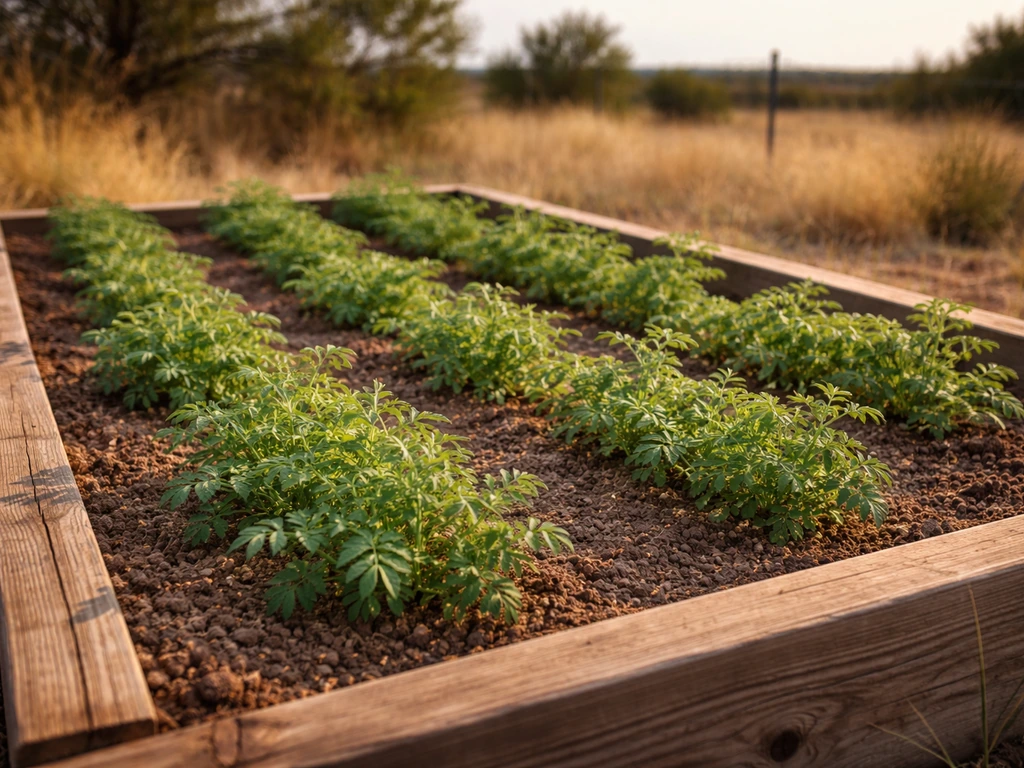
Texas Climate and Timing for Chickpeas
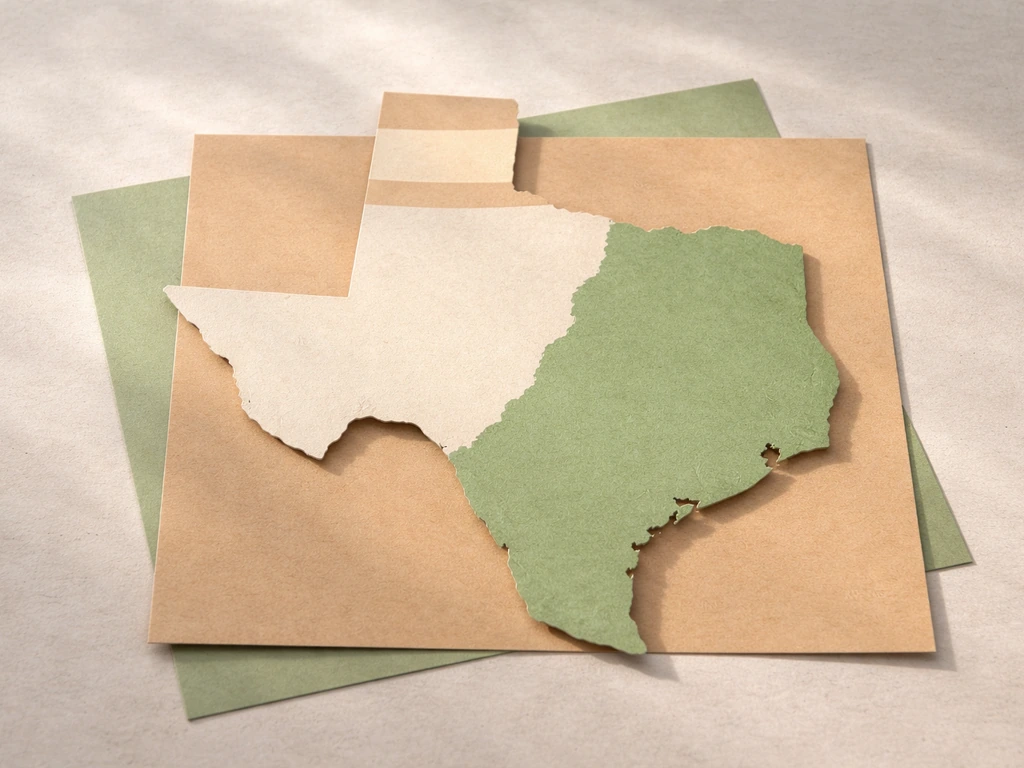
Texas spans a huge range of conditions, from the humid Piney Woods of East Texas to the arid Chihuahuan Desert of the Trans-Pecos, so there is no single planting date. That said, one principle holds across the state: chickpeas need roughly 90 to 110 days to mature, and flowering must happen before temperatures consistently top 95°F. That's the hard constraint you're working around.
In North Texas and the Panhandle (zones 6b to 7b), a late-February to mid-March direct sow works well. The same idea of matching the crop to your local season length applies when you try to grow short day onions in the north. You get a longer cool window before summer arrives. Frost risk is real before mid-March in Amarillo, so watch the forecast, but chickpeas can handle a light frost down to about 28°F once established.
In Central Texas, including the Hill Country and Austin area (zones 8a to 8b), aim to sow between late January and late February. The summer heat arrives fast here, and if you're not in the ground by early March you're gambling on pods setting during 100°F days in June.
In South Texas and the Rio Grande Valley (zones 9a to 9b), the summer is simply too brutal for chickpeas as a spring crop unless you push the planting window to January or very early February. Many South Texas growers actually have better luck with a late-summer planting (late August into September) for a fall harvest before hard frosts, though frost risk is minimal in the Valley itself.
East Texas is the trickiest zone. The humidity here invites fungal disease on chickpeas, which are native to dry Mediterranean and South Asian climates. It's doable, but you need well-drained soil, good airflow, and a vigilant eye on disease. If your summers are humid and wet, chickpeas will struggle more than in drier parts of the state.
| Region | USDA Zone | Recommended Planting Window | Key Risk |
|---|---|---|---|
| Panhandle / North Texas | 6b–7b | Late Feb to mid-March | Late frost, short spring |
| DFW / North Central | 7b–8a | Late Jan to early March | Fast-arriving summer heat |
| Austin / Hill Country | 8a–8b | Late Jan to late Feb | Early June heat stress |
| San Antonio / South Central | 8b–9a | Mid-Jan to mid-Feb | Short cool window |
| Rio Grande Valley / South Texas | 9a–9b | Jan–early Feb or Aug–Sept | Summer heat, humidity |
| East Texas / Piney Woods | 8a–8b | Feb to early March | Humidity, fungal disease |
Soil, pH, and Water Needs in Texas
Chickpeas want well-drained, loamy to sandy loam soil with a pH between 6.0 and 8.0. They're more tolerant of alkaline conditions than most vegetables, which actually makes them a decent fit for the calcareous, high-pH soils common in Central and West Texas. If your soil tests around 7.5, don't panic, chickpeas can handle it.
Heavy clay soils common in parts of North Texas and the Blackland Prairie are the bigger problem. Chickpeas sitting in waterlogged clay will develop root rot fast. If you're dealing with clay, raise your beds by at least 6 to 8 inches, work in compost heavily, or grow in raised beds or containers. The goal is drainage above all else.
Water needs are moderate. Chickpeas are drought-tolerant once established, which is great news for Texas. During germination and early growth, keep soil evenly moist but never soggy. Once plants are 6 to 8 inches tall, you can back off and water deeply once or twice a week. During pod fill, consistent moisture matters most, irregular watering at that stage causes pods to abort. Drip irrigation is ideal because it keeps foliage dry, cutting down on fungal issues.
Because chickpeas are legumes, they fix their own nitrogen through root bacteria when properly inoculated. Don't over-fertilize with nitrogen or you'll get lots of leafy growth with few pods. A phosphorus-focused starter fertilizer at planting, or a balanced all-purpose fertilizer at half strength, is all you really need beyond inoculant.
Choosing Chickpea Varieties for Heat and Cold Tolerance
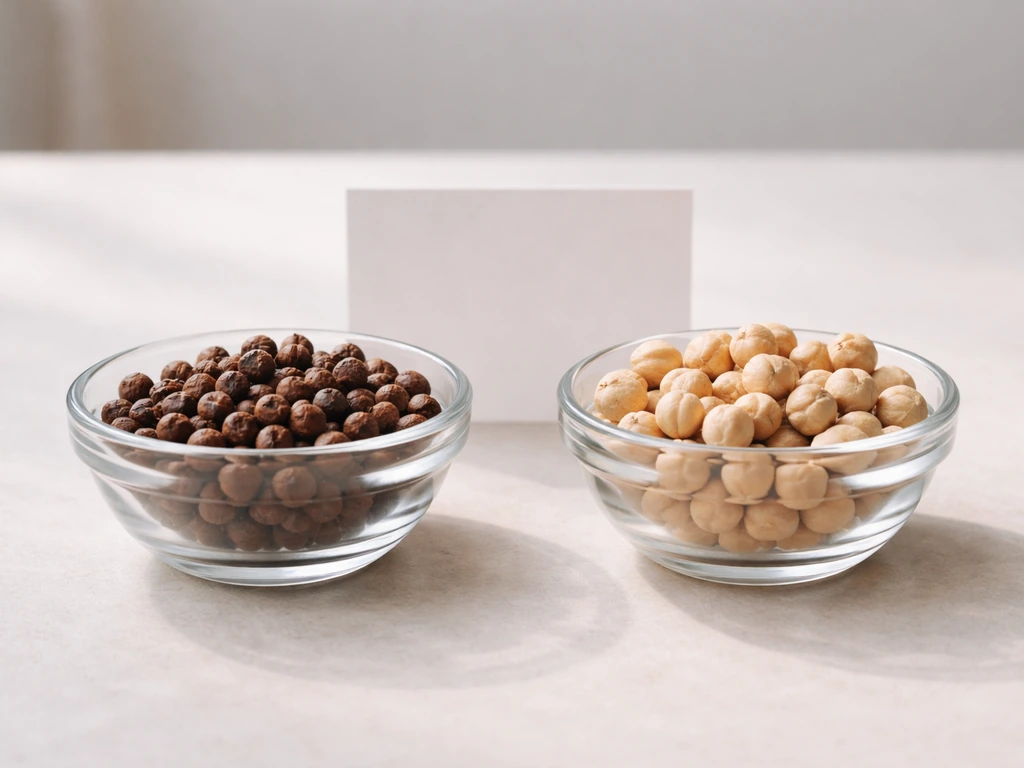
There are two main types of chickpeas: Desi (small, dark, angular seeds) and Kabuli (large, round, tan seeds, the classic hummus chickpea). For Texas conditions, variety selection comes down to days to maturity and heat tolerance more than type preference.
- CDC Frontier: A Kabuli type with good heat tolerance and around 95 days to maturity. A solid all-around choice for Central and North Texas.
- Myles: A Kabuli variety bred for shorter seasons (around 90 days), useful for areas with a tight spring window.
- ICC 4958 and related Desi lines: Desi types tend to mature faster (85 to 95 days) and handle heat slightly better than large Kabuli varieties, worth considering in South Texas or late-planting situations.
- FLIP 82-150C and other ICARDA lines: Developed specifically for hot, dry climates. Less common in retail seed catalogs but available through specialty suppliers and worth seeking out for West Texas.
If you're in a region where summers arrive early, prioritize shorter days-to-maturity over seed size preference. A 90-day variety that finishes before June heat hits will beat a 110-day premium Kabuli every time in Texas conditions.
Planting Methods, Spacing, and Seed Prep
Chickpeas are always direct-sown. They develop a taproot early and don't transplant well, so don't try to start them indoors and move them out. Get your soil prepped, inoculate your seed, and sow directly in the ground.
Inoculant: Don't Skip This Step
Chickpeas need a specific rhizobium bacterium called Mesorhizobium ciceri (or M. mediterraneum) to fix nitrogen from the air. Generic legume inoculants won't work. The rhizobium used for peanuts, beans, or soybeans is a different species, and it will not colonize chickpea roots. Texas A&M AgriLife has specifically flagged this, because growers sometimes grab whatever inoculant is on the shelf, and that's money wasted. You need an inoculant labeled specifically for chickpea or garbanzo bean.
Apply the inoculant directly to damp seed right before you plant, not hours before. Coat the seeds, let them dry for just a few minutes in shade, and get them in the ground the same day. Follow the package rate exactly, inoculant packages specify how much seed or row length one package treats, and under-dosing defeats the purpose. Inoculant packages from Colorado State University Extension include application information for how much seed (or furrow) can be treated, so you should follow the labeled rates and prep instructions Follow the package rate exactly, inoculant packages specify how much seed or row length one package treats, and under-dosing defeats the purpose..
Sowing Depth, Spacing, and Row Setup
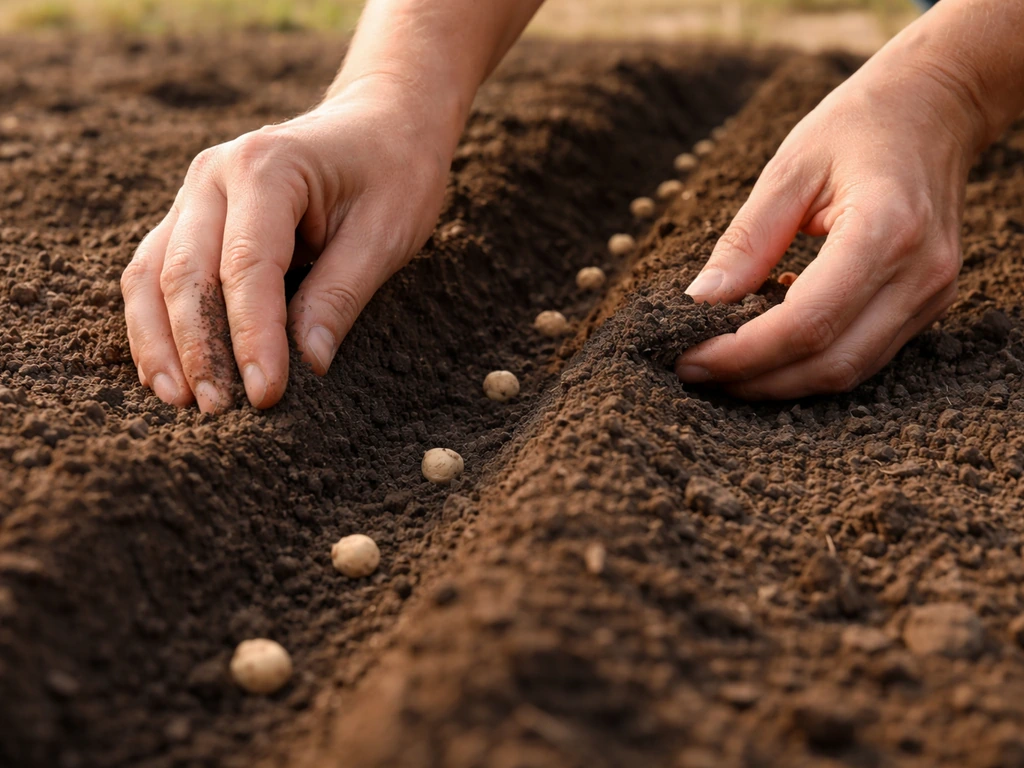
Plant chickpea seeds 1.5 to 2 inches deep. In hot, dry Texas conditions, slightly deeper planting helps seeds access moisture and avoids the soil surface crusting over before germination. Space seeds 4 to 6 inches apart within rows, with rows 18 to 24 inches apart. For home garden beds, a grid pattern at 6 inches in all directions works fine and maximizes yield per square foot.
Germination takes 7 to 15 days depending on soil temperature. Chickpeas prefer a soil temperature of 50 to 65°F for germination. In Texas, that sweet spot usually falls in late winter and early spring. If your soil is still cold (below 45°F), wait a week rather than sowing into soggy cold ground.
Controlling Weeds, Pests, and Diseases
Weed Management
Chickpeas emerge slowly and don't compete well with weeds in the first few weeks. Hand-weed or hoe shallowly between rows during that early period. Once plants are 8 to 10 inches tall and canopy is filling in, weed pressure drops significantly. Mulching with straw or wood chips around seedlings helps a lot, though keep mulch an inch or so away from the stems to avoid moisture buildup at the crown.
Pests in Texas
- Aphids: The biggest recurring pest on chickpeas in Texas. They cluster on new growth and the undersides of leaves. A strong jet of water, insecticidal soap, or neem oil handles most infestations. Catch them early before populations explode.
- Lygus bugs (tarnished plant bugs): Common in Texas and damaging during pod set. They inject toxins while feeding, causing pods to abort or seeds to deform. Row covers during flowering help if pressure is high.
- Cutworms: Cut seedlings off at the soil level overnight. Collar young plants with a cardboard or plastic collar pushed into the soil around the stem. Beneficial nematodes applied to soil before planting help reduce populations.
- Spider mites: A problem during hot, dry spells, especially in West and Central Texas. Insecticidal soap or neem oil, applied in the evening to avoid plant stress, provides control.
Disease Concerns
- Ascochyta blight: The most serious chickpea disease in humid conditions. Shows as brown lesions on leaves, stems, and pods. Use disease-free seed, avoid overhead watering, maximize airflow between plants, and rotate out of the bed for at least 2 years after an infection.
- Fusarium wilt: A soilborne disease that causes yellowing, wilting, and plant death. Choose resistant varieties where possible, and never plant chickpeas in the same spot two years in a row.
- Botrytis (gray mold): More of an issue in East Texas and humid springs. Remove infected plant material promptly, and again, drip irrigation over sprinklers.
Harvest Timing and Yield Expectations
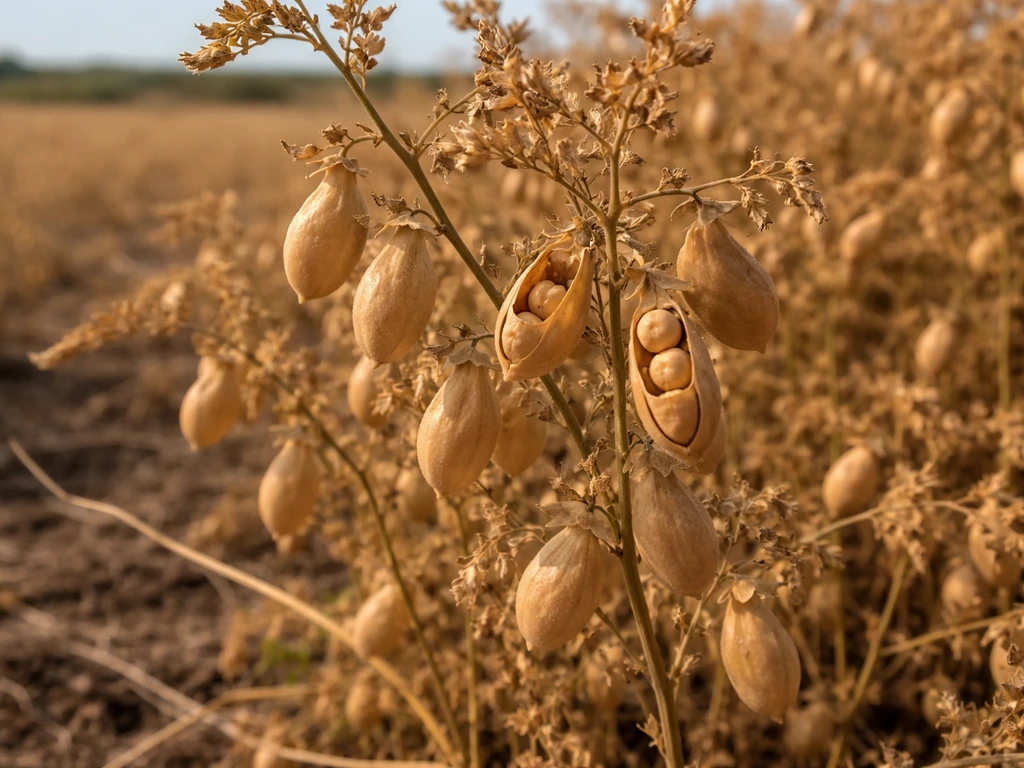
Chickpeas are ready to harvest dry when the pods have turned tan or papery brown and the seeds rattle inside. The whole plant typically matures at once, so many growers pull the entire plant and hang it upside down in a warm, dry, ventilated space for another 1 to 2 weeks before threshing. This finishing cure helps seeds dry uniformly.
At home garden scale in Texas, expect roughly 1/4 to 1/2 pound of dry chickpeas per linear foot of row under good conditions. A 10-foot row planted at 5-inch spacing (about 24 plants) might yield 2 to 4 pounds of dried chickpeas. It's not a high-volume crop per square foot compared to beans, but the quality and freshness of home-grown chickpeas is genuinely better than store-bought, and the plants require very little input once established.
If you want green chickpeas (like fresh edamame-style), harvest when the pods are plump and green, usually 2 to 3 weeks before full dry maturity. They have a sweet, nutty flavor that dried chickpeas don't replicate. In Texas, this fresh stage often falls in late April to May for spring crops, depending on planting date.
Common Mistakes and Troubleshooting in Texas
Most chickpea failures in Texas trace back to one of a handful of consistent mistakes. Here's what to look for and how to fix it.
| Problem | Likely Cause | Fix |
|---|---|---|
| Poor or uneven germination | Cold soil, old seed, or soil crusting | Wait for soil temps above 50°F, buy fresh seed each season, water gently after sowing to prevent crust |
| Plants blooming but no pods forming | Heat stress during flowering (temps above 95°F) | Plant earlier next year; shade cloth at 30% can buy a few extra days in marginal timing |
| Yellow leaves on established plants | Wrong inoculant used, nitrogen deficiency, or waterlogged roots | Check drainage; confirm chickpea-specific inoculant was used; avoid nitrogen fertilizer if inoculant is working |
| Pods forming but seeds shriveled | Moisture stress during pod fill | Water deeply and consistently during pod fill stage; drip irrigation helps most |
| Spots and lesions on leaves/stems | Ascochyta blight or other fungal disease | Remove affected material, switch to drip irrigation, improve airflow, rotate location |
| Plants wilting despite adequate water | Fusarium wilt or root rot from clay soil | Improve drainage immediately; don't replant in same spot; choose resistant varieties next season |
If you're planting this week in May and haven't started yet, the spring window has closed for most of Texas. Your best move right now is to prep your bed for a fall planting if you're in South Texas, or plan for a late-January start next year if you're in Central or North Texas. Get your chickpea-specific inoculant sourced now, because it's harder to find locally than online.
Alternatives If Chickpeas Won't Fit Your Area
If your timing is off, your soil is heavy clay, or you're dealing with high humidity in East Texas that makes fungal disease a constant battle, there are better legume options worth considering. If you want a different warm-season crop instead, you can also ask whether you can grow long day onions in the south and how to time them for your area can you grow long day onions in the south.
- Black-eyed peas (Southern peas): Texas's natural legume. Heat-tolerant, humidity-tolerant, and productive through summer. Plant from April through July in most of the state. If chickpeas are giving you grief, this is your crop.
- Cowpeas (including Iron and Clay mix): Similar to Southern peas, excellent drought and heat tolerance, good for Central and West Texas, and doubles as a cover crop.
- Pinto beans: Better heat tolerance than chickpeas, shorter season, and well-adapted to Texas conditions. Plant in spring or fall.
- Tepary beans: A Native American drought-adapted bean that is outstanding in hot, dry Texas conditions, particularly West Texas. Very underused by home gardeners.
- Lentils: Like chickpeas, they prefer cool and dry, but they mature faster (around 80 to 90 days) and may be easier to squeeze into the Texas spring window, especially in the Panhandle.
Chickpeas are also a more feasible crop in some other states with different timing challenges. Growers in the upper Midwest, for instance, face a different set of constraints entirely. If you're wondering can you grow celery in Minnesota, the short growing season and cold winters change the approach, but it can still be done with the right timing and protection. Yes, you can grow celery in Ohio, but you will need to match the variety and timing to Ohio's cooler season conditions can you grow celery in ohio. If you are in Ohio, that same upper Midwest timing logic and a heat-tolerant variety are usually what determine whether chickpeas will do well. Can you grow black beans in Ohio? Timing and frost-free days matter, and choosing a heat-tolerant variety helps. Timing and frost-free days matter, and choosing a heat-tolerant variety helps upper Midwest. If you're comparing notes with gardeners in other states, the timing logic and variety choices shift significantly from what works in Texas.
Bottom line: chickpeas in Texas are absolutely worth trying, especially if you're in Central, North, or West Texas with a spring planting window. The key ingredients are an early start, chickpea-specific inoculant, well-drained soil, and a heat-tolerant variety with a short days-to-maturity. Nail those four things and you have a real shot at a satisfying harvest. If you are wondering can you grow chickpeas in georgia, the same ideas about avoiding sustained summer heat and matching the planting window to maturity days apply.
FAQ
Can I start chickpeas indoors and transplant them in Texas?
Yes, but it is usually riskier in Texas. Chickpeas develop a taproot early and are commonly harmed by transplanting, which can delay flowering past the heat window. If you must start early indoors for cool soil or short seasons, start in deep, biodegradable pots and plant out very quickly, but expect lower success than direct sowing.
How should I mulch chickpeas in humid or hot parts of Texas?
Mulch can help a lot with moisture and weed control, but keep it away from the plant stems. An inch or so of clear space around the crown reduces moisture buildup that can worsen fungal issues in humid East Texas. Also, avoid piling mulch against seedlings right after heavy watering.
What should I do if spring planting timing has already passed in my Texas area?
If the weather is already warm and you are past the spring window, switch plans rather than trying to force it. For most of Texas, the next realistic approach is a fall planting aimed to have flowering finish before hot spells return. In the Rio Grande Valley and South Texas, many gardeners instead target late-summer sowing for a fall harvest.
How do I know if my inoculant is the right one for chickpeas?
For Texas gardens, you should not rely on “generic legume” inoculants. Chickpeas need the chickpea-specific rhizobium (often labeled for chickpea or garbanzo). If you use the wrong inoculant, plants may grow leaves but set fewer pods because nitrogen fixation will be limited.
Can I inoculate chickpea seed the day before planting?
Do not apply inoculant too early. Coat damp seed right before sowing, let it sit briefly in shade until surface moisture is absorbed, then plant the same day. If inoculated seed sits in heat or direct sun, bacteria survival drops and you lose the benefit.
What’s the best way to control weeds early without damaging chickpeas?
Use shallow early weeding strategies. Chickpeas emerge slowly and are weak against weeds at first, so hoe lightly between rows before plants get too tall. After plants are about 8 to 10 inches and canopy fills in, you can reduce disturbance because deeper cultivation can cut roots.
Should I change my watering schedule as chickpeas start flowering and forming pods?
Yes, but manage moisture during pod fill. Keep soil evenly moist during flowering and pod set, then water less once plants are maturing and pods are drying. Overwatering late can delay drying and increase disease pressure, especially where humidity runs high.
My chickpeas are leafy but not setting pods, what went wrong?
If plants are tall and leafy but pods are scarce, the most likely cause is excess nitrogen. Use a phosphorus-forward starter or a balanced fertilizer at reduced strength, and avoid top-dressing with nitrogen during the season. Compost is fine, but do not add high-nitrogen amendments after flowering begins.
Which chickpea type, Desi or Kabuli, is better for Texas?
Target a variety by days to maturity and heat tolerance rather than seed type alone. A shorter (around 90-day) variety is often safer for Central and North Texas because it is more likely to flower before sustained 95°F-plus weather. Seed size preference matters less if the crop finishes late.
How do I harvest and dry chickpeas so they store well?
Chickpeas are harvested dry differently than many beans. Wait until pods turn tan or papery brown and seeds rattle, then finish-dry the whole plant in a warm, dry, ventilated area for 1 to 2 weeks. Skipping the cure often leads to uneven drying and poorer texture.
Next Articles
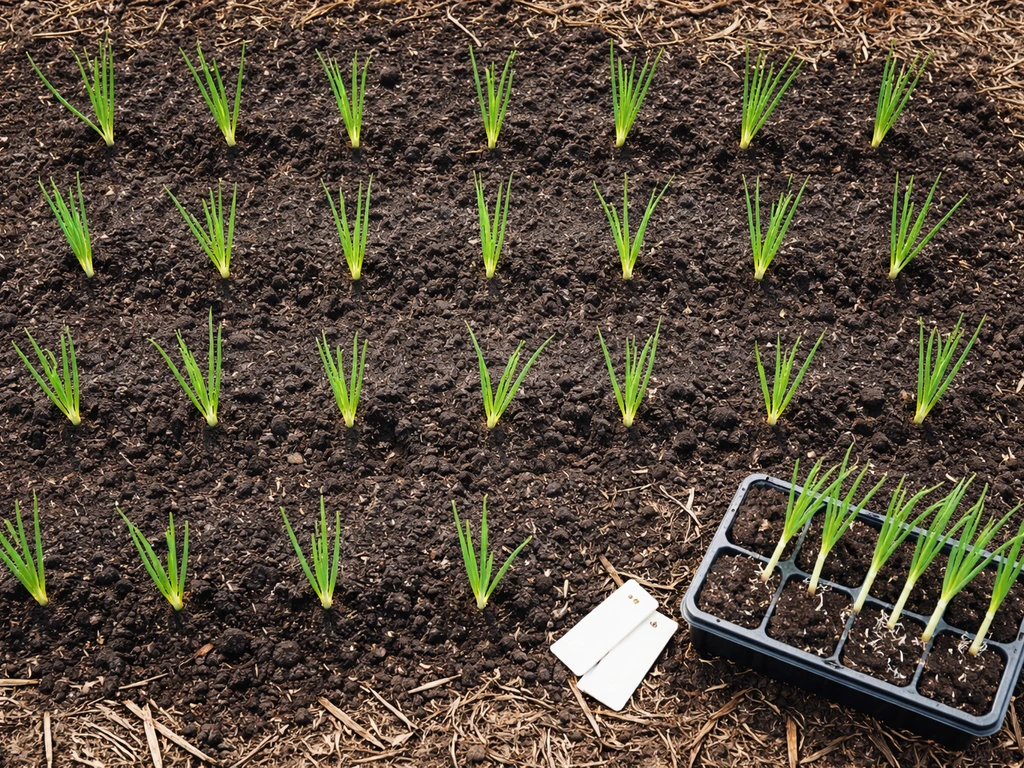
Can You Grow Short Day Onions in the North? How-To Guide
Yes, you can. Learn how to pick short-day onion varieties and plant timing for cold northern climates.
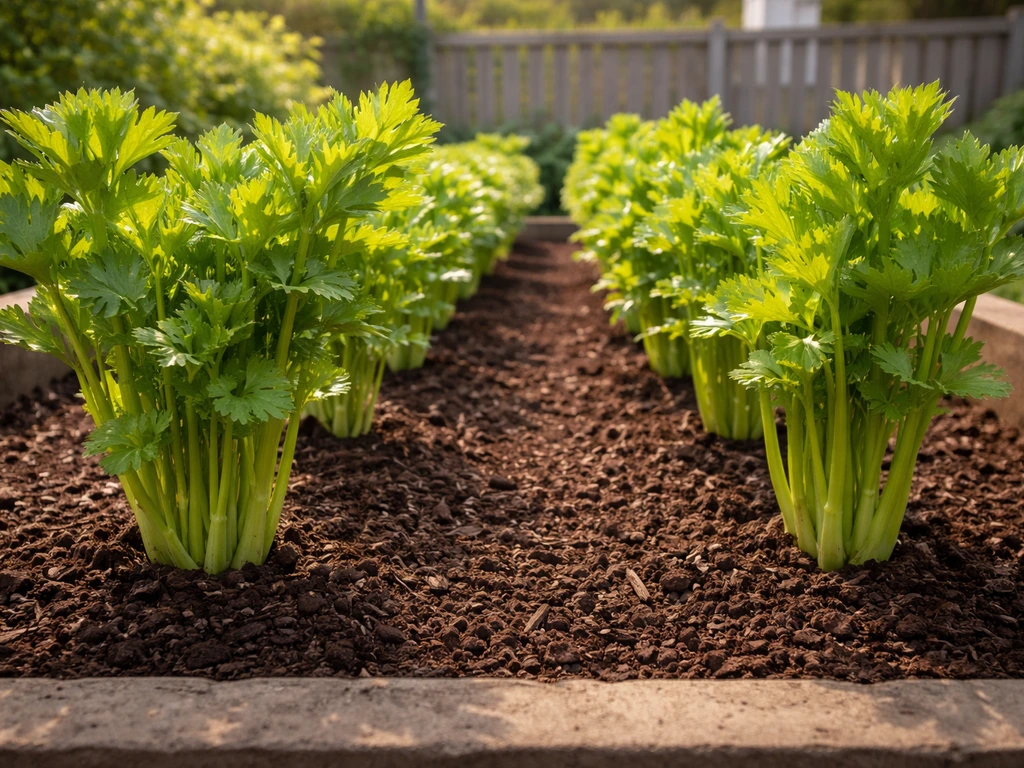
Can You Grow Celery in Ohio? Planting Guide to Harvest
Yes, learn when and how to grow celery in Ohio, with planting dates, varieties, care, pests, and harvest tips.
Can You Grow Black Beans in Ohio? Planting Guide
Yes. Ohio guide for growing black beans: planting dates, varieties, care, frost protection, pests, harvest and curing.