
You can grow short-day onions in the North, but it takes some deliberate workarounds and you need to go in with realistic expectations. Short-day varieties are bred for the deep South, where winters are mild and spring daylength stays short long enough for good bulb development. Up north, those same conditions don't naturally exist, so you have to create them artificially through timing and variety selection. Done right, you can get decent green onions and even modest bulbs from short-day types in northern gardens. Done carelessly, you'll end up with premature bolting or tiny, disappointing onions. Here's exactly what you need to know.
Can You Grow Short Day Onions in the North? How-To Guide
Marcus Holloway
18 May 2026
What 'short-day onions' means and why day length matters so much
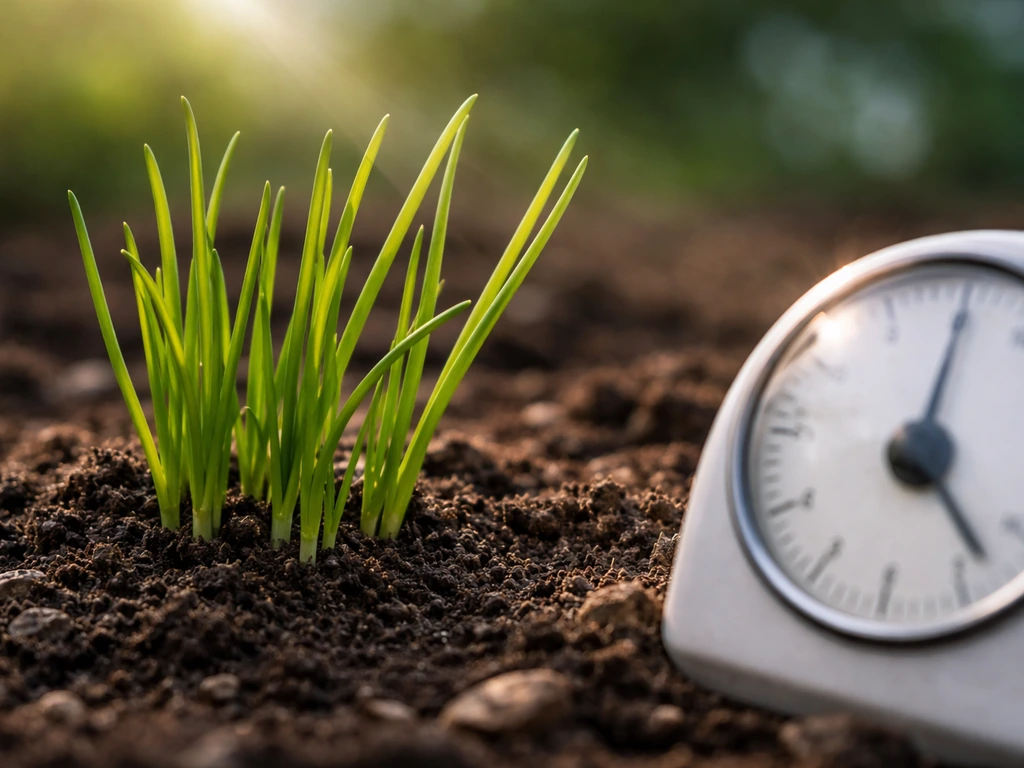
Onions don't form bulbs based on temperature or time of year the way most vegetables do. They respond to photoperiod, meaning the number of daylight hours in a day. When daylength hits a variety's specific threshold, the plant stops making leaves and starts storing energy underground into a bulb. Get that trigger too early or too late, and bulb formation either stunts out or never really happens.
Short-day onions start bulbing when days reach roughly 10 to 12 hours of daylight. Intermediate-day types kick in at 12 to 14 hours, and long-day onions need 14 or more hours before they begin forming bulbs. In the South, where these short-day varieties were developed, spring arrives while days are still short, so the plants have a long vegetative window to build size before the bulbing trigger hits. That's what produces those big, sweet Vidalia-style onions. In the North, 10 to 12 hours of daylight happens in early spring and again in late summer, but by late spring and summer you're already at 14 to 16 hours of daylight. That compressed timing is the core challenge.
Can the North actually grow short-day onions? A quick feasibility check
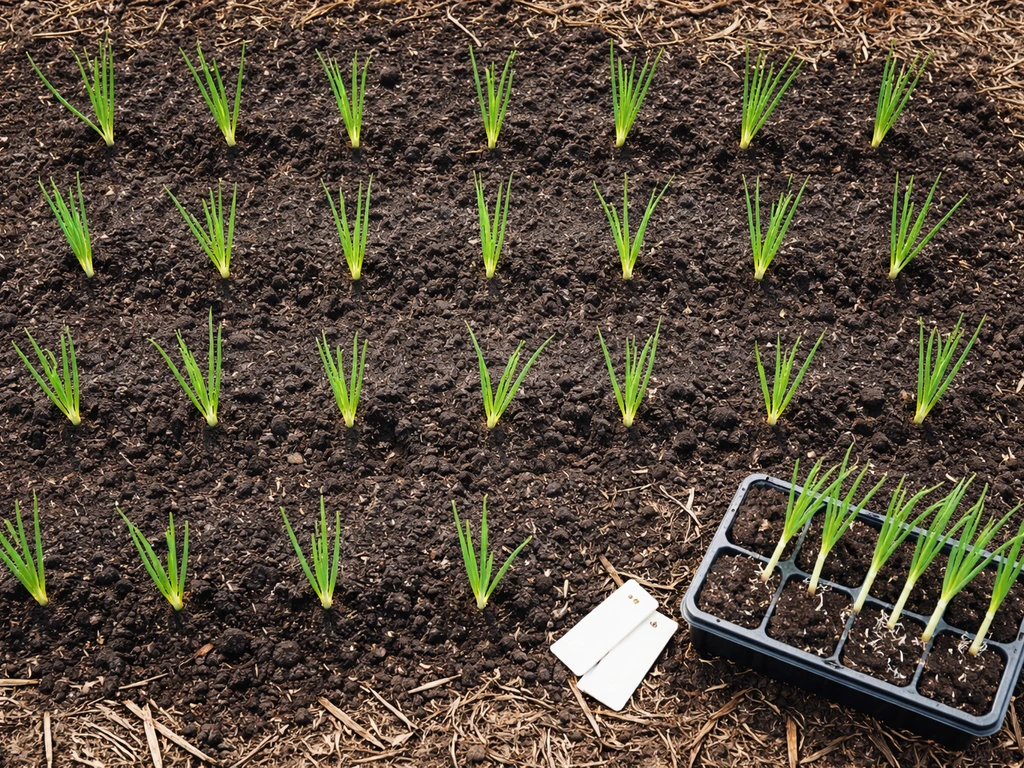
The honest answer depends on your specific location and what you're trying to produce. University of Illinois Extension says short-day onions may perform acceptably in the North if plants can be set out very early in the season. That's the key phrase: very early. You're essentially trying to get plants in the ground while spring days are still short enough that the plants can build vegetative mass before the bulbing trigger fires.
In states like Minnesota, Wisconsin, Michigan, and the northern parts of Ohio, Indiana, and Pennsylvania (generally USDA zones 3 through 5), short-day onions are a real stretch for full bulb production. The window between 'warm enough to transplant' and 'days already too long' is narrow to nonexistent. You can still grow short-day types as green onions or scallions in these regions because those don't require a bulbing trigger at all.
In the mid-latitude transition band, roughly zones 6 through 7 (think central Ohio, southern Pennsylvania, Missouri, Kansas, Virginia), you have a better shot. Days in early to mid-spring are in the 12 to 13 hour range, which overlaps with both short-day and intermediate-day requirements. Starting transplants indoors in late winter and getting them out in late February or early March (under row covers if needed) can work.
| Region | USDA Zones | Short-Day Feasibility | Best Use Case |
|---|---|---|---|
| Deep North (MN, WI, MI, northern NY) | 3–5 | Very difficult for bulbs | Green onions/scallions only |
| Mid-North (OH, IN, PA, MO) | 5b–6b | Possible with early transplants | Small to medium bulbs, green onions |
| Transition Zone (VA, KS, NJ southern tier) | 6b–7 | Workable with effort | Moderate bulbs, better with intermediates |
| Southern border of 'North' (OK, TN border) | 7–7b | Reasonable | Short-day or intermediate varieties both viable |
The best planting strategy: sets, transplants, or seed
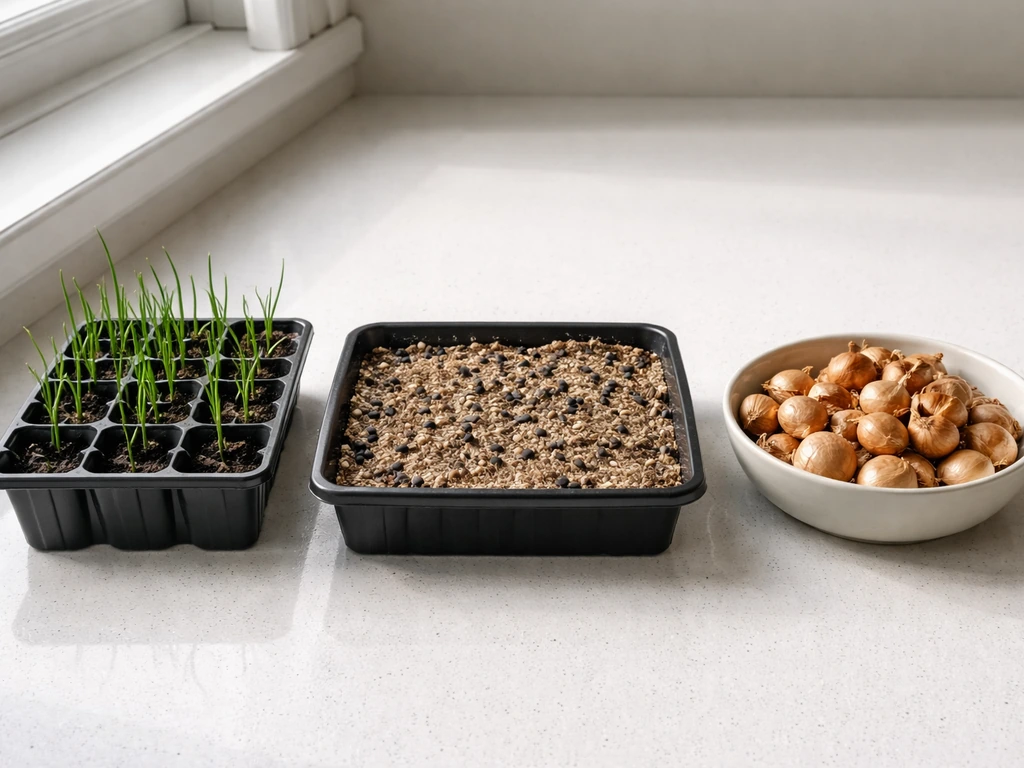
For northern attempts at short-day onions, transplants started indoors give you the most control and are almost always the better choice over sets or direct seeding. Here's why: you need plants to have enough size and root mass to capitalize on the short bulbing window, and transplants give you a head start that sets and direct-seeded plants rarely can match.
Starting from seed indoors
Start seeds indoors 10 to 12 weeks before your last expected frost date. For most of the northern US, that means starting in January or early February. Use a quality seed starting mix, keep soil temps around 65 to 70 degrees Fahrenheit, and provide 14 to 16 hours of supplemental light daily so seedlings don't get leggy. Transplant outdoors as soon as soil is workable, typically 4 to 6 weeks before last frost, and use row covers to protect from freezes below about 20 degrees Fahrenheit.
Using sets
Onion sets are small dormant bulbs, usually sold in spring at garden centers. Most sets sold in northern states are long-day varieties, not short-day, so finding short-day sets takes some hunting (specialty seed suppliers online are usually your best bet). Sets planted in the North are more prone to bolting because the stress of transplanting combined with cold snaps can trigger premature flowering.
Planting timing
Timing is everything here. You want transplants in the ground when daytime temperatures are consistently in the 45 to 55 degree range and daylength is still under 12 hours. In most northern states, that window falls between early March and mid-April depending on your specific location. If you're asking whether this timing works for your exact spot, see can you grow chickpeas in michigan for how to match crop schedules to Michigan's season. The earlier you can safely get plants established, the more vegetative growth they'll build before the daylength trigger fires.
Choosing the right short-day varieties (and when to reconsider)
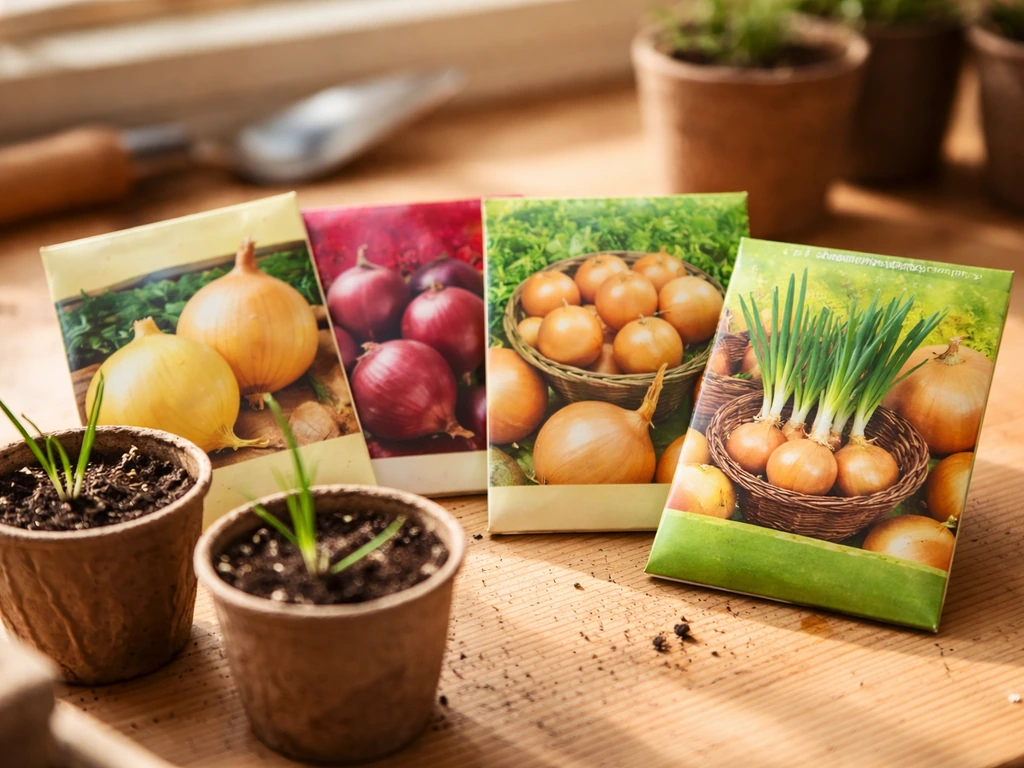
Not all short-day onions are created equal, and variety selection makes a real difference in northern trials. Look for varieties labeled 'short-day' with shorter maturity windows (under 100 days from transplant) so they have the best chance of completing their cycle in your season.
- Texas Early Grano: One of the earliest-maturing short-day types, ready in about 85 to 95 days from transplant. A reasonable choice for zone 6 northern gardeners.
- Red Creole: A short-day variety with some heat and storage tolerance, matures around 95 to 100 days.
- Southern Belle Red: Sweet, short-day type that performs well where early spring planting is possible.
- Granex (Yellow Granex/Vidalia type): The classic short-day sweet onion, but needs a long vegetative window, so it's tough in zones 5 and below.
- Candy (intermediate-day): Technically an intermediate, not short-day, but worth mentioning because it bridges the gap well for northern zones 5 to 6 and produces good-sized bulbs.
If you're in zone 5 or colder and you want actual bulbs (not just green onions), seriously consider whether intermediate-day varieties like Candy, Super Star, or Expression would serve you better than true short-day types. The bulbing trigger at 12 to 14 hours fits northern spring daylengths far more naturally, and you'll spend less time fighting the calendar.
For green onions and scallions, variety flexibility opens up considerably. You can use almost any short-day type and just harvest before the plant ever reaches its bulbing stage. White Lisbon and Evergreen Hardy White are excellent scallion choices that handle northern temperatures without fuss.
Growing conditions in northern climates
Soil
Onions are not forgiving of heavy, poorly drained soil regardless of variety. Aim for loose, well-drained loam with a pH between 6.0 and 7.0. If your northern garden has clay-heavy soil (common in the Great Lakes region and much of the Midwest), work in several inches of compost before planting and consider raised beds or mounded rows to improve drainage. Cold, wet soil in early spring can stunt root development right when you need those plants taking off.
Fertilizing
Nitrogen is the key nutrient during the vegetative phase, which is exactly the phase you need to maximize in a northern short-day planting. Apply a balanced fertilizer (10-10-10 or similar) at planting, then side-dress with a nitrogen-heavy fertilizer like blood meal or ammonium sulfate every 3 to 4 weeks through early summer. Stop fertilizing once you can see the bulbs starting to push up through the soil surface. Pushing nitrogen after bulbing begins can delay maturity and hurt storage quality.
Watering
Onions have shallow root systems and need consistent moisture, especially during bulb development. Aim for about 1 inch of water per week. Drip irrigation works well and keeps foliage dry, which reduces disease pressure. Back off watering significantly in the final 2 to 3 weeks before harvest to help bulbs cure and tighten up.
Spacing
For bulbing onions, space transplants 4 to 6 inches apart in rows 12 inches apart. Tighter spacing produces more but smaller bulbs; wider spacing gives each plant more room to develop a larger bulb. If you're growing primarily for green onions, you can plant as close as 1 to 2 inches apart and thin by harvesting.
Common problems when growing short-day onions in the North
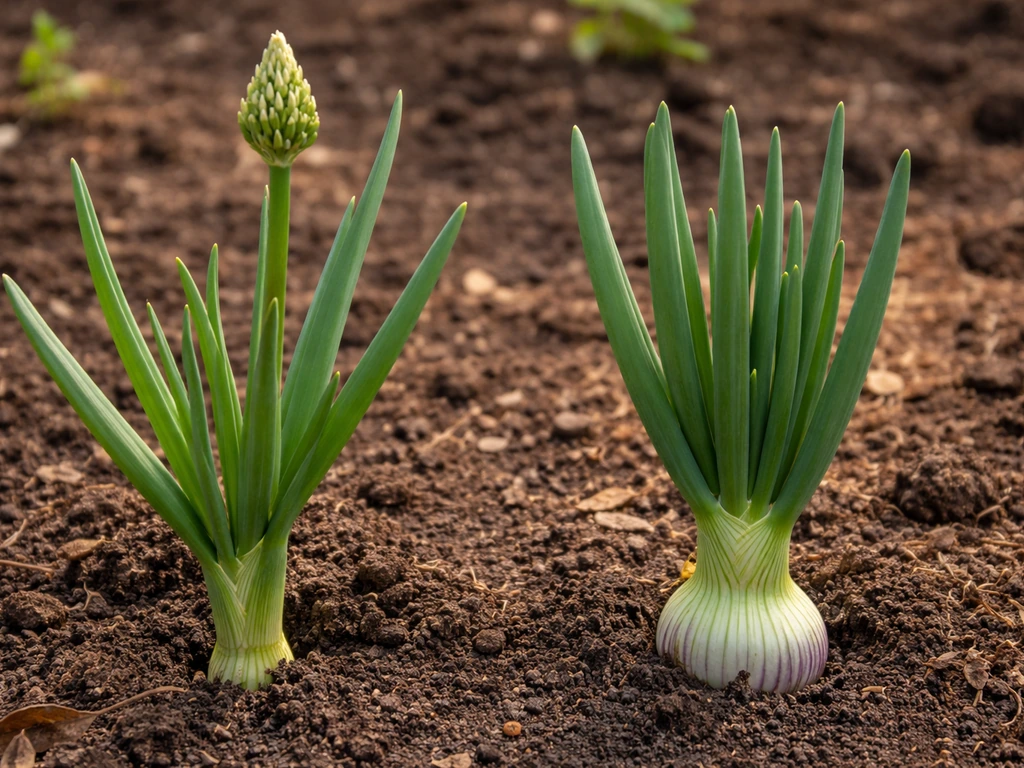
Premature bolting
Bolting, where the plant sends up a flower stalk instead of forming a bulb, is the most frustrating problem northern growers face with short-day types. It's usually triggered by temperature stress: a cold snap after planting that causes the plant to think it survived winter, which signals it to reproduce. Plants exposed to temperatures below about 45 degrees Fahrenheit for extended periods (2 to 3 weeks) are most at risk. To reduce bolting risk, use row covers to moderate soil and air temperatures during early spring cold snaps, and avoid planting too early when hard freezes are still likely. If a stalk does appear, snap it off at the base immediately. The plant can still form a small bulb, but it will have poorer storage life.
Small or nonexistent bulbs
In the North, short-day onions often hit their photoperiod trigger before they've built enough vegetative mass to form a large bulb. The plant starts bulbing when it only has 6 to 8 leaves instead of the 12 to 13 leaves needed for a full-sized onion (each leaf corresponds to a ring in the bulb). The fix is maximizing vegetative growth time by planting early, keeping nitrogen levels up throughout the vegetative phase, and choosing varieties with the shortest maturity windows.
Delayed or stalled development in cold soil
Northern springs can be stubbornly cold, and onion roots basically stall out below 50 degrees Fahrenheit. If you plant into cold soil, the plants just sit there losing time while the calendar advances and daylength increases. Using black plastic mulch over the bed raises soil temperature by 5 to 10 degrees and can make a real difference in early root establishment. It also suppresses the weeds that compete heavily with onions.
Missed planting windows
This one is simple but common. If you wait until your typical vegetable planting date in late April or May to put short-day onions in the ground in the North, you've already missed the window. By then, days are already 14 to 15 hours long in most northern states, which means your short-day plants will begin bulbing almost immediately after transplanting, with nowhere near enough leaf mass to form a decent bulb. Mark your calendar in January. Seed starting has to happen before most people are even thinking about their garden.
When short-day won't cut it: practical alternatives and next steps
If you've read through this and decided the timing gymnastics of short-day onions in the North aren't worth it for you, that's a completely reasonable conclusion. Here are the alternatives that work much more naturally in northern climates. Celery grown in Minnesota can succeed with a short, cool-season approach and proper timing.
- Switch to long-day varieties. This is the straightforward solution for zones 3 through 6. Varieties like Patterson, Copra, Walla Walla, Ailsa Craig, and Stuttgarter are specifically bred for northern conditions where summer days run 14 to 16 hours. They'll produce large, well-formed bulbs without the timing stress. This is the same principle that applies to the reverse situation, where southern gardeners struggle with long-day varieties, much like how growing long-day onions in the South involves its own set of challenges.
- Try intermediate-day varieties. Candy is the standout here for gardeners in zones 5 to 7 who want a sweet, mild onion closer in flavor to southern short-day types. It bulbs at 12 to 14 hours, which matches mid-spring daylengths in much of the country's middle latitudes.
- Grow scallions or bunching onions. If you just want fresh onion flavor from the garden all season, bunching onion varieties like Evergreen Hardy White have no bulbing trigger concerns at all. They grow happily in northern gardens and can be harvested from early summer through fall.
- Check your specific zone and daylength. Before choosing any onion variety, look up your USDA hardiness zone and cross-reference it with daylength charts for your latitude. At 45 degrees north latitude (roughly Minneapolis or Portland, OR), the summer solstice brings over 15.5 hours of daylight. At 40 degrees north (Denver, Philadelphia), you're still seeing about 15 hours. That information alone tells you which day-length class of onion is naturally suited to your garden.
- Source seeds from northern-tested suppliers. If you're committed to experimenting with short-day types, buy from suppliers who specifically trial varieties in northern climates and can give you honest performance data. Generic seed packets rarely tell you whether a variety succeeded in zone 4 or zone 8.
The bottom line is that short-day onions in the North are a project, not a plug-and-play crop. They can work, especially for green onions or if you're in a warmer northern zone with the right timing. But for most northern gardeners who just want a reliable harvest of good onions, long-day and intermediate-day varieties will give you far better results with far less frustration. For example, Bayer Seminis notes that Northeast and Pacific Northwest onion production areas generally require long-day varieties (with some medium-day types grown) blank" rel="noopener noreferrer">Northeast and Pacific Northwest onion production areas require long-day varieties. If your short-day onion plan still feels too finicky, you may prefer a more straightforward approach for other crops, like considering whether can you grow chickpeas in georgia. If you're wondering can you grow long day onions in the south, start by matching the variety to your local daylength and planting window. Know your daylength, match your variety, and you'll spend your summer watching onions grow instead of troubleshooting why they aren't. If you're wondering about chickpeas specifically, the best approach is to match the planting time and variety to Texas heat and frost-free windows watching onions grow.
FAQ
Can you grow short-day onions in the North just for green onions, and when should you harvest?
Yes, but you have to harvest at the right stage. For true short-day types in the North, expect bulbing to start once daylength rises to the 10 to 12 hour threshold, so plan on harvesting green tops well before you see bulbs swelling underground. Once the plant commits to bulbing, the leaves slow down and your “green onion” crop quality drops.
How do I know if my short-day onions are getting enough leaves before bulbing starts?
For onions, “growing days” matters less than daylength trigger plus leaf count. A practical target is to transplant so the plants have time to build toward roughly 12 leaves before daylength pushes into the 12 to 14 hour range for your variety. If you’re late and the trigger hits when plants only have 6 to 8 leaves, you will usually get small bulbs or mostly bulbing without good size.
What should I do if my transplants are struggling after cold weather, and can that cause bolting?
If your seedlings get too much cold exposure after transplanting, bolting risk rises, even if the crop started with good timing. Use row covers at night during cold snaps, and also avoid letting the plants sit in very cold soil for weeks, because stress plus daylength changes can push plants to flower instead of building bulbs.
Why does a “short-day, under 100 days” onion still fail to make bulbs up north?
Don’t rely on onion “weeks to maturity” alone. A short-day onion labeled under 100 days from transplant might still fail in the North if the transplant date misses the brief window before daylength gets too long. Check both maturity days and the photoperiod group, then choose a variety with the shortest maturity window you can find plus a transplant plan that beats late March.
Will raised beds and mulch fix my clay soil problem for short-day onions?
Yes, but only to a point. Raised beds or mounded rows help drainage in early spring, but you still need consistent moisture, especially during bulbing. Overly dry, hot, or uneven moisture can reduce bulb size and storage quality, so mulch and drip irrigation are helpful to keep conditions steady.
How do I avoid over-fertilizing nitrogen on short-day onions in the North?
It’s a common mistake to keep nitrogen going too long. Stop nitrogen once you see bulb swelling starting near the soil surface, because extra nitrogen after bulbing begins can delay maturity and reduce how long onions store. A good rule is to side-dress through the vegetative phase, then taper off as soon as you observe bulbing.
Do row covers actually prevent bolting, or can they cause other problems?
Row covers help, but they must be managed. Keep covers on during cold snaps, but ventilate on warmer days to prevent overheating and excess humidity, which can raise disease pressure. Also confirm your cover system can be secured at the edges, since wind-driven gaps can defeat the temperature protection.
What’s the biggest mistake with indoor seed starting for northern short-day onions?
Start seeds earlier than you think, but not into the dark. Seed starting 10 to 12 weeks before the last frost works best when you also provide 14 to 16 hours of supplemental light, otherwise seedlings become weak and leggy, then transplant poorly into cold soil. Leggy transplants can establish slower, which costs you critical vegetative time.
When should I use black plastic mulch, and do I need to remove it later?
Black plastic mulch warms the root zone, and it usually helps most if you use it early and remove or vent it once temperatures rise. If you leave it on too long in mid-summer, it can overheat soil and increase water stress. Pair mulch with drip irrigation so moisture stays even while the soil warms.
If I missed the early window, what are my best next steps?
If you missed the transplant window, salvage options are green onion harvesting, or switching to intermediate-day varieties. Short-day bulb production becomes unlikely once daylength is already pushing into the 13 to 16 hour range, because plants start bulbing before they build enough leaf mass. Many northern gardeners replant only if they can still get a meaningful vegetative window.
Next Articles
Can You Grow Celery in Ohio? Planting Guide to Harvest
Yes, learn when and how to grow celery in Ohio, with planting dates, varieties, care, pests, and harvest tips.
Can You Grow Black Beans in Ohio? Planting Guide
Yes. Ohio guide for growing black beans: planting dates, varieties, care, frost protection, pests, harvest and curing.
Can You Grow Chickpeas in Michigan? Planting Guide
Learn if you can grow chickpeas in Michigan and get Michigan-specific planting, variety, timing, and harvest tips.