
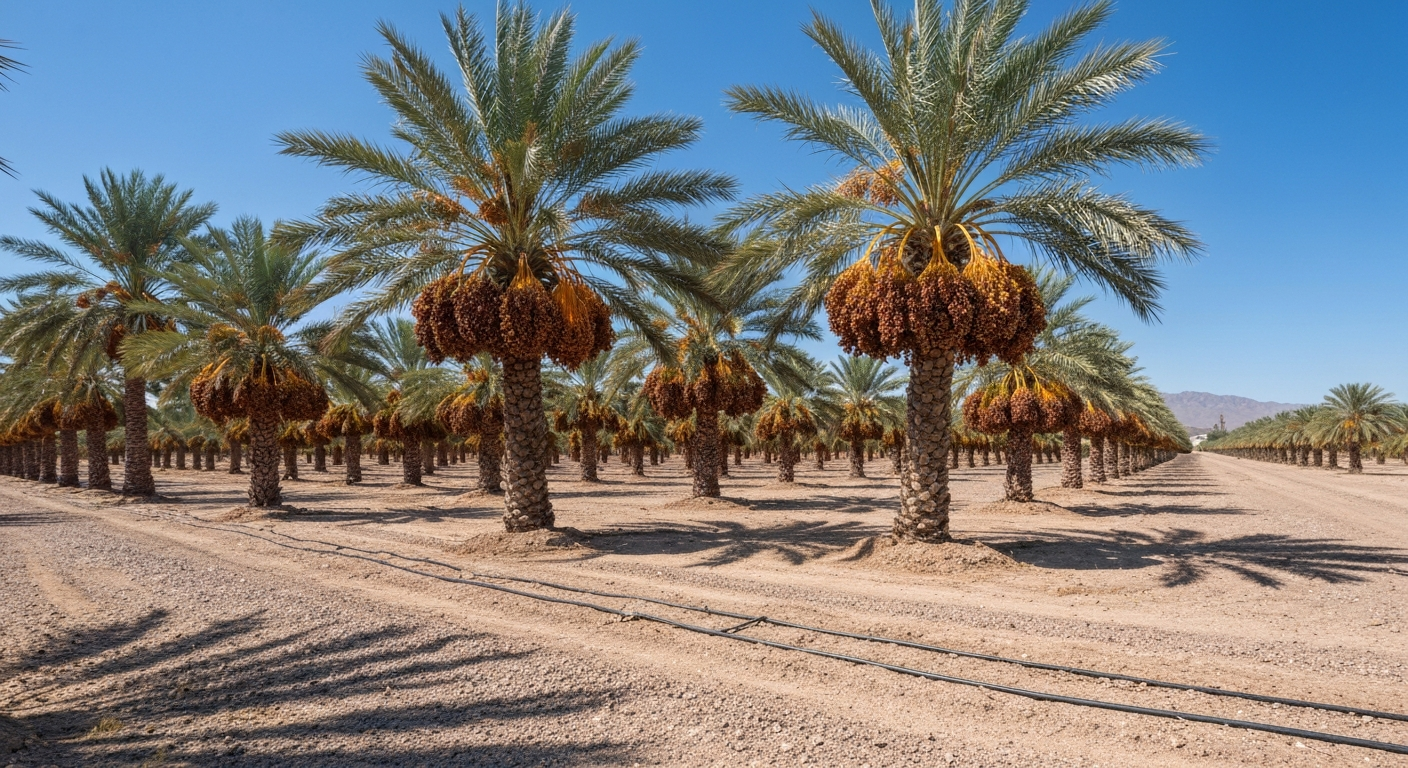
Yes, you can absolutely grow date palms in Arizona, and in the right parts of the state they thrive as well as almost anywhere in the world outside the Middle East. The low Sonoran Desert, covering Phoenix, Yuma, the lower Colorado River Valley, Casa Grande, and the Tucson basin floor, sits in USDA hardiness zones 9b to 10a with AHS heat zones of 11 to 13, which matches exactly what date palms need: a long, brutally hot summer, warm nights during fruit ripening, minimal winter freezes, and dry weather during flowering. If you live in one of those areas, a date palm is not an experiment, it is a practical crop. If you live above roughly 3,500 feet, in Prescott, Flagstaff, or Sierra Vista, the picture changes quickly and date production becomes unreliable.
Can You Grow Dates in Arizona? Practical Guide & Tips
Where in Arizona date palms actually do well
Arizona is not a single climate. Elevation is everything here, and a 2,000-foot gain can take you from ideal date country to somewhere that gets hard freezes every winter. The University of Arizona Cooperative Extension breaks the state into distinct planting zones, and the warm end of that spectrum, the low-desert floor, is where commercial date growers have operated for decades.
The hot spots: Phoenix, Yuma, and the Colorado River Valley
Yuma and the lower Colorado River Valley are the gold standard for Arizona date production. Summer temperatures regularly push past 110°F, nights stay warm through the ripening season, rainfall during flowering is almost nonexistent, and winter lows rarely drop below the mid-20s°F in the worst years. The Phoenix metro is nearly as good, and the urban heat island effect actually pushes many neighborhoods into slightly warmer territory than the surrounding desert. Casa Grande and Gila Bend fall into this favorable tier as well. These are the locations where commercial date orchards exist and where a home grower can expect a full, reliable harvest.
Tucson and the basin floor
Tucson sits at about 2,400 feet and is classified slightly cooler than Phoenix, falling into USDA zone 9a to 9b in many parts of the city. Date palms grow there and produce fruit, but the ripening season is shorter and frost risk is higher than in the Phoenix area. If you are in Tucson, site selection matters more: choose a south-facing wall, an inner courtyard, or an urban lot surrounded by pavement rather than an exposed suburban yard. Avoid low-lying areas where cold air pools on clear winter nights. Planting and Early Care of the Peach Orchard (OSU Extension), guidance on air drainage/frost pockets (applicable site‑selection principles) advises avoiding frost pockets and siting orchards on gentle slopes or other locations that promote cold‑air drainage to reduce freeze risk Planting and Early Care of the Peach Orchard (OSU Extension) — guidance on air drainage/frost pockets (applicable site‑selection principles). A well-sited Medjool in central Tucson can produce, but do not expect the yields you would get in Yuma.
Elevations above 3,500 feet: not viable for production
Prescott, Flagstaff, Payson, and similar higher-elevation communities experience regular hard freezes and shortened growing seasons that make reliable date production impractical. A mature date palm can survive a brief dip to around 20°F with some damage, but fruit will not ripen before cold weather arrives, and repeated freeze events will eventually kill the tree or prevent consistent harvests. If you are in one of these areas and determined to try, a large container kept in a greenhouse or sunroom during winter is your best option, not an in-ground orchard planting.
Microclimate tips that shift the odds in your favor
- Plant on the south or west side of a heat-absorbing masonry wall; it raises nighttime temperatures by several degrees and accelerates fruit ripening.
- Avoid frost pockets: low spots, basins, and areas at the base of slopes where cold air drains and collects on calm, clear nights.
- Gentle upslope positions or elevated patios allow cold air to drain away from the tree rather than settle around it.
- Urban and suburban lots in Phoenix surrounded by concrete and buildings benefit from the heat island effect, which can add 3 to 5°F over rural desert locations.
Climate and hardiness requirements: what date palms actually need
The FAO's reference document on date palm cultivation lays this out plainly: date palms need a long hot summer with warm nights, mild winters without hard freezes, low rainfall during flowering and fruit set, and abundant sunshine. Arizona's low desert checks every single one of those boxes. USDA zones 9b to 10a provide winter conditions the tree can tolerate without consistent freeze damage. AHS heat zones 11 to 13, which apply to Phoenix and Yuma, reflect the 120-plus days per year above 86°F that dates need to develop and ripen fruit properly.
Humidity is the other critical factor and it is one where Arizona genuinely shines. High relative humidity or rainfall during flowering reduces pollination success and causes fruit disorders. Arizona's Sonoran Desert is famously dry during spring flowering season, which is a major reason the state can support commercial date production at all. The summer monsoon arrives later, after most of the critical early fruit development has occurred, though heavy monsoon rain during the late Khalal or Rutab ripening stages can cause fruit splitting and fungal problems.
Cold hardiness thresholds to keep in mind: mature date palms can tolerate brief dips to around 20°F but suffer frond damage below about 25°F. Young trees are more vulnerable and should be protected until established. Flower buds and developing fruit are damaged by temperatures below roughly 28 to 30°F, so late-season cold events in marginal zones like Tucson are the main production risk even when the tree itself survives.
Best date varieties for Arizona growers
Variety selection matters enormously. Not every cultivar ripens at the same rate, tolerates the same heat, or suits the same end use. The two most widely planted and commercially successful varieties in the US Southwest are Medjool and Deglet Noor, and there are good reasons for that. Both have proven track records in Arizona's climate and are the easiest to source from nurseries and tissue-culture suppliers. But other cultivars are worth knowing about depending on your goals.
| Variety | Fruit Type | Heat/Chill Tolerance | Harvest Season (AZ Low Desert) | Best For | Notes |
|---|---|---|---|---|---|
| Medjool | Soft (moist) | Very high heat tolerance; frost-sensitive at fruit stage | Late August to October | Fresh eating, home garden, premium market | Largest commercial fruit; high value; widely available as tissue-culture offshoot |
| Deglet Noor | Semi-dry | High heat tolerance; tolerates slightly drier air | September to November | Dried/semi-dry market, commercial production | Industry standard in Coachella Valley and AZ; stores well |
| Barhee | Soft (also sold fresh at Khalal stage) | Excellent heat tolerance | August to September | Fresh yellow Khalal eating, home gardens | Can be eaten crispy-yellow or soft-brown; ripens earlier than Medjool |
| Zahidi | Semi-dry | Good heat tolerance; relatively drought tolerant | August to September | Smaller home orchards, drier markets | Smaller fruit; vigorous grower; easier to manage |
| Halawy | Soft | Good heat tolerance | August to September | Home garden fresh eating | Rich caramel flavor; smaller clusters |
| Khadrawy | Soft | Good heat tolerance; ripens early | August | Home garden fresh eating | One of the earliest-ripening cultivars; short shelf life |
For most home gardeners in Arizona, Medjool is the default choice for good reason: the fruit is extraordinary fresh off the tree, it is well-studied and documented in Arizona conditions, and tissue-culture plants are reliably available from Arizona and California nurseries. Deglet Noor makes more sense if you want to dry or store your harvest or if you are running a small commercial operation. Barhee is worth considering if you want earlier fruit and enjoy eating dates at the crispy yellow Khalal stage, which is a completely different and delicious eating experience that most people in the US have never had.
How to pick the right variety for your situation
Before you order a plant, think through three questions: Where are you located in Arizona, what do you want to do with the fruit, and how much space do you have? Those answers will narrow the field quickly.
If you are in Yuma or the lower Colorado Valley, you have the most options and can confidently plant any variety on the list above. Phoenix growers are in nearly the same position, though the slightly shorter extreme-heat window compared to Yuma means Medjool and Barhee are the safest bets for full ripening. Tucson growers should lean toward earlier-ripening cultivars like Barhee, Halawy, or Khadrawy to get fruit fully through the Rutab or Tamr stage before temperatures drop in October and November.
For fresh eating and giving away to neighbors, go with Medjool or Barhee. If you want to dry and store dates for the winter or sell them at markets, Deglet Noor and Zahidi hold up far better post-harvest. For space: all mature date palms get large, reaching 50 to 80 feet over decades, but they are slow-growing enough that space is not a major constraint in the first 10 years. Even a small yard in Phoenix can accommodate one or two trees placed thoughtfully.
Site selection and soil preparation checklist
Getting the site right before you plant is the single most impactful thing you can do. Date palms are forgiving about soil type but unforgiving about drainage and sun exposure. Here is what to verify before you dig a hole.
- Full sun is non-negotiable: date palms need direct sun all day, especially from spring through fall. Even partial afternoon shade will reduce yields noticeably.
- Drainage: date palms tolerate many soil types including sandy loam, clay loam, and rocky desert soils, but standing water around the root zone causes crown rot. If your soil drains poorly, raise the planting bed by 12 to 18 inches or install sub-surface drainage before planting.
- Soil EC (salinity): Arizona soils and irrigation water can carry significant salt loads. Date palms are relatively salt-tolerant compared to most fruit crops, but yield begins declining when soil saturation-extract electrical conductivity (ECe) rises above about 4 dS/m. Test your soil before planting if you are in an area with known salinity issues, such as parts of the Yuma or Wellton areas.
- pH: date palms grow well across a wide pH range (roughly 7.0 to 8.5), which is typical of Arizona alkaline desert soils. No significant pH amendment is usually needed.
- Soil amendments: in pure sandy desert soils, work in compost or aged manure at a rate of 10 to 15% by volume in the planting pit to improve water retention. In heavy clay soils, focus on raised beds and drainage rather than organic amendments.
- Avoid frost pockets: confirm the site has good cold-air drainage (a slight slope or elevation above surrounding terrain helps) and is not a low-lying collection point for cold air on calm winter nights.
- Distance from structures: plan for a tree that will eventually be 30 to 50 feet tall and have an 8 to 15-foot crown spread. Keep it at least 10 to 15 feet from foundations, rooflines, and power lines.
- Clearance above: check for overhead utility lines before selecting a permanent site.
How to plant date palms: step-by-step for home gardens and small orchards
Date palms planted correctly establish quickly in Arizona's low-desert conditions. Spring planting (March through May) gives the tree a full growing season to develop roots before the first winter. Fall planting (September to October) works too in the Phoenix and Yuma areas but requires more attention to irrigation and cold protection in the first winter.
- Dig the planting hole: make it two to three times the width of the root ball or container and the same depth. In compacted caliche soils, break through the caliche layer completely so water drains freely downward.
- Amend the backfill: mix the excavated soil with 15 to 20% compost by volume. In sandy soils, this improves moisture retention. Do not over-amend; date palms grown in over-amended, overly rich soil can be more susceptible to root diseases.
- Set the tree at grade: the base of the trunk (the bud zone) should sit at or just slightly above the surrounding soil level. Planting too deep is one of the most common mistakes and can cause crown rot.
- Backfill and firm: fill in around the root ball in stages, firming the soil to eliminate large air pockets. Do not tamp so hard that you compact the soil around roots.
- Build a watering basin: form a raised ring of soil 6 to 8 inches tall around the tree about 2 to 3 feet out from the trunk to direct irrigation water into the root zone.
- Water deeply immediately after planting: fill the basin two to three times to saturate the root zone and settle the soil.
- Mulch: apply 3 to 4 inches of wood chip or straw mulch inside the watering basin but keep it 6 inches away from direct contact with the trunk.
- Stake only if necessary: date palms generally do not need staking unless the planting site is very windy. If you stake, use two stakes placed outside the root ball and attach loosely with wide straps, removing them after 6 to 12 months.
- Protect young trees from frost in the first winter: if planting in Tucson or a marginal Phoenix microclimate, wrap the crown with frost cloth or burlap when temperatures are forecast below 28°F during the first two winters until the tree is well established.
Spacing for home gardens and small orchards
FAO and commercial orchard guidelines recommend 8 to 10 meters (about 25 to 33 feet) between trees in full orchard plantings. For home gardens where you are planting one or two trees, 15 to 20 feet from the nearest tree, structure, or large shrub is a practical minimum. Tighter spacing is possible but leads to shading conflicts as the trees mature. If you are setting up a small commercial block, a 30-foot grid (roughly 9 meters) is a solid standard that allows access for equipment and adequate airflow.
Offshoots vs. tissue-culture plants
Date palms are propagated either from offshoots (suckers removed from the base of a known variety) or from tissue-culture (TC) plants grown in labs. Offshoots from certified sources are reliable and were the industry standard for decades, but supply is limited. Tissue-culture plants are now widely available, are true-to-type for named varieties like Medjool and Deglet Noor, and are what most Arizona nurseries sell today. TC plants establish well in Arizona conditions and are the practical choice for most home growers. Avoid unnamed, seed-grown date palms if you care about fruit quality because seed-grown trees vary enormously and half will be male with no fruit at all.
Irrigation and fertilization: keeping Arizona date palms productive
Water management is the most demanding part of growing dates in Arizona. Date palms use a lot of water, blank" rel="noopener noreferrer">published studies on date orchards in arid regions report annual crop evapotranspiration in the range of 1,800 to 2,400 mm per year (roughly 71 to 95 inches annually). In practice, Arizona growers use the University of Arizona's AZMET network, which provides station-level reference evapotranspiration (ETo) data for Phoenix, Yuma, Tucson, Wellton, and other locations, multiplied by a crop coefficient (Kc) for date palms to calculate actual irrigation needs by week or month.
Irrigation system and scheduling
Drip irrigation or micro-bubbler systems work best for home gardens and small orchards. They deliver water directly to the root zone, reduce evaporative loss, and keep the trunk base dry (which matters for disease prevention). For established trees in Phoenix during peak summer, a typical deep irrigation every 3 to 5 days may be needed, scaling back to every 10 to 14 days in winter. Young trees in the first two years need more frequent irrigation because their root system is limited. The rule of thumb is to irrigate deeply and infrequently rather than shallowly and often, encouraging deep root development. Always verify by checking soil moisture at 12 to 18 inches depth before irrigating.
Water quality and salinity management
Arizona irrigation water, especially in the Yuma and Wellton areas, can have elevated salt content. Salt accumulation in the root zone above an ECe of about 4 dS/m starts reducing date palm yields, and higher levels cause more significant damage. Manage salinity by applying a leaching fraction: periodically irrigating with 15 to 20% more water than the tree's calculated need to flush accumulated salts below the root zone. Deep, infrequent irrigations accomplish this more effectively than frequent shallow applications. If you are on a municipal water supply in Phoenix, salinity is generally less of a concern, but it is still worth getting a basic water quality report from your utility.
Fertilization plan
Date palms are heavy feeders over time but modest in their needs during establishment. A practical schedule for Arizona home growers looks like this: in the first year, apply a balanced slow-release palm fertilizer (such as an 8-2-12 or similar formula with micronutrients) in spring and again in early summer, following label rates for tree size. From year two onward, increase rates as the canopy develops. Nitrogen, potassium, and magnesium are the nutrients most commonly deficient in alkaline Arizona soils. Potassium deficiency shows up as orange-brown leaf tip necrosis on older fronds, which is common in Arizona and responds well to potassium sulfate applications. Magnesium deficiency produces a yellow band on outer fronds. Avoid high-phosphorus fertilizers in Arizona's naturally phosphorus-rich soils. Fertigation through your drip system is the most efficient delivery method for established trees.
| Season | Irrigation Frequency (Established Tree, Phoenix) | Key Fertilizer Action |
|---|---|---|
| January to February | Every 14 to 21 days | No fertilizer; dormant rest period |
| March to April | Every 7 to 10 days | Apply balanced palm fertilizer; pollination season, keep trunk area dry |
| May to June | Every 4 to 7 days | Side-dress potassium sulfate if deficiency signs present |
| July to August | Every 3 to 5 days (peak heat) | Light nitrogen application if growth is slow; monitor salt buildup |
| September to October | Every 5 to 7 days | No late-season nitrogen; harvest period |
| November to December | Every 14 to 21 days | Final potassium application to harden fronds before winter |
Pollination: the step most home growers overlook
Date palms are dioecious, meaning you need both a male and a female tree to get fruit. In commercial plantings, the standard approach is roughly one male tree for every 40 to 50 female trees, with hand or mechanized pollination used to ensure reliable fruit set and good uniformity. For home gardens where you have one or two female trees, you need to source pollen rather than plant a full male tree (which produces no fruit and takes up significant space). Most Arizona date nurseries and extension resources can direct you to pollen suppliers, or you can share with other growers in your neighborhood.
Hand pollination is straightforward: collect or obtain pollen from a mature male inflorescence in the morning, let it dry slightly, and apply it directly to receptive female flowers by cutting a male flower stalk into sections and tucking them into the opening female spathe, or by dusting loose pollen over the female flowers with a small brush or syringe. Do this early in the day when humidity is lowest. Timing is everything: female palms are receptive for about 5 to 7 days after the spathe splits open, so check your trees daily in late February through April.
For storing pollen between seasons or buying in advance, keep it dry: store in an airtight container with a desiccant packet at 4°C (refrigerator) for weeks to a few months, or freeze at -20°C for longer-term storage. Research confirms that properly dried and frozen pollen retains good viability for extended periods, while warm or humid storage rapidly degrades it. Label everything with date and source variety because pollen genotype affects fruit quality and set rate.
Timeline to first fruit and what to expect year by year
A tissue-culture or offshoot-grown Medjool or Deglet Noor planted in Arizona's low desert will typically begin producing its first significant fruit cluster at around 4 to 6 years after planting. You may see the first small spathe as early as year 3 or 4, but most growers remove early fruit clusters to let the tree put energy into trunk and root development. Full production, meaning 100 to 200 pounds of fruit per tree per year, is usually reached at 8 to 10 years. A well-maintained date palm in Arizona can remain productive for 50 to 80 years, so this is genuinely a generational planting.
Pest, disease, and frost protection
The most significant pest threat in Arizona date orchards is the date palm scale (Parlatoria blanchardi) and various other scale insects that colonize fronds and fruit stalks. Inspect fronds regularly and treat with horticultural oil sprays during the dormant season if scale populations build up. Spider mites can be a problem during hot, dry periods, controlled with miticides or strong water sprays on frond undersides. Birds and rodents are the most common fruit-loss problem for home growers during ripening season; netting individual clusters starting at the Khalal stage (when fruit turns color) is the most reliable protection.
Fusarium wilt (Bayoud disease) is the most devastating date palm disease globally, but it has not been confirmed in Arizona or the US as of 2026, and strict import controls on plant material are designed to keep it out. The main disease concerns in Arizona are fungal crown rots associated with overwatering or poor drainage, and graphiola leaf spot (false smut) on fronds in humid conditions. Both are prevented primarily through good site drainage and avoiding overhead irrigation. For frost protection of young trees, wrap the crown with frost cloth when temperatures are forecast below 28°F, and wrap the trunk loosely with burlap if sustained freezes are expected.
Harvest and post-harvest handling
Dates go through four ripening stages: Kimri (green, hard), Khalal (yellow or red, crunchy), Rutab (soft, partially brown), and Tamr (fully ripe, brown, reduced moisture). Harvest timing depends on what you want: Barhee is commonly eaten at the Khalal stage, while Medjool and Deglet Noor are best at Rutab or Tamr. In Arizona's low desert, Medjool typically hits Rutab in late August through September. You can harvest whole clusters when most fruit has reached your target stage, then let them finish ripening indoors at room temperature if needed.
Fresh soft dates (Rutab) keep for 2 to 4 weeks refrigerated. Fully dried Tamr-stage dates store at room temperature for months and freeze well for up to a year. Keep harvested fruit away from moisture and pests. If monsoon rain hits your fruit at the Rutab stage, move quickly: check for splitting and mold, and dry affected fruit at low heat (around 95 to 105°F) if you have access to a food dehydrator.
Common failure modes and how to avoid them
- Planting in poor drainage: crown rot from waterlogged roots kills more Arizona date palms than frost does. Always verify drainage before planting and raise beds if needed.
- Missing the pollination window: female spathes are receptive for only about a week. Mark your calendar in February, check trees daily in early spring, and have pollen ready before the spathe opens.
- Planting seed-grown or unnamed trees: half will be male and fruitless, and even female seedlings will produce inferior, variable fruit. Always buy named-variety tissue-culture or certified offshoot plants.
- Underestimating water needs in summer: date palms in Phoenix in July need deep, frequent irrigation. A tree that runs dry during fruit development will drop clusters or produce shriveled, poor-quality fruit.
- Salt buildup without leaching: if you irrigate frequently without a leaching fraction, salts accumulate to yield-damaging levels over 2 to 4 years. Test soil EC annually in areas with known water salinity issues.
- Planting in a frost pocket in Tucson or marginal zones: this is the most common site-selection mistake for growers outside the Phoenix and Yuma areas. Walk the site on a calm cold winter night and feel for cold air pooling before committing to a permanent planting.
How Arizona compares to other date-growing locations
Arizona's low desert is genuinely one of the best places to grow dates outside the Middle East and North Africa. It compares favorably even to other US locations. Oklahoma, for example, sits in USDA zones 6 to 8 across most of the state, with cold winters and high humidity during flowering that make reliable date production very difficult. If you want a deeper look at that question, see our guide titled “can you grow dates in Oklahoma” for specifics on climate limitations and possible container or greenhouse options. Canada is largely out of the question for outdoor date production given winter temperatures across all provinces. Ghana's climate is the opposite problem: equatorial humidity and rainfall year-round prevent the dry flowering conditions and hot arid summer that dates require. For more on this, see our article titled 'can dates grow in Ghana' which explains why equatorial humidity and year-round rainfall limit date production there. Australia has some suitable desert regions in Western Australia and South Australia, where small-scale date growing does occur, though the industry is less developed than in the US Southwest. For details on suitable Australian regions and cultivation practices, see the guide titled "can you grow dates in Australia". Arizona, alongside California's Coachella Valley, represents the most favorable temperate date-growing territory in the Western world. For a concise answer to can you grow dates in Canada, see our guide explaining why harsh winters prevent outdoor production across provinces and what limited options exist for container or greenhouse cultivation.
Next steps and local resources
If you are ready to plant, the University of Arizona Cooperative Extension is your best starting point for locally calibrated advice. Extension offices in Maricopa County (Phoenix area), Yuma County, and Pima County (Tucson) have specialists familiar with date palms and can provide soil testing, water quality analysis, and variety guidance specific to your location. Glenn Wright, a UA Cooperative Extension horticulturist, has published extensively on Arizona's date industry and is a reference point for serious growers.
For plant sourcing, look for Arizona or California nurseries selling certified Medjool or Deglet Noor tissue-culture plants. Prices range widely based on plant size, but buying a larger, more established TC plant (3 to 5 years old) is worth the extra cost because it shortens your wait for first fruit. For irrigation planning, bookmark the AZMET website (University of Arizona Meteorological Network) where you can pull current ETo data for the station nearest your location and calculate weekly water needs by multiplying ETo by a date palm crop coefficient.
If you are in Tucson or another marginal location and not sure whether your specific microsite will work, plant one tree in your best-sheltered, south-facing spot and observe it for two full winters before committing to more. One tree is an experiment; a grove is an investment. Get the site dialed in first.
FAQ
Can you grow date palms in Arizona?
Yes — date palms (Phoenix dactylifera) can be grown successfully in Arizona, but only in the low‑desert/low‑elevation warm zones. Success requires planting in the Sonoran low‑desert microclimates (Yuma, Wellton, Lower Colorado Valley, Phoenix metro, Casa Grande, parts of Tucson basin) that have long, hot summers, warm nights, minimal damaging freezes, and low humidity during flowering.
Which Arizona regions and microclimates are suitable or unsuitable?
Suitable: Yuma, Wellton, Gila Bend, Lower Colorado River Valley, Phoenix metro, Casa Grande, many parts of the Tucson basin (roughly USDA 9b–10a / AHS heat zones ≈11–13). Unsuitable or risky: higher‑elevation/cooler towns (Prescott, Flagstaff, Sierra Vista) and frost‑prone valleys. For home sites, choose south‑ or west‑facing courtyards, slopes with cold‑air drainage, or locations near heat‑storing walls to reduce freeze risk.
What environmental and climate requirements should growers consider?
Key requirements: long, hot summers with warm nights for fruit ripening; mild winters without hard freezes (repeated sub‑freezing damages crowns and delays fruiting); dry weather during flowering/fruit set; abundant sunshine; adequate irrigation (high seasonal evapotranspiration). Use local AZMET ETo data and a crop coefficient (Kc) to plan irrigation because annual water use can be very high compared with many backyard crops.
Which date varieties perform best in Arizona?
Top choices in Arizona/US Southwest: Medjool (large, high‑value, widely grown) and Deglet Noor (semi‑dry standard). For small growers also consider Halawy, Khadrawy or Barhi for early‑season or niche markets. Choose varieties known for heat tolerance and tested locally; consult local nurseries/extension for site‑specific recommendations.
How should I space and plant date palms (orchard vs home)?
Spacing: commercial orchards commonly use 8–10 m (25–33 ft) between palms depending on cultivar and training. For home/small farms allow at least 20–30 ft between mature palms. Planting steps: 1) Select full‑sun, well‑drained site away from frost pockets. 2) Dig a hole slightly larger than rootball; crown should sit slightly above final grade. 3) Backfill with native soil amended only if very poor — good drainage is more important than rich soil. 4) Mulch 3–4 in around base (keep off trunk). 5) Install irrigation drip/soaker lines and set up fertilizer regimen. Avoid deep planting; ensure crown integrity.
What soil and salinity considerations apply?
Date palms tolerate a range of soil textures and are relatively salt‑tolerant, but yields decline as soil ECe climbs above ≈4 dS/m. Ensure good drainage, monitor soil EC, and if salinity is high: use tolerant cultivars, provide periodic leaching with extra irrigation when water and drainage allow, and avoid saline irrigation water without blending or treatment.
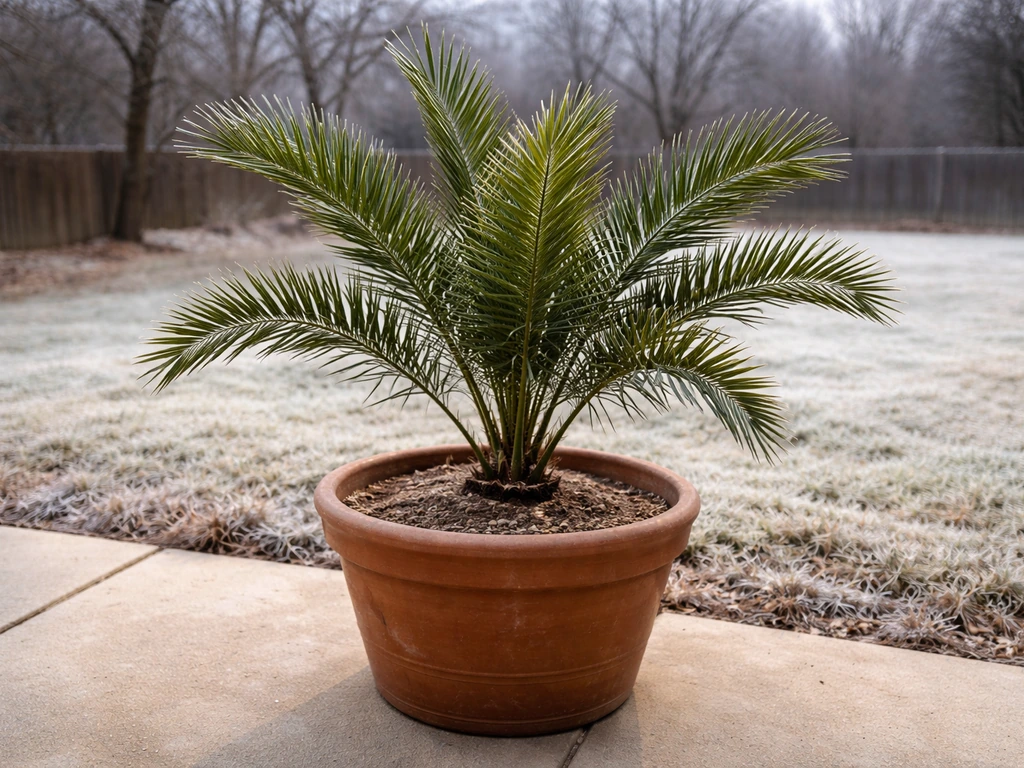
Learn if you can grow date palms in Oklahoma and get tips for cold-hardy container success and fruit set.
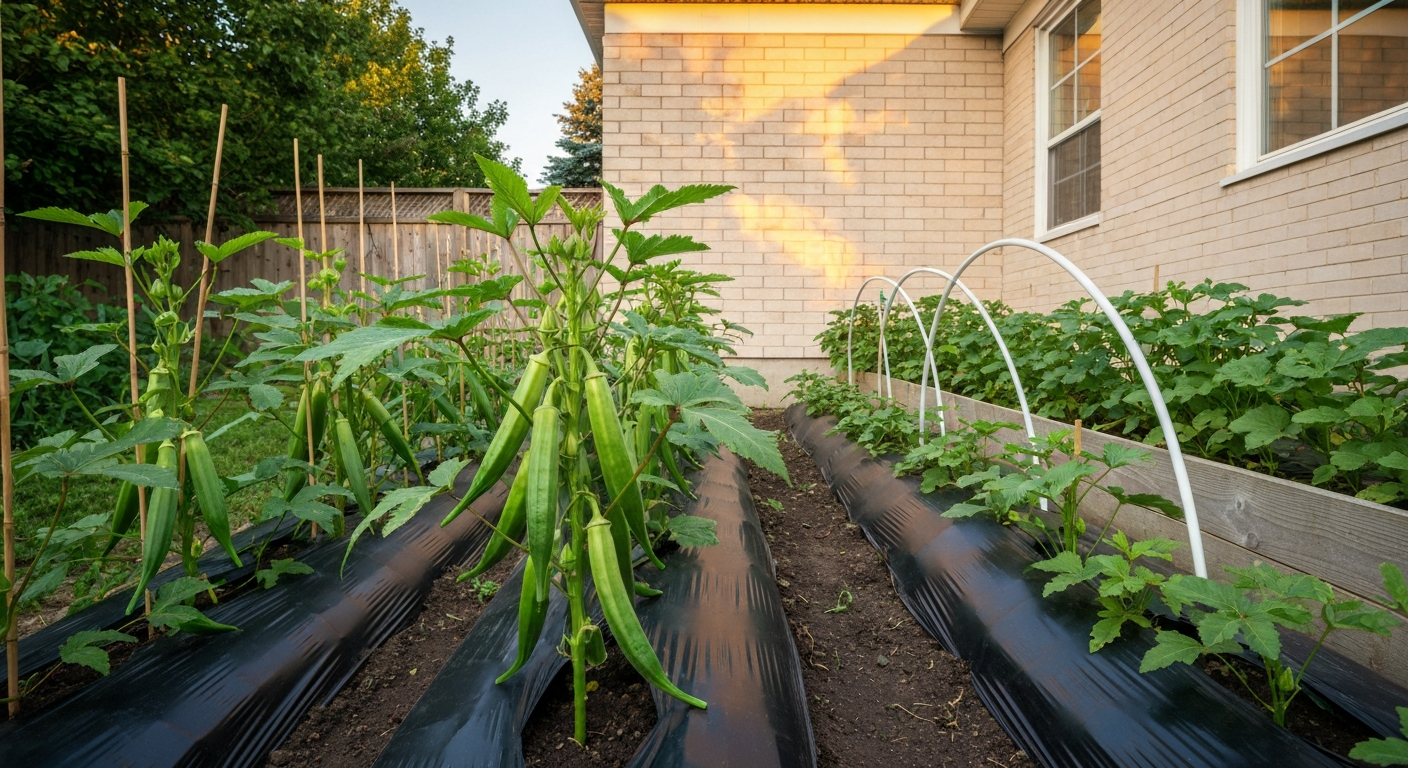
Can you grow okra in Canada? Regional verdict, Ontario-specific steps, varieties, season-extension & harvest tips.
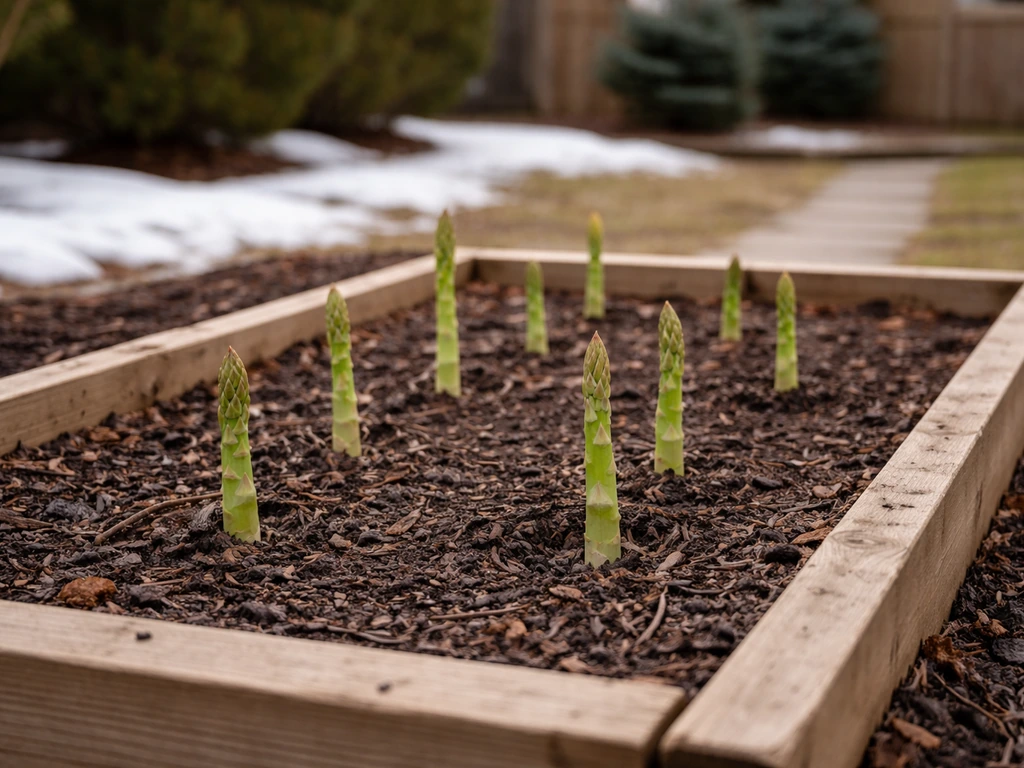
Grow asparagus in Canada by zone: site, hardiness, crowns or seed, planting depth, care, and harvest plus fixes