Date palms (Phoenix dactylifera) can be grown outdoors in the United States, but the honest answer is that only a handful of regions give you a real shot at harvesting actual dates. Hot desert climates like inland Southern California, Arizona, and parts of the Southwest are the sweet spot. Parts of Texas, Nevada, and Florida can work for growing the tree itself, but producing fruit is trickier. Anywhere with cold winters, short summers, or high humidity is going to be an uphill battle. Here is how to figure out exactly where you stand.
Where Can You Grow Dates in the US State by State Guide
Marcus Holloway
11 Apr 2026
What date palms actually need to survive and fruit
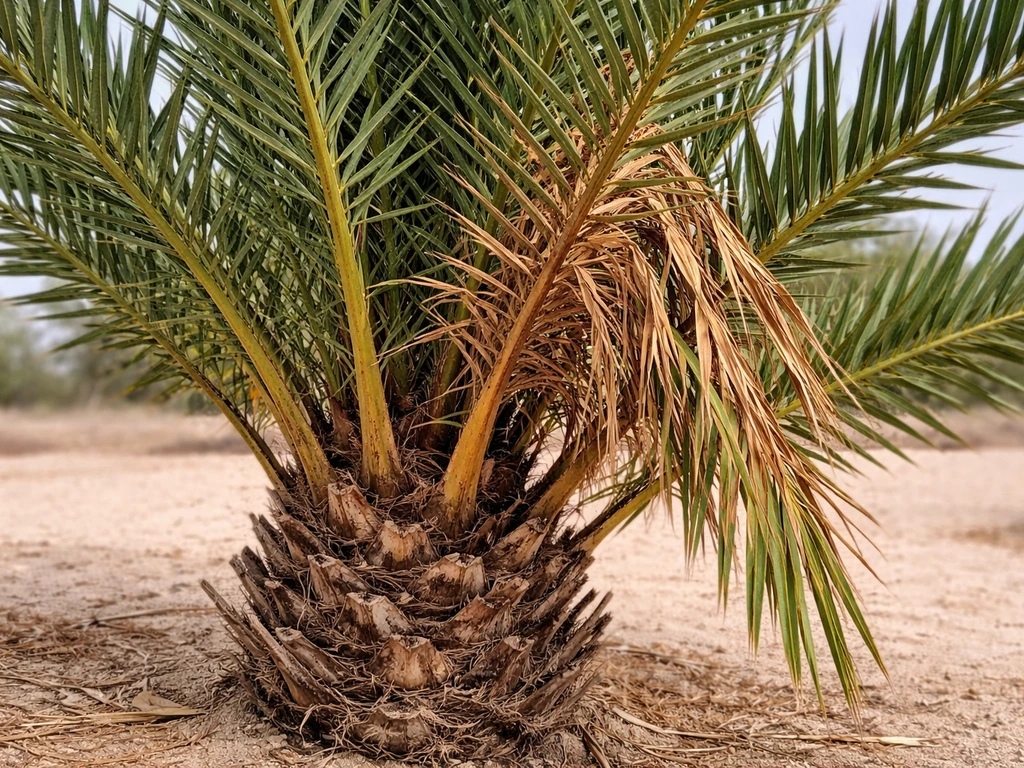
Before you look at a map, understand what the plant demands. Date palms handle cold down to about 15°F, but damage to fronds can start before you hit that threshold, and temperatures below 15°F are genuinely risky for the whole tree. That puts them squarely in USDA Hardiness Zones 9 through 11, though some zone 8b locations can work if the microclimate is favorable.
Cold hardiness is only half the story. The bigger challenge is heat. The finest date varieties need around 3,300 degree-days of heat, calculated above a daily mean of 64.4°F across the fruit development and ripening period. That is an enormous heat requirement. Vegetative growth stops below 10°C (50°F), flowering kicks in when shade temperatures consistently rise above 18°C (64°F), and fruit set and ripening really want sustained temperatures above 25°C (77°F), ideally climbing to around 26.7°C (80°F) or higher for at least a month. The fruiting period itself runs about 120 to 200 days depending on the variety and conditions, which is why short warm seasons are a dealbreaker.
Humidity is the other factor people underestimate. Date palms need low relative humidity and an absence of rain during flowering and fruit set. Cold winds during flowering are also a problem because they disrupt pollen germination and reduce fruit set. This is why humid southeastern states or rainy Pacific Northwest climates are so problematic for fruiting, even when the palm survives the winter just fine.
To summarize the site requirements: full sun all day, a long hot and dry summer, mild winters without frost, low humidity at flowering time, and protection from cold wind. If your location checks all those boxes, you are in business. If it checks only some of them, you can grow an ornamental tree but probably not harvest dates you would want to eat.
US regions where dates can actually grow outdoors
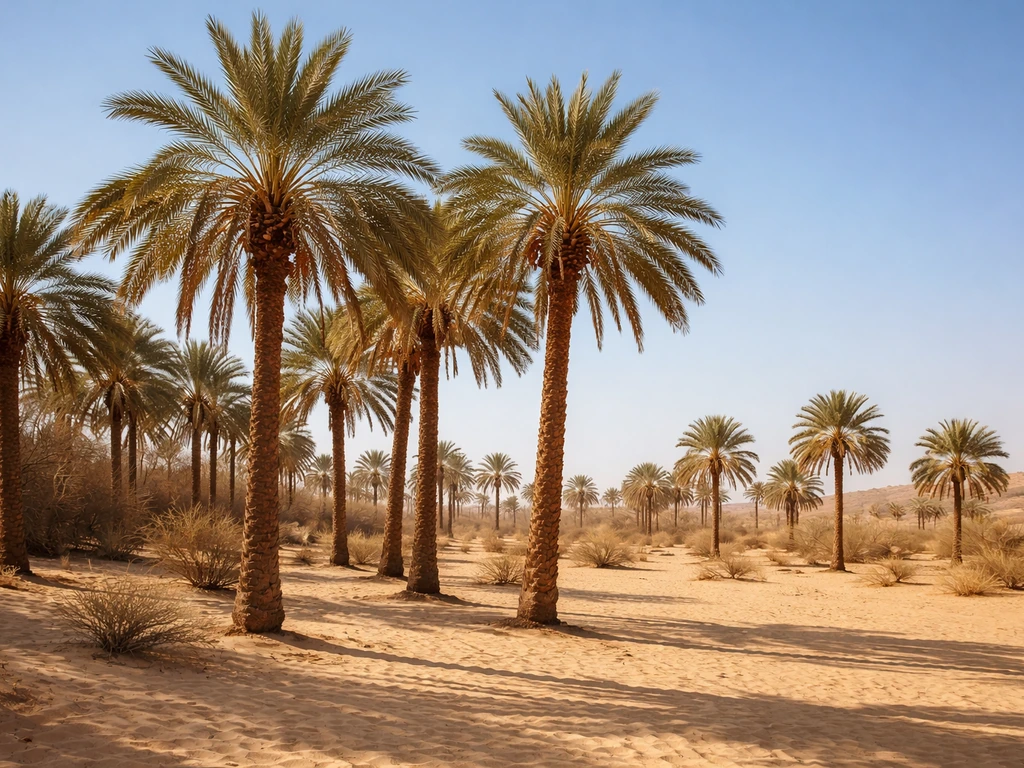
The Sonoran Desert and surrounding inland valleys are the gold standard for US date production. The Coachella Valley in California and the low desert of Arizona produce the vast majority of commercial US dates for exactly this reason: extreme summer heat, very low humidity, minimal rain during fruiting season, and winters mild enough to keep the palms in good shape. These places were essentially built for Phoenix dactylifera.
Moving outward from that core, other regions can work to varying degrees. The lower Rio Grande Valley of Texas gets hot enough and rarely freezes hard, so date palms grow and sometimes fruit there. Southern Nevada (Las Vegas and surroundings) shares the desert heat profile and is a reasonable bet. Coastal Southern California gets good heat in inland valleys, though marine air and fog near the coast can dampen fruit quality. Central and South Florida is warm enough for the tree to survive but high humidity and summer rain during fruiting season work against you for actually harvesting good fruit.
As you move north or into higher elevation, wetter, or more humid climates, the calculus shifts quickly. The Gulf Coast states, the Southeast, the Pacific Northwest, and the upper South can occasionally support date palms as ornamentals, especially in protected spots, but expecting a fruit harvest there is wishful thinking in most years.
State-by-state feasibility snapshot
Here is a quick-reference look at how different states stack up, both for tree survival and for actually producing dates you can eat.
| State / Region | Tree Survival | Fruit Production | Main Limiting Factor |
|---|---|---|---|
| California (Coachella Valley, inland deserts) | Excellent | Excellent | None in ideal zones |
| Arizona (low desert, Phoenix, Yuma) | Excellent | Excellent | None in ideal zones |
| Nevada (Las Vegas, southern) | Very Good | Good | Occasional frost events |
| Texas (lower RGV, El Paso area) | Good | Fair to Good | Humidity in RGV; cold snaps inland |
| Florida (South and Central) | Good | Poor to Fair | High humidity, summer rain at fruiting |
| New Mexico (southern, low elevation) | Fair | Fair | Winter cold at higher elevations |
| Hawaii | Very Good | Good | Varies by island/elevation |
| Gulf Coast (LA, MS, AL coastal) | Fair | Poor | Humidity, rain at flowering |
| Georgia, South Carolina (coast) | Marginal | Very Poor | Cold, humidity, short heat season |
| Pacific Northwest (OR, WA) | Poor | Not Feasible | Cold, wet, insufficient heat |
| Midwest, Northeast, Mountain West | Not Feasible | Not Feasible | Winter cold, insufficient heat |
If you are in Texas, the situation is nuanced enough that it deserves closer attention. growing dates in Texas depends heavily on which part of the state you are in, since El Paso and the far west behave more like the Arizona desert than the humid Gulf Coast. Similarly, if you are in Ohio or anywhere in the Midwest, it is worth understanding that growing dates in Ohio is essentially off the table for outdoor fruiting, though container growing is a conversation worth having.
Growing dates in borderline climates
If you are not in the desert Southwest or a clearly favorable zone, you still have options, but you need to be realistic about the goal. Are you aiming for a living, attractive tree, or are you aiming to harvest dates? The first is achievable in many more places than the second.
Microclimates and site selection
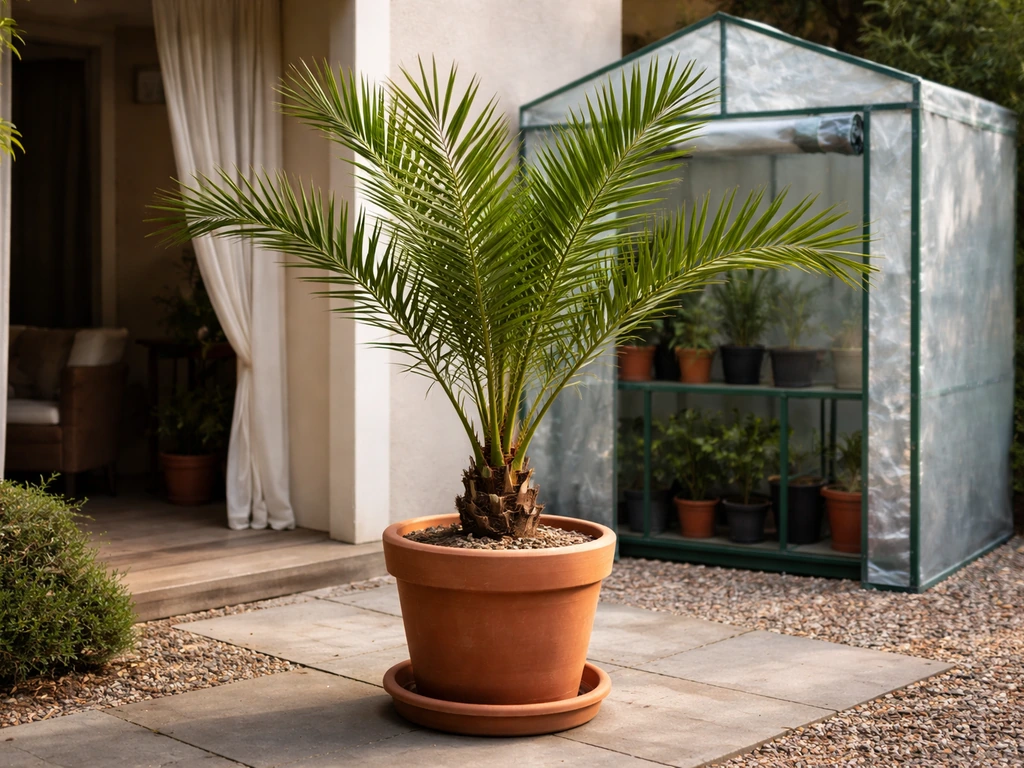
Microclimates can shift your effective zone by one to two zones in some situations. Planting against a south-facing masonry wall, in a heat-absorbing courtyard, or in a low-lying pocket that drains cold air away from the tree can make a meaningful difference. Urban heat islands help too, which is why date palms survive in surprising spots in cities like Houston or Tampa. The key is maximizing radiated heat, reflected sunlight, and wind protection all at once.
Container growing and indoor overwintering
Container growing is genuinely viable in marginal climates like the Carolinas, the upper South, or even growing dates in Michigan if you are committed. Keep the palm in a large pot, put it outdoors in full sun from late spring through early fall, and bring it into a warm bright space (at least 50°F, ideally warmer) before your first frost. You will not be harvesting dates this way, but you can keep a healthy tree alive and enjoy it for years. Just know that date palms grow large over time, so container culture has a natural ceiling.
Cold protection for in-ground trees
For in-ground plantings in zones 8b or marginal zone 9 locations, a few cold protection strategies can get you through hard winters. Wrapping the trunk and tying fronds upright around the growing point helps insulate the crown, which is the part that matters most. Thermal blankets or frost cloth over the whole canopy are effective for short cold snaps. Stringing incandescent lights inside the tied frond bundle adds a few degrees of warmth. None of this is foolproof below about 15°F, but it buys insurance against brief dips that would otherwise damage or kill the growing tip.
Picking the right variety, location, and handling pollination
Medjool is the variety most commonly grown by home growers in the US and is well adapted to California, Arizona, Nevada, and the warmer parts of Texas and Florida. Deglet Noor is another widely grown commercial variety in the Coachella Valley and works in similar desert conditions. For borderline areas, look for varieties described as having lower heat requirements or shorter fruiting periods, though you should know that no variety completely sidesteps the climate constraints described above.
Sun exposure should be maximum, meaning full sun all day with no afternoon shading. A south or southwest-facing position is ideal. In areas with mild or humid summers, placing the tree near a south-facing wall or in a heat-trapping microsite improves your odds noticeably.
Pollination is a topic that catches a lot of home growers off guard. Date palms are dioecious, meaning male and female flowers are on completely separate trees. You need both to get fruit. The good news is that one male can theoretically pollinate up to 100 female palms, so you do not need a male for every female.
In commercial operations like those in California's date gardens, workers hand-pollinate female flowers in March and April by climbing the palms and physically placing male flower clusters near the female clusters. For home growers, hand pollination is very doable: collect pollen from the male flower spike, and dust or tie it into the female flower cluster. Wind and insects do not reliably do this job for you, especially in areas without large date palm populations nearby.
If buying from seed, you have roughly a 50/50 chance of getting a male or female plant, and you will not know which for several years. This is why most serious growers buy named cultivars propagated from offshoots or tissue culture, where the sex and variety characteristics are known from the start.
How long this actually takes and what to realistically expect
Date palms are not a quick-reward crop. Plants typically begin bearing fruit somewhere between 3 and 8 years after planting, with the wide range depending on variety, growing conditions, and whether you started from a sucker or a seedling. Commercial-scale harvests are usually viable between 7 and 10 years, and palms are considered fully mature at around 12 years. You are planting for the long game.
In ideal conditions (Coachella Valley, low Arizona desert), you can expect a palm to start producing meaningful fruit in the 4 to 6 year range from a quality offset. A KESQ report on the Coachella Valley farming industry frames the typical crop year output as being on the order of about 30,000 tons in that region In ideal conditions (Coachella Valley, low Arizona desert). In borderline climates where the tree is just surviving, the timeline stretches out and fruit quality will be lower even when it does appear. In cold or humid regions, the honest expectation is an attractive, architectural palm that adds real visual value to your landscape but does not reliably deliver edible dates.
That is not necessarily a bad outcome. A well-grown date palm is a striking tree, and in warmer zones it can be part of a broader subtropical garden approach. Just go in with clear expectations: if you are in zone 9b or warmer with a dry summer climate, you have a legitimate shot at fruit. If you are in zone 8 or a humid subtropical climate, you are likely growing an ornamental, and there is nothing wrong with that as long as you know it going in.
Your next steps to confirm whether dates will work for you
Use this checklist to quickly assess your situation before you buy a tree or invest in a site.
- Look up your USDA Hardiness Zone. Date palms need zone 9 at minimum for reliable outdoor survival; zones 9b to 11 are required for realistic fruit production.
- Check your average summer high temperatures from June through September. You want sustained highs well above 95°F (35°C) during this period for good fruit development, especially if you are aiming for Medjool quality.
- Assess your summer humidity and rainfall. If you get regular summer rain or high humidity during your warmest months, plan for ornamental growing only, not fruit harvest.
- Identify a planting site with all-day full sun. No partial shade compromises. South or southwest exposure against a heat-absorbing wall is ideal in borderline zones.
- Plan for at least one male tree or confirm access to male pollen if you want fruit. Hand pollination in late winter or early spring (March to April) is your most reliable approach.
- Decide whether you are buying from an offset (recommended) or seed. Offsets give you known sex and variety; seeds are a gamble on both counts.
- If you are in a marginal zone (8b, humid zone 9), decide upfront: container culture with indoor overwintering, or in-ground with cold protection gear ready? Both are viable strategies, but require different commitments.
- Set a realistic timeline. Expect 4 to 8 years before fruit, and do not be disappointed if year two looks like nothing is happening. Consistent summer heat and good irrigation are your levers for pushing toward the faster end of that range.
The bottom line is this: if you are in the desert Southwest or inland Southern California, go for it with confidence. If you are anywhere else in the US, do the zone and climate homework first, match your expectations to your actual climate, and lean on the microclimate and container strategies above to extend what is possible. A date palm that lives for 30 years and looks spectacular in your yard is a win, even if it never hands you a Medjool.
FAQ
If my state is listed as possible, will I definitely be able to harvest edible dates?
Yes, but mostly as an ornamental or as a very long-term experiment. In humid or rainy areas, even if the palm survives winter, you often get poor fruit set because flowering needs dry conditions and pollen issues are more likely. The practical payoff is usually edible dates only when your site can mimic desert-like dryness during the 120 to 200 day fruiting window.
How do I know if my yard has enough summer heat for ripening, not just survival?
For dates, you need heat accumulation during the full ripening period, not just warm daytime highs. Aim to confirm your location consistently reaches the kind of sustained summer warmth the crop needs (around those degree-day targets) and that nights do not stay too cool for too long. A hot week is rarely enough if the rest of the season is short or frequently cloudy.
Why can two places in the same USDA zone have very different odds for dates?
USDA zone is only a starting point because date palms fail from the combination of cold snap timing and heat and humidity patterns. Two neighborhoods in the same zone can behave very differently if one is exposed to cold wind or sits in a frost pocket. If you can’t verify a site’s microclimate, assume fruiting odds drop sharply.
What is the real limit for winter protection, and when does it become unrealistic?
Cold protection helps most in “marginal zone 8b to low zone 9” situations, mainly to protect the growing point and fronds during brief dips. If the forecast frequently approaches or goes below about 15°F, you should treat it as a low-probability area for fruiting because damage is likely beyond what wrapping and frost cloth can fix.
Do I need a male date palm planted near mine to get dates?
You can still get fruit without a nearby population, but you must manage pollination directly or by having the correct male tree within reach. Wind and insects are not reliable for pollinating date palms. For home success, plan for either one known male cultivar or active hand pollination during March to April.
What’s the biggest mistake home growers make when starting date palms from seed?
Growing from seed gives you uncertainty about both variety and sex, and you can easily wait several years to discover you have a female or male mismatch. The article’s timeline also depends on starting material, so if your goal is edible fruit, buying a named offset or tissue-culture plant is usually the faster, lower-risk route.
My date palm flowered, but I’m not seeing fruit. What usually goes wrong first?
If your palm flowers but fruit never develops, the most common causes are insufficient dry conditions during flowering or poor timing caused by cold snaps or late frosts. Another frequent issue is wind or rain disrupting pollen germination, especially in coastal or humid summers. Hand-pollination and site selection for dryness are your best levers.
Why does wind matter so much if my winter temperatures look okay on paper?
You can reduce some risk with a south-facing, heat-trapping position, but you still need wind protection, because cold winds during flowering can reduce fruit set. That means not only choosing a sunny spot, also avoiding open corridors and ensuring the canopy is sheltered from prevailing winter and spring winds.
Can I grow dates in containers in a colder state and still expect real harvests?
Yes, container culture can keep a palm alive in marginal climates, but it adds constraints that limit fruiting. You will typically need a large pot, frequent watering, and a bright, warm indoor or greenhouse window before first frost. Even then, fruiting often fails because the plant may not experience the full, long, hot outdoor ripening season.
Is switching from Medjool to another variety my best chance in a borderline climate?
Yes, variety choice can help, but it cannot override the climate basics. For borderline areas, prioritize cultivars described as lower heat requirement or shorter fruiting period. Also note that home growers often have better results using varieties that are already proven in similar desert conditions.
Do the cold-protection methods improve fruit quality, or just survival?
Yes, but you should match the protection to the goal. For survival, wrapping and tying fronds can protect the crown through brief cold snaps. For fruit quality, the larger constraints are humidity and ripening heat, so thermal blankets do not fix a wet or low-heat summer.
If my climate is borderline, how should I adjust my expectations for when dates show up?
Expect slow timelines, especially if you start smaller plants or if conditions are not consistently ideal. A common practical approach is to plan for 4 to 6 years only when you can provide the right hot, dry summers and careful pollination, otherwise fruiting can be later with poorer fruit even when fruit appears.
Next Articles
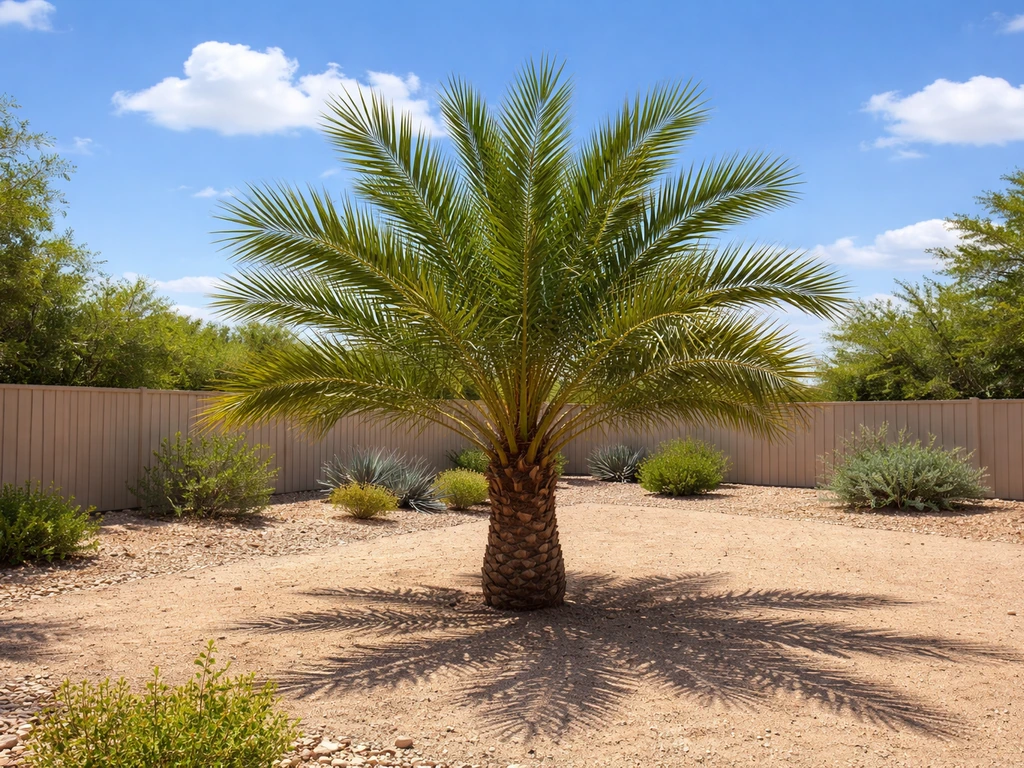
Can You Grow Dates in Texas? How to Grow Date Palms
Can you grow date palms in Texas? Learn which zones work, ideal planting and winter care, plus time to fruit.
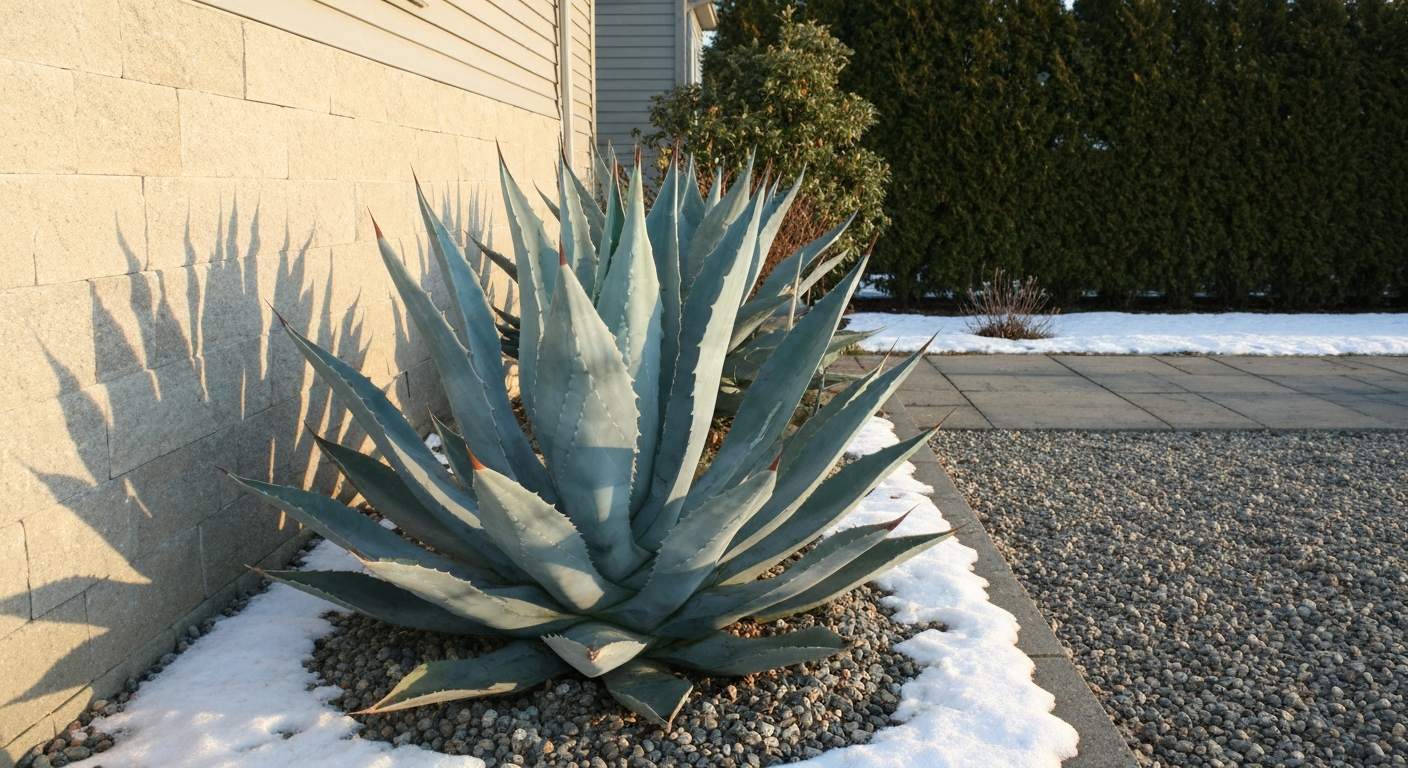
Can You Grow Agave in Canada? Zone Guide & Growing Tips
Can you grow agave in Canada? Practical region-by-region guide, hardy species, container tips & winter care.
Can You Grow Okra in Canada? Ontario Guide & Short‑Season Tips
Can you grow okra in Canada? Regional verdict, Ontario-specific steps, varieties, season-extension & harvest tips.