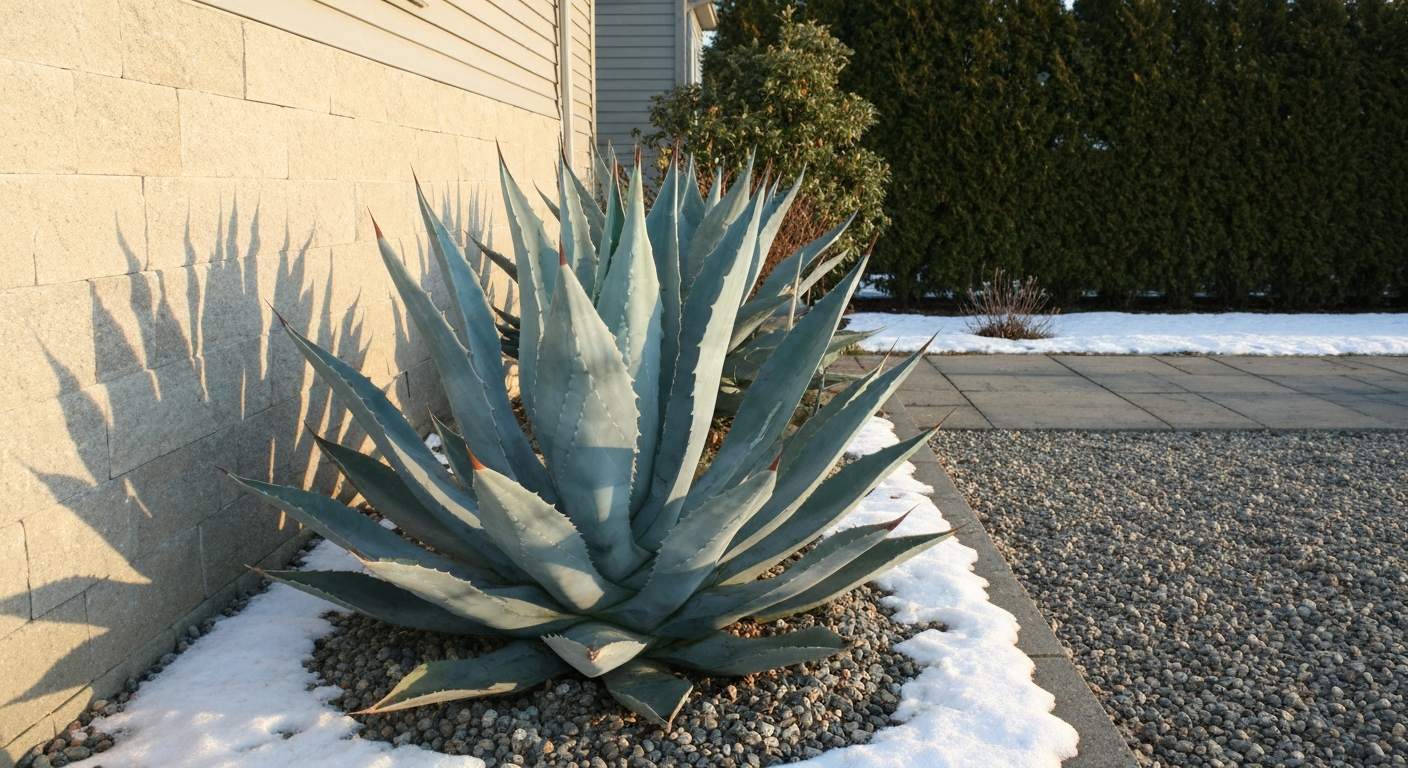
Why Ohio's climate makes date fruiting so difficult
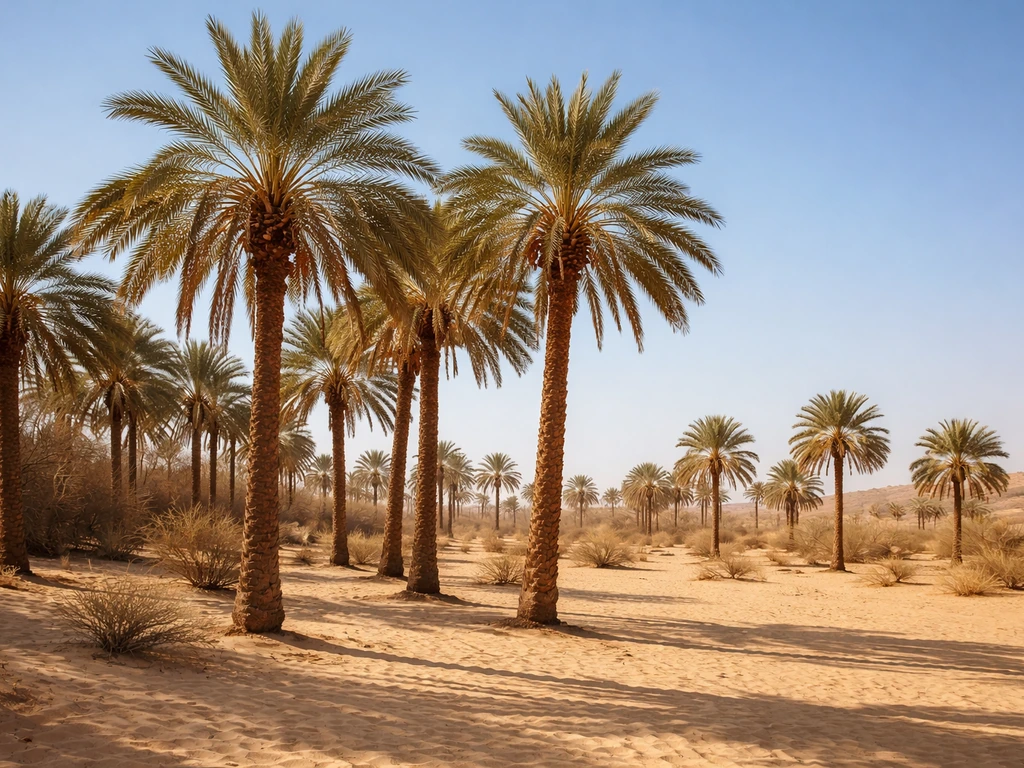
Date palms are desert plants from North Africa and the Middle East, and their fruiting requirements are extreme. For pollination through ripening, the ideal average temperature sits around 21 to 27 °C, but the real challenge is heat accumulation over months. Depending on the cultivar, date palms need between 1,100 and 2,500 hours above 18 °C to ripen fruit from pollination to harvest. That's not just warm days, that's sustained heat across a full growing season of 6 to 7 months. Pollen germination is optimized around 35 °C. Humidity is the other killer: dates require low humidity at the time of flowering and fruit ripening, and Ohio summers are notoriously muggy.
Ohio falls into USDA hardiness zones 5b through 7a, depending on where you are. Northern Ohio cities like Cleveland and Toledo sit in zones 6a to 6b, where winter lows regularly hit -10 °C to -18 °C. Even southern Ohio near Cincinnati, which edges into zone 7a, sees hard freezes every winter. Date palms can survive brief cold snaps down to around -6 °C to -9 °C when mature and dry, but Ohio winters go far beyond that.
The growth point of a date palm is active above 7 °C and most productive up to around 32 °C, so Ohio's frost-free season (roughly 160 to 200 days in southern Ohio, less in the north) gives you a fraction of the heat accumulation dates need. Short season plus high humidity plus cold winters equals no fruit, that's the practical reality.
Container growing vs. planting in the ground
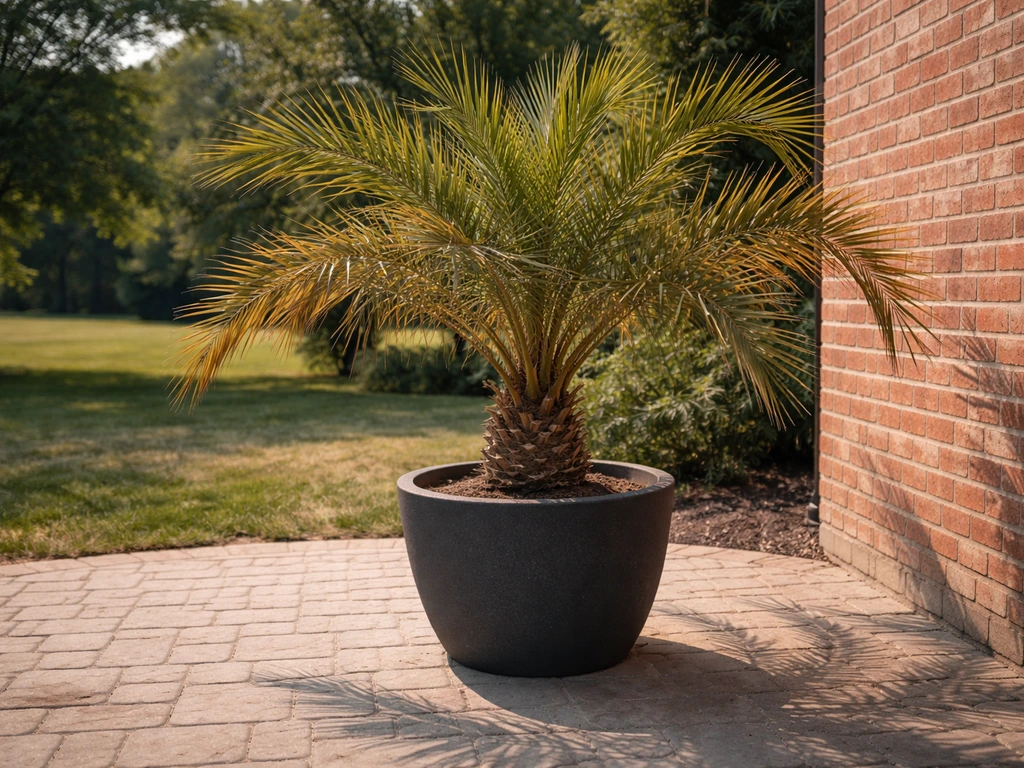
In Ohio, this decision is simple: do not plant a date palm directly in the ground and expect it to survive more than one or two winters, if that. The ground-planting route is essentially a slow way to kill the plant. The only realistic path is container growing, where you treat the date palm as a tropical houseplant that gets a summer vacation outside.
Container growing gives you full control. You move the palm outdoors when nighttime temps are consistently above 10 °C (typically late May in most of Ohio) and bring it back inside before first frost (usually mid-October). The downside is obvious: date palms can grow large, and a mature palm in a 25-gallon or larger container is a serious logistical challenge to move. Most Ohio growers keep their palms in the 7 to 15-gallon range for manageability, which also limits growth and further reduces any chance of fruiting. If you have a heated greenhouse, that changes the equation somewhat, but even then, replicating the desert heat and dryness that dates need is a tall order.
If you're curious how growers in warmer states handle this, the approach is quite different. growing dates in California looks almost nothing like Ohio's container strategy, because California's desert regions deliver the heat accumulation and dry conditions that actually produce a harvest.
Starting your plant: pits from the store vs. buying a nursery start
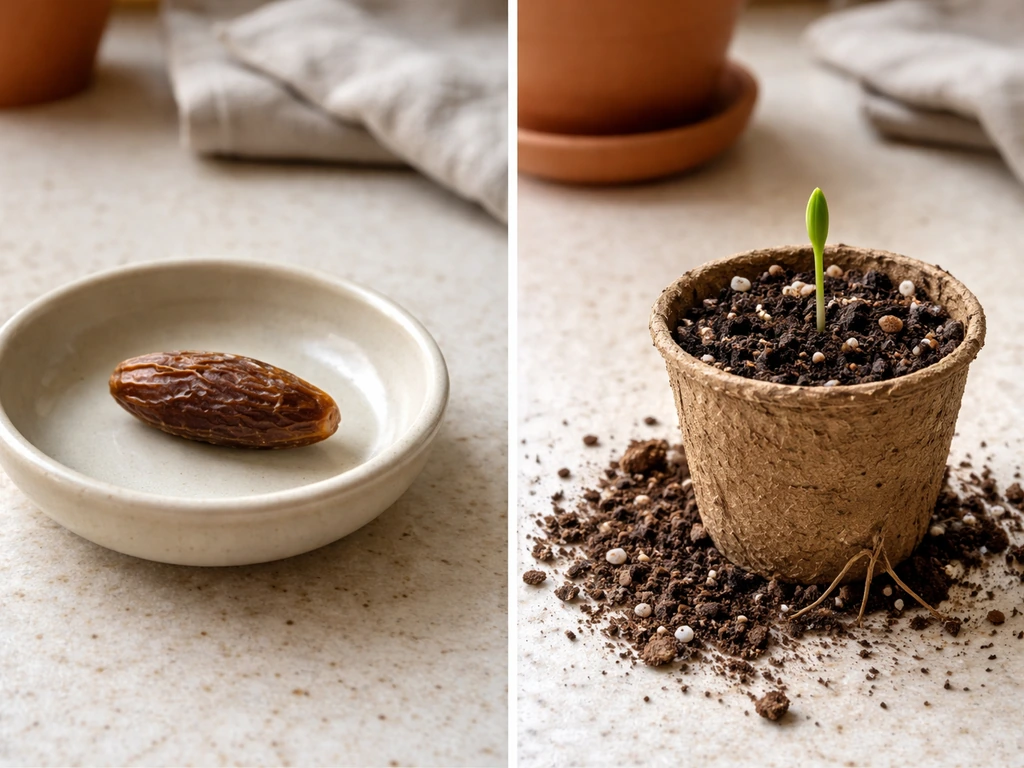
You can absolutely sprout a date pit from a store-bought Medjool or Deglet Noor date. Soak the pit for 24 hours, plant it an inch deep in well-draining mix, keep it warm (above 24 °C is ideal for germination), and you'll likely see a sprout in 3 to 8 weeks. The seedling phase is slow, and the plant won't be significant in size for 2 to 3 years.
There's also a catch with seedlings: date palms are dioecious, meaning you need both a male and a female plant to get fruit, and you won't know the sex of a seedling until it's old enough to flower, which can take 5 to 8 years or more. [Date palms are dioecious](https://journals. ashs. org/downloadpdf/view/journals/hortsci/42/5/article-p1077.
pdf), so you need both a male and a female plant for fruit, and the sex of a seedling is not known until it flowers.
Buying a named cultivar from a nursery is the better move if fruit production is your goal. You can get grafted or tissue-cultured female plants of known varieties like Medjool, Barhee, or Halawy, which at least removes the sex-uncertainty variable. Barhee is worth noting specifically because it's one of the few varieties that can ripen (to a soft, khalal stage) in shorter or more moderate heat conditions, which makes it the most discussed option for marginal climates. Expect to pay $30 to $100 for a small start, or considerably more for a larger specimen. Either way, managing your expectations about fruiting is the most important prep work you'll do.
Year-round care plan for Ohio
Light
Date palms need full sun, and lots of it. Outdoors from late May through early October, put the container in the sunniest spot you have, ideally against a south-facing wall that reflects heat. Indoors during winter, place it directly in front of the largest south-facing window you have. If you don't have a genuinely sunny window, a grow light running 12 to 14 hours a day will keep the plant alive, though it won't thrive the way it would under real desert sun.
Soil and container
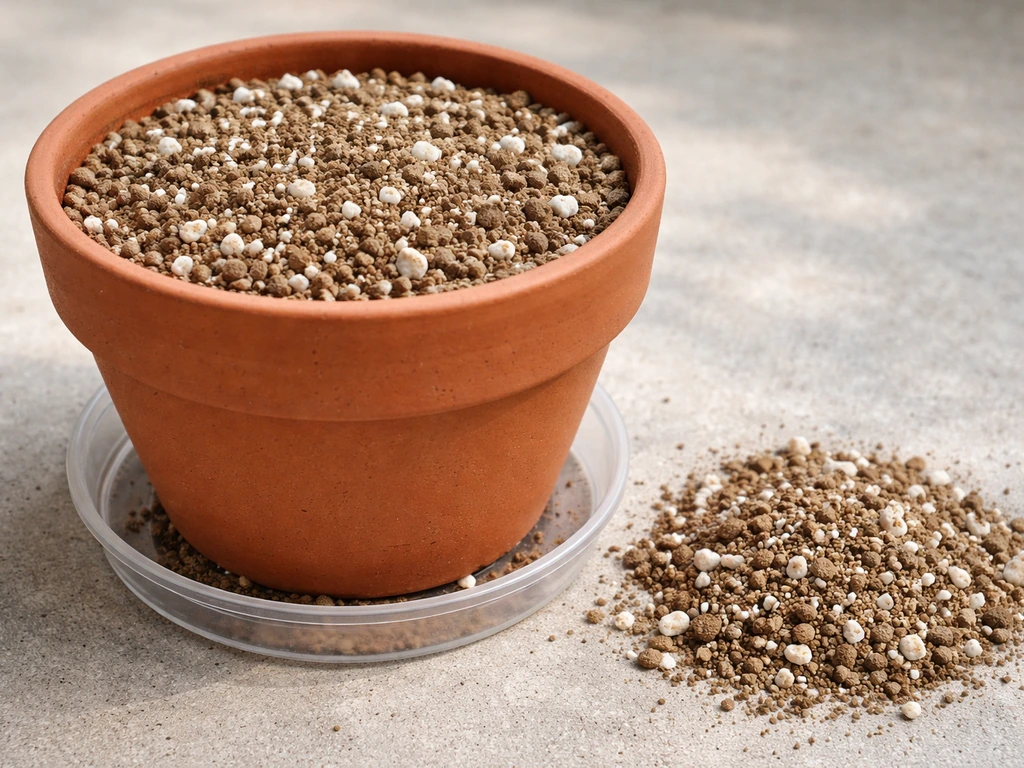
Use a fast-draining mix: cactus and palm potting mix blended with coarse perlite or coarse sand at roughly a 2:1 ratio. Soggy roots are the fastest way to kill a date palm. The container must have large drainage holes. Terra cotta works well because it wicks moisture, but glazed or plastic pots are easier to move. Whatever you use, make sure it's not holding water at the bottom.
Watering
In the active growing season outdoors (June through September), water deeply when the top 2 to 3 inches of soil are dry. During the indoor winter period, dial watering back significantly, maybe once every 2 to 3 weeks, just enough to keep the roots from desiccating completely. Date palms tolerate drought far better than they tolerate overwatering, especially in low-light indoor conditions.
Feeding
Feed monthly during the outdoor growing season with a balanced palm fertilizer or a granular slow-release fertilizer with added magnesium and manganese (palms are prone to deficiencies of both). Stop fertilizing once you bring the plant inside for winter. Feeding an indoor, low-light palm in winter just creates weak, leggy growth that's more susceptible to pests.
Timing for moving outdoors
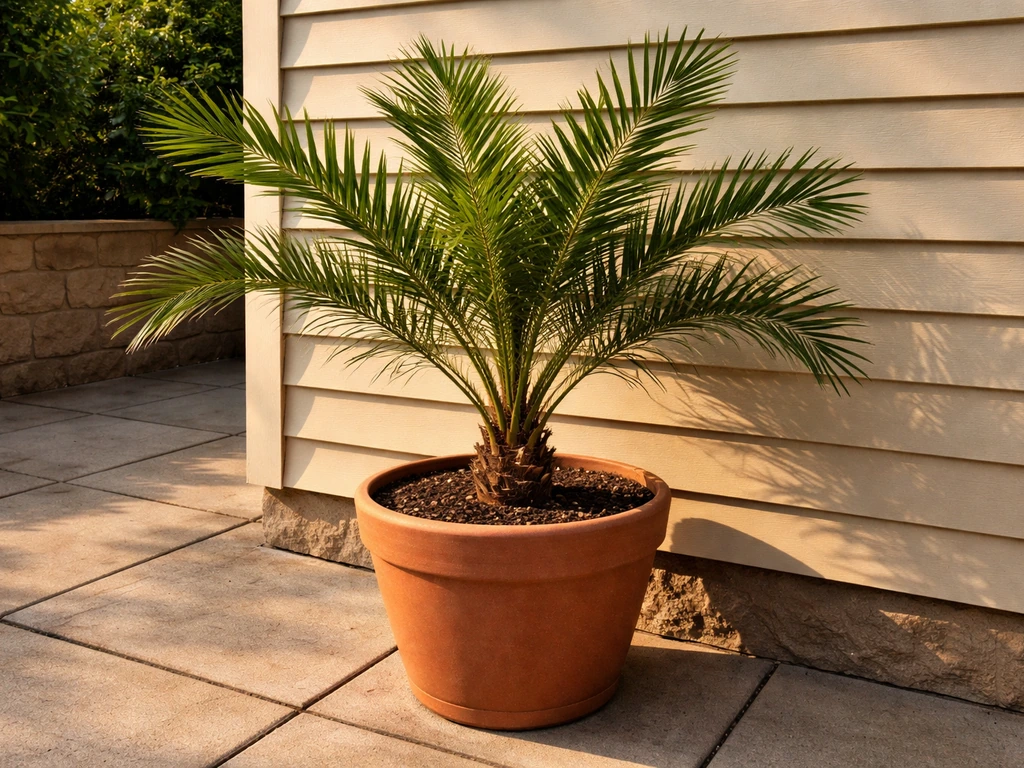
Don't rush the spring move outside. Wait until nighttime lows are reliably above 10 °C, which in most of Ohio means late May. Harden the plant off over a week or two by starting it in part shade before moving it to full sun, otherwise the sudden intensity of outdoor light can cause leaf scorch. Bring it back inside when nighttime temps approach 7 to 10 °C in fall, usually mid to late October in most of Ohio.
Overwintering your date palm in Ohio
This is the most critical part of the whole operation. A date palm that gets hit by a hard Ohio freeze is usually dead or severely set back, losing its growing tip in the worst case, which is fatal. You have two main options: a heated indoor space or a frost-free greenhouse.
For indoor overwintering, the ideal temperature range is 10 to 18 °C, cool but frost-free. A cool basement or garage that doesn't drop below freezing works reasonably well if you can supplement with a grow light. Full dormancy at these temperatures is actually beneficial, reducing the plant's light and water demands. Avoid keeping it in a warm, bright living room all winter because that encourages soft new growth that will be stressed when moved back outdoors in spring.
For greenhouse overwintering, a minimum of 4 to 7 °C is sufficient to keep the palm alive, but 10 °C or warmer gives you a healthier plant come spring. The greenhouse also lets you maximize light exposure during the short Ohio winter days, which matters more than temperature for long-term plant vigor. Watch carefully for spider mites and scale insects, which thrive in the warm, dry conditions of a heated greenhouse or indoor space and can devastate a date palm over a winter. Inspect fronds every 2 to 3 weeks and treat early with insecticidal soap or neem oil.
Ohio's overwintering challenge is actually quite similar to what growers face in neighboring states. If you're curious about how the situation compares just across the border, the approach to growing date palms in Michigan follows a nearly identical container-and-overwinter strategy for the same reasons.
Will you actually get fruit? Honest expectations
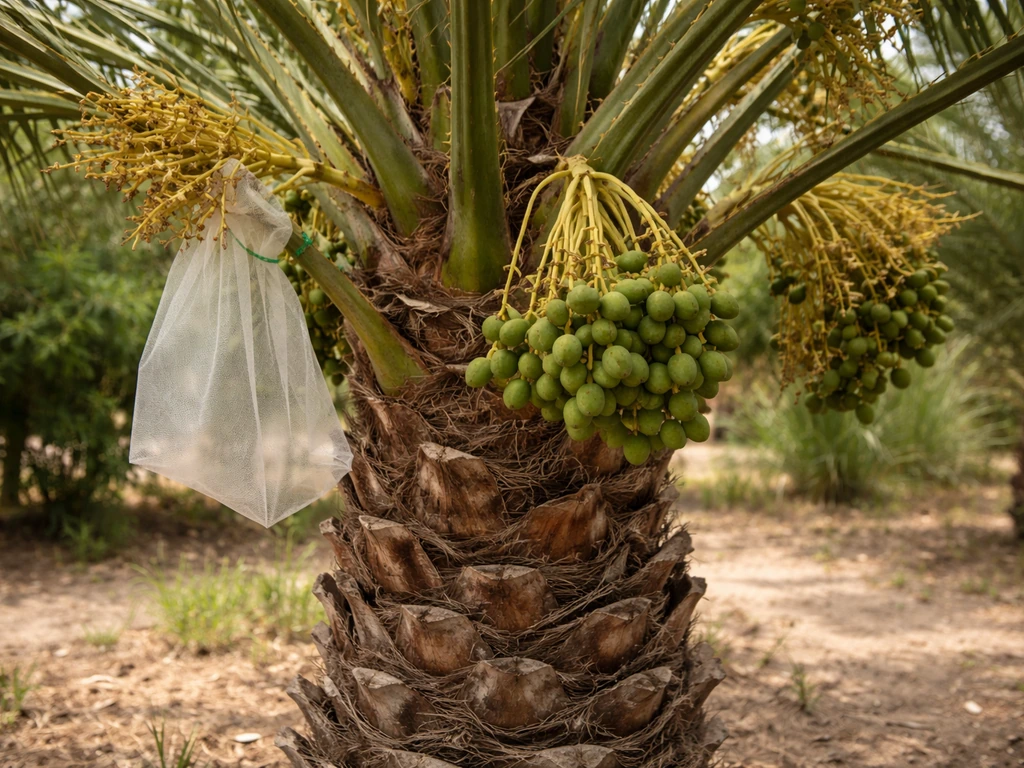
Here's where I'll be straight with you: the odds of ripening edible dates in Ohio are very low. Even with the best container setup, a south-facing wall, and a Barhee cultivar (the most forgiving option), Ohio simply doesn't accumulate the heat hours needed for most cultivars to reach the tamer (fully ripe) stage. You might, in a very hot Ohio summer, push a Barhee palm to the khalal stage, which is the crisp, yellow or red stage before full ripening. Some people enjoy khalal-stage Barhee dates, and they are edible. But Medjool, Deglet Noor, and most other popular varieties won't even get close.
For fruiting to be even a remote possibility, you need both a male and a female plant, you need to hand-pollinate (outdoor conditions in Ohio won't facilitate natural pollination reliably), and you need a stretch of 5 to 6 consecutive months with average daytime highs consistently above 32 °C and low humidity. Ohio averages June through August daytime highs of around 27 to 31 °C with significant humidity, which falls short on both counts. If you hit a particularly hot, dry summer, you might get close on some days, but the consistency and the total heat accumulation just aren't there across the season.
Troubleshooting tip: if your palm sets flowers but fruit doesn't develop or drops early, the culprit is almost certainly insufficient heat rather than a care problem. There's not a watering or fertilizing fix for a cool, humid climate. The climate is the constraint, not your technique. University of Nevada, Reno Extension notes that date palms require high temperatures and low humidity to set fruit and ripen to maturity.
How Ohio compares to states where dates actually fruit
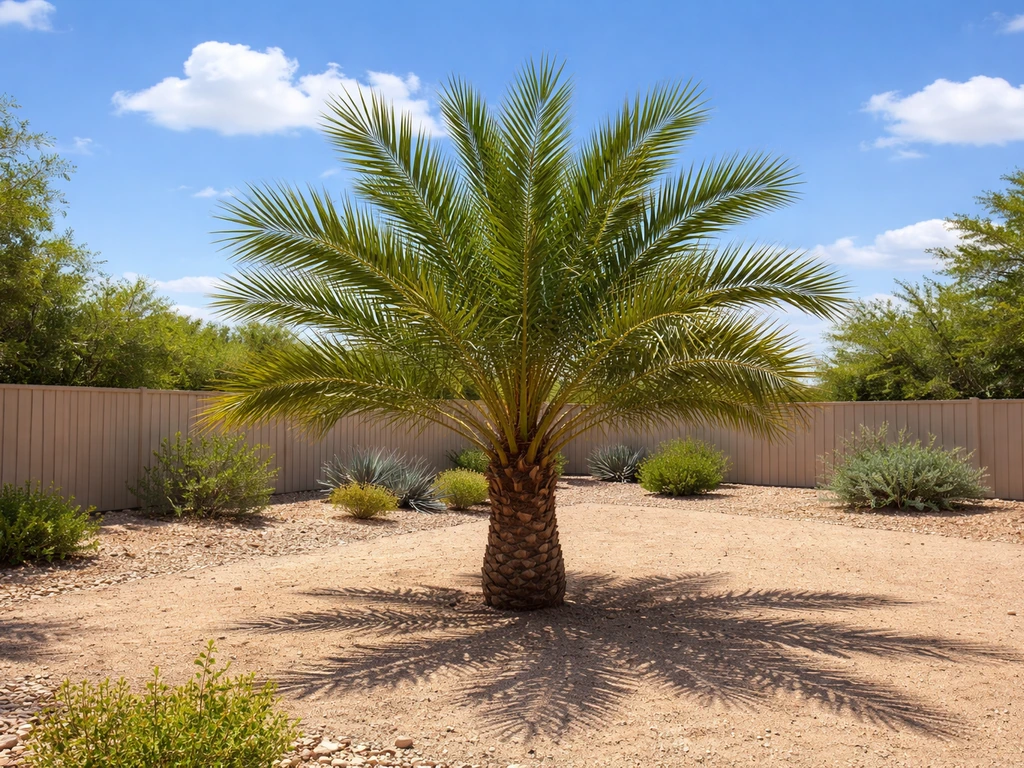
It helps to put Ohio in context against regions where date palms are genuinely productive. Understanding where date palms can realistically be grown for fruit shows just how narrow the ideal range is in the US. The Coachella Valley in California and the low desert of Arizona and Texas are the main commercial zones, and even in Texas, fruit production is limited to the far western desert regions.
| State/Region | Hardiness Zone | Summer Heat | Humidity | Fruit Feasibility |
|---|
| Ohio (north) | 5b–6b | Moderate (27–29 °C avg high) | High | Not feasible |
| Ohio (south) | 6b–7a | Moderate–warm (29–31 °C avg high) | High | Extremely unlikely |
| Texas (west) | 7b–9a | Very hot (38–42 °C avg high) | Low–moderate | Possible with right cultivar |
| California (desert) | 9b–11 | Extreme (42–48 °C avg high) | Very low | Commercial production |
| Michigan | 5a–6b | Moderate | Moderate–high | Not feasible |
The contrast is stark. Date growing in Texas is a fundamentally different proposition than Ohio, because parts of west Texas deliver the desert heat and dry air that dates actually need to ripen.
Practical next steps: plant, experiment, or skip it
Here's a simple decision framework for Ohio growers:
- If you want to grow a date palm as a novelty houseplant or patio plant with no expectation of fruit: go for it. Start a pit from a store-bought date or buy a small nursery start, use a well-draining container, and enjoy it as a tropical accent. The care commitment is moderate and the plant is genuinely attractive.
- If you want the best (slim) shot at fruit: buy a Barhee female cultivar from a reputable palm nursery, keep it in the largest container you can manage, place it against a south-facing wall during summer, hand-pollinate if you also have a male plant, and accept that a khalal-stage fruit in a hot August is the realistic ceiling.
- If you want reliably edible homegrown dates: move to the desert Southwest or grow something else. Ohio isn't the place, and no amount of technique overcomes the climate gap.
- If you're in southern Ohio and have a heated greenhouse: you can push the season longer and accumulate more heat hours, which slightly improves the odds for early-ripening cultivars like Barhee. It's still a stretch, but it's the most realistic path in Ohio.
- If your real goal is just growing a fun tropical plant that connects you to date palms: sprouting a pit is a satisfying, low-cost experiment. Just know upfront that the palm you grow from a Medjool pit is a seedling of unknown sex and won't fruit for many years even in ideal conditions.
The bottom line for Ohio is this: date palms can survive here with the right indoor care, but they live a compromised life compared to what they'd do in the desert. If fruit is your goal, your energy is better spent on crops that actually love the Ohio climate. If you just want the experience of growing a palm, or you're curious about pushing the limits of what's possible in your zone, a container date palm is a worthwhile project. Go in with clear eyes, plan your overwintering setup before you buy the plant, and you won't be disappointed.