
Yes, you can grow edamame in Minnesota, but you need to pick the right variety and get your timing tight. The key constraint is heat: edamame needs a frost-free window of at least 75 to 90 days with consistently warm temperatures to fill pods properly. In Canada, the same rule applies: you need enough frost-free time and consistently warm temperatures for 75 to 90 days for pods to fill properly edamame needs a frost-free window. Most of southern Minnesota and the Twin Cities metro can pull that off with a short-season variety. Northern Minnesota is harder, and some years even southern growers get caught by an early frost. Pick a cultivar rated 75 to 80 days to maturity, get seeds in the ground by late May, and you have a genuine shot at a decent harvest.
Can You Grow Edamame in Minnesota Yes With Conditions
What Minnesota's climate actually means for edamame
Edamame is essentially a vegetable soybean, and soybeans are a warm-season crop that needs heat to develop. If your goal is to grow soybeans in a similar climate, the key is matching the crop to your frost-free window and soil warmth, then planting at the right time. The state divides pretty cleanly into three growing zones when it comes to feasibility. Southern Minnesota and the Twin Cities area typically see their last spring frost in early to mid-May and their first fall frost in late September to mid-October, giving you roughly 140 to 165 frost-free days. For Twin Cities planting-risk planning, the Minnesota DNR provides median spring and fall frost and critical low-temperature thresholds you can use to judge the latest planting window against fall freezes first fall frost in late September to mid-October. That's enough room for a 75- to 80-day edamame variety with margin to spare. Central Minnesota tightens up to around 120 to 140 days, and you're cutting it close with anything over 80 days. Northern Minnesota often sees last frost as late as late May or early June and first fall frost in early September, leaving you 90 to 110 days at best. In the north, edamame is a gamble even with the shortest-season varieties.
Beyond frost dates, edamame needs heat accumulation measured in growing degree days (GDD), calculated above a base temperature of 50°F. Soybeans require roughly 200 GDD just to emerge after planting. If you plant into cold soil, seeds sit there and rot or germinate painfully slowly. The practical minimum soil temperature is 50°F, but 60°F is when germination really gets reliable and consistent. In Minnesota, that soil warmth usually arrives in the second or third week of May in the south, and not until late May or early June further north.
Picking a variety that will actually finish in Minnesota
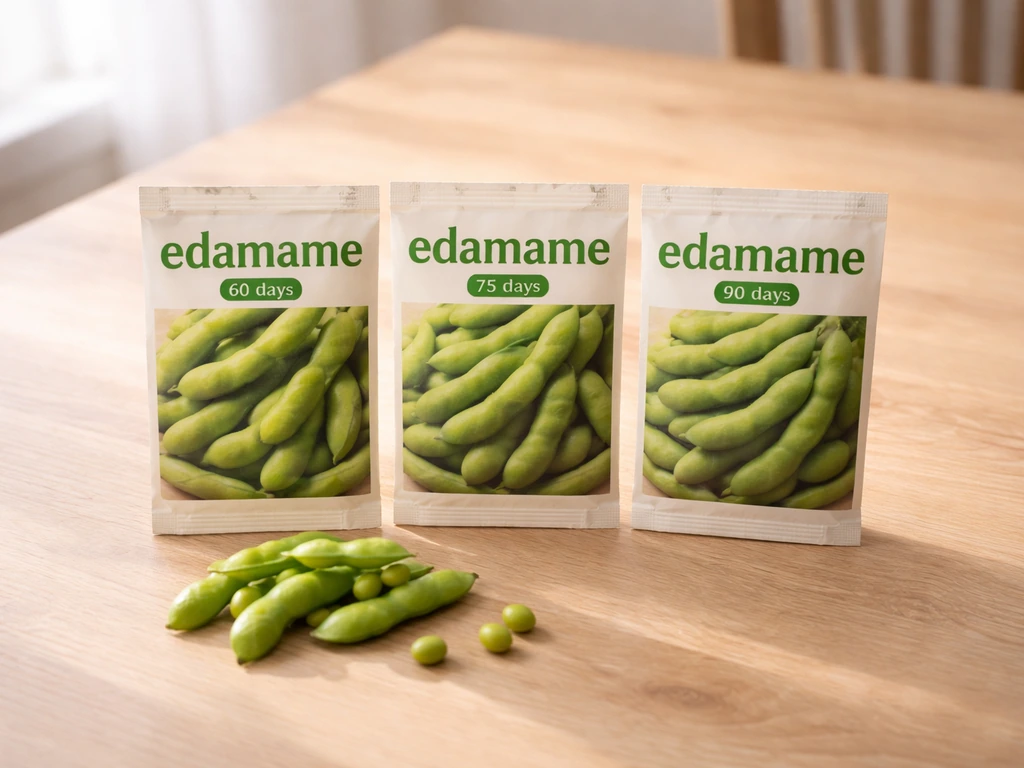
Variety selection is where most Minnesota gardeners go wrong. They grab whatever edamame seed looks interesting at the hardware store without checking the days-to-maturity number, and then wonder why their pods are barely formed when frost hits. For Minnesota, you want varieties in the 75- to 82-day range as your primary bet. Anything pushing 90 to 100 days is better suited to longer-season states like Pennsylvania or Wisconsin's warmer southern counties. In Pennsylvania, you typically have a longer growing season than Minnesota, so more 85- to 90-day edamame options can work well depending on your specific frost dates 90 to 100 days.
| Variety | Days to Maturity | Best For |
|---|---|---|
| Early Hukucho | 75 days | All of MN, safest choice |
| Beer Friend | 75 days | Southern and central MN |
| Midori Giant | ~75 days | Southern MN, good pod size |
| Tohya | ~78 days | Southern and central MN |
| Lucky Lion / Envy / Green Legend | 80 days | Southern MN with good conditions |
| Chiba Green | ~82 days | Southern MN only, push it |
| White Lion | 90 days | Not recommended for MN |
| Butterbean | 70–80 days | Good across MN, compact plant |
Early Hukucho and Butterbean are the two I'd recommend for anyone north of the Twin Cities. Midori Giant and Tohya are excellent for southern Minnesota gardeners who want slightly larger pods and a bit more flavor depth. Avoid the 90- to 100-day types entirely unless you're in the warmest corner of the state and have a south-facing microclimate with good heat retention.
When and how to plant
Timing by region
The single most useful planting rule for Minnesota is this: don't plant by the calendar, plant by soil temperature. UMN Extension research on soybean planting dates shows that the yield penalty for waiting until conditions are actually right is small, around 3% for May 15 planting versus May 10, but planting into cold wet soil can cost you entire rows to rot or poor stands. Wait until your soil is at least 50°F at a 2-inch depth, and ideally closer to 60°F. For the Twin Cities and southern Minnesota, that's typically mid-May. For central Minnesota, aim for May 20 to May 25. For northern Minnesota, late May to the first week of June is realistic.
Starting indoors vs. direct sowing
Edamame generally does not love transplanting, because the taproot is easily disturbed. Direct sowing is the standard approach and works well across southern and central Minnesota. In northern Minnesota, you can try starting seeds indoors in peat or coir pots about 3 to 4 weeks before your anticipated transplant date to steal a bit of the season, but keep transplanting disturbance minimal. If you go the indoor route, harden off seedlings carefully over 7 to 10 days before moving them out, and transplant only after soil temps are solidly above 55°F.
Spacing and depth
Sow seeds about 1 to 1.5 inches deep. Standard spacing is 3 to 4 inches between seeds within a row, with rows 18 to 24 inches apart. Tighter row spacing, down to about 10 inches between rows, can improve overall yield, which matters when you have a short season and need maximum production from a small window. For a home garden, planting in a block rather than a single long row also improves pod set through better cross-pollination.
Soil, water, fertilizer, and inoculation
Soil prep
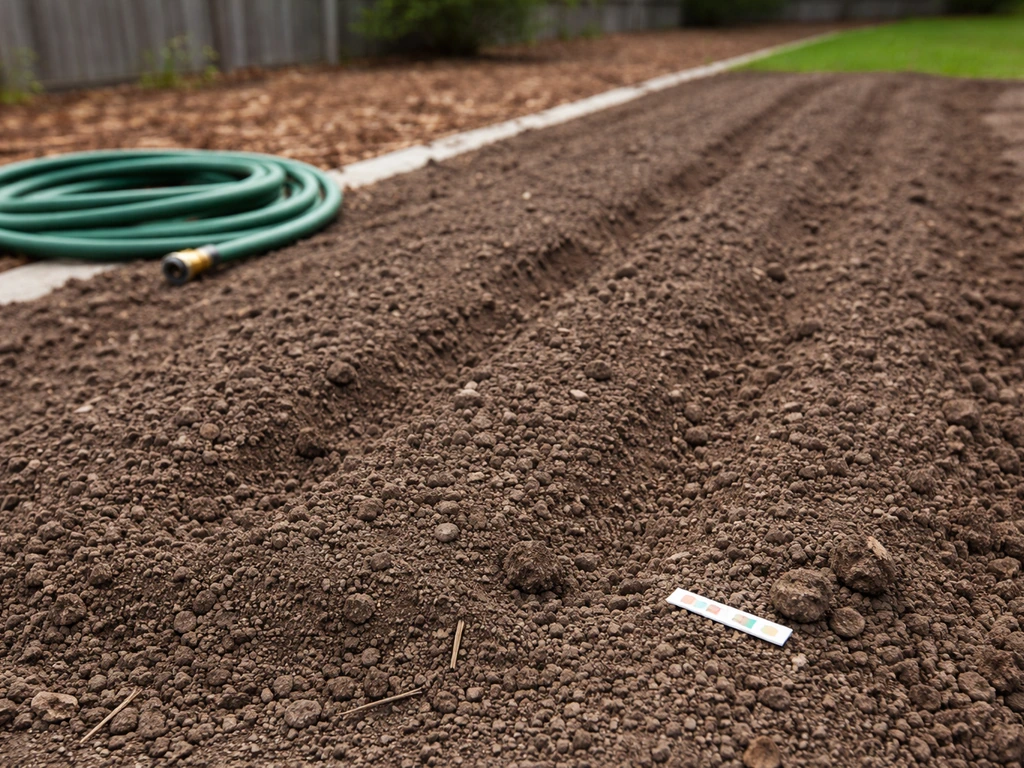
Edamame wants well-drained, slightly acidic to neutral soil, ideally pH 6.0 to 6.8. Poor drainage is a significant problem in Minnesota, especially during cool wet springs, because saturated soils nearly eliminate germination and invite disease. Raised beds or mounded rows can help a lot in heavier clay soils. Work in compost to improve both drainage and moisture retention, but don't go heavy on nitrogen fertilizer since edamame fixes its own nitrogen when properly inoculated.
Inoculation
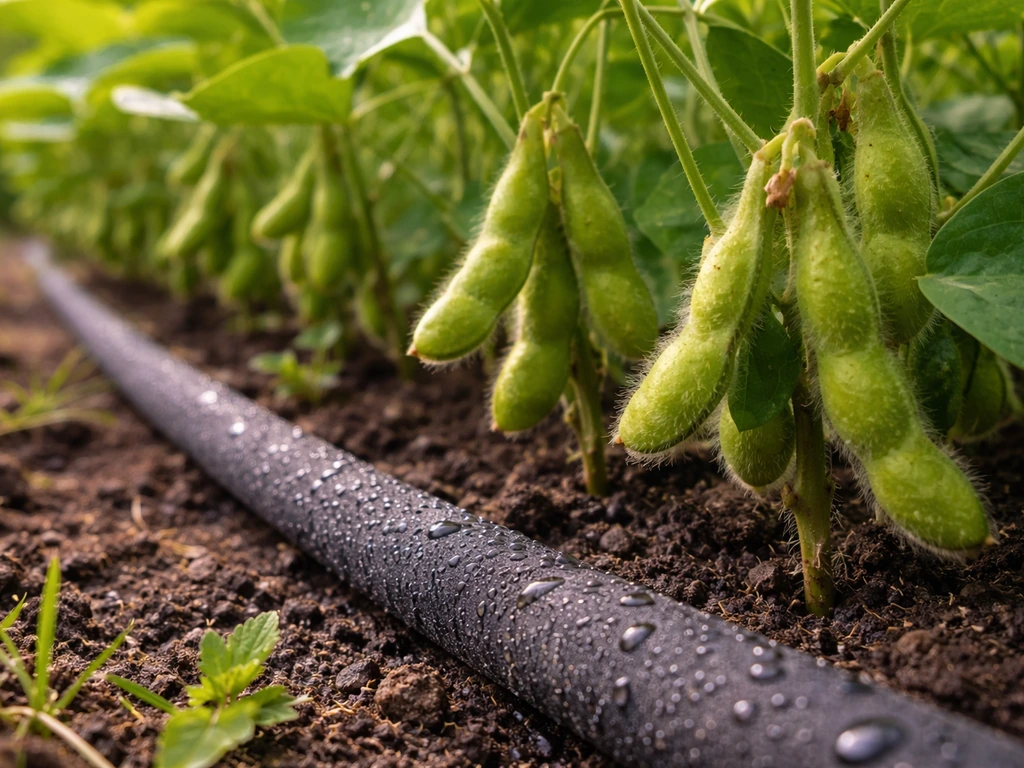
This step is worth doing and most home gardeners skip it. Edamame, like all soybeans, fixes atmospheric nitrogen through a symbiotic relationship with Bradyrhizobium japonicum bacteria in root nodules. If your garden soil hasn't grown soybeans before, those bacteria may not be present in meaningful numbers. Coat your seeds with an appropriate soybean inoculant (available at most seed suppliers and farm stores) right before planting. It's inexpensive, takes two minutes, and can meaningfully improve plant health and pod fill. If you've grown soybeans in the same bed recently, you can skip it, but it doesn't hurt to use it anyway.
Watering and fertilizing
Edamame is most sensitive to water stress during pod set and seed fill, roughly 6 to 8 weeks after emergence. In Minnesota, this often coincides with late July to August, which can be dry. Aim for about 1 inch of water per week during this period, either from rain or irrigation. Inconsistent moisture during pod fill is one of the main reasons pods come out undersized or fail to fill completely. On the fertilizer side, if you've inoculated properly, you don't need to add much nitrogen at all. A moderate phosphorus and potassium application at planting based on a soil test is plenty.
Pests, diseases, and the failure points Minnesota growers actually face
Germination failure in cool, wet springs
The most common failure I hear about from Minnesota edamame growers isn't pests or disease, it's bad stands from planting too early into cold, saturated soil. Seeds rot before they emerge. The fix is patience: wait for soil temps and avoid planting after heavy rain when the soil is waterlogged. A light soil crust after rain can also trap seedlings before they break through, so a quick shallow scratch with a rake after watering or rain can help if you see crust forming.
Soybean aphids
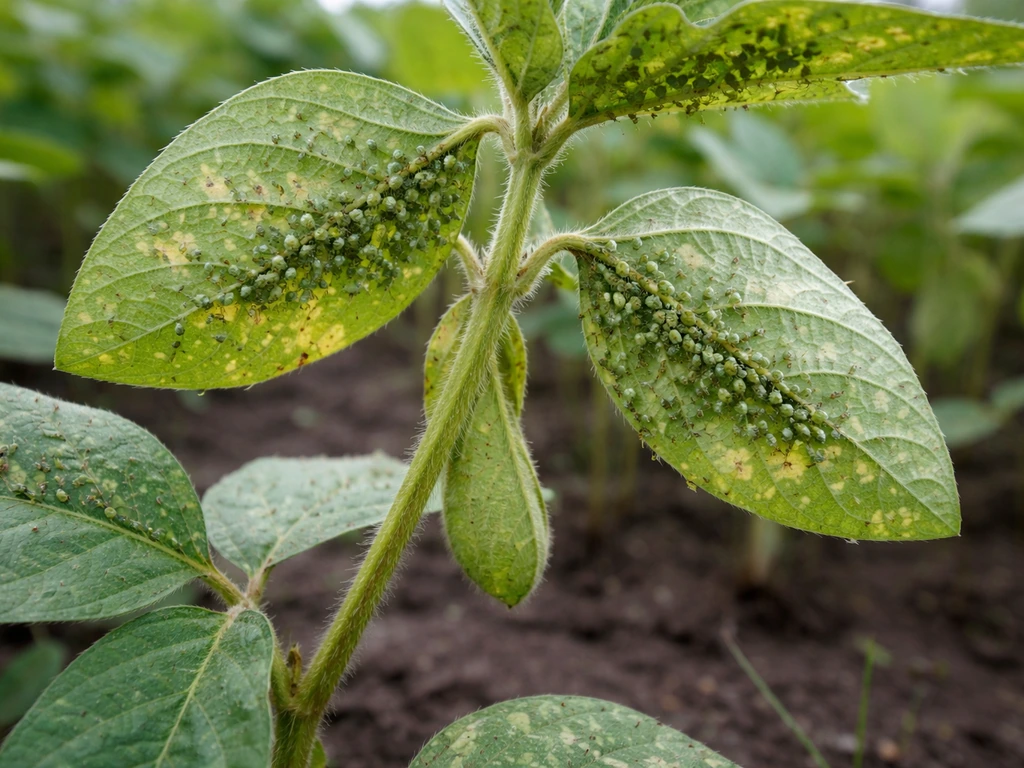
Soybean aphids are a major Minnesota pest and edamame isn't immune. Aphid populations can build fast in July and August, and a heavy infestation during pod fill will reduce your yield and pod quality. Scout regularly by flipping leaves and looking for small pale-yellow insects clustered on stems and undersides of leaves. Insecticidal soap or neem oil works for home-garden scale infestations. UMN Extension notes that neonicotinoid seed treatments aren't a reliable preventive measure since aphids usually colonize after early-season insecticide concentrations drop, so reactive scouting is your best tool.
Twospotted spider mites
Hot, dry conditions in mid-summer can trigger spider mite outbreaks, particularly in July and August. Mites overwinter as eggs on plant debris, so good garden sanitation at season's end helps reduce next year's pressure. Look for fine stippling on leaves and tiny webs. Miticides or strong water sprays can knock them back, but prevention through consistent watering and avoiding plant stress is easier.
Fungal diseases: SDS and white mold
Sudden death syndrome (SDS) is favored by early planting into cool, wet soil combined with soybean cyst nematode pressure. For home gardens, avoiding planting too early and choosing varieties with some SDS resistance is the practical response. White mold (Sclerotinia stem rot) is especially common in southeast Minnesota and thrives in dense, humid canopies. Wider spacing and good airflow reduce risk. SCN is widespread across Minnesota and can compound both SDS and brown stem rot, so rotating away from soybeans or edamame every 2 to 3 years is a smart habit.
Pods not filling due to insufficient heat
This is the sneaky failure mode. The plant looks fine, pods form, but seeds inside never plump up properly because the season runs out of heat before the crop hits the R5 to R6 seed-fill stages. If you chose a longer-season variety or planted late, you can end up with underfilled pods that aren't worth harvesting. The prevention is straightforward: pick a 75- to 80-day variety, get seeds in the ground at the right time, and don't plant anything over 82 days in Minnesota unless you're in the warmest part of the state.
Harvesting, cooking, and what to expect for yield
When to pick
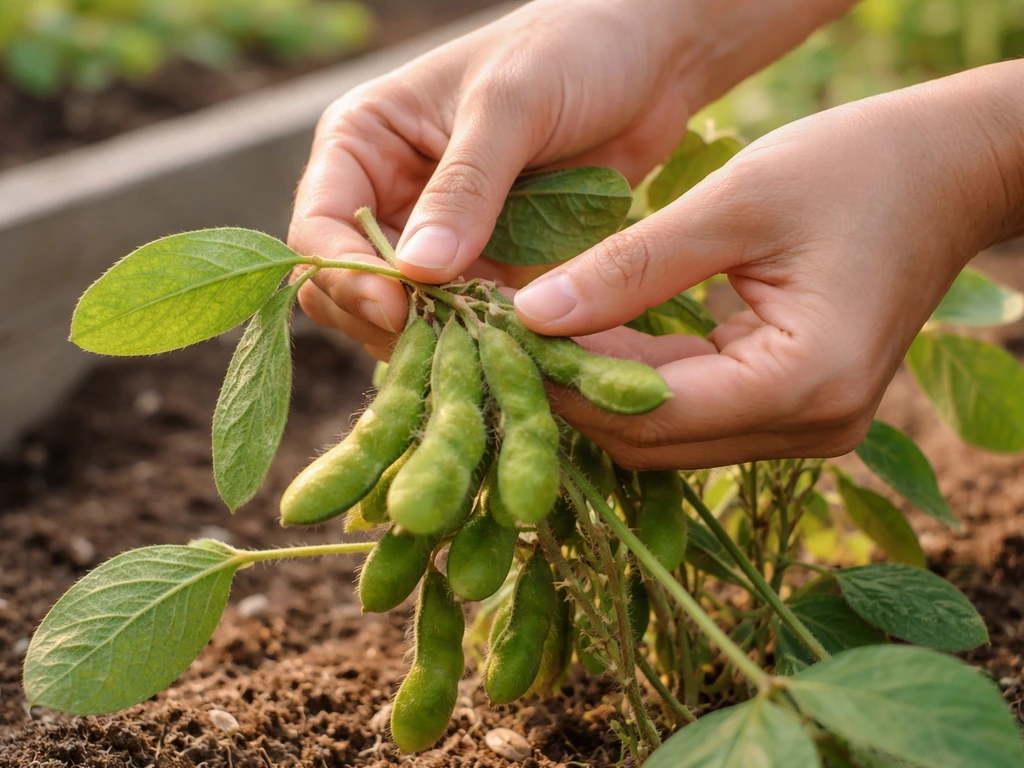
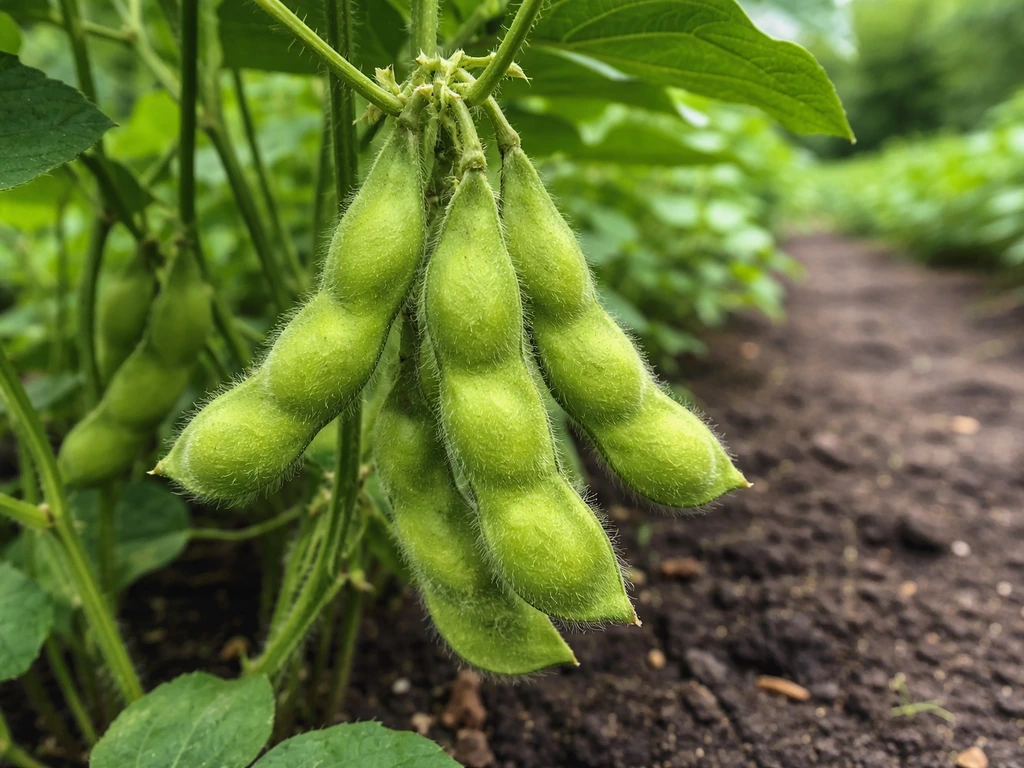
The harvest window for edamame is short, roughly 5 to 7 days at peak quality. You're aiming for about 25 to 30 days after pod set, when seeds fill 85 to 90 percent of the pod cavity and pods are still bright green. Squeeze a pod: the beans should feel plump and firm but the pod should still have some give. If the pods start yellowing or the seeds rattle loose inside, you've waited too long and they'll taste starchy rather than sweet and nutty. Generally, for a 75- to 80-day variety planted in mid-May, you're harvesting in mid to late August in southern Minnesota, which gives you a comfortable buffer before frost.
Harvesting and handling
Pull or cut the entire plant and strip pods, or harvest pods individually. Edamame quality degrades fast after harvest, so cook or freeze within a day or two for best flavor. To freeze, blanch pods in boiling salted water for 4 to 5 minutes, then cool in ice water and freeze in a single layer before bagging. Blanching stops enzyme activity that degrades flavor and texture.
Realistic yield expectations
Home garden yields vary quite a bit with conditions, but a realistic expectation for a well-managed 10-foot row of edamame in Minnesota is somewhere between 1 and 2 pounds of pods, enough for a couple of generous snacking servings or one good side dish. Edamame plants tend to produce fewer pods per plant compared to snap beans, so plan for more row space than you might expect. If you want a meaningful freezer supply, plan at least 20 to 30 row-feet.
What to grow instead if edamame won't work for you
If you're in northern Minnesota, deal with heavy clay soils prone to waterlogging, or had a run of cool summers, edamame may not be worth the frustration. You can sometimes grow black beans in Canada in warm, frost-free pockets, but they usually need a long, heat-rich season and careful variety choice edamame may not be worth the frustration.. There are reliable alternatives that scratch the same itch.
- Snap beans or bush beans: These mature faster, often in 50 to 60 days, tolerate Minnesota's short seasons easily, and produce reliably. They're not edamame, but they're a satisfying fresh legume crop with much lower risk.
- Dry beans or shelling beans: Varieties like Black Turtle or Great Northern are more forgiving of short seasons than edamame and can be dried for winter storage. They're also a solid option if you're interested in the soybean-adjacent experience of growing legumes for protein.
- Shelling peas: Even faster than beans at 60 to 70 days and highly cold-tolerant. Plant them in April in southern Minnesota and you get a satisfying pod crop well before summer heat is a concern.
- Fava beans: Another cold-tolerant legume that can be planted early and harvested before summer heat stress. They have a creamy, rich flavor when eaten fresh as a shelling bean.
- Mung beans: Worth trying in southern Minnesota if you want a soy-adjacent legume. They mature in 60 to 75 days and handle Minnesota summers reasonably well in warmer years.
It's also worth noting that growing edamame in neighboring states follows similar logic with slightly different margins. Wisconsin's southern counties have a somewhat longer warm season than central Minnesota, and states like Pennsylvania offer even more heat-unit flexibility. If you're curious how the feasibility compares across the region, that context can be useful when deciding whether to order seeds or adjust your growing plan based on where you actually live.
FAQ
Can you grow edamame in Minnesota without irrigation if summers are dry?
You can, but you need to watch pod set and seed-fill closely (about 6 to 8 weeks after emergence). If rainfall is inconsistent during that window, aim to supplement with roughly 1 inch per week to keep pods from staying small or underfilled.
What happens if I plant edamame a few days earlier than recommended?
The biggest risk is not slow growth, it is poor stands from cold, wet soil. If the ground is below about 50°F at 2 inches depth or it is waterlogged after rain, seeds can rot. It is usually better to wait until soil temperature is right than to chase a calendar date.
Should I soak edamame seeds or use a starter treatment before planting?
Soaking is optional, but seed inoculation is not. Use an appropriate soybean inoculant and apply it right before planting, because the bacteria that support nitrogen fixation may be absent if you have not grown soybeans in that soil.
Can I grow edamame successfully in containers in Minnesota?
Yes for a small trial, but use a large container with excellent drainage (at least 12 to 18 inches deep) and keep soil from cooling down. Containers warm faster in spring, but they dry out faster during pod fill, so consistent moisture becomes even more important.
Do I need to inoculate if I bought “treated” or pre-inoculated soybean seed?
Check the bag label. Some seed is pre-inoculated, but many home-garden seed packets are not reliably inoculated for home conditions. If you are unsure, add inoculant right before planting, because it takes only minutes and you can avoid a common yield limiter.
Is it worth starting edamame indoors in northern Minnesota?
It can help you steal time, but the tradeoff is transplant shock because the taproot is easily disturbed. If you start indoors, keep disturbance minimal (pots that can be planted with the root zone) and transplant only when soil temperatures are securely above about 55°F.
How late can you plant edamame in Minnesota and still get filled pods?
As a rule of thumb, avoid long-season varieties and avoid late planting that pushes pod fill into cooler fall weather. Practically, once your soil is warm, earlier short-season plantings usually provide more reliable pod fill than trying to “catch up” later in the season.
Why are my pods present but the beans do not fill out?
This usually means the crop ran out of heat before it reached seed-fill stages. The fix is choosing a 75 to 80 day variety and planting when soil temperature is right, because planting too cold or selecting a longer-season type often leads to underfilled, less worth-harvesting pods.
What is the best way to prevent aphids from ruining pod quality?
Start scouting early in July, flip leaves, and check stems and undersides for clusters of pale-yellow aphids. If you catch infestations when they are small, insecticidal soap or neem oil is more effective than treating after pod fill damage is underway.
Are there any Minnesota-friendly companion plants or spacing tips that reduce disease?
Edamame benefits from airflow. Wider spacing within the row and between rows lowers humidity inside the canopy, which helps reduce risk from white mold and other humidity-loving issues that show up in dense growth.
How should I harvest edamame in Minnesota to keep it sweet?
Harvest when pods are still bright green and the beans feel plump and firm but the pod still has some give. If pods yellow and seeds start to rattle loose, quality declines quickly and the taste shifts toward starchiness, even if you harvest soon after.
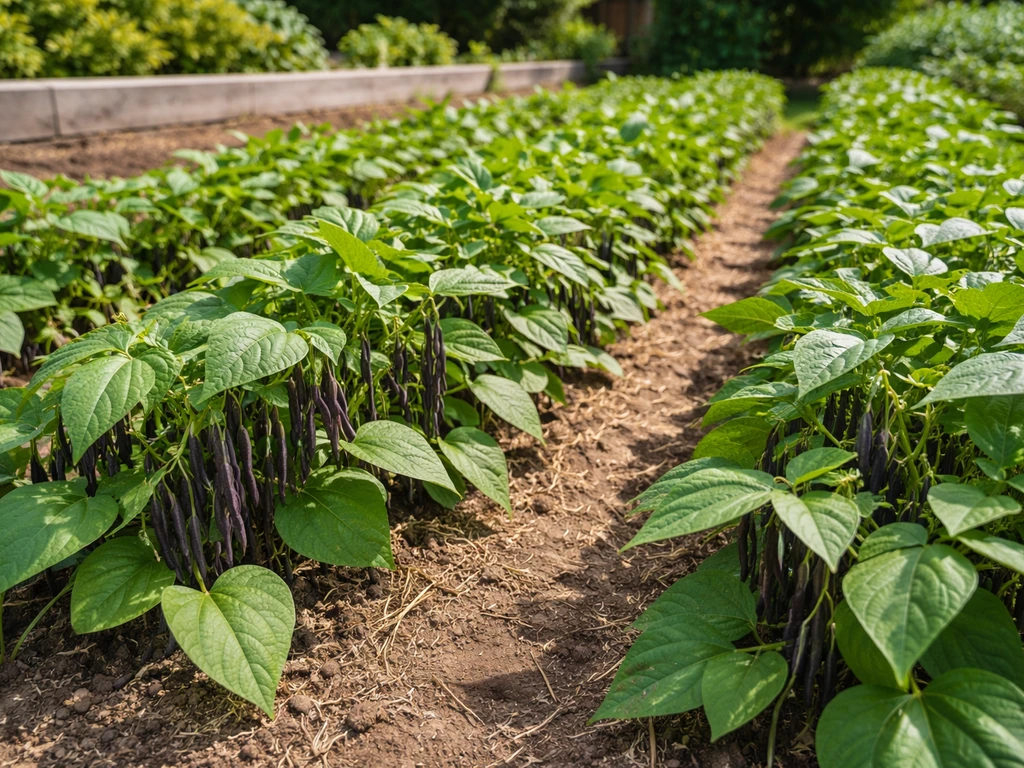
Yes. Learn when and how to grow black beans in Canada, with timelines, planting tips, and pest and harvest guidance.
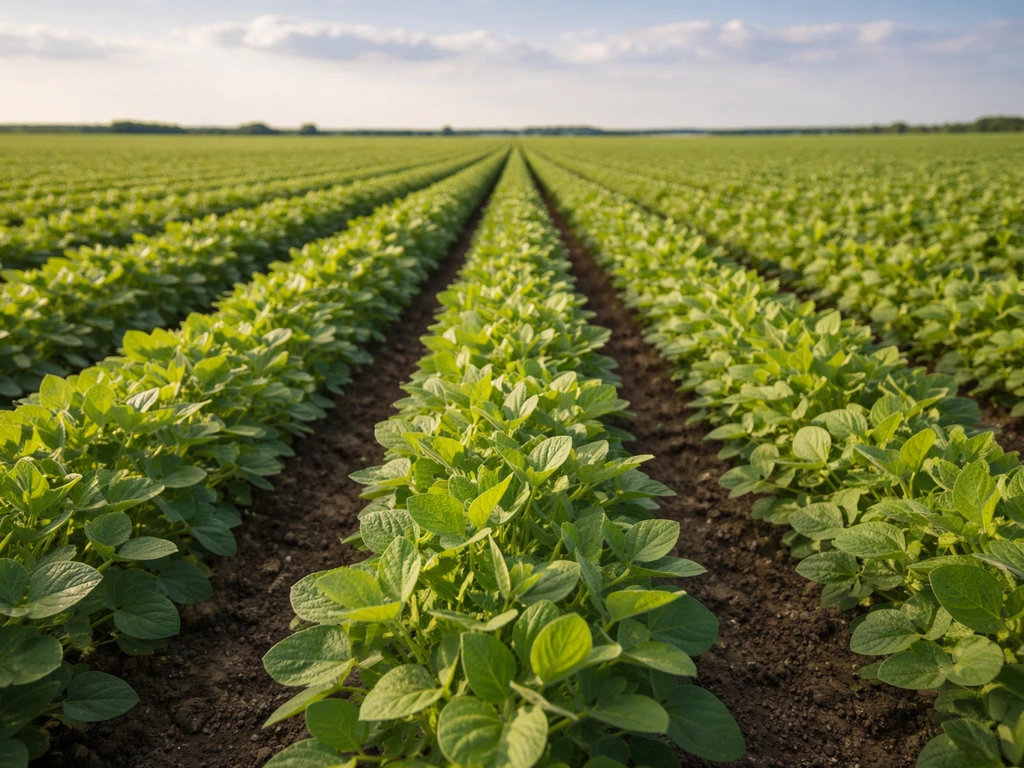
Yes in many US regions: soybean growing guide for grain or edamame, with climate checks, planting, inoculation, harvest.
Can you grow agave in Canada? Practical region-by-region guide, hardy species, container tips & winter care.