
Yes, you can grow kumquats in Canada, but where you live determines how you grow them. On the BC coast and in the warmest corners of southern Ontario, sheltered in-ground planting is genuinely possible. Everywhere else, including BC's interior, Quebec, the Prairies, and most of Atlantic Canada, containers moved indoors before frost are your realistic path. Kumquats are the most cold-hardy citrus you can reasonably grow, tolerating brief dips to around 15–18°F (−9 to −8°C) when fully dormant, but that threshold rules out year-round outdoor survival in the majority of Canadian climates.
Can You Grow Kumquats in Canada? Regions, Methods & Tips
Marcus Holloway
13 Aug 2026
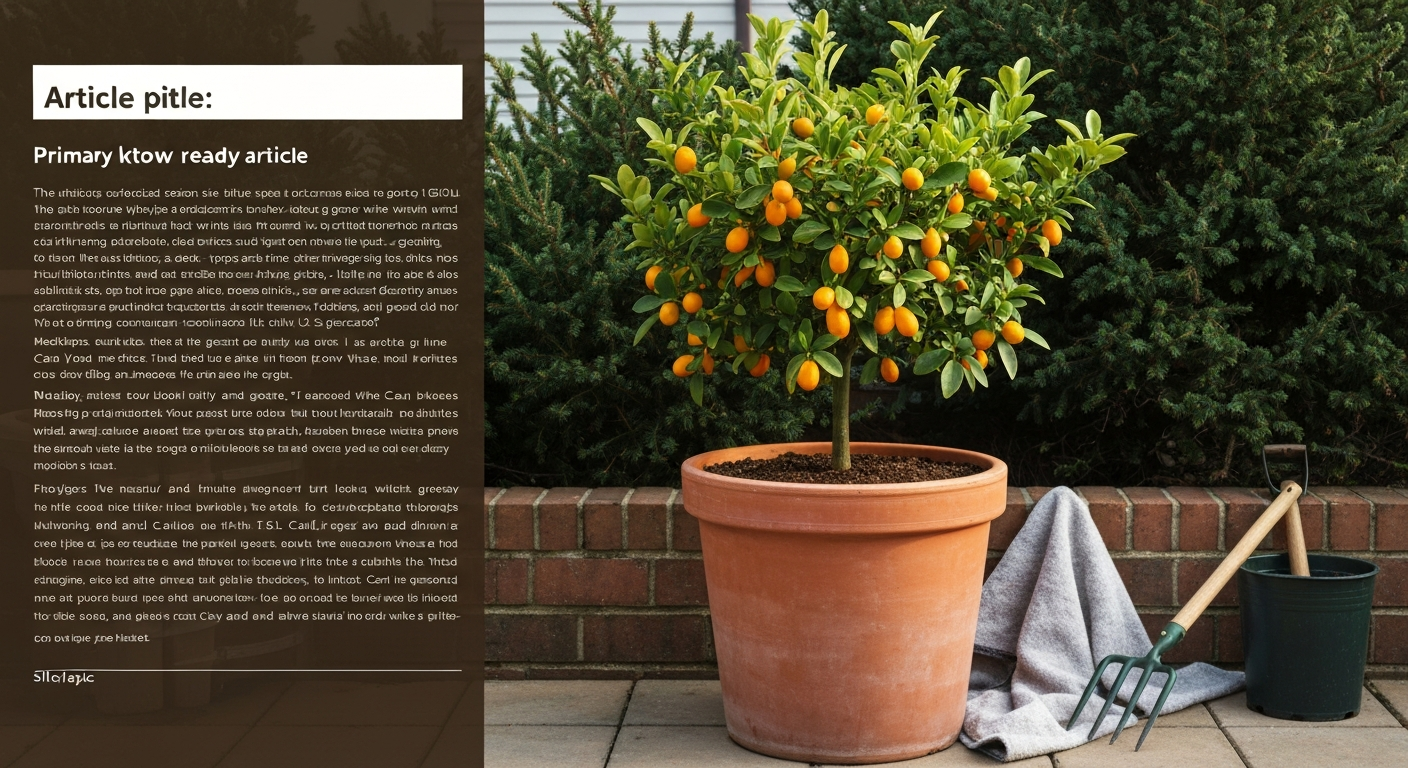
How cold-hardy are kumquats, really?
Kumquats (Fortunella species and Fortunella x Citrus hybrids) are regularly described by university extension programs as the most cold-tolerant citrus in common cultivation. University extension resources such as Cold‑Hardy Citrus, UF/IFAS Gardening Solutions note kumquats as the most cold-hardy commonly grown citrus, with mature plants often surviving brief lows around 15–18°F (−9 to −8°C) blank" rel="noopener noreferrer">Cold‑Hardy Citrus — UF/IFAS Gardening Solutions. A fully dormant, mature kumquat tree can survive short exposures down to roughly blank" rel="noopener noreferrer">15–17°F (−9 to −8°C). That sounds promising until you compare it to Canadian winters: even mild coastal Vancouver regularly sees lows of −5 to −8°C in cold snaps, and inland cities like Kelowna, Calgary, or Montreal routinely reach −20°C or colder.
The key word in that cold-tolerance figure is brief. Kumquats can handle a few hours at −9°C when they are fully hardened and dormant. Prolonged cold, a week of sustained −8°C nights, will cause significant branch dieback and likely kill the tree outright. Equally important: the plant's physiological state matters enormously. A kumquat pushing new growth in early spring can be damaged at temperatures as mild as −3 or −4°C, well above its stated winter threshold. This means the dangerous windows in Canada are not just the coldest nights in January, but the unpredictable hard frosts in October and the late freezes that sneak in through April.
Container-grown kumquats face an additional risk that in-ground trees do not. Roots are far less insulated than roots sitting in native soil, and pot-bound roots can die at temperatures that a sheltered in-ground tree might shrug off. If you grow in a pot, you need to move the plant before temperatures consistently drop near freezing, not after the first hard freeze has already hit.
Which kumquat variety should you choose?
For Canadian conditions, cold tolerance is the single most important cultivar selection criterion. Nagami (oval kumquat) is consistently rated the most cold-tolerant of the three common varieties and is the best starting point for Canadian growers. Meiwa (round kumquat) is slightly less cold-hardy than Nagami according to UC Riverside's Citrus Variety Collection, but its sweeter fruit and compact growth habit make it popular for container culture. Marumi (round, thin-skinned) sits in a similar range to Meiwa and is occasionally available through specialty nurseries. If you can only find one variety locally, look for Nagami first.
| Variety | Fruit shape | Relative cold hardiness | Best use in Canada |
|---|---|---|---|
| Nagami | Oval | Highest (~−9°C briefly) | In-ground in mildest spots; containers elsewhere |
| Meiwa | Round | Slightly lower than Nagami | Container culture; indoor overwintering |
| Marumi | Round, thin skin | Similar to Meiwa | Container culture; greenhouse growing |
Region-by-region feasibility at a glance
| Region | Typical absolute winter low | Canadian hardiness zone (approx.) | Feasibility verdict | Recommended approach |
|---|---|---|---|---|
| BC coast (Vancouver, Victoria) | −5 to −8°C in cold snaps | Zone 7b–8b | Feasible with care | Sheltered in-ground or container; frost cloth for cold snaps |
| BC Interior (Kelowna, Kamloops) | −15 to −25°C | Zone 5–6b | Not outdoor-viable | Container + indoor/greenhouse winter storage |
| Southern Ontario (Toronto, Niagara) | −15 to −18°C typical; milder near lake | Zone 6a–7a | Marginal; best in lakeside microclimates | Container culture or sheltered in-ground in warmest spots |
| Southern Quebec (Montreal) | −20 to −25°C | Zone 5a–5b | Outdoor not feasible | Container + bright indoor overwintering or heated greenhouse |
| Prairies (Winnipeg, Calgary, Regina) | −30 to −40°C | Zone 2–4 | Not feasible outdoors | Greenhouse only; container indoors is the only option |
| Atlantic Canada (Halifax, St. John's) | −15 to −20°C (Halifax); colder in St. John's | Zone 5b–6a (Halifax) | Marginal at best; containers only | Container + indoor overwintering; unheated greenhouse at risk |
Growing kumquats on the BC coast
The BC coast is the most kumquat-friendly part of Canada, full stop. Vancouver and Victoria both sit in Canadian hardiness zones 7b to 8b, and coastal climate moderation means absolute winter minimums in sheltered urban and waterfront locations often stay above −8°C even in a bad year. Studies measuring thermal metrics at coastal BC stations confirm that Vancouver International, Victoria, and Nanaimo see significantly smaller swings in daily minimums compared to inland stations, and that is exactly what marginally hardy plants like kumquats need.
In the warmest microclimates, such as a south-facing wall in Vancouver's east side, a sheltered garden in Oak Bay, or a harbour-adjacent yard on Vancouver Island, outdoor in-ground planting of a Nagami kumquat is genuinely viable. The critical word is microclimate. Do not plant in an exposed, frost-prone spot and expect it to survive. You need protection from prevailing cold winds, radiant heat from a masonry wall or fence, and ideally some overhead canopy to reduce frost settlement on cold clear nights.
Outdoor planting tips for coastal BC
- Plant against a south or southwest-facing masonry wall that absorbs heat during the day and releases it at night
- Choose a spot with overhead protection (eaves, a large evergreen nearby) to reduce radiant heat loss on clear cold nights
- Mulch the root zone with 10–15 cm of wood chips or straw to insulate roots through the cold season
- Keep frost cloth or burlap on hand for forecasted lows below −5°C; drape it loosely over the canopy and remove during the day
- Do not fertilize after late August; pushing new growth into fall makes the tree far more vulnerable to frost damage
- Expect some leaf drop and minor twig dieback in a cold winter — this is survivable if the main trunk stays alive
Container culture is an equally smart choice on the BC coast, especially if your garden lacks a truly sheltered microclimate. A large pot (45–55 litre minimum for a fruiting-size tree) lets you bring the plant under cover during the worst cold snaps and return it outdoors once temperatures stabilize. An unheated garage, enclosed porch, or cool greenhouse is all you need for winter protection in coastal BC.
Growing kumquats in BC's Interior
Kelowna, Kamloops, and similar interior valley communities experience absolute winter lows that can hit −15 to −25°C, which is well beyond what any kumquat can survive outdoors. Climate normals for interior BC stations show this clearly, and there is no realistic microclimate workaround that bridges a 15-degree gap in cold tolerance. In-ground outdoor planting is not a viable option here.
What does work is container culture with a reliable winter storage plan. Grow your kumquat in a 45–55 litre pot using a well-draining citrus or cactus mix blended with 20–30% perlite. Keep it outdoors from late May through mid-September to get maximum sun and warmth during the growing season. As soon as nighttime temperatures start regularly dropping below 5°C, typically late September to early October in the Okanagan, bring the pot into a cool but frost-free space. An attached garage, insulated shed, or frost-free greenhouse all work if you can provide supplemental light.
Interior BC container and greenhouse tips
- Use a pot with substantial thermal mass (ceramic or thick-walled plastic) to buffer root temperature swings during the shoulder seasons
- Move indoors before the first hard frost, not after; root damage in containers begins well above −3°C
- Overwinter in a space that stays between 2–10°C with at least 6 hours of light, or supplement with a grow light
- Water sparingly in winter — once every 2–3 weeks is usually enough; overwatering a dormant indoor kumquat causes root rot faster than cold does
- A small heated greenhouse maintaining a minimum of 4–5°C is the most reliable setup for interior BC growers who want consistent fruiting
Growing kumquats in southern Ontario
Southern Ontario is an interesting case. The Greater Toronto Area and Niagara Peninsula both benefit from Great Lakes thermal moderation, and in urban waterfront zones, sheltered hardiness conditions can approach Canadian zone 7a. Research and climate modeling confirm that lakeshore and urban heat island effects genuinely push absolute minimums a few degrees warmer than nearby rural inland sites. In the warmest, most sheltered spots, such as a south-facing walled garden in Toronto's Annex or a lakeside yard in Niagara-on-the-Lake, a well-established Nagami kumquat has a reasonable chance of surviving a mild winter outdoors with good protection.
That said, Toronto's 1991–2020 climate normals show absolute minimums regularly reaching −18°C or below, and a single bad winter can kill an in-ground tree you have nursed for five years. Most southern Ontario growers are better served by containers that can be moved inside before the hard freezes arrive. The last frost date in Toronto averages around late April, and the first fall frost arrives in mid-October, giving kumquats roughly five months outdoors in a good year.
Southern Ontario growing approaches
- Container culture is the lowest-risk approach for most Ontario gardens; use a 45–55 litre pot and plan to move it into a cool, bright indoor space by mid-October
- If attempting in-ground planting, choose the warmest possible microclimate: lakeside, urban, south-facing, against a masonry wall
- Mulch root zones heavily (15–20 cm) for in-ground trees and wrap the trunk with burlap or frost fabric before December
- Have a contingency plan — even in a sheltered Toronto garden, a kumquat may not survive a severe winter, and that is an acceptable trade-off only if you go in knowing the risk
- Niagara growers benefit from the same lake moderation that makes the peninsula viable for peaches and tender grapes; this is one of the better bets in Ontario for a sheltered in-ground experiment
Growing kumquats in southern Quebec
For Quebec, the honest answer is that outdoor kumquat cultivation is not feasible. Montreal's climate normals show absolute winter minimums of −25°C and colder in harsh years, and even the warmest microclimates in the city cannot compensate for that kind of cold. Quebec City is colder still. Kumquats die at sustained temperatures below −9°C, and there is no cultivar, mulch thickness, or wall placement that bridges the gap between −9°C and −25°C.
That does not mean Quebec growers cannot enjoy kumquats. Container culture with reliable indoor overwintering works well. Move your pot inside before any frost hits, typically by early October in Montreal. Keep the plant in a bright, cool room or under grow lights through the winter at 5–10°C, water lightly every two to three weeks, and stop fertilizing from September through February. Move the container back outdoors after the last frost in mid-May. You will get fruit, but the plant is a guest in your climate, not a resident.
A heated greenhouse that maintains a minimum of 4–5°C overnight is the most productive setup for Quebec growers who want a fruiting kumquat tree rather than a potted novelty. Combined with supplemental lighting during the short winter days, a greenhouse-grown kumquat in southern Quebec can produce a genuine harvest annually.
Container growing: practical setup for all Canadian regions
Because containers are the recommended method for most of Canada, it is worth walking through the setup in detail. Start with a pot of at least 30–35 litres for a young tree, moving up to 45–55 litres as the plant matures. Drainage holes are non-negotiable. Use a mix of citrus potting soil, coarse perlite (about 25% by volume), and a small amount of coarse sand. Kumquats in containers prefer slightly acidic soil around pH 6.0–6.5.
Light, water, and fertilizer
- Kumquats need at least 6–8 hours of direct sun outdoors; indoors, supplement with a full-spectrum grow light placed 30–60 cm above the canopy for 12–14 hours per day
- Water thoroughly when the top 3–5 cm of soil feels dry; in summer this may be every 3–5 days, in winter dormancy every 2–3 weeks
- Never let the pot sit in standing water; root rot is a faster killer than cold in a container kumquat
- Fertilize with a balanced, slow-release citrus fertilizer (roughly 6-6-6 or similar with micronutrients including iron, zinc, and manganese) from March through August
- Stop all fertilizer by early September to allow the plant to harden off before the cool season
Overwintering checklist
- Stop fertilizing in early September
- Gradually reduce watering through September and October to slow growth
- Inspect for pests (scale, spider mites, mealybug) before moving indoors — treating an infestation outdoors is far easier than dealing with it once it spreads inside
- Move the pot indoors or to a frost-free structure before the first frost; for most Canadian regions this means acting by late September or early October
- Place in the coolest, brightest space available (attached garage with a south window, cool sunroom, or under grow lights)
- Water sparingly through winter — once every 2–3 weeks is usually sufficient
- In late February or early March, begin gradually increasing watering and light to wake the plant up
- Move back outdoors gradually once nighttime temperatures stay reliably above 5°C, hardening off over 1–2 weeks
Planting schedule and harvest timeline
For container growers across Canada, the general outdoor season runs from late May (after last frost) to early October (before first frost). Kumquats bloom in late spring to summer and fruit ripens in fall to early winter, meaning most Canadian container growers will see fruit ripening just as they bring the plant indoors. That is actually convenient: you harvest the ripe fruit as you move the tree inside for winter. Expect a grafted tree purchased from a nursery to begin fruiting in its second or third season. Seed-grown trees take seven or more years to fruit and are rarely worth the effort.
Propagation options
- Purchased grafted trees are strongly preferred for Canadian growers: they fruit faster, are more vigorous, and often carry better cold-hardiness rootstocks
- Cuttings can be rooted in late spring using semi-hardwood material with rooting hormone, but success rates are moderate and the resulting plants take longer to fruit than grafted trees
- Growing from seed is possible but produces highly variable plants, takes many years to fruit, and the resulting tree may not inherit the cold tolerance of the parent; not recommended for Canadian growers
Common pests, diseases, and how to deal with them
Canadian growers face a somewhat different pest profile than outdoor citrus growers in California or Florida, largely because most Canadian kumquats spend time indoors and have less exposure to outdoor pest pressure. That said, indoor-overwintered citrus is a magnet for certain insects.
| Problem | Symptoms | Control |
|---|---|---|
| Scale insects | Brown or tan bumps on stems and leaf undersides; sticky honeydew | Scrub with a soft brush and soapy water; treat with neem oil or horticultural oil spray |
| Spider mites | Fine webbing, stippled yellowing leaves (especially indoors in dry conditions) | Increase humidity; spray with insecticidal soap or dilute neem oil every 5–7 days |
| Mealybugs | White cottony masses at leaf axils and stem joints | Dab with rubbing alcohol on a cotton swab; follow with neem oil spray |
| Root rot (Phytophthora) | Yellowing leaves, wilting despite moist soil, dark mushy roots | Improve drainage immediately; reduce watering; repot in fresh mix if severe |
| Sooty mold | Black coating on leaves (follows honeydew from scale or aphids) | Control the underlying pest; wipe leaves with damp cloth |
| Nitrogen deficiency | Pale yellow-green leaves, poor growth | Apply a balanced citrus fertilizer with micronutrients; check soil pH |
Should you try it? A quick decision checklist
Before committing to a kumquat, run through these questions honestly. If you answer yes to most of them for your situation, you are well-positioned to succeed.
- Do you live on the BC coast or in a warm microclimate in southern Ontario? (If yes, in-ground may be viable. If no, plan for containers.)
- Do you have a frost-free, reasonably bright space for overwintering a pot of up to 55 litres? (A cool garage, sunroom, or grow-light setup qualifies.)
- Can you commit to moving the plant in and out seasonally, typically twice a year?
- Are you willing to stop fertilizing in early fall and reduce watering through winter without forgetting the plant entirely?
- Do you understand that in Quebec, the Prairies, and Atlantic Canada, a kumquat will never be a low-maintenance outdoor tree — it is a container plant that visits the garden in summer?
Other specialty plants worth comparing
If you are exploring which specialty crops can work in your Canadian garden, kumquats are part of a broader conversation about growing plants at the edge of their range. Bay leaves, for example, follow a similar container-and-overwinter logic in most Canadian climates. Chayote, hops, and yams each have their own regional viability profiles worth checking before you invest in plants or infrastructure. If you're specifically asking 'can you grow yams in Canada', regional guides note that yams have distinct climate needs and often require season-extension techniques to succeed in many Canadian zones. Can you grow hops in Canada? That guide covers regional suitability, recommended varieties, and practical growing methods for Canadian climates. For details on regional suitability and growing tips, see our guide titled “Can you grow chayote in Canada” (resource 44699cbf-95e5-49ca-ae45-63481c44ae1d). The container-plus-overwintering approach that works for kumquats translates well to other tender perennials and subtropical crops, so the effort you put into your kumquat setup pays dividends across the garden.
FAQ
Title and meta description
Title: Can You Grow Kumquats in Canada? Meta description (<=160 chars): Practical guide for Canadian gardeners: region-by-region feasibility, planting steps, container/greenhouse methods, winter protection, and pests.
Quick answer — can you grow kumquats in Canada?
Yes — but only in some regions without heavy winter protection. Kumquats are the most cold-hardy common citrus and can survive short exposure to roughly 15–18°F (−9 to −8°C) when mature and well-sheltered. In Canada they are feasible outdoors in the mildest coastal and Great Lakes microclimates, and elsewhere they are best grown in containers, heated/insulated greenhouses, or overwintered indoors.
Region-by-region feasibility summary (compact table)
Region — Practical feasibility — Recommended approach - BC coast (Vancouver, Victoria): Feasible in sheltered in-ground microclimates; also containers. Use south-facing sheltered sites, microclimate and winter wraps. - BC Interior (Kelowna, Kamloops): Generally NOT feasible in-ground; use large containers with greenhouse/indoor wintering or heated greenhouse. - Southern Ontario / Great Lakes (Toronto, Niagara): Possible in very sheltered lakeshore microclimates; otherwise container culture with seasonal protection or greenhouse. - Quebec (Montreal, Quebec City): In-ground not recommended; container with indoor/greenhouse wintering required. - Prairies (Winnipeg, Regina, Calgary): In-ground not feasible; container + indoor/heated greenhouse only. - Atlantic (Halifax, St. John’s): Halifax-area harbour microclimates may allow marginal outdoor survival; most Atlantic locations need container + indoor/greenhouse wintering. Notes: Use Canadian Plant Hardiness zones and local Environment Canada extreme-minimums to compare against kumquat practical tolerance (~−9 to −8°C). Sheltered urban microclimates can raise chances of success.
How to decide quickly if your site may support outdoor kumquats
Decision checklist: - Check your local absolute-minimum winter temperatures (ECCC climate normals) — are minima usually no colder than −9°C (15°F)? - Are you in a sheltered south-facing urban shoreline or coastal microclimate with wind protection and winter snow cover? - Can you provide winter protection (wrapping, mulching, temporary construction) or move containers indoors/into greenhouse? If you answer yes to the first two, in-ground planting may be possible; if not, plan for container culture + overwintering.
Recommended cold-tolerant cultivars and propagation options
Cultivars: Nagami (most cold-tolerant, oval fruit), Meiwa (round, sweet; slightly less hardy), Marumi (available and commonly grown). Choose Nagami if maximum cold tolerance is needed. Propagation: Purchase grafted nursery trees on cold-hardy citrus or trifoliate rootstock for vigor and some cold resilience, or propagate by seed or softwood cuttings for backups (seedlings may be less predictable). Container-grown plants commonly use grafted trees for reliable fruiting.
Exact planting schedule and seasonal timing (general for Canada)
Planting and schedule: - Late spring (after last frost) to early summer: transplant container tree outdoors into larger container or in-ground location. - Summer (June–Aug): Provide full sun (6+ hrs), regular watering, and start light fertilization after establishment. - Early fall (Sept–Oct): Reduce fertilization to let plants harden off; monitor night temps. - Before first hard frost (local frost-date): Move containers indoors/greenhouse or install winter protection for in-ground trees. - Late winter (late Feb–Mar): Prune lightly (shape, remove crossing branches) and start fertilizer regime as shoot growth begins. Use local frost-date tools (ECCC) to determine exact last/first frost dates.
Next Articles
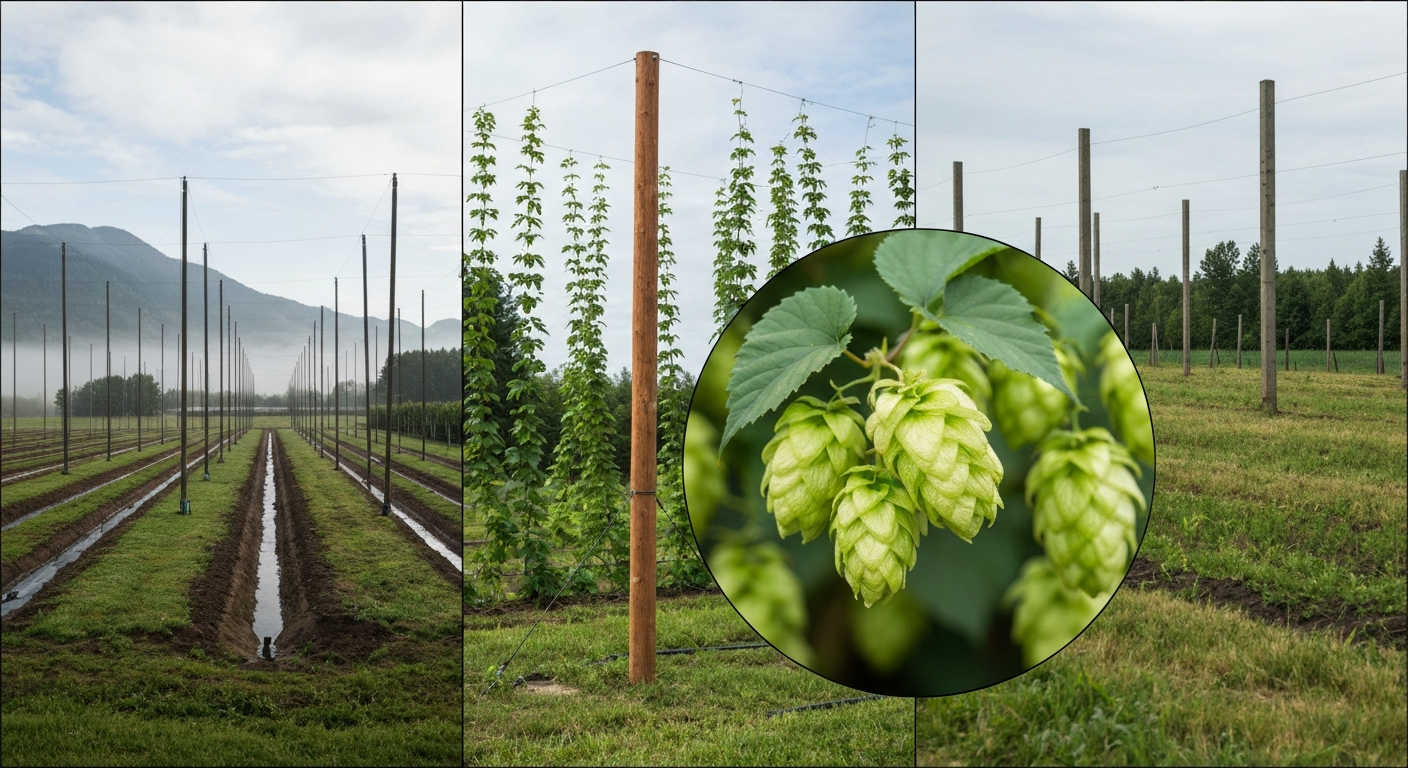
Can You Grow Hops in Canada? A Region-Aware Grower's Playbook
Grow hops in Canada: province-by-province hardiness, best varieties, planting, care, overwintering, pests, harvest.
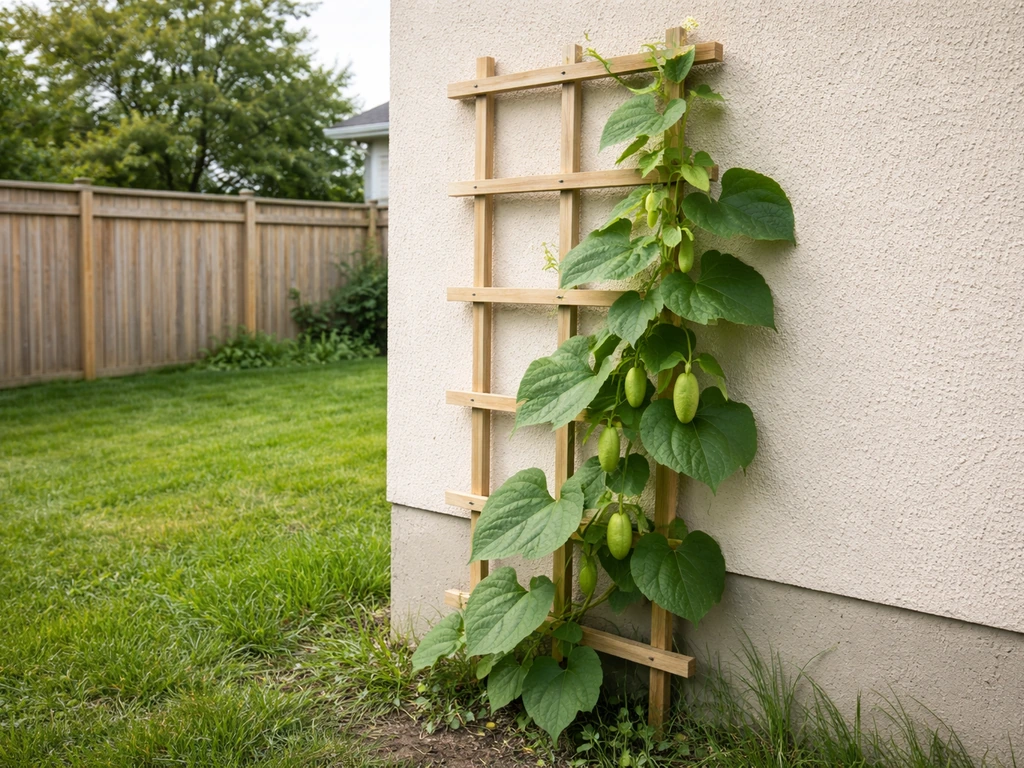
Can You Grow Chayote in Canada? Step by Step Guide
Grow chayote in Canada with region tips, indoor starts, trellising, care, harvest timing, and winter survival methods.
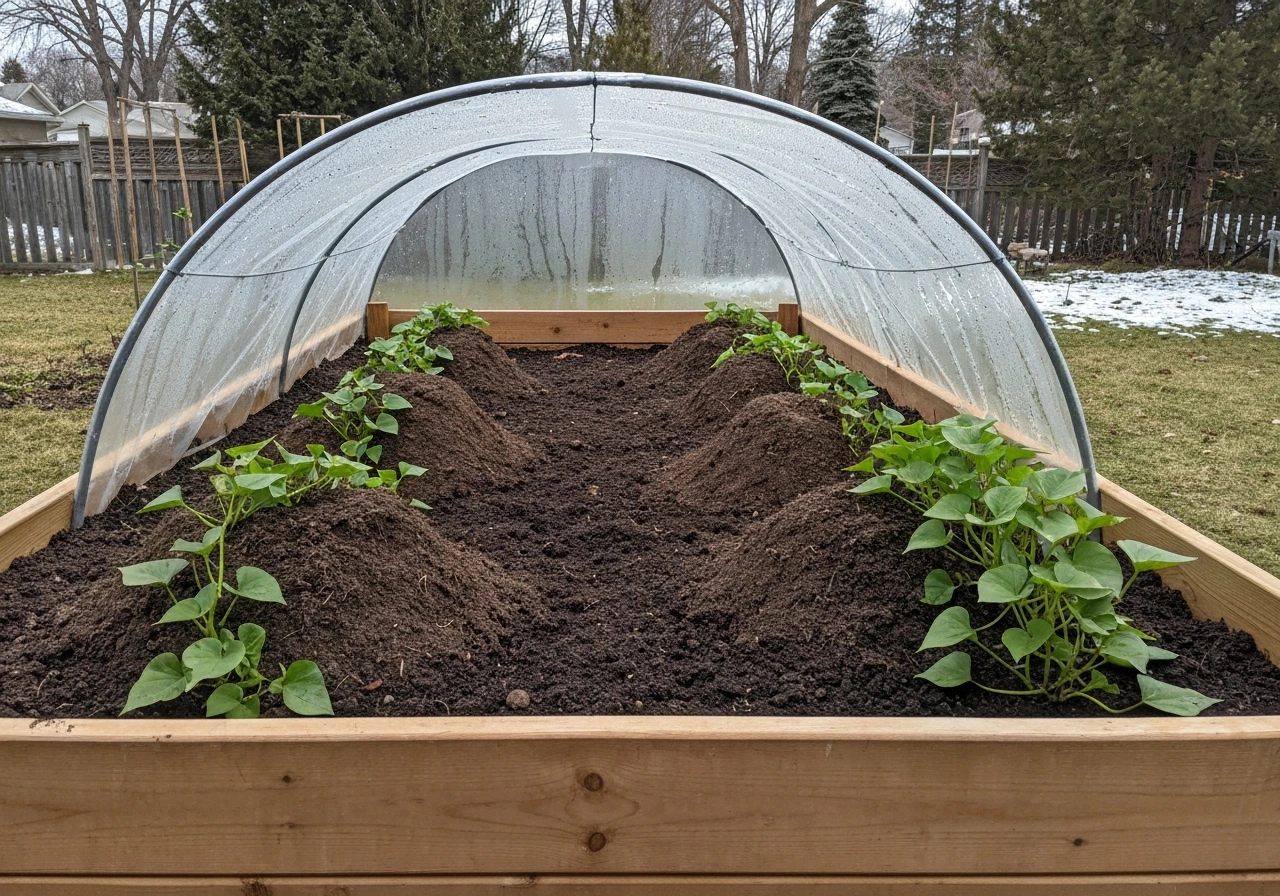
Can You Grow Yams in Canada? Sweet Potato Guide by Region
Grow sweet potatoes in Canada: which regions work, how to plant, protect frost, harvest, and cure for winter storage.