
Yes, you can grow yams in Canada, but there is a catch most gardeners run into right away: what Canadians call a yam is almost never a true yam. The orange-fleshed tuber at your grocery store is a sweet potato (Ipomoea batatas), and that is almost certainly what you actually want to grow. True yams (Dioscorea species) are a genuinely tropical crop that needs 8 to 10 months of warm growing season, which rules out almost every part of Canada. Sweet potatoes, on the other hand, are very growable in southern Canada with the right variety, some season-extending tricks, and a bit of planning. This guide covers both so you can decide what you are actually dealing with and what to do about it.
Can You Grow Yams in Canada? Sweet Potato Guide by Region
Marcus Holloway
1 Jul 2026
Yams vs sweet potatoes: what you can realistically grow
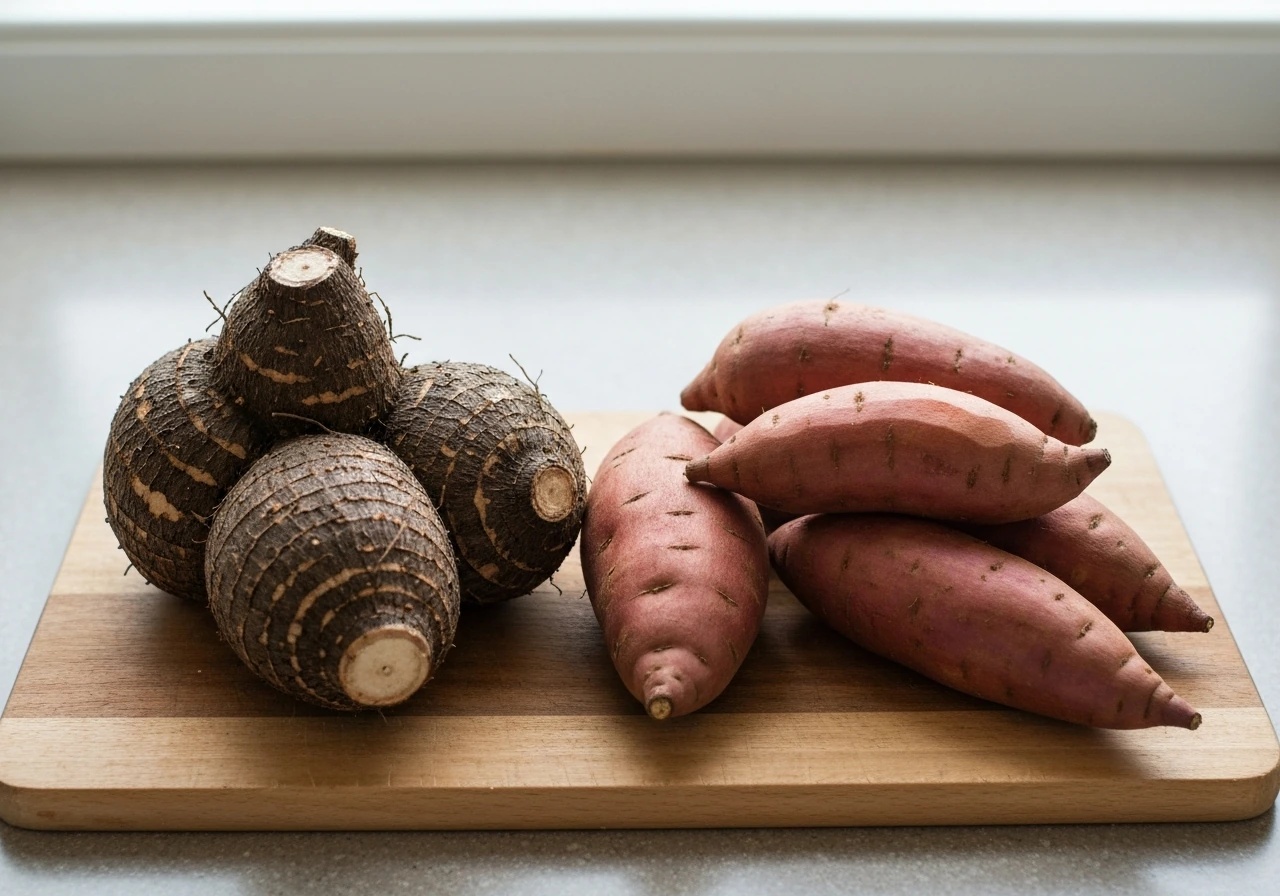
True yams belong to the genus Dioscorea and are a staple crop in West Africa, the Caribbean, and parts of Asia and Latin America. They are large, starchy, bark-skinned tubers that require sustained tropical temperatures, around 25 to 30 degrees Celsius, for most of a year. In Canada, even in the warmest corners of British Columbia or southern Ontario, you simply do not have enough warm days in a row to bring a true yam to harvest outdoors. You could theoretically try one in a heated greenhouse, but the effort and infrastructure required make it impractical for most growers.
What you see labeled as yams in Canadian grocery stores are dark-skinned, orange-fleshed sweet potatoes, specifically varieties like Beauregard or Jewel. Wikipedia notes that in North America, dark or orange-fleshed sweet potatoes are often labeled “yams,” which contributes to confusion with true yams blank" rel="noopener noreferrer">North America labeling confusion. This labeling confusion goes back decades in North America and it sticks everywhere from Walmart to farmers markets. So when someone asks if they can grow yams in Canada, the real and useful answer is: grow sweet potatoes instead, because that is the crop you know, the one that performs in a real Canadian season, and the one worth putting your effort into.
Canada feasibility: climate, zones, frost-free days, and heat needs
Sweet potatoes are a warm-season tropical crop grown as an annual in temperate climates. They are cold-sensitive at every stage, from planting through harvest, and they need soil temperatures above 65°F (18°C) before slips go in the ground. Most varieties take 90 to 120 days to maturity, which means you need a long enough frost-free window with genuinely warm summers to get there.
That reality narrows the map quite a bit. Southern Ontario, the Niagara Peninsula, parts of the Fraser Valley and Okanagan in BC, and the warmer zones of southern Quebec and the Maritimes have a realistic shot. Growing zones 5b through 7 in Canada are your target range. Growers in zones 3 and 4, including most of the Prairies, northern Ontario, and rural Quebec, face a tougher fight: not impossible, but you need short-season varieties, aggressive use of black plastic mulch, row covers, and you should manage expectations on yield. Zone 2 and below, basically anywhere with fewer than 100 frost-free days, sweet potatoes are more of a curiosity than a reliable crop.
| Canadian Region | Hardiness Zone | Frost-Free Days (approx.) | Sweet Potato Feasibility |
|---|---|---|---|
| Southern Ontario / Niagara | 6a–7a | 150–180+ | Very good with standard varieties |
| Fraser Valley / Okanagan BC | 6b–8a | 150–200+ | Very good, best in Canada |
| Southern Quebec / Montreal area | 5a–6a | 120–150 | Good with short-season varieties |
| Maritimes (NS, NB, PEI) | 5a–6a | 120–145 | Doable with early starts and mulch |
| Prairies (AB, SK, MB) | 3a–5a | 90–120 | Challenging; short-season varieties + season extension needed |
| Northern Ontario / Quebec | 2b–4a | 80–110 | Very difficult; container growing recommended |
| Yukon / NWT / Nunavut | 0–2 | Under 80 | Not practical outdoors |
Choosing the right variety and starting method
Variety selection is probably the single biggest lever you have as a Canadian grower. Standard varieties like Beauregard and Jewel come in around 90 to 100 days and work well in southern Ontario and BC. For shorter seasons, look for varieties specifically bred or marketed for northern or short-season production. Covington is reliable and widely available. Georgia Jet is a popular short-season pick that finishes closer to 90 days. Porto Rico is a compact, bushy type that works well in containers and smaller raised beds. Some Canadian seed suppliers sell slips of varieties selected specifically for Canadian conditions, which is worth seeking out over generic grocery-store tubers.
Slips vs tubers: what to start from
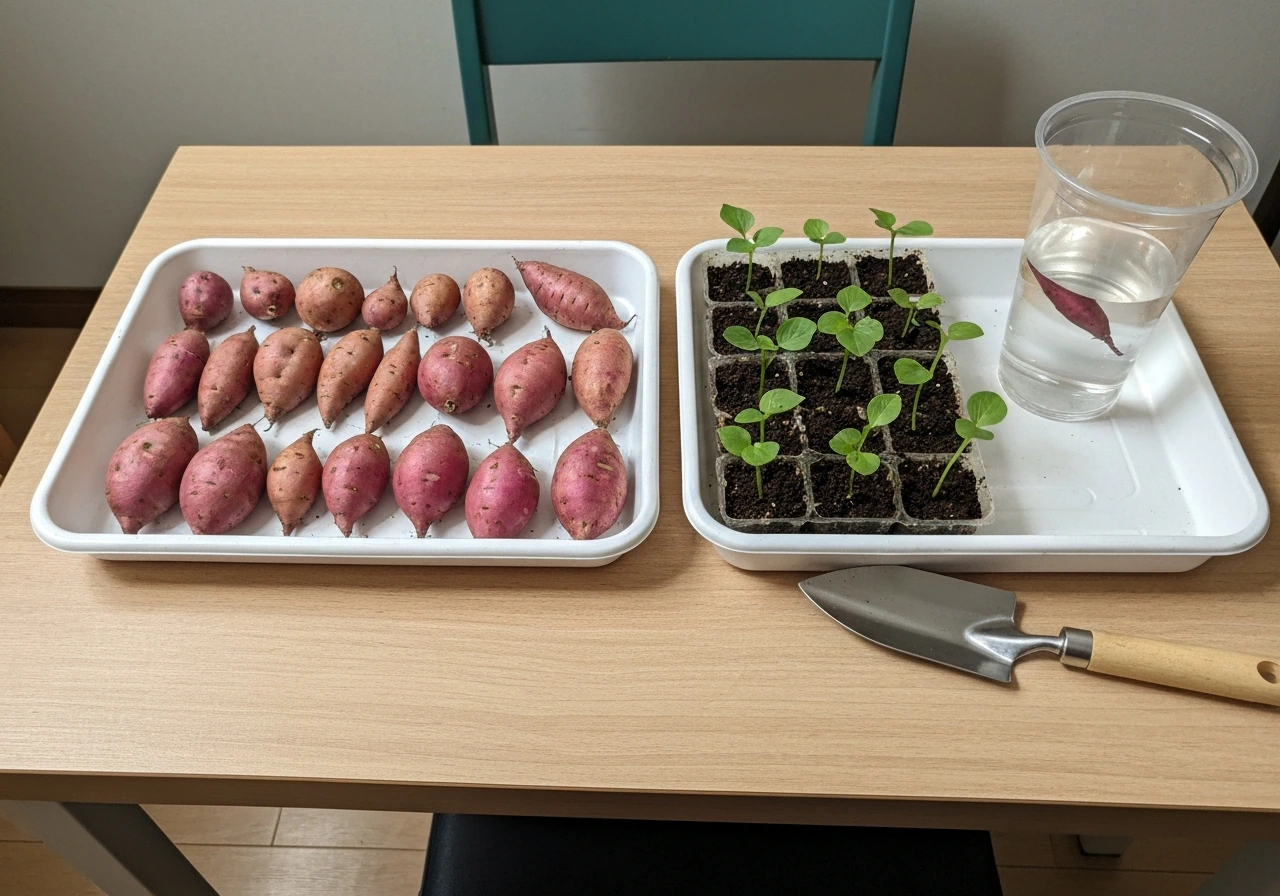
Sweet potatoes are not grown from seed or from whole tubers planted directly in the ground. They are grown from slips, which are rooted shoots sprouted from a tuber. You can buy slips from a Canadian nursery or seed supplier in late spring, or you can sprout your own starting in March. To make your own slips, suspend a sweet potato (organic, if possible, since commercial ones may be treated to suppress sprouting) halfway in a jar of water and put it in a warm, bright spot. Shoots will emerge from the eyes within 2 to 4 weeks. Once those shoots are about 6 inches long and have developed a few leaves, you snap them off and root them in water or damp potting mix before planting out. Starting your own slips indoors in early March gives you the longest possible head start, which is critical in zones 4 and 5.
Planting timeline and site setup
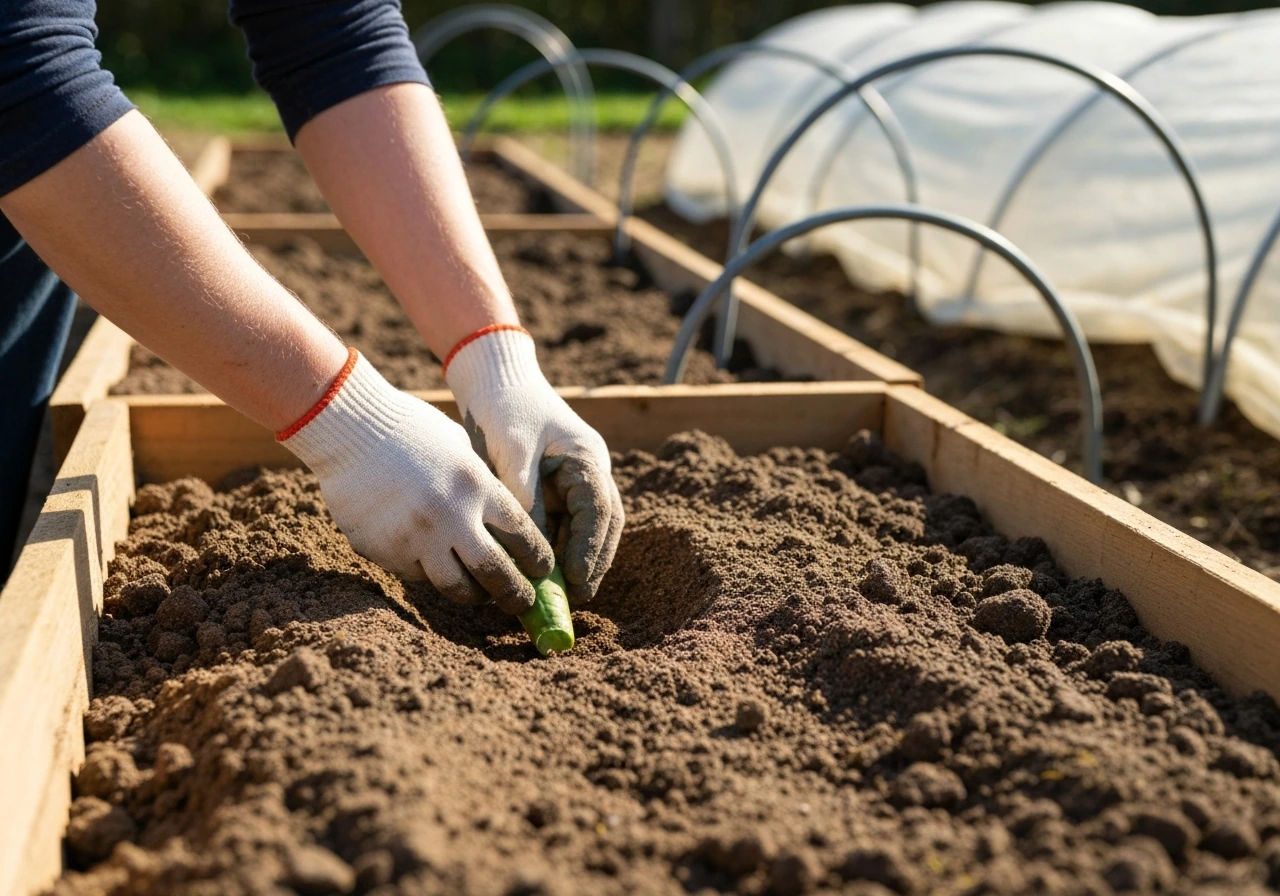
Timing is everything. Sweet potatoes go into the ground only after your last frost date has passed AND soil temperature at 4 inches deep has reached at least 65°F (18°C). In southern Ontario and BC, that is typically late May to early June. In the Maritimes and southern Quebec, aim for early to mid-June. In the Prairies, you are pushing late June, which compresses your season significantly and makes short-season varieties non-negotiable.
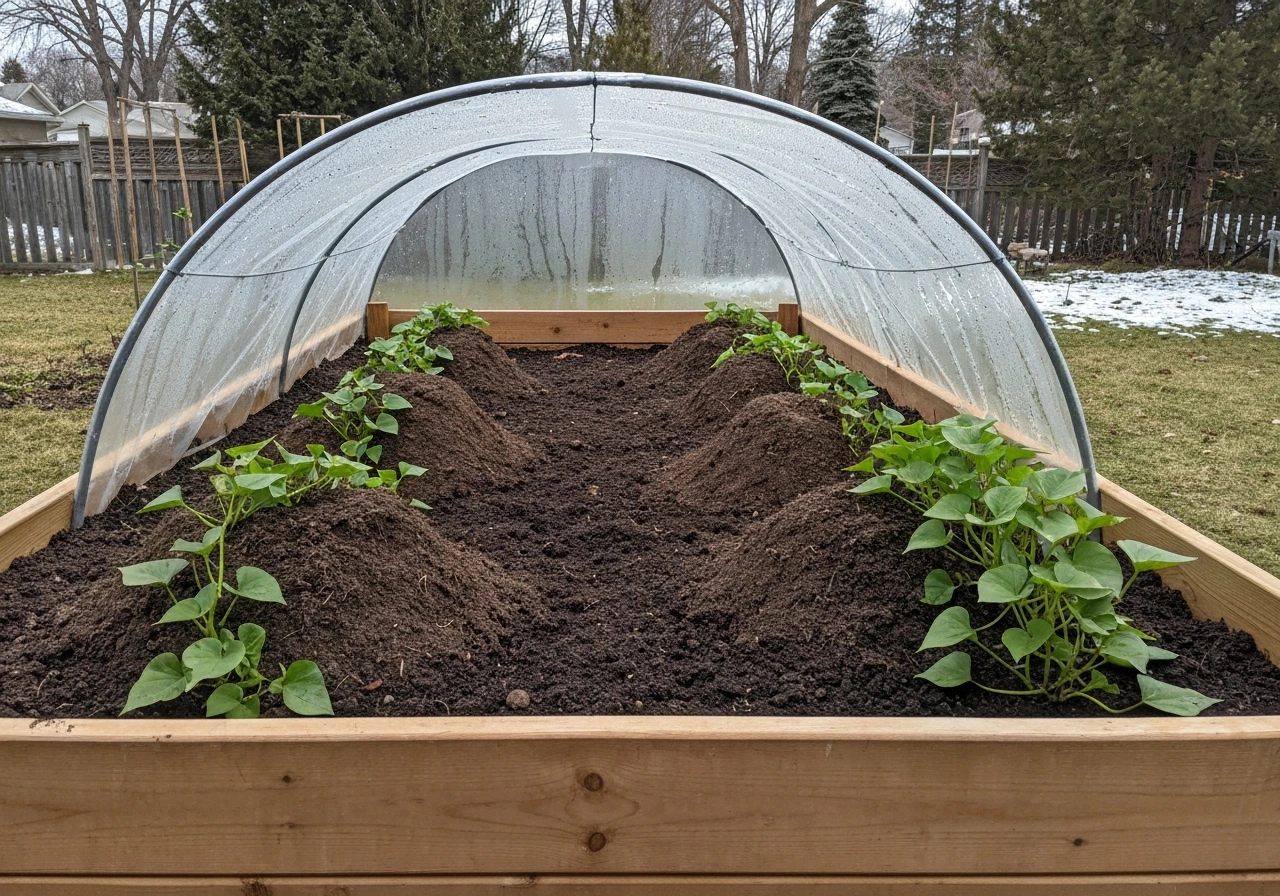
For soil, sweet potatoes want loose, well-drained, sandy loam with a pH between 5.5 and 6.5. They do not perform well in heavy clay. Raised beds and mounded rows both work well because they drain freely and warm up faster in spring, which is a meaningful advantage in Canada. Work in compost but go light on nitrogen-heavy fertilizers, since too much nitrogen pushes leaf growth at the expense of tuber development.
Black plastic mulch is close to essential in Canada. Lay it over your beds before transplanting and cut holes for the slips. It warms the soil by several degrees, suppresses weeds, retains moisture, and meaningfully extends your effective growing season at both ends. Organic mulch like straw or shredded leaves works too but does not warm soil as effectively. Space slips about 30 to 45 cm (12 to 18 inches) apart in rows 90 cm (3 feet) apart, since the vines sprawl aggressively. If you are wondering about bay leaves too, the good news is there are ways to grow them in Canada with container culture and winter protection can you grow bay leaves in canada.
If you are in a colder zone or just working with a small space, containers are a genuinely good option. A 15 to 20 gallon pot or a large grow bag gives roots enough room and you can move it to maximize sun exposure or bring it under cover if a late frost threatens. Bush-type varieties like Porto Rico are best suited for containers.
Care during the season
Once established, sweet potatoes are relatively low-maintenance. Water consistently, aiming for about 2.5 cm (1 inch) per week, especially during tuber development in mid-summer. They handle short dry spells reasonably well once vines have filled in, but drought during the first few weeks after transplanting will stunt growth. Avoid overwatering, which promotes rot in heavy soils.
Feed with a balanced fertilizer at planting and then switch to a lower-nitrogen, higher-potassium formula once vines are established, since potassium supports tuber development. A mid-season side dressing of compost works well as a gentler alternative.
Pest pressure in Canada is generally lighter than in the American South. The sweet potato weevil is not established in Canada, which is a genuine advantage. Watch for wireworms in Prairie soils, which can tunnel into tubers. Aphids and whiteflies can be issues in warmer regions, particularly under row covers where airflow is limited. Slip rot and black rot are fungal diseases to watch for, both managed mostly through clean planting material and good drainage. If you bought certified disease-free slips, your risk is low.
Harvest, curing, and storage for Canadian winters
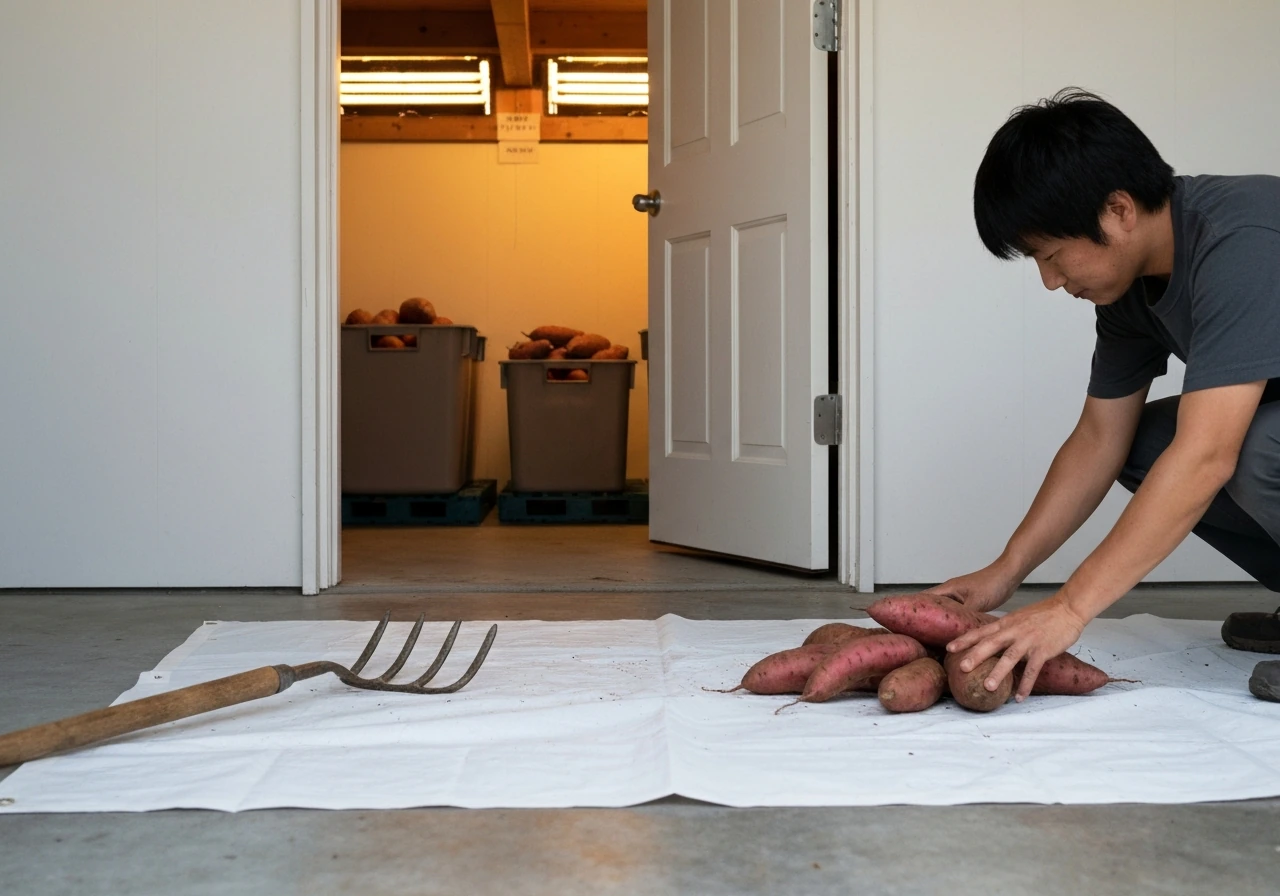
Harvest sweet potatoes before the first fall frost, which is the hard deadline. A frost will kill the vines and can damage tubers if cold penetrates the soil. In practice, most Canadian growers are digging in late August through September. You can check for readiness around the 90-day mark by carefully digging near one plant to see what size the tubers have reached. The vines yellowing and dying back naturally is also a signal, but do not wait for frost to make the decision for you.
Dig carefully with a fork rather than a spade to avoid slicing tubers. Shake off excess soil but do not wash them. Curing is the step most home growers skip and really should not. Fresh-dug sweet potatoes are starchy and bland. Curing converts starches to sugars and heals skin damage, dramatically improving flavor and storage life. Cure them at 82 to 86°F (28 to 30°C) with high humidity, around 90 to 95% relative humidity, for 4 to 7 days. A warm bathroom, a closed shed with a space heater, or any warm enclosed space works. Wrapping loosely in newspaper and storing in a warm spot near a furnace is a common Canadian workaround.
After curing, move them to long-term storage at 55 to 60°F (13 to 16°C) with humidity around 80 to 90%. A cool basement corner, root cellar, or insulated garage (not too cold) fits the bill. Do not refrigerate sweet potatoes, since cold below about 10°C causes chilling injury that ruins texture and flavor. Stored correctly, they will keep comfortably through a Canadian winter, often 4 to 6 months.
Region-based next steps: what to do depending on where you are
If you are in southern Ontario or the BC Lower Mainland and Okanagan, you are in the best position. Order slips of Beauregard, Covington, or Georgia Jet now from a Canadian supplier, plan your raised bed or mounded row with black plastic mulch, and target a planting date in late May or early June once soil hits 65°F. You should have no trouble reaching maturity before frost.
If you are in the Maritimes or southern Quebec, use the same short-season varieties and start your own slips indoors in early March. Get them in the ground by early June under row covers for the first week or two. Black plastic mulch is not optional here, it is your main tool for making the season work. Expect harvest in late August.
If you are on the Prairies, this is genuinely hard but not impossible. Georgia Jet in a raised bed or large container with black plastic is your best bet. Start slips indoors in early March, plant out in late June, and be ready to cover plants if a cold snap arrives in August. Expect smaller yields and know going in that some years you will lose the race to frost. Container growing in a south-facing location or against a heat-absorbing wall gives you the best odds.
If you are in northern Ontario, northern Quebec, or the territories, sweet potatoes are a container-only project with a heated greenhouse being the realistic option for reliable results. You might also want to look at what else grows in your zone, since other root crops and specialty vegetables will reward your effort more consistently in those climates. For reference, crops like hops can handle much colder Canadian zones, and that might be worth exploring if you are after something productive in a short-season environment. For comparison, hops can handle much colder Canadian zones, so it can be worth exploring hop-growing if you want something productive in a short season.
As for true yams (Dioscorea): unless you have a heated polytunnel and a lot of patience for an experimental crop, they are not a practical fit for Canada. Put your energy into sweet potatoes. You can also apply the same warmth-and-frost-planning approach to chayote if you want to try growing it in Canada chayote in Canada. They are easier to source, easier to grow, cook the same way, and they are what you actually wanted in the first place.
FAQ
Can I plant grocery-store yams directly in the ground in Canada?
Yes, but only if you are planting sweet potatoes (actually grown from slips). Buying a grocery-store “yam” and planting the tuber rarely works because sweet potatoes are cold-sensitive and commercial tubers are often treated to limit sprouting. If you want to use tubers, sprout them indoors to make slips first, then plant the rooted slips after soil is at least 18°C.
If I want to try “true yams” (Dioscorea), what would it realistically take in Canada?
Grow sweet potatoes in the normal outdoor way, and save true yams for a controlled setup. In most Canadian climates, you will not get the sustained 25 to 30°C warm period true yams need to size properly. If you still want to experiment, plan on a heated greenhouse with strong day and night temperature control, plus space for slow vine growth.
What is the easiest way to grow sweet potatoes in a cold or small yard?
Container sweet potato success comes down to soil warmth and drainage. Use a large pot or grow bag, fill with a loose, well-drained mix, and keep the container where it warms fastest (south-facing patio, near a heat-retaining wall). Do not let containers sit in cold, wet ground, and consider using black plastic mulch around the base even in containers to boost soil temperature.
My sweet potato vines grew, but the tubers are tiny. What went wrong?
If vines look healthy but tubers are small, the most common causes are planting too early (soil too cold), too much nitrogen (fertilizer or manure), inconsistent watering during the bulking phase, or not enough time before frost. Start slips early, switch to a lower-nitrogen, higher-potassium approach after vines establish, and harvest before any frost hits.
How do I store sweet potatoes so they last through winter, and should I refrigerate them?
For storage, curing is not optional, and refrigeration is usually a mistake. After curing, store at about 13 to 16°C with 80 to 90% humidity, and avoid the refrigerator because chilling injury can ruin texture and flavor. If you do not have humidity control, check tubers periodically and remove any that show soft spots.
What if my soil temperature is still below 18°C when my last frost date passes?
If you miss the soil temperature target and plant when nights are still cool, growth can stall and tuber development can suffer. Use a soil thermometer at about 10 cm (4 inches) depth, and delay planting until it consistently reads above 18°C. You can buy a week or two by using row covers early and black plastic mulch, but do not try to “force” cold soil indefinitely.
Can I rely on row covers to extend the season for sweet potatoes?
Yes, but treat row covers as temporary insurance, not as a substitute for warm soil. Covers help after transplanting if you get short cold spells, yet they also reduce airflow, which can worsen humidity-related issues. Vent on mild days, and ensure the main warmth comes from sun plus mulch, not only from fabric.
How can I reduce the risk of slip rot or tuber rot in Canada?
For the healthiest slips, choose certified disease-free slips if you can, or sprout from organic tubers that are not heavily treated. Always plant after the soil warms, and keep bedding clean. Once established, watch for rot symptoms near the soil line, and improve drainage rather than adding more water or nitrogen.
How do I know exactly when to plant and when to harvest in my region?
A practical check is to confirm soil readiness before you plant and maturity before you dig. Mid-season, you should see active vine growth after transplanting, and around the 90-day window you can gently dig near one plant to assess tuber size. Do not wait for frosty leaves to make the final decision, because the first soil-level cold can damage developing tubers.
Next Articles
Can You Grow Agave in Canada? Zone Guide & Growing Tips
Can you grow agave in Canada? Practical region-by-region guide, hardy species, container tips & winter care.
Can You Grow Okra in Canada? Ontario Guide & Short‑Season Tips
Can you grow okra in Canada? Regional verdict, Ontario-specific steps, varieties, season-extension & harvest tips.
Can You Grow Asparagus in Canada? Planting Guide by Zone
Grow asparagus in Canada by zone: site, hardiness, crowns or seed, planting depth, care, and harvest plus fixes