
You can grow cassava in Canada, but not the way you'd grow it in the tropics. Outdoors in the open ground, it's only remotely viable in the warmest microclimates of southern British Columbia or southwestern Ontario, and even there it's a gamble. For most Canadian growers, a greenhouse or large containers you can move indoors is the realistic path. Done right, you can get actual harvestable roots within a single Canadian growing season if you start early enough and keep temperatures up. It takes planning, but it's absolutely doable. If you are also wondering, can you grow agave in Canada, the same warmth and sun requirements will matter.
Can You Grow Cassava in Canada? Feasibility and Steps
Marcus Holloway
14 Jun 2026
What cassava needs and why Canada makes it hard
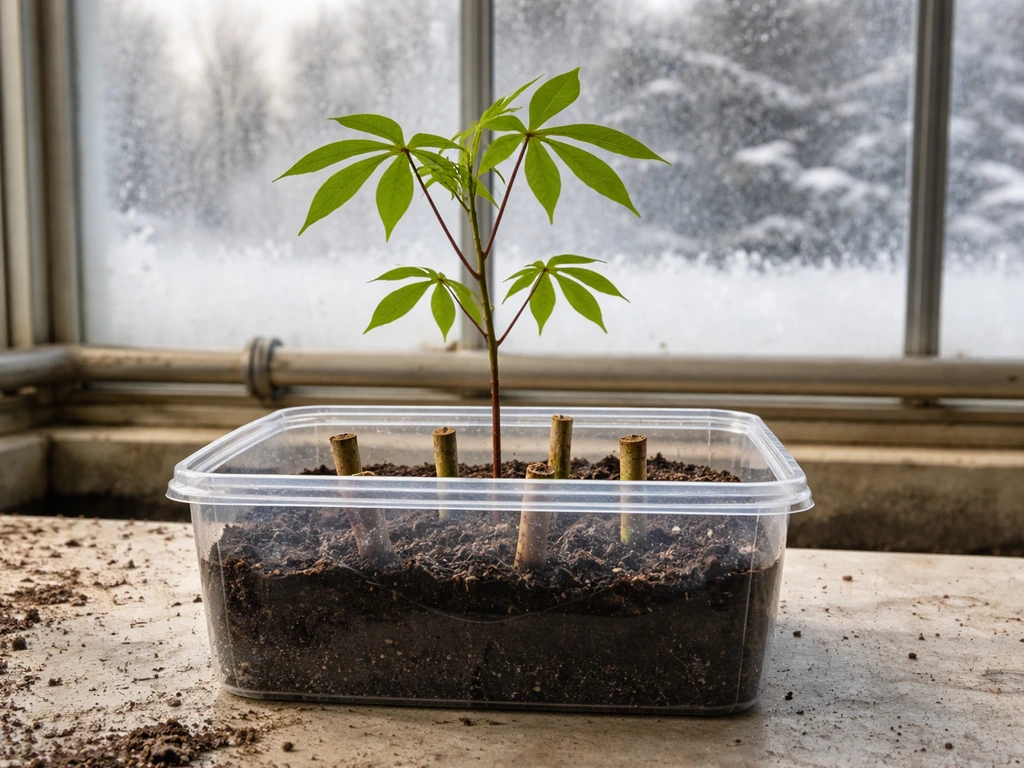
Cassava (Manihot esculenta) is a tropical root crop built for heat, long warm seasons, and absolutely no frost. It thrives at 25 to 29°C, and the soil temperature it likes best is around 30°C. Below 10°C, growth stops entirely. Any frost kills the above-ground plant and can damage or destroy the roots in the ground. Cold exposure at the molecular level causes stress responses that inhibit starch accumulation in the roots, which is ultimately what you're growing it for.
Canada's winters are obviously the opposite of that. But the deeper challenge is the short warm season. Cassava needs roughly 8 to 10 months of warm, frost-free growing conditions to produce a decent root in favorable tropical climates. In suboptimal, cooler conditions that window can stretch to 18 months or more. Most of Canada gets maybe 3 to 5 frost-free months outdoors, which is nowhere near enough without serious intervention.
The other constraint is soil. Cassava wants loose, well-draining soil. It performs poorly in waterlogged, heavily compacted, or gravelly ground. That's manageable in Canada since you can build the soil you need, but it's worth noting from the start.
Canadian climate zones and what they mean for cassava
Canada's plant hardiness zones (mapped by Natural Resources Canada using an extreme minimum temperature model similar to the USDA system) range from Zone 0 in the far north to Zone 9 in parts of coastal BC. Cassava is not cold-hardy in any meaningful sense. It's a Zone 10 to 12 plant in USDA terms. That means no part of Canada is warm enough to grow it year-round outdoors, full stop.
What matters practically is your frost-free window and your summer heat. Here's a rough breakdown by region:
| Region | Hardiness Zone (approx.) | Frost-Free Days (approx.) | Outdoor Cassava Viability |
|---|---|---|---|
| Southern Vancouver Island / Metro Vancouver | Zone 7–9 | 180–220 days | Marginal; warmest microclimates only |
| Southern Ontario (Windsor, Niagara) | Zone 6–7 | 160–185 days | Very marginal; heat is the limiting factor |
| Southern Quebec / Greater Montreal | Zone 5–6 | 145–165 days | Not viable outdoors |
| Prairie provinces (AB, SK, MB) | Zone 2–5 | 90–130 days | Not viable outdoors |
| Atlantic Canada | Zone 4–6 | 130–160 days | Not viable outdoors |
| Northern Canada | Zone 0–3 | Under 90 days | Not viable outdoors |
Even in the warmest Canadian zones, summer temperatures rarely sustain the heat cassava needs for starch accumulation. You might keep the plant alive outdoors from May to October in southern BC or Windsor, but root yields will likely be disappointing without supplemental heat. The frost-free days count is one issue; consistent warmth is the other.
Outdoor vs greenhouse: which route actually works
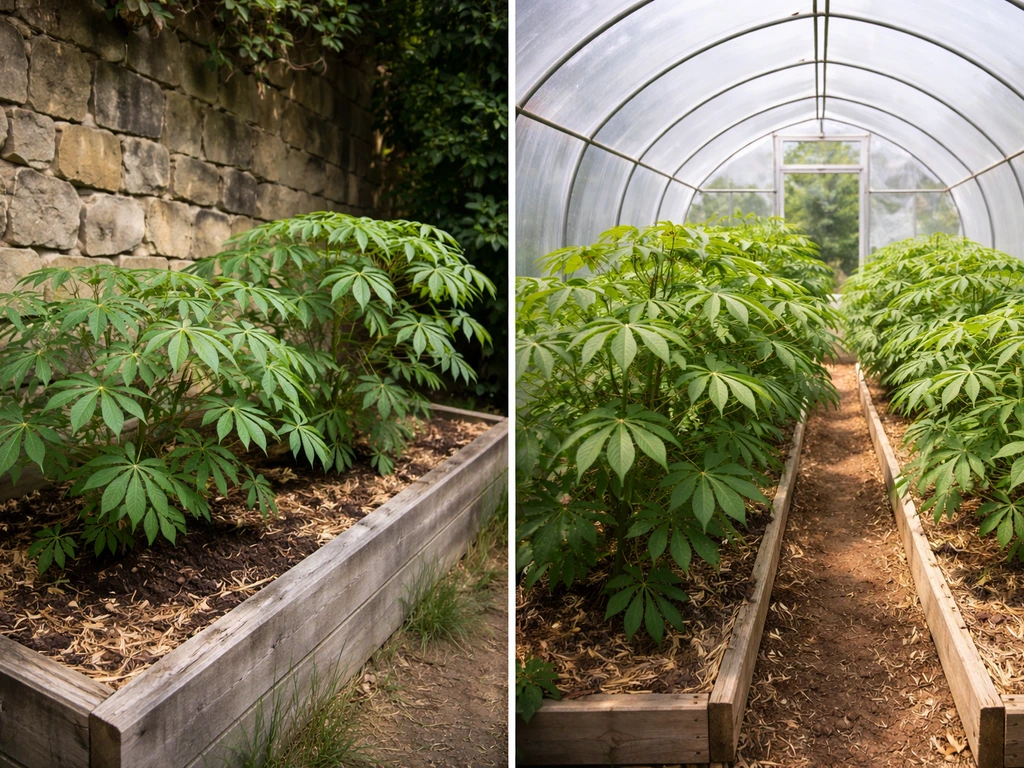
Let's be honest here. Outdoor cassava in Canada is an experiment, not a crop plan. If you're in coastal southern BC in a sheltered south-facing spot with a heat-retaining wall or fence, you can try it, but manage your expectations. For anyone else, that experiment is very likely to end in a small, underdeveloped root (if any) come October.
A greenhouse, high tunnel, or polytunnel is where Canadian cassava growing actually makes sense. Researchers have successfully maintained and grown cassava in Canadian controlled environments, including growth chambers in Winnipeg, Manitoba, so the controlled-environment concept is proven. A greenhouse extends your effective warm season dramatically, boosts ambient temperatures, and lets you manage both the start and end of the growing period regardless of outdoor conditions.
Large containers are the other practical route. You can start cuttings indoors in late winter, move containers outside once temperatures settle above 15°C consistently (usually May or June depending on your region), and bring them back inside before the first frost in fall. This also lets you overwinter the plant and give it a second growing season, which dramatically improves your chances of a meaningful root harvest.
When and how to get started
Sourcing your cuttings
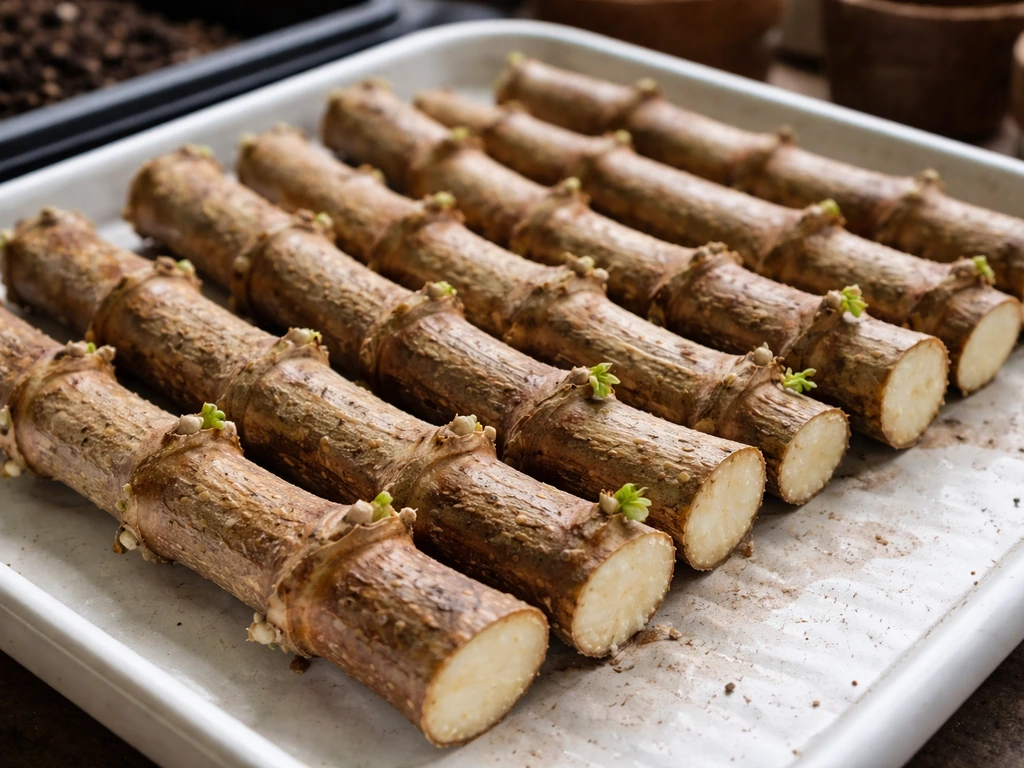
Cassava is almost always propagated from stem cuttings, not seeds. You need cuttings that are roughly 20 to 30 cm long with 5 to 7 nodes each. Look for cuttings from specialty tropical plant suppliers, Caribbean or African grocery importers (fresh stems are sometimes sold there), or online rare plant communities. Order early, since Canadian sourcing options are limited and stock moves fast.
Timing your start
Start cuttings indoors in late February or March. This gives you a head start on the growing season and maximizes your warm-growing window. blank" rel="noopener noreferrer">Plant the lower end of each cutting about 5 to 10 cm deep into your growing medium. A warm germination mat under the pot makes a significant difference since soil temperature is critical for rooting.
Containers and soil
Go big with containers. Cassava roots need room to develop, so a 40 to 60 litre container per plant is a reasonable minimum. Bigger is better. Use a mix that drains very well: a sandy loam base with added perlite or coarse sand works well. Avoid heavy clay-based potting mixes. Good drainage is non-negotiable. If you're growing in a greenhouse bed rather than containers, amend the soil deeply and build raised beds if your native soil drains poorly.
Light, water, feeding, and pests
Light
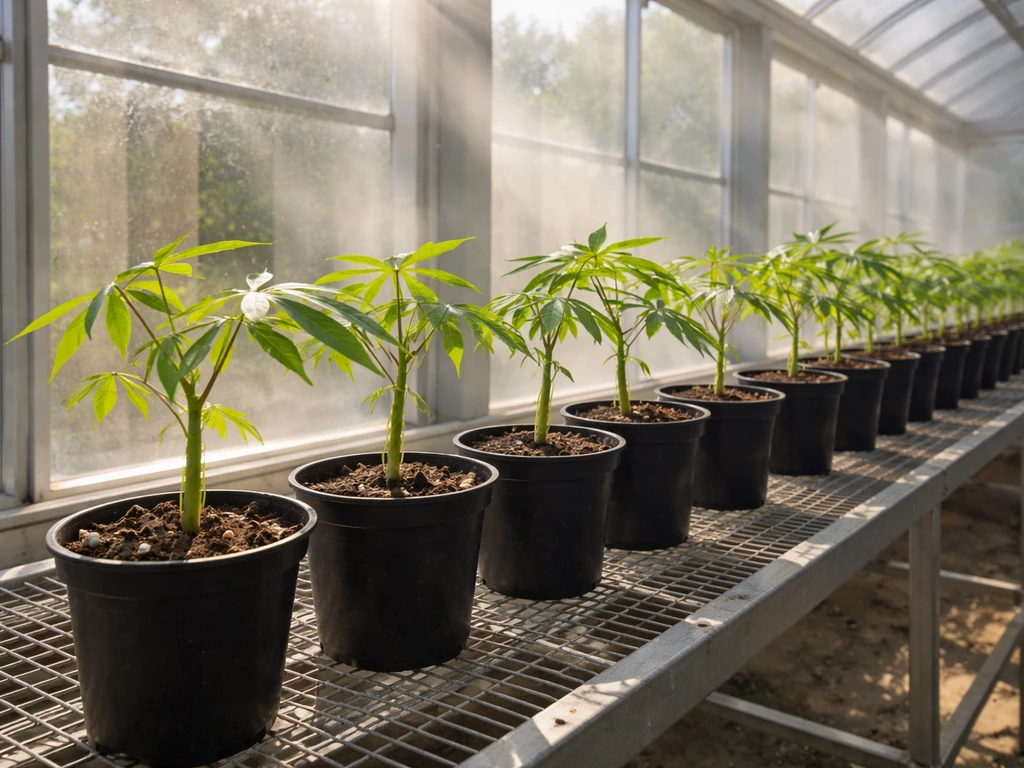
Cassava wants full sun, at least 6 to 8 hours of direct light daily. In a Canadian greenhouse this is usually fine in summer, but if you're starting indoors in February or March you'll want supplemental grow lighting to keep seedlings healthy. A 12-hour photoperiod is a useful target. Note that long-day photoperiods can actually trigger cassava flowering, which isn't your goal, but in practice this rarely becomes an issue during a container-based root-focused growing cycle.
Watering
Cassava is more drought-tolerant than most people expect, and overwatering in a container is a real risk. Water deeply when the top couple of centimetres of soil dry out, then let it drain fully. Never let containers sit in standing water. In a Canadian summer outdoors, you may water more frequently, but in a greenhouse in spring or fall, the soil stays moist longer and rot is a genuine threat.
Feeding
Cassava isn't a heavy feeder, but container growing depletes nutrients faster than in-ground planting. Use a balanced slow-release fertilizer at planting, then supplement monthly with a low-nitrogen, higher-potassium feed during the growing season to push energy toward root development rather than leaf production. Don't overdo nitrogen or you'll get a beautiful plant with disappointing roots.
Pests and disease in Canadian conditions
The good news is that Canada's cool climate naturally limits many of the severe tropical cassava pests (cassava mosaic virus, cassava green mite, whitefly infestations) that devastate outdoor crops in Africa and Asia. The bad news is that greenhouse environments create their own issues. Watch for spider mites (common in warm, dry greenhouses), aphids, and fungal problems from humidity. Ensure good airflow around plants, avoid wetting the foliage, and inspect cuttings carefully before bringing them indoors since that's the most likely entry point for pests.
Harvesting, yields, and storing your roots
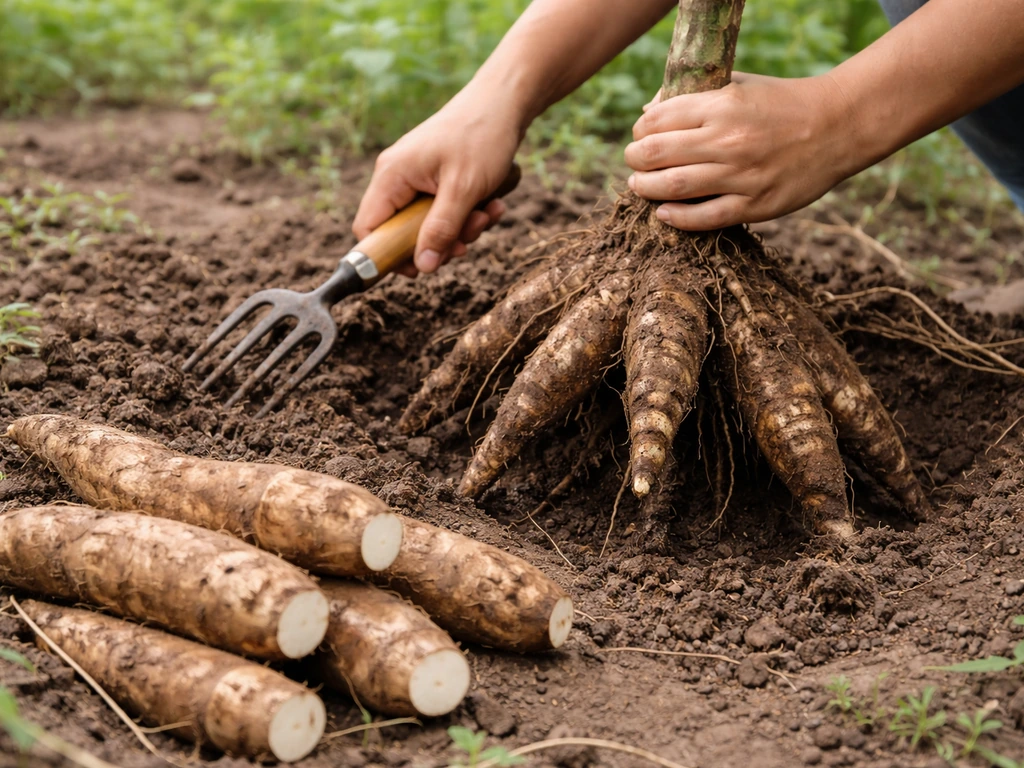
In ideal tropical conditions, early-maturing cassava varieties are harvestable at 6 to 8 months, while later types take 12 to 18 months. In Canadian conditions with the heat limitations involved, assume you're working toward the longer end of that range. A plant started in March and grown through a full outdoor summer with greenhouse overwintering can realistically hit harvestable size by late fall of its second warm season.
Harvest by carefully loosening the soil around the base of the plant and pulling the roots out by hand. Avoid cuts and bruises since physical damage during harvest is the biggest factor in post-harvest losses. Damaged roots deteriorate rapidly due to a process called postharvest physiological deterioration (PPD), which begins within 24 to 72 hours of harvest.
For storage, fresh cassava roots are notoriously perishable. The practical options for Canadian growers are: use or process the roots within a few days of harvest, freeze them (peel, cut, and freeze in bags), or store them packed in damp sand in a cool but frost-free place (around 10 to 15°C) for a few weeks. Curing (leaving roots in warm, humid conditions for several days) can help extend shelf life slightly, but only with roots that were harvested cleanly without damage. For longer storage, making cassava flour or freezing parboiled pieces is the most reliable approach.
Yield expectations for container or greenhouse cassava in Canada should be modest: a few kilograms per plant per season is a realistic goal, not the high yields possible in ideal tropical field conditions. That said, even a small harvest of homegrown cassava roots is a satisfying result given the effort involved.
Should you try it? A practical decision checklist
Before you commit, run through these questions honestly. They'll tell you whether cassava makes sense for your setup right now.
- Do you have access to a greenhouse, polytunnel, or a way to overwinter a large container plant indoors at 15°C or warmer? If not, outdoor-only cassava in Canada is almost certainly not worth your time.
- Can you source healthy stem cuttings with 5 to 7 nodes and 20 to 30 cm length before late March? Check specialty suppliers now since stock is limited.
- Do you have containers large enough (40 litres minimum) and a well-draining soil mix ready? This isn't something to improvise at planting time.
- Are you in a region with at least 160 frost-free days and warm summers? Southern BC and southern Ontario are your best bets outdoors; everywhere else, go controlled environment.
- Are you comfortable growing a plant for 12 to 18 months to get a meaningful harvest? This is not a quick crop.
- Do you have a plan for the harvest: how to process, store, or use the roots within a few days? Cassava deteriorates fast, so having a plan before harvest matters.
- Are you okay with an experimental outcome on your first attempt? First-time Canadian cassava growers often learn more than they harvest, and that's fine.
If you checked most of those boxes, here's your next action plan: order cuttings now, prepare a 40 to 60 litre container with a sandy, well-draining mix, set up a heat mat for germination, and start indoors under grow lights in late February or early March. Plan your greenhouse or indoor overwintering strategy before the first frost arrives in fall so you're not scrambling. Give the plant two warm seasons if you can, and harvest carefully in late fall of year two.
If cassava feels like too much of a stretch for your setup, you might find other warm-season or borderline crops more rewarding to experiment with in Canada. If you're wondering about growing aloe vera in Canada, the limiting factor is the same: you need consistent warmth and protection from frost. Okra, for instance, is another heat-loving crop that pushes the limits of Canadian summers but with a shorter harvest window. Can you grow okra in Canada? It depends on having enough heat and a protected growing setup. Whatever you grow, the key is matching the crop's needs to what your specific site and infrastructure can actually provide. Asparagus is a cool-season vegetable, so you still need to pick the right varieties and give it protection in Canada’s colder winters matching the crop's needs.
FAQ
Can you grow cassava outdoors in Canada without a greenhouse or indoor overwintering?
Only as a long-shot trial in the warmest microclimates of coastal southern British Columbia or the very warmest parts of Ontario, in a sheltered, south-facing spot. Even then, plan for likely small or zero harvestable roots, because cassava needs long, consistent warm soil temperatures and any frost can ruin roots or stop starch buildup.
What minimum temperature should I protect cassava from in a greenhouse or indoors?
Avoid sustained periods when root-zone temperatures drop below about 10°C. Cassava growth stalls under 10°C, and in Canadian shoulder seasons you may need supplemental bottom heat or insulation to keep the soil consistently warm, especially at night.
Do I need to grow cassava from seed, or can I start with cuttings?
Use stem cuttings, not seeds. Cassava is typically propagated from 20 to 30 cm cuttings with multiple nodes, and using the right node-containing sections is the fastest way to establish a crop that can reach harvestable root size in a short Canadian warm window.
How do I keep the potting mix warm enough for rooting in late winter?
Rooting is far more reliable with a warm germination or propagation mat under the container. Also consider placing the pot in the warmest indoor area you have and avoiding cold floors or drafts that can chill the root zone even if your room air feels warm.
What container size is realistic for getting a harvestable root in Canada?
Aim for at least 40 to 60 litres per plant, bigger if you have space. Small pots may keep the plant alive but often restrict root expansion, resulting in thin, underdeveloped roots by the end of the season.
Should I bury the cuttings deeply, and how much of the cutting should be in soil?
Plant the lower end about 5 to 10 cm deep into a loose, well-draining medium. Deeper burial than that can increase rot risk if drainage is not excellent, while shallow planting can reduce rooting and slow early establishment.
Does cassava need a lot of fertilizer to produce roots?
No, it should be fed modestly. In containers, use a balanced slow-release fertilizer at planting, then shift to a lower-nitrogen, higher-potassium feed monthly during active growth to encourage root development rather than leafy growth.
How do I tell if my cassava is getting root rot from overwatering?
Watch for persistent wilting or yellowing despite wet soil that never dries, and inspect drainage closely. In greenhouse conditions, rot can start quietly, so ensure containers never sit in standing water, water only after the top layer dries, and improve airflow to reduce humidity-related fungal issues.
When should I start and stop watering to reduce problems near harvest?
As the plant approaches harvest time, reduce watering gradually rather than making a sudden dry-out. The goal is to keep soil draining well and avoid waterlogged conditions that can worsen bruising and post-harvest deterioration after harvest.
What pest problems are most likely in Canadian greenhouses compared with outdoor tropical production?
Spider mites and aphids are often the main greenhouse pests, and fungal issues can appear when humidity is high and airflow is poor. Inspect cuttings carefully before bringing them in, keep spacing for airflow, and avoid wetting foliage during watering.
Can long-day lighting cause flowering, and does that reduce my root yield?
Long photoperiods can trigger flowering in cassava, but in a container-based root-focused cycle it usually is not the main issue. If you notice unexpected flowering, you can still manage the cycle by continuing your root timing and avoiding excessive nitrogen that would otherwise push leaf growth.
How long after harvest can cassava roots be stored, and how do I prevent losses?
Cassava roots deteriorate quickly, often starting within a day or two depending on conditions. Handle roots gently, avoid cuts and bruises, then process within a few days, freeze after peeling and cutting, or store in damp sand at cool, frost-free temperatures around 10 to 15°C.
What’s the safest way to harvest and clean roots without damaging them?
Loosen soil carefully around the base and pull by hand rather than cutting roots. If you must rinse, do it briefly and dry quickly before storage options, because lingering moisture and damaged tissue speed up deterioration.
Is it worth trying cassava if I only want a small experiment, not a full harvest?
Yes, if you treat it as a managed experiment, not an expectation of heavy yields. If you cannot provide consistent warmth, use a container you can move indoors and aim for survival plus a small test root, since yields in Canada are usually modest even with good setups.
Next Articles
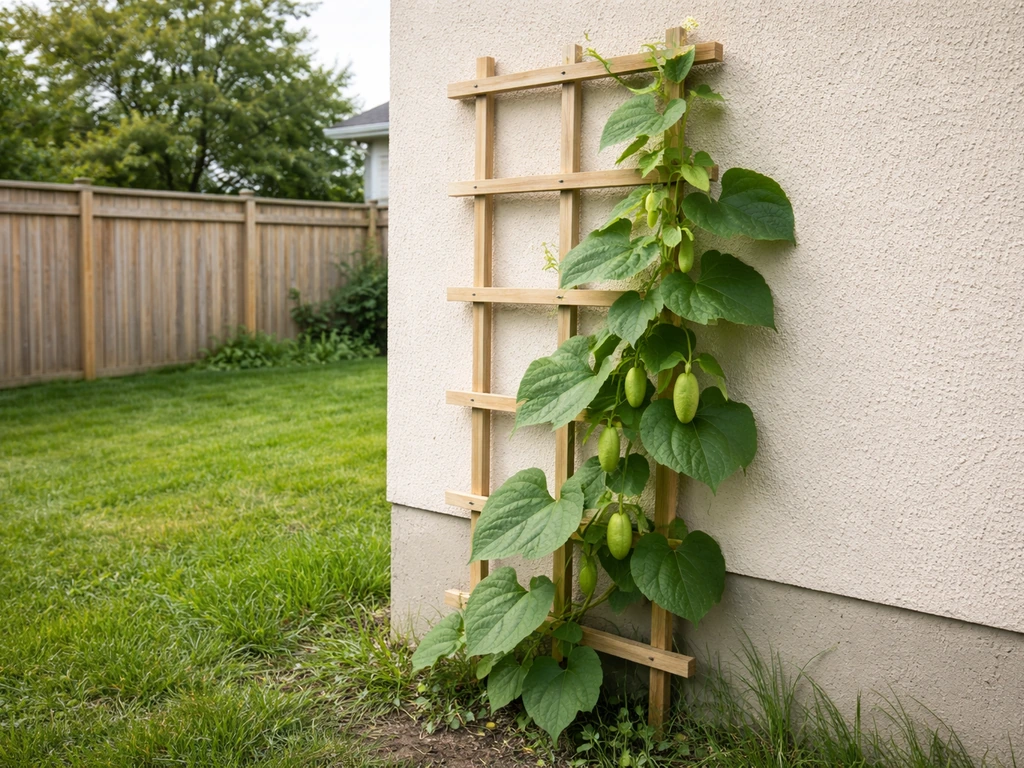
Can You Grow Chayote in Canada? Step by Step Guide
Grow chayote in Canada with region tips, indoor starts, trellising, care, harvest timing, and winter survival methods.
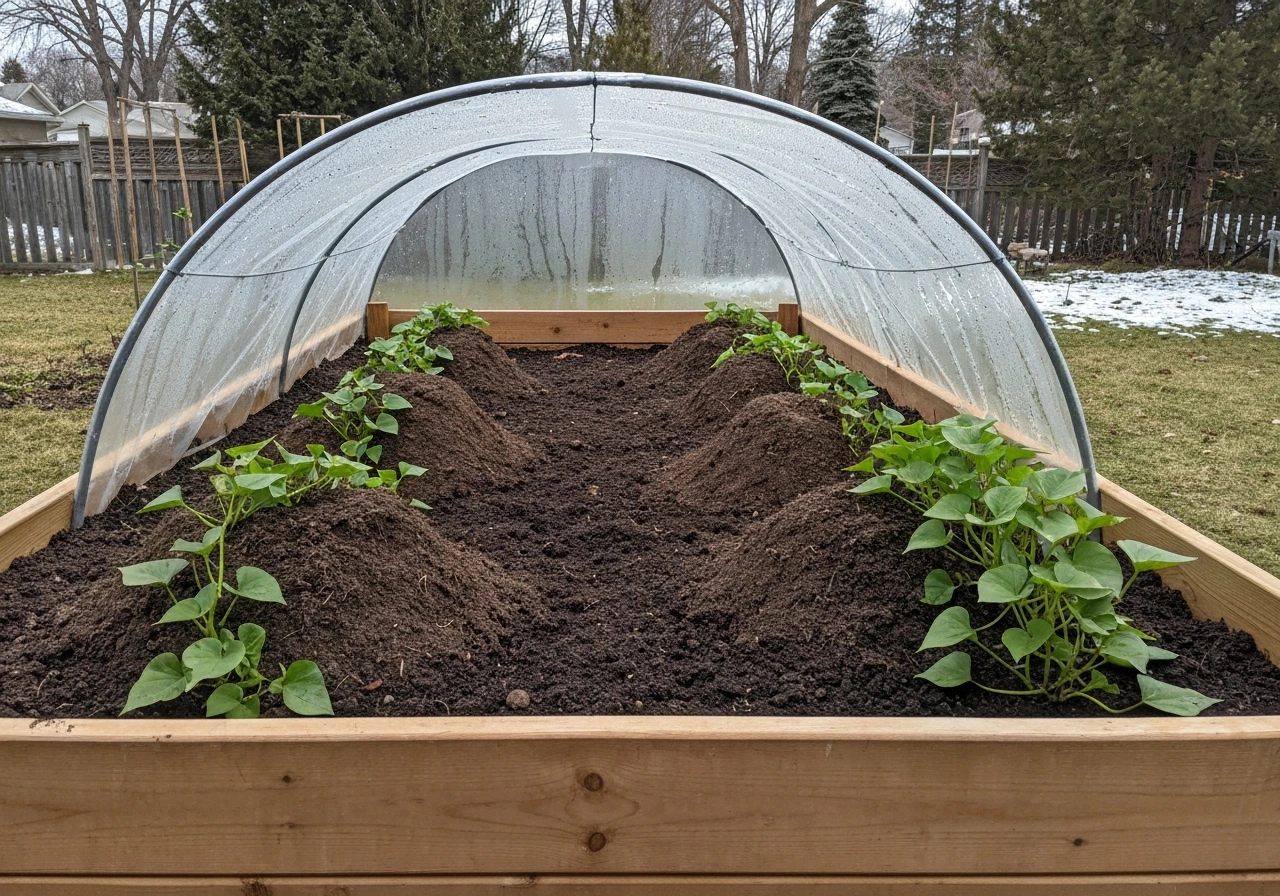
Can You Grow Yams in Canada? Sweet Potato Guide by Region
Grow sweet potatoes in Canada: which regions work, how to plant, protect frost, harvest, and cure for winter storage.
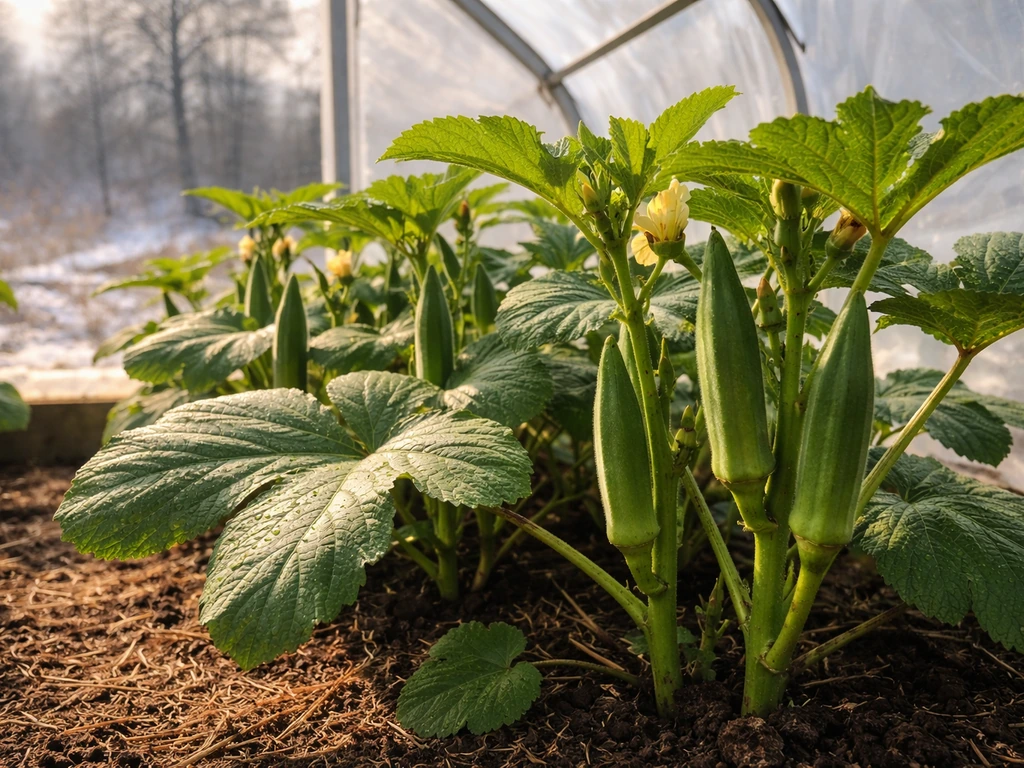
Can You Grow Okra in Washington State? Yes, With Heat
Yes, you can grow okra in Washington with heat. Choose varieties, time plantings, and use warming tricks for harvest.