
Yes, you can grow vanilla in Arizona, but keeping a vanilla vine alive and actually producing beans are two very different goals. With the right setup (a greenhouse, a heavily managed indoor space, or a shaded outdoor container zone), you can absolutely keep Vanilla planifolia alive and even get it to flower in Arizona. Getting harvestable beans is harder and requires consistent hand pollination, near-tropical humidity, and years of patience. It is doable, but you need to go in with realistic expectations and a real plan for controlling your environment.
Can You Grow Vanilla Beans in Arizona? Realistic Guide
Marcus Holloway
13 Jun 2026
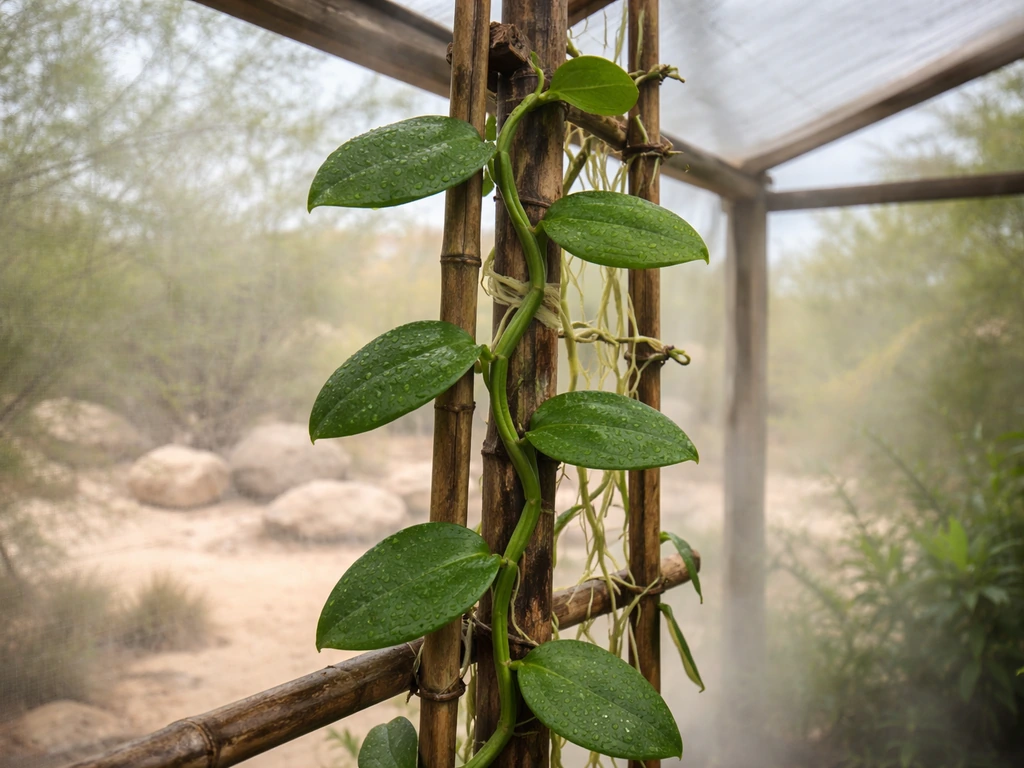
Arizona's climate vs. what vanilla actually needs
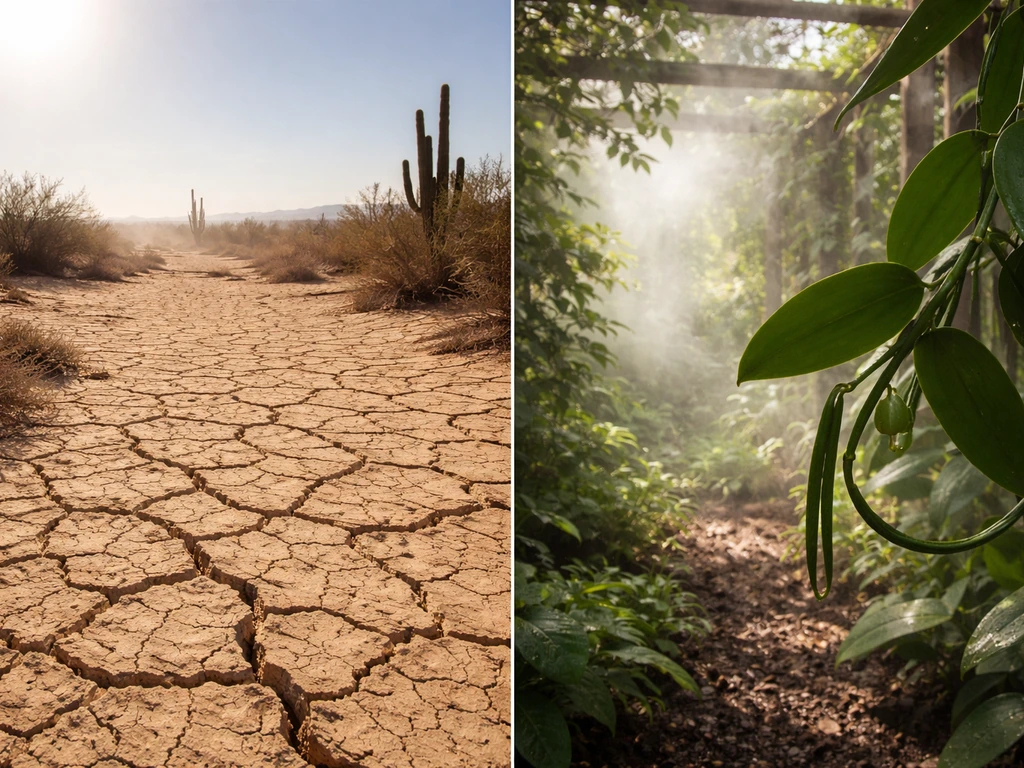
Vanilla planifolia is a tropical orchid vine from Mexico and Central America. It wants temperatures between 21 and 32°C (roughly 70 to 90°F), around 80% relative humidity year-round, and at least 1,500 mm of evenly distributed annual rainfall or irrigation. Arizona gives you almost none of that naturally.
Phoenix summers hit nighttime lows around 88°F in August, which means daytime highs are well over 100°F for months at a stretch. That blows past vanilla's upper comfort range and, more importantly, dries the air down to single-digit humidity levels during early summer. Even Tucson, which gets monsoon relief in July and August, spends much of the year well below the 50% RH floor you need just to keep the plant comfortable.
Flagstaff sits cooler but rarely exceeds 43% RH even in July, and its winters are far too cold for outdoor vanilla cultivation. The monsoon season in southeastern Arizona near Nogales gets closer to tropical conditions, but only for a few weeks a year. Nogales background materials characterize the area’s climate as semi-arid steppe and note that the Arizona monsoon season (July to August) brings increased rainfall [Arizona monsoon season (July–August)](https://www. nogalesaz.
gov/DocumentCenter/View/142/8---Background-and-Current-Conditions-PDF).
The bottom line on climate: Arizona's heat is manageable for vanilla (the temperature range is not far off in the warmer parts of the state), but the chronic low humidity and lack of consistent moisture are the real obstacles. You are not fighting the thermometer as much as you are fighting the dry desert air.
Which types of vanilla are worth trying in Arizona
The vanilla you want for bean production is Vanilla planifolia, the species behind the vast majority of commercial vanilla extract. There are other species, including Vanilla tahitensis and Vanilla pompona, but planifolia is the one growers pursue for actual culinary beans, and it is the species with the most documented growing guidance. In terms of Arizona-specific variety selection, there is no magic heat-tolerant or drought-tolerant cultivar that makes outdoor growing practical. All vanilla orchids need humid, warm, shaded conditions. If someone is selling you a "desert vanilla" variety, be skeptical.
Vanilla planifolia can tolerate temperatures up to about 32°C, which means Phoenix summers will regularly exceed its comfort zone outdoors. Indoors or in a climate-controlled greenhouse, you can stay within that window. For Arizona growers, the species choice is less important than the growing environment choice.
Your three real options: containers, greenhouse, or indoors
There is no realistic outdoor vanilla garden in most of Arizona. What you can build is a controlled microclimate. Here are the three setups worth considering, with honest pros and cons for each.
Container growing in a shaded outdoor space
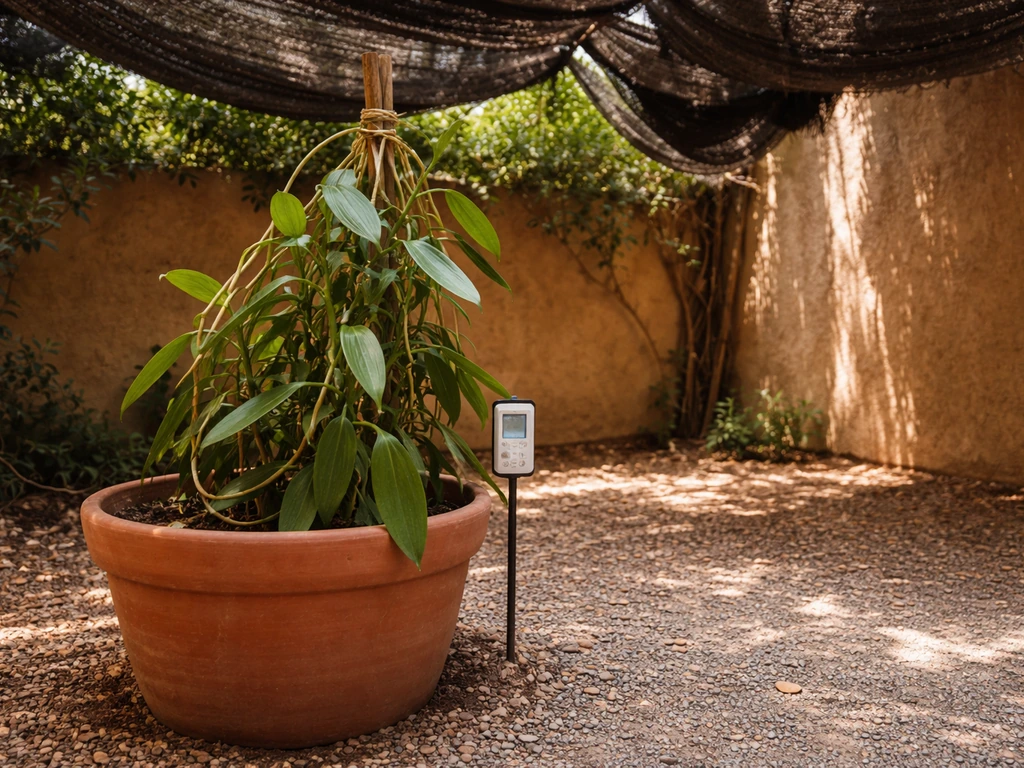
In southern Arizona (Tucson, Yuma, the southeastern corner near Nogales), you can grow vanilla in containers under deep shade during the warmer months and bring it inside when temps drop. The problem is humidity: even in summer, you will need to mist heavily or run a portable humidifier near the plant to approach the 80% RH target. This is a high-maintenance setup and mostly gets you a surviving plant rather than a bean-producing one. It can work as a stepping stone to a better setup.
Greenhouse growing
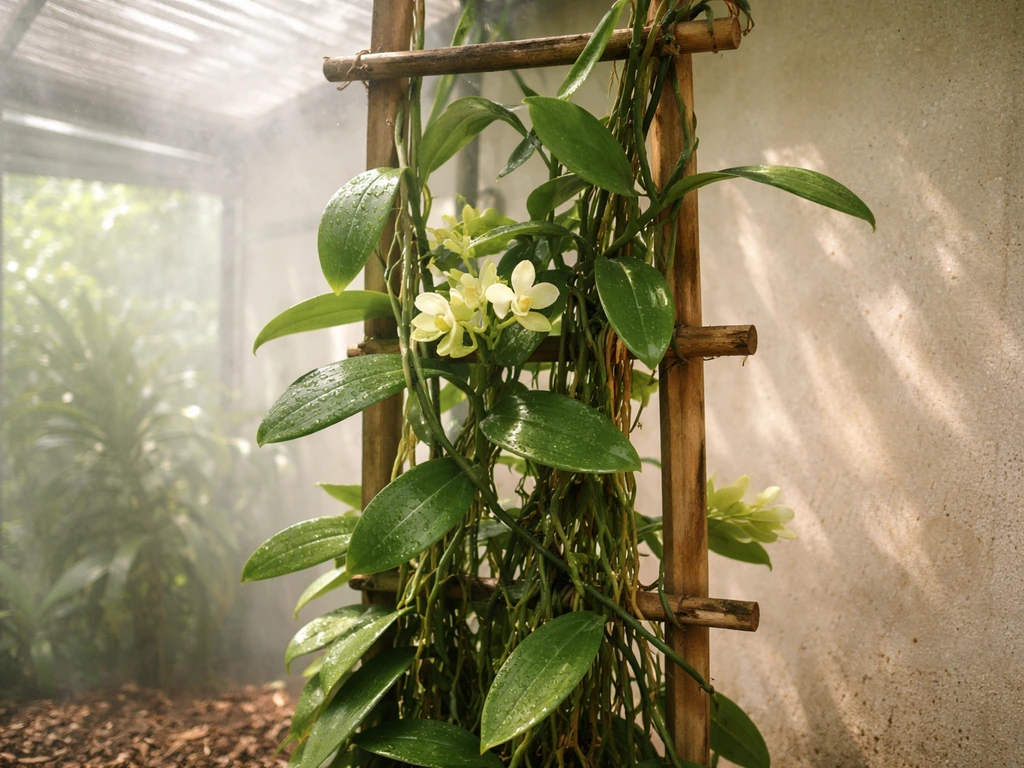
A dedicated greenhouse is the most reliable path to actually producing vanilla beans in Arizona. If you’re aiming specifically for greenhouse production, plan on humidifying, cooling, and shade as the foundation for reliable flowering and bean development can you grow vanilla beans in a greenhouse.
You will need evaporative cooling or a fog system to push humidity up to 80% and keep temps below 32°C during summer, plus heating to maintain 21°C minimum on cold winter nights in higher-elevation areas like Flagstaff or Prescott. Fog systems with high-pressure nozzles and timers are commonly used in arid-climate greenhouses for exactly this purpose: they create fine droplets that raise humidity without soaking surfaces.
Combine that with shade cloth (50 to 70% shade is typical for vanilla), good airflow from circulation fans to prevent fungal problems at high humidity, and you have a genuine tropical analog.
Indoor growing under controlled conditions
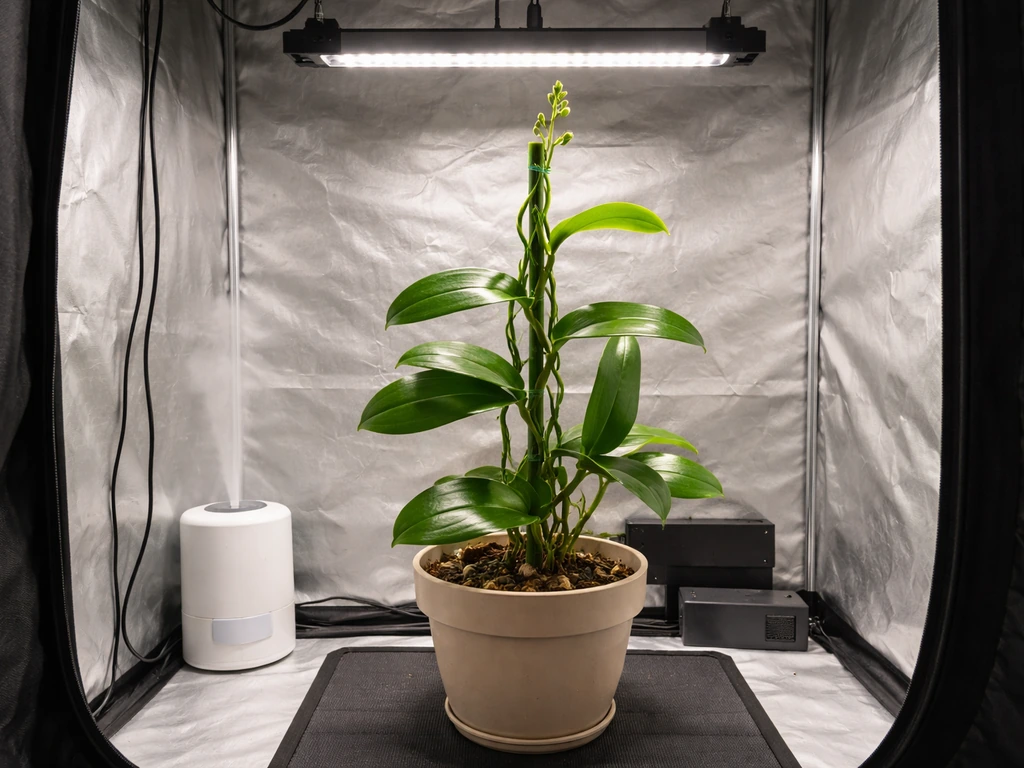
Growing vanilla inside your home is possible but demanding. You will need a dedicated space with grow lights, a humidifier running almost continuously to maintain 50% or higher humidity (80% is ideal but hard to sustain indoors without affecting your walls and furniture), and a trellis or climbing support at least 6 feet tall. Logee's, a well-known specialty plant nursery, notes that vanilla can tolerate RH as low as 50% for basic survival, though bean production really wants 80%. Indoor growing in Arizona works best as a winter or year-round setup where outdoor conditions are never viable.
| Setup | Humidity control | Temperature control | Bean production potential | Effort level |
|---|---|---|---|---|
| Shaded outdoor container | Very difficult (misting only) | Limited in peak summer | Low | High daily effort |
| Greenhouse with fog/cooling | Achievable with equipment | Manageable year-round | High (with pollination) | Moderate once established |
| Dedicated indoor space | Achievable with humidifier | Easy (HVAC) | Moderate (with pollination) | High (lighting costs) |
How to keep the plant thriving: light, temperature, humidity, water, and soil
Light
Vanilla wants bright indirect light, not direct desert sun. Direct afternoon sun in Arizona will burn the leaves fast. In a greenhouse, use 50 to 70% shade cloth. Indoors, position the vine near a bright window but screen it from direct rays, or use full-spectrum grow lights set to a 12 to 14 hour photoperiod. Too little light will suppress flowering, so you want bright but diffused.
Temperature
Keep the growing space between 21 and 32°C (70 to 90°F) at all times. Vanilla can tolerate brief excursions above this but prolonged heat above 32°C stresses the plant and can cause flower and pod drop. In Arizona greenhouses during summer, this means active cooling is not optional. Below 60°F (about 15°C) for extended periods will damage roots and slow growth significantly.
Humidity
Target 80% RH for optimal growth and bean development. For survival and vegetative growth, 50% is workable. In Arizona's low desert, ambient outdoor RH in May and June can be below 10%, so your enclosed growing space needs to be well sealed and actively humidified. In a greenhouse, fog systems with timers are the most practical solution. Indoors, an ultrasonic humidifier with a hygrometer nearby is the standard approach. Run circulation fans continuously to prevent the high humidity from creating fungal hotspots on leaves and stems, but keep airflow gentle so it does not dry out the air faster than your humidifier can replenish it.
Watering
Water thoroughly and then let the top portion of the growing medium dry slightly before watering again. Vanilla roots rot quickly in stagnant, waterlogged conditions. In Arizona's heat, your medium may dry faster than expected, so check it frequently. The goal is consistently moist but never soggy. This is especially critical in containers.
Soil and container media
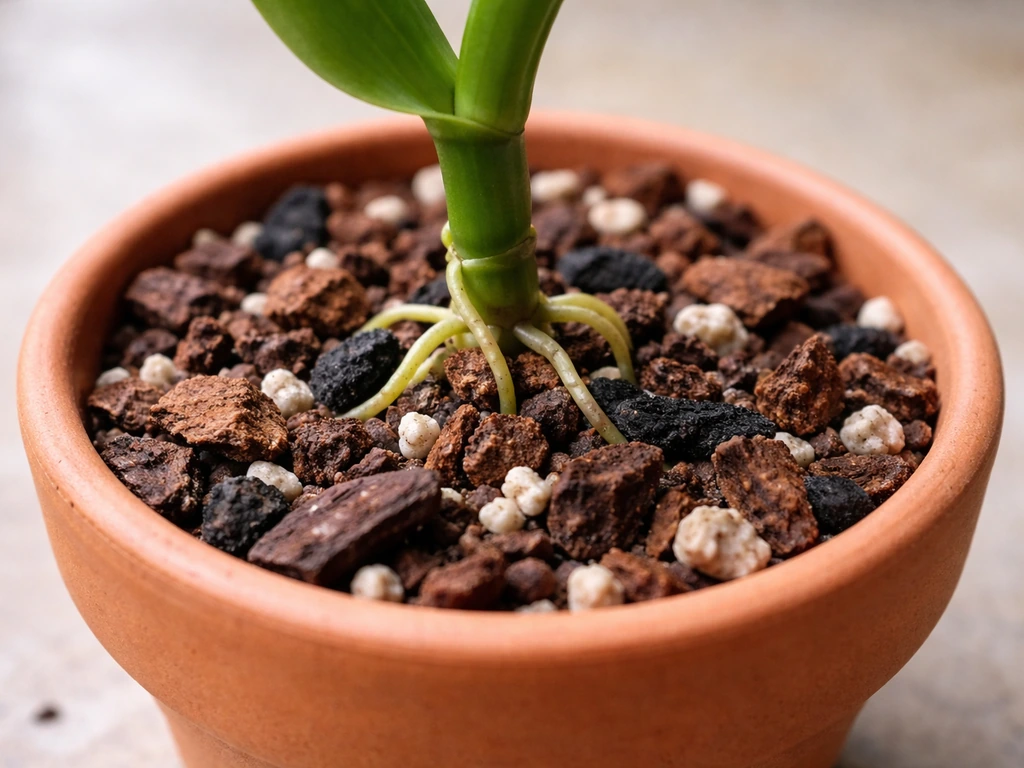
Vanilla needs an open, well-draining orchid-style medium, not standard potting soil. A good mix is coarse orchid bark combined with chunky horticultural charcoal and perlite. Some growers put a layer of charcoal chunks at the bottom of the container for extra drainage. The vine needs something to climb: attach it to a wooden stake, a trellis, or a piece of cork bark. Plastic mesh or wire trellis also works. The plant climbs by aerial roots that need to grip a surface.
Pollination and fruiting: why most people never get actual beans
This is the part most Arizona vanilla enthusiasts underestimate. Getting flowers is one challenge. Getting beans from those flowers is another one entirely.
Vanilla planifolia cannot self-pollinate easily because of a physical barrier in the flower called the rostellum, which separates the pollen from the stigma. In its native range, certain orchid bees (Euglossini species) handle pollination in the wild, but those bees do not exist in Arizona. You must hand-pollinate every single flower, and each flower stays open for only about one day. According to PROSEA's cultural requirements for Vanilla planifolia, [hand pollination is required for producing vanilla seedpods](https://www.
plants... /VanAkatsuka. pdf). Miss the window, and that flower drops with no bean.
The American Orchid Society emphasizes that timing is everything: you need to check your flowering plant daily during its bloom period (which lasts roughly two months each year) and pollinate flowers the morning they open.
The technique itself is straightforward once you practice it: use a toothpick or thin tool to move the anther cap and press the pollen mass against the stigma. It takes about 30 seconds per flower, but you have to be there to do it. After successful pollination, pods swell and reach full length (around 20 cm) within about 6 weeks, then spend 7 to 9 months maturing on the vine before harvest. That is a long, condition-sensitive window where temperature and humidity must remain stable.
Flowering itself does not happen until the vine is mature, typically 3 to 4 years after planting. Maximum production is not reached until 7 to 8 years in. In a productive season, a mature vine can produce 10 to 20 inflorescences with up to 30 flowers each, which sounds generous, but in practice, hand-pollination success rate and consistent growing conditions will determine how many of those become actual beans. For a first-time home grower in Arizona, getting a handful of beans from a mature vine in a well-managed greenhouse is a realistic and satisfying goal.
Time, costs, and what to realistically expect
Growing vanilla in Arizona is a long-game investment. Here is a realistic breakdown of what you are looking at:
| Phase | Timeline | Estimated cost range |
|---|---|---|
| Setup (greenhouse or indoor space) | Before planting | $300 to $3,000+ depending on scale |
| Humidity and cooling equipment | Before planting | $200 to $800 (fog system or humidifiers) |
| Vine cutting or starter plant | Year 0 | $15 to $60 per plant |
| Vegetative establishment | Years 1 to 3 | Ongoing water, fertilizer, media |
| First flowering (if conditions right) | Year 3 to 4 | No additional major cost |
| First harvestable beans | Year 4 to 5 at earliest | Time investment for hand pollination |
| Peak production | Year 7 to 8 | Ongoing maintenance |
The biggest ongoing cost in Arizona is energy: running evaporative coolers, fog systems, humidifiers, grow lights if indoors, and fans adds up. A small greenhouse running through an Arizona summer can meaningfully increase your electricity bill. Factor that in before you commit. The vanilla plant itself is inexpensive. The environment it needs is not.
Growers in states with naturally higher humidity, like Texas or California's coastal areas, deal with fewer baseline environmental challenges. In Texas, you may have an easier starting point because baseline humidity can be higher than in Arizona. Arizona growers are working harder against the climate from day one. That said, the controlled-environment approach that Arizona demands actually gives you more consistent conditions than an outdoor grower in a place with variable weather. A well-dialed greenhouse in Tucson can be more stable than a backyard in a more temperamental climate.
Practical next steps and where to source plants in Arizona
If you want to get started, here is the order of operations that makes sense for an Arizona grower:
- Decide on your growing environment first. Do not buy a plant until you have a plan for where it will live year-round. A greenhouse with humidity control is the strongest setup for eventual bean production. An indoor grow space works if you can commit to the humidity management.
- Get a hygrometer and thermometer for your intended space and monitor it for a week before doing anything else. Know exactly what you are starting with and how far you need to get to 80% RH.
- Source your vanilla vine from a reputable online specialty nursery. Logee's Greenhouses, Kartuz Greenhouses, and Florida-based orchid nurseries regularly carry Vanilla planifolia cuttings or rooted starter plants. You can also find cuttings from hobbyist growers on orchid forums and platforms like Etsy. Look for cuttings with at least 3 to 4 nodes.
- Set up your growing medium before the plant arrives. Mix coarse orchid bark, chunky horticultural charcoal, and perlite in roughly equal parts. Choose a pot with multiple drainage holes and set up a trellis or climbing support immediately.
- Get your humidity system running before the plant goes in. Whether that is a fog system in a greenhouse or a humidifier in an indoor room, test it and confirm you can reach and hold 60 to 80% RH in the growing space.
- Plan your pollination calendar. Once your vine matures, mark on your calendar to check for flower buds daily from late winter through spring. Set a reminder to check every morning during flowering season. Missing a single day can cost you a pod.
- Be patient. Commit to at least 3 to 4 years before expecting flowers and 4 to 5 years before your first real chance at beans. Treat the first few years as vine establishment and system refinement.
If the greenhouse route feels like too much infrastructure, a dedicated indoor setup can absolutely work, especially for growers in the Phoenix or Tucson metro areas where a climate-controlled room is easy to maintain. If you are interested in comparing approaches, greenhouse-specific growing methods share a lot of overlap with what Arizona growers need regardless of location. Growers in similar hot, dry climates like parts of California also face the humidity challenge and have developed useful container and shade-house techniques worth looking into. If you are trying to answer can you grow vanilla beans in California, plan on recreating high humidity with a greenhouse or a carefully managed humidified indoor setup parts of California also face the humidity challenge.
Growing vanilla in Arizona is one of the more demanding horticultural projects a home grower can take on, but it is genuinely achievable. In Australia, you can still grow vanilla, but you will need a greenhouse-like setup to consistently hit the warm temperatures and very high humidity vanilla beans require. The people who succeed are the ones who invest in the environment first, accept the long timeline without frustration, and show up daily during flowering season with a toothpick and patience. If that sounds like you, Arizona is not the obstacle it first appears to be.
FAQ
Can I grow vanilla beans outside in Arizona if I use shade cloth and a drip system?
For most Arizona locations, shade and drip won’t solve the core issue, low year-round humidity. Even if the vine survives, bean set usually fails because you cannot reliably hold near-tropical humidity for flowering, pod swelling, and the 6-week post-pollination growth window.
What humidity level should I target if I’m only trying to keep a vanilla vine alive, not produce pods?
Aim for at least around 50% relative humidity for basic survival and slower recovery from stress. For flowering and bean development, plan on pushing closer to 80% using a sealed greenhouse, timed fogging, or a dedicated humidified room.
Do I need to pollinate every flower, even if the plant flowers heavily?
Yes. Vanilla planifolia does not reliably self-pollinate, and flowers typically open for about a day. If you miss even a few blossoms during that daily window, you may get inflorescences with dropped flowers and far fewer usable pods.
How often should I check the plant during the flowering period?
Check daily during the bloom season, then pollinate each open flower in the morning as it opens. If you only check every couple of days, you’ll often miss the short viability window and lose the chance to set pods.
Is there a way to reduce the amount of daily hand work during flowering?
Not really. You still need to pollinate individual flowers during their one-day window. The practical way to reduce stress is to prepare tools, label branches so you can locate open blooms quickly, and have a dedicated routine during the roughly two-month bloom period.
What causes pods to abort after successful pollination?
Pod drop usually follows instability, often from heat spikes above about 32°C, humidity falling too low for too long, or inconsistent watering that swings the roots from too dry to soggy. After pollination, treat temperature and humidity stability as mandatory, not “nice to have.”
Can I grow vanilla in a greenhouse but skip the fog system and use an evaporative cooler instead?
Evaporative cooling can help with temperature, but it often doesn’t reliably raise humidity to the high levels vanilla needs because evaporative systems are limited by outdoor dry air. Many arid-climate greenhouses use fog or fine-mist systems specifically to drive humidity upward without soaking surfaces.
How sealed should a greenhouse be for vanilla?
You want enough sealing and controlled humidification to prevent constant humidity loss, but still enough fresh air exchange to avoid fungal hotspots. In practice, growers often run circulation fans continuously and control fresh-air vents carefully so humidity stays high while leaves remain dry enough to resist disease.
What orchid-style potting medium is safest for rot prevention?
Use an open mix like coarse bark plus perlite and chunky charcoal, and avoid fine peat or dense potting soils. The key is drainage and oxygen around roots, so water thoroughly, then let the top portion dry slightly before the next watering.
Do vanilla vines need a large pot or can I start small in a container?
Start small to medium, but make sure drainage is excellent and roots can breathe. Oversized containers stay wet longer and increase rot risk, especially in Arizona heat where you may end up watering less frequently but evaporation patterns can still leave pockets of moisture.
What temperature is dangerous for vanilla roots in Arizona?
Extended periods below about 15°C (60°F) can damage roots and noticeably slow growth. If you’re in higher elevations or run unheated nights, plan supplemental heating so the root zone does not dip for long stretches.
How high should the trellis be indoors or in a greenhouse?
At least about 6 feet tall so the vine can climb and establish enough structure to support flowering later. Indoor setups that keep the vine too low often end up vegetative only, because mature, well-supported growth is part of reaching the flowering stage.
How long will it take before I see flowers in Arizona?
Expect typically 3 to 4 years after planting before reliable flowering. If you’re impatient, many first-time growers abandon too early, even when the plant is healthy. Treat vanilla as a long-term project, not a seasonal crop.
If I can’t hit 80% humidity, is it still worth attempting to harvest beans?
It’s possible but far harder. Around 50% may support survival and some growth, but flowering success and pod development drop when humidity regularly falls well below target. If your setup can only hold mid-range humidity, plan your expectations around getting a few pods rather than consistent harvests.
Is vanilla planifolia the only species worth growing for culinary beans?
For the traditional culinary beans used for vanilla extract, Vanilla planifolia is the main species pursued. Other species can flower under similar orchid conditions, but plan on your best odds being with planifolia when your goal is actual bean quality and established growing guidance.
Next Articles
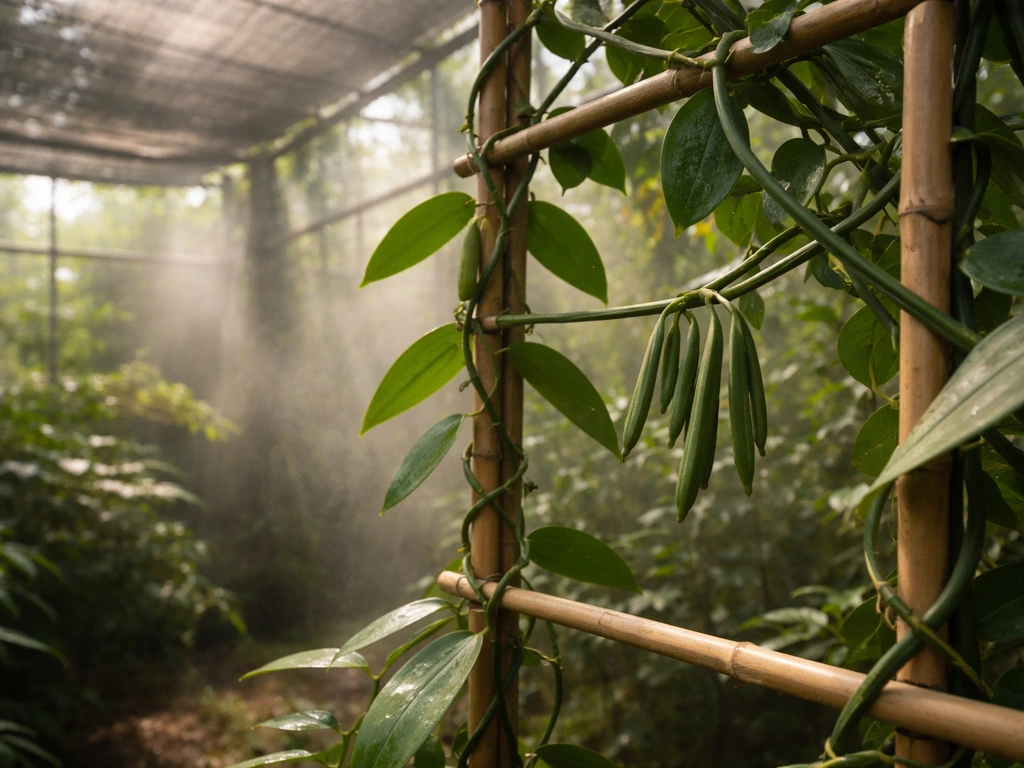
Can You Grow Vanilla Beans in a Greenhouse? How-To for US
Yes. Greenhouse how-to for growing vanilla beans in US climates: warmth, humidity, trellis, and hand-pollination for pod
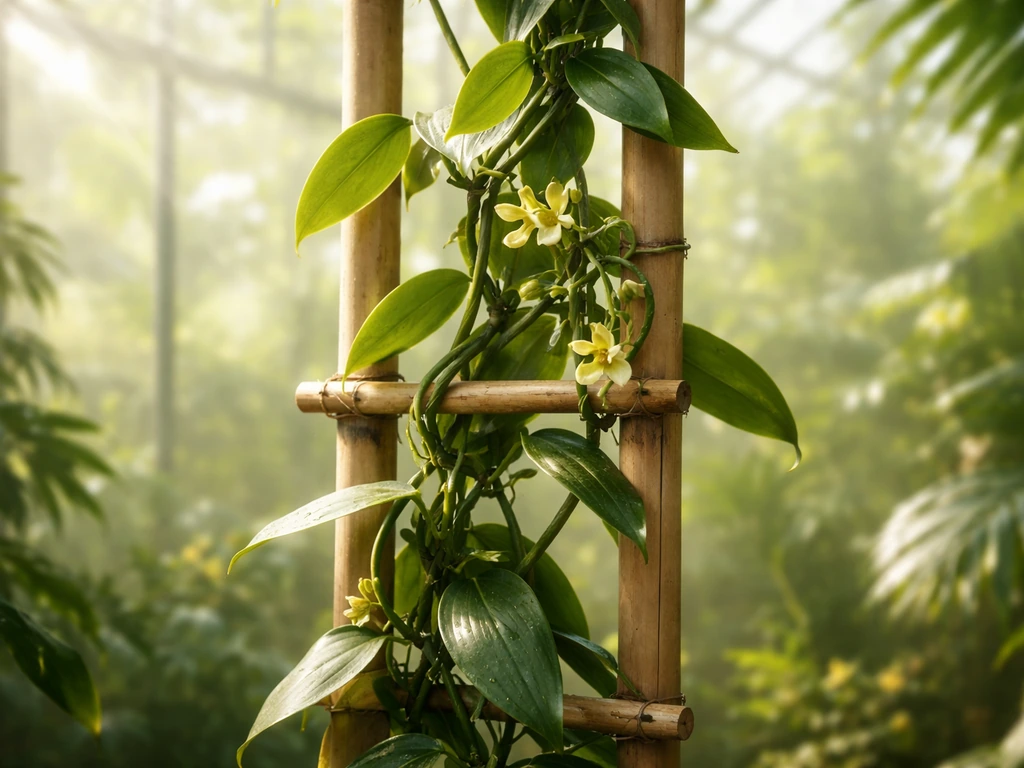
Can You Grow Vanilla Beans in California? How to Start
Learn if you can grow vanilla beans in California and how to meet tropical warmth, humidity, and pollination needs.
Can You Grow Vanilla Beans in Texas? How to Succeed
Learn if you can grow vanilla beans in Texas and follow step-by-step for orchid care, hand pollination, and curing.