
You can grow vanilla beans in Illinois, but not outdoors. Illinois winters will kill a vanilla orchid in a single night, and even summer conditions are hit-or-miss for a tropical plant that wants heat, humidity, and bright filtered light year-round. The realistic path is a dedicated indoor setup or a heated greenhouse where you control the climate completely. Do that, and producing actual vanilla beans is genuinely achievable. Skip it, and you'll have a dead plant by November.
Can You Grow Vanilla Beans in Illinois? Feasibility Guide
Marcus Holloway
5 May 2026
Illinois (and Indiana): the quick verdict

Illinois sits in USDA hardiness zones 5a through 7a, depending on where you are in the state. Chicago runs around zone 6a, central Illinois (think Peoria) is zone 5b to 6a, and the southern tip nudges into 6b or 7a. None of those zones support outdoor vanilla. According to 1991-2020 climate normals from NWS Peoria, the average last freeze at 32°F is April 16, and the first freeze of fall arrives around October 23. That gives you roughly a six-month frost-free window at best, and vanilla needs twelve months of warm, humid, tropical-like conditions to thrive and eventually flower.
Indiana is in the same boat. Central Indiana follows similar frost normal tables, with last freeze dates in mid-to-late April and first fall freezes arriving in October. Southern Indiana's slightly warmer zones don't change the math enough to matter for vanilla production outdoors. Both states share the same verdict: indoor or greenhouse growing only, with consistent climate control required.
If you're in Ohio or Michigan and wondering if the situation is different there, the answer is essentially the same, though states like Georgia and North Carolina have more favorable outdoor conditions further south. If you are wondering can you grow vanilla beans in Ohio, the temperature and humidity requirements still mean indoor or greenhouse growing is the realistic path Ohio or Michigan.
What vanilla actually needs to produce beans
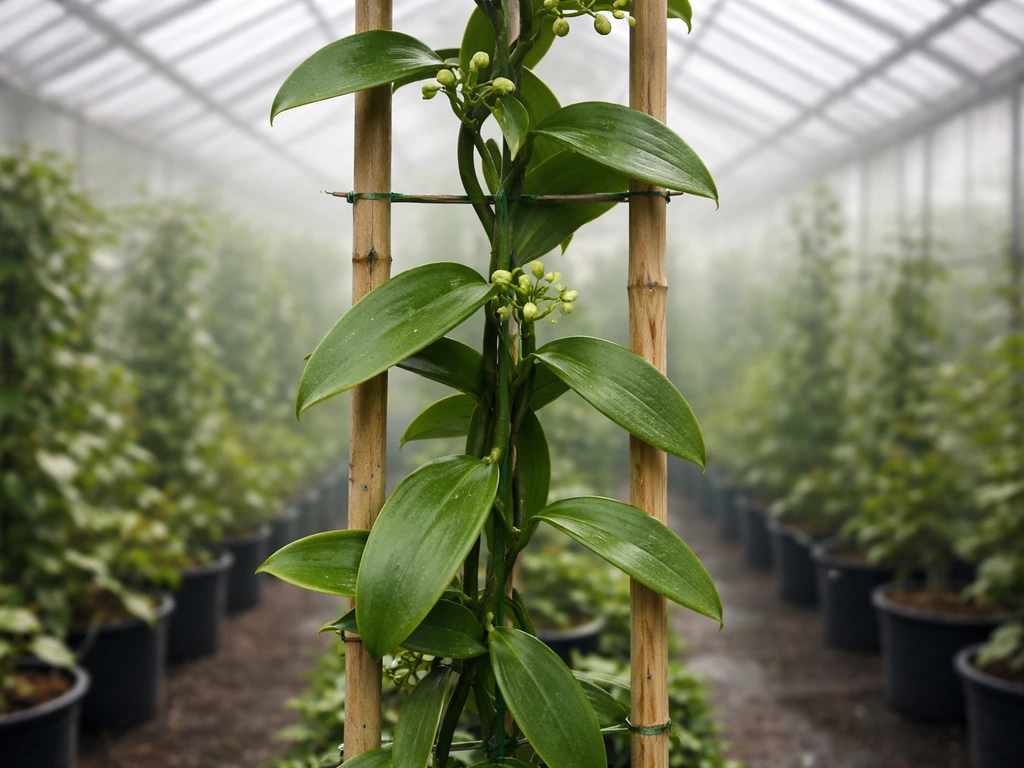
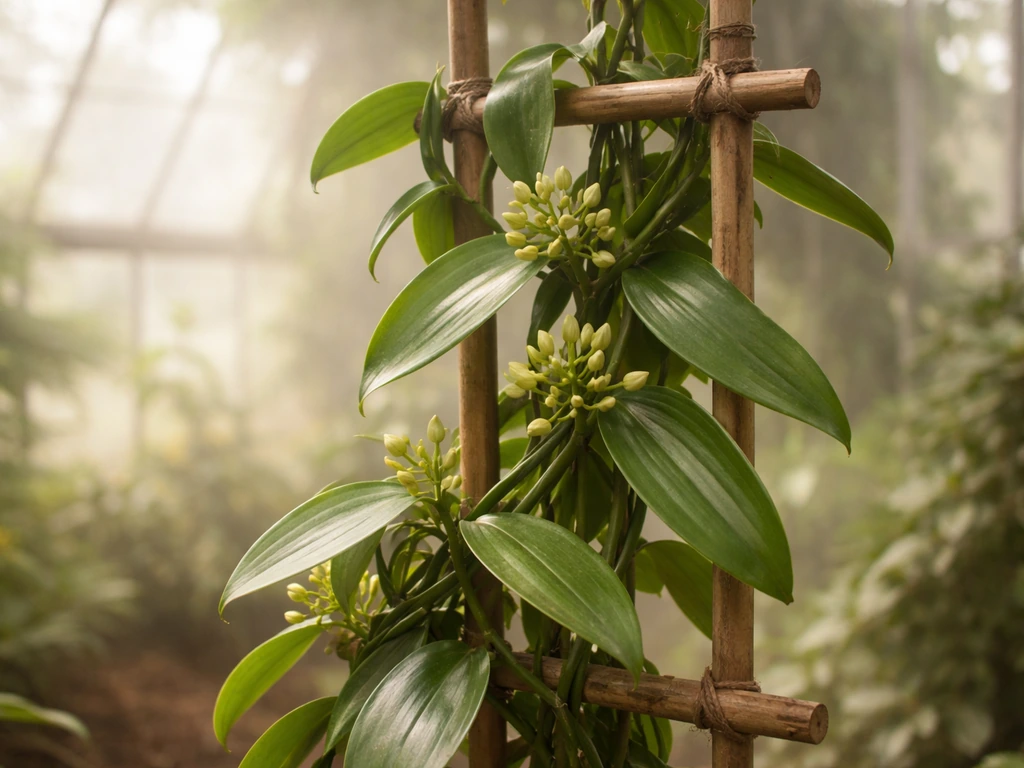
Vanilla planifolia, the species behind commercial vanilla extract and beans, is a vining orchid native to eastern Mexico and Central America. It climbs trees or trellises using aerial roots, produces clusters of pale greenish-yellow flowers, and only turns into vanilla beans after successful pollination. The plant itself can live for decades in the right conditions, but 'the right conditions' is where most Midwestern growers run into trouble.
Just getting a vine to grow isn't the hard part. Getting it to flower, then timing your hand-pollination correctly, then waiting nine months for beans to mature without disease or premature splitting is where effort really stacks up. Most vanilla plants don't flower until they're three to five years old and have reached a vine length of around 10 to 15 feet. This is a long-game crop, not a seasonal one.
Key requirements at a glance
| Requirement | Vanilla's ideal range | Typical Illinois/Indiana reality |
|---|---|---|
| Temperature | 60–95°F year-round; optimal 70–85°F | Below 32°F in winter; hot summers are variable |
| Humidity | 80–85% relative humidity | 30–50% indoors in winter; variable outdoors |
| Light | Bright, filtered (no direct harsh sun) | Manageable indoors with grow lights or shade cloth |
| Frost tolerance | None; damaged below 50°F, killed by frost | Frost arrives October; last freeze mid-April |
| Growing season length | 12 months continuous warmth | 6-month frost-free window outdoors |
| Root medium | Fast-draining, bark-based orchid mix | Must be created; not naturally available |
| Vine maturity to flower | 3–5 years, 10–15 feet of growth | Achievable indoors with patience |
Why Illinois and Indiana climate is a hard no for outdoor growing
Vanilla planifolia starts to suffer below 50°F and takes real tissue damage below 40°F. A single hard freeze wipes it out. Using the 1991-2020 normals from the Illinois State Climatologist, even the most protected areas of Illinois see a hard freeze (28°F or colder) as late as April 5 in spring and as early as November 2 in fall. That means there's essentially no outdoor planting window for a plant with zero frost tolerance. You'd be lugging a large potted vine in and out constantly, and even a single miscalculation ends the plant.
Summer heat and humidity are the other half of the problem. Vanilla wants consistently high humidity around 80 to 85 percent. Illinois summers can be humid, especially in the south, but that humidity is inconsistent, and the plant would still need to be outdoors at temperatures above 60°F every night. Summer nights in Illinois can drop into the 50s even in June and August, which stresses the plant. The outdoor option just doesn't work reliably, even as a warm-season strategy.
How to actually grow vanilla indoors or in a greenhouse
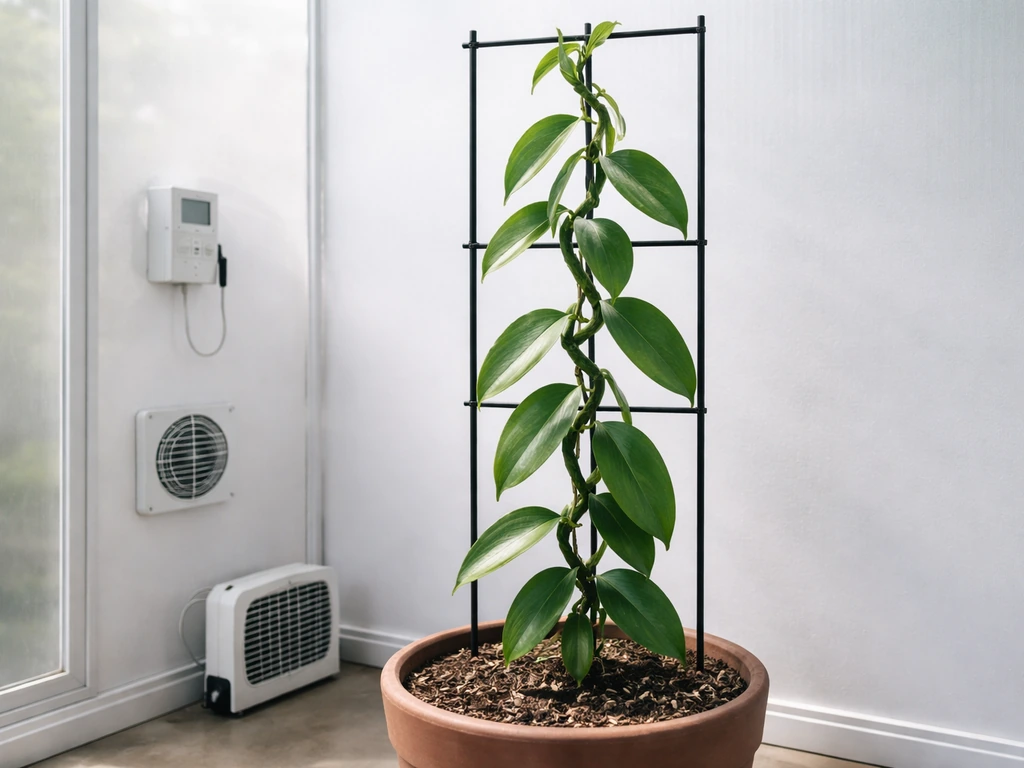
This is where Illinois and Indiana growers can make it work. The setup isn't cheap or effortless, but it's absolutely doable, and people are doing it successfully in climates far colder than Chicago. The goal is to recreate tropical conditions in a controlled space year-round.
Container and growing medium setup
Plant your vanilla in a well-draining orchid bark mix, not potting soil. Vanilla is a hemi-epiphyte, meaning it naturally grows with its roots partly exposed or in very loose, airy substrate. A mix of medium orchid bark, perlite, and a small amount of coco coir works well. Use a 6- to 10-inch container to start, repotting as the vine grows. The pot needs excellent drainage holes because waterlogged roots rot fast.
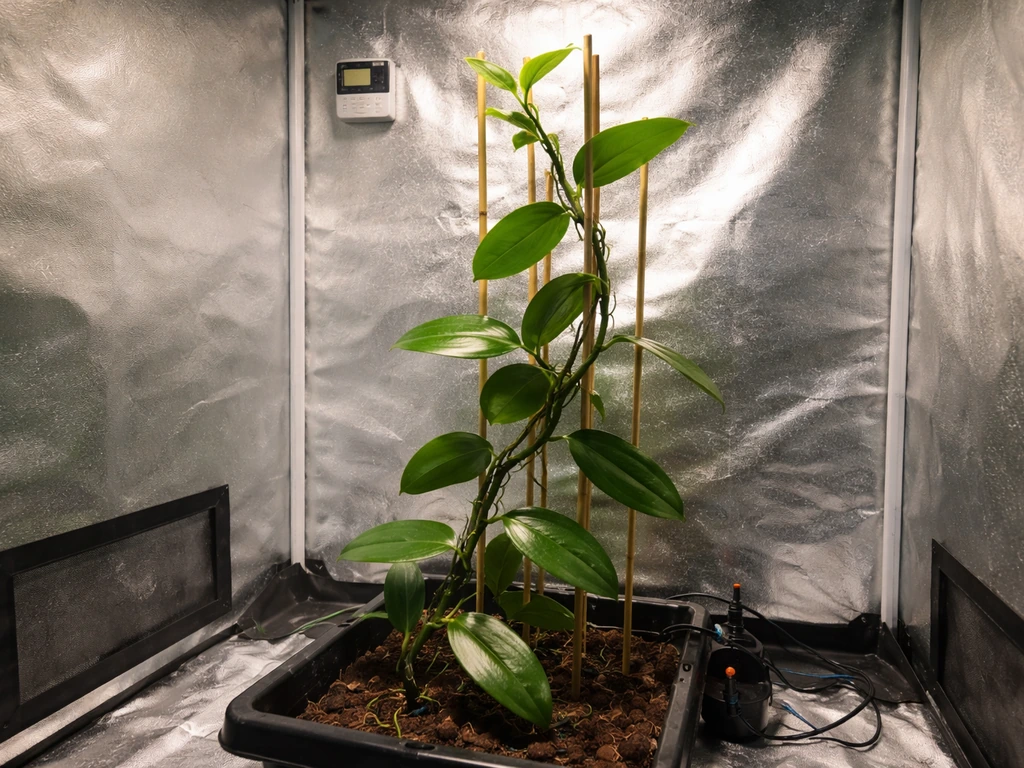
Provide a trellis, bamboo pole, or wire system inside the growing space. Vanilla vines climb, and a plant that can't climb struggles to thrive. Allow for at least 10 to 15 feet of vertical and horizontal growing space if you're serious about getting to the flowering stage.
Temperature targets
Keep daytime temperatures between 75 and 85°F. Nighttime temperatures can drop to around 60 to 65°F without major stress, but try not to go lower regularly. For a heated greenhouse in Illinois or Indiana, this means running heat through October to May at minimum. A quality gas or electric heater with a thermostat controller makes this manageable. For indoor setups, a spare room, sunroom, or conservatory addition works if you can dedicate space to it.
Humidity and light

Humidity is the most challenging factor indoors, especially in Illinois winters when forced-air heating drops indoor humidity well below 30 percent. You'll need a humidifier running consistently in the growing area targeting 70 to 85 percent relative humidity. A digital hygrometer is essential so you're not guessing. Misting the leaves can help but won't substitute for a proper humidifier in a well-sealed room or greenhouse.
For light, vanilla wants bright but filtered light, roughly equivalent to 10,000 to 20,000 lux. Direct harsh sun burns the leaves, and too little light slows growth dramatically. A south- or west-facing window with a sheer curtain can work in summer, but for consistent year-round production you'll want to supplement with full-spectrum LED grow lights, especially November through March in Illinois when natural light is at its weakest and shortest.
Pollination and timing: the step most people skip
Even if your vine flowers, you won't get beans without pollination. In their native range, vanilla flowers are pollinated by specific Melipona bees and hummingbirds. Neither exists in Illinois or Indiana, which means you have to hand-pollinate every single flower, and you have about a 12-hour window to do it. Each flower opens in the morning and closes by afternoon, and it won't reopen.
How to hand-pollinate vanilla

- Check your vine every morning during the flowering period. Flowers open early, usually between 6 and 10 a.m.
- Use a small toothpick or thin wooden skewer. You need to transfer pollen from the anther to the stigma within the same flower.
- Gently peel back or lift the flap (called the rostellum) that separates the anther cap from the stigma. This is the key step most beginners miss.
- Press the pollen mass (pollinia) from the anther against the sticky stigma surface. A gentle press is enough.
- Mark pollinated flowers with a small twist tie or ribbon so you can track which ones are developing.
- Successful pollination results in the ovary (the green stem behind the flower) beginning to swell within a few days. Unpollinated flowers drop off within 24 hours.
After successful pollination, vanilla beans take approximately nine months to mature on the vine. The beans are ready to harvest when they start to turn yellow at the tip, not fully yellow or split. Harvest too early and the flavor compounds haven't developed. Harvest too late and they split open and lose quality. Timing matters.
A single flowering cluster can produce 6 to 20 flowers, and experienced growers recommend pollinating no more than 6 to 8 per cluster on a young vine to avoid stressing the plant. For a first-time Illinois or Indiana grower, pollinating 2 to 4 flowers per cluster is a practical starting point.
Overwintering, pests, diseases, and the mistakes that kill vanilla plants
If your vanilla is in a controlled indoor or greenhouse space, overwintering is mostly just maintaining your heat and humidity targets through the cold months. Reduce watering slightly in winter since the plant's growth slows, but never let the roots dry out completely. Keep temperatures above 60°F at all times. A single cold snap to 45°F or below can cause leaf drop, root damage, and set the plant back significantly.
Common pests and diseases
- Root rot: The number one killer, usually caused by overwatering or poor drainage. Use fast-draining bark mix and water only when the top inch of substrate is dry.
- Spider mites: Common in low-humidity indoor environments. Regular humidity and occasional neem oil spray keeps them controlled.
- Mealybugs: Check leaf axils and under leaves. Remove by hand and treat with insecticidal soap or neem.
- Fusarium root and stem rot: A fungal disease that spreads fast in wet conditions. Remove affected sections immediately and treat with a copper-based fungicide.
- Anthracnose: Causes brown leaf spots in humid conditions with poor airflow. Ensure good air circulation in your growing space even while maintaining humidity.
The most common failure points for Midwest growers
- Using regular potting soil instead of a bark-based orchid mix, leading to root rot within the first season.
- Placing the plant in a drafty spot near a window or vent where winter temperatures fluctuate.
- Giving up before the plant matures enough to flower, which takes 3 to 5 years minimum.
- Missing the pollination window because flowers weren't checked daily during flowering season.
- Letting winter indoor humidity drop below 40 percent without compensating with a humidifier.
Is it worth it? Realistic expectations by effort level
The honest answer is that growing vanilla beans in Illinois or Indiana is a multi-year commitment that requires real infrastructure. It's not a casual container gardening project. But for growers who genuinely love the process and are set up with a greenhouse or dedicated indoor space, it absolutely pays off. Homegrown vanilla beans are exceptional quality, often far better than commercial beans, and there's a real satisfaction in producing something so specialized in the Midwest.
Feasibility checklist: are you set up to succeed?
- You have a heated greenhouse, sunroom, or indoor space you can dedicate to tropical plants year-round.
- You can maintain 70 to 85°F daytime temperatures and no lower than 60°F at night from October through May.
- You have a humidifier capable of maintaining 70 to 85% RH in your growing space.
- You can provide or supplement with 10,000 to 20,000 lux of filtered light year-round.
- You have or can build a trellis structure allowing 10 to 15 feet of vine growth.
- You're prepared to wait 3 to 5 years before your vine flowers.
- You'll check the plant every morning during flowering to hand-pollinate within the 12-hour window.
- You're using a fast-draining orchid bark mix and watering conservatively.
If you can check most of those boxes, vanilla is genuinely achievable in Illinois and Indiana. If you're wondering about Missouri specifically, the same constraints apply and you'll still need a tightly controlled indoor setup or heated greenhouse to get vanilla to flower vanilla is genuinely achievable in Illinois and Indiana. If several of them are dealbreakers, especially the temperature control in winter and the humidity management, you'll likely lose the plant before it ever has a chance to flower. For growers with fewer resources, a potted vanilla vine as an ornamental tropical houseplant is still a rewarding project, even if beans aren't the goal.
For context, growers in warmer states like Georgia or North Carolina have the option of outdoor or semi-protected cultivation for much of the year, making the project significantly less infrastructure-intensive. For context, you can grow vanilla beans in North Carolina too, but it still usually requires semi-protected conditions and careful indoor or greenhouse climate control. Missouri sits somewhere in between, with slightly warmer southern regions but still requiring indoor protection through winter. If you're in Illinois or Indiana and committed to beans, go all-in on the indoor setup from day one rather than trying to compromise with partial outdoor seasons.
FAQ
If I have an unheated sunroom in Illinois, can I grow vanilla beans anyway?
Usually not for beans. Vanilla planifolia must stay above about 60°F consistently, and it is not frost tolerant. An unheated sunroom may warm in daytime but can still fall too low at night in fall and winter, causing leaf drop or root damage that sets the plant back, often before it ever reaches flowering age.
Can I bring the plant outdoors in summer and keep it inside in winter?
You can try for ornamental growth, but it complicates the climate targets and increases stress. Vanilla also struggles with nighttime temperatures that regularly dip into the 50s, so even in summer Illinois nights can be stressful. For consistent flowering and bean development, the safer approach is a controlled indoor or greenhouse environment year-round.
What is the minimum humidity I can get away with indoors during winter in Illinois?
Aim for roughly 70 to 85 percent relative humidity, not the 30 percent or lower typical of forced-air heat. If you frequently fall far below 70 percent, you may see slower growth, tougher leaf stress, and more frequent drying around aerial roots. A digital hygrometer and a humidifier with enough output for your room size matter more than occasional misting.
Do I need a sealed greenhouse, or will a leaky space work if I run a humidifier?
A leaky or very vented space usually forces you to run the humidifier harder and may never stabilize humidity. For vanilla, stability is the goal, so either use a tighter enclosure or plan on significant humidifier capacity and careful control of ventilation. Otherwise humidity swings can derail the plant’s growth cycle.
How much light is really required, can I rely on window light year-round?
Window light alone is often unreliable in Illinois from about late fall through winter. If your indoor area does not consistently provide bright filtered light, growth will slow and flowering becomes less likely. Full-spectrum LED grow lights are the practical fix, especially November through March, when day length and intensity drop quickly.
What size pot should I start with to avoid root issues?
Starting with a 6 to 10 inch container is typically easier to manage than going large immediately, because it helps prevent soggy media. Use a loose orchid bark mix and ensure excellent drainage holes. Overly large pots tend to stay wet longer, which increases the risk of root rot.
Do I have to use orchid bark, or will regular potting mix work?
Potting soil is usually a mistake for vanilla in Illinois because it compacts and holds water too long. Vanilla prefers an airy, well-draining substrate that mimics a hemi-epiphytic root environment. A mix of medium orchid bark plus perlite with a small amount of coco coir gives better aeration and reduces rot risk.
How do I know my plant is ready to flower, and how many years should I plan for?
Plan on three to five years for most plants, sometimes longer, because vanilla needs enough vine length and maturity. A good target is around 10 to 15 feet of vine for many growers before expecting flowers. If your vine is growing but never forms clusters after several years, it usually means light, humidity, or temperature is still not meeting the plant’s needs.
When hand-pollinating, can I pollinate later in the day if the flower is still open?
No, there is a limited daily window. Many flowers open in the morning and close by afternoon, and they generally do not reopen the next day. Set up a routine to pollinate the same day the flower opens, and treat it like a time-sensitive task.
How many flowers should I pollinate on a young vine so I do not weaken it?
A common guideline is to limit pollination on young plants to reduce stress. For a first-time grower in Illinois, pollinating about 2 to 4 flowers per cluster is a practical starting point. If you pollinate too many, the plant may struggle to support full bean maturity and can be less likely to flower again soon.
What should I do with irrigation during winter when growth slows?
Reduce watering slightly in winter because growth slows, but do not let the roots fully dry out. Instead of following a strict calendar schedule, check the media and water only when it is getting light and slightly dry, while still preventing complete drying. Consistent warmth above 60°F is what keeps the plant safe during the cold months.
How do I handle a brief temperature dip, like power outage or heater failure?
Treat it as an emergency. Keep a plan to prevent sustained time below 60°F, and ideally have backup heat or alerting for your thermostat. If temperatures drop near freezing or the plant experiences a hard cold snap, leaf drop and root damage can occur, delaying flowering by a season or more.
How can I tell if I harvested vanilla beans at the right time?
Look for the tip color change, not full yellowing and not splitting. Beans should be harvested when they start turning yellow at the tip. If they are harvested too early, flavor development is weaker, and if harvested too late, splitting starts and quality declines.
Next Articles
Can You Grow Vanilla Beans in Georgia and Tennessee
Learn if you can grow vanilla beans in Georgia or Tennessee, plus heat, humidity, frost-free needs, and setup steps.
Can You Grow Vanilla Beans in NC and South Carolina?
Learn if you can grow vanilla beans in NC and SC, and get indoor or greenhouse steps for humidity, hand pollination, and
Can You Grow Vanilla Beans in Ohio? Indoor Guide
Learn if you can grow vanilla beans in Ohio indoors, with setup, humidity, care, pollination, and pod timeline.