
Yes, you can grow vanilla beans in North Carolina and South Carolina, but not by planting them in the ground and walking away. Both states get too cold in winter for vanilla to survive outdoors year-round, so you need a container-based setup you can move indoors, a heated greenhouse, or a dedicated indoor growing space. With that commitment in place, NC and SC growers can absolutely raise vanilla orchids, get them to flower, hand-pollinate them, and harvest real vanilla beans. It just takes a few years of patience and a setup that keeps the plant warm and humid even when January temps drop.
Can You Grow Vanilla Beans in NC and South Carolina?
Marcus Holloway
29 Apr 2026
Can you actually grow vanilla in NC and SC? The honest answer
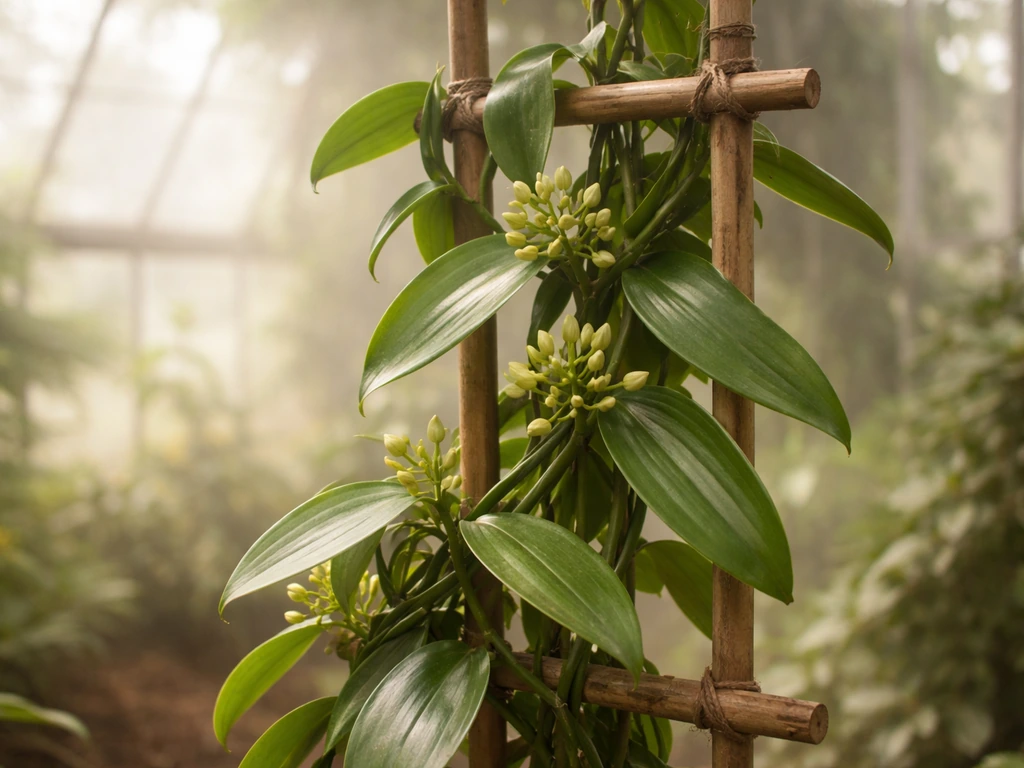
Vanilla planifolia is a tropical orchid vine native to Mexico and Central America. It thrives in USDA zones 11-12, which covers only the southernmost tip of Florida. North Carolina sits mostly in zones 6b-8b, and South Carolina ranges from about 7a on the coast to 8b in the lowcountry. That means winters in both states will kill vanilla if it's left outside. The Outer Banks or coastal SC areas around Hilton Head are the mildest spots, but even there you'll get freezing nights that vanilla simply cannot handle.
The good news is that vanilla has been grown successfully as far north as Michigan and Ohio in controlled indoor environments, so North and South Carolina's warmer baseline climate actually makes the job easier than it is for growers in colder states. The coastal humidity in both states also works in your favor. The challenge is purely about protecting the plant from frost and providing consistent warmth, not about the summer climate, which is nearly ideal.
What vanilla actually needs to thrive
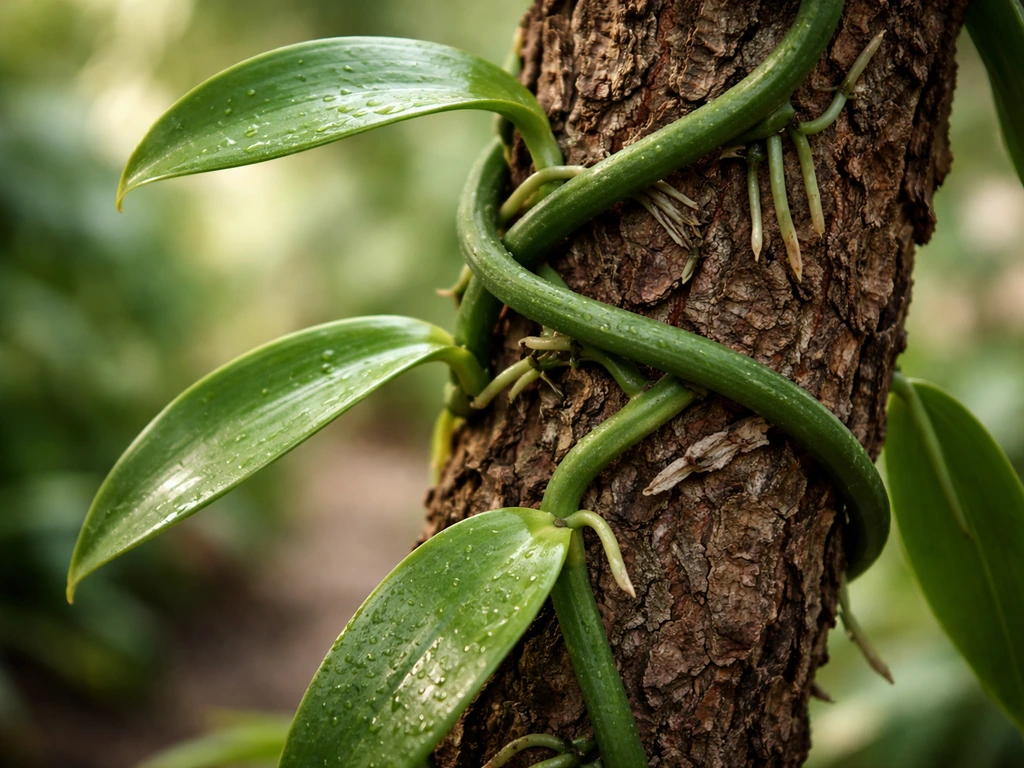
Before you set up a growing space, it helps to understand exactly what vanilla is asking for. This is an epiphytic orchid, meaning it grows by clinging to trees in the wild rather than rooting deeply in soil. Its needs are specific but not impossible to meet.
| Requirement | Target Range | Notes for NC/SC |
|---|---|---|
| Temperature (day) | 70-95°F | NC/SC summers are naturally in range |
| Temperature (night) | 60-70°F minimum | Indoors or greenhouse required in winter |
| Frost tolerance | None | Any frost will damage or kill the plant |
| Humidity | 60-80% RH | Coastal SC has natural advantage; inland NC may need a humidifier |
| Light | Bright indirect, 50-70% shade | Avoid direct afternoon sun; east-facing window or shade cloth works |
| Airflow | Moderate, consistent | Prevents fungal issues; a small fan helps indoors |
The frost tolerance point is the most critical one. Vanilla cannot handle temperatures below about 50°F for extended periods, and a hard freeze will kill it outright. In Charlotte, Raleigh, or Asheville, overnight lows regularly drop below that threshold from November through March. Even in coastal areas like Wilmington or Charleston, SC, a cold snap can surprise you. Plan your setup assuming you need frost protection for at least four to five months of the year.
Your setup options in NC and SC
There are three realistic approaches for growing vanilla in these states, and which one you choose depends on your space, budget, and how serious you are about actually harvesting beans.
Indoor container growing
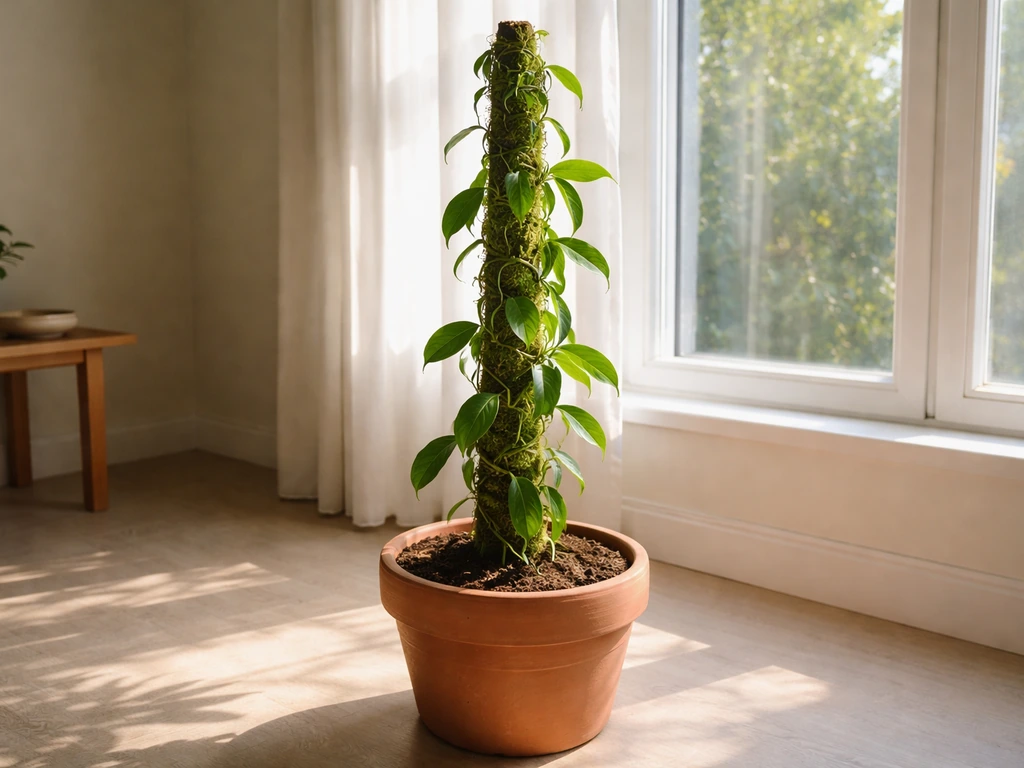
This is the most accessible starting point. You grow the vine in a large pot, give it a trellis or moss pole to climb, and keep it near a bright south or east-facing window. In warm months (roughly May through September in NC/SC), you can move the whole container outside to a shaded patio or screened porch where it will love the humidity and warm air. Once nights start dipping toward 55°F in the fall, bring it back inside.
While Illinois weather is much harsher than the Carolinas, you can still attempt vanilla beans with a fully controlled container setup and careful frost and humidity management grow vanilla beans in Illinois. The limitation is light: a window typically gives you 4-6 hours of bright indirect light, which is usually enough to keep the plant healthy but may not trigger flowering as reliably as a greenhouse or supplemental grow lights.
Indoor growing with supplemental lighting
Adding a full-spectrum LED grow light rated for 200-400 micromoles (PPFD) puts you in a much better position for getting the plant to flower. You can set the light on a 12-14 hour timer to simulate tropical day length. This setup works well in a spare room, basement with good ventilation, or a dedicated grow tent with a humidifier. It's a step up in cost (a good LED panel runs $80-200) but dramatically improves your odds of getting to the flowering stage.
Heated greenhouse
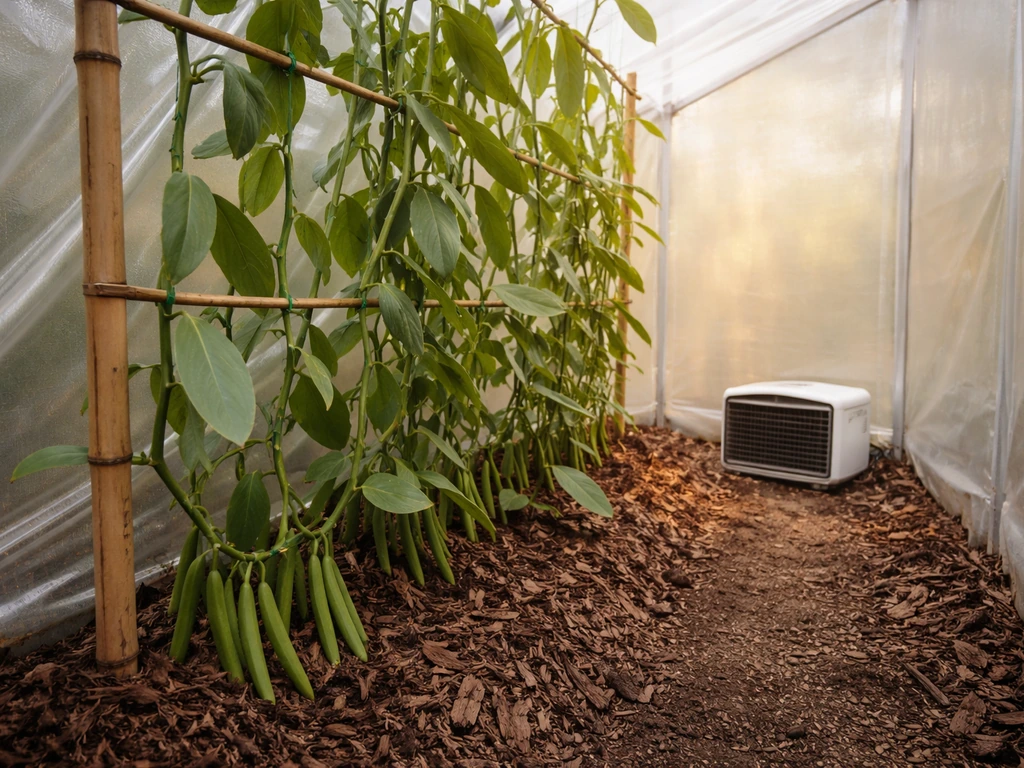
If you're serious about vanilla bean production, a heated greenhouse is the gold standard. Even a modest 8x10 foot hobby greenhouse with a propane or electric heater gives vanilla everything it wants: high humidity, strong light, warm nights, and room for the vine to climb. In NC and SC, you generally only need to heat the greenhouse from around November through March, which keeps operating costs manageable. The vine can grow aggressively in a greenhouse setting, reaching 10-20 feet or more over a few growing seasons.
Summer outdoors in protected spots
Coastal SC and the Cape Fear region of NC have mild enough summers that you can keep potted vanilla outdoors from late April through October with just shade cloth protection. Temperatures in these areas rarely exceed 95°F for extended stretches, which vanilla handles fine as long as it isn't sitting in direct afternoon sun. This works as a supplement to indoor or greenhouse growing, not as a standalone approach.
Planting, potting, and basic care
Getting your plant
Start with a rooted cutting or small plant from a reputable orchid nursery or specialty vendor rather than trying to root an unrooted cutting as a beginner. Look for Vanilla planifolia specifically (not Vanilla pompona or ornamental types, which don't produce the same quality beans). Cuttings should be at least 12-18 inches long and have at least one healthy node. Several online vendors ship live vanilla plants to NC and SC with no legal restrictions.
Potting medium and containers
Vanilla roots rot easily in heavy, moisture-retaining mixes. Use a chunky, well-draining orchid medium: a combination of medium-grade orchid bark, perlite, and sphagnum moss works well (roughly 60% bark, 20% perlite, 20% moss). A terracotta pot in the 6-12 inch range with drainage holes is ideal because it lets the roots breathe. As the plant matures over years, you can repot into a larger container or a raised bed if you're in a permanent greenhouse.
Support and training
Vanilla is a vining orchid and will grow 20-30 feet in optimal conditions. Give it something to climb from day one: a sturdy moss pole, bamboo trellis, wooden lattice, or greenhouse rafter works well. The vine produces aerial roots at each node, and those roots need to grab onto something rough and slightly moist to anchor properly. Gently tie new growth to your support with soft plant ties or clips. In a greenhouse, you can train the vine horizontally along wires at a height of about 6 feet, which makes pollination much easier later.
Watering and fertilizing
Water thoroughly when the top inch of the medium feels dry, then let it drain fully. Do not let the pot sit in standing water. In summer, this might mean watering every 3-5 days. In winter indoors, it may stretch to once a week. Vanilla is sensitive to fluoride and chlorine in tap water, so if you're in a municipal water area, letting water sit overnight or using filtered water is worth the extra step. For fertilizing, use a balanced orchid fertilizer (20-20-20 or similar) diluted to half strength every two weeks during active growing months. Reduce to once a month in winter.
Training the vine and how long until you see flowers
This is where most people hit a wall: vanilla takes time. A plant grown from a cutting won't flower until it reaches maturity, which is typically measured in vine length rather than age. Most growers find that flowering begins when the vine reaches 10-15 feet of growth, which usually takes 3-5 years in a home indoor setting and 2-4 years in a greenhouse with strong light. There's no shortcut here. The vine needs to produce enough nodes and stem length before it shifts from vegetative growth to reproductive growth.
To encourage flowering, some growers stress the plant mildly by reducing water slightly for 4-6 weeks in late winter (a dry rest period that mimics tropical seasonality), then resuming normal watering in spring. This can trigger flower bud development in a mature vine. Once buds appear, they develop into clusters of small yellow-green flowers called racemes, each carrying 10-20 individual blooms. The flowers open one or two at a time, usually in the morning, and each individual flower stays open for only about 8-12 hours, which makes timing your pollination critical.
Hand pollinating vanilla flowers step by step
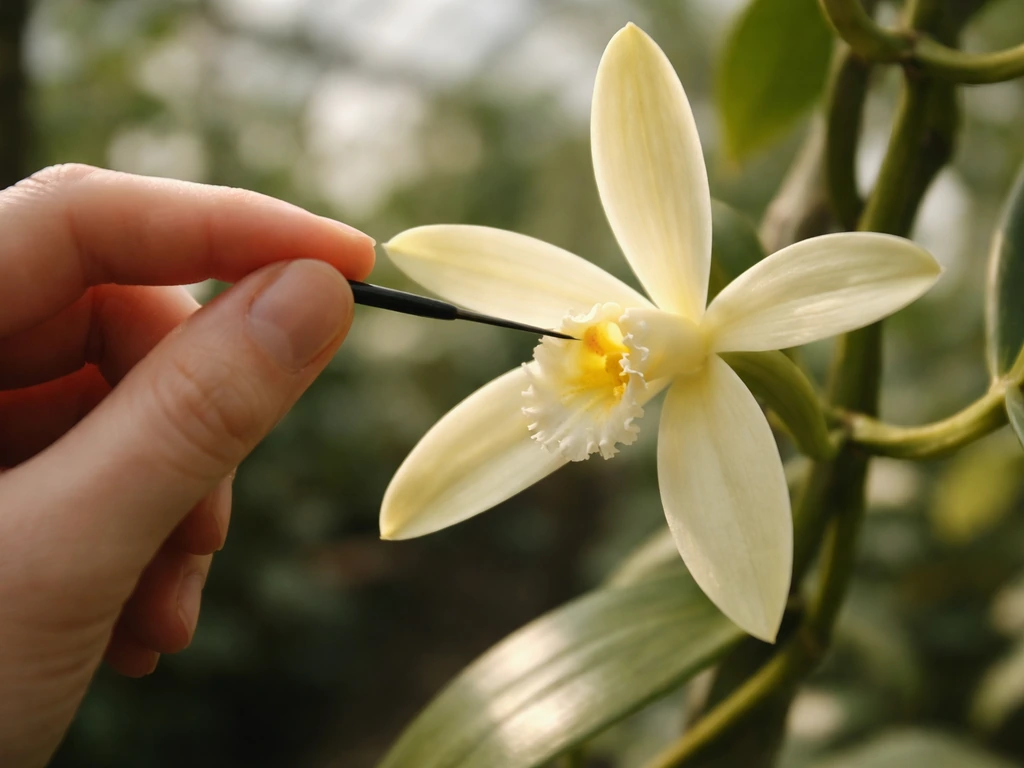
This is the most important skill to learn before you start growing. In vanilla's native range, it's pollinated by specific bees and hummingbirds that aren't present in North America. Outside of Mexico, virtually every vanilla flower you want to turn into a bean must be pollinated by hand. The good news is the technique is simple once you understand the anatomy of the flower. Hand pollination is typically done by using a toothpick or similar tool to lift the rostellum and apply the pollinium (pollen) to the stigma, following Garden Guides' step-by-step method lift the rostellum and apply the pollinium to the stigma.
- Check your plant each morning during flowering season (typically late spring or early summer indoors). Look for flowers that have opened fully that day.
- Gather your tools: a toothpick, a small stiff brush, or even just a thin stick. You can also use your fingertip. No special equipment is needed.
- Look at the open flower. Inside, you'll see the rostellum, a small flap or membrane that separates the pollen (anther cap, at the top) from the stigma (the sticky pad below it). This barrier prevents self-pollination under natural conditions.
- Use your toothpick or finger to gently lift or push aside the rostellum. This is the key step: you're bypassing the natural barrier.
- With the rostellum moved aside, press the anther cap (which contains the sticky pollen mass called the pollinium) down onto the stigma below it. Apply gentle but firm pressure. You should feel a slight stickiness as contact is made.
- Repeat for every open flower that morning. Each successfully pollinated flower can develop into one vanilla bean pod.
- Check back the next morning for newly opened flowers and repeat the process. A single raceme can have 10-20 flowers opening over 1-2 weeks.
- Within a few days, successfully pollinated flowers will begin to swell at the base. The ovary will start to enlarge into a pod. If the flower simply drops, pollination failed and you can try again on the next open bloom.
- Vanilla pods take 9-12 months to fully mature after pollination. Do not harvest early. The pod should be about 6-8 inches long and just beginning to turn from dark green to slightly yellowish before you harvest.
Don't be discouraged if your first few attempts fail. Timing is everything: a flower that opened yesterday or has been open for more than 8-10 hours may have collapsed the stigma. Working with freshly opened morning flowers gives you the best success rate. Most experienced vanilla growers get 50-70% of pollinated flowers to set pods once they get comfortable with the technique.
Common problems and how to troubleshoot them
NC and SC growers face a predictable set of issues, mostly driven by the indoor or greenhouse environment. Here's what to watch for and how to handle it.
| Problem | Likely Cause | Fix |
|---|---|---|
| Root rot | Overwatering or poor drainage | Reduce watering frequency; repot into chunkier bark mix; ensure pot drains completely |
| Yellow leaves | Overwatering, low light, or nutrient deficiency | Check soil moisture first; move to brighter spot; resume half-strength fertilizer |
| Leaf scorch or bleaching | Too much direct sun | Move to filtered light or add 50% shade cloth |
| Vine growing but not flowering | Plant not mature enough, or insufficient light | Wait for 10-15 ft of vine length; add grow lights or move to greenhouse |
| Spider mites | Low humidity, dry indoor air | Raise humidity above 60%; spray plant with water; use neem oil spray |
| Mealybugs | Common on orchids indoors | Remove manually with isopropyl alcohol on a cotton swab; treat with insecticidal soap |
| Fungal lesions on stems or leaves | Poor airflow, overwatering | Improve ventilation with a small fan; reduce watering; remove affected tissue |
| Flowers dropping without setting pods | Missed pollination window | Pollinate in the morning within hours of flower opening; practice on each bloom |
The biggest mistake NC and SC indoor growers make is overwatering. Vanilla's epiphytic roots are designed to dry out between rains in the wild. Reddit hobbyists in r/gardening share real-world troubleshooting experiences with vanilla growing, including issues like humidity problems, failed pod set, and the timing of hand pollination. The second most common issue is low humidity in heated indoor spaces during winter. A small ultrasonic humidifier near the plant set to 60-70% RH makes a noticeable difference in leaf health and aerial root development. If you're growing in an inland NC location like Raleigh or Charlotte where winter air gets very dry with the heat running, a humidifier is essentially non-negotiable.
Where to start and what to confirm before you buy
Before you order a vanilla plant, run through this checklist. It will save you from setting up a growing space that won't work long-term.
- Decide on your setup: container indoors with a grow light, a dedicated grow tent, or a heated greenhouse. Your setup is the single most important decision.
- Confirm your indoor or greenhouse temperature stays above 55°F at night year-round. Check your coldest room or greenhouse space with an inexpensive min/max thermometer before you start.
- Measure your available light. If you're relying on a window, check whether the spot gets 4+ hours of bright indirect light in winter (shorter days). If not, budget for a grow light.
- Check your indoor humidity in winter. If it drops below 40% when your heat is running, plan for a humidifier before the plant arrives.
- Choose the right species: Vanilla planifolia for bean production. Confirm this with your vendor.
- Source a rooted cutting or established plant from a specialty orchid vendor. Avoid unrooted cuttings unless you have orchid propagation experience.
- Set realistic timelines: expect 3-5 years before flowering in a good indoor setup, 2-4 years in a greenhouse. If this seems too long, vanilla may not be the right crop for your goals.
- Plan your trellis or climbing support before the plant arrives. Have it installed in the pot or growing space from day one.
- Learn the hand-pollination technique before your plant flowers. Practice on the flower's anatomy so you're not figuring it out in an 8-hour window.
- If you're in coastal SC or the NC coast (Wilmington area), note that your outdoor summer season is longer and more forgiving than inland. You may be able to leave the plant outside from April through October, which can accelerate vine growth significantly.
Compared to colder states like Ohio or Michigan, NC and SC growers have a real advantage in the outdoor summer growing window and naturally higher humidity. If you're comparing vanilla cultivation across the Southeast, Georgia growers (especially in the southern half of the state) have it even easier, while states further north face steeper heating costs and shorter outdoor windows. Still, vanilla is absolutely doable in both Carolinas with the right protected setup, and the satisfaction of harvesting pods you grew and pollinated yourself makes the multi-year commitment worth it for the right grower.
FAQ
Can you grow vanilla beans outdoors year-round in North Carolina or South Carolina?
In general, no. Vanilla planifolia will not survive winter lows in most of NC and SC, with frost protection needed for about four to five months. If you want to spend time outside, treat it as seasonal outdoor growing, bring the pot in before nights regularly drop toward the mid-50s, and use a frost cloth only as a short-term backup.
What is the minimum temperature vanilla needs in NC or SC?
Avoid extended exposure below about 50°F. A brief dip can be survivable with active protection, but a hard freeze can kill the vine. If you rely on a heater or greenhouse, set your control to keep night temperatures comfortably above 50°F, not right at the threshold.
If I use a container, how big should the pot be and when should I repot?
Start with a pot that has drainage holes and good airflow around the roots, often in the 6 to 12 inch range for a young plant. Repot when the vine becomes top-heavy, roots fill the container, or water runs through too quickly, typically every 1 to 2 years early on, and more slowly later. Do not jump to an oversized pot because excess wet mix increases root-rot risk.
Is filtered or distilled water always required for vanilla?
Not always, but it helps. Vanilla is sensitive to fluoride and chlorine, so if your tap water has noticeable additives or you see browning leaf tips or weak growth, switch to filtered water or let municipal water sit overnight and then use the upper portion. Consistency matters more than the exact water type.
How humid does the air need to be, and can I rely on humidity trays?
Aim for roughly 60 to 70% relative humidity in winter when indoor air is dry. Humidity trays or pebble trays are usually not enough for a small orchid setup because they often fail to raise RH consistently. A small ultrasonic humidifier near the plant, with a hygrometer to verify readings, is more reliable.
Will vanilla grow if it gets bright window light but no grow lights?
It can stay healthy, but flowering is less reliable. Window light often provides limited intense hours, especially in winter. If your goal is beans, consider adding a full-spectrum LED setup or a greenhouse where light intensity and day length are easier to control.
Can I pollinate vanilla the first year after bringing it home?
Usually no, unless you acquire a mature plant with enough vine length and nodes. Vanilla’s shift to flowering depends on growth maturity measured by vine length, commonly 10 to 15 feet. Plan on 3 to 5 years from a cutting in controlled home conditions, sometimes less in a strong greenhouse environment.
What’s the best time of day to hand-pollinate vanilla flowers in NC or SC?
Pollinate morning flowers soon after they open. Flowers are short-lived, and if the stigma has aged (for example, because the flower opened the day before or has been open too long), set rates drop. Keep notes on your timing each season so you can match local conditions to the flower schedule.
How do I know if my vanilla is dying versus just stalling growth?
Stalling is common because vanilla is a slow, multi-year vine. But root problems show up as soft, dark roots, foul odor, or leaf yellowing paired with persistently wet media. If your plant’s aerial roots shrivel while the pot mix stays wet, correct drainage and reduce watering before adding more fertilizer.
What are the most common mistakes with watering vanilla in containers?
Overwatering is the big one, letting roots sit in moisture-retaining mix. Water thoroughly, then let excess drain fully, and only water again when the top inch of the medium is dry. In winter indoors, watering frequency often drops to about once a week depending on your humidity and light.
Can I expect better odds if I grow in a greenhouse in NC or SC?
Yes, a greenhouse often improves your chances because it stabilizes warmth, humidity, and light intensity. If you do greenhouse heating, focus on maintaining warm nights and avoiding large daily swings. Even a hobby size greenhouse can work, but you still need to train the vine for easy pollination access.
Do I need a climbing support right away, and how should I train the vine?
Yes, provide a stable support from the start because vanilla is a vine with aerial roots that need something to anchor to. For easier hand pollination later, consider training horizontally at a consistent height (for example, around 6 feet in greenhouse setups) so racemes are reachable.
How do I protect a potted vanilla during unexpected cold snaps in coastal areas?
Use an indoor move as your primary plan. For brief cold events when you cannot move it immediately, combine a heated environment, insulation around the pot, and frost protection, then keep monitoring temperatures overnight. If the pot mix and vine drop near the frost risk window, hand that plant over to controlled heat rather than waiting for morning.
Next Articles
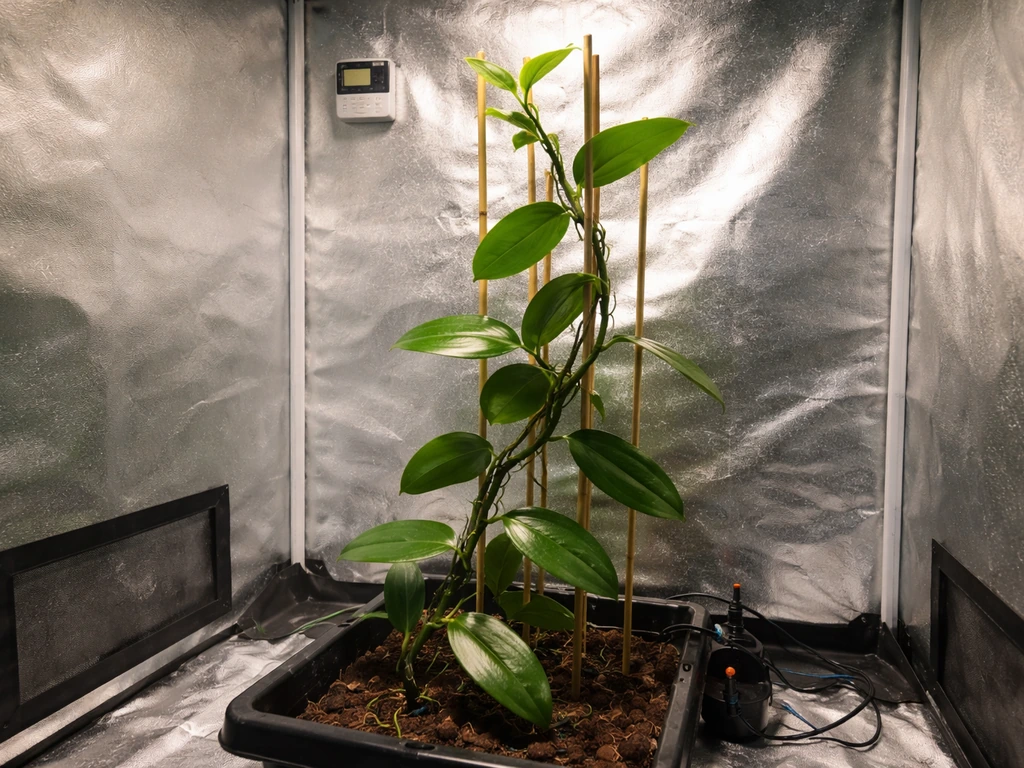
Can You Grow Vanilla Beans in Ohio? Indoor Guide
Learn if you can grow vanilla beans in Ohio indoors, with setup, humidity, care, pollination, and pod timeline.
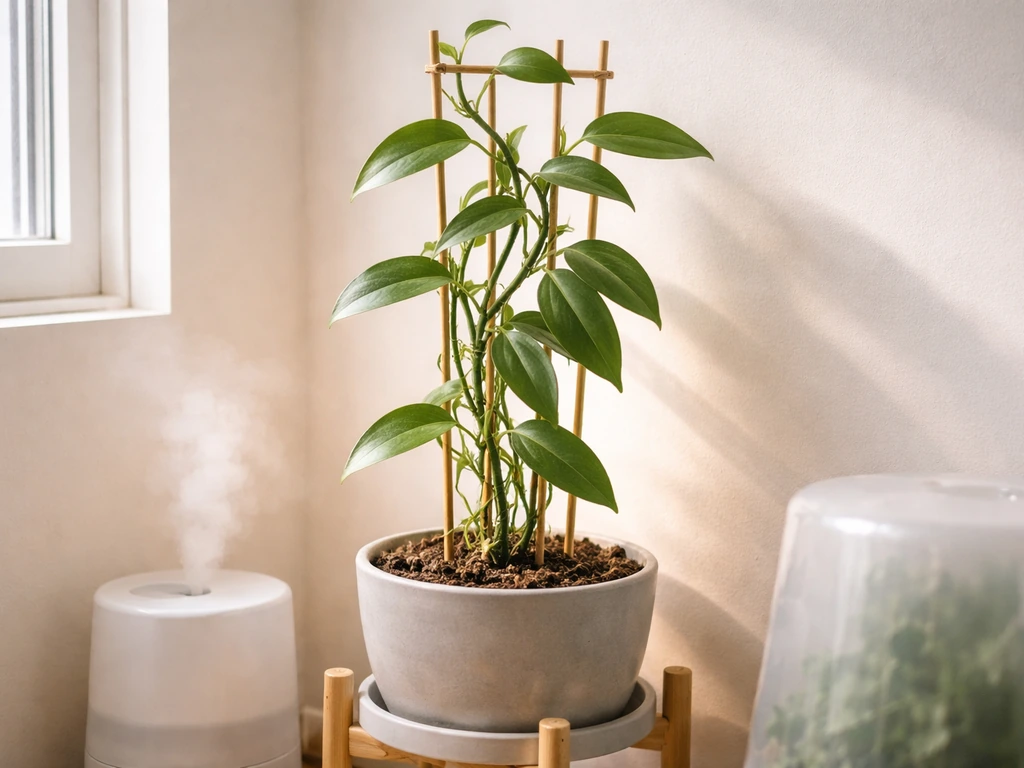
Can You Grow Vanilla Beans in Michigan? Indoor Setup Guide
Learn if vanilla beans can grow in Michigan indoors, with climate targets, trellis care, pollination, and a setup checkl
Can You Grow Okra in Canada? Ontario Guide & Short‑Season Tips
Can you grow okra in Canada? Regional verdict, Ontario-specific steps, varieties, season-extension & harvest tips.