
Yes, you can grow vanilla beans in Louisiana, but the realistic pathway depends on where you are in the state and how much effort you want to put into protecting the vine. In the southernmost coastal parishes, a sheltered outdoor spot has a genuine shot, especially if you pick a cold-tolerant variety. Everywhere else, a greenhouse, hoop house, or large container you can move indoors during cold snaps is the smarter play. This is not a casual backyard plant, but Louisiana's subtropical heat and humidity actually give you a meaningful head start compared to most of the country.
Can You Grow Vanilla Beans in Louisiana? Feasibility Guide
Marcus Holloway
11 Aug 2026
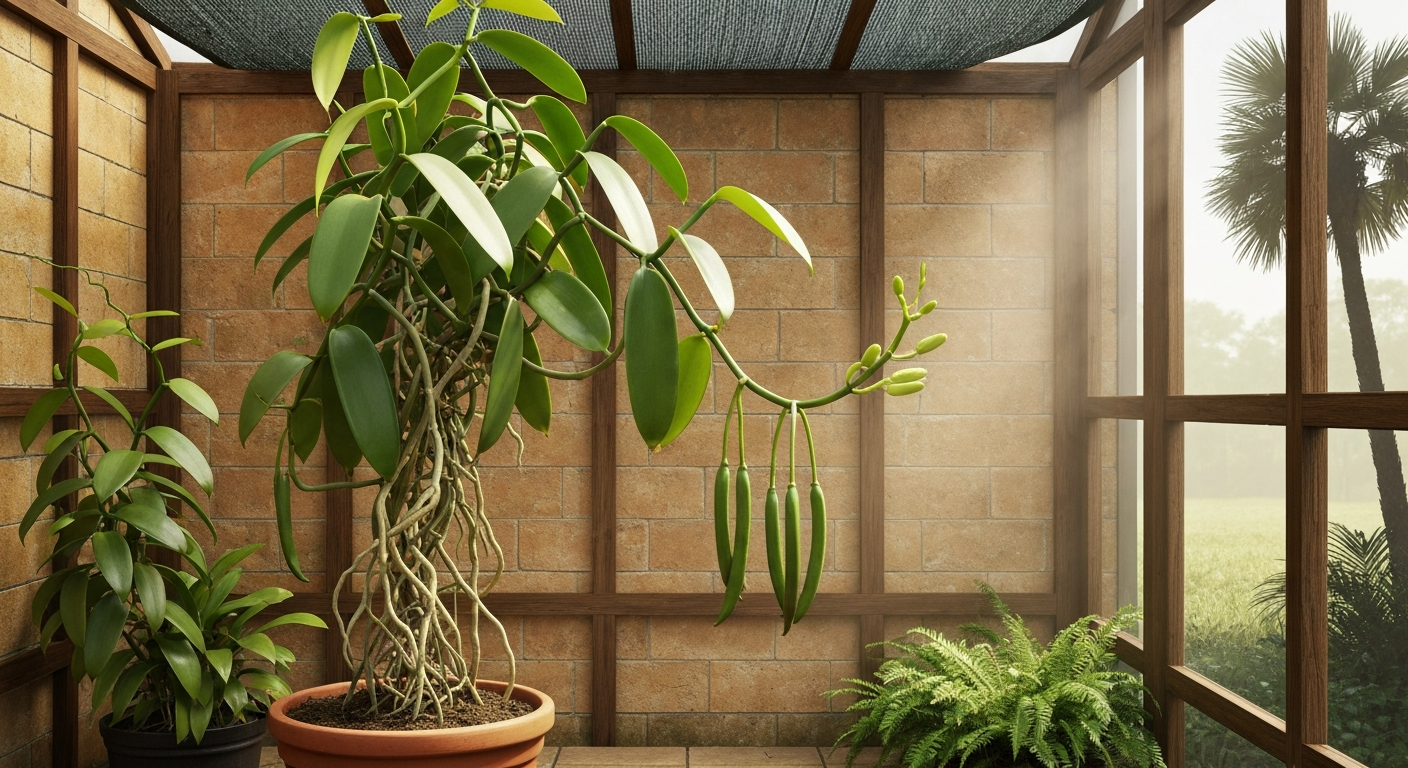
Quick Verdict: Outdoor, Protected, or Container?
Louisiana sits in USDA hardiness zones roughly 7b/8a in the far northern parishes up to 9a-10a along the Gulf Coast. That north-to-south spread matters enormously for vanilla, which is frost-sensitive to the point that a single hard freeze can kill an established vine. Here is how the three pathways break down for Louisiana growers specifically.
| Growing Pathway | Where It Works in Louisiana | Biggest Risk | Feasibility |
|---|---|---|---|
| Unprotected outdoor | Coastal parishes (zones 9b-10a) only, in a sheltered microclimate | Occasional hard freezes, even on the Gulf Coast | Low-moderate; high-reward if it works |
| Greenhouse or hoop house | Statewide with heating for winter nights | Setup cost, humidity management, disease | High; most reliable path to beans |
| Container with winter protection | Statewide; move indoors below 50°F | Space limits vine size and eventual yield | Moderate; great for hobbyists |
My honest take: if you are north of Baton Rouge, skip the outdoor experiment and go straight to a protected structure or a large container setup. If you are in the New Orleans metro or south of it, a well-chosen microclimate is worth trying alongside a backup container plan.
Louisiana's Climate: What Vanilla Actually Encounters Here
Louisiana's climate is genuinely subtropical, with long hot summers, high humidity, and relatively mild winters along the coast. The Gulf Coast parishes average summer highs well into the 90s°F and rarely see prolonged cold. That matches vanilla's preferred temperature band of roughly 70-90°F (21-32°C) for most of the year. The problem is the occasional freeze event. Even New Orleans, which sits in zone 9a, can see temperatures dip below 28°F during a hard winter. Shreveport in the north sits in zone 8a and averages multiple freeze nights per winter.
Humidity is actually one of Louisiana's biggest assets for vanilla growing. The state's muggy summers and high ambient relative humidity reduce the irrigation burden and keep the aerial roots of a vanilla vine reasonably happy outdoors. Annual rainfall in much of Louisiana runs well above the 1,700 mm minimum vanilla prefers, though you will still want to manage drainage carefully to prevent root rot.
Microclimates shift the picture dramatically. South-facing walls of brick or masonry buildings, urban heat-island zones in New Orleans, sheltered courtyards, and spots under established tree canopy can hold several degrees warmer than open-field temperatures on a cold night. Coastal parishes also benefit from the thermal buffering effect of the Gulf. These are the spots where outdoor vanilla has the best shot in Louisiana. For precise frost probability data for your parish, the LSU State Climate Office and NOAA NCEI 1991-2020 normals are the best resources to check before committing to an outdoor planting. For parish-level frost probabilities and monthly normals, query the NOAA NCEI U.S. Climate Normals (1991–2020) and LSU State Climate Office data portal.
What Vanilla Actually Needs to Thrive
Vanilla planifolia is a tropical orchid vine, and its requirements are specific. Getting these right is the whole game, whether you are growing outdoors in a coastal Louisiana parish or in a greenhouse in a colder state.
- Temperature: sustained 70-90°F (21-32°C); chilling injury begins below about 50°F (10°C); freezing temperatures kill the vine
- Humidity: high ambient humidity, ideally 65-85% relative humidity; aerial roots absorb moisture from the air
- Light: filtered or dappled, not direct full sun; roughly 50% shade is the standard recommendation; too much direct sun causes leaf scorch and slows growth
- Water: consistent moisture without waterlogging; a brief (approximately 2-month) drier period is actually beneficial to trigger flowering
- Soil/substrate: free-draining, organic-rich mix; pH in the 5.5-7.0 range; traditional systems use aged coconut husk, organic mulch beds, or bark mixes
- Support structure: vanilla is a climbing vine that needs a trellis, tree host, post, or wire system; it uses aerial roots to attach and climb upward
One thing growers often underestimate is the support system. Vanilla vines can reach 30 feet or more at maturity, and in a home garden or greenhouse you will need to train them horizontally or in loops once they hit the top of their support to encourage flowering. Flowers only appear on lateral shoots, not on the main vertical stem, so the way you train the vine directly affects how many flowers (and eventually beans) you get.
Best Vanilla Varieties for US Growers
Vanilla planifolia is the dominant commercial species and the one behind the vanilla extract in your pantry. It is also the most widely available for home growers in the US and the variety UF/IFAS and other extension services have worked with most extensively in the Southeast. For Louisiana growers, it is your starting point.
That said, two other species deserve attention. Vanilla tahitensis (Tahitian vanilla) requires less severe environmental stress to trigger flowering, which can make it slightly more forgiving in cultivation. Vanilla pompona and certain V. pompona hybrids have shown notably higher cold tolerance than V. planifolia in South Florida field trials, which is directly relevant if you are pushing the envelope in a marginal Louisiana microclimate or a lightly heated hoop house. Research from SARE-funded germplasm trials identified specific V. pompona accessions as better candidates for cooler subtropical sites. The tradeoff is that pompona and tahitensis produce beans with a different flavor profile than the classic planifolia vanilla, which matters if you are growing for extract or culinary use.
| Species | Flavor Profile | Cold Tolerance | Availability for US Growers | Best For |
|---|---|---|---|---|
| Vanilla planifolia | Classic vanilla; highest vanillin content | Low; most frost-sensitive | Widely available | Quality extract; greenhouse or coastal outdoor growing |
| Vanilla × tahitensis | Floral, anise-like notes; less vanillin | Moderate; easier to flower | Moderate availability | Hobbyists wanting easier flowering |
| Vanilla pompona / hybrids | Fruity, less intense | Higher than planifolia | Limited; specialty nurseries | Marginal outdoor sites or lightly heated structures |
Propagation and Planting: Step by Step
Vanilla is almost always started from stem cuttings or tissue-cultured (TC) starter plants. Seeds exist but are not practical for home growers. Here is how to get a plant established in Louisiana conditions.
- Source your plant: get a healthy stem cutting of at least 30 cm (12 inches) with a minimum of 2 nodes, or purchase a tissue-cultured starter plant from a reputable specialty nursery. Longer cuttings (around 1 meter) will flower in roughly 2-3 years; shorter 30 cm cuttings typically take 3-4 years.
- Heal the cutting: if you are working from a fresh cut, let the cut end dry and callous for 1-2 days before planting. This reduces rot risk significantly.
- Harden tissue-cultured plants: TC starts come out of sterile lab conditions and need to be eased into ambient humidity over 1-2 weeks under a high-humidity dome or plastic cover before being moved to your growing mix.
- Prepare your substrate: mix orchid bark, aged coconut coir or husk, and perlite or pumice for drainage. Aim for a loose, fast-draining mix that retains moisture without staying soggy. pH should fall between 5.5 and 7.0.
- Plant the cutting: insert one node below the substrate surface so it can root; the remaining nodes should be above. Do not bury the whole stem.
- Set up support immediately: attach the vine loosely to a stake, trellis, or tutor post. Vanilla will begin sending out aerial roots quickly once it starts growing.
- Maintain high humidity and warmth during establishment: mist the cutting daily or use a humidity tent for the first few weeks. Keep temperatures consistently above 60°F and ideally above 70°F.
- Begin light fertilizing once rooted: a balanced, diluted orchid fertilizer applied every 2-4 weeks works well once the vine shows new growth, indicating active roots.
Year-Round Care: Watering, Feeding, and Keeping the Vine Healthy
Once established, vanilla is not a hands-off plant, but it is manageable with a consistent routine. Water when the top inch or so of substrate dries out; consistent moisture is important, but soggy roots are a fast way to lose a vine. In Louisiana's summer heat and high humidity, you may water less frequently outdoors than you would in a drier climate. During winter, cut back watering deliberately, as the plant benefits from a slightly drier rest period to initiate flowering.
Fertilize every 2-4 weeks during the growing season with a diluted balanced fertilizer. Many growers use an orchid-specific formulation since vanilla is, after all, a member of the Orchidaceae family. Ease off fertilizing in the cooler months. Prune lateral shoots to redirect energy and train the vine to grow where you want flowers to form. Keep an eye out for root rot (caused by overwatering or poor drainage), fungal spots, and common greenhouse pests like mealybugs, spider mites, and aphids, all of which can appear in Louisiana's warm, humid conditions.
Pollination: The Step Most Growers Don't Expect
This is where vanilla separates itself from almost every other backyard crop. Outside of a narrow range in Mexico where the native Melipona bee does the job, vanilla flowers will not self-pollinate. Every single flower must be hand-pollinated, and each flower only stays open for roughly one day. You need to be paying attention during flowering season.
The technique used worldwide is the Albius method, named for Edmond Albius who developed it in the 19th century. It takes about 30 seconds per flower once you have done it a few times. Here is how it works:
- Head out in the morning, as early as possible; flowers open overnight and are most viable in the morning hours.
- Identify open flowers on the vine. Each flower sits on a short stalk on a lateral shoot.
- Use a small wooden skewer, toothpick, or even your fingernail. Gently peel back or tear away the thin lip (labellum) covering the reproductive column.
- Locate the rostellum, a small flap that separates the pollinia (pollen masses) from the stigma. Lift or push this flap back gently.
- Press the pollinia against the now-exposed stigma firmly enough to make contact. You will feel a slight stickiness confirming contact.
- Move to the next open flower and repeat. A practiced hand can work through roughly 200 flowers in a day.
- Mark pollinated flowers lightly (a loose tie or small tag) so you can track pod development.
- Check back over several days; any flowers that were not reached will simply drop off unpollinated.
Successful pollination leads to pod development over the following 8-9 months. Pods reach their full length before they are ready to harvest, and the window to pick them is narrow: harvest just before the tip of the pod begins to yellow, which signals the pod is mature but not yet splitting.
Harvesting and Curing: The Long Road to Flavor
Green vanilla pods have almost no vanilla aroma. All of that characteristic flavor develops during curing, a multi-step process that takes anywhere from 3 to 6 months and requires consistent attention. Traditional curing involves a blanching or killing step (brief hot water or sun exposure), followed by alternating periods of sun exposure and wrapping the pods in cloth or boxes to sweat. This enzymatic process converts precursors in the pod into vanillin and the dozens of other flavor compounds that make vanilla worth growing.
Modern small-batch approaches can shorten the timeline somewhat, but there is no fast lane to fully cured vanilla. If you are growing vanilla purely for the experience and the biology, that is fine. If you want a practical supply of high-quality extract, be realistic that from planting a 30 cm cutting, you are looking at roughly 3-4 years to first flowers, another 8-9 months to ripe pods, and another 3-6 months of curing before you have a finished product. Yields from a single home vine are modest, usually a few dozen pods in a good year.
Pathway 1: Outdoor Growing in Protected Louisiana Microclimates
Outdoor vanilla in Louisiana is genuinely possible in the right spots, but it is not a casual plant-and-forget situation. The coastal parishes from the New Orleans area south and west along the Gulf are your best bet. Even there, you need to pick your site carefully and have a contingency plan for the occasional hard freeze.
The best outdoor sites share a few characteristics: a south or southwest-facing masonry wall that absorbs daytime heat and re-radiates it at night, overhead canopy from a large tree that reduces radiant heat loss on clear cold nights, proximity to urban infrastructure (pavement, buildings) that adds a few degrees of protection, and well-drained soil or a raised bed that stays warm. A sheltered courtyard in New Orleans, for example, can stay 4-6°F warmer than an open suburban yard on a cold night. That buffer may be enough to protect the vine during a typical mild winter, but it will not save it during a hard freeze event like the ones Louisiana sees every several years.
If you go this route, plant in spring once nighttime temperatures are consistently above 60°F. Choose a cold-tolerant variety like V. pompona or a hybrid if you can source one. Keep a supply of frost cloth on hand for cold snaps, and accept that some years you may lose foliage and need to let the vine regrow from the roots or protected lower stem. Small unheated hoop structures or lath covers can add a few degrees of protection but cannot substitute for actual heating during a genuine freeze event.
Pathway 2: Greenhouse, Hoop House, and Indoor Systems
A heated greenhouse or well-managed hoop house is the most reliable way to grow vanilla beans in Louisiana, and this approach is equally relevant for growers in much colder states where outdoor cultivation is simply not on the table. For guidance tailored to cooler Pacific Northwest conditions, see can you grow vanilla beans in Oregon. Growers in states like Minnesota, Wisconsin, or Pennsylvania, for example, would rely entirely on protected structures, while Louisiana growers use them to eliminate winter uncertainty.
For vanilla in a protected structure, aim for these environmental targets:
| Parameter | Target Range | Notes |
|---|---|---|
| Daytime temperature | 75-86°F (24-30°C) | Consistent warmth drives vine growth |
| Nighttime temperature | 59-65°F (15-18°C) minimum | Do not let nights drop below 50°F |
| Relative humidity | 65-85% | Balance with ventilation to reduce disease risk |
| Light | 50% filtered (shade cloth) | Direct unfiltered sun causes leaf scorch |
| Air circulation | Continuous low-level airflow | Prevents fungal disease in humid conditions |
| Substrate | Bark/coir/perlite blend, pH 5.5-7.0 | Free-draining is non-negotiable |
Louisiana's climate means you will need active heating for roughly 2-3 months in winter, even in a greenhouse. A simple gas or electric heater with a thermostat set to maintain nights above 55°F will handle most winters. Shade cloth rated at approximately 50% light transmission handles the intense Louisiana summer sun. Ventilation is critical in summer as well, both for temperature management and to prevent the prolonged leaf wetness that leads to fungal problems in high-humidity conditions. Greenhouse climate research recommends maintaining RH setpoints in the 75–85% range for tropical crops in closed environments to balance disease risk and energy use (Crop‑based climate regimes for energy saving in greenhouse cultivation, Wageningen/greenhouse climate research review) Crop‑based climate regimes for energy saving in greenhouse cultivation — Wageningen/greenhouse climate research (review).
In a greenhouse system, vanilla vines can be trained up wires, along rafters, or on vertical posts with horizontal training runs at the top. The more lateral growth you encourage, the more flowering sites you create. A well-established greenhouse vine in Louisiana conditions can produce a genuinely impressive number of pods once it starts flowering, which makes the upfront infrastructure investment worthwhile for serious growers.
Pathway 3: Container Culture With Winter Protection
Container growing is the most accessible entry point for most Louisiana hobbyists, and it works for growers all across the country who do not have a dedicated greenhouse. The core idea is simple: grow the vine in a large container during the warm months (outdoors or in a sunny spot), then move it to a protected indoor location when temperatures drop below about 50°F at night.
A few practical notes from experience with container vanilla:
- Use the largest container you can practically move; vanilla needs room for roots and will reward you with faster growth in a bigger pot. A 15-25 gallon container is a reasonable starting size.
- Fill with a fast-draining orchid-style mix: medium orchid bark, aged coconut coir, and perlite in roughly equal thirds. Avoid standard potting soil, which holds too much water.
- Install a vertical support (stake or small trellis) in the container from the start; once the vine begins to climb, adding support without disturbing roots is awkward.
- In Louisiana, you can keep container vanilla outdoors from about April through October without worry. Bring it inside or into a heated space once nighttime lows approach 55°F consistently.
- A south-facing window indoors with a grow light supplement can maintain the vine through winter; vanilla needs bright indirect light even when resting.
- Tissue-cultured starts are well suited to container culture but require a hardening-off period under a humidity dome before transitioning to open conditions.
- Container plants will likely take longer to reach flowering size than greenhouse-grown vines because root volume limits overall plant size; manage expectations accordingly.
The portability of containers is genuinely useful in Louisiana's climate. You get the benefits of warm outdoor conditions for most of the year while being able to react quickly to unexpected cold fronts. Many Louisiana growers who try vanilla start here and then scale up to a small greenhouse once they see the vine thriving.
Where to Source Vanilla Plants and What to Budget
Finding vanilla starter plants in the US takes a little more work than picking up a tomato transplant at a garden center. Tissue-cultured starts are available from specialty tropical plant nurseries online; search for vendors that ship live tropical plants and specifically list Vanilla planifolia or V. tahitensis. Some orchid societies and tropical plant enthusiasts also sell cuttings. Expect to pay $15-40 for a small TC start or rooted cutting. Larger, more established vines cost more but may shave a year or two off your timeline to flowering.
Beyond the plant itself, here is a realistic picture of what you will spend to set up a container or small greenhouse system:
| Item | Approximate Cost | Notes |
|---|---|---|
| Vanilla planifolia starter plant (TC or cutting) | $15-40 | Source from reputable specialty tropical nursery |
| Large container (15-25 gallon) | $20-50 | Fabric grow bags work well for drainage |
| Orchid bark / coir / perlite mix (per bag) | $10-20 each | Mix your own; avoid standard potting soil |
| Support stake or small trellis | $10-30 | Bamboo, rebar, or wire trellis all work |
| Shade cloth (50%) | $20-60 | For outdoor or greenhouse use in summer |
| Propagation humidity dome (for TC starts) | $10-20 | Critical for hardening off TC plants |
| Basic grow light (for indoor winter maintenance) | $40-120 | LED panel with full spectrum; not always needed in sunny spots |
| Small greenhouse or hoop house (optional, serious growers) | $200-2,000+ | Huge range depending on size and heating |
Honest Difficulty and Timeline Assessment
I want to be straight with you here: vanilla is one of the more demanding specialty crops a home grower can take on. It is not technically impossible in Louisiana, but it requires patience, consistent attention, and either a good microclimate or some infrastructure investment. The timeline from a fresh cutting to your first cured vanilla beans is realistically 4-6 years if everything goes right. The yields from a home vine are modest. If you are purely interested in growing vanilla as a fascinating horticultural project or a conversation piece, it is absolutely worth attempting. If your primary goal is a cost-effective supply of vanilla beans for your kitchen, buying high-quality beans from a reputable importer will always be more economical.
That said, Louisiana growers have a genuine climate advantage over most of the US. The combination of heat, humidity, and a long frost-free season along the coast means vanilla can grow vigorously here with less energy input than it would require in colder states. Growers in places like Minnesota or Wisconsin are working against climate almost entirely and depend on heated structures year-round. For a closer look at growing vanilla in a much colder climate, see can you grow vanilla beans in Wisconsin. For growers in high-desert or mountain states, check regional advice on can you grow vanilla beans in Utah for recommendations tailored to colder, drier climates. For specific guidance on colder regions, see can you grow vanilla beans in Pennsylvania, which illustrates the heated-structure approach those growers depend on. In Louisiana, the climate is largely working with you.
Practical Alternatives If Vanilla Isn't the Right Fit
If after reading all of this you decide vanilla is more project than you want to take on right now, Louisiana's climate opens doors to other interesting specialty crops. Ginger and turmeric both thrive in Louisiana's warm, humid conditions with far less fuss. Passionfruit vines do well in southern Louisiana and produce a dramatic tropical flavor with much less complexity in cultivation. Lemongrass is practically effortless in the state's heat and humidity. And if you are drawn to the specialty spice angle, saffron is an interesting counter-seasonal project that works in Louisiana during the cooler fall months. None of these have the mystique of homegrown vanilla, but they offer a more forgiving path to a specialty harvest in Louisiana conditions.
FAQ
Can you grow vanilla beans in Louisiana?
Short answer: Yes, but with conditions. Vanilla (mainly Vanilla planifolia) is a tropical, frost‑sensitive vine. In Louisiana fully outdoor, in‑ground production is only realistic in very limited frost‑free coastal/urban microclimates (rare). For most of the state you should plan on protected structures (greenhouse/hoop house) or container culture moved indoors/into heated cover during cold periods. Success depends on choosing the right site, providing year‑round warmth and humidity, and hand‑pollinating flowers.
Why Louisiana climate matters (temperature, humidity, frost risk)
Vanilla prefers daytime 70–90°F (≈21–32°C) and nights generally above ~59–64°F (15–18°C). It also prefers high relative humidity (rough target 65–85%) and a short drier spell to promote flowering. Vanilla is frost‑sensitive and can be killed by freezes. Louisiana spans USDA zones ~7b–10a; only the warmest coastal/parish microclimates approach vanilla’s outdoor needs. Use parish/station climate normals (NOAA/LSU or USDA PHZ map) to assess your freeze probability before planting outdoors.
How do local microclimates in Louisiana affect success?
Microclimates can create usable pockets: south/southwest‑facing walls, courtyards, heat‑retaining masonry, dense windbreaks, urban heat islands, and sites under established canopy can raise night temperatures several °F and reduce freeze risk. Irrigated, mulched soils also moderate night chilling. However, microclimate gains are limited — hard freezes still require moving plants to protection or using heated covers.
Which vanilla varieties are appropriate for Louisiana or marginal sites?
Primary choice: Vanilla planifolia (classic commercial vanilla). For marginal subtropical sites consider: Vanilla × tahitensis (more flexible flowering) and some V. pompona accessions or pompona × planifolia hybrids that have shown greater cold/water‑stress tolerance in trials. If you’re in a marginal site, choose accessions documented for higher cold tolerance or use greenhouse/container culture.
How should vanilla be planted and what substrate does it need?
Vanilla is a climbing vine that needs a support/tutor and a loose, well‑drained, organic‑rich substrate. For in‑ground protected plantings use very free‑draining beds with aged coconut husk/leaf mold and good organic matter; pH ~5.5–7.0. For containers use large pots (15+ gallons) with a mix of coconut husk/aged coir, orchid bark or leaf mold, plus perlite or pumice for aeration. Provide a vertical support (tutor pole, tree, or trellis) and 50% filtered light (adjust by variety).
How do you propagate vanilla?
Propagate from stem cuttings. Typical guidance: select 12–36 inch (30–90 cm) cuttings with at least 2–3 nodes; allow cut ends to callus 1–2 days; plant so at least one node is buried and another is in contact with the substrate; maintain high humidity and warm conditions while roots form. Longer cuttings establish and can flower sooner (2–3 years) compared with short cuttings (3–4 years). Tissue‑culture starts are also available and have to be hardened before potting out.
Next Articles
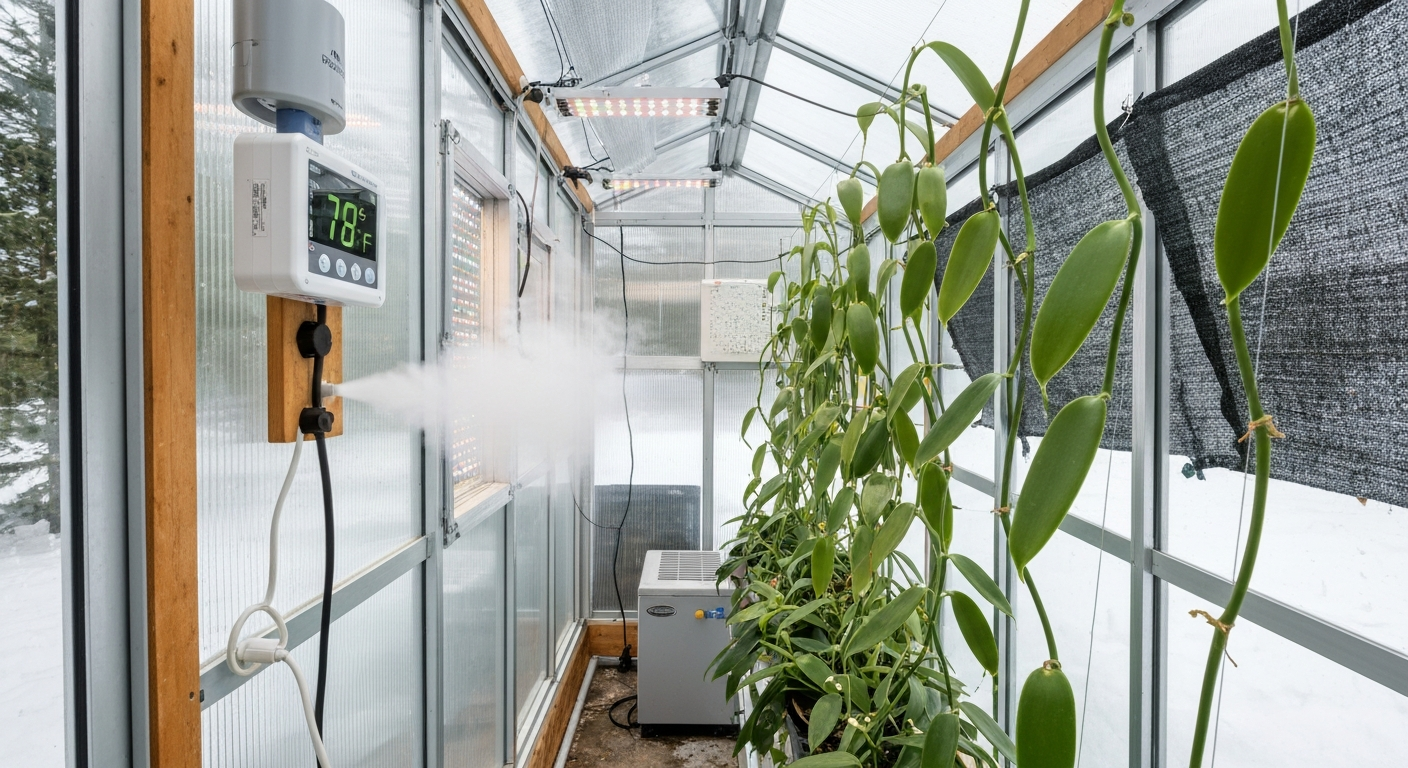
Can You Grow Vanilla Beans in Wisconsin? Feasibility Guide
Can you grow vanilla beans in Wisconsin? Practical verdict, step-by-step greenhouse/indoor guide, costs, timeline.
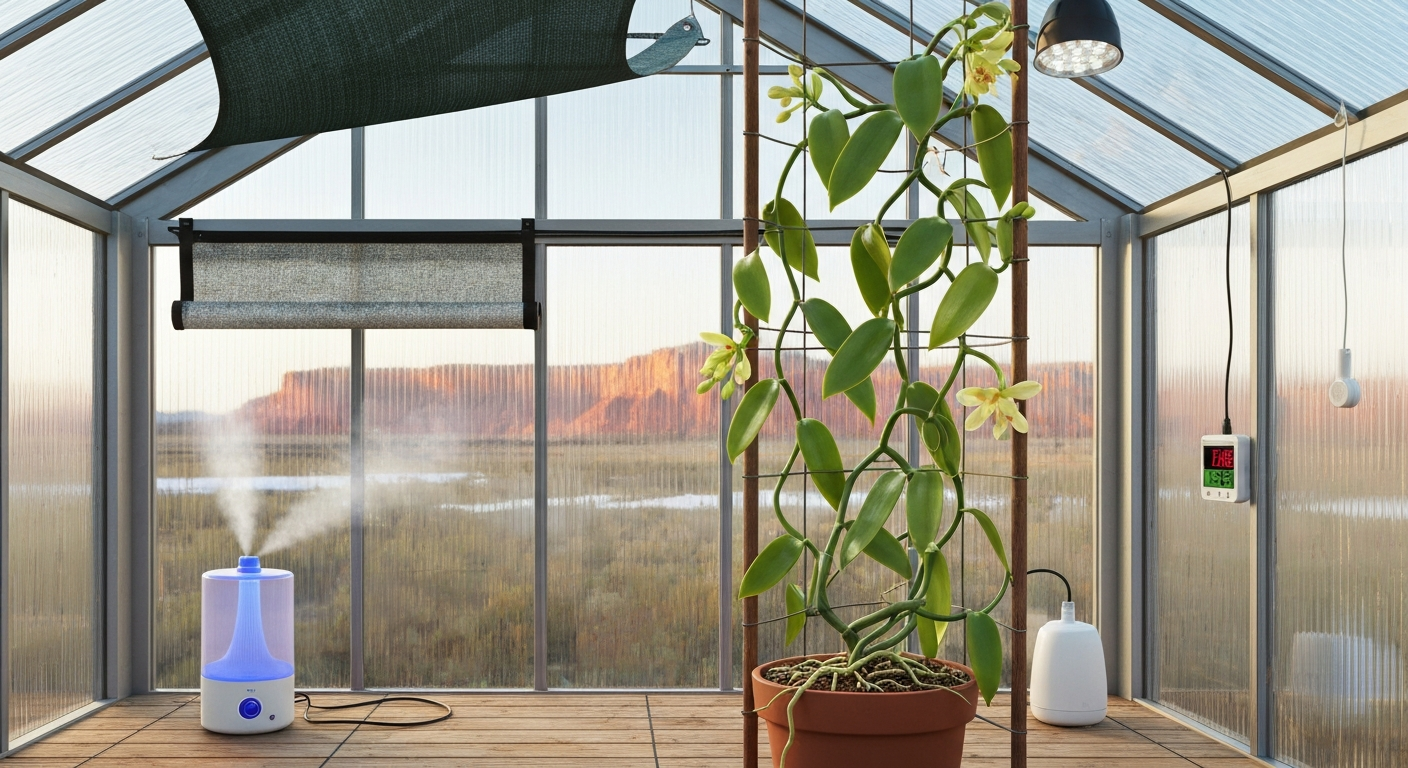
Can You Grow Vanilla Beans in Utah? Guide for Gardeners
Can you grow vanilla beans in Utah? Clear verdict, greenhouse & indoor how-to, timeline, costs, pests, practical steps.
Can You Grow Vanilla Beans in Minnesota? Feasibility Guide
Can you grow vanilla beans in Minnesota? Feasibility, 3 methods, care steps, timeline, costs, and alternatives.