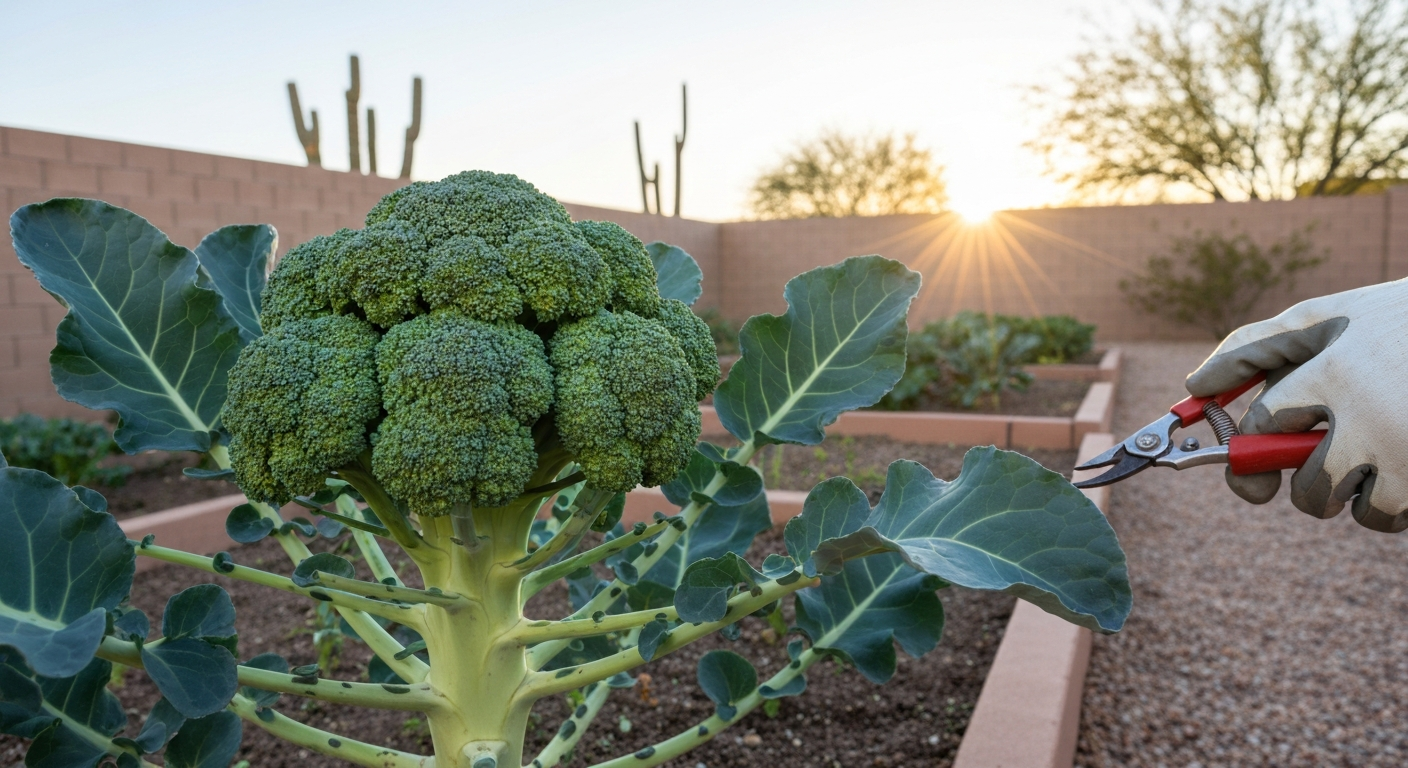
Yes, you can grow broccoli in Arizona, but the timing is everything. Broccoli is a cool-season crop, so in the low desert you grow it as a fall and winter vegetable, not in summer. In the high desert and mountain zones, you get a wider window with earlier fall and even spring planting possible. Get the timing right and Arizona soils and sunshine actually produce excellent, dense heads. Miss the window and the heat will bolt your crop before you get a single floret worth cutting.
Can You Grow Broccoli in Arizona? Regional Guide
Marcus Holloway
20 Jul 2026
Growing Broccoli in Arizona: Region by Region
Arizona is not one climate. The low desert around Phoenix and Yuma is a completely different growing world than Flagstaff or even Prescott. Before you do anything else, figure out which region you are in, because the planting window shifts by weeks or even months depending on your elevation.
Low Desert (10–1,000 ft): Phoenix, Yuma, Tucson valleys
This is where most Arizona gardeners live, and broccoli is genuinely manageable here as long as you treat it strictly as a fall and winter crop. The University of Arizona Cooperative Extension sets the planting window at September 1 through January 1 for this elevation band. Phoenix Sky Harbor climate normals show average daily highs above 90°F from roughly late March through early October, so planting outside this fall/winter window means your crop will face heat it cannot handle. Broccoli tolerates temperatures from about 30°F to 90°F, which lines up almost perfectly with a Phoenix winter. You are not fighting the climate, you are working with a brief but very productive cool season. Commercial Arizona broccoli production follows the same logic, with most plantings going in mid-August through early December.
High Desert and Plateau (1,000–2,000 ft): Prescott, Wickenburg, Globe
At this elevation, summers are cooler than the low desert but still warm enough to bolt broccoli. The UA planting window here is September 1 through December 1, slightly tighter than the low desert on the back end. You gain some flexibility on the front end in early fall because heat fades sooner, but hard freezes arrive earlier in winter too. Prescott, for example, averages its first fall freeze around mid-October to early November depending on the specific site and year. Timing transplants to head up before the hardest freezes is the main management challenge at this elevation.
Mountain and Cooled Elevations (2,000–3,000 ft+): Payson, Show Low, Flagstaff fringes
This is where Arizona broccoli growing gets interesting. The UA window for the 2,000–3,000 ft band is July 25 through October 1, essentially a summer planting for a fall harvest. At these elevations, summers are cool enough for broccoli to establish without heat stress. Above 3,000 ft, such as the Flagstaff area, the growing season shortens sharply and frost risk increases, but spring plantings become viable if you time them for after the last frost. Microclimates matter a lot here: a sheltered south-facing slope at 4,500 ft near Flagstaff can outperform an exposed site at 3,000 ft. Containers are genuinely useful at high elevations because you can move them to extend the season on either end.
Arizona Broccoli Planting Calendar by Region
The table below translates UA Cooperative Extension planting data into practical month-by-month guidance for each region. 'Seed indoors' means starting transplants in trays before moving to the garden. 'Transplant out' means setting established starts into the garden bed. 'Direct seed' means sowing straight into the garden soil.
| Region | Elevation | Seed Indoors (trays) | Transplant Out | Direct Seed Outdoors | Target Harvest |
|---|---|---|---|---|---|
| Low Desert (Phoenix, Yuma, Tucson) | 10–1,000 ft | Aug–Nov | Sept–Jan | Sept–Dec | Nov–Feb |
| High Desert / Plateau (Prescott, Globe) | 1,000–2,000 ft | July–Oct | Sept–Dec | Sept–Nov | Oct–Jan |
| Mountain / Cooled Elevations (Payson, Show Low) | 2,000–3,000 ft | June–Aug | Late July–Oct 1 | Late July–Sept | Sept–Nov |
| High Mountain (Flagstaff area, 3,000 ft+) | 3,000 ft+ | Apr–May (spring) or June–July (fall) | After last frost (May) or July–Aug | May–Aug (site dependent) | July–Sept or Sept–Oct |
Which Broccoli Varieties Work Best in Arizona
Variety selection matters more in Arizona than in most states because you are working with a narrow temperature window. You want varieties that head up quickly before heat arrives or before deep winter cold sets in. The UA crop profile for Arizona broccoli lists recommended varieties by planting period, and this is a useful shortcut for home gardeners as well as commercial growers.
Recommended Varieties by Season
| Planting Period | Recommended Varieties | Notes |
|---|---|---|
| Fall (Sept–Oct plantings) | Major, Ninja, Captain | Fast-maturing heads, good for low and high desert fall windows |
| Mid-winter (Nov–Dec plantings) | Everest, Liberty, Greenbelt, Heritage | Suited to cooler conditions; Greenbelt also works in spring |
| Spring (mountain/high elevation) | Marathon, Triathlon, Greenbelt | Longer-season types; best for elevations where spring planting is viable |
For the low desert, fall varieties like Ninja and Captain are your best bet because they mature relatively quickly (around 60–70 days) before temperatures climb in late February and March. At mountain elevations where you have a cooler summer window, Marathon and Triathlon can take more time to develop without the risk of heat interrupting heading. When sourcing seed, check local Arizona garden centers in July and August for fall varieties, or order from seed suppliers that carry commercial broccoli hybrids. The UA Extension Master Gardener program at your county office is a good local resource for variety availability.
What to Look For on the Seed Packet
- Days to maturity of 60–80 days for low and high desert fall plantings (tighter window)
- Heat tolerance or 'fall/winter' designation in the variety description
- Hybrid types for more uniform heading and disease resistance in commercial-influenced markets
- Side-shoot production if you want extended harvest after the main head is cut
Seed vs. Transplant: What to Use and When
For most Arizona home gardeners, starting with transplants gives you better control over timing, especially in the low desert where your planting window is fairly tight. You can either buy starts from a nursery in August or September or start your own trays 4 to 6 weeks before you plan to set them into the garden. Broccoli seed germinates best at soil temperatures of about 70 to 75°F, which is easy to hit in Arizona even in late summer since indoor or shaded soil stays warm.
Starting Your Own Transplants
- Sow seed 1/4 to 1/2 inch deep in seed-starting trays or small cells, 4 to 6 weeks before your target transplant date.
- Keep trays in a shaded, warm spot (70–75°F) and water consistently to maintain moisture without waterlogging.
- Seedlings with 2 to 5 true leaves and a stocky stem are ready to transplant, usually at 4 to 6 weeks old.
- Harden off seedlings for 7 days before setting them out: start with 1 to 2 hours of outdoor shade, gradually increasing sun exposure.
- Transplant into the garden in the evening or on a cloudy day to reduce transplant shock, and water in immediately.
Direct Seeding in Arizona
Direct seeding works well in the higher elevation zones where soil temperatures are already in the ideal germination range in late July and August. In the low desert, direct seeding in September is feasible but you need to keep the soil consistently moist for germination since surface soil can dry out fast. Sow 1/4 to 1/2 inch deep, thin to your final spacing once seedlings have their first true leaves. Commercial Arizona broccoli is mostly direct-seeded at 1/4 to 1/2 inch depth into beds with 40-inch centers and two rows per bed, with plants spaced about 7 inches apart within the row at commercial density. For home gardens, you want more room: 18 to 24 inches between plants and 24 to 36 inches between rows gives each plant enough space to develop a full central head and produce side shoots after cutting.
Soil and Fertility for Arizona Gardens
Arizona soils are typically alkaline, with pH commonly running 7.5 to 8.0 in commercial broccoli-producing areas. Broccoli prefers a pH between 6.0 and 7.5, so you are often starting with a slight mismatch. This does not mean you cannot grow great broccoli, but it does mean soil preparation is not optional. A simple home soil test kit or a county extension soil test will tell you exactly what you are working with before you plant.
Amending Arizona Soils
- Test soil pH and adjust toward 6.5–7.0 with elemental sulfur if your pH is above 7.5; apply sulfur at least 30 days before planting to allow breakdown.
- Incorporate 2 to 3 inches of finished compost into the top 8 to 10 inches of soil before planting; one cubic yard spread over 1,000 square feet gives you roughly 0.33 inches of coverage, so you need several cubic yards for meaningful improvement.
- Add a balanced pre-plant fertilizer (such as a 10-10-10 or similar) worked into the bed at planting to cover phosphorus and potassium needs in native soils.
- Arizona soils are often low in organic matter and can have high calcium and bicarbonate levels that tie up micronutrients, particularly iron, manganese, and boron; a soil test will flag these deficiencies.
- For boron, a common limiting nutrient in brassica production, a light foliar application of borax solution (1/4 teaspoon per gallon of water) during early head development can prevent hollow stem and poor head set.
Nitrogen: The Most Important Nutrient for Broccoli
Broccoli is a nitrogen-hungry crop. In Arizona, nitrogen moves quickly in irrigated soils and the alkaline pH can limit organic nitrogen conversion. A typical side-dressing schedule for home gardens: apply a nitrogen-rich fertilizer (such as blood meal, feather meal, or a balanced granular like 21-0-0 ammonium sulfate, which also slightly acidifies the soil over time) at planting, again 3 to 4 weeks after transplanting, and a final application when you first see the central head beginning to form. Ammonium sulfate is a particularly practical choice in Arizona because it provides nitrogen and has a mild acidifying effect that helps counter the alkaline soil. Do not over-apply nitrogen late in the season or you will push leafy growth at the expense of head development.
Watering Broccoli in Arizona's Climate
Water management is the skill that separates a good Arizona broccoli harvest from a disappointing one. The desert sun and low humidity pull moisture from soil quickly, but broccoli also does not want to sit in waterlogged ground. The goal is consistent moisture through the root zone, not wet surface soil.
Seedlings vs. Established Plants
Newly transplanted or recently germinated broccoli needs more frequent, lighter watering to keep the top few inches of soil moist while roots establish. In low desert fall conditions (still warm in September and October), you may need to water seedlings every 1 to 2 days. Once plants are established with a root system extending 6 or more inches deep, typically 2 to 3 weeks after transplanting, you can shift to deeper, less frequent irrigation that encourages roots to follow moisture downward.
Weekly Water Targets and Seasonal Adjustments
UA field irrigation trials at the Maricopa Agricultural Center give a useful benchmark: total seasonal water applied in broccoli trials ranged from about 13 to 20 inches over the growing season, with the most water-efficient treatments using subsurface drip at roughly 13 to 16 inches total. For a fall-to-winter low desert crop that runs September through February (about 24 weeks), that works out to roughly 0.5 to 0.75 inches of water per week on average, with higher needs in the warm early fall period and lower needs in December and January. The UA research found that deficit drip irrigation at about 80% of crop evapotranspiration (ETc) maintained yield while reducing water use, which is a practical target for home gardeners using a drip system with an ET-based timer.
Drip Irrigation: The Practical Choice
UA Cooperative Extension endorses drip and microirrigation as the most water-efficient method for vegetable beds in Arizona, and in practice it makes broccoli management much simpler. University of Arizona Cooperative Extension guidance (Drip Irrigation: The Basics (AZ1392), University of Arizona Cooperative Extension) endorses drip/microirrigation as the most water‑efficient method for vegetable beds and provides emitter spacing, line design, and ET‑based scheduling recommendations blank" rel="noopener noreferrer">Drip Irrigation: The Basics (AZ1392) — University of Arizona Cooperative Extension. A drip system with emitters spaced to wet the root zone (typically every 12 to 18 inches for a garden bed) and a timer set to deliver water in early morning gives you consistent moisture without wet foliage, which reduces disease pressure. If you are setting up a new system, look for pressure-compensating emitters so every plant in a long row gets the same flow regardless of line length. UA guidance recommends scheduling drip irrigation by ET or soil moisture sensor rather than a fixed calendar, which is easy to implement with an inexpensive tensiometer or a weather-based smart timer.
Containers and Drought Tips
Broccoli in containers dries out faster than in-ground beds, sometimes needing water daily during warm fall weather. Use containers that are at least 12 to 15 inches deep and wide, fill with a mix that includes plenty of compost for moisture retention, and mulch the surface heavily. In-ground beds benefit just as much from mulch: 2 to 3 inches of straw or shredded wood mulch over the root zone can cut watering frequency by 30 to 50% in dry Arizona winters. In particularly dry or windy high desert locations, a windbreak on the prevailing wind side of the bed reduces desiccation stress significantly.
Managing Heat: The Biggest Challenge in Arizona
Heat is the primary enemy of broccoli in Arizona, not cold. Temperatures above 80 to 85°F during heading cause buttoning (tiny, premature heads), loose open heads, or outright bolting. The fix is almost entirely about timing, but when you cannot avoid warm stretches in early fall or late spring, a few tactics help.
- Shade cloth (30–40% shade) over transplants during the first 2 to 3 weeks in September and October significantly reduces transplant stress in the low desert.
- Plant on the east or north side of a wall or tall fence to get afternoon shade in late fall when the sun angle is still high.
- Choose the fastest-maturing varieties for early fall plantings so heads develop and are cut before the warm period ends in late February or March.
- In containers, move plants to shadier spots during unexpected warm spells.
- Water in the early morning rather than midday to keep root-zone temperatures down.
Pests and Diseases to Watch For
Arizona broccoli faces a fairly predictable lineup of pests, most of which are manageable with early identification. The cool season reduces some disease pressure but not all of it.
Common Arizona Broccoli Pests
| Pest | What to Look For | Control Approach |
|---|---|---|
| Imported cabbageworm (Pieris rapae) | White butterflies around plants; pale green caterpillars eating leaf tissue and hiding in heads | Bt (Bacillus thuringiensis) spray applied when caterpillars are small; hand-pick larger worms; row covers as prevention |
| Cabbage looper (Trichoplusia ni) | Looping movement; irregular leaf holes; frass in heads | Bt spray; spinosad for heavier infestations; encourage parasitic wasps |
| Aphids (several species) | Clusters of small soft-bodied insects on undersides of leaves and in head florets; sticky honeydew | Strong water spray to dislodge; insecticidal soap; avoid excess nitrogen which promotes soft growth aphids prefer |
| Diamondback moth (Plutella xylostella) | Very small caterpillars; windowpane feeding on leaf surface | Bt spray; avoid planting near old brassica debris; rotate planting areas |
| Flea beetles | Tiny round holes across leaves of seedlings; small jumping beetles | Row covers at planting; kaolin clay as physical deterrent; spinosad for heavy pressure |
Disease Issues in Arizona
Downy mildew is the most common disease issue in Arizona broccoli, showing as yellow patches on upper leaf surfaces and purplish-gray mold on the undersides. It is favored by humid nights and cool mornings, which occur regularly in Arizona's winter growing season, especially in the low desert. Space plants well (18 to 24 inches apart) to promote air circulation, water at the base rather than overhead, and choose resistant varieties when available. Black rot (Xanthomonas campestris) can appear as V-shaped yellow lesions at leaf margins and causes vascular blackening; avoid overhead watering, do not work in the garden when plants are wet, and rotate brassicas to a different bed each year. Club root is uncommon in alkaline Arizona soils but can occur in poorly drained beds or when soil pH drops below 6.5.
Harvesting and Storing Arizona Broccoli
Cut the central head while the buds are still tight and deep green, before any yellow flowers open. In the low desert this typically means harvesting from November through February. The head should feel firm and the bead texture should be fine and compact. Once a single bud starts to open and show yellow, the rest follow quickly, especially if temperatures climb. Cut the main stem at a diagonal about 5 to 6 inches below the head; this encourages the plant to produce side shoots over the following weeks. Side shoots on well-fed Arizona plants can continue producing into March before heat ends the season.
For storage, wrap unwashed heads loosely in a damp paper towel and refrigerate in a plastic bag. Fresh-cut Arizona broccoli holds well for 5 to 7 days this way. For longer storage, blanch florets for 3 minutes, cool immediately in ice water, drain, and freeze in a single layer before transferring to freezer bags. Frozen broccoli keeps well for 10 to 12 months.
Troubleshooting Common Arizona Broccoli Problems
| Problem | Likely Cause | Fix |
|---|---|---|
| Tiny, premature 'buttoned' heads | Planted too late into warming weather, or heat stress during early growth | Plant earlier next season; use shade cloth in warm fall weather; choose faster-maturing varieties |
| Loose, open, or flowering heads | Heat exposure during heading; harvest delay | Cut heads promptly when buds are tight; improve timing next season |
| Yellow leaves | Nitrogen deficiency common in alkaline soils; waterlogged roots | Side-dress with nitrogen (ammonium sulfate); check drainage; reduce watering frequency |
| No head forming after 10+ weeks | Insufficient cold exposure for heading; excess nitrogen | Ensure nighttime temps drop below 50°F to trigger heading; reduce nitrogen late in season |
| Plants wilting despite moist soil | Root rot from overwatering or poorly draining alkaline soil | Improve drainage with compost; reduce irrigation frequency; check for club root |
| Lots of leaves, small heads | Excess nitrogen late in season; variety not suited to your window | Switch to lower-nitrogen fertilizer after plants are established; choose quicker-maturing varieties |
Next Steps: Local Resources Worth Using
The University of Arizona Cooperative Extension is genuinely one of the most useful resources for any Arizona vegetable gardener. Their publication AZ1435 (Vegetable Planting Dates) gives precise planting windows by elevation across the state, and the Maricopa County Garden Planting Calendar (AZ1005) is a clear, practical reference for low desert gardeners. Both are freely available through the UA Extension website. Your county extension office often runs Master Gardener plant clinics and soil testing services, which are worth using before you put money into seed or amendments.
For seed sourcing, look for fall broccoli varieties at local nurseries and garden centers in late July and August when fall transplant season begins. Local independent nurseries in Phoenix, Tucson, and Prescott typically stock Arizona-appropriate varieties and can give on-the-ground advice about what performs well in your specific area. If you are also exploring other cool-season crops for the same garden beds, rhubarb is a common comparison point for Arizona growers, though it faces its own challenges in the desert heat that are worth understanding separately before committing bed space to it. If you specifically want to know whether you can grow rhubarb in Alabama, see guidance on growing rhubarb in Alabama for climate-specific tips and timing can you grow rhubarb in alabama. If you’re wondering 'can you grow rhubarb in Georgia', check local extension guidance for regional viability and timing tailored to the Deep South. If you’re asking “can you grow rhubarb in Arizona,” see our guide on growing rhubarb in Arizona for climate-specific tips and challenges.
If you garden in Georgia or Alabama and arrived here by accident, the timing and variety guidance will look quite different for your climate. For gardeners in Georgia, consult guidance on when to grow broccoli in Georgia for region-specific planting dates and variety recommendations. Broccoli in the deep South follows a different fall planting calendar and faces different pest pressure. The core takeaway for Arizona, though, is simple: plan your planting window around your elevation, pick varieties matched to your planting date, get your soil amended before you plant, use drip irrigation, and harvest promptly. Do those things and Arizona broccoli is genuinely rewarding. Compost & Soil Building, practical extension/gardening conversion guidance (compost rates per 1,000 sq ft): common recommendations are to incorporate at least 1 inch of finished compost annually (2–3 inches for faster improvement), and note that 1 cubic yard spread over 1,000 sq ft equals about 0.33 inches blank" rel="noopener noreferrer">Compost & Soil Building — practical extension/gardening conversion guidance (compost rates per 1,000 sq ft).
FAQ
Short searchable title and meta description
Title: Can You Grow Broccoli in Arizona? Region-by-Region Guide and Exact Planting Plan. Meta description: Yes—broccoli can be grown in Arizona with region-specific timing and techniques. This guide gives planting windows by region, recommended varieties, seed vs. transplant timing, soil and irrigation plans, heat-management tactics, pest/disease controls, harvesting and storage, troubleshooting, and local resources (University of Arizona Extension).
Core answer: Can home gardeners and small-scale growers successfully grow broccoli in Arizona?
Yes. Broccoli is feasible across Arizona when you match planting dates, varieties, irrigation and heat-management to your elevation/microclimate. Success is easiest in high-elevation and cooler microclimates; in low-desert areas you must plant fall/winter to avoid hot-season bolting and use heat mitigation (shade, mulch, timely transplants). Follow the region-specific plans below.
How does feasibility break down by Arizona growing region (low desert, high desert/plateau, mountain/cooled elevations and microclimates)?
Low desert (Phoenix, Yuma, Tucson valley areas): Feasible as a fall/winter crop only (plant Sept–Jan). Needs heat-tolerant varieties, rapid-germination/transplants, drip irrigation and shade early in spring. High desert/plateau (1,000–3,000 ft: parts of Prescott area, higher Sonoran zones): Very feasible for fall and spring plantings; wider planting windows (Sept–Dec and Feb–Apr). Mountain/cooled elevations (above ~3,000 ft: Flagstaff, Payson, alpine pockets): Most forgiving—can grow fall, winter (where frost not extreme), and spring; can use typical cool-season schedules (plant July–Oct for fall crop in many mountain areas). Microclimates (urban heat islands, irrigated yards, shaded canyon lots): Treat according to local temperatures—use local frost/heat dates to adjust.
What are the recommended broccoli varieties for Arizona (heat vs cool conditions)?
Heat-tolerant / fall low-desert: 'Major', 'Ninja', 'Captain'. Cold / mid-winter and mountain: 'Everest', 'Liberty', 'Greenbelt', 'Heritage'. Spring / longer-season: 'Marathon', 'Triathlon', 'Greenbelt'. For small gardens consider smaller-head/minibroccoli or sprouting broccoli (Romanesco, 'Waltham 29', 'Belstar') for staggered harvests. Source seeds from local suppliers or Extension lists for best regional selections.
Exact planting windows by Arizona region (months ranges)
Planting calendar (general ranges — adjust to local frost/heat dates): Low desert (0–1,000 ft): Transplants/seeds for fall crop: Sept 1–Jan 1 (best Sep–Nov for transplants; Dec–Jan OK for quick maturing types). High desert / plateau (1,000–3,000 ft): Fall planting: Sept 1–Dec 1; Spring/early summer planting for cool season: Feb–Apr (watch late frosts). Mountain/cooled elevations (above 3,000 ft): Plant July 25–Oct 1 for fall heads; late winter/spring plantings Feb–Apr depending on snow/frost. Microclimates: Use local station normals—aim to transplant when soil temps are ~50–70°F for growth and avoid >80–85°F for head development. (Sources: UA AZ1435, county calendars).
Seed vs transplant guidance and timing (depth, germination temps, transplant age and hardening)
Seed: Sow 1/4–1/2 inch deep. Ideal germination soil temp ~60–75°F (faster at ~70–75°F). In low desert, direct-seed only early fall or winter when soil temperatures have cooled. Transplants: Start trays 4–6 weeks before field set; transplant at 4–6 true leaves (~4–6 weeks old). Harden off for 5–10 days before planting: reduce water and expose gradually to outdoor sun/wind. For low desert fall crops start trays in September for October–November set.
Next Articles
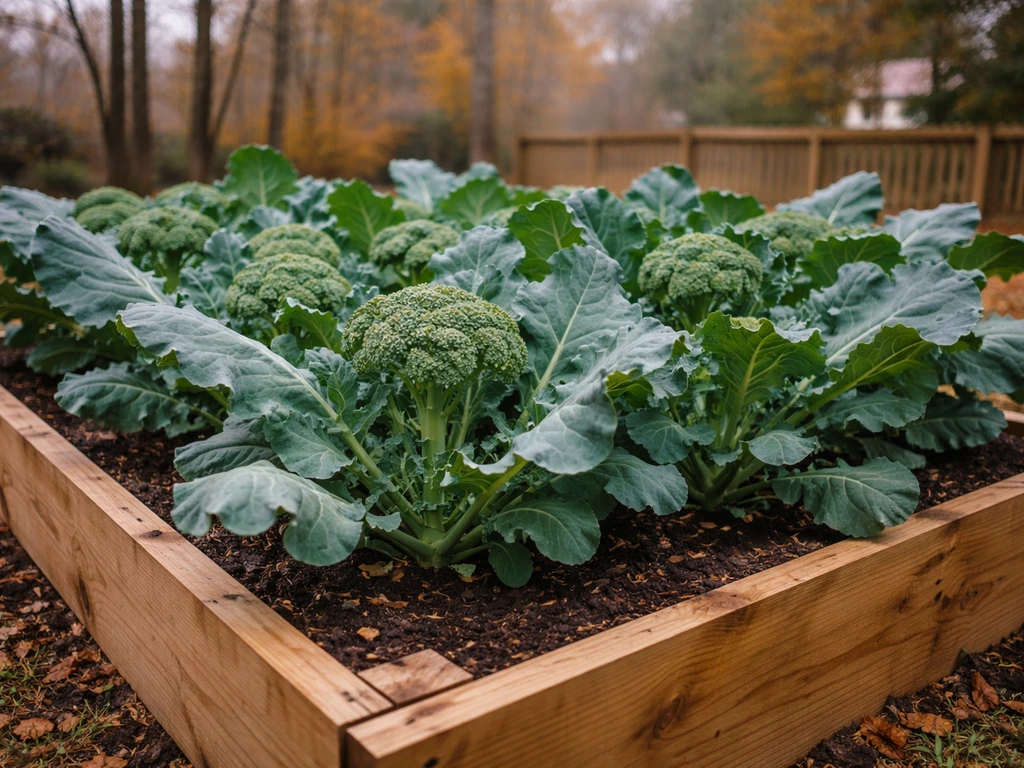
When to Grow Broccoli in Georgia and How to Do It
Georgia broccoli planting dates, frost and heat timing, and step-by-step growing for multiple harvests from start to yie
Can You Grow Rhubarb in Alabama? Yes, Heres How
Yes. Learn if rhubarb grows in Alabama, best varieties, planting timing, site setup, heat care, and harvest tips.
Can You Grow Rhubarb in Georgia? A Practical Guide
Yes, but only with the right Georgia zones, cold-chill, and heat management. Planting, varieties, timing, care, fixes.