
Yes, vanilla can grow in Nigeria, and in many parts of the country the climate is genuinely well-suited for it. Nigeria sits squarely in the tropical belt that vanilla prefers: warm temperatures year-round, high humidity across the south and middle belt, and rainfall patterns that match or exceed vanilla's minimum needs. That said, growing vanilla anywhere is a long, patient project. You are looking at 3 to 4 years before your first flowers and 7 to 8 years before peak production. If you go in with realistic expectations and set up the right conditions from the start, Nigeria is a legitimate place to build a vanilla operation, whether that is a backyard trial or a small commercial plot.
Can Vanilla Grow in Nigeria? Steps to Start and Succeed
Marcus Holloway
16 Jun 2026
Vanilla in Nigeria: the quick verdict
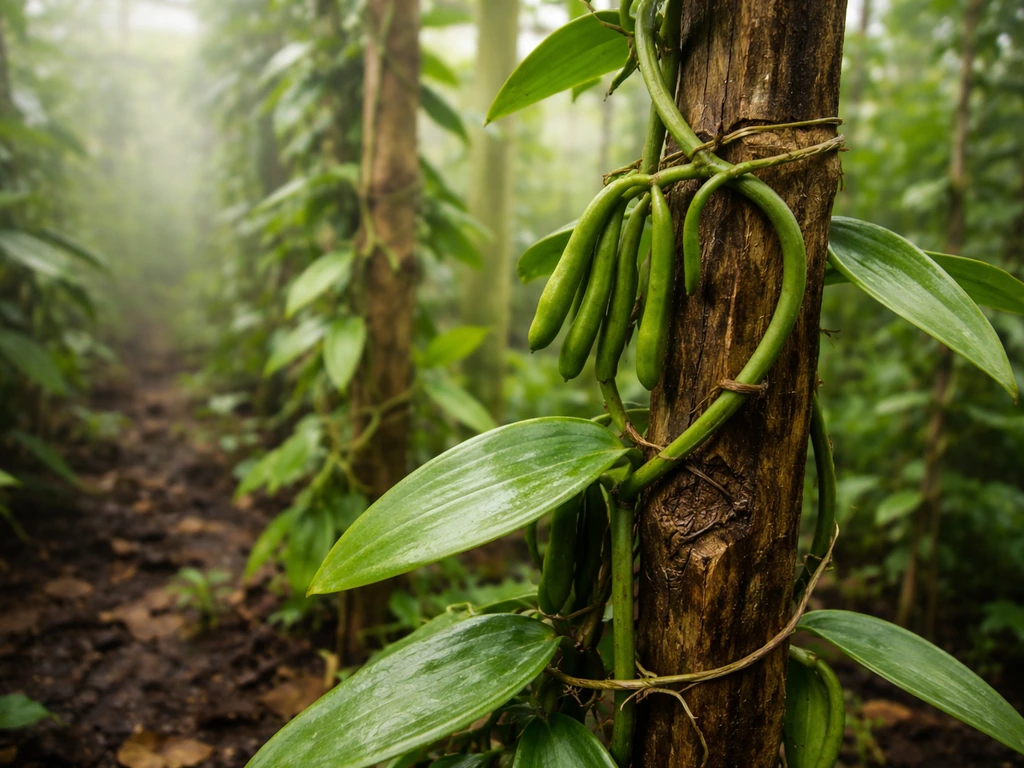
Vanilla planifolia is a tropical orchid vine that originated in Mexico and is now commercially grown across Madagascar, Indonesia, and parts of East Africa. It needs warmth, humidity, filtered light, and free-draining organic soil. Vanilla planifolia in the FAO ECocrop data sheet is listed as preferring light shade and having annual rainfall roughly in the 1500 to 3000 mm range, depending on sub-climate [filtered light](https://ecocrop. apps.
fao. org/ecocrop/srv/en/dataSheet? id=2131). Nigeria's southern and middle belt regions tick nearly every one of those boxes.
The FAO puts vanilla's ideal temperature range at 21 to 32°C and minimum annual rainfall at 1,500 mm, with a preference for 80% relative humidity. Nigeria's rainforest zones routinely hit all three. The main challenges are not climate, they are disease management, the need for manual pollination (vanilla has no effective local pollinator in most growing regions), and getting drainage right so roots do not rot in your wet season.
Nigeria's climate compared to what vanilla actually needs
Vanilla is more demanding than most spice crops, but Nigeria handles its core requirements well. Here is how the match looks in practical terms.
| Requirement | Vanilla needs | Nigeria (south/middle belt) |
|---|---|---|
| Temperature | 21–32°C year-round | Averages 25–32°C; rarely dips below 20°C in forest zones |
| Annual rainfall | 1,500 mm minimum, evenly spread | 1,500–3,000+ mm in south; 1,000–1,500 mm in middle belt |
| Relative humidity | ~80% or higher | 75–90% in south; 60–75% in middle belt (manageable with mulch/irrigation) |
| Light | Filtered/indirect (30–50% shade) | Achievable under tree canopy or shade cloth |
| Soil pH | 6.0–7.0 | Achievable with organic amendments in most zones |
| Wind exposure | Low; vine is fragile | Sheltered sites or windbreaks needed in open land |
The savanna north (Kano, Sokoto, Maiduguri) is not a realistic option without intensive irrigation and humidity management. The dry season is too long and too harsh. Stick to the regions below.
Where in Nigeria vanilla has the best shot
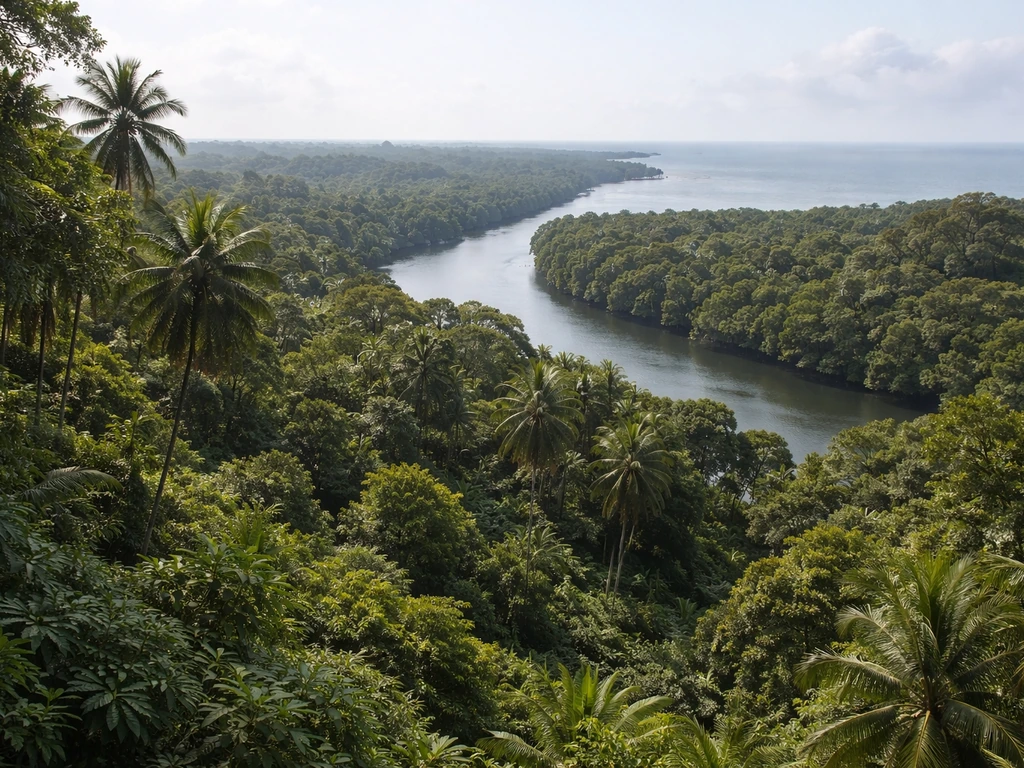
The southern rainforest belt is your strongest starting point. States like Cross River, Akwa Ibom, Rivers, Delta, Edo, Ondo, Osun, and Ogun have the rainfall, humidity, and forest shade conditions that most closely mimic vanilla's native habitat. Cross River State in particular, with its intact rainforest and consistent humidity, is arguably the single best environment in the country for vanilla cultivation.
The middle belt states, including Benue, Kogi, Kwara, and parts of Plateau State, can also work in areas with reliable rainfall and access to shade trees or shade structures, though you may need supplemental irrigation through the dry season. Abuja's FCT is borderline: the wetter parts of the territory can support a trial plot, especially in sheltered valleys, but you will need to manage moisture more carefully.
Stay away from open savanna zones in the north unless you are willing to invest heavily in controlled growing infrastructure.
How to grow vanilla step by step
Choose your planting material
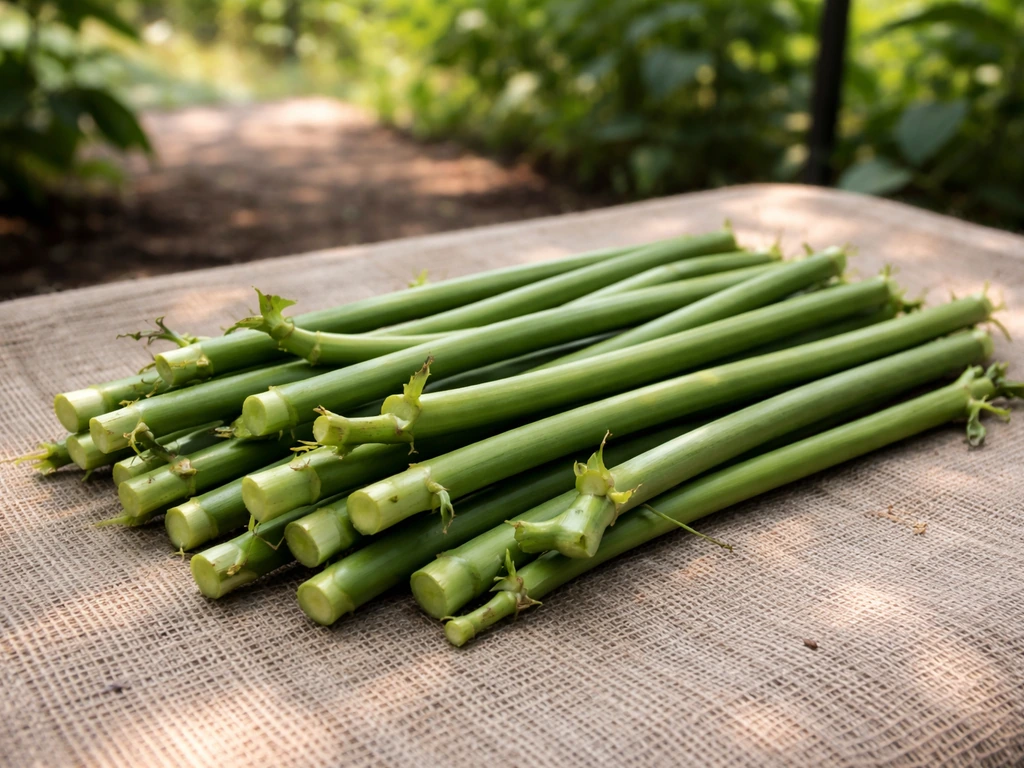
Vanilla is almost always propagated from stem cuttings, not seeds. Look for healthy cuttings that are at least 30 to 60 cm long, taken from a mature, disease-free vine. Cuttings from verified Vanilla planifolia stock are what you want, not ornamental vanilla relatives that do not produce marketable pods. If you can access nursery-raised rooted cuttings, even better, they give you a head start. Check with agricultural research institutes like NIHORT (National Horticultural Research Institute) or state agricultural development programs for locally sourced planting material.
Pick and prepare your site
You want a site with indirect, filtered light, roughly 30 to 50% shade. The traditional approach is to plant vanilla at the base of a live support tree (called a tutor) that provides both physical support and canopy shade. Good tutor trees include shade trees that are not too aggressive about drawing water from the soil. If you are working on cleared land, set up a shade structure using poles and shade cloth before you plant. The site needs to be protected from strong wind, which can snap vines and damage aerial roots. Avoid low-lying areas that collect water; vanilla roots sitting in standing water will rot within days.
Set up your trellis or support
Space your vanilla plants 1 to 3 metres apart in the row, with 2.5 to 3 metres between rows. Each vine needs a vertical support to climb: a live tree, a treated wooden post, or a concrete pole all work. As the vine grows, train it along horizontal wires or branches at a height that keeps flowers and pods accessible for hand pollination and harvesting, roughly 1 to 1.5 metres off the ground is practical. Avoid training vines too high; you will need to reach every flower individually.
Planting
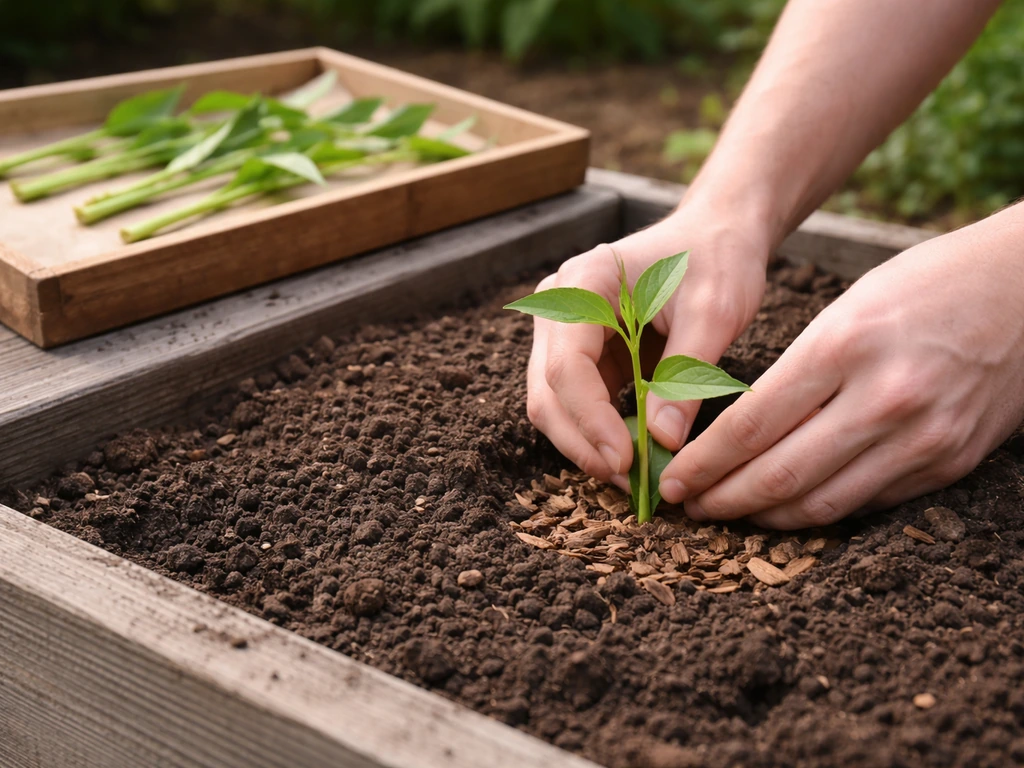
- Allow your cuttings to dry in the shade for 3 to 5 days after cutting so the cut end calluses over and is less susceptible to rot.
- Prepare a planting hole or raised bed with well-draining, organic-rich soil. Mix in compost or well-rotted organic matter generously.
- Plant the cutting at a shallow depth, burying only the bottom 2 to 3 nodes. Vanilla has shallow roots (20 to 50 cm depth is typical) and does not want to be buried deep.
- Lay a thick organic mulch (coconut husk, dry leaves, or wood chips work well) around the base. This keeps roots cool, retains moisture, and suppresses weeds.
- Secure the vine gently to its support and keep the area free of competing weeds while the plant establishes.
Getting humidity, irrigation, and drainage right
In Nigeria's south, natural rainfall handles most of your irrigation needs from April through October. The dry season (roughly November through March, longer in the middle belt) is when you need to step in with supplemental watering. Vanilla does not like to dry out completely, but it equally cannot tolerate waterlogged roots. Your goal is consistently moist but never saturated soil. If you are in a zone with a pronounced dry season, install drip irrigation or micro-sprinklers rather than flood or furrow irrigation; you want moisture at the root zone, not waterlogging. A thick mulch layer of 5 to 10 cm does a lot of the work by reducing evaporation between watering cycles.
Drainage is non-negotiable. If your soil is heavy clay, build raised beds or mounded rows before you plant. Vanilla roots are shallow and fine; even one week of sitting in saturated soil can trigger Fusarium root rot, which is the number one killer of vanilla vines globally. Test drainage by digging a 30 cm hole, filling it with water, and seeing how fast it drains. If it takes more than 30 minutes to empty, you need to amend the soil with sand and compost, or build up your planting beds. Soil pH should sit between 6.0 and 7.0 for healthy nutrient uptake; test your soil and lime if necessary.
Pollination and getting your pods to set
This is the part most Nigerian growers underestimate. Vanilla flowers are orchids, and in their native Mexican range they are pollinated by specific orchid bees (Eulaema species) that do not exist in Nigeria. Without those bees, virtually no fruit will set on its own. You have to pollinate every flower by hand, on the morning it opens. Vanilla flowers open for only one day and typically in the morning hours, so you need to walk your vines daily during the flowering period.
How to hand-pollinate vanilla
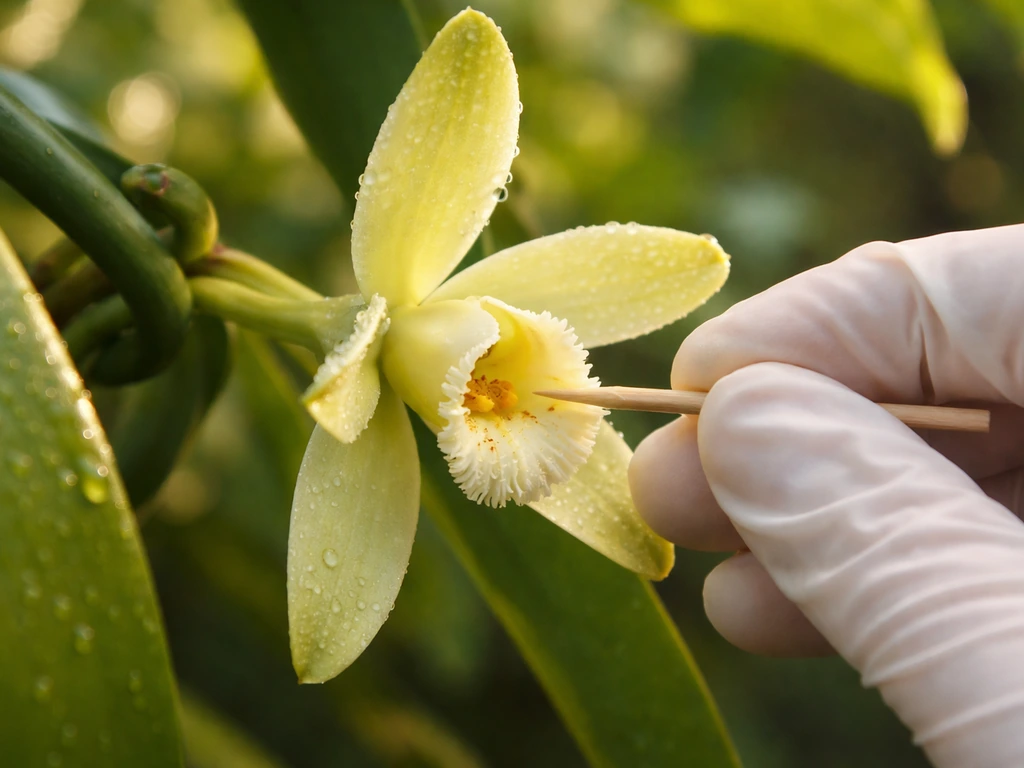
- Go out early in the morning, ideally before 10 AM, when flowers are freshly open.
- Pick up a small stick, toothpick, or similar tool.
- Gently peel back the flap (labellum) separating the anther (pollen-bearing structure) from the stigma (female receptive surface). The two structures sit almost on top of each other in the column of the flower.
- Use the tool or your fingernail to transfer the pollen mass (pollinium) from the anther onto the sticky stigma surface and press gently.
- A successfully pollinated flower will begin to swell at the base within a few days; unpollinated flowers drop off cleanly.
Pods mature over 6 to 9 months after successful pollination before they are ready to harvest. Do not rush the harvest; pods harvested too early will not cure properly and will have far less vanillin content. Harvest when pods are fully developed and just beginning to show a yellowish tinge at the tip.
Problems you are likely to face and how to handle them
Root and stem rot (Fusarium oxysporum)
This is the biggest threat to vanilla in tropical, humid growing environments like Nigeria's south. Fusarium root rot causes the base of the stem and roots to turn brown and mushy, and an infected vine can collapse quickly. Prevention is everything here: start with disease-free cuttings, ensure excellent drainage, do not over-water, and avoid wounding roots during weeding. If you spot early symptoms (discoloration at the stem base), cut out the affected section with a clean blade, treat the cut surface with a fungicide or lime paste, and remove and bag the infected tissue. Do not compost it.
Anthracnose and other fungal leaf/stem spots
High humidity in enclosed or low-airflow areas encourages leaf spot diseases. Give your vines enough spacing so air can move through the canopy. If you see dark or sunken lesions on leaves and stems, remove the affected tissue and apply an appropriate copper-based fungicide. Avoid wetting the foliage when you irrigate.
Poor flowering and low pod set
If your vines are healthy and 3 to 4 years old but not flowering, the most common causes are too much nitrogen fertilizer (which pushes vegetative growth at the expense of flowers), not enough light, or vines that have not been looped or trained downward to trigger flowering. Vanilla tends to flower on lateral shoots, not just the main climbing stem. Once vines reach about 1.5 metres, loop or arch them back downward along horizontal supports to encourage lateral shoot development where flowers appear.
Mealybugs, scale, and other pests
Nigeria's warm, humid conditions favor sap-sucking insects. Inspect the undersides of leaves and stem joints regularly. Neem oil spray is an effective first-line treatment for mealybugs and scale insects and is compatible with organic production. For slug or snail damage (common in mulched, humid beds), apply diatomaceous earth around the base of plants or use approved bait.
Vine viruses
Vanilla is susceptible to a handful of viruses that cause mosaic patterns, distorted growth, and reduced yields. There is no cure once a plant is infected. The only management strategy is to start with certified, virus-free planting material and to sterilize cutting tools between plants. Infected vines should be removed and destroyed, not composted.
Your action plan for starting today
Here is a practical sequence to get your Nigeria vanilla trial off the ground without wasting money on avoidable mistakes.
- Check your local rainfall and humidity data first. If you are in Cross River, Akwa Ibom, Rivers, Delta, Edo, Ondo, or nearby states, you are in a strong zone. Middle belt growers should confirm they can irrigate through a 4 to 5 month dry season before committing.
- Assess your drainage before anything else. Dig a test hole and observe. If drainage is poor, plan raised beds or mounded rows as your first infrastructure task.
- Source disease-free planting material from NIHORT, a reputable agricultural university extension program, or a verified commercial nursery. Do not accept cuttings from an unknown source with no disease history.
- Start small with a trial plot of 10 to 20 vines before investing in a full hectare. This lets you learn your site's specific quirks, including shade patterns, drainage, and pest pressure, before scaling.
- Set up your support system (tutor trees or posts) and shade structure before planting. Install drip irrigation lines if you are in a middle belt zone with a long dry season.
- Plant your callused cuttings at the start of the rainy season (April to May in most southern states) so young vines establish during the high-moisture months.
- Build a pollination calendar into your routine. Once vines mature and flower (expect 3 to 4 years), you need to check every vine every morning during flowering season. Miss a flower's one-day window and that potential pod is gone.
- Keep records of what works: watering frequency, fertilizer applications, any pest or disease signs, and flowering dates. Vanilla is a long-cycle crop and good notes from year one save you a lot of guesswork in years four and five.
If you have experience growing other orchids or spice crops in Nigeria, vanilla is a logical next step and the climate genuinely cooperates. If you are wondering can you grow vanilla successfully in your area, start by matching your site to vanilla's warmth, shade, humidity, and drainage needs. It is worth comparing how growers in similar tropical contexts approach this crop.
Growers trying vanilla elsewhere in Africa face similar pollination and disease challenges, and the same fundamentals of site selection and drainage apply whether you are growing in Nigeria or anywhere else in the tropical world. The good news is that these site selection and drainage fundamentals can guide attempts to grow vanilla in Canada too can you grow vanilla in canada.
You may be wondering can you grow vanilla in South Africa, and the same basics of warmth, humidity, filtered light, and excellent drainage still apply. In the US, you typically can only grow vanilla outdoors in very limited warm, humid regions, so many growers rely on greenhouses to recreate the tropical conditions vanilla needs can you grow vanilla in the us.
The commitment is real, but so is the reward: a productive vanilla plot at 7 to 8 years can yield around 2. 5 to 4 tonnes of fresh pods per hectare, and high-quality cured vanilla commands strong prices. PROSEA reports a practical yield benchmark: a good vanillery may yield about 2.
5, 4 t/ha per year of fresh fruits (cured beans around 500, 800 kg/ha) over a productive crop life of about 7 years (total crop life about 10 years) [2. 5 to 4 tonnes of fresh pods per hectare](https://www. growables. org/information/TropicalFruit/VanillaPROSEA.
htm). Nigeria has the climate. The rest is preparation and patience.
FAQ
Can I grow vanilla from seed in Nigeria, or should I use cuttings?
In Nigeria, the safest approach is to start with rooted stem cuttings taken from verified Vanilla planifolia sources. Seeds are not practical because you still must wait years for flowering and you can end up with genetic or cultivar mismatches that do not produce marketable pods. If you buy unverified cuttings or ornamental relatives, you may grow for a long time and then never get reliable pod set.
What happens if I do not get the right shade or wind protection for vanilla in Nigeria?
Avoid planting vanilla in the hottest, most exposed edges of your property where direct midday sun or wind hits the vines. Vanilla needs filtered light and wind protection, so even in the rainforest south, you will usually need a live tutor tree or shade cloth structure before planting. If you cannot provide 30 to 50% shade consistently, growth will stall and flowering will be delayed.
How strict is the timing for hand pollination, and what if I miss a day?
During pollination season, you need daily checking, usually morning only, because each vanilla flower opens once. If you miss the day it opens, that flower typically will not set properly and you lose that potential pod. Set a simple routine plan, mark flowering clusters, and pollinate as soon as the blooms open.
How do I prevent Fusarium root rot in Nigerian rainy conditions if my soil is heavy?
Fusarium root rot risk is highest when the base of the plant stays wet. If your soil drains slowly or you have standing water after rain, you should mound or raise beds, improve soil structure, and consider drip irrigation to avoid soaking the root zone. You can be watering correctly and still lose vines if the field layout traps water.
My vanilla vines flower but do not produce pods, what should I check first?
If leaves look fine but pods are small or never form, the most common cause is pollination failure, not fertilizer. Make sure you are pollinating every open flower and that vines are mature enough and properly trained to produce lateral shoots. Nitrogen excess can also reduce flowering, but it will not replace the need for hand pollination in Nigeria.
What is the best way to irrigate vanilla so I do not create leaf-spot disease in humid areas?
To reduce leaf spot problems, irrigate in a way that keeps foliage dry. Use drip or micro-sprinklers aimed at the base, and avoid spraying water on leaves. Also keep adequate spacing and ensure airflow, because enclosed or tightly spaced beds trap humidity around the canopy.
My vanilla is healthy but not flowering, how can I diagnose the most likely causes in Nigeria?
If your vines are 3 to 4 years old and still not flowering, review three factors first: light, nitrogen level, and training. Vanilla often flowers on laterals, so loop or train vines downward to encourage lateral shoot growth. Also avoid frequent high-nitrogen feeding, which can keep the vine in a vegetative phase.
Do I need to adjust soil pH for vanilla in Nigeria, and how should I do it safely?
For soil pH, do not guess. Test first, then lime only if needed, because applying lime to already-correct soils can lock up nutrients. Vanilla performs best around slightly acidic to neutral conditions, and the pH shift also affects root health and how well nutrients become available.
What practical steps should I take to reduce virus and disease spread between vanilla vines?
Start with good sanitation and tool hygiene. Between plants, sterilize cutting tools to reduce virus spread risk, and only handle healthy vines first. If you suspect virus symptoms, remove and destroy affected vines promptly, because leaving them in the plot can reduce yields and spread issues.
When should I harvest vanilla pods in Nigeria for good curing results?
You should not wait for pods to look fully dry on the vine. Harvest when pods are fully developed and the tip begins to show a yellowish tinge, then cure properly. Over-early harvest leads to weak vanillin development, and over-delayed harvest can degrade pod quality and aroma.
Can I use thick mulch around vanilla plants in Nigeria, and what is the common mistake to avoid?
Mulch helps, but keep it from touching the vine base too tightly. Heavy mulch that stays wet against the stem can increase rot risk, especially in rainy zones. Use mulch to buffer evaporation and regulate moisture, while ensuring the base area and drainage remain healthy.
If I want to start small, how should I scale a Nigerian vanilla project without wasting money?
Many growers start small and expand after the first management cycle. Plan for labor-intensive hand pollination during flowering, plus long timelines since peak production takes several years. If you want a low-risk test, begin with a trial plot in a well-draining, shaded area, then scale once drainage, training, and disease control are proven.
Next Articles
Can You Grow Vanilla in the US? Requirements and Steps
Can you grow vanilla in the US? Learn US requirements, setups, and hand pollination steps for beans, often years later.
Can You Grow Vanilla in the US? Practical Guide by Region
Can you grow vanilla in the US? Regional feasibility, greenhouse setup, care needs, and years to pods via hand pollinati
Can You Grow Okra in Canada? Ontario Guide & Short‑Season Tips
Can you grow okra in Canada? Regional verdict, Ontario-specific steps, varieties, season-extension & harvest tips.