
Yes, you can grow vanilla in Canada, but not outdoors in the ground except in a handful of very protected coastal microclimates on Vancouver Island or the Lower Mainland. For a detailed how-to and regional feasibility overview on whether can you grow vanilla in Canada, see the full guide. For the vast majority of Canadians, vanilla (Vanilla planifolia) is a greenhouse or indoor plant. That is not a dealbreaker. Plenty of hobbyists and small-scale growers are producing vanilla vines in heated greenhouses, sunrooms, and even spare bedrooms from Victoria to Halifax. If you want comparative advice for a different climate, see can you grow vanilla in the US for information tailored to US regions. It takes patience, a controlled environment, and a willingness to hand-pollinate every single flower, but it is absolutely doable.
Can You Grow Vanilla in Canada? Feasibility & How-To Tips
Regional feasibility across Canada
Where you live in Canada changes what you need to invest and how hard the grow will be. Here is an honest region-by-region picture based on ECCC 1991–2020 Climate Normals data.
Coastal British Columbia
This is the closest thing to a genuine outdoor growing opportunity in Canada, and even here it is limited. Vancouver International Airport averages a frost-free period of about 235 days, and Victoria's Gonzales/Airport composite shows roughly 213 frost-free days. Absolute winter minima in both cities regularly dip below the 10–15 °C threshold that vanilla needs even at night. So while you could theoretically overwinter a vine in a very sheltered, south-facing microclimate with frost cloth and supplemental heat cables, I would not count on it surviving a typical Vancouver January without some kind of protected structure. A lean-to greenhouse against a south-facing wall, kept minimally heated, is the realistic setup for coastal BC growers. The mild summers are a genuine advantage: outdoor daytime temperatures frequently reach 20–28 °C, which is right in vanilla's sweet spot.
Ontario and Quebec
Toronto's frost-free season runs around 200–210 days under the 1991–2020 normals, which sounds reasonable until you remember that vanilla needs nights above 15 °C for most of the year. Toronto winters routinely see absolute minima well below -10 °C, which would kill a vanilla vine instantly. Montreal has an even shorter frost-free window, commonly 140–170 days depending on the station. Consult Canadian Climate Normals 1991–2020, Montréal / Trudeau (ECCC) for station-specific frost-free periods (commonly ~140–170 days) blank" rel="noopener noreferrer">Canadian Climate Normals 1991–2020 — Montréal / Trudeau (ECCC). In both provinces, vanilla is strictly a heated greenhouse or climate-controlled indoor crop. That is a firm line, not a soft suggestion.
The Prairies
Calgary's average frost-free period is about 119 days under current normals, and absolute winter minima are severe. There is no outdoor option here, full stop. Prairie growers who want to try vanilla need a well-insulated, year-round heated greenhouse or a dedicated indoor setup with supplemental lighting. The heating costs are real. Using the greenhouse heat-loss formula (Q = U × A × ΔT), a freestanding single-glazed structure in a Calgary-equivalent design-temperature zone can require roughly 360 Btu/hr per square foot, which converts to approximately 1.14 kW/m². Double-wall polycarbonate cladding cuts those numbers substantially and is worth the upfront investment on the Prairies.
Atlantic Canada and northern zones
Halifax-area frost-free periods run roughly 160–170 days, with warm and often humid summers that vanilla would enjoy. See blank" rel="noopener noreferrer">Climate change in Nova Scotia: temperature increases from 1961 to 2020 (regional climate summary citing frost‑free values) for Halifax‑area frost‑free periods of roughly 160–170 days. But winters are cold enough to kill the vine without heated protection. Atlantic Canada growers have a slight advantage in summer ambient humidity compared to, say, Calgary, which reduces the cost of humidity management in a greenhouse. Anywhere north of roughly the 50th parallel (think northern Ontario, northern BC, the territories) is effectively a high-investment indoor-only proposition with significant supplemental heat and lighting requirements year-round.
What vanilla actually is (and what you are signing up for)
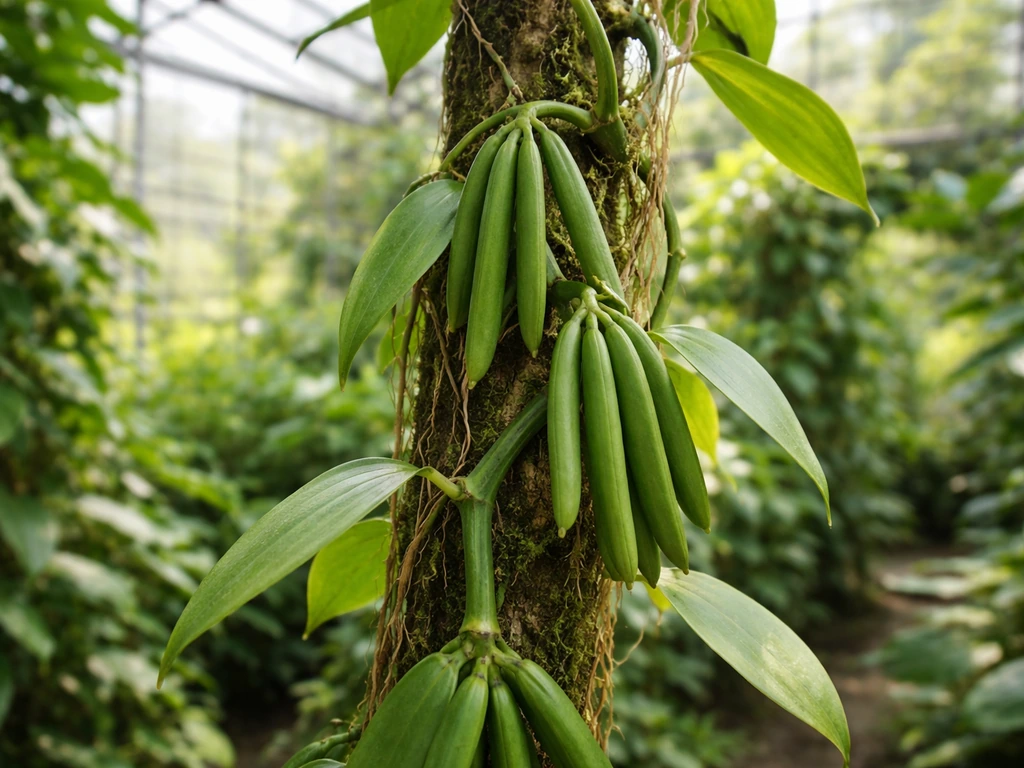
Vanilla planifolia is a vining orchid native to Mexico's Gulf Coast and Central America. It is not a compact houseplant. Left to its own devices, a mature vine reaches 30 metres in the wild. In a greenhouse or indoors you manage it to a workable length, typically 1.5–3 metres, by pruning. The vine produces aerial roots along its stem that anchor into bark or a moss pole, and it needs something to climb. The lifecycle matters for expectation-setting: from a cutting, expect 2–4 years before your first flowers appear. Flowers last exactly one day. Each flower must be manually pollinated within hours of opening. After successful pollination, the bean takes 9 months to mature. From cutting to cured vanilla bean is a 3–5 year journey at minimum. If that timeline seems daunting, I will be honest: it is. But the vine itself is genuinely beautiful, and many Canadian growers enjoy it as an ornamental long before they get beans.
The three commercially relevant species are Vanilla planifolia (the main source of commercial vanilla, with the classic flavour), Vanilla × tahitensis (Tahitian type, with floral, anise-like notes and slightly rounder pods), and Vanilla pompona (larger pods, less commonly grown). For Canadian growers, V. planifolia is the standard choice and the easiest to source. V. tahitensis is worth seeking out if you can find cuttings and want a slightly different flavour profile.
What vanilla needs to thrive
Getting the environmental parameters right is the single most important thing you can do. Vanilla is not forgiving of cold snaps or prolonged dry spells.
| Parameter | Optimal Range | Absolute Limit | Notes for Canadian Growers |
|---|---|---|---|
| Daytime temperature | 20–30 °C | Below 15 °C causes growth decline | Supplemental heat required Oct–Apr across most of Canada |
| Night temperature | 15–20 °C | 0 °C is lethal; chilling injury below ~10 °C | Night setback heaters must not drop below 15 °C |
| Relative humidity | 60–90% | Below 50% stresses vines and desiccates flowers | Use foggers, misters or a humidifier; ensure air circulation |
| Light (PPFD) | 200–450 µmol/m²/s for established vines | Avoid direct midday sun; diffuse/partial shade preferred | 40–70% shade cloth in summer; LED supplemental lighting in winter |
| Substrate pH | 6.0–7.0 | Outside 5.5–7.5 causes nutrient lockout | Orchid bark mixes typically fall in this range |
| Watering | Evenly moist, never waterlogged | Soggy roots cause rapid rot | Allow top 2–3 cm to dry slightly between waterings |
Substrate and potting mix
Vanilla roots need oxygen as much as they need moisture. A standard potting soil will suffocate them. The mix I use and recommend is roughly 50% medium-grade orchid bark, 25% perlite, and 25% coconut coir. Some growers add a handful of sphagnum moss to help retain a little more moisture in drier greenhouse environments. The key is excellent drainage combined with enough organic matter to hold some moisture between waterings. Repot every 2–3 years or when the bark has broken down to a fine, compacted texture.
Support structures
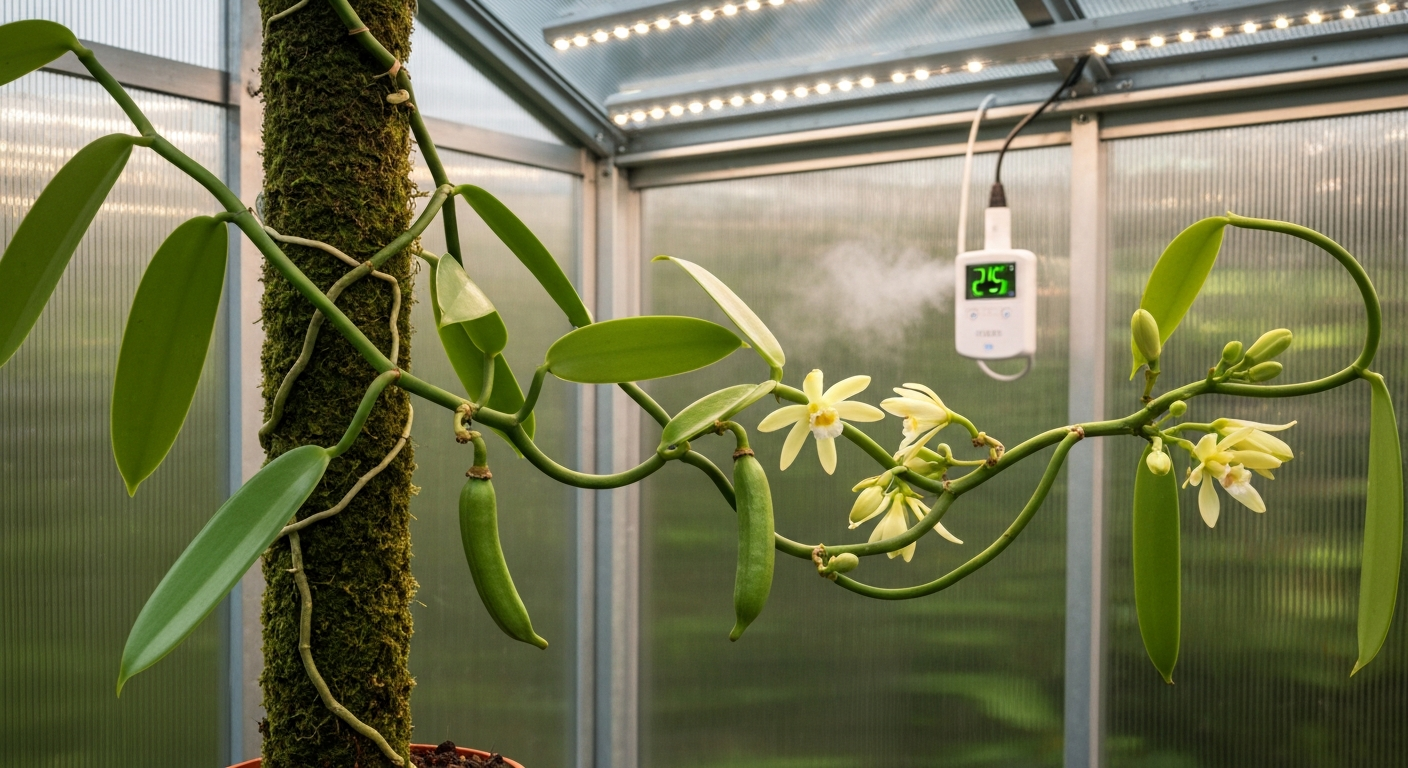
Vanilla produces aerial roots that grip rough, moisture-retaining surfaces. A thick moss pole (coconut coir wrapped around a PVC pipe works well) is the standard indoor option. In a greenhouse, you can train the vine along a horizontal wire trellis or up and over a wooden frame, then loop the growing tip back downward, which is a technique commercial growers use to bring the vine into contact with light for more even flowering. Whatever support you choose, make sure it is anchored solidly: a mature vine in a large pot is surprisingly heavy.
Outdoor, greenhouse, or indoors: which setup makes sense for you
This is the decision most Canadian growers struggle with. Here is a clear breakdown of what each option actually involves.
| Setup | Who It Suits | Key Pros | Key Cons |
|---|---|---|---|
| Outdoor (in-ground) | Coastal BC only, very sheltered microclimate | No infrastructure cost; natural humidity | Frost risk; vine almost certainly needs winter protection even in Vancouver |
| Heated greenhouse | Serious hobbyists and small producers across Canada | Best environment control; scalable; good for multiple vines | Upfront cost ($2,000–$15,000+); ongoing heating costs; humidity management needed |
| Sunroom or conservatory | Southern BC, Ontario, Quebec homeowners | Existing structure; year-round access; passive solar heat gain | May still need supplemental heating; light levels can be low in winter |
| Indoor grow setup | Any Canadian climate; apartment growers | Lowest barrier to entry; climate-controlled by default | Requires LED grow lights; limited space; lower yields; humidity harder to manage |
Run through this quick checklist before deciding on your setup. If you answer yes to most of these, a greenhouse or sunroom is worth pursuing. If mostly no, start indoors with a single vine under LEDs and scale up if you enjoy it.
- Do you have space for a structure at least 2 m x 3 m with 2+ metres of ceiling height?
- Can you run electrical to that space for a heater, fan, and grow lights?
- Are you comfortable monitoring temperature and humidity daily, especially in winter?
- Do you have a water source nearby for regular misting or a fogger connection?
- Are you willing to commit to 3–5 years before you see your first harvestable beans?
- Is your budget above roughly $1,500 for a minimal heated greenhouse setup?
Lighting for indoor and greenhouse growers
Canadian winters are brutal for light levels. In Vancouver, usable daylight in December and January is limited, and in Toronto or Calgary it is even worse for photoperiod and intensity. Established vanilla vines need roughly 200–450 µmol/m²/s PPFD for good vegetative growth. Newly rooted cuttings and young vines need less, around 25–100 µmol/m²/s during acclimatization. Spectrally tunable LED grow lights are the practical choice: they run cool (important when you are also managing temperature carefully), consume less electricity than HPS fixtures, and can be adjusted in spectrum as the vine matures. Supplement greenhouse light from October through March at minimum. Aim for a 14–16 hour photoperiod during the active growing season.
Humidity and ventilation
Target 60–80% RH for vegetative growth and especially during flowering and bean development. Use an ultrasonic fogger or high-pressure misting system on a timer rather than open-pan humidifiers, which struggle to raise RH quickly in a greenhouse. The catch: high humidity plus poor air movement invites fungal disease. Always run a small circulation fan at low speed to keep air moving around the foliage, and make sure your greenhouse or grow room has some ventilation capacity for summer months when temperatures can spike. CO2 enrichment (700–1,500 ppm) can boost growth in a sealed greenhouse, but vanilla displays some CAM (crassulacean acid metabolism) behaviour, so time CO2 injection for nighttime fixation if you go this route.
How to grow vanilla step by step
Planting and potting
- Choose a pot that is wide rather than deep: a 25–30 cm azalea-style pot works well for a young vine. Vanilla roots spread laterally and the vine does not need deep soil.
- Fill with your orchid bark/perlite/coir mix and pre-moisten it thoroughly before planting.
- Place a single cutting or young plant at a slight angle toward the moss pole or trellis, and press the lowest aerial root nodes gently into the bark mix.
- Do not bury the stem deeply. The bottom 5–8 cm should be in the mix; the rest climbs the support.
- Water in gently and place in your pre-heated, pre-humidified growing space. Do not fertilize for the first 3–4 weeks while the cutting establishes roots.
Watering schedule
Vanilla is sensitive to both overwatering and drying out completely. During active growth (roughly April through September for Canadian greenhouse growers), water when the top 2–3 cm of bark mix feels just barely dry. In winter, when growth slows, reduce watering frequency by about 30–40% but never let the roots desiccate entirely. Always use room-temperature water; cold water straight from the tap can shock tropical roots. If your tap water is heavily chlorinated, let it sit overnight before watering.
Feeding and fertilizing
Feed with a balanced orchid fertilizer (typically 20-20-20 or a similar NPK ratio) at quarter-strength every two weeks during active growth. Some growers switch to a lower-nitrogen, higher-potassium formula (such as 10-30-20) as the vine approaches flowering age to encourage blooming rather than purely vegetative growth. Flush the pot with plain water once a month to prevent salt buildup in the bark mix. Reduce fertilizing to once a month or less in winter.
Staking and pruning
Tie new growth to your support structure with soft plant clips or strips of pantyhose, nothing that will cut into the stem. As the vine grows, loop it horizontally to keep it within your growing space and encourage more even light distribution. Prune any shoots that are growing in unproductive directions or crowding the structure. In a greenhouse, the classic commercial technique is to train the vine up to the roof structure, then loop it back down and allow it to grow horizontally along wires at head height, which keeps the flowering nodes at an accessible level for hand pollination.
How to propagate vanilla
Stem cuttings (most practical method)
Stem cuttings are the standard propagation method for vanilla and the easiest to execute at home. Take a cutting with 3–5 nodes (roughly 20–30 cm long) from a healthy, mature vine. Remove the leaves from the bottom two nodes. Allow the cut end to callus for 24–48 hours before planting, this is important and often skipped, but it dramatically reduces the risk of rot. Insert the calloused end into pre-moistened orchid bark mix so that at least one or two bare nodes are below the surface. Cover loosely with a clear humidity dome or plastic bag to maintain 70–80% RH around the cutting, and place under gentle LED light (around 50–100 µmol/m²/s). Rooting typically takes 4–8 weeks. Do not tug on the cutting to test for roots, wait until you see new leaf growth, which is a reliable sign that roots have formed.
Layering
Air layering works well on vanilla if you want to propagate a section of vine while keeping the parent plant intact. Identify a node with a visible aerial root nub, wrap it with a ball of moist sphagnum moss about the size of a golf ball, and secure it with plastic wrap. Keep the moss moist over 4–8 weeks. When you can see roots growing into the moss ball through the plastic, cut the vine below the node and pot up the new plant. This method has a high success rate and is worth trying if you are working with a particularly valuable vine.
Seed propagation
Growing vanilla from seed is technically possible but not practical for home growers. Vanilla seeds require sterile in vitro (tissue culture) germination with a symbiotic mycorrhizal fungus or a laboratory nutrient medium. The success rate for home attempts is very low, and the resulting seedlings need years of in vitro culture before they are robust enough to transplant. Stick with cuttings or purchased young vines from a reputable orchid or specialty nursery.
Hand pollination: the skill that determines whether you get beans
In the wild, vanilla is pollinated by specific species of Melipona bees and some hummingbirds in Mexico. None of those exist in Canada. Every single flower you want to set a bean must be hand-pollinated by you, on the day it opens. For guidance on how vanilla performs in tropical climates, see our guide on growing vanilla in Nigeria. This is non-negotiable and is the single task that most separates successful Canadian vanilla growers from those who enjoy a beautiful vine but never get beans.
Anatomy of the flower
A vanilla flower has both male (anther/pollen mass called the pollinium) and female (stigma) reproductive organs, but they are separated by a small flap of tissue called the rostellum, which physically prevents self-pollination in nature. The flower is greenish-yellow, tubular, about 5–8 cm long, and opens in the morning. The pollinium (a small waxy mass of pollen) sits behind the rostellum, and the stigma is just below it on the column.
Pollination technique
- Check your vine every morning during flowering season. Flowers open between roughly 6 am and 10 am and are receptive for only 8–12 hours. In a heated greenhouse, this window is consistent year-round.
- Use a thin wooden toothpick, a sharpened matchstick, or a fine artist's brush as your tool. Some growers prefer their thumbnail.
- Hold the flower from underneath with one hand. With your tool, gently lift the rostellum (the small flap separating the anther from the stigma) upward.
- Press the pollinium (pollen mass from the anther) down onto the stigma surface below. You are essentially bridging the gap that the rostellum normally keeps open.
- You should feel or see a slight stickiness as pollen contacts the stigma. Do not crush the column.
- Pollinate all open flowers on that day. A vanilla vine can have 10–20 flowers per raceme (flower cluster) opening over a period of 2–3 weeks.
- A successfully pollinated flower will remain attached to the vine and the ovary (the small tubular structure behind the petals) will begin to swell within a week. Failed pollinations result in the flower dropping off within a day or two.
Timing and pollination schedule for Canadian greenhouse growers
In a controlled Canadian greenhouse where temperatures are kept steady at 20–28 °C year-round, vanilla vines can flower at almost any time, though most growers report peak flowering in late winter and spring (February through May) after a slight reduction in watering and fertilizing in November and December. This mild stress mimics the dry-season trigger that induces flowering in the tropics. Once you see flower buds forming on a raceme, check the vine morning and evening daily and do not miss a single open flower. Keep a simple log: date, number of flowers pollinated, and a note on whether each one stayed attached a week later. A successful season might see 15–30 beans set per raceme if pollination is thorough.
Harvest and curing: the long game
After successful pollination, vanilla beans take approximately 9 months to fully mature on the vine. Harvest when the beans are still green but the tips are just beginning to turn yellow. Do not wait for full yellowing on the vine, as the pods can split. After harvest, the curing process transforms the green, odourless pods into the fragrant vanilla beans you recognize from the grocery store. Traditional Bourbon curing involves killing the bean by brief immersion in hot water (65–70 °C for 2–3 minutes), followed by a daily cycle of sun-sweating (wrapping in wool blankets to raise pod temperature) and shade drying for about one week, then slow drying in the shade for 1–3 months until the pods are dark brown, flexible, and intensely fragrant. The full process from pollination to cured bean is 10–12 months.
What to expect: timeline, yield, cost and difficulty
| Factor | Hobby Grower (1–3 vines, indoor/sunroom) | Serious Hobbyist (heated greenhouse, 5–20 vines) | Small Commercial (greenhouse 50+ vines) |
|---|---|---|---|
| Time to first flowers | 3–5 years from cutting | 2–4 years from cutting | 2–3 years from cutting with optimised conditions |
| Time to first beans | 4–6 years | 3–5 years | 3–4 years |
| Expected yield per vine (mature) | 10–50 beans/year if pollination is diligent | 30–100 beans/year per vine | Variable; commercial yields in tropics average 1–2 kg green beans/plant/year but temperate greenhouse yields are much lower |
| Setup cost (CAD estimate) | $200–$800 (lights, pots, humidifier) | $2,000–$15,000+ (greenhouse structure + climate control) | $15,000–$100,000+ |
| Ongoing annual cost (CAD) | $100–$400 (electricity, fertilizer) | $500–$3,000+ (heating, electricity, supplies) | Significant; economic viability requires careful cost analysis |
| Difficulty rating | Moderate-High (manageable with research) | High (requires consistent monitoring) | Very High (commercial viability in Canada is marginal) |
For hobby growers in Canada, vanilla is absolutely worth attempting if you enjoy the process and the plant. For information on growing vanilla in warmer climates, see our guide on can you grow vanilla in South Africa. Approaching it expecting to offset grocery store vanilla prices is unrealistic: a single bottle of good quality vanilla extract retails for less than the annual electricity cost of a grow light running for 14 hours a day. The real payoff is the experience, the ornamental vine, and the very real satisfaction of curing your own pods.
Common pests, diseases and how to deal with them
- Root rot (Fusarium oxysporum and related species): the most common killer of vanilla in Canadian conditions. Caused by overwatering or poorly drained mix. Fix: repot into fresh bark mix, trim blackened roots cleanly, dust with cinnamon or a copper-based fungicide, and reduce watering frequency.
- Botrytis (grey mould): thrives in high humidity with poor air circulation, especially on flowers and young growth. Fix: increase fan speed, reduce humidity slightly during flowering, remove affected material immediately.
- Spider mites: common in warm, dry indoor environments. Look for fine webbing on the undersides of leaves. Fix: mist foliage more regularly to raise humidity around leaves, treat with insecticidal soap or neem oil spray, repeat weekly for 3–4 weeks.
- Mealybugs: white cottony masses in leaf axils and along stems. Fix: dab with 70% isopropyl alcohol on a cotton swab for small infestations, or use neem oil spray for larger ones.
- Scale insects: brown or tan bumps on stems and leaves that scrape off. Fix: same as mealybug treatment; systemic insecticides can be used in severe cases.
- Anthracnose leaf spots: dark lesions on leaves, often in humid conditions with overhead watering. Fix: water at the base rather than overhead, improve air circulation, use a copper-based fungicide.
- Etiolated (weak, stretched) growth: a sign of insufficient light. Fix: increase PPFD by repositioning lights or adding supplemental fixtures.
Sourcing vanilla vines and supplies in Canada
This is genuinely the hardest part for many Canadian growers. Vanilla planifolia cuttings and young vines are not common at local garden centres. Your best options are specialty orchid nurseries (several operate in BC and Ontario and ship nationwide), orchid society sales and swaps (the Canadian Orchid Congress and provincial societies hold events where cuttings are sometimes traded), and reputable online vendors in the US who ship to Canada. When ordering from the US, be aware of CFIA (Canadian Food Inspection Agency) phytosanitary requirements for importing plant material. Bare-root cuttings are generally easier to import legally than potted plants with soil; ask your vendor for a phytosanitary certificate if they offer one.
For supplies, orchid bark mix, perlite, and coconut coir are available at most Canadian nurseries and big-box garden centres. Quality orchid fertilizers (look for brands like Dyna-Gro Orchid Pro or equivalent) can be ordered online. For grow lights, Canadian LED horticultural lighting suppliers are active in BC and Ontario and can provide fixtures suitable for a small greenhouse bay or a single-vine indoor setup. Moss poles, humidity meters, and ultrasonic foggers are all available through Canadian Amazon or specialty indoor growing retailers.
If you are exploring vanilla as part of a broader interest in growing tropical specialty crops, it fits naturally alongside other challenging but rewarding plants like ginger, saffron, and other orchids that Canadian growers are increasingly attempting in controlled environments. The skills you develop managing humidity, temperature, and light for vanilla translate directly to other tropical species.
FAQ
Short answer: Can you grow vanilla in Canada?
Yes — but not outdoors except in extremely limited mild coastal microclimates. Vanilla (mainly Vanilla planifolia and related species) is a tropical/subtropical vine requiring year‑round warm temperatures, high humidity and frost‑free conditions. In Canada, practical options are: outdoor only in a very small number of frost‑free coastal pockets on southern Vancouver Island (protected microclimates); otherwise grown in a heated greenhouse or indoors with precise environmental control.
Region‑by‑region feasibility (coastal BC vs rest of Canada)
Coastal BC (southern Vancouver Island/nearby Gulf Islands): some sheltered sites with long frost‑free periods can potentially support outdoor, semi‑protected vanilla, but this is rare and microclimate‑specific. Mainland BC coastal zones with cool summers usually need greenhouse protection. Southern Ontario, Quebec, Atlantic Canada: summers are warm enough for growth but winters require heated greenhouse or indoor culture; vanilla will not survive winter outdoors. Prairies and most of northern Canada: outdoor culture is impossible; greenhouse culture is technically possible but requires significant year‑round heating and is usually uneconomic.
What are the key environmental requirements (temperature, humidity, light)?
Temperature: optimal daytime 20–30 °C, night minima 15–20 °C; sustained temps below ~15 °C reduce growth/flowering; freezing (≤0 °C) is lethal. Humidity: high relative humidity targeted ~60–80% for healthy growth and flowering. Light: bright, diffuse light or partial shade (roughly 40–70% of full sun); avoid direct hot midday sun which scorches leaves. These are practical greenhouse/indoor setpoints to aim for.
What substrate and support does vanilla need?
Vanilla is a climbing orchid that prefers an open, fast‑draining yet moisture‑retentive mix: fine bark, coconut coir, perlite and some well‑rotted leaf/wood material or orchid mix; pH near neutral to slightly acidic (5.5–6.5). Provide sturdy vertical supports: trellises, posts, tree‑like supports or slatted poles allowing vines to attach. In commercial systems, vines are often grown on stakes or hanging supports to encourage vertical growth and ease of pollination/harvest.
Step‑by‑step planting and early care
1) Acquire a healthy vine or cutting (see sourcing). 2) Plant in a loose orchid‑type potting mix in a container or plant at the base of a support. 3) Provide filtered bright light, steady warmth (day ~24–28 °C, night ≥15 °C) and high humidity. 4) Water regularly to keep mix evenly moist but not waterlogged; allow slight surface drying between waterings. 5) Feed every 2–4 weeks during active growth with a balanced dilute fertilizer (e.g., 20‑20‑20 at 1/4–1/2 strength) or use a fertilizer regime recommended for orchids, increasing potassium during pod development. 6) Train stems up the support, securing loosely to avoid girdling.
Watering, feeding and pruning routine
Watering: consistent moisture—daily misting in dry indoor air or thorough waterings when top of mix dries slightly. Avoid soggy roots. Feeding: balanced weak fertilizer during growth; switch to bloom/pod formula with higher potassium once vines are mature and flowering begins. Pruning: remove dead/diseased growth; prune to control size and to promote lateral branching once vines are established. After harvest, cut back old growth to stimulate new shoots if needed.
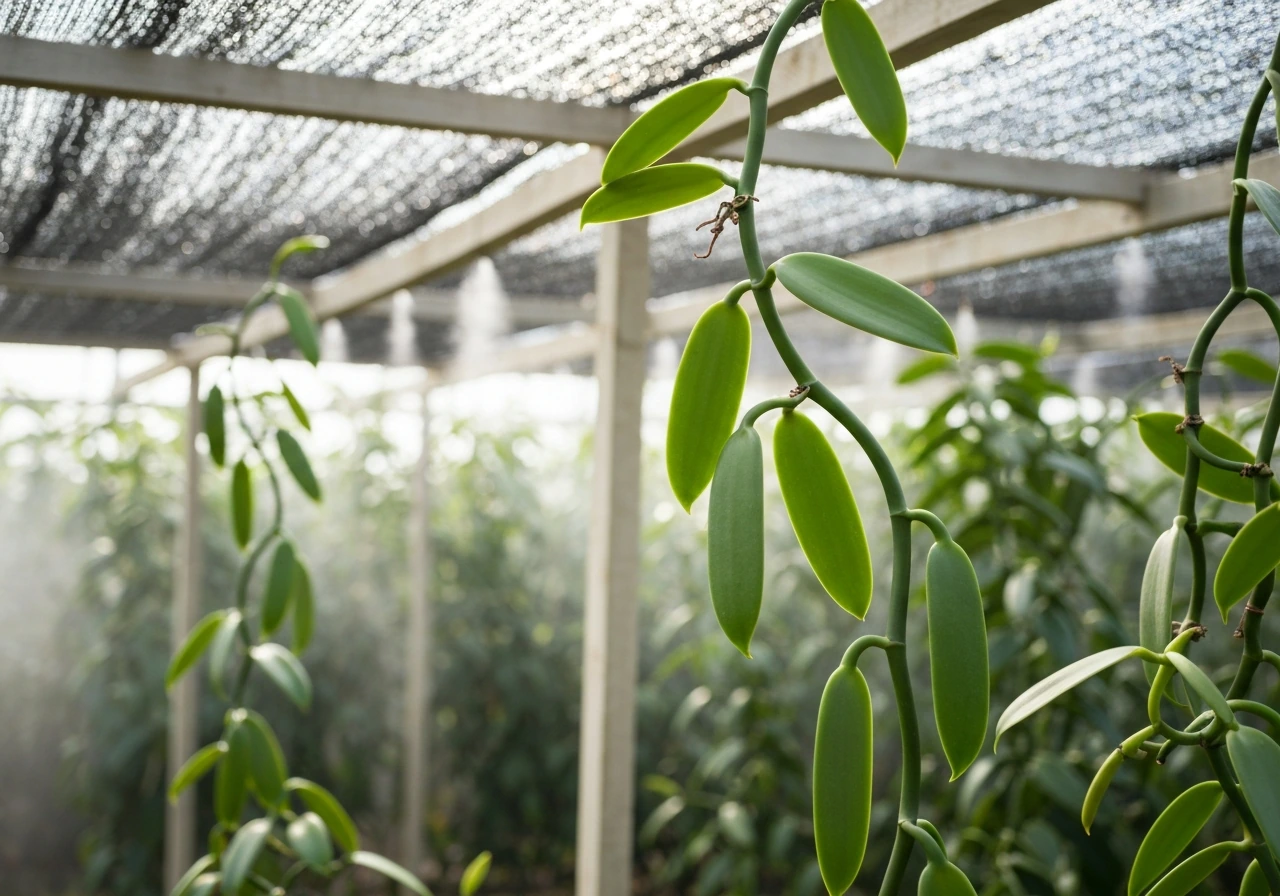
See if you can grow vanilla pods in South Africa and get step by step greenhouse and hand pollination guidance.
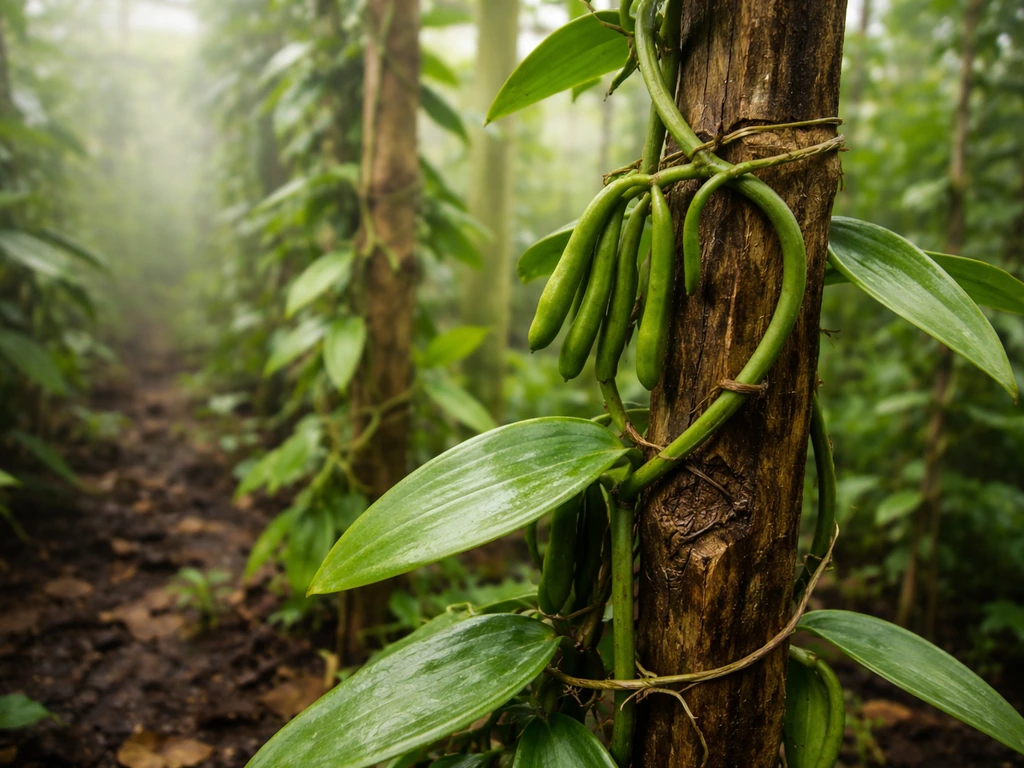
Yes, with warm humid, shaded sites. Learn Nigeria setup, planting, humidity care, pollination, and troubleshooting for v
Can you grow vanilla in the US? Learn US requirements, setups, and hand pollination steps for beans, often years later.