
Yes, you can grow vanilla in South Africa and produce real vanilla pods, but only in specific regions and almost always with some form of protected growing structure. In Nigeria, you can still grow vanilla, but you’ll need to replicate the tropical warmth and humidity using a protected structure and careful climate control grow vanilla in Nigeria. If you're in a warm, humid coastal zone like KwaZulu-Natal or the Lowveld, you have a genuine shot at outdoor or semi-protected production. If you're in the Highveld, the Cape interior, or anywhere that gets cold winters or dry spells below about 15°C at night, you'll need a greenhouse or polyhouse to make it work. This isn't a plant you put in the ground and leave alone. Vanilla rewards growers who set up the right environment and actually manage it, but the results, real home-grown vanilla pods, are absolutely achievable.
Can You Grow Vanilla in South Africa? Pods Guide
Where in South Africa can vanilla actually grow?
Vanilla planifolia, the species that produces commercial pods (the same one behind Bourbon and Madagascar vanilla), is a tropical vine. It wants year-round warmth, consistent humidity, and no frost. South Africa spans a wide range of climates, so the regional picture matters a lot.
| Region | Outdoor Feasibility | What You'll Need |
|---|---|---|
| KwaZulu-Natal coast | Best in SA for outdoor/semi-protected growing | Shadecloth, irrigation management, frost protection in upcountry KZN |
| Mpumalanga Lowveld | Good, especially low-altitude areas near Hazyview and White River | Polyhouse or shadehouse, irrigation during dry season |
| Limpopo lowlands | Possible with irrigation and shade structure | Humidity management, summer heat protection above 35°C |
| Eastern Cape coast | Marginal to possible in warmer coastal strips | Protected structure strongly recommended, winter cold watch |
| Western Cape | Not suitable outdoors; greenhouse only | Heated greenhouse with humidity control |
| Highveld (Gauteng, Free State, most of Mpumalanga plateau) | Not suitable outdoors | Heated polyhouse with full humidity and temperature control |
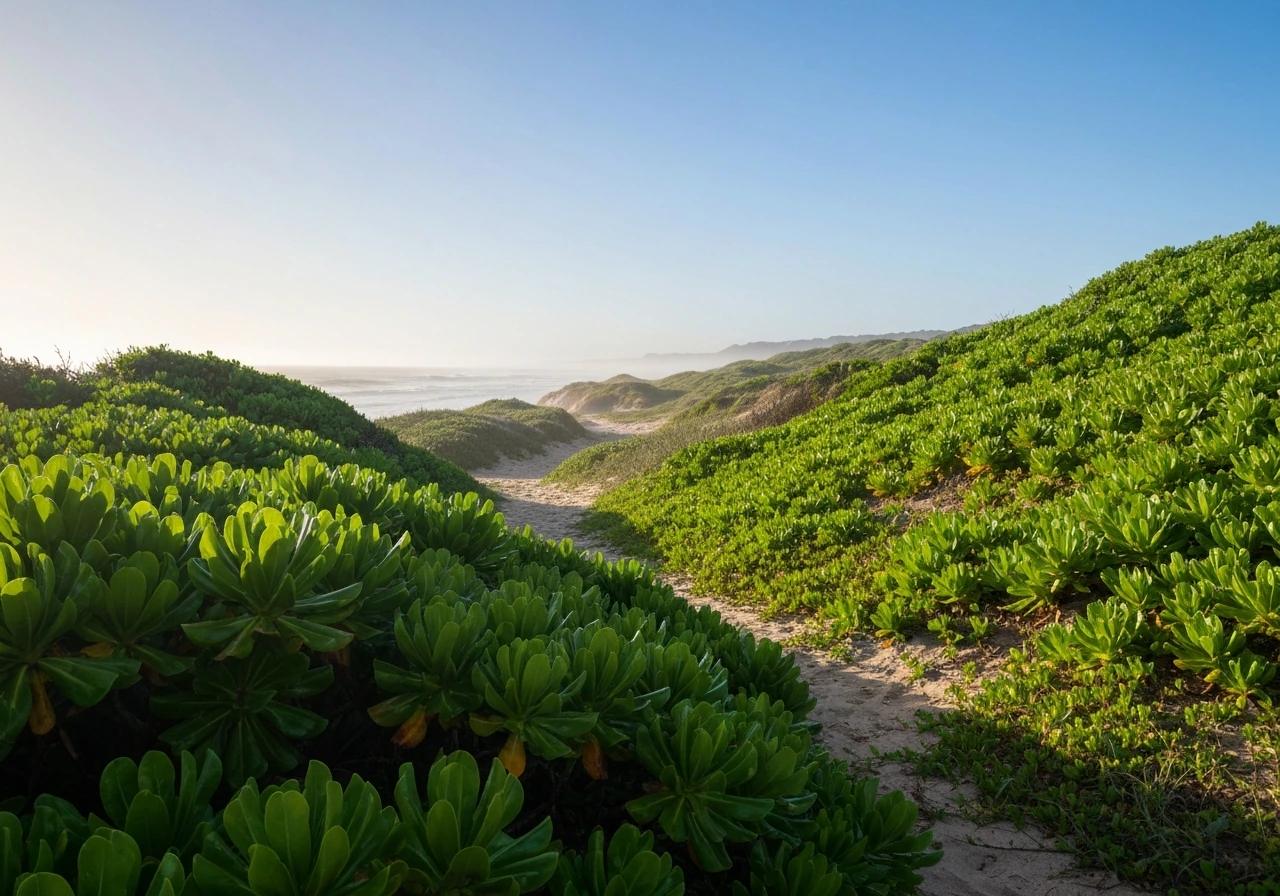
The KZN coast and the Mpumalanga Lowveld are where I'd focus if I were starting a serious vanilla project in South Africa. These zones get the closest to vanilla's native tropical conditions without heroic infrastructure investment. Everywhere else, plan to build a controlled environment before you plant a single cutting.
Climate and setup requirements
Vanilla needs temperatures between roughly 21°C and 32°C consistently. Night temperatures should stay above 15°C at all times. Humidity should sit between 70% and 85% during the growing season. Annual rainfall ideally falls between 1,500mm and 2,500mm, but it must be well-distributed, not a single summer flush followed by a dry winter. Direct, harsh midday sun will scorch the leaves and stress the vine, so some form of shade (30-50% shadecloth is the standard) is almost always required even in suitable climates.
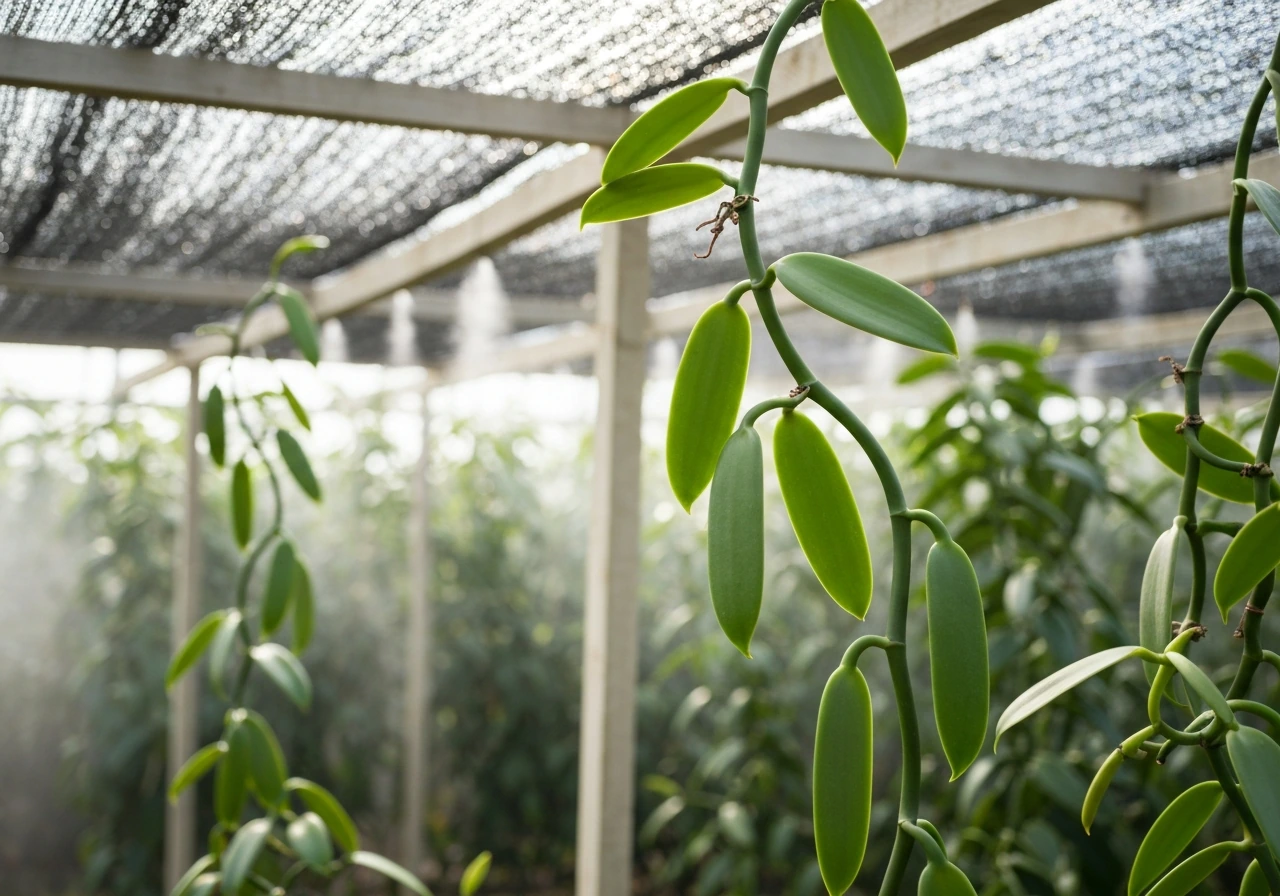
For most South African growers outside the KZN coast, this means building a structure. A polyhouse or plastic-covered tunnel traps heat and humidity effectively. A shadehouse works in already-warm and humid regions but won't buffer against cold. If you're serious about pods, plan for a structure with drip irrigation and ideally a misting system to keep humidity up during dry periods. This is the single biggest investment and the single biggest factor in whether your project succeeds.
- Temperature: 21–32°C daytime, above 15°C at night, year-round
- Humidity: 70–85% during active growth and flowering
- Light: Bright but filtered; 30–50% shade cloth is standard
- Rainfall or irrigation: 1,500–2,500mm per year, well-distributed
- Frost: Zero tolerance; even a single frost event will kill or severely damage the vine
- Structure: Polyhouse or tunnel for most SA regions, shadehouse adequate in coastal KZN and low-altitude Lowveld
Choosing your vanilla plant material and getting started
Vanilla planifolia is the species you want for pod production. There is another species, Vanilla tahitensis, but its pod flavour profile is different and it's far less commonly grown commercially. Stick with V. planifolia unless you have a specific reason to experiment with Tahitian vanilla.
Vanilla is almost always started from cuttings, not seeds. Seed-grown plants take far too long to reach maturity and are impractical for production goals. Look for cuttings that are at least 30–60cm long, with several nodes, healthy green stems, and no signs of rot or disease at the cut end. Sourcing in South Africa can be tricky. Check with tropical plant nurseries in KZN and Mpumalanga, specialized online plant sellers, and grower communities or agricultural research stations. The Agricultural Research Council (ARC) has historically had interest in tropical crops and is worth contacting. When you get cuttings, let the cut end callus (dry and harden) for 24–48 hours before planting to reduce rot risk.
Growing the vine: trellis, soil, watering, and feeding
Trellis and support
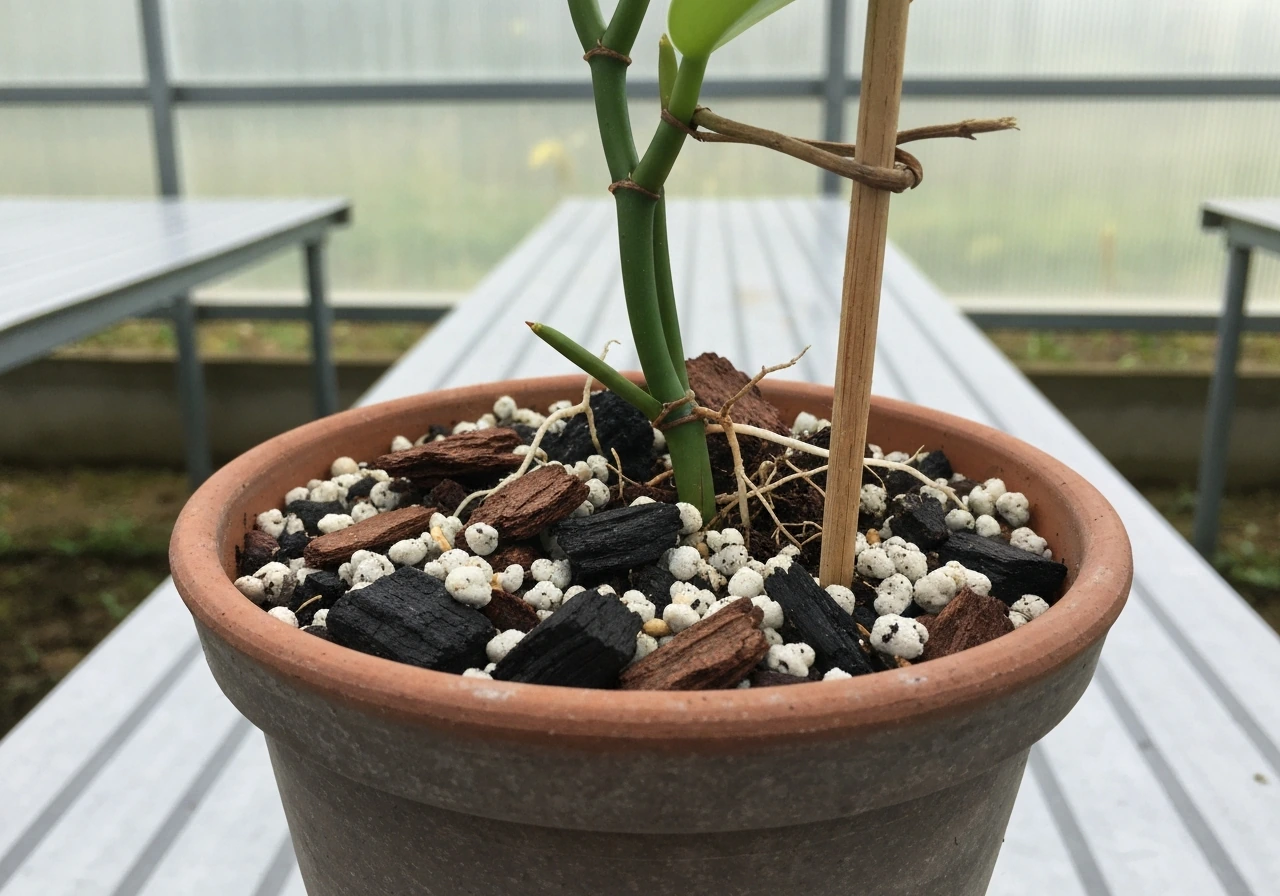
Vanilla is a climbing vine and needs something to grow on. In commercial tropical plantations, living trees or wooden posts are used. In a South African shadehouse or polyhouse, timber posts or robust bamboo poles work well. Space them about 2 metres apart and run horizontal wires or lines between them at roughly 1.5 to 2 metres height. Train the vine upward and then loop it downward once it reaches the top, which encourages side shoots and, eventually, flowering. You want the vine to reach a length of at least 3 metres before expecting it to flower.
Soil and potting mix
Vanilla is actually an epiphytic vine in nature, meaning it grows on trees rather than in deep soil. Its roots need excellent drainage above almost everything else. If you're planting in ground beds inside a structure, a mix of coarse bark, perlite, coarse river sand, and a small amount of well-composted organic matter works well. Aim for a loose, chunky, fast-draining medium. pH should sit between 6.0 and 7.0. If growing in containers, use a large pot (at least 30–40 litres) with the same well-draining mix. Waterlogged roots rot fast and will kill the plant within weeks.
Watering
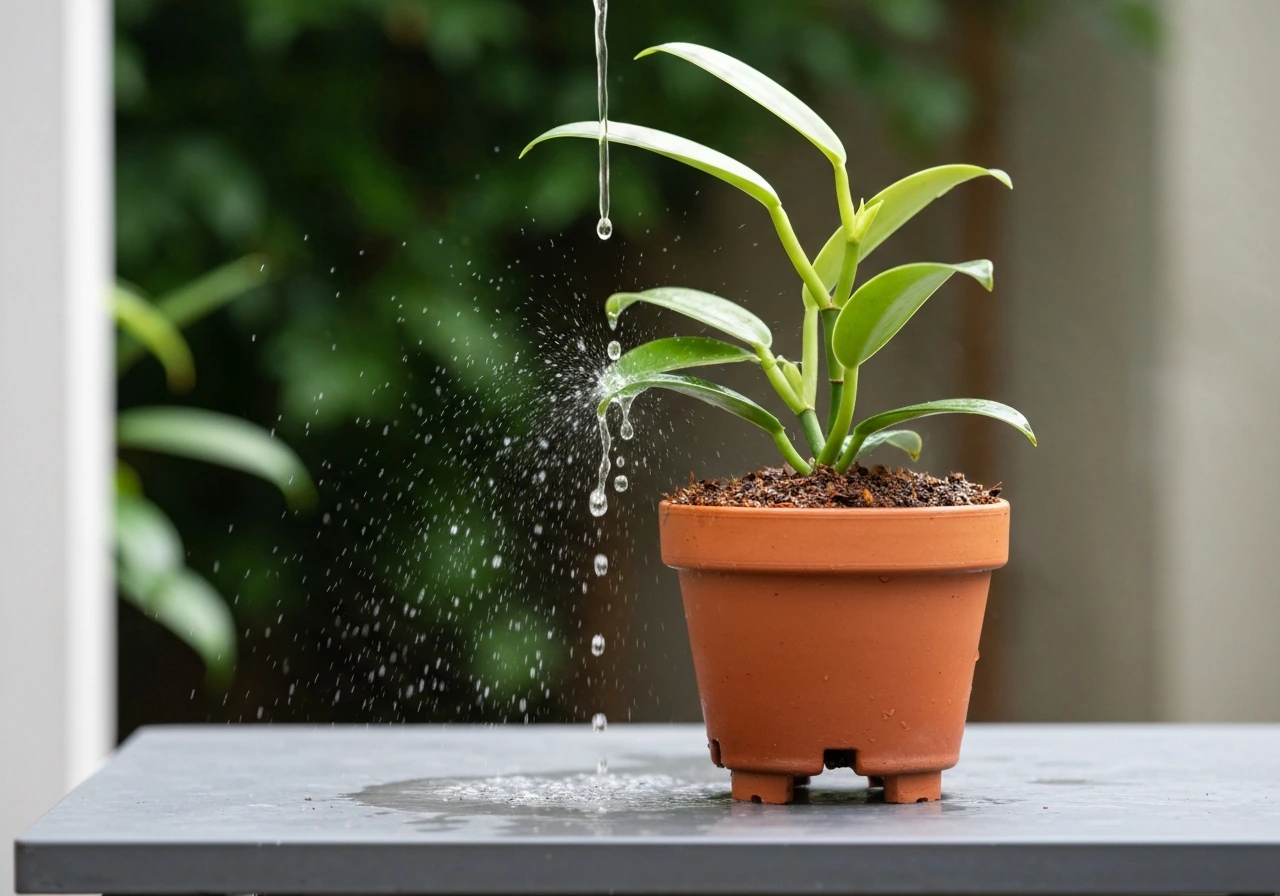
Water consistently but never let roots sit in water. In active growing conditions, watering every 2–3 days is typical, reducing to once a week or less during cooler or drier periods when the vine is less active. Drip irrigation at the base works well for established plants. Misting the foliage and root zone (vanilla also produces aerial roots) raises humidity and helps the plant thrive, especially inside a tunnel in dry inland conditions.
Feeding
Vanilla is not a heavy feeder but it does need regular nutrition to grow strong enough to flower. A balanced liquid fertilizer with an NPK around 20-20-20 applied every two to three weeks during active growth is a solid starting point. Once the vine is mature and you're encouraging flowering, shift to a lower nitrogen, higher potassium formula to promote blooming rather than endless leafy growth. Adding a foliar feed with micronutrients (magnesium, calcium, trace elements) every month helps prevent deficiencies that can slow growth or reduce pod set.
Getting flowers and hand-pollinating for vanilla pods
This is where most first-time vanilla growers either succeed or give up. Vanilla typically won't flower until the vine is mature, usually 3 years or more from a cutting, though in ideal conditions some vines show flowers at 2 years. Flowering is also encouraged by a brief dry, slightly cooler period (not cold, just a relative dry spell of a few weeks) followed by resumed warmth and moisture, mimicking the seasonal cues of its native range. If your vine is long and healthy but not flowering after 3 years, try a controlled dry-down period for 4–6 weeks, then resume normal irrigation.
Vanilla flowers open one at a time, usually in the early morning, and they stay receptive for only about 12 hours. This means you need to check your plants every morning during flowering season and pollinate on the same day a flower opens. In South Africa, the natural pollinators (specific Melipona bees native to Mexico) are not present, so hand-pollination is not optional. It is the only way you get pods.
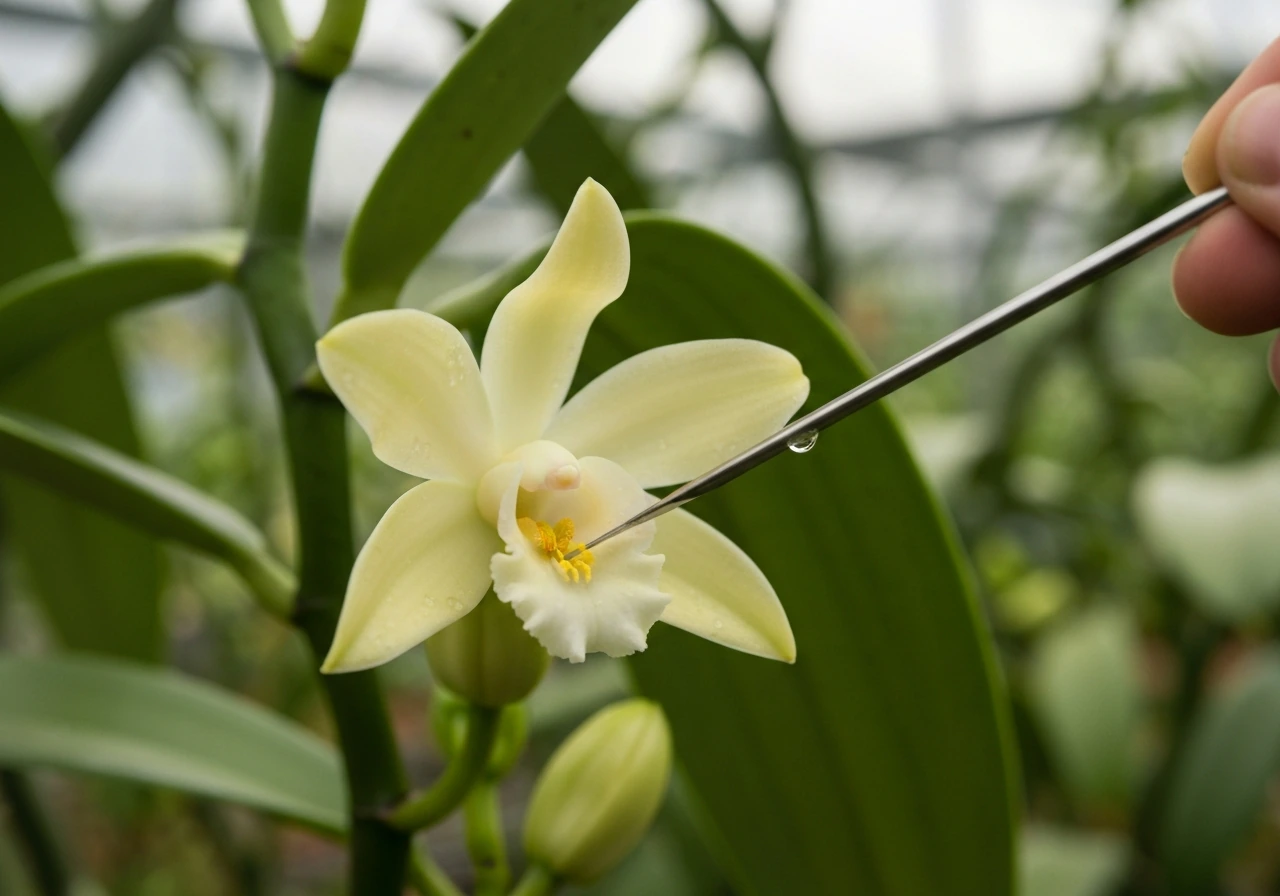
Hand-pollination is simpler than it sounds once you do it a few times. Use a small wooden skewer or toothpick. Gently pull back the small flap (the rostellum) that separates the anther (pollen) from the stigma inside the flower. Then press the anther directly against the stigma to transfer pollen. The whole process takes about 10 seconds per flower. A successfully pollinated flower will begin to swell at the base within a week or two, developing into a pod. If it shrivels and drops, the pollination didn't take.
- Check vines every morning during flowering, ideally between 6am and 10am
- Identify open flowers that day, they will look fresh and slightly open at the tip
- Use a toothpick or fine skewer to gently lift the rostellum flap inside the flower
- Press the exposed anther (pollen mass) firmly against the stigma below it
- Mark pollinated flowers with a small tag so you can track pod development
- Repeat daily for every new flower that opens; a single vine can produce dozens of flowers over several weeks
After successful pollination, pods take approximately 9 months to reach harvest maturity. During this time, keep conditions stable, maintain nutrition, and watch for any stress signs on the vine.
Pests, diseases, and troubleshooting
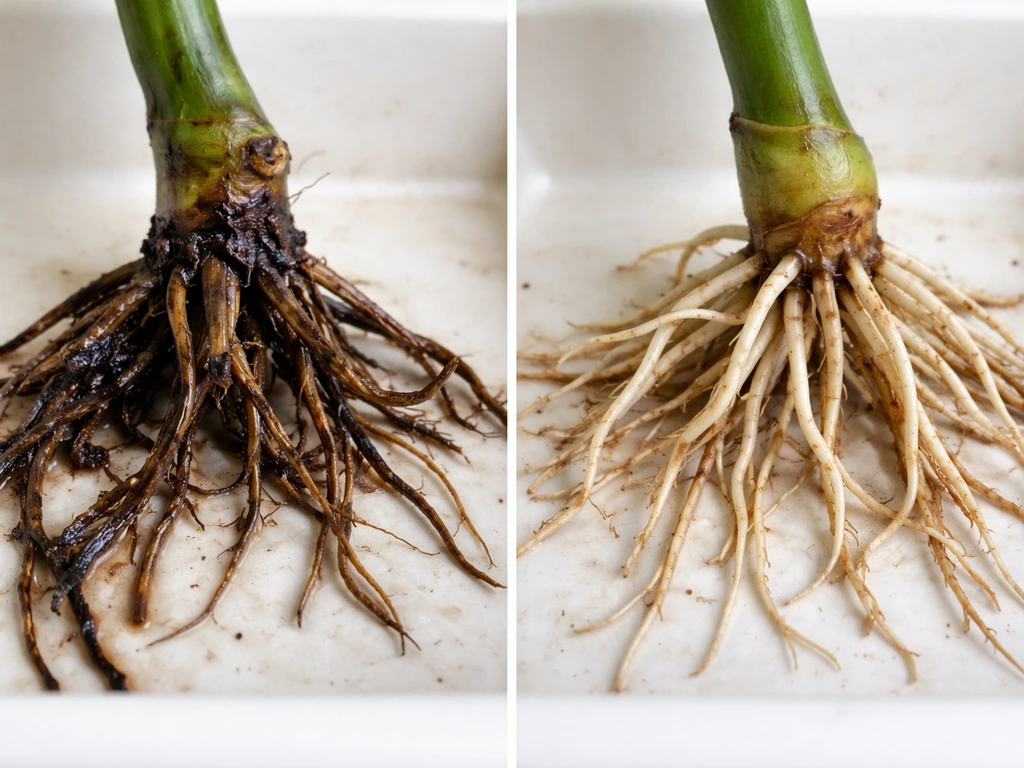
Vanilla is not pest-free, but it's also not as plagued as some tropical crops. The issues you're most likely to run into in South Africa are root rot, fungal stem problems, and a handful of insect pests.
| Problem | Symptoms | Fix |
|---|---|---|
| Root rot (Fusarium/Pythium) | Yellowing leaves, mushy stem base, wilting despite watering | Improve drainage immediately, remove affected roots, drench with a registered fungicide |
| Anthracnose | Brown lesions on leaves and pods | Remove affected material, apply copper-based fungicide, improve airflow |
| Mealybugs | White cottony clusters on stems and leaf joints | Spray with insecticidal soap or neem oil, repeat weekly until clear |
| Spider mites | Fine webbing, pale stippled leaves, worst in hot dry conditions | Increase humidity, apply miticide or neem oil spray |
| Snails and slugs | Irregular chewed sections on lower leaves and stems | Bait traps, hand removal, copper tape around pots |
| Vanilla mosaic virus | Mottled, distorted leaves, stunted growth | No cure; remove and destroy affected plants, source certified clean cuttings |
Root rot is by far the most common killer of vanilla in South African conditions, almost always caused by overwatering or poor drainage rather than actual disease pressure. If you get the soil mix and watering right, you'll avoid most of your problems before they start.
Harvesting and curing your vanilla pods
Pods are ready to harvest when they start to turn yellow at the tip, roughly 9 months after pollination. Don't wait for them to fully ripen on the vine or they'll split and lose quality. Harvest when the pods are still mostly green but showing that first hint of yellow at the blossom end. At harvest, pods are odourless. The rich vanilla scent only develops during curing.
Curing goes through four main stages: killing, sweating, slow drying, and conditioning. Killing stops the ripening process and initiates the enzymatic reactions that create vanillin (the primary flavour compound). This is done by briefly immersing pods in hot water (around 65°C) for about 3 minutes, or by wilting them in the sun. After killing, pods go through a sweating phase where they're wrapped in blankets or cloth and kept warm overnight to sweat, then spread out in the sun during the day. This cycle repeats for 1–2 weeks. Then comes slow drying in the shade for several weeks until the pods reach about 25–30% moisture content by weight. That FAQ notes a common post-harvest benchmark of bringing vanilla pods down to roughly 25, 30% moisture content by weight before curing is complete, helping prevent rotting and supporting aroma development 25–30% moisture content by weight. Too wet and they rot. Too dry and they become brittle and lose potency. The final conditioning phase involves storing the dried pods in sealed containers for a further 1–2 months, which allows the flavour to deepen and fully develop.
The whole curing process takes 3–6 months from harvest. It's time-consuming but not complicated, and the difference between properly cured pods and rushed ones is enormous in terms of flavour and market value.
A realistic plan to start today
Here's the honest picture: vanilla in South Africa is a medium-to-high difficulty project. It's absolutely doable, especially in KZN and the Lowveld, but it requires patience, the right setup, and active management. If you’re wondering about the U.S. instead of South Africa, the same core requirements apply: warmth, humidity, pollination, and a protected setup in most regions can you grow vanilla in the us. The timeline from first cutting to first cured pods is realistically 4–5 years: 2–3 years to get a mature flowering vine, 9 months for pods to develop, and several months for curing. Investment in a basic protected structure (even a modest shadehouse or polytunnel) plus irrigation will run into the thousands of rands, but it's the foundation everything else depends on.
If you want to start today, work through these steps in order:
- Check your local climate honestly: What are your average winter night temperatures? Do you regularly drop below 15°C? If yes, a heated structure is non-negotiable before you spend anything on plants.
- Decide on your structure: KZN coast growers can often start with a simple shadehouse. Everyone else should plan a proper polyhouse or tunnel with temperature and humidity monitoring.
- Source 3–5 cuttings of Vanilla planifolia as trial plants before committing to a large planting. Contact tropical nurseries in KZN, Mpumalanga, or online SA plant communities.
- Set up your growing medium before the cuttings arrive: coarse bark, perlite, and sand mix in large pots or ground beds, with excellent drainage.
- Install your trellis or support system so it's ready when you plant.
- Set up basic irrigation, even manual drip, and a hygrometer so you can track humidity from day one.
- Be realistic about timeline: plan for 3 years before you see flowers, 4 years before you touch a pod. That's not failure, that's just vanilla.
Growing vanilla in South Africa is one of those projects that separates growers who do the groundwork from those who don't. The growers who succeed are the ones who respect what the plant actually needs rather than hoping their climate is close enough. Get the environment right first, then the vine will do the rest. And when you hold your first batch of home-cured vanilla pods, it's genuinely one of the more satisfying things you can grow. If you’re wondering can you grow vanilla at home in South Africa, the key is matching the warm, humid conditions and using a protected structure where needed home-cured vanilla pods.
FAQ
Can I grow vanilla in South Africa if my area gets cold winters or frost? What should I do?
If you are below about 15°C at night, you can still try vanilla, but you should plan for active temperature buffering, not just shade. A basic shadehouse may fail because cold nights slow growth and can trigger stress that leads to root and stem problems. Use a polyhouse or tunnel with extra insulation and wind protection, and consider supplemental heat during cold snaps.
Is it possible to grow vanilla successfully in a greenhouse, and what’s the biggest mistake to avoid?
Indoor or greenhouse-growing can work, but you will still need humidity control at the root zone, not only misting the air. Keep the medium fast-draining, use drip irrigation for the roots, and monitor moisture so the bark mix dries slightly between waterings. Many failures come from keeping the humidity high while accidentally keeping the medium wet.
What should I look for when buying vanilla cuttings in South Africa?
For best odds, start with cuttings that are healthy, disease-free, and have multiple nodes along the stem, because each node area can later support new growth and training. Avoid very thin or pale cuttings and anything with soft or browned areas near the cut end. If a cutting arrives with rot spots, quarantine it and cut back to healthy tissue before planting.
Can I grow vanilla in containers at home in South Africa?
You can use containers if you have limited land, but plan for size and stability. A 30 to 40 litre container is a minimum, and many growers eventually upsize because vanilla vines are heavy and need consistent moisture and feeding. Use a chunky, fast-draining mix, ensure drainage holes are unobstructed, and avoid saucers that can trap runoff.
How do I avoid over-fertilizing or salt buildup when growing vanilla under drip and mist?
Vanilla does not tolerate salt buildup well, especially under drip and misting in structures. If you fertigate with soluble fertilizers, flush the media occasionally with clean water to reduce salt accumulation, and adjust feed strength based on growth rate. Yellowing leaves plus persistent weak growth can be a sign of nutrient imbalance or salts, not always nitrogen deficiency.
You mentioned a controlled dry-down to encourage flowering, how dry should it get and for how long?
Yes, but only as a deliberate part of your flowering plan. A longer or deeper dry spell can stall growth and increase stress, especially in inland dry areas. Aim for a short, controlled reduction in watering (weeks, not months) while keeping nights above the minimum temperature range, then return to consistent moisture and nutrition.
What causes flowers to drop after I hand-pollinate, and how can I reduce pod loss?
Even if you pollinate correctly, you can lose pods if conditions swing during the first 1 to 2 weeks after pollination. Protect the plants from sudden cold nights, reduce waterlogging, and keep nutrition steady. Flower drop or failure to swell usually means the flower dried out too fast, was stressed by temperature swings, or was pollinated after the flower’s receptive window.
How much shade do I actually need, and how do I balance shade with ventilation?
Not all shade levels are equal. In hot, sunny coastal conditions you typically still need strong protection from harsh midday sun, but in a well-ventilated tunnel you also need airflow to prevent fungal problems. Use shadecloth in the range you already referenced, and adjust by observing leaf scorch, scorching patterns, and whether humidity stays in the target band without condensation.
If I’m in a rainy part of South Africa, do I still need irrigation and misting?
You should not rely on rainfall timing for schedule. Even in areas with good annual rainfall, vanilla needs well-distributed moisture during active growth, and tunnel or polyhouse setups often require irrigation anyway. If your irrigation system fails during a flowering or pod set window, have a backup plan such as scheduled manual watering or a small water reserve.
What’s the most common curing mistake that reduces vanilla quality?
Curing is where many home growers lose quality, because rushed drying makes pods brittle or weak in aroma. Use a realistic target for moisture reduction and keep pods separated enough to dry evenly. If you see surface mold during drying, increase airflow in the shade phase and verify your pods are not too wet when you start curing.
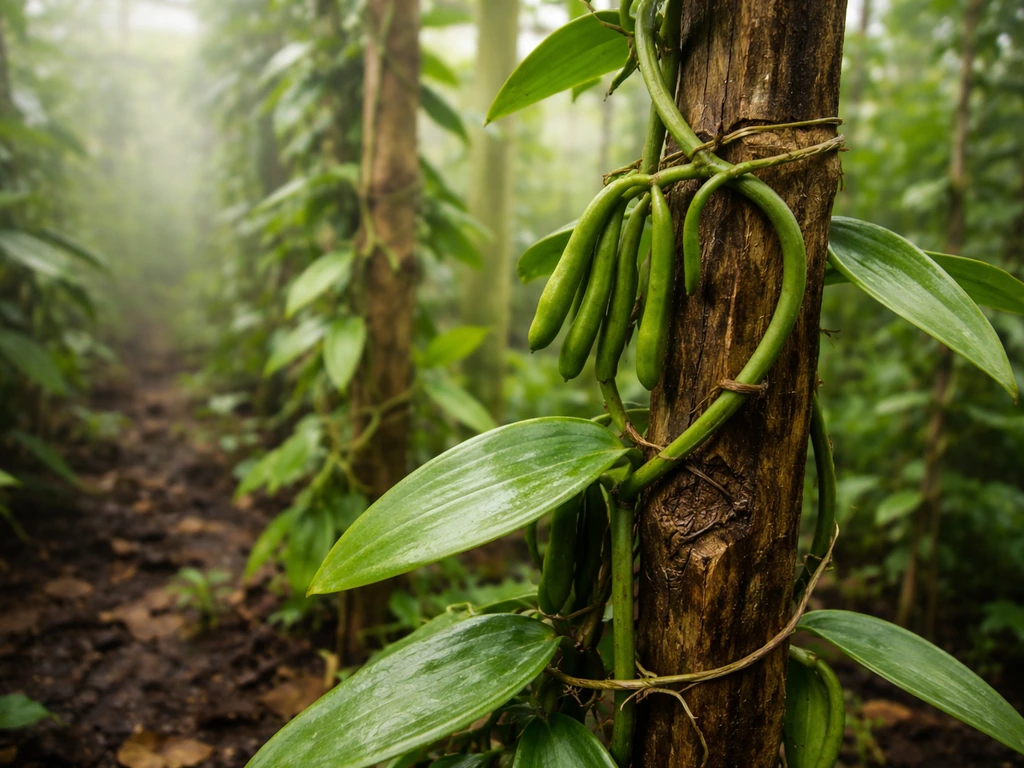
Yes, with warm humid, shaded sites. Learn Nigeria setup, planting, humidity care, pollination, and troubleshooting for v
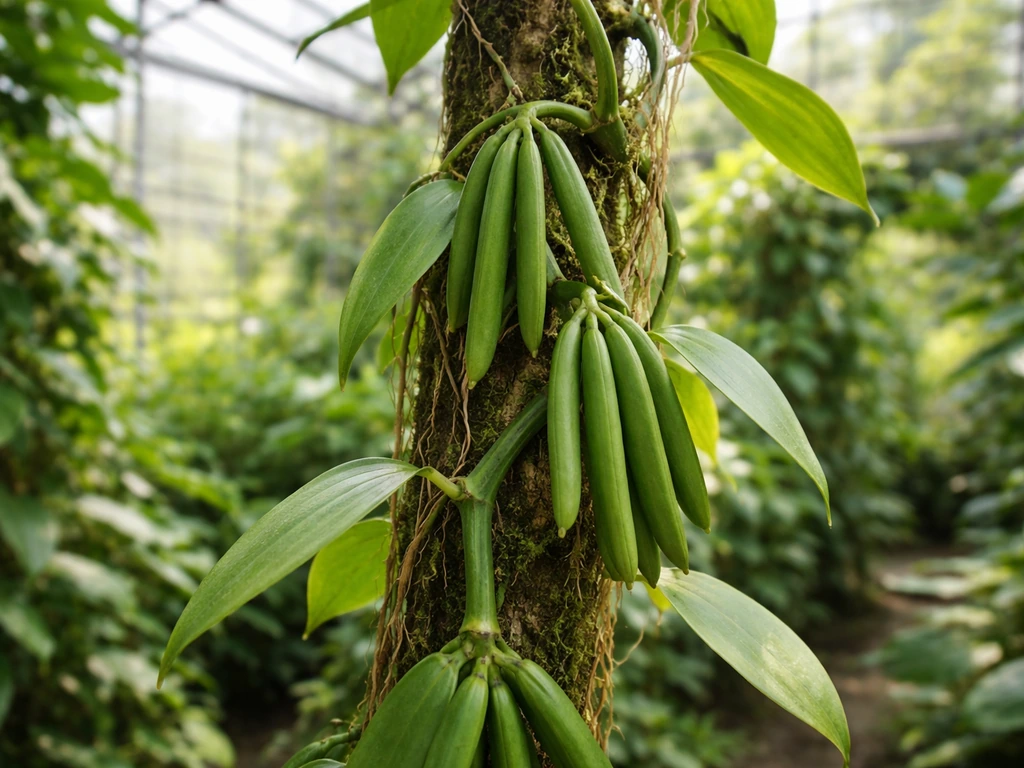
Can you grow vanilla in the US? Learn US requirements, setups, and hand pollination steps for beans, often years later.
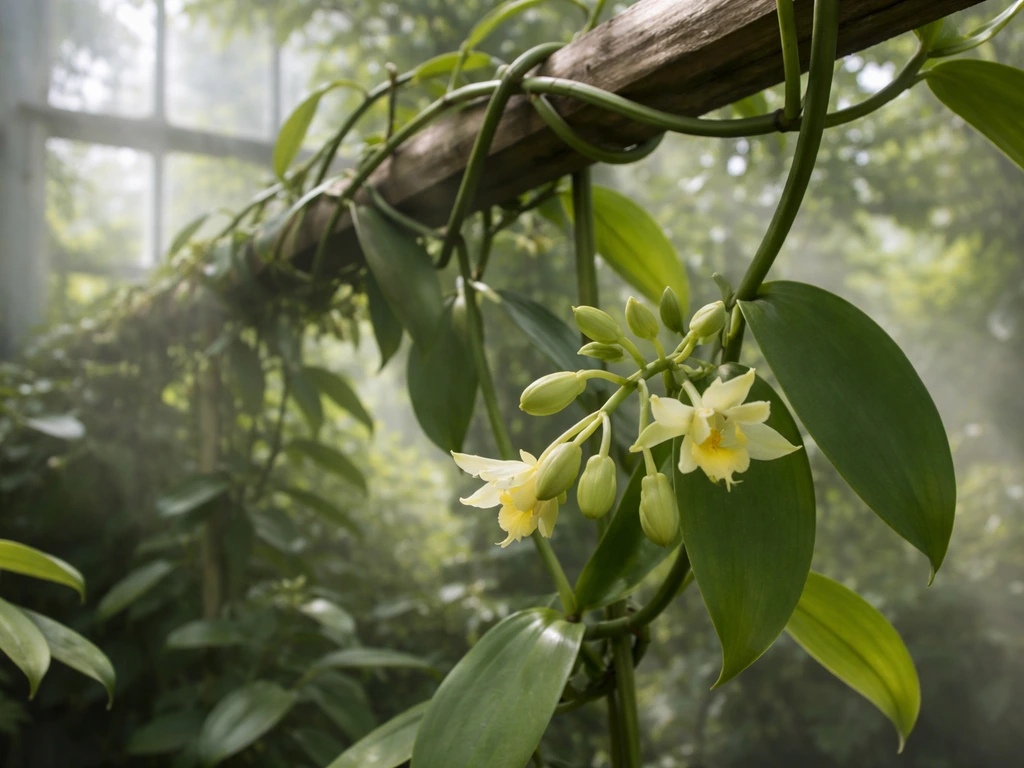
Can you grow vanilla in the US? Regional feasibility, greenhouse setup, care needs, and years to pods via hand pollinati