
You can grow vanilla beans in Missouri, but not outdoors. Missouri's winters, spring freezes, and low winter humidity rule out any outdoor vanilla production. The realistic path is growing Vanilla planifolia as a container vine indoors or in a heated greenhouse year-round, hand-pollinating every flower that opens, and then curing the pods yourself. It takes patience (usually 2-3 years before your first flower), careful attention to humidity and temperature, and a pollination step most growers don't expect. But it absolutely works, and Missouri growers are doing it.
Can You Grow Vanilla Beans in Missouri? Indoor and Greenhouse Guide
Marcus Holloway
29 May 2026
Outdoor vs. Indoor: What's Actually Feasible in Missouri
Outdoors in Missouri, vanilla doesn't stand a chance as a permanent crop. St. Louis averages its last freeze around April 5, with late-season freezes recorded as late as May 10. In northwestern Missouri, the average date for a moderate freeze (24-28°F) is April 10. Vanilla planifolia is a tropical orchid that suffers cold damage well before temps hit freezing. Even if you tried to treat it as a seasonal outdoor plant, the frost-free window isn't long enough to support the vine's slow growth and the time it needs to flower and develop pods.
Missouri's low winter humidity is another dealbreaker for outdoor or uncontrolled growing. Purdue's consumer horticulture team specifically calls out low humidity as one of vanilla's biggest environmental problems in non-tropical climates. Without active humidity management, the vine struggles, growth stalls, and flowering becomes unlikely.
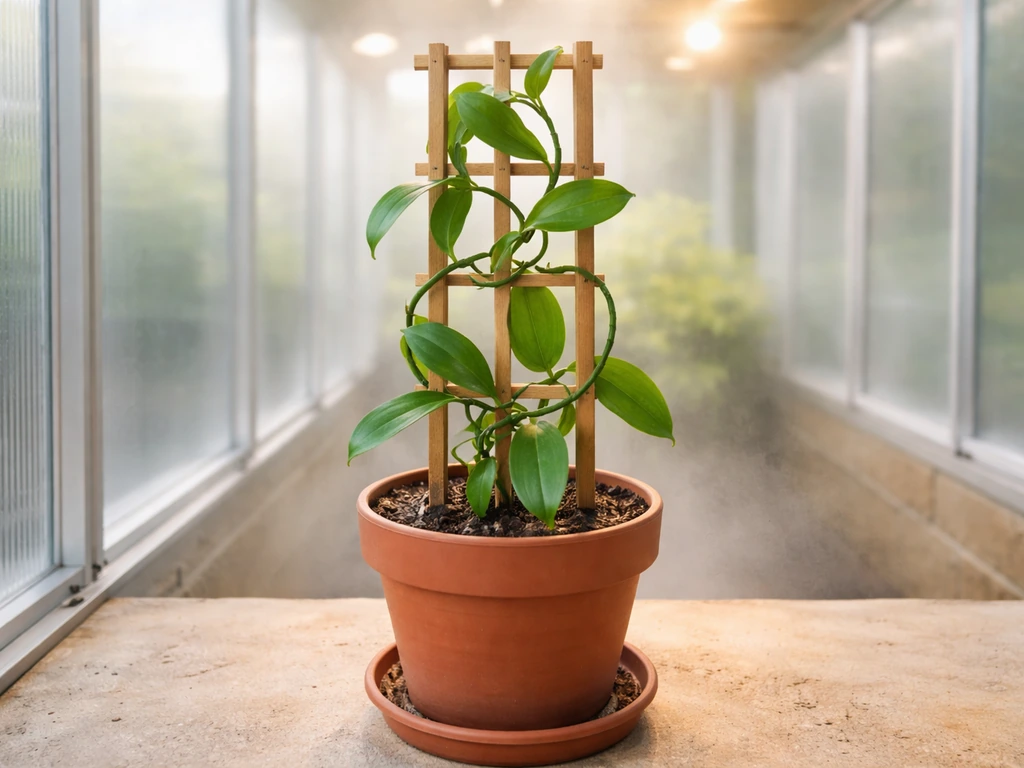
The realistic options for Missouri growers are a heated indoor space (a sunroom, bright room with supplemental lighting, or a grow tent) or a dedicated greenhouse that stays above 60°F through winter. If you are wondering can you grow vanilla beans in ohio, the short answer is yes with the same indoor or heated greenhouse approach. Either works. The greenhouse route gives you more control over humidity and light, but a well-set-up indoor container situation produces vanilla beans just fine. If you're in a state with similar constraints like Ohio, Michigan, or Illinois, the approach is essentially the same: controlled indoor environment, no outdoor cultivation.
What Vanilla Needs and Where Missouri Falls Short Outdoors
Vanilla planifolia is native to tropical Mexico and Central America. It's a climbing orchid that wraps around trees in humid, warm forest understories. Understanding what it expects helps you build the right indoor environment and avoid the mistakes that kill most vanilla plants.
| Requirement | What Vanilla Needs | Missouri Outdoors |
|---|---|---|
| Temperature | 68-86°F (20-30°C) year-round; never below 60°F | Freezes below 32°F most winters; cold snaps to the 20s |
| Humidity | 50% RH minimum; 70%+ preferred | Winter indoor RH often drops to 20-30% without humidification |
| Light | Bright indirect; 50-70% shade from direct sun | Workable in summer outdoors; impossible in winter without lights |
| Frost risk | Zero tolerance | Last freeze averages April 5 in St. Louis, April 10+ in northwest MO |
| Frost-free season | Year-round tropical conditions needed | Roughly 180-200 frost-free days depending on location |
The bottom line: Missouri's summers could theoretically support vanilla outdoors for a few months, but vanilla doesn't flower in its first year or even second year, so seasonal outdoor growing doesn't get you to beans. The vine needs a stable, consistent environment to build the size and maturity it needs to bloom. That means indoor or greenhouse culture all year.
The Conditions You Need to Hit Indoors
Getting vanilla to thrive in Missouri is about replicating a tropical forest environment inside your home or greenhouse. Here are the targets to aim for:
- Temperature: Keep it between 68-86°F (20-30°C) during the day; never let it drop below 60°F at night. Below 60°F stunts growth and delays flowering significantly.
- Humidity: Target at least 50% relative humidity. Vanilla grows better at 70% RH. Use a humidity sensor and a room humidifier or greenhouse fogger to maintain this. Don't let high humidity sit without airflow, or you risk fungal issues.
- Light: Bright, indirect light for most of the day. Direct afternoon sun scorches the leaves. A south-facing window with a sheer curtain works in spring and summer. In winter, supplement with a full-spectrum LED grow light to hit 6-8 hours of bright light daily.
- Airflow: Vanilla doesn't like stagnant air. A small circulating fan or opening greenhouse vents daily reduces fungal disease risk and mimics natural air movement. The American Orchid Society recommends this for greenhouse orchid care.
- Watering: Water thoroughly, then let the top inch or two of the potting mix dry before watering again. Vanilla roots rot fast in soggy conditions.
Setting Up Your Container and Trellis
Choosing the right pot and mix
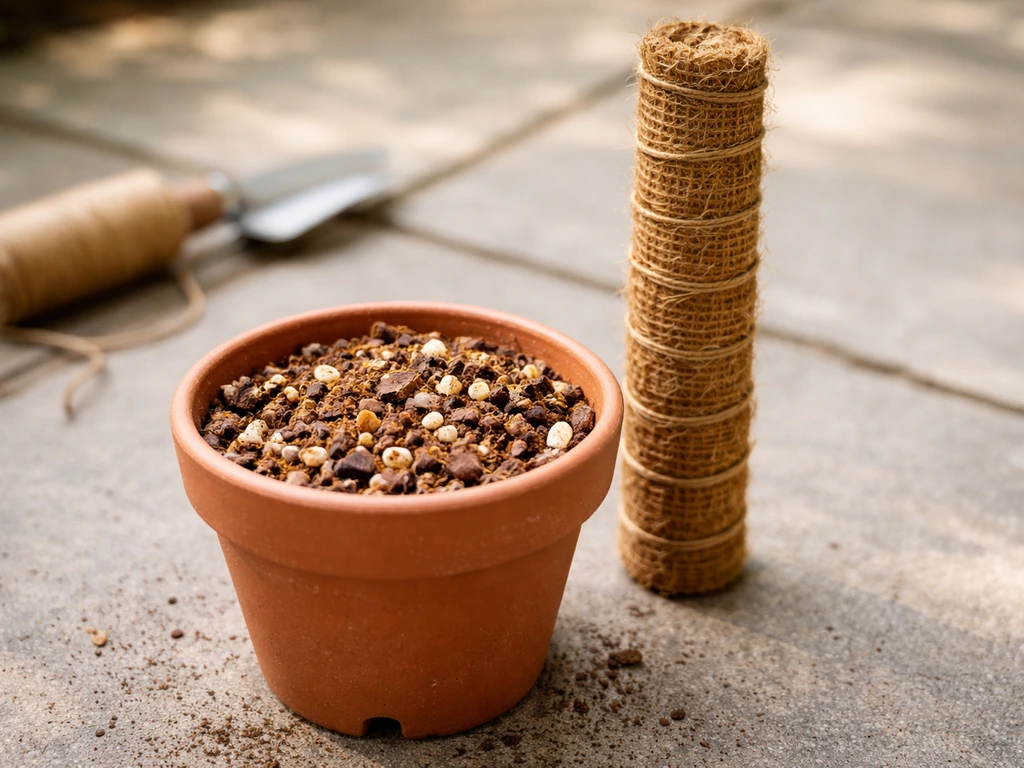
Vanilla grows best in a container with excellent drainage and aeration. A 6-10 inch pot works for a young plant; you'll repot as it grows. Use an open, airy potting mix: orchid bark mix, or a blend of sphagnum moss and perlite. The goal is a medium that drains fast and doesn't hold excess moisture around the roots. Logee's, one of the main U.S. vanilla plant suppliers, specifically warns that vanilla is highly susceptible to root disease if kept too wet, so resist the urge to water frequently.
Building the trellis and training the vine
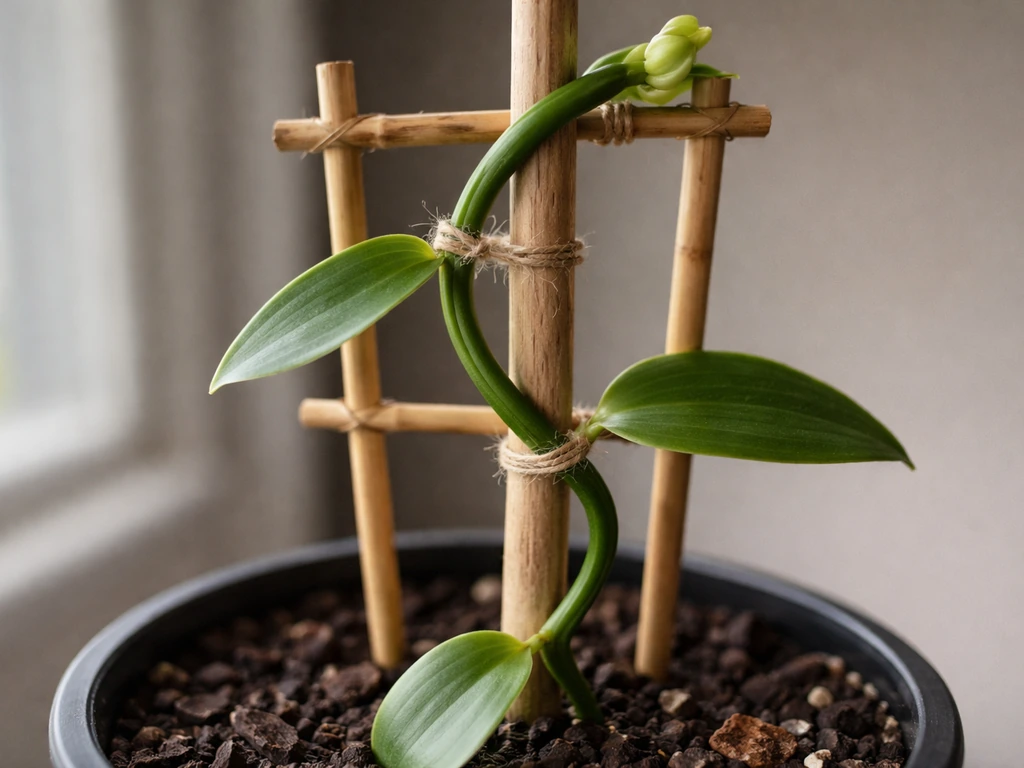
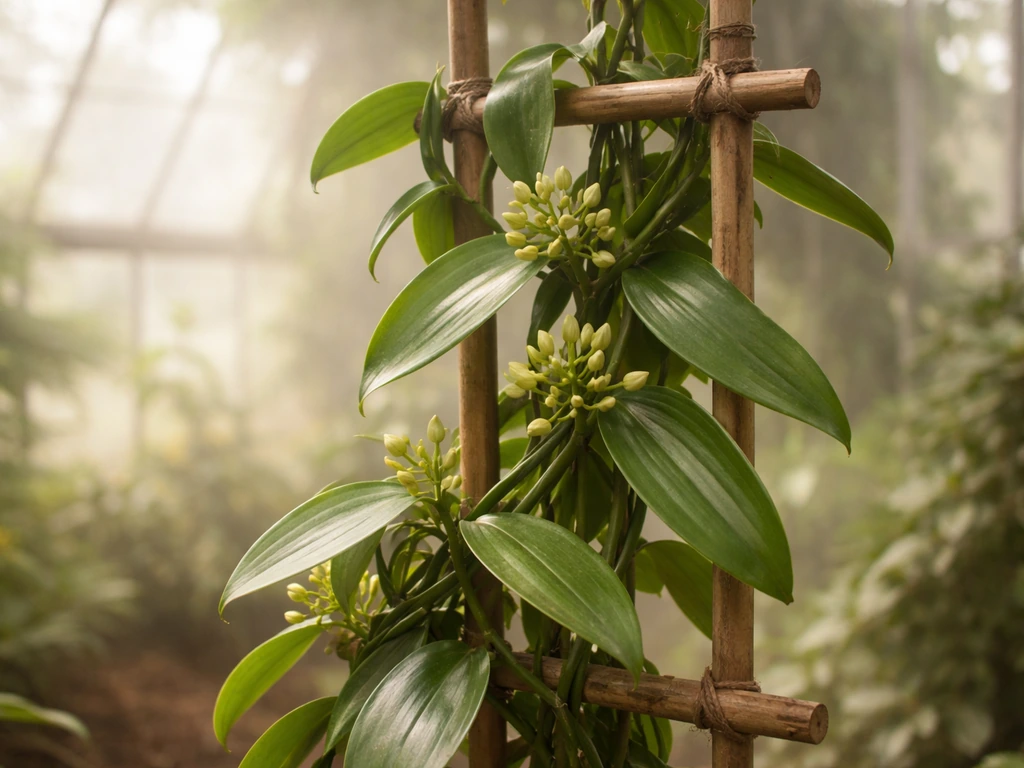
Vanilla is a climber. In the wild it scrambles up tree trunks; in your home it needs a support structure. A simple wooden stake, bamboo pole, or coco coir pole in the pot works for starters. As the vine grows, you can add horizontal wires or tie it to a wall-mounted trellis. The vine produces aerial roots along its stem, and those roots actually absorb moisture and anchor the plant, so a textured support (like coco coir) that the aerial roots can grip is ideal.
Train the vine upward first, then let it loop or trail horizontally once it nears the top of your support. Vanilla typically starts flowering when the vine reaches about 3 meters (roughly 10 feet) in length. This is why the setup and training phase matters: you're building a vine that's big enough to bloom, not just keeping a houseplant alive.
Where to source your plant
You have two main options for starting: a rooted cutting or a young potted plant. Logee's sells Vanilla planifolia and provides a detailed care sheet. Akatsuka Orchid Gardens lists young vanilla plants in 2-inch pots. Both are reputable U.S. sources that ship to Missouri. Avoid tissue-culture (TC) starts if you want beans sooner, as Truleaf's growing guide notes that TC plants typically need extra years to reach flowering maturity compared to cuttings or established plants. A rooted cutting that's already a foot or two long is your fastest path to first flowers.
Flowering and Hand-Pollination: The Step That Determines Everything
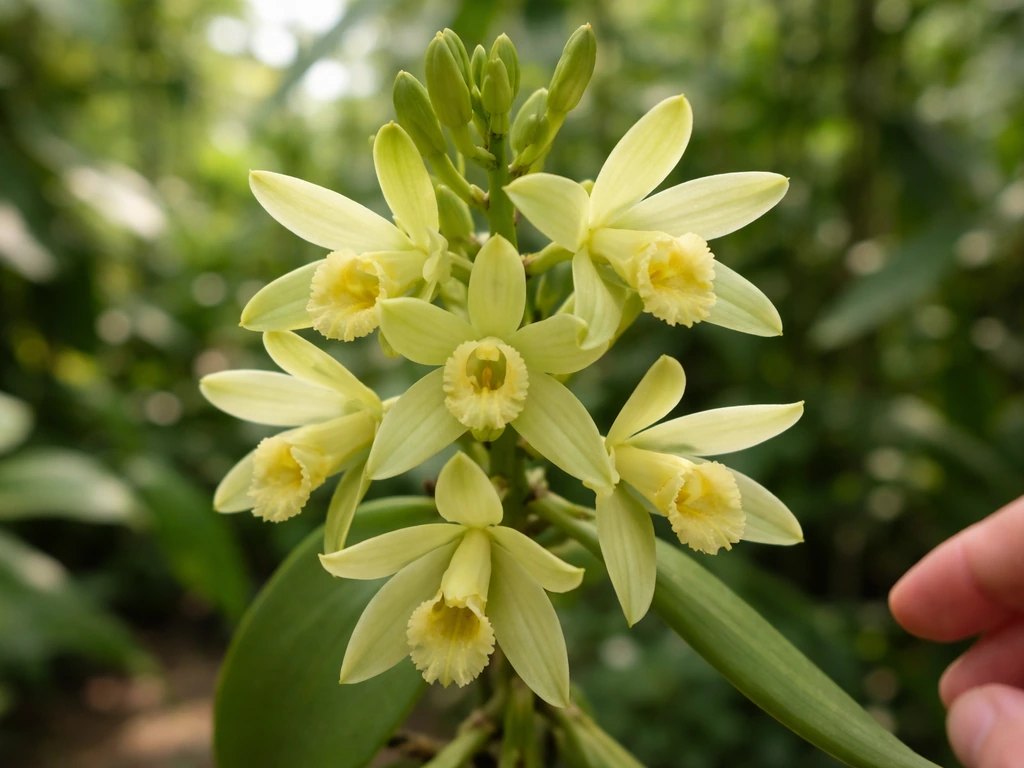
This is where most first-time vanilla growers get caught off guard. Vanilla does not self-pollinate in cultivation outside of its native habitat (where specific bees do the job). Every single flower you want to turn into a bean must be hand-pollinated by you, on the day it opens. Not the next day. The same day.
Each Vanilla planifolia flower opens for just one day. If you miss it, the flower drops and you get no pod. Pacific Farmers’ technical session on pollination also emphasizes that manual pollination must be done during the opening flower window, because unsuccessful fertilization results in the flower withering and falling off the next day If you miss it, the flower drops and you get no pod.. The Brooklyn Botanic Garden, which grows vanilla in their tropical greenhouse, describes it bluntly: you're connecting the male part to the female part, and you have one day to do it. This means checking your vine every morning during the flowering period.
How to actually pollinate
- Identify an open flower in the morning. Vanilla flowers are pale yellow-green and clustered in small racemes.
- Use a thin toothpick, small stick, or even your fingernail. Gently lift the small flap (the rostellum) that separates the pollen-bearing anther cap from the sticky stigma below it.
- With the rostellum lifted, press the pollen mass (pollinia) firmly onto the exposed sticky stigma. You want direct contact.
- That's it. If pollination succeeds, the base of the flower (the ovary) will begin to swell over the next few days and develop into a pod. If it fails, the flower wilts and drops off within a day or two.
Your vine won't flower every day. Flowers tend to open in clusters over a period of days or weeks. Once you see a flower cluster forming (a raceme), check it every single morning. Set a reminder if you need to.
Harvesting, Curing, and First-Year Reality
Growing to harvest
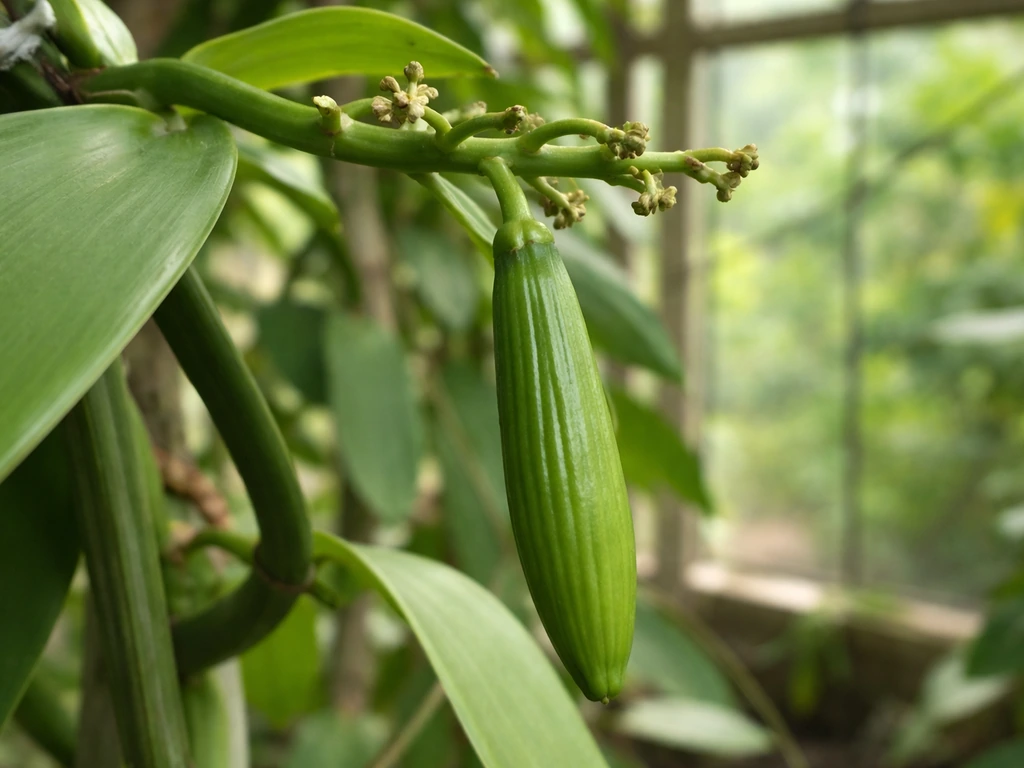
A successfully pollinated vanilla flower develops into a pod over 9 months. Yes, nine months from pollination to harvest. The pods are ready when they start to turn yellowish at the tip and the very bottom begins to crack slightly. Don't rush it. Harvest too early and the vanillin content is low; the flavor won't be there.
Curing: where the flavor actually comes from
Fresh vanilla pods have almost no vanilla flavor. The characteristic aroma develops through curing, which is a multi-stage process. NY Vanilla's documented process and commercial curing guidance from Vanilla Trading both describe the same basic stages:
- Killing: Briefly expose pods to heat (blanching in hot water or brief oven exposure at low temp) to stop biological activity and begin the enzymatic process that creates vanillin.
- Sweating: Wrap pods in cloth or place in an insulated container for 7-10 days, maintaining warmth. This draws moisture to the surface and deepens color.
- Slow drying: Lay pods out to dry gradually in a well-ventilated spot, out of direct sun, for several weeks. Uneven drying can reduce vanillin quality.
- Conditioning: Store cured pods in a sealed container for 2-6 months. This is where complex flavor nuances develop.
The whole process from pollination to finished, flavorful vanilla beans is roughly 12-15 months. From planting a cutting to your first finished beans is realistically 3-4 years in a Missouri indoor setup. That's not a discouragement; it's just the honest timeline so you know what you're building toward.
What to expect in year one
In your first year, the goal is establishing a healthy, fast-growing vine. A rooted cutting in good conditions can put on significant length in a single growing season. You likely won't see flowers until year 2 or 3, once the vine hits roughly 3 meters (10 feet) in length. If you start with a tissue-culture plant, add another year or two. Don't interpret the absence of flowers in year one as failure. You're building the infrastructure. Keep the temperature stable, the humidity up, the light consistent, and the roots happy, and the vine will get there.
Is It Worth It? Cost, Effort, and Where to Start
Buy vs. grow
If you need vanilla beans for cooking right now, buying them is obviously faster and cheaper. High-quality vanilla beans run $10-30 for a small pack depending on origin. Growing your own vanilla is not a cost-saving strategy; it's a long-term project driven by curiosity, the satisfaction of producing something rare, or the desire for a unique tropical plant in your home. Be honest with yourself about which of those is driving the interest.
What it actually costs to start
- Vanilla planifolia cutting or young plant: $15-40 from Logee's or Akatsuka Orchid Gardens
- Pot and orchid bark potting mix: $10-20
- Coco coir pole or trellis: $10-15
- Humidifier (if indoors): $30-80 depending on size
- Grow light for winter supplemental lighting: $40-150 depending on quality
- Humidity/temperature sensor: $10-25
A basic indoor setup runs $100-200 upfront. A greenhouse adds significantly more depending on what you already have. The ongoing cost is mostly electricity for the grow light and humidifier through Missouri winters.
Your next steps starting today
- Decide on your growing space: a south-facing sunny room, sunroom, or heated greenhouse. Make sure you can hit 60°F minimum year-round and add a humidifier if your winter RH drops below 50%.
- Order a rooted cutting or established vanilla plant from Logee's or Akatsuka Orchid Gardens. Choose a cutting over tissue culture if you want to see flowers sooner.
- Prepare a 6-8 inch pot with orchid bark or a sphagnum and perlite mix. Install a coco coir pole or trellis immediately so the vine has something to climb from the start.
- Set up your humidity sensor and establish a watering routine: water thoroughly, then wait for the top inch or two to dry before watering again.
- Plan for supplemental lighting in November through February when Missouri's daylight drops. A full-spectrum LED grow light on a timer (12-14 hours) keeps growth moving through winter.
- Track vine length. Once you're approaching 10 feet of vine, start checking for flower buds every morning during spring and summer.
Growing vanilla in Missouri is genuinely one of the more ambitious things you can do as a home grower, but it's not mysterious or out of reach. If you're also wondering can you grow vanilla beans in Georgia, the key is the same as Missouri: replicate a stable tropical indoor or greenhouse environment.
You can grow vanilla beans in North Carolina too, as long as you recreate tropical conditions indoors or in a heated greenhouse can you grow vanilla beans in nc. The climate just means you're building a controlled tropical environment instead of planting in the ground. Get the basics right: warmth, humidity, indirect light, good drainage, and a trellis, and you'll have a healthy vine.
Then stay alert when it finally decides to bloom, because that one-day pollination window is the whole game. If you are wondering can you grow vanilla beans in Illinois, the same indoor or heated greenhouse approach that works in Missouri is your best bet.
FAQ
What temperatures should my indoor or greenhouse stay above to grow vanilla beans in Missouri?
Plan on keeping the growing area consistently warm, ideally not dropping below the mid-60s Fahrenheit range in winter. Vanilla can tolerate heat, but temperature swings can delay growth and reduce flowering, so use a space heater or greenhouse thermostat, not just window warmth.
Can I grow vanilla outdoors on a porch or in summer only, then bring it in for winter?
It usually will not work for beans. Even if the vine grows during warm months, vanilla needs a stable environment for the long vine development period and then months after hand-pollination to reach harvest, so short seasonal outdoor windows rarely get you to flowering maturity.
How do I avoid root rot if I’m trying to keep humidity high?
Humidity and wet roots can conflict. Use very fast-draining orchid-style bark or a sphagnum-perlite blend, water only when the mix is drying slightly, and ensure the pot has drainage holes plus airflow around the container. If leaves yellow while soil stays damp, cut back watering immediately.
What’s the best pot size and when should I repot my vanilla vine?
Start with a pot large enough to support a growing root mass but not so oversized that the mix stays wet. A common approach is stepping up pot size gradually as new growth accelerates, then repot when roots circle tightly or when you can see the plant losing vigor in the current container.
Do I need a trellis right away, or can I let it trail until it gets longer?
You can let it trail temporarily, but vertical training helps you reach the approximate length needed for flowering sooner. Set up a support early and guide the vine upward, then allow horizontal looping or trailing once it approaches the top of the structure.
How do I know when flowers are going to open the day I need to pollinate?
Look for flower spikes or racemes forming and then check the vine at the same time each morning during the flowering period. Since each blossom lasts one day, being consistent with daily checks matters more than trying to predict opening from a calendar.
What’s the easiest way to hand-pollinate vanilla flowers at home?
Use a small, clean tool or fingers to transfer pollen from the male part to the female part on the same day the flower opens. If you do it correctly you should see pod development continue after pollination, but if you miss the window the flower will drop without forming a pod.
Will my vanilla flower if I’m not perfectly dialing in humidity and light?
You may get growth without reliable flowering. Vanilla often needs both bright indirect light and humid conditions, indoors especially during Missouri winter. Aim for consistent light, indirect sun exposure, and active humidity management if your home is dry.
How often should I water and mist my vanilla plant in Missouri winter?
Avoid watering on a fixed schedule. Instead, water based on how quickly your mix dries, because winter indoor conditions change humidity and evaporation. Misting alone rarely fixes low humidity, and constant moisture around roots raises disease risk.
How long does it realistically take from buying a plant to getting harvestable beans?
If you start with a more established cutting, plan on about 2-3 years before you see first flowers, then about 9 months from pollination to harvest, plus curing time before the beans are flavorful. If you start with younger or tissue-culture material, add additional time to reach flowering maturity.
When should I harvest pods, and what happens if I pick early?
Harvest when pods start to show yellowing at the tip and the very bottom begins to crack slightly. Picking too early typically reduces vanillin development, so the result tastes weaker even if the curing process is followed.
Can I cure vanilla pods in my home without a commercial setup?
Yes, home curing is possible, but you need control over stages like drying and conditioning, plus time and space where pods can cure without mold. If you live in a very humid home, you may need extra airflow and careful monitoring to prevent surface mold during the curing steps.
Is buying ready-to-grow vanilla plants more reliable than starting from seed for Missouri?
In practice, yes. Vanilla planifolia seed starts are slow and unpredictable, while rooted cuttings or young established plants move you toward the vine length and flowering maturity needed for beans. If your goal is pods, prioritize cuttings or established plants over seed.
What are the most common mistakes that prevent flowering in Missouri indoor grows?
The biggest blockers are not reaching sufficient vine length, inconsistent temperatures, low humidity, and missing the one-day pollination window. Another frequent issue is root problems from overwatering, which can keep a plant alive but prevent it from investing energy into flowering.
Next Articles
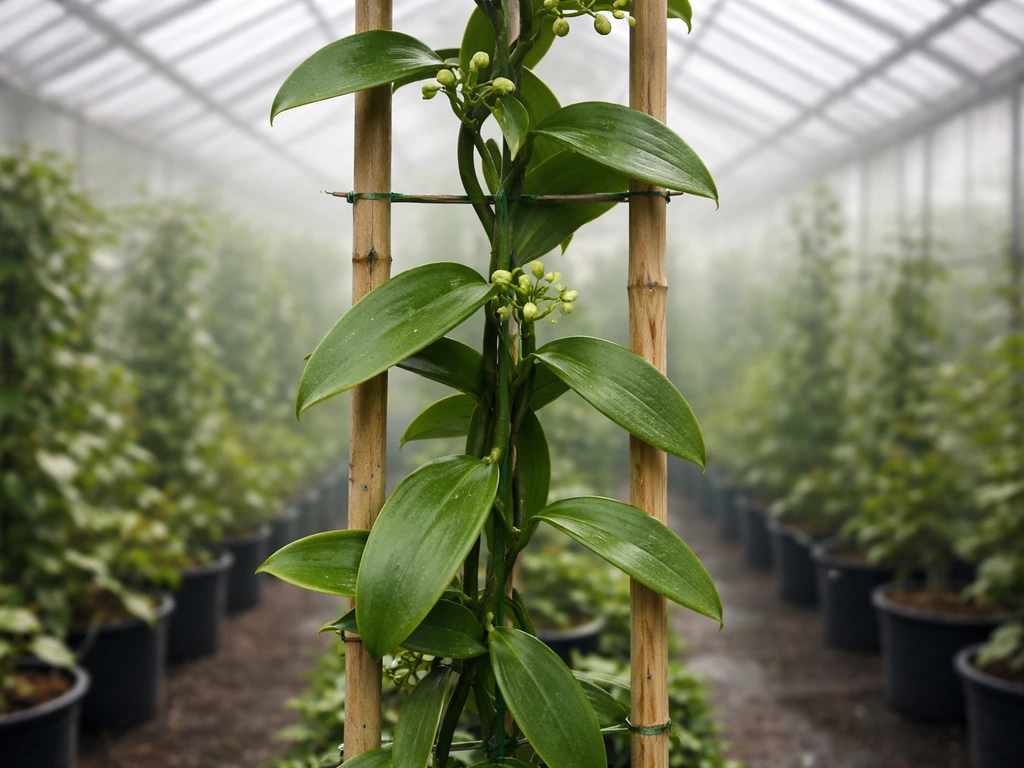
Can You Grow Vanilla Beans in Illinois? Feasibility Guide
Learn if you can grow vanilla beans in Illinois, including climate limits, greenhouse needs, humidity, and hand-pollinat
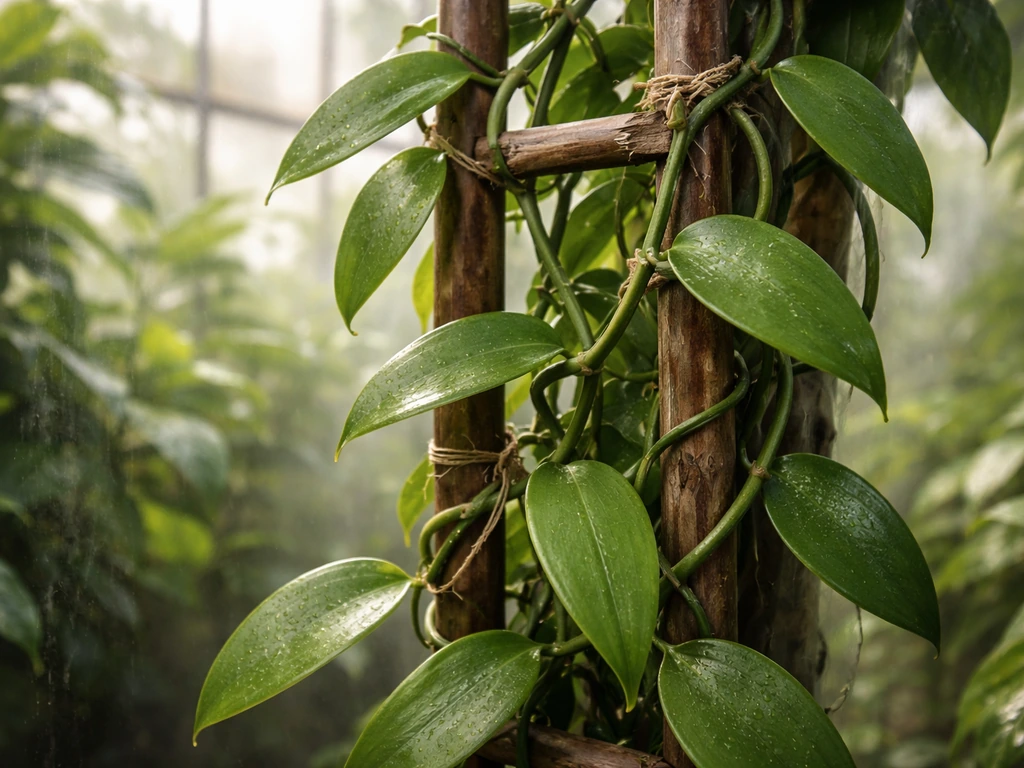
Can You Grow Vanilla Beans in Georgia and Tennessee
Learn if you can grow vanilla beans in Georgia or Tennessee, plus heat, humidity, frost-free needs, and setup steps.
Can You Grow Vanilla Beans in NC and South Carolina?
Learn if you can grow vanilla beans in NC and SC, and get indoor or greenhouse steps for humidity, hand pollination, and