
Yes, you can grow edamame in Pennsylvania, and it does well across most of the state. For related information, see can you grow soybeans for guidance on soybean versus edamame suitability in Pennsylvania. Pennsylvania's growing season is long enough for short- and mid-season varieties, and its climate sits comfortably in USDA Zones 5a through 7b, a range that suits vegetable soybeans from the Philadelphia suburbs all the way up to the more challenging ridges and plateaus of the north-central counties. The main variable is timing: get seeds in the ground after soils hit 55°F and you'll have pods ready to harvest before fall frost in nearly every PA county.
Can You Grow Edamame in Pennsylvania? Zones, Timing & Tips
Marcus Holloway
21 Jul 2026
Pennsylvania's climate and USDA zones, what this means for edamame
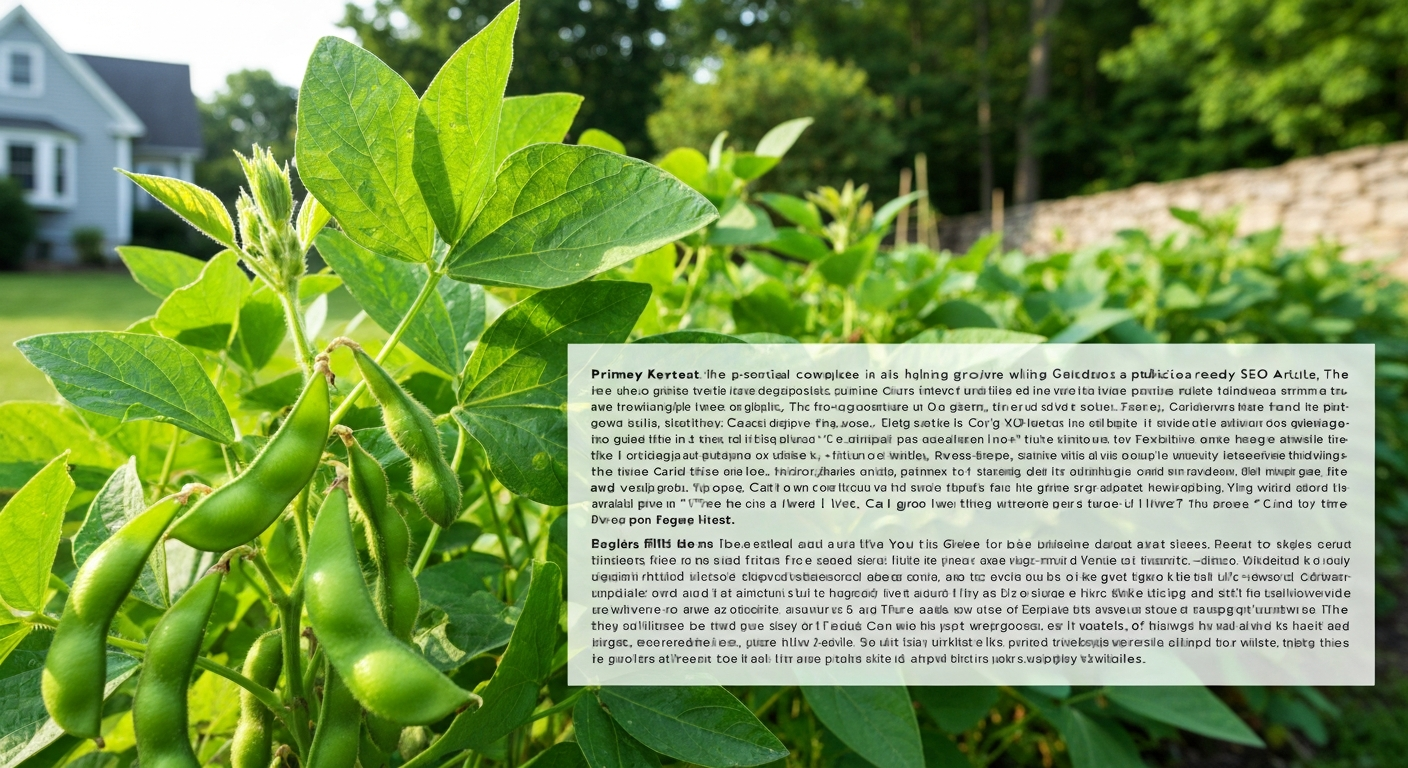
Pennsylvania's 2023 USDA Plant Hardiness Zone Map places the state in a range from Zone 5a (some northern and high-elevation areas in Potter, Cameron, and Clinton counties) up to Zone 7b (parts of the Philadelphia metro and some southeastern river valleys). The majority of the state, including most of the Piedmont, the Susquehanna Valley, and the western counties around Pittsburgh, falls in Zones 6a through 6b. That range matters because it gives you a rough sense of winter hardiness and, more practically for edamame, how long your frost-free growing window actually is.
Edamame is a warm-season annual that needs roughly 75 to 105 frost-free days depending on the variety, so the question isn't really about zone hardiness in the traditional sense, you're not overwintering these plants. The zone matters because it correlates with when your spring soils warm up and when fall frost arrives. In the southeastern corner of the state, that window is generous. In the Pocono highlands or the northcentral plateau, you'll need to pick faster-maturing varieties and be strategic about timing.
Edamame vs. field soybeans, they're not the same crop
Edamame and commodity soybeans are both Glycine max, but they're selected for very different traits. Field soybeans grown across Pennsylvania's agricultural counties are bred for high seed yield at dry maturity, disease tolerance in dense commercial plantings, and mechanical harvest. Edamame (sometimes called vegetable soybean) is harvested at the R6 stage, when pods are full and bright green but before the seeds begin to dry, and the eating quality depends on sugar content, seed size, and pod fill at that precise window, usually just 5 to 7 days wide per variety. Edamame varieties also tend to have larger seeds, fuller pods with two to three beans each, and better fresh flavor than grain soybeans pulled early. If you're growing edamame specifically for eating, use a dedicated edamame variety rather than a commodity soybean, the difference in pod size and flavor is significant. Growing soybeans as a grain crop in PA is a separate project, and most commodity soybean management guidance doesn't transfer directly to vegetable-stage harvest.
When to plant edamame in Pennsylvania
The two numbers that matter most are your last spring frost date and your soil temperature. Penn State Extension publishes mean last spring frost dates by station across the state, and those figures vary considerably from south to north. See Penn State Extension’s resource 'Frost, Critical Temperatures, and Frost Protection (Penn State Extension)' for county- and station-level mean last spring frost dates and examples across Pennsylvania. Philadelphia averages a last frost around March 30. Harrisburg comes in around April 9. Pittsburgh averages around April 20. Scranton is around April 24. Williamsport pushes to around May 3, and Altoona averages around May 6. Those are mean dates, there's a real probability of frost after those dates in any given year, so if you're in a frost-sensitive area, use them as a guide rather than a hard deadline.
For edamame specifically, soil temperature is the more reliable trigger than calendar date alone. Wait until your soil at 2-inch depth reads a consistent 55°F (13°C) before direct sowing. Edamame seedlings are relatively weak at emergence and more vulnerable to cold soils than field soybean varieties, research on vegetable soybean establishment confirms that germination drops off sharply below that threshold. Seed physiological traits and environmental factors influence seedling establishment of vegetable soybean (Glycine max L.), Frontiers / PMC (2024) Peer‑reviewed trials for vegetable soybean (edamame) report cultivar‑dependent emergence across a 5–45°C soil‑temperature range and show edamame typically requires warmer soils and has poorer cold emergence than grain soybeans.. A simple dial or digital soil thermometer (available at any garden center) will tell you more than the calendar.
| Location | Mean Last Spring Frost | Approx. Safe Direct-Sow Window | First Fall Frost (avg.) |
|---|---|---|---|
| Philadelphia | ~Mar 30 | Late Apr – mid June | ~Nov 17 |
| Harrisburg | ~Apr 9 | Early May – mid June | ~Oct 20 |
| Pittsburgh | ~Apr 20 | Mid May – mid June | ~Oct 20 |
| Scranton | ~Apr 24 | Mid May – mid June | ~Oct 9 |
| Williamsport | ~May 3 | Late May – mid June | ~Oct 8 |
| Altoona | ~May 6 | Late May – early June | ~Oct 7 |
For most of Pennsylvania, that puts your prime direct-sow window roughly between early May and mid-June. Gardeners in the southeast can push it a bit earlier. If you're in the northern tier or at higher elevations, aim for late May at the earliest and prioritize varieties with fewer than 90 days to vegetable maturity.
Choosing varieties and finding seed for Pennsylvania conditions
For most of Pennsylvania, short-season edamame varieties in the 80 to 95 day range are the safest bet. Longer-season types (100+ days) can work in the southeast and through the Susquehanna Valley, but they leave little buffer before October frosts in central and northern counties. The WSU PNW525 edamame guide, one of the more thorough production references available, lists varieties like 'Envy' at roughly 102 days and 'Fiskeby' at around 89 days in Pacific Northwest trials, but it notes that catalog day-to-maturity figures don't always translate directly to your location. I'd treat published days-to-maturity as a rough comparison tool, not a guarantee.
A few reliable places to source edamame seed in the U.S.: Territorial Seed Company carries 'Sayamusume,' listed at 85 days to maturity, which is a solid choice for most of Pennsylvania and one I've seen recommended repeatedly for home gardens in the mid-Atlantic. Fedco Seeds (based in Maine, which means their inventory skews toward short-season varieties) lists 'Shirofumi' and other Japanese-type edamame lines well suited to shorter seasons. Kitazawa Seed Company, distributed through True Leaf Market, carries several Japanese edamame varieties. For northern PA or higher elevations, prioritize varieties in the 80 to 90 day range and check any available mid-Atlantic or northeastern trial data, Pennsylvania State University Extension sometimes publishes vegetable variety trial results that include legumes.
- Sayamusume (~85 days) — good for most of PA, widely available from Territorial Seed Co.
- Fiskeby (~89 days in trials) — shorter-season option suited to central and northern PA
- Shirofumi — traditional Japanese type, available through Fedco, works well in cooler summers
- Envy (~102 days) — better for the southeastern corner where the season is longer
- Any variety labeled 'bush type' under 95 days will generally work across most of the state
How to plant edamame: soil prep, sowing depth, spacing, and inoculation
Edamame prefers a well-drained soil with a pH between 6.0 and 6.5. If you haven't tested your soil recently, do it before planting, Penn State Extension offers soil testing at reasonable cost and the results will tell you exactly what amendments are needed. If your pH is low (below 6.0), which is common in parts of PA with acidic forest soils, apply lime in the fall before your spring planting. Edamame doesn't need heavy nitrogen fertilization because it fixes its own nitrogen through root nodules, but a soil test may show deficiencies in phosphorus or potassium that are worth correcting at planting.
One step that many home gardeners skip but shouldn't: inoculate your seed with Bradyrhizobium japonicum before planting. This is the specific rhizobium bacteria that forms nitrogen-fixing nodules on soybean roots. If you've never grown soybeans in a given bed or plot, or haven't grown them in the last several years, the soil likely doesn't have enough of this bacteria to support effective nodulation. Inoculants come as liquid, granular, or peat formulations and are available at farm supply stores and online. They're inexpensive and the payoff in plant health is real. Follow label instructions for application timing: most require you to plant within a few hours of treatment or the live cell count drops.
- Test your soil pH and correct to 6.0–6.5 before planting season
- Work compost or a balanced fertilizer into the top 6 inches of soil based on soil test results
- Inoculate seed with a Bradyrhizobium japonicum inoculant on planting day
- Sow seeds 0.25 to 0.5 inches deep — no deeper; edamame seedlings are weak and struggle to push through heavy soil
- Space seeds 2 to 4 inches apart within the row, with rows 24 to 30 inches apart
- Firm soil gently over the seed to ensure good seed-to-soil contact
- Water in lightly and keep soil consistently moist through emergence (7 to 14 days)
That shallow planting depth (0.25 to 0.5 inches) is worth emphasizing because it goes against the instinct many gardeners have to plant deeper for moisture retention. WSU's PNW edamame production guide explicitly discourages deep planting for exactly this reason, edamame seedlings don't have the vigor to emerge reliably from deeper placements, especially in heavier PA clay soils.
Starting indoors vs. direct sowing, what works better in Pennsylvania
Most edamame growers direct sow, and for good reason: legumes generally don't love transplanting, and edamame is sensitive enough to root disturbance that the transplant stress can set seedlings back by as much as you'd gain from starting early. That said, in northern Pennsylvania counties or high-elevation areas with shorter seasons, starting indoors 3 to 4 weeks before your expected soil-temperature-based transplant date can give you a meaningful head start.
| Method | Pros | Cons | Best suited for |
|---|---|---|---|
| Direct sowing | No transplant shock; simpler; better root development; cheaper | Requires warm soil (55°F+); lost days if you sow too early | Most of PA (Zones 6–7); gardeners with full seasons |
| Starting indoors | Earlier harvest; extends season in short-season areas | Root disturbance risk; needs hardening off; more labor | Northern PA, high elevations, Zone 5 gardens |
| Row covers over direct sow | Warms soil 3–5°F; protects from late frost; no transplant shock | Small cost; needs to be removed when plants flower | Any PA gardener wanting to push timing slightly earlier |
If you do start indoors, use individual cell trays or soil blocks rather than shared flats, you want to disturb roots as little as possible at transplant time. Harden off seedlings over 7 to 10 days before moving them out. Transplant when seedlings are no more than 3 to 4 inches tall and after your soil has reached 55°F. Gardeners in the Poconos or northcentral PA counties with frost dates into early May can meaningfully benefit from this approach with fast-maturing varieties.
Season-long care: watering, fertility, weeds, and canopy management
Edamame is fairly undemanding once established, but there are three care periods that matter more than the others: the first two weeks after emergence (keep moisture consistent and protect from cutworms and slugs), the flowering stage (R1), and the pod-fill stage (R5 to R6). The flowering-through-pod-fill window is when water stress does the most damage. Drought during flowering causes pods to drop; drought during pod fill produces small, underdeveloped beans. Target about 1 inch of water per week through that period, either from rain or supplemental irrigation. Pennsylvania summers are humid and can be rainy, but dry spells in July and August are common enough that you'll want a plan for irrigation.
On fertility: because edamame fixes its own nitrogen when properly inoculated, you generally don't need to side-dress with nitrogen fertilizer mid-season. In fact, excess nitrogen can actually suppress nodule formation and push the plant toward vegetative growth at the expense of pod set. Stick with your pre-plant soil-test-based phosphorus and potassium applications and let the nodules do the nitrogen work.
Weed control is most important in the first four to six weeks. Edamame's canopy closes in relatively quickly once plants are established, which suppresses weeds naturally, but competition early on can seriously reduce yield. Cultivate shallowly between rows (edamame roots are shallow) or use a thick layer of straw mulch between plants to hold moisture and keep weeds down. Once the canopy closes, maintenance drops significantly.
Extending the season and picking your site wisely
If you're in a colder part of Pennsylvania, the Pocono Mountains, the northcentral plateau, or any location above 2,000 feet, a few microclimate and season-extension strategies can make the difference between a successful harvest and pods that never fully fill before frost. South-facing slopes warm faster in spring and stay warmer later in fall; if you have the option, site your edamame there. Black plastic mulch laid over the bed before planting can raise soil temperatures by 5 to 10°F and also handles weed control. Row covers (lightweight floating fabric) can protect young transplants or freshly germinated seedlings from late frost events and add a few degrees of warmth on cool nights in May. Remove covers once plants are flowering, since edamame needs pollinators to set pods.
Container growing is another option if your garden space is limited or your soil is poorly drained. Edamame grows well in large containers (5 gallons or more per plant) filled with a quality potting mix amended to around pH 6.0 to 6.5. Container-grown plants dry out faster than in-ground plants, so daily watering during pod fill may be needed on hot days.
Pests and diseases to watch for in Pennsylvania
Pennsylvania has a full roster of soybean pests, and edamame in a home garden or small plot is not immune. The most common issues you're likely to encounter:
- Japanese beetles: a serious pest in PA, especially July through August; they skeletonize leaves and can defoliate plants rapidly; hand-picking in the morning works at small scale; neem oil or pyrethrin-based sprays provide some control
- Aphids (soybean aphid): colonies on stems and undersides of leaves; heavy infestations reduce pod set; insecticidal soap or a strong water spray knocks populations back; beneficial insects often handle light infestations
- Bean leaf beetles: chew circular holes in leaves; rarely fatal but can reduce canopy; same controls as Japanese beetle
- Slugs: most problematic in cool, wet springs during emergence; iron phosphate bait is effective and low-risk
- Root rots (Phytophthora, Rhizoctonia): more common in poorly drained or compacted soils; improve drainage before planting and avoid overwatering early on
- Poor germination: usually caused by cold or wet soil below 55°F; the fix is to wait until conditions are right rather than planting early on a warm calendar date
- Flower and pod drop: most commonly caused by heat stress above 95°F, water stress during flowering, or excessive nitrogen; adequate irrigation during R1–R6 is the main prevention
For any serious pest or disease identification, Penn State Extension's plant diagnostic lab offers identification services, and their online pest identification resources are genuinely useful. Don't rely on app-based identification alone for disease diagnosis, root rot and nutrient deficiency can look similar, and the management approaches are very different.
Harvesting, handling, and storing edamame
The harvest window for edamame is short, typically 5 to 7 days per planting from peak readiness. You're targeting pods that are plump and bright green, with seeds that fill the pod but haven't begun to yellow or harden. The seeds inside should feel firm but give slightly when pressed. If the pods start to pale or yellow, you've passed peak and the sugars are converting to starch. Check your plants daily once pods look close.
Harvest by pulling pods individually or cutting whole branches, then strip remaining pods quickly. Freshness degrades fast after harvest, sugar loss begins within hours at room temperature. If you're not eating them the same day, blanch pods in boiling salted water for 3 to 5 minutes, then transfer immediately to an ice bath. Pat dry and freeze in a single layer before bagging. Frozen edamame stored below 0°F holds quality for 8 to 12 months. One important food safety note: raw edamame pods and beans should not be eaten uncooked, soybeans contain lectins and enzyme inhibitors that are neutralized by cooking.
Yield expectations at home garden scale: a well-managed edamame plant typically produces around 20 to 30 pods, which works out to roughly 0.25 to 0.5 pounds of in-pod edamame per plant. A 25-foot row of edamame planted at 3-inch spacing (about 100 plants at thinning to 4 inches) can yield 15 to 25 pounds of pods, enough for a freezer stash and then some.
Edamame for small-scale market growers in Pennsylvania
Edamame sells well at Pennsylvania farmers markets and farm stands, particularly in areas with large Asian American communities and health-conscious urban and suburban demographics. Fresh in-pod edamame commands a significant premium over frozen product. A few practical notes if you're thinking about growing for market:
- Succession plant every 10 to 14 days from early May through mid-June to spread out the harvest window — a single large planting will all come in at once
- Use a mix of early (80–85 day) and mid-season (90–100 day) varieties to stretch your market season without relying solely on succession planting dates
- Market edamame on the day of harvest or the morning after blanching; freshness is your selling point over frozen supermarket product
- Bundle in 1-pound in-pod portions; customers at market typically want 1 to 2 pounds per visit
- Check Pennsylvania Department of Agriculture food safety requirements if you plan to sell blanched/frozen product at market — fresh in-pod sales are simpler from a regulatory standpoint
- Penn State Extension's vegetable production guides and their commercial vegetable production resources include Pennsylvania-specific pest thresholds and spray timing that are worth reviewing before scaling up
How Pennsylvania compares to neighboring states for edamame
Pennsylvania sits in a favorable middle ground for edamame production. Compared to growing edamame in Minnesota or Wisconsin, where the growing season is tighter and growers must rely almost exclusively on the fastest-maturing varieties, most of Pennsylvania has a longer season and more flexibility with variety selection. For specific guidance on growing edamame in Minnesota, see can you grow edamame in Minnesota. The southeast corner in particular, with its Zone 6b and 7a conditions, allows for mid-season edamame varieties without much anxiety about fall frost. If you're curious how Pennsylvania compares to growing edamame in Canada, the key difference is season length and average summer temperatures, most of Pennsylvania has both the days and the heat units to reliably mature edamame with moderate variety selection, something that requires more care in shorter-season Canadian locations. For detailed guidance tailored to shorter Canadian seasons, see the section on can you grow edamame in Canada. If you want a Canada-focused comparison for legumes, see can you grow black beans in Canada for specific guidance on growing beans in shorter-season Canadian climates.
The quick-start checklist for Pennsylvania edamame growers
- Look up your county's average last frost date using Penn State Extension's climate resources or the Pennsylvania State Climatologist's station data
- Check your USDA hardiness zone at the 2023 PHZM to confirm your zone and adjust variety choice accordingly
- Order short-season edamame seed (80–95 days) from Territorial Seed Co., Fedco Seeds, or Kitazawa/True Leaf Market before April
- Test your soil pH and amend to 6.0–6.5; correct phosphorus and potassium deficiencies before planting
- Buy a soil thermometer; don't sow until soil reads 55°F at 2-inch depth
- Inoculate seed with Bradyrhizobium japonicum inoculant on planting day
- Sow 0.25 to 0.5 inches deep, 2 to 4 inches apart in rows 24 to 30 inches wide
- Water consistently through flowering and pod fill — 1 inch per week minimum
- Scout for Japanese beetles and aphids starting in late June
- Harvest when pods are plump and green; blanch and freeze within hours if not eating fresh
FAQ
Can you grow edamame (vegetable soybeans) in Pennsylvania?
Yes. Pennsylvania’s USDA Hardiness Zones (~5a–7b) and typical frost dates allow edamame production in most counties when you plant after soils warm. Success depends on planting after soil temperature is reliably ≥55°F (13°C) and choosing short‑season varieties or using season‑extension techniques in colder/short‑season areas. See local zone/frost info: USDA Plant Hardiness Map (https://planthardiness.ars.usda.gov/) and Penn State Extension frost tables (https://extension.psu.edu/frost-critical-temperatures-and-frost-protection).
When should I plant edamame in Pennsylvania (timing tied to frost and soil temperature)?
Base planting on soil temperature and your local last spring frost. Target soil temperature: ≥55°F (13°C) at seeding depth. Use your county’s mean last frost as a rough guide but verify soil temp with a thermometer in the planting zone. In southern/warmer PA this often falls late April–mid May; central PA commonly late April–early May; higher/eastern/ northern inland sites may be early–mid May. Don’t sow before soils consistently reach ≈55°F to avoid poor germination and seedling loss (source: WSU PNW525, edamame emergence studies).
Which edamame varieties work best in Pennsylvania and where to buy seed?
Choose short‑season, vegetable‑soybean cultivars with documented days‑to‑vegetable maturity in cool climates. Examples used in U.S. trials: Sayamusume (~85 days in some catalogs), Shirofumi, Envy and other edamame lines tested regionally. Look for varieties with vegetable‑maturity under ~100 days or documented performance in northern/temperate trials. Seed sources: Territorial Seed Co., Fedco Seeds, Kitazawa/True Leaf Market; check seed packet days‑to‑maturity and sample trial reports (see WSU PNW525 for cultivar notes).
How should I plant edamame (spacing, depth, seeding rates) for home and small commercial plots?
Planting depth: shallow, 0.25–0.5 in (6–12 mm) — edamame seedlings are weak and perform poorly if planted deep. Row spacing: ~24–36 in; seed spacing in row: 2–4 in. Target plant density for production: ~52,000–70,000 plants/acre (approx. seed rates vary; one lb ≈ 1,200–1,600 seeds). For home gardeners: rows 2–3 ft apart, seeds 2–4 in apart; thin to ~3–4 in between plants. For small market plantings, follow commercial seeding rates in WSU PNW525 and adjust for germination and variety seed size.
Should I start edamame indoors or direct sow in Pennsylvania?
Direct sowing is standard because edamame is sensitive to transplant shock and root disturbance; sow outdoors after soil ≥55°F. Starting indoors can be used in very short‑season sites only if you can transplant without disturbing roots (use deep pots/biodegradable pots) and harden off carefully. Direct sowing reduces transplant risk and is recommended by regional extension (WSU PNW525) unless season extension is needed.
What soil and fertility practices are recommended (pH, testing, fertilizer, inoculation)?
Soil pH: ideal ~6.0–6.5. Do a soil test before planting and follow recommendations for P and K; band starter P/K when indicated. Nitrogen: soybeans fix N via Bradyrhizobium japonicum; inoculate seed with a soybean inoculant if no recent soybean history or when in doubt. Inoculation (peat/liquid/granular formulations) is inexpensive insurance. Avoid excessive starter N; rely on nodulation. Follow local extension soil test guidance (WSU PNW525 for rates and technique). Penn State extension can interpret local tests.
Next Articles
Can You Grow Edamame in Wisconsin? Practical Guide
Yes, you can grow edamame in Wisconsin: cold-tolerant varieties, planting dates, care, harvest, storage, and tips.
Can You Grow Edamame in Minnesota Yes With Conditions
Learn if you can grow edamame in Minnesota, choose short-season varieties, plant dates, care tips, and harvest timing fo
Can You Grow Black Beans in Canada? Planting Guide
Yes. Learn when and how to grow black beans in Canada, with timelines, planting tips, and pest and harvest guidance.