
Yes, you can grow hops in a greenhouse, and under the right setup you can get real, harvestable cones. It takes more management than field growing, but a greenhouse actually solves some of the biggest problems hops face in marginal climates: late frosts, short seasons, and extreme summer heat. The key constraints are light (hops need long days to flower), temperature (they need a proper cold rest in winter), airflow (poor circulation is how you get powdery mildew fast), and vertical space (mature bines push 15 to 20 feet). Get those four things right and a greenhouse hop setup will produce cones reliably. Yes, agave can be grown in a Michigan greenhouse or in a protected setting, but success depends on choosing the right hardy agave type and managing winter cold carefully agave in Michigan.
Can You Grow Hops in a Greenhouse? Full Guide
Is a greenhouse actually feasible for hops?
Hops are photoperiod-sensitive plants that evolved in the 35 to 55 degree north latitude band. They need lengthening days to trigger flowering, which is why the best commercial production sits in places like the Pacific Northwest, parts of the Great Lakes, and the upper Midwest. Outside that band, either the days stay too short at the wrong time or summer heat prevents cone set. A greenhouse lets you cheat those constraints by controlling light timing, temperature, and humidity. With that kind of climate control, you can also ask whether hatch chiles will grow in California and mimic the right conditions for them control light timing, temperature, and humidity. Research using double-season subtropical greenhouse systems has shown that with trellis design, supplemental LED lighting for photoperiod extension, and climate control, hop strobile production is achievable well outside traditional growing zones.
That said, a greenhouse is not always necessary. If you are growing in USDA Zones 4 through 7 with a good season length and natural long days, field or high tunnel production is usually simpler. A greenhouse makes the most sense if you are in a short-season northern state (Zones 3 to 4), a hot southern state (Zones 8 to 10) where summer heat shuts down cone development, or if you want a second production cycle in a subtropical climate. Agave has different temperature and watering needs than hops, so success depends on choosing the right type and matching your climate and sunlight can you grow agave in the us. For states like Michigan, where hops grow well outdoors, a greenhouse mostly adds season extension and disease protection rather than being a baseline requirement. For Florida or Texas growers, though, a climate-controlled greenhouse is probably the only realistic path to consistent cone production.
Which greenhouse type works best, and where in the US
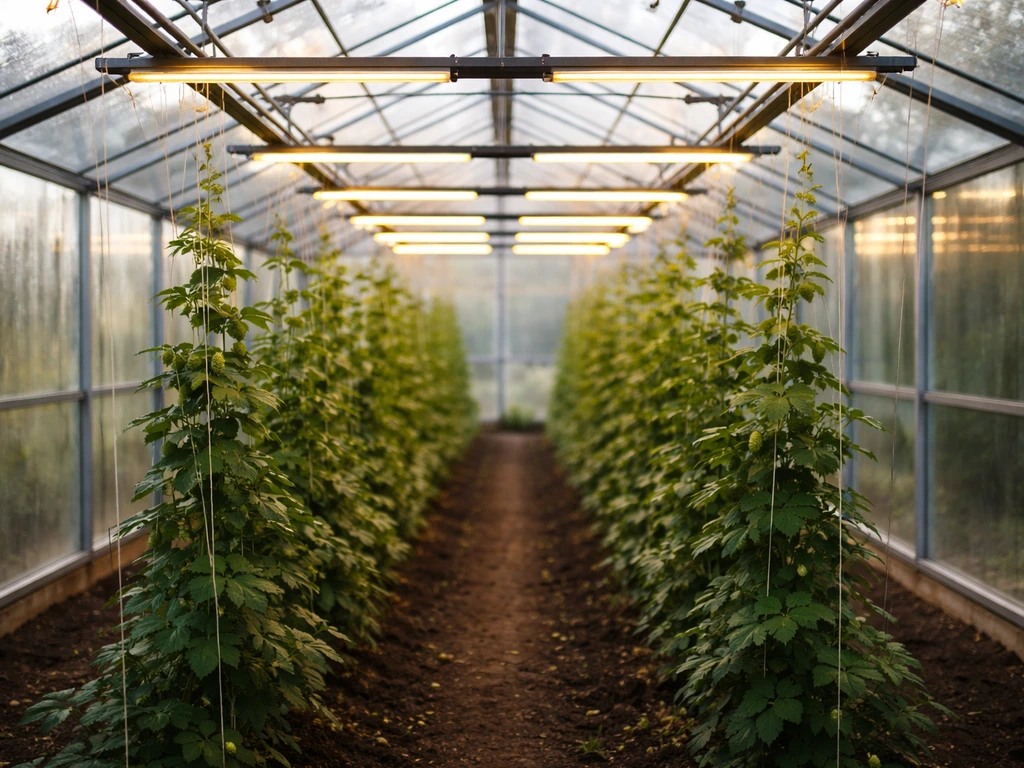
Not every greenhouse structure suits hops equally. The single most important factor is ceiling height: you need at least 16 to 20 feet of vertical clearance for full bine development. Hops also need serious airflow, so passive vents alone usually are not enough.
| Greenhouse Type | Best US Fit | Key Advantage | Key Limitation |
|---|---|---|---|
| Unheated high tunnel | Zones 5-7 | Low cost, good ventilation, easy trellis mounting | No winter temperature control, frost risk in Zones 5-6 |
| Cold greenhouse (minimal heat) | Zones 4-6 | Protects crowns from extreme freeze, low input cost | Still needs supplemental lighting for southern latitudes |
| Heated/climate-controlled | Zones 3-4 or 8-10 | Full season and dormancy control, works in extreme climates | High energy cost, requires active management |
| Open-sided protected structure | Zones 6-9 | Excellent airflow, reduced disease pressure | Less control over temperature and photoperiod |
For most US home growers, a heated high tunnel with rollup sides and supplemental lighting hits the sweet spot. Rollup sides give you the airflow hops need in summer, the supplemental light handles photoperiod management, and the heating keeps crowns safe during winter dormancy management. In southern states like Florida, Georgia, or Texas (Zones 8-10), a fully climate-controlled greenhouse with active cooling is more appropriate. In northern states like Minnesota, Wisconsin, or Michigan (Zones 3-5), even a minimally heated high tunnel dramatically extends your viable growing season and protects rhizomes from destructive freeze-thaw cycles. If you are specifically trying to grow hops in Michigan, the key is choosing a setup that extends your season and protects rhizomes through winter.
Light, temperature, humidity, and airflow targets
Light and photoperiod
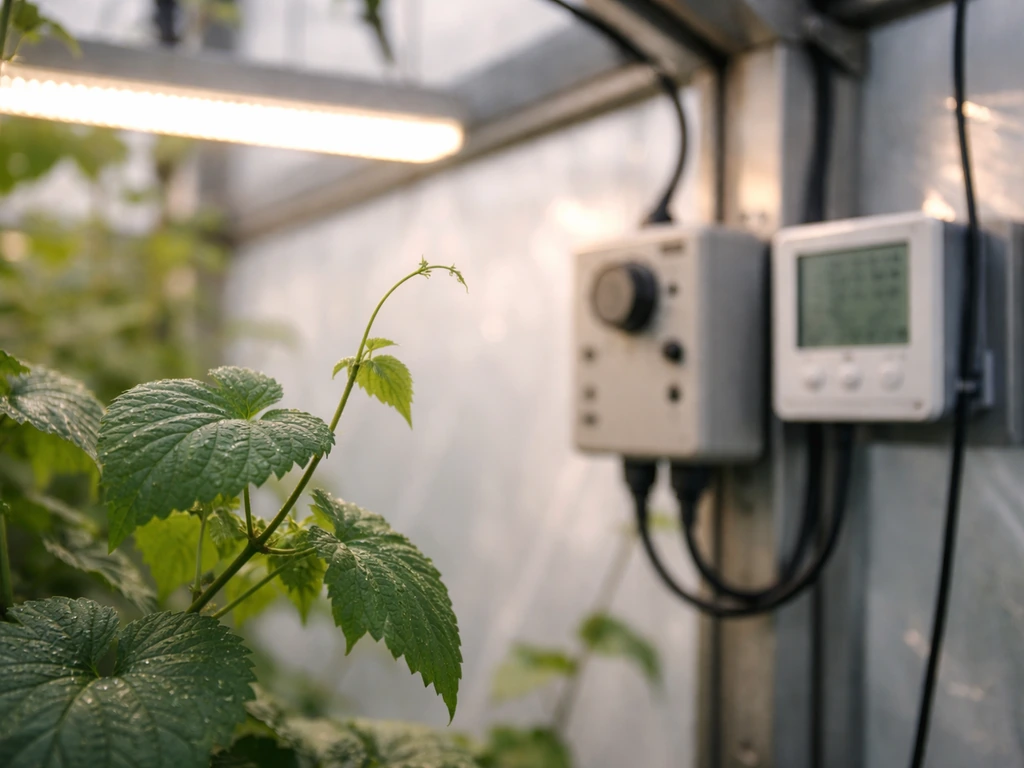
This is the single most misunderstood part of greenhouse hops. Hops flower when day length exceeds their critical photoperiod threshold, typically around 14 to 16 hours of light depending on variety and latitude. In northern states above roughly 45 degrees latitude, natural summer days are long enough that supplemental lighting is mainly useful for early-season acceleration. Below about 38 degrees latitude (think Tennessee southward), natural day length during what should be flowering time may not hit the threshold, so you will need to extend days with LEDs. During vegetative growth, bines can grow up to 25 cm per day under ideal photoperiod conditions. Set LED supplemental lighting to maintain at least 16 hours of light daily from the time you want bines growing through the point when you see cone formation. Full-spectrum LEDs positioned to supplement existing sunlight work well; overhead placement that mimics natural sky angle gives the most even coverage.
Temperature
During active growth, hops prefer 60 to 75°F daytime temperatures. They tolerate higher temps briefly, but sustained heat above 85°F during flowering significantly reduces cone quality and yield. At night, 50 to 60°F is ideal. For winter dormancy (more on this below), hops need exposure to temperatures below 40°F for roughly 4 to 8 weeks to complete their chilling requirement and emerge vigorously in spring. Managing this in a heated greenhouse means either letting the greenhouse cool down intentionally in late fall, moving containers to cold storage, or working with the outdoor temperature cycling if your climate allows.
Humidity and airflow
Target relative humidity between 50 and 70% during active growth. Above 80% is where powdery mildew becomes a serious threat, and in a greenhouse without good airflow that threshold is easy to breach. You need active circulation: at minimum, horizontal airflow fans running continuously, and ideally rollup sides or large ridge vents that you can open during the day. Think of airflow as your primary disease prevention tool. No fungicide program compensates for stagnant, humid air in a hop canopy.
Planting setup: rhizomes, containers, soil, and trellis
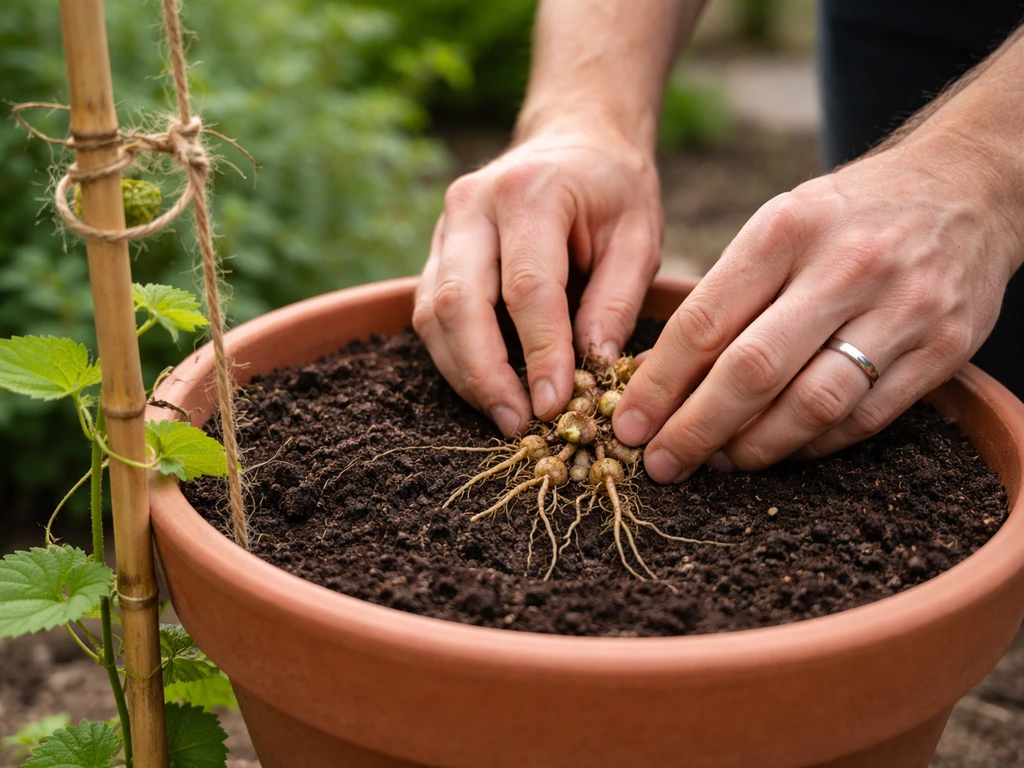
Starting material
Start from rhizomes (root cuttings with one or two buds) or potted transplants from a licensed nursery. Rhizomes are typically available in late winter to early spring from hop suppliers, and that is the most cost-effective way to start. Cuttings from established plants can also work in a greenhouse if you have access to a mother plant. Sourcing from a reputable vendor matters: disease-free planting stock avoids introducing downy mildew or virus problems before you even start. Popular varieties for protected culture include Cascade, Centennial, and Chinook (all adaptable and well-studied), with Cascade being a particularly forgiving choice for new greenhouse growers.
Containers vs. in-ground
In-ground planting in a greenhouse floor bed is ideal for long-term production. Hops develop deep root systems (6 feet or more over time) and benefit from the moisture buffering and nutrient cycling that native soil provides. If your greenhouse has a compacted or paved floor, large containers (30 to 50 gallons minimum per plant) are a practical alternative and let you move plants for dormancy management. Container-grown hops dry out faster and need more frequent watering and fertilizing than in-ground plants, so factor that into your management commitment.
Soil and drainage
Hops want well-drained, deep, loamy soil with a pH between 6.0 and 8.0, ideally closer to 6.5. Avoid waterlogged conditions above all else: root diseases tied to overwatering are one of the most common hop failures in controlled environments. If building raised beds inside a greenhouse, use a mix of native loam, compost, and coarse sand or perlite for drainage. Soils with more than 5% organic matter are well-buffered and need less added nitrogen, so adjust your fertilizer plan accordingly rather than defaulting to standard rate charts.
Trellis system
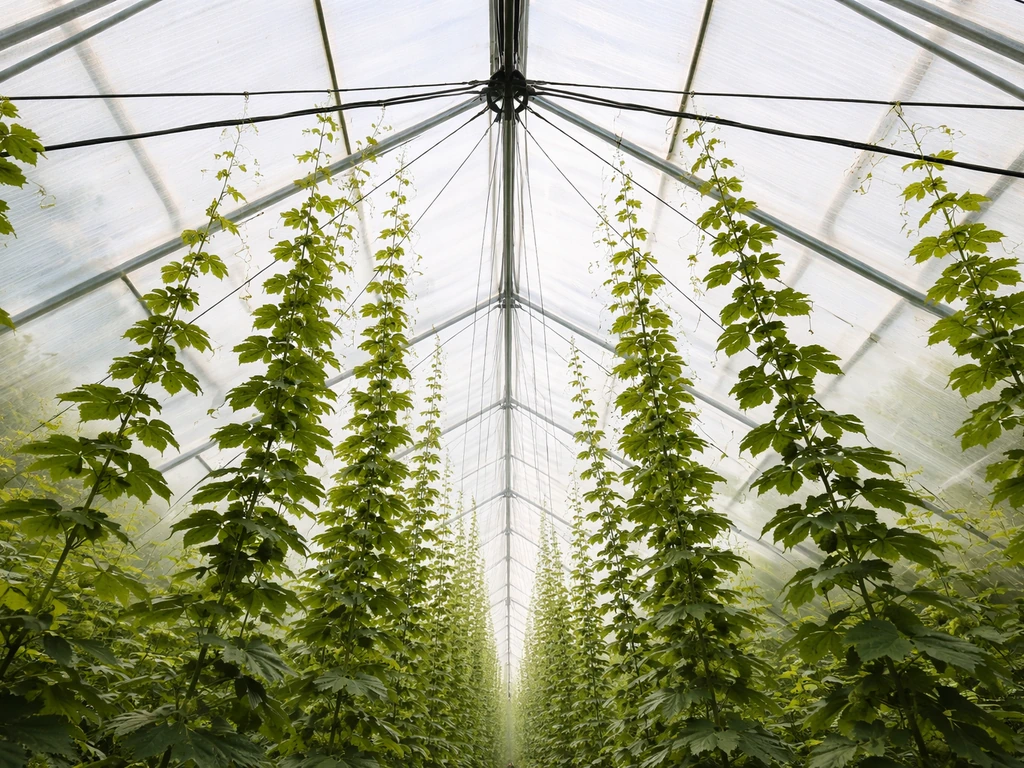
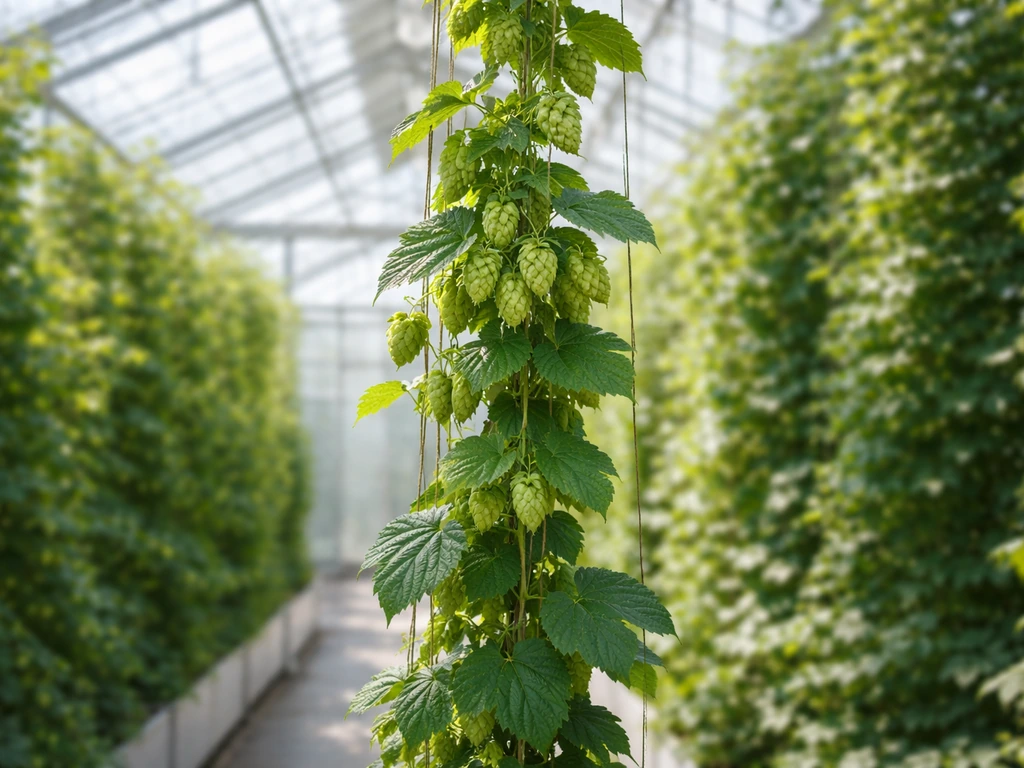
Hops need to climb. Plan for a trellis with a top cable or anchor point at least 16 to 18 feet high, ideally 18 to 20 feet for mature plants. Research on subtropical greenhouse hop systems used a top cable at approximately 5.5 meters (about 18 feet) height, which is a good practical target. Run coir or sisal twine strings from a heavy gauge wire at the top down to stakes at the base of each plant. Angle the strings slightly (about 70 degrees from horizontal rather than straight vertical) to slow the bine down and encourage more lateral branching, which means more cone sites. Each plant needs 2 to 4 strings. In a greenhouse, the trellis anchors to the roof framing: make sure your structure is rated for the load, because a mature hop bine with cones is significantly heavier than it looks.
Training and management to actually get cones
Getting vegetative growth out of hops is easy. Getting cones is where greenhouse growers run into trouble, and it almost always comes down to training and photoperiod management.
When bines emerge in spring, select the three to five strongest per plant and wrap them clockwise around your trellis strings, starting them at about 12 inches of height. Remove or compost the rest. Do not skip this thinning step: allowing too many bines to grow creates a dense canopy that restricts airflow and reduces light penetration to the laterals where cones form. As the bines climb, strip the leaves and lateral shoots from the bottom 2 to 3 feet of the bine to improve airflow at the base.
Once bines reach the top of the trellis (or the tops are pinched to stop upward growth), lateral branches develop and those are where cone clusters form. If your photoperiod management is right and your plants are getting adequate light, you will see cone set on those laterals. If bines are lush and green but producing no cones, the most likely culprits are day length too short (add lighting), temperatures too high during what should be flowering time, or plants in their first year that simply need another season to mature.
First-year plants typically produce a modest crop. Second and third year plants, with established root systems, produce the bulk of their potential yield. Expect to be patient: in a greenhouse, first-year rhizomes should produce a partial crop, and by year two to three you should have a realistic harvest.
Feeding, watering, and the seasonal schedule
Watering
During peak summer growth (June and July), established hops can consume around 6 gallons of water per plant per day in field conditions. In a greenhouse, actual demand varies with container size, air temperature, and vapor pressure deficit, but the direction is the same: hops are thirsty during rapid growth. Drip irrigation is the most practical delivery method; it keeps the canopy dry (reducing mildew risk) and allows consistent, targeted delivery to the root zone. Check soil moisture daily during the growing season and water before plants show any stress. In winter dormancy, reduce watering dramatically but do not let containers go bone dry.
Fertilizing
Hops are moderate to heavy nitrogen feeders. For established plants, target roughly 120 to 150 pounds of actual nitrogen per acre equivalent (about 0.33 lb of actual N per 100 square feet) across the season, split into multiple applications from spring emergence through mid-summer. Phosphorus needs are relatively modest, but potassium demand is high: hops remove substantial potassium annually and deficiency shows up as leaf scorch and weak cone development. Penn State Extension also notes that phosphorus requirements for hops are relatively small, while potassium removal can be substantial each year, which supports focusing on potassium in protected fertigation plans phosphorus requirements are relatively small. Use a balanced fertilizer at the start of the season, then shift to a higher K formula as plants approach flowering. Be cautious with micronutrients: excessive application can cause phytotoxicity, so apply only with soil test or tissue test data backing the decision. Petiole testing during the season is a useful way to check whether current nitrogen rates are adequate.
Seasonal schedule and dormancy
- Late winter (January to February): Order rhizomes or check stored crowns for health. Prepare beds or containers. Begin warming the greenhouse if you are in a cold zone.
- Early spring (March to April): Plant rhizomes 1 to 2 inches deep, horizontal, with buds just below the soil surface. Keep temperatures at 55 to 65°F. Begin drip irrigation and first light fertilization once shoots emerge.
- Late spring to early summer (May to June): Train bines to trellis strings as they emerge. Strip lower foliage. Begin full nitrogen and potassium program. Extend day length with supplemental lighting if needed.
- Mid-summer (July to August): Peak water and nutrient demand. Scout for mites and aphids weekly. Monitor humidity and airflow closely. Cones develop on lateral branches.
- Late summer to early fall (August to September): Cone ripening. Reduce nitrogen. Monitor lupulin color for harvest readiness.
- Fall (October to November): After harvest, allow bines to die back naturally. Cut bines to the ground. Reduce watering.
- Winter (November to February): Hops need 4 to 8 weeks of temperatures below 40°F (endo-dormancy) to fulfill their chilling requirement and bud break vigorously in spring. In a heated greenhouse, lower nighttime temperatures intentionally or move container plants to an unheated space. Do not skip this step: plants that skip proper chilling emerge weakly and produce poor yields.
Common greenhouse problems and how to handle them
Powdery mildew
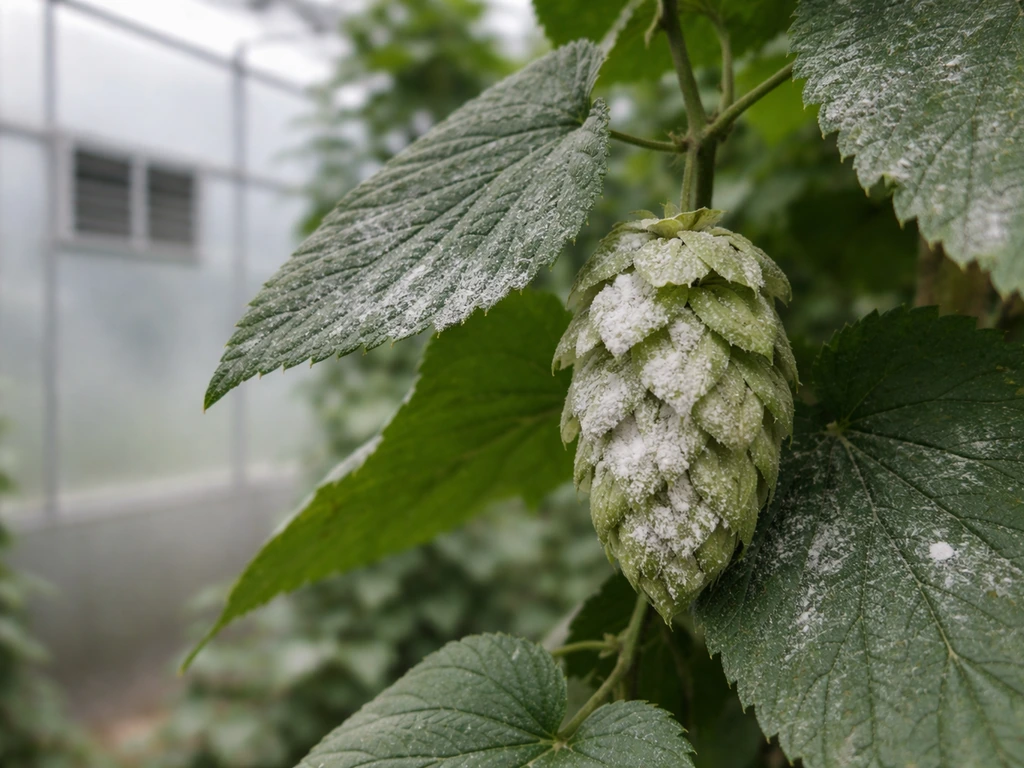
This is the number one greenhouse hop disease, and it is almost entirely an airflow and humidity problem. Powdery mildew can colonize stems, leaves, flowers, and cones, and it overwinters on crown buds, meaning infected plants carry the problem year to year. Prevention comes first: space plants adequately, run circulation fans continuously, open vents during the day, strip lower canopy leaves, and avoid overhead watering. If you see the characteristic white powdery patches, act immediately with a labeled fungicide (potassium bicarbonate, sulfur, or synthetic options depending on your tolerance). Scout the lower canopy and crown area particularly after winter, when overwintered infections reactivate.
Spider mites
Two-spotted spider mites are one of the most prevalent arthropod pests on hops, and greenhouses create ideal warm, dry conditions for population explosions. Mites puncture plant cells, causing stippled, bronzed foliage. Scout the undersides of leaves weekly starting in June; catching mite populations early is critical because they build fast. In a greenhouse where you are not spraying broad-spectrum pesticides, predatory mites (Phytoseiidae) can suppress populations below damaging levels. If you are using chemical controls, check temperature restrictions on your product: some miticides like propargite have maximum temperature thresholds above which they should not be applied. PNW Handbooks’ hop spider mite management notes include temperature and compatibility cautions for chemical options, such as restrictions when using propargite with oil sprays and a maximum temperature threshold for application some miticides like propargite have maximum temperature thresholds above which they should not be applied.. Rotate modes of action to prevent resistance.
Hop aphids
Hop aphids (Phorodon humuli) are the other major pest priority alongside mites. They cluster on new growth and undersides of leaves and can colonize cones directly, reducing quality. In a greenhouse, beneficial insects like parasitic wasps can help if you avoid broad-spectrum sprays. Check new growth at every scouting visit and intervene early with insecticidal soap or a labeled aphicide if populations are building.
Root and crown rot
Overwatering is the fast track to crown rot in containers or poorly drained beds. Let the top few inches of soil dry slightly between waterings, ensure containers have adequate drainage holes, and never let pots sit in standing water. If you see wilting despite adequate soil moisture, that is often a root health signal worth investigating immediately.
Heat stress
Greenhouses concentrate heat, and sustained temperatures above 85°F during flowering will tank your cone yield. If you want to focus on a warmer climate like California, the same greenhouse fundamentals apply, but you will need to pay extra attention to heat stress and airflow during flowering. In summer, shade cloth on the south and west-facing panels (30 to 40% shade) combined with active ventilation and rollup sides is often necessary. In hot southern states, a cooling system or evaporative cooling pad is not optional, it is required.
Harvest timing, yield, and troubleshooting by symptoms
When and how to harvest
Hops are ready to harvest when the cone bracts feel papery and springy, the lupulin glands inside the cone turn bright yellow, and the cones have a strong, resinous aroma. If cones feel wet or soft and the lupulin is pale or sparse, they need more time. If cones are browning at the tips and lupulin is starting to degrade in smell, you are late. Greenhouse-grown cones will mature at roughly the same calendar timing as field hops in your latitude, typically late July through September, depending on variety and when you started the season. After harvesting, cones need to be dried promptly to around 9% moisture content for storage quality. A food dehydrator set to 95 to 120°F works fine for home-scale harvests.
Realistic yield expectations
Do not expect commercial yields from a greenhouse setup, especially in early years. A first-year plant from a rhizome might produce a quarter to a half pound of dried cones. By year two to three with good management, 1 to 2 pounds of dried cones per plant is achievable, and some well-established container plants in optimal conditions can push higher. Research using protected open-sided greenhouse structures confirmed measurable strobile yield and brewing-quality cones, so the production potential is real, just not commercially scaled for most setups.
Troubleshooting by symptom
| Symptom | Most Likely Cause | Fix |
|---|---|---|
| Bines growing but no cones forming | Day length too short or first-year plant | Extend photoperiod with LEDs; wait for year 2 if first season |
| Yellowing lower leaves mid-season | Nitrogen deficiency or root stress | Check soil moisture and adjust N fertilization; tissue test if persistent |
| White powdery patches on leaves | Powdery mildew | Improve airflow immediately; apply labeled fungicide; remove affected tissue |
| Stippled, bronzed foliage | Spider mites | Scout undersides of leaves; introduce predatory mites or apply miticide |
| Wilting despite adequate watering | Root rot from overwatering or poor drainage | Reduce irrigation frequency; check container drainage; inspect roots |
| Weak, spindly bine emergence in spring | Insufficient winter chilling | Ensure 4-8 weeks below 40°F next dormancy cycle |
| Cones browning early or with poor aroma | Heat stress or late harvest | Add shade cloth; improve ventilation; harvest earlier next cycle |
| Slow growth or no bud break | Crown damage from freeze or disease | Inspect crown health; replace plants if no buds emerge by 6-8 weeks post dormancy |
Your next steps
If you are ready to set up a greenhouse hop system, start by checking your greenhouse's ceiling height and airflow capacity before anything else. If you are asking can you grow agave in California outdoors or in a greenhouse, the same idea applies: match the plant to your microclimate and plan for the right light, temperature, and drainage. If you are under 14 feet clear, the project is going to be frustrating. If you have the vertical space, order rhizomes in late winter from a reputable hop nursery and select varieties suited to your region: Cascade is forgiving and widely adapted, Centennial performs well in cooler greenhouse environments, and Zeus or Nugget work for higher-alpha-acid goals. Get your drip irrigation and trellis wire in place before planting, not after, because bines grow fast once they start and retrofitting is annoying. Set up at least two horizontal airflow fans per bay and plan your lighting before your first spring, not mid-summer when plants are already struggling.
The dormancy management plan is the piece most new greenhouse hop growers skip and then regret. Write down your plan for how you will deliver 4 to 8 weeks below 40°F to your plants before you commit to a heated-all-winter setup. That one planning step separates a productive greenhouse hop system from an expensive disappointment. If you are wondering whether longan can be grown in California, the climate and temperature requirements are the first things to check before planning a setup can you grow longan in california.
FAQ
Can you keep greenhouse hops warm all winter and still get cones?
Yes, but only if you can provide a true dormancy rest. Even in a greenhouse, hops still need a 4 to 8 week chilling period below about 40°F, so you will need a strategy like intentionally shutting down heat in late fall, moving containers to an unheated cold area, or using a separate cold room. If you keep plants warm year-round, expect mostly vegetative growth and weak cone formation.
How do I prevent overwatering and crown rot in greenhouse hops?
In a greenhouse, you should avoid “set it and forget it” watering. Plan to check soil moisture daily during active growth, and use drip with dry-canopy goals, water when the top few inches start to dry, and never allow pots to sit in runoff. For containers, the faster drying means you may need more frequent, smaller irrigation cycles than you’d expect.
My hops look healthy but won’t cone, what’s usually wrong besides day length?
Yes, unless your plants are truly crowding. Two common mistakes are underestimating how quickly bines fill space, and not thinning. Remove weaker bines so you end up with roughly 3 to 5 strong bines per plant, maintain the leaf stripping on the lower 2 to 3 feet, and ensure air can move through laterals where cones form. Poor spacing often shows up as leaf disease or no cones even when the plants look healthy.
Do first-year greenhouse hops always produce little or no harvest?
You can use the first-year crop to confirm your setup, but timing alone is not the main issue. First-year rhizomes often produce a partial crop, so if you see lush growth with few cones, treat it as a training and acclimation year. Still, verify photoperiod timing, avoid sustained flowering heat above 85°F, and watch for mites or powdery mildew signs early.
What lighting schedule should I use with LEDs for greenhouse hops?
Full-spectrum LEDs can work well, but the key is total light timing and uniformity. Place lights so they cover the canopy evenly, then run at least about 16 hours of light from the start of bines growth through cone initiation. If your greenhouse already has long summer days, you may only need early-season extension, not year-long lighting.
My greenhouse ceiling is around 14 feet, can I still grow hops?
If your greenhouse is below about 16 to 18 feet of clear height, the trellis will force bines to crowd and twist, which reduces productive lateral development. A practical workaround is to use training to keep growth within the structure and consider dwarf or early-heading varieties, but yields will likely drop and disease risk increases due to denser canopy.
If I spray for powdery mildew, do I still need fans and ventilation?
Powdery mildew is often managed by airflow and humidity control, not just fungicide. Even when you treat early patches, you still must keep relative humidity roughly in the 50 to 70% range, run circulation fans continuously, and open vents during the day. Also avoid overhead watering because it increases leaf wetness and microclimates that favor spread.
How can I catch spider mites early in a greenhouse?
For mites, scouting is nonnegotiable. Start checking leaf undersides weekly as temperatures warm, then increase frequency if you spot early stippling. Predatory mites can help in greenhouses where broad-spectrum sprays are limited, but if you miss the first rise, populations can explode quickly.
Should I fertilize hops the same way throughout the season?
Watch for a consistent mismatch between nitrogen and potassium needs as flowering approaches. Early season should support vigorous growth, but later you need higher potassium to avoid weak cone development and leaf scorch patterns. The best decision aid is a soil or tissue check, then adjust rather than increasing nitrogen repeatedly.
Is it better to plant hops in-ground or in containers inside a greenhouse?
Not always. In-ground beds can handle moisture buffering better, but container plants dry faster and usually require more frequent feeding and irrigation. If you use containers, prioritize large pots with good drainage, expect tighter day-to-day moisture monitoring, and plan your dormancy move because containers are easier to transport than heavy beds.
How do I know when greenhouse-grown hops are actually ready to harvest?
You will usually see harvest around the same late-summer window as field hops for your latitude, but variety and when you started growth matter. Use cone readiness signals rather than calendar date: papery bracts plus bright yellow lupulin glands, and strong resin aroma. If cones feel wet or the lupulin is pale, keep drying time on the vine or hold longer before harvest.
What is the most important “plan it before you plant” step for greenhouse hops?
Because hops are heavy and fast-growing, it is smart to plan trellis load and installation before planting. Use properly rated roof anchoring for the top cable and wire, then set up the drip line and horizontal airflow fans before bines climb. Retrofitting later often damages shoots, disrupts root establishment, or requires reworking airflow paths.
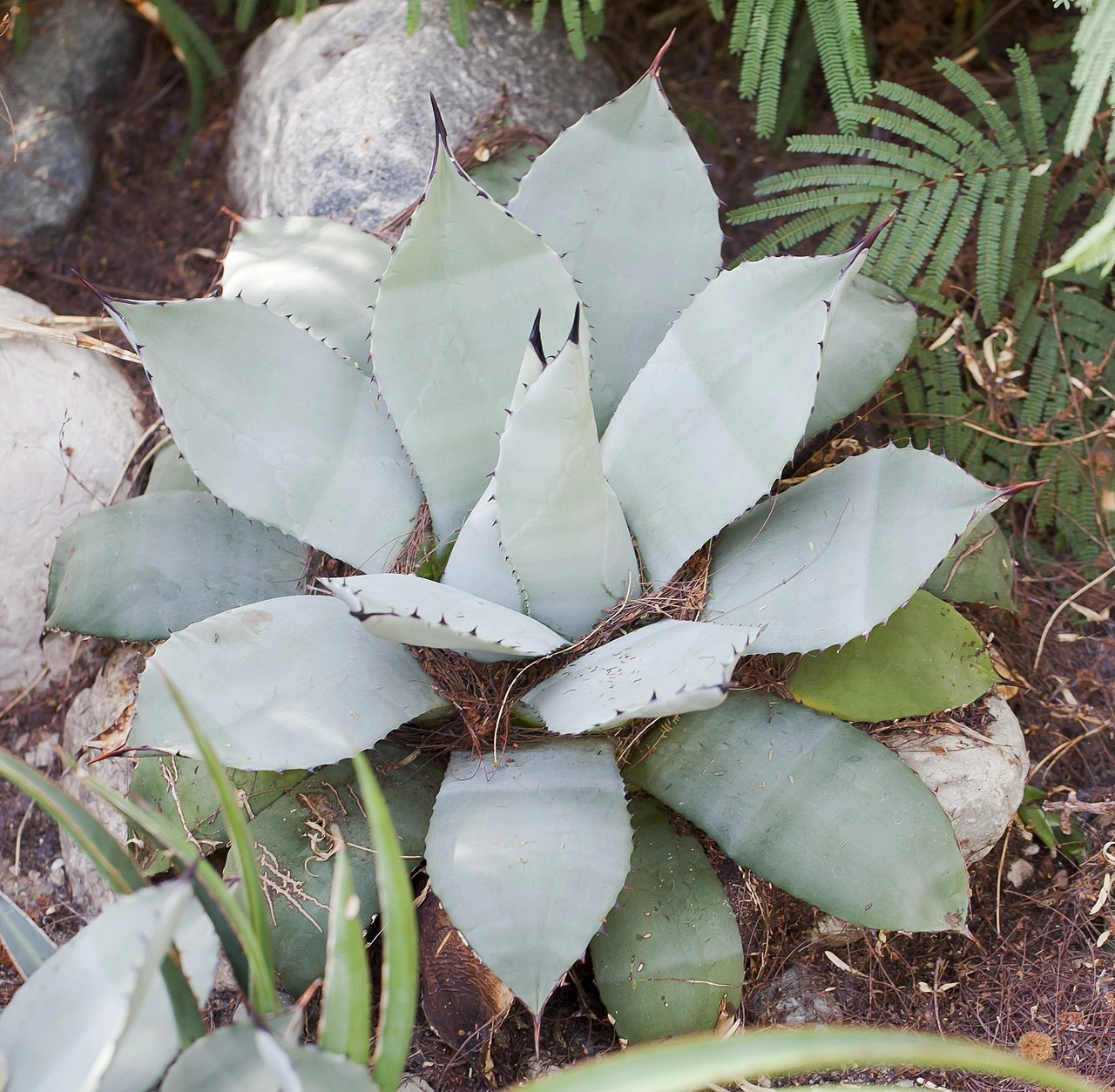
Find if you can grow agave in California, which species fit your zone, and exact care tips for cold, frost, and drainage
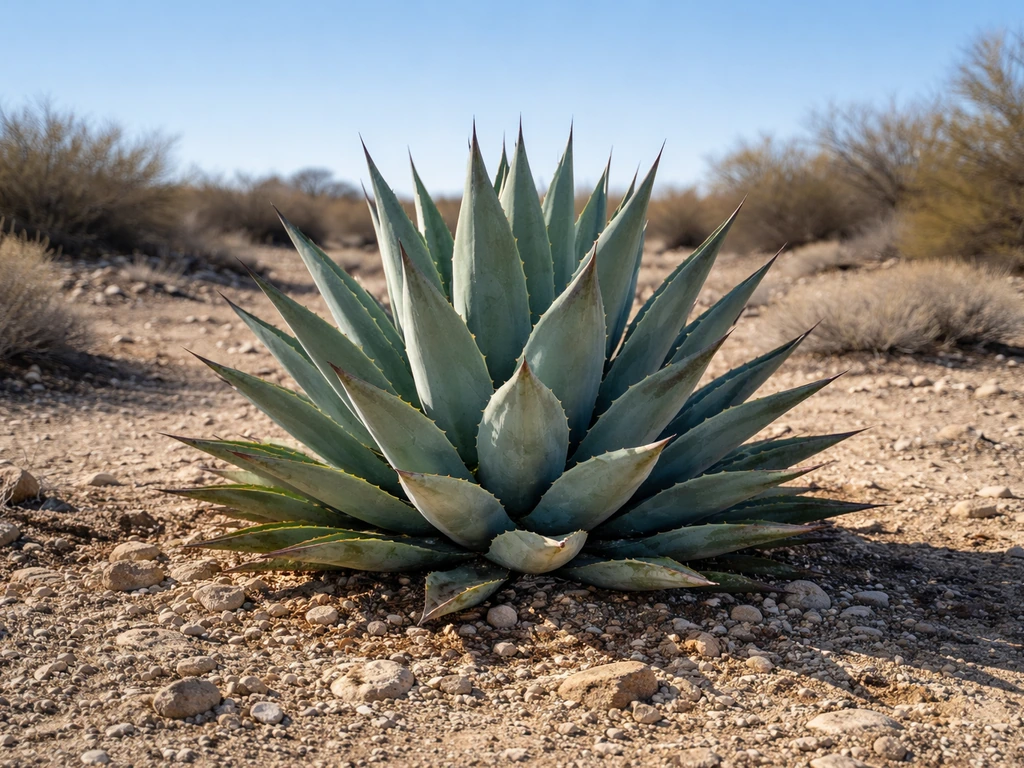
Yes, agave can grow in much of the US with the right cold-tolerant varieties, sun, drainage, and winter protection.
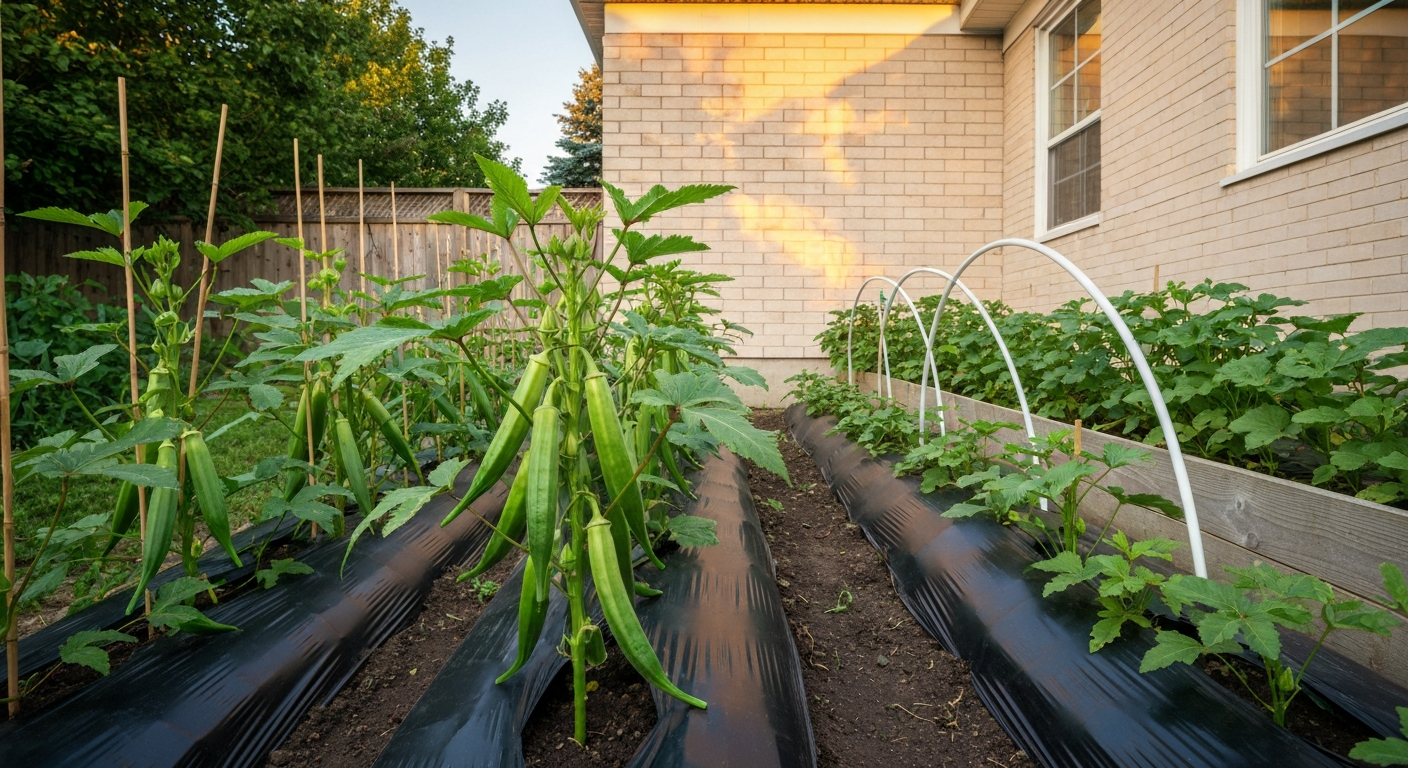
Can you grow okra in Canada? Regional verdict, Ontario-specific steps, varieties, season-extension & harvest tips.